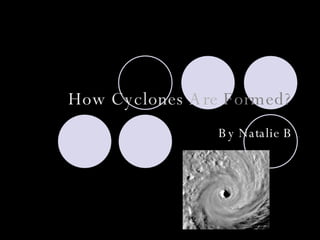
How Cyclones Are Formed

Loading...

Flash Player 9 (or above) is needed to view presentations.
We have detected that you do not have it on your computer. To install it, go here.

7 comments

Comments 1 - 7 of 7 previous next Post a comment

  • + guest9d53d1c0 guest9d53d1c0 7 months ago
    cant like read it, its covered with pictures
  • + guest9d53d1c0 guest9d53d1c0 7 months ago
    i coudnt read it cause it was covered with pictures
  • + guestd822f guestd822f 8 months ago
    stupid
  • + guestd822f guestd822f 8 months ago
    ur the homo
  • + guest22ec9 guest22ec9 9 months ago
    Percy is a homo
  • + guestc6b3bf guestc6b3bf 2 years ago
    actually i left this commet before i wtched this

    and now i think tht it isnt very gd coz you have tu press the button tu change the slide

    and i think tht it shld be automaically playing with a bit of mmusic

    yes ?

    im rly gd at these so if yu need help then just ask me

    im always here

    love


    percy b

    x
  • + guestc6b3bf guestc6b3bf 2 years ago
    this is like well gd

    cnt belive yu dun this yurself

    please show me how to do it

    thankyou

    love

    Percy

    x
Post a comment
Embed Video
Edit your comment Cancel

1 Favorite

How Cyclones Are Formed - Presentation Transcript

  1. How Cyclones Are Formed? By Natalie B
  2. What are the “ingredients” of a cyclone?
    • Cyclones are formed from thunderstorms, however, the thunderstorms can only grow to cyclone strength with cooperation from the ocean AND the atmosphere.
  3. How the “ingredients” need to be for a cyclone?
    • The ocean water itself must be warmer than 26.5 °C. The heat and moisture from this warm water is ultimately the source of energy for cyclones.
  4. What will happen if the cyclone doesn’t get it’s “ingredients”?
    • Cyclones will weaken rapidly when they travel over land or colder ocean waters - locations where the heat and/or moisture sources are rare or do not exist.
  5. Cold-Core Cyclones
    • Cold-core cyclones (most cyclone varieties) form due to the nearby presence of an upper level trough, which increases divergence over an area that induces upward motion and surface low pressure.
  6. Warm-core Cyclones
    • Warm-core cyclones (such as tropical cyclones and many mesocyclones) can have their initial start due to a nearby upper trough, but formation of the initial disturbance, depend upon a storm-relative upper level high to maintain or increase their length.
  7. Types of Cyclones
    • There are six types of cyclones: Polar cyclone; Polar low; Extra tropical; Subtropical; Tropical or Mesoscale.
  8. Credits
    • All photos from http:// images.google.com.au/images?hl=en&q=cyclone&gbv=2
    • Info from http://en.wikipedia.org/wiki/Tropical_Cyclone
    • http:// www.reference.com/search?q=cyclone

+ allstarsallstars, 2 years ago

custom

3683 views, 1 favs, 1 embeds more stats

More info about this document

© All Rights Reserved

Go to text version

  • Total Views 3683
    • 3680 on SlideShare
    • 3 from embeds
  • Comments 7
  • Favorites 1
  • Downloads 30
Most viewed embeds
  • 3 views on http://08allstars.wikispaces.com

more

All embeds
  • 3 views on http://08allstars.wikispaces.com

less

Flagged as inappropriate Flag as inappropriate
Flag as inappropriate

Select your reason for flagging this presentation as inappropriate. If needed, use the feedback form to let us know more details.

Cancel
File a copyright complaint
Having problems? Go to our helpdesk?

Categories

Tags