Cisco Systems Case Study: The Architecture Review Process Improving the IT Portfolio

Loading...

Flash Player 9 (or above) is needed to view presentations.
We have detected that you do not have it on your computer. To install it, go here.

0 comments

Post a comment

    Post a comment
    Embed Video
    Edit your comment Cancel

    1 Favorite

    Cisco Systems Case Study: The Architecture Review Process Improving the IT Portfolio - Presentation Transcript

    1. Cisco Systems Case Study: Architecture Review Process— Improving the IT Portfolio Susan Bouchard Enterprise Architecture Standards and Governance
    2. Agenda
      • Cisco Culture and History
      • Managing the IT Investment Portfolio
      • Architecture Review Process
      • Architecture Review Process Improvement
      • Improving the IT Portfolio
    3. Cisco Culture and History
    4. The Other Guys Largest U.S. Foodservice Distributor
    5. Cisco Systems: Worldwide Leader in Networking for the Internet Cisco Products Power the Internet Cisco Runs Its Business on the Internet
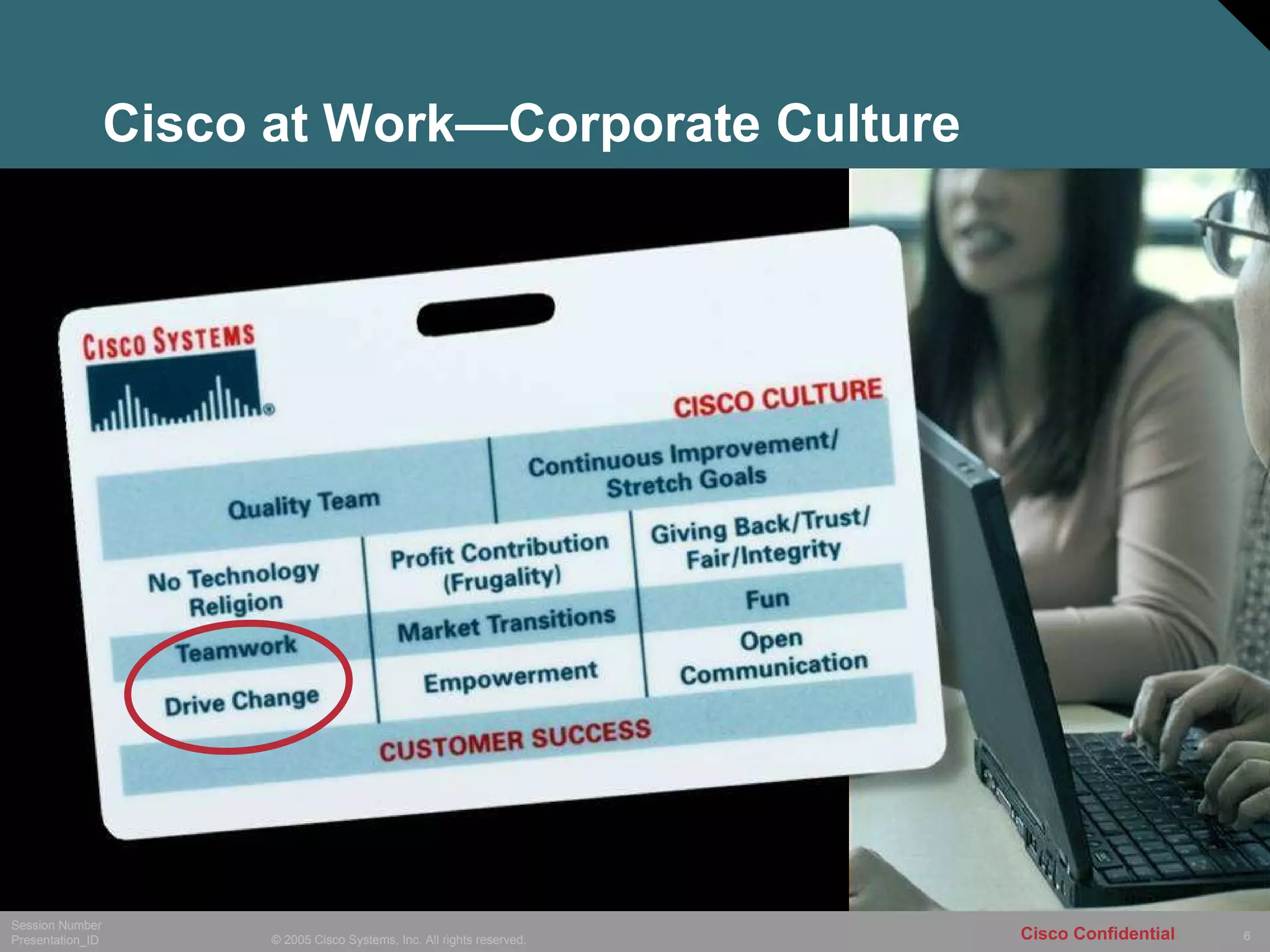
    6. Cisco at Work—Corporate Culture
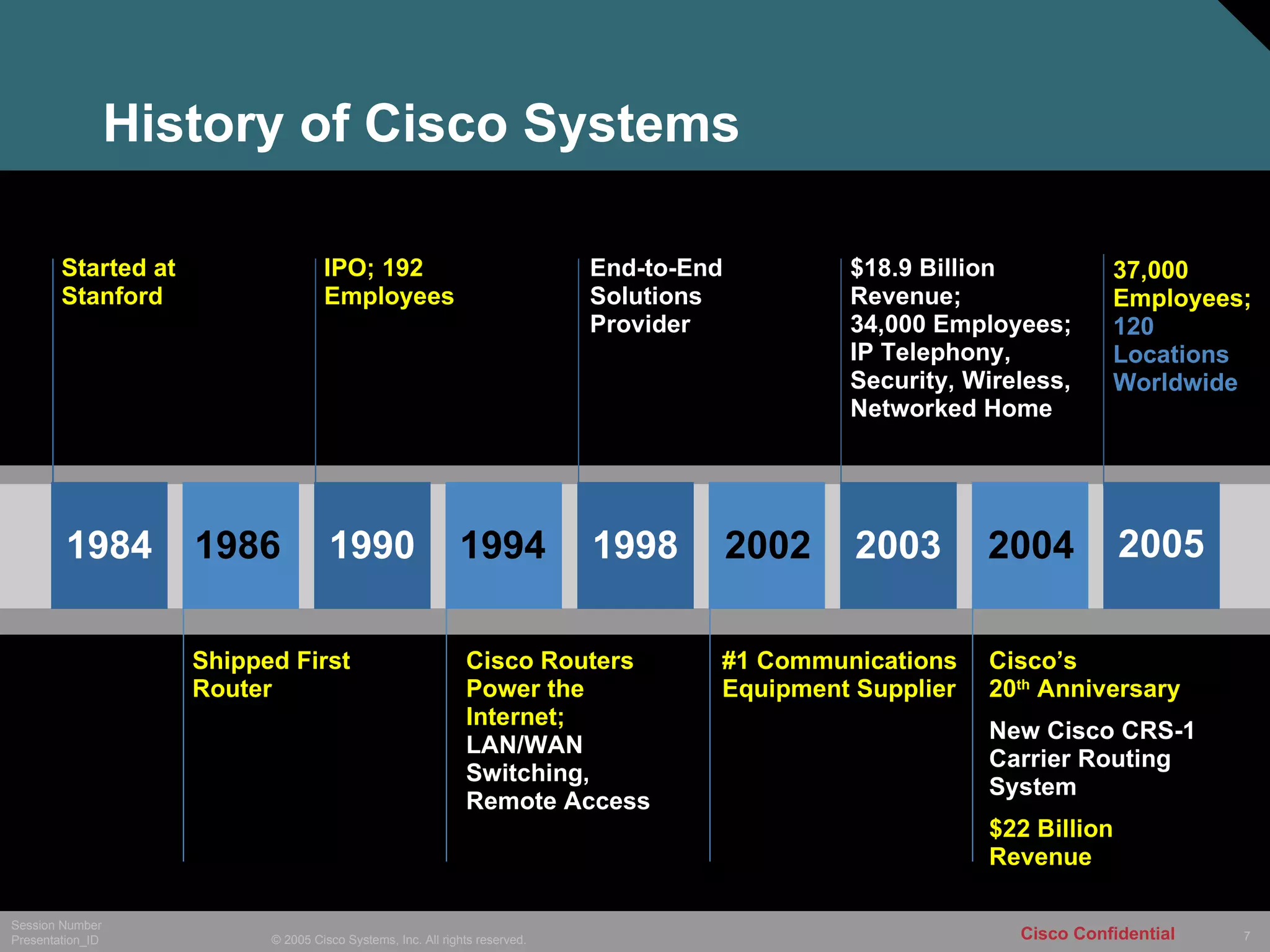
    7. History of Cisco Systems 1998 1984 1986 1990 1994 2002 2003 2004 Started at Stanford IPO; 192 Employees End-to-End Solutions Provider Cisco Routers Power the Internet; LAN/WAN Switching, Remote Access #1 Communications Equipment Supplier Shipped First Router $18.9 Billion Revenue; 34,000 Employees; IP Telephony, Security, Wireless, Networked Home Cisco’s 20 th Anniversary New Cisco CRS-1 Carrier Routing System $22 Billion Revenue 2005 37,000 Employees; 120 Locations Worldwide
    8. Managing the IT Investment Portfolio
    9. Portfolio Management
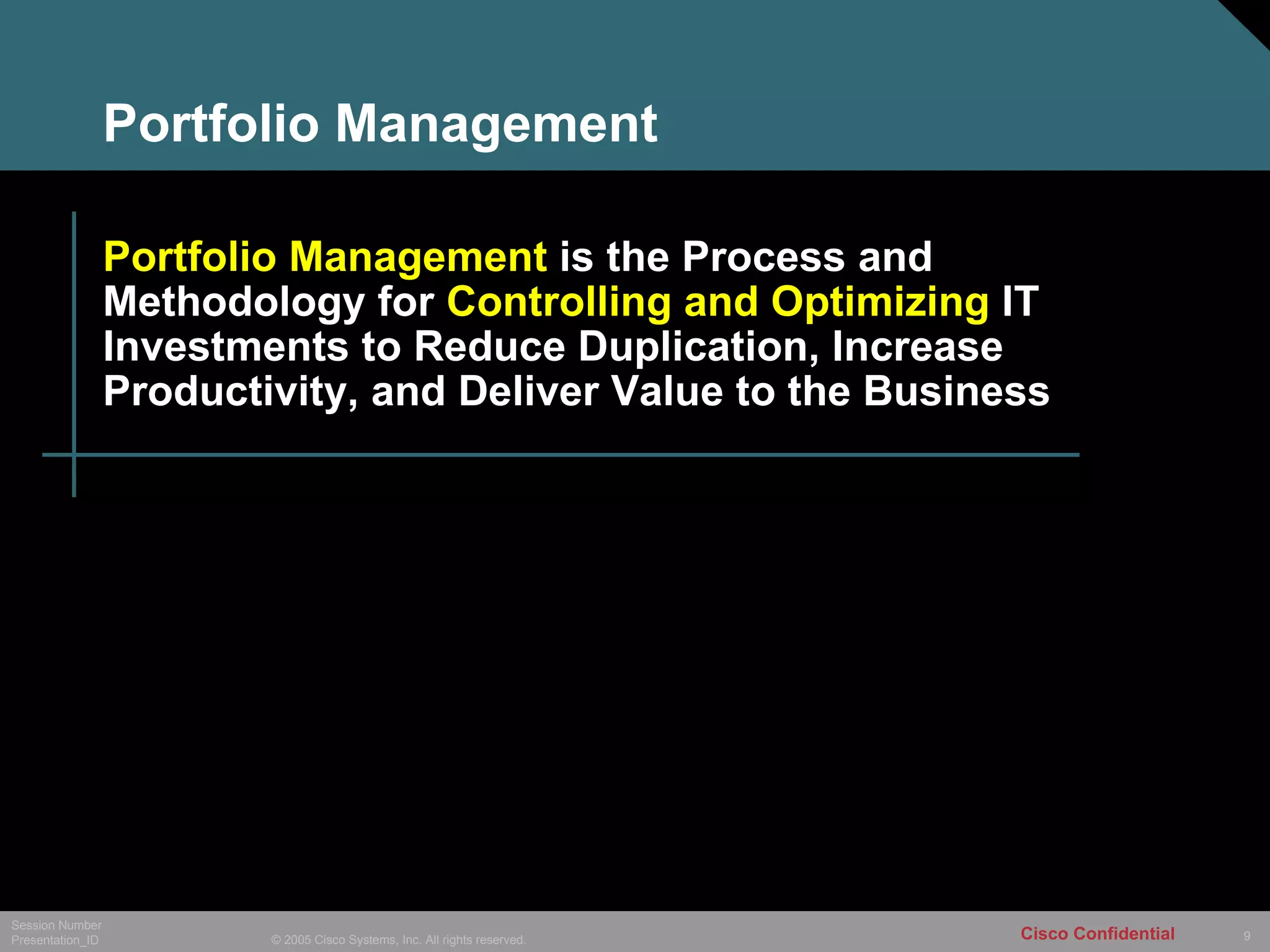
      • Portfolio Management is the Process and Methodology for Controlling and Optimizing IT Investments to Reduce Duplication, Increase Productivity, and Deliver Value to the Business
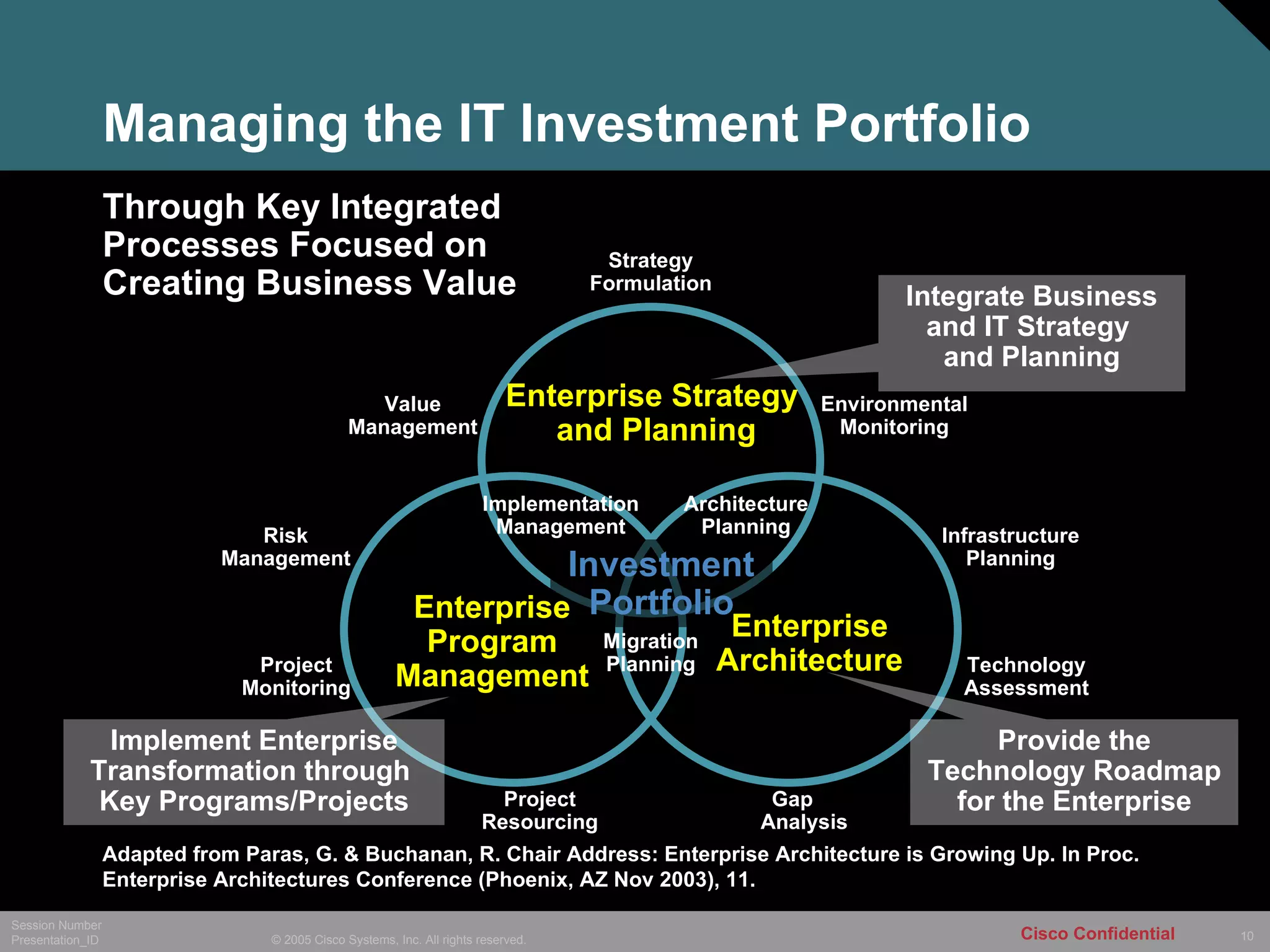
    10. Managing the IT Investment Portfolio Strategy Formulation Environmental Monitoring Value Management Implementation Management Architecture Planning Infrastructure Planning Gap Analysis Risk Management Project Resourcing Project Monitoring Migration Planning Enterprise Strategy and Planning Integrate Business and IT Strategy and Planning Implement Enterprise Transformation through Key Programs/Projects Provide the Technology Roadmap for the Enterprise Technology Assessment Investment Portfolio Enterprise Program Management Enterprise Architecture Through Key Integrated Processes Focused on Creating Business Value Adapted from Paras, G. & Buchanan, R. Chair Address: Enterprise Architecture is Growing Up. In Proc. Enterprise Architectures Conference (Phoenix, AZ Nov 2003), 11.
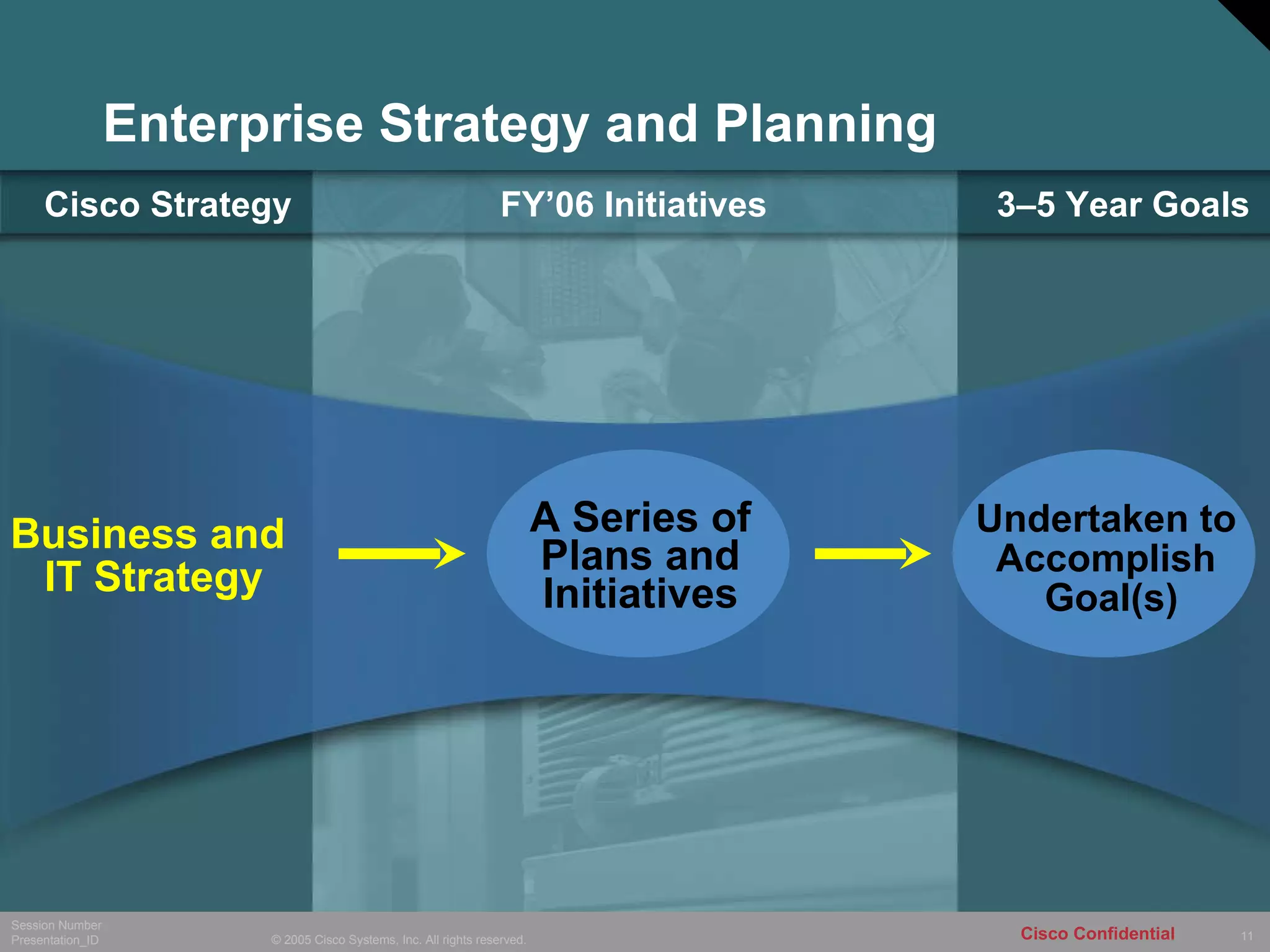
    11. Enterprise Strategy and Planning Business and IT Strategy Undertaken to Accomplish Goal(s) 3–5 Year Goals Cisco Strategy FY’06 Initiatives A Series of Plans and Initiatives
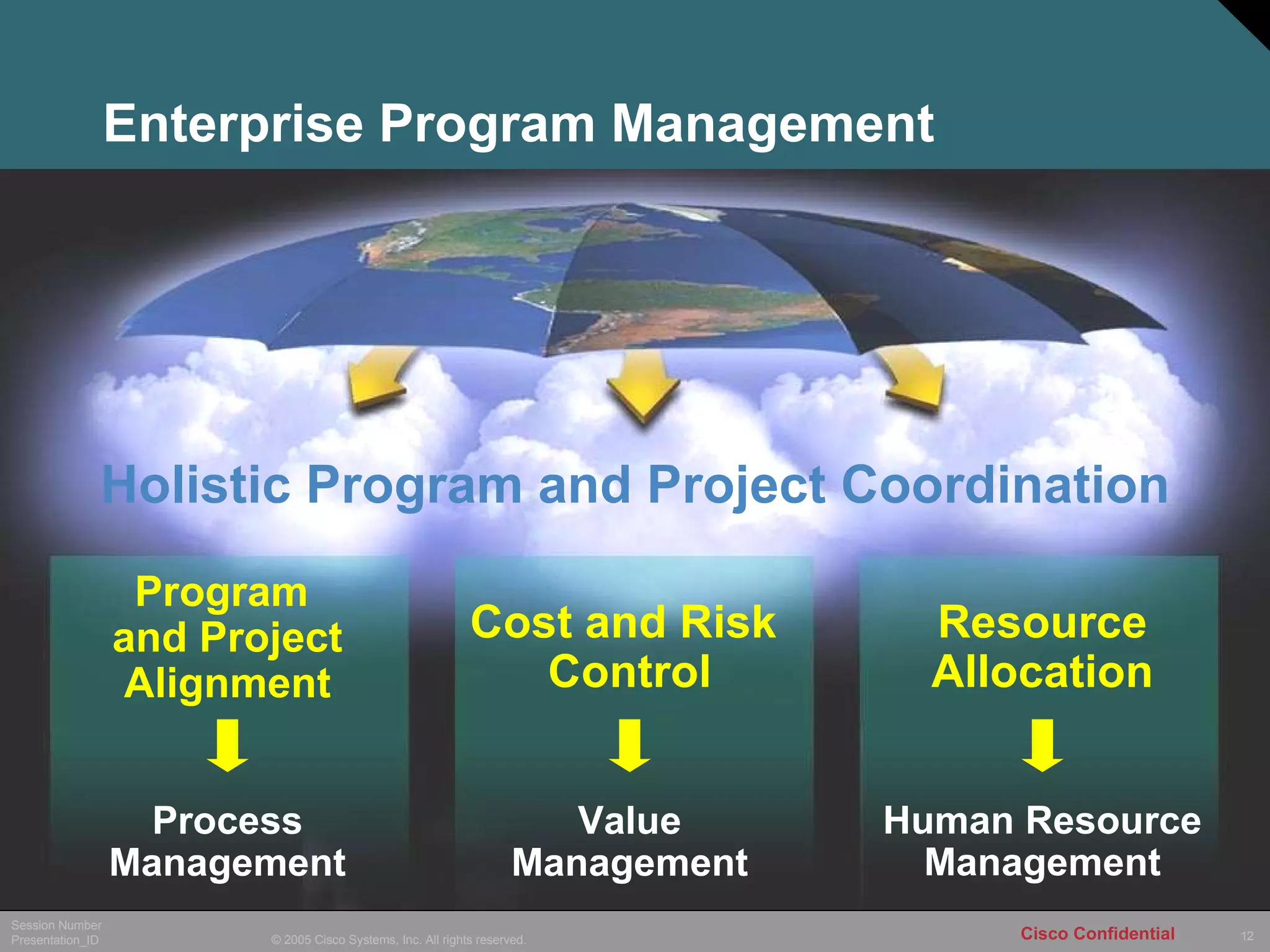
    12. Enterprise Program Management 3–5 Year Goals Cisco Strategy FY ’06 Initiatives Resource Allocation Cost and Risk Control Program and Project Alignment Holistic Program and Project Coordination Process Management Value Management Human Resource Management
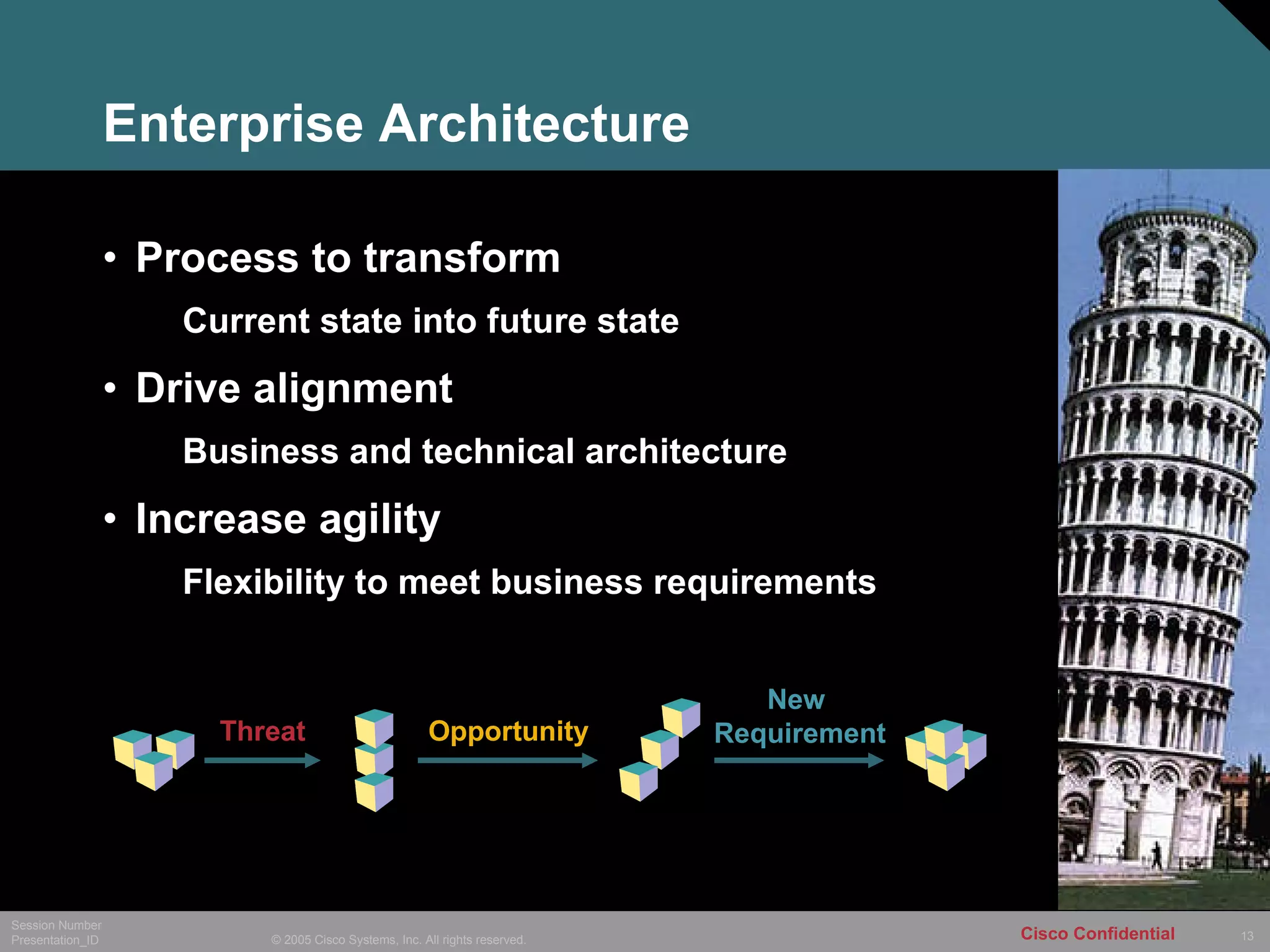
    13. Enterprise Architecture
      • Process to transform
        • Current state into future state
      • Drive alignment
        • Business and technical architecture
      • Increase agility
        • Flexibility to meet business requirements
      Threat Opportunity New Requirement
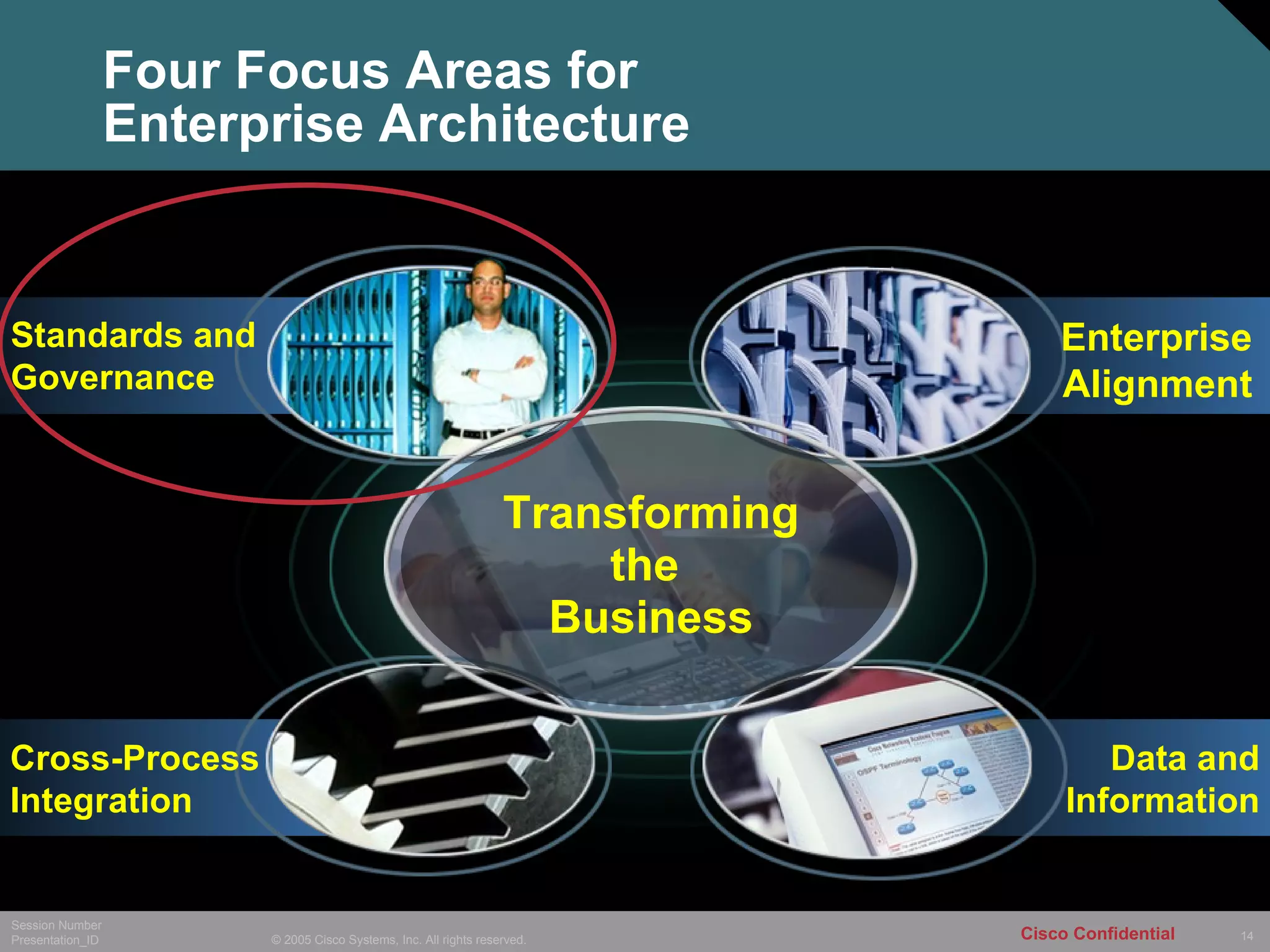
    14. Four Focus Areas for Enterprise Architecture Transforming the Business Standards and Governance Enterprise Alignment Cross-Process Integration Data and Information
    15. Architecture Review Process
    16. Architecture Review Process
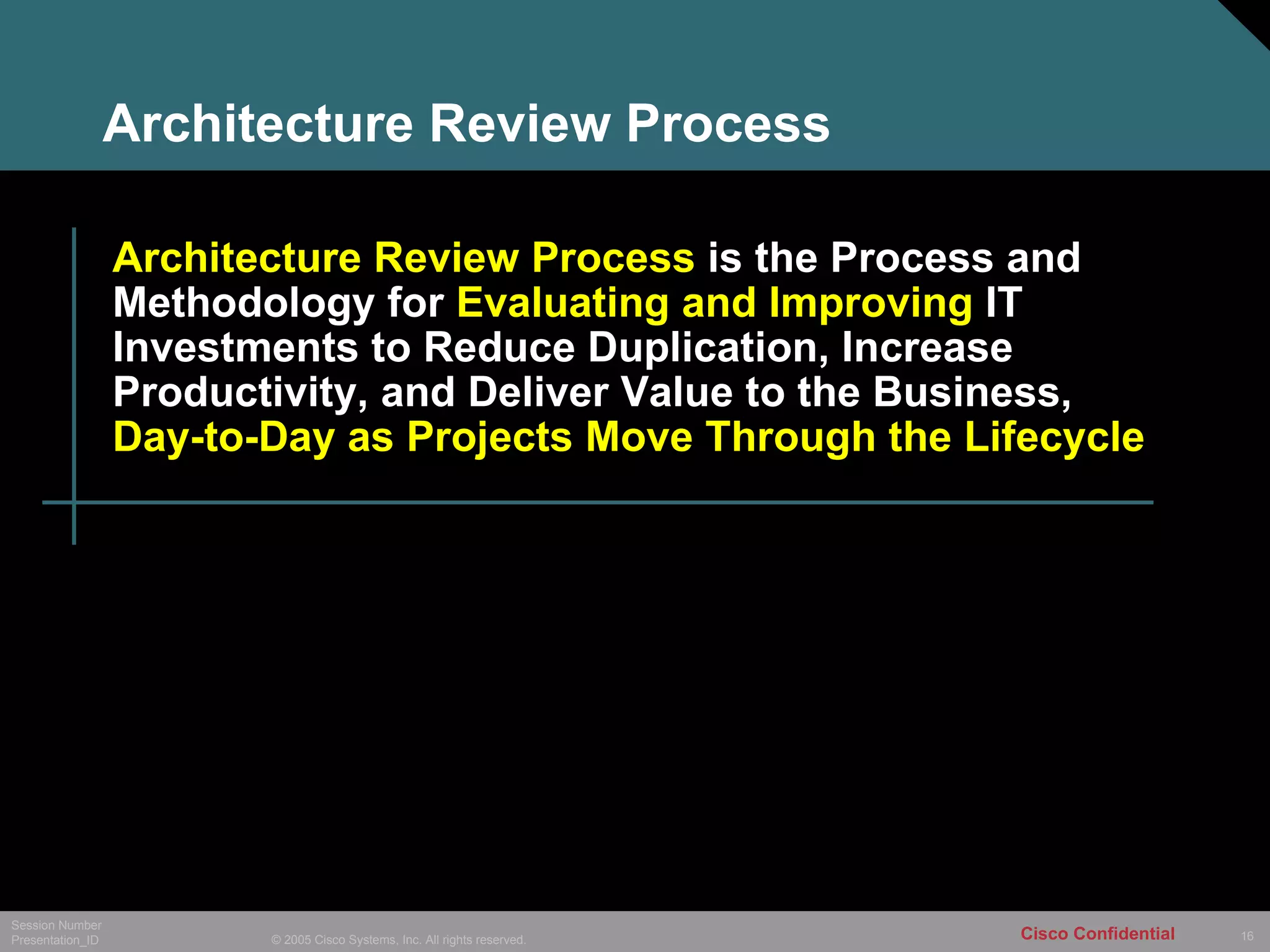
      • Architecture Review Process is the Process and Methodology for Evaluating and Improving IT Investments to Reduce Duplication, Increase Productivity, and Deliver Value to the Business, Day-to-Day as Projects Move Through the Lifecycle
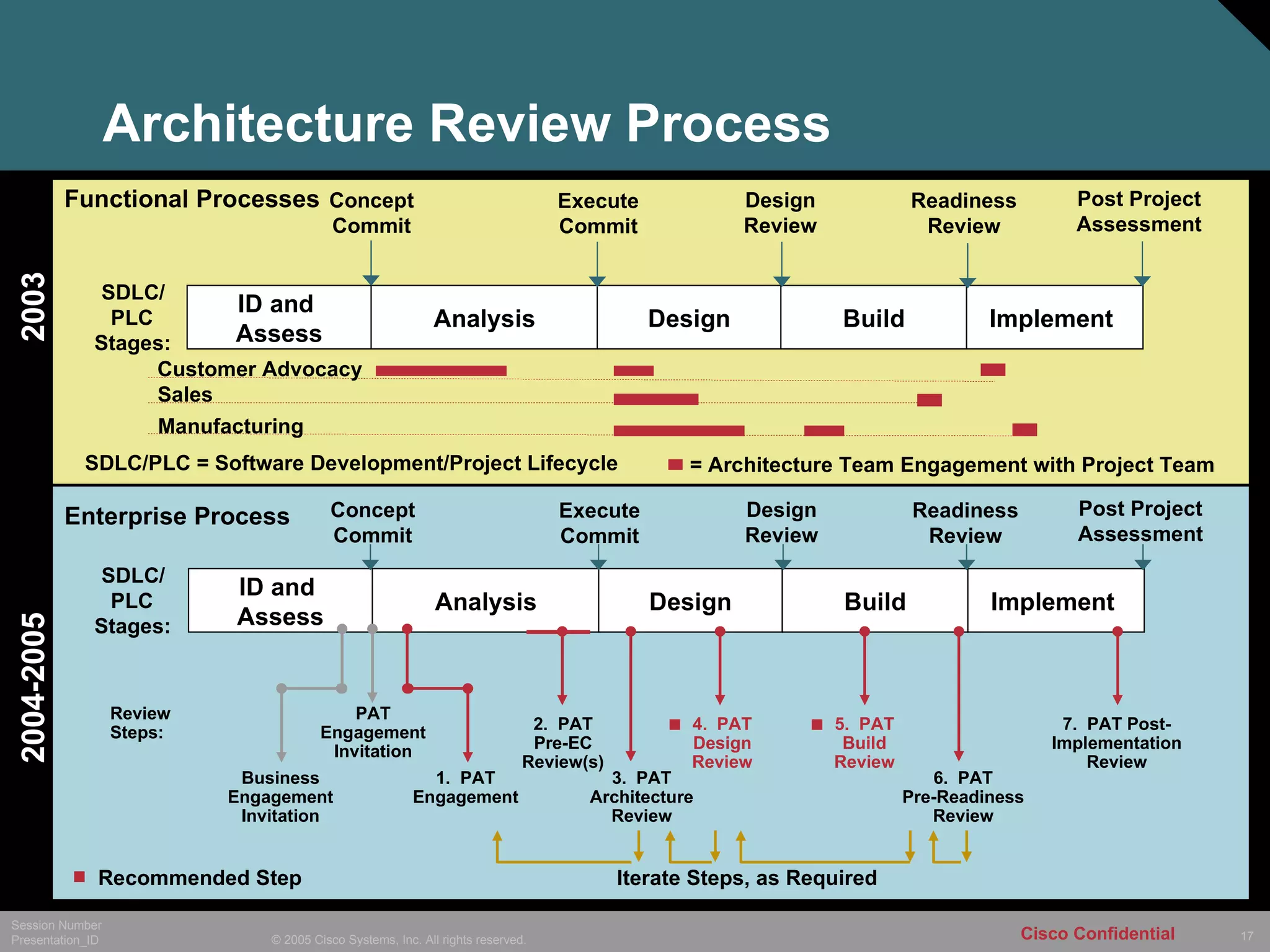
    17. Architecture Review Process ARP Website Functional Processes ID and Assess Analysis Design Build Implement SDLC/ PLC Stages: Concept Commit Execute Commit Design Review Readiness Review Post Project Assessment Customer Advocacy Sales Manufacturing = Architecture Team Engagement with Project Team 2003 2004-2005 SDLC/PLC = Software Development/Project Lifecycle ID and Assess Analysis Design Build Implement SDLC/ PLC Stages: Concept Commit Execute Commit Design Review Readiness Review Post Project Assessment Review Steps: Business Engagement Invitation PAT Engagement Invitation 1. PAT Engagement 2. PAT Pre-EC Review(s) 3. PAT Architecture Review 4. PAT Design Review 5. PAT Build Review 6. PAT Pre-Readiness Review 7. PAT Post- Implementation Review Iterate Steps, as Required Enterprise Process Recommended Step
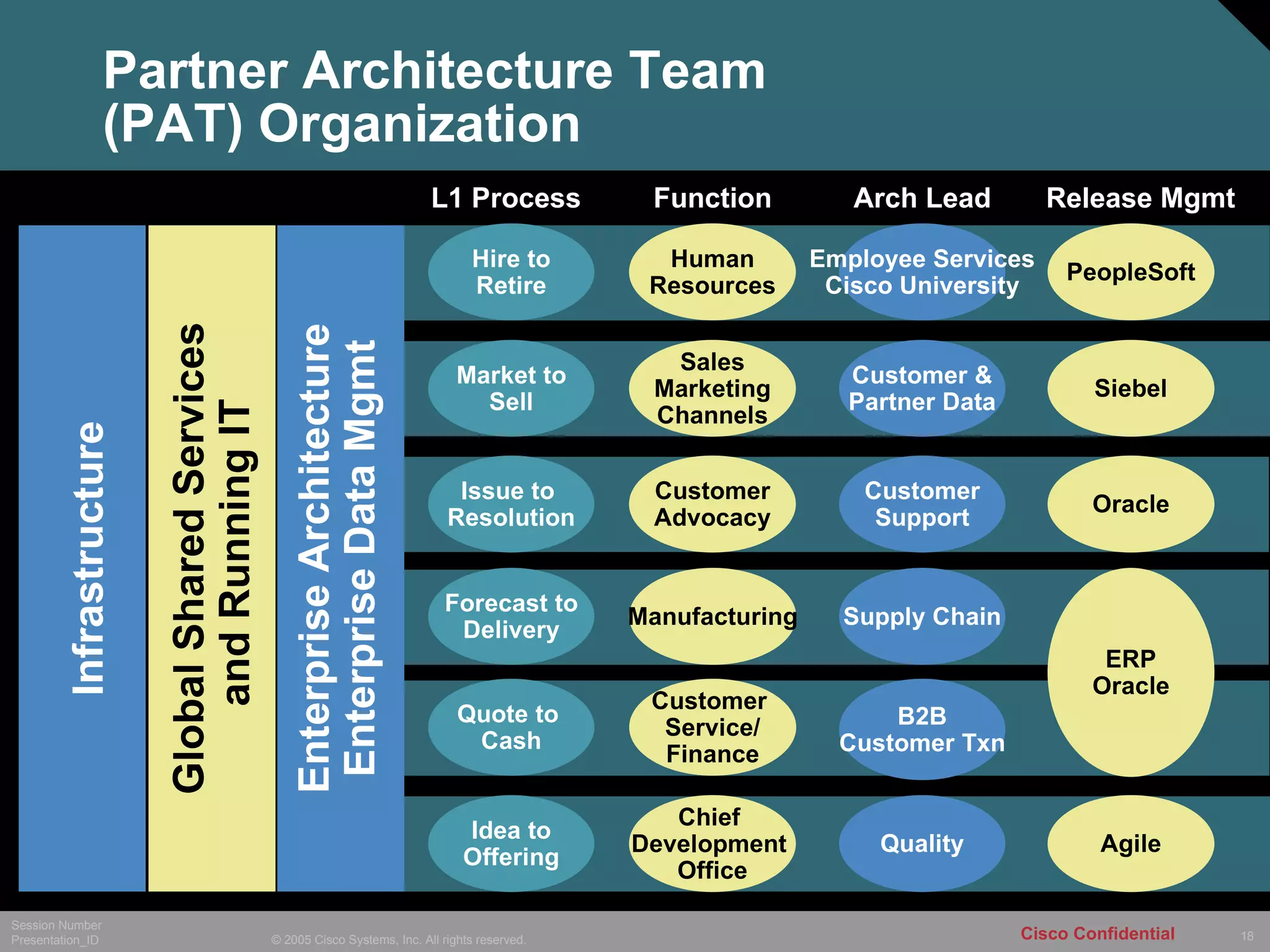
    18. Partner Architecture Team (PAT) Organization Infrastructure Global Shared Services and Running IT Enterprise Architecture Enterprise Data Mgmt Oracle Customer Advocacy Issue to Resolution Customer Support Manufacturing Forecast to Delivery Supply Chain Siebel Sales Marketing Channels Market to Sell Customer & Partner Data Customer Service/ Finance ERP Oracle Quote to Cash B2B Customer Txn Agile Chief Development Office Idea to Offering Quality PeopleSoft Human Resources Hire to Retire Employee Services Cisco University L1 Process Function Arch Lead Release Mgmt
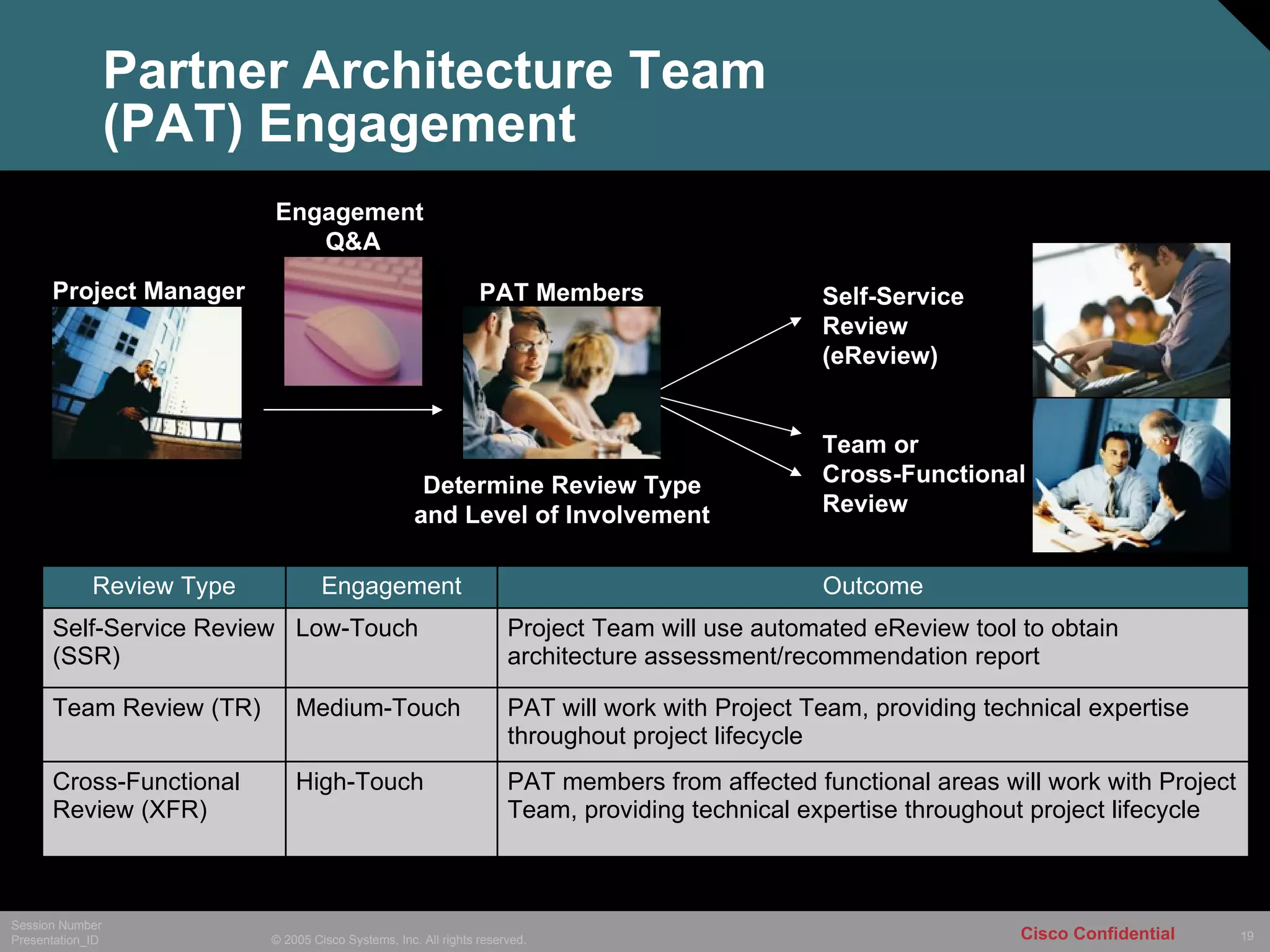
    19. Partner Architecture Team (PAT) Engagement Self-Service Review (eReview) Team or Cross-Functional Review PAT Members Engagement Q&A Determine Review Type and Level of Involvement Project Manager Outcome Engagement Review Type PAT will work with Project Team, providing technical expertise throughout project lifecycle Medium-Touch Team Review (TR) Project Team will use automated eReview tool to obtain architecture assessment/recommendation report Low-Touch Self-Service Review (SSR) PAT members from affected functional areas will work with Project Team, providing technical expertise throughout project lifecycle High-Touch Cross-Functional Review (XFR)
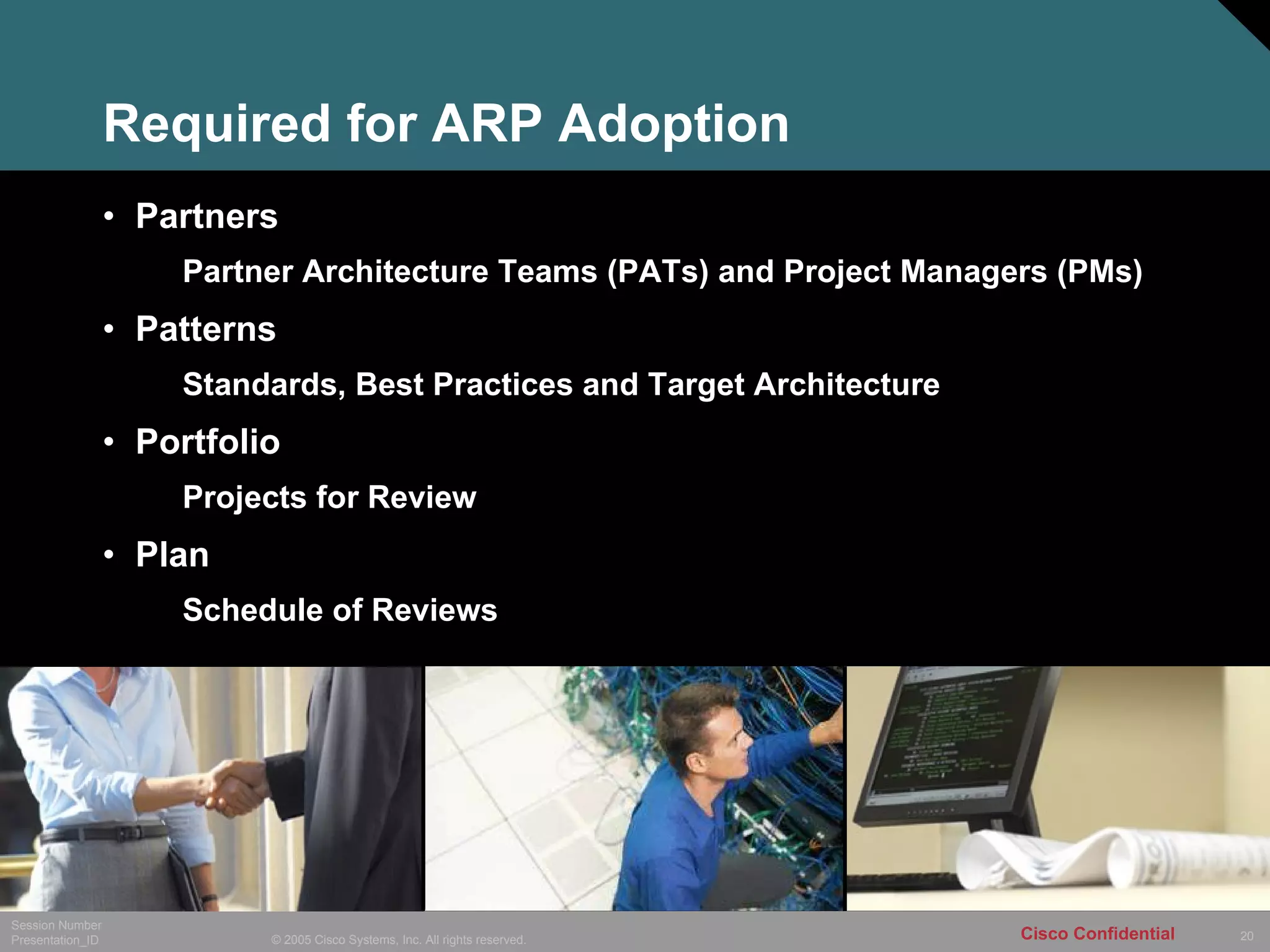
    20. Required for ARP Adoption
      • Partners
        • Partner Architecture Teams (PATs) and Project Managers (PMs)
      • Patterns
        • Standards, Best Practices and Target Architecture
      • Portfolio
        • Projects for Review
      • Plan
        • Schedule of Reviews
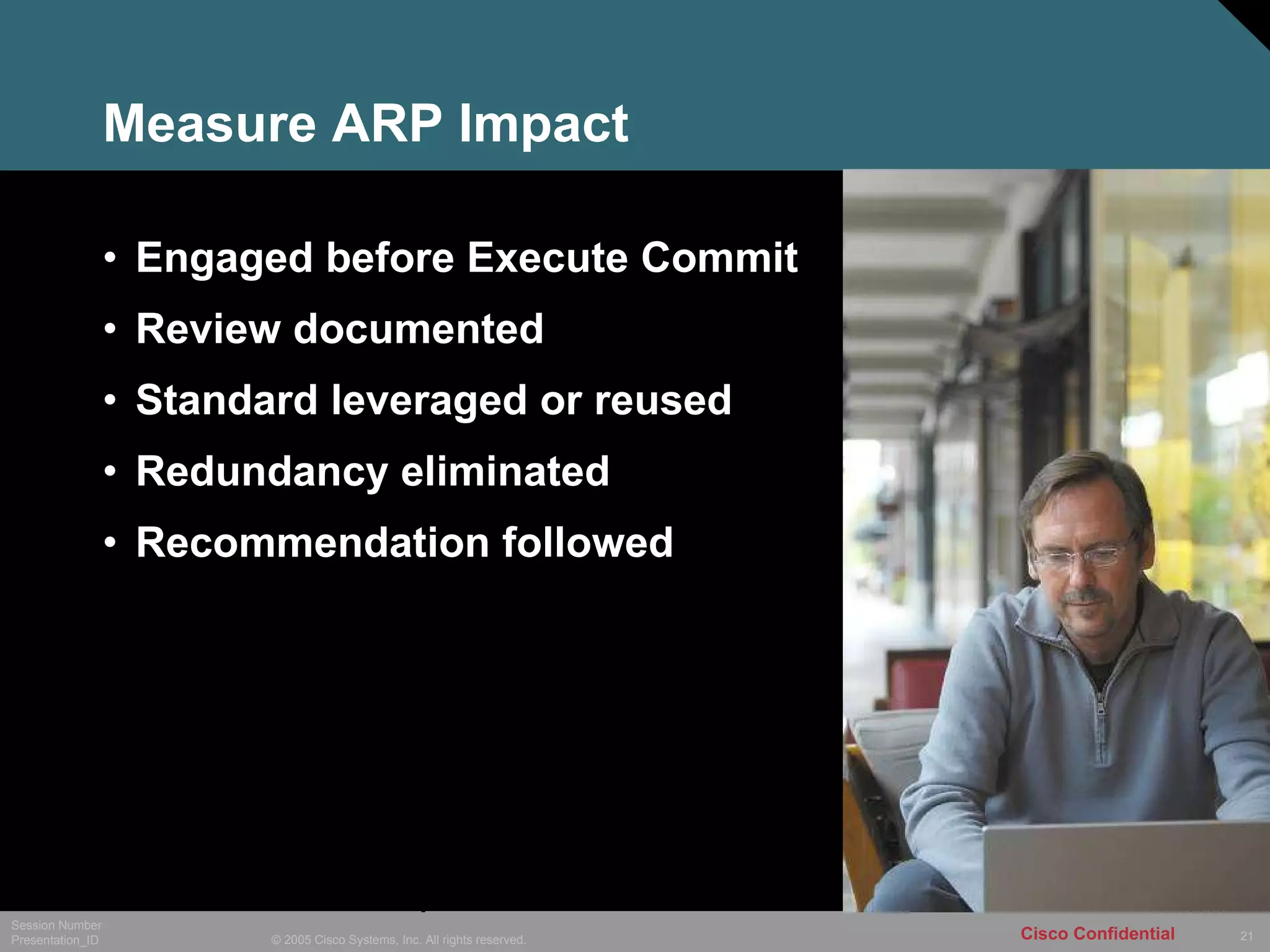
    21. Measure ARP Impact
      • Engaged before Execute Commit
      • Review documented
      • Standard leveraged or reused
      • Redundancy eliminated
      • Recommendation followed
    22. Adoption Challenges
      • Resource commitment and early engagement
      • Review documentation quality
      • Constant evolution of technology standards
      • Support to mature process and measure impact
    23. Architecture Review Process Improvement
    24. Problem Statement
      • Redundant engagements/questions take time
      • Answers are not readily available for shared access
      • Architecture decisions are not well-documented
      • Engagements often occur too late in PLC for effect
      • This problem impacts PMs, PATs, EA and the Business
      PMs Answer Many Architecture-Related Questions to Obtain Resources and Pass Project Lifecycle (PLC) Gates
    25. EA Action Plan
      • Identify key ARP steps and improvement goals
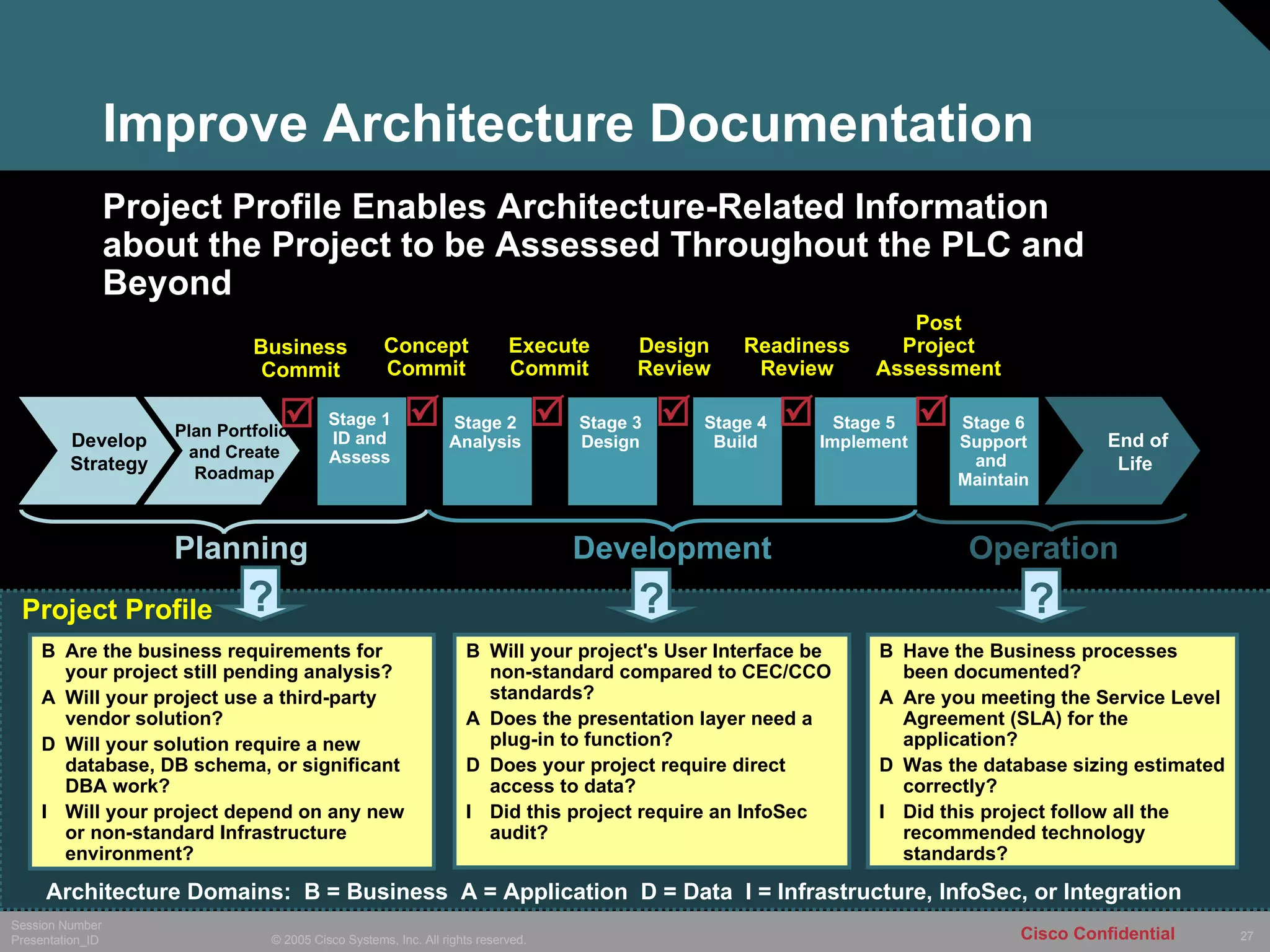
      • Improve architecture documentation
      • Provide value case for adoption
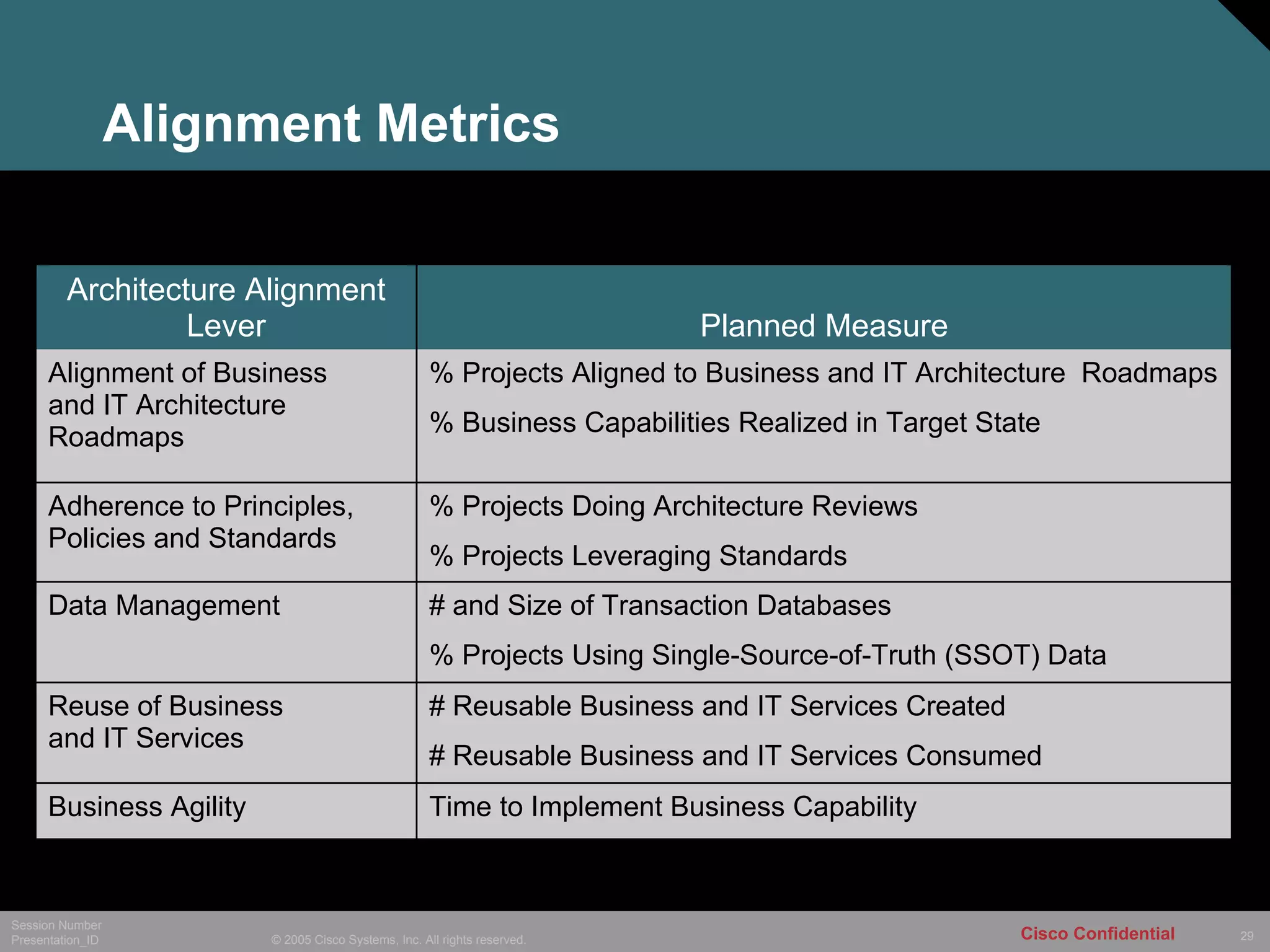
      • Identify and gather alignment metrics
      ARP Adoption
    26. Key ARP Steps and Improvement Goals
      • Planning
        • Align engagement activities and engage early
        • Reduce touch points for the project team
      • Development
        • Record architecture history in a common format
        • Gather standards compliance metrics
      • Operation
        • Audit to confirm recommendations followed
        • Gather lessons learned to improve quality
    27. Improve Architecture Documentation B Are the business requirements for your project still pending analysis? A Will your project use a third-party vendor solution? D Will your solution require a new database, DB schema, or significant DBA work? I Will your project depend on any new or non-standard Infrastructure environment? Plan Portfolio and Create Roadmap Develop Strategy Planning Development End of Life Operation Project Profile ? ? ? B Will your project's User Interface be non-standard compared to CEC/CCO standards? A Does the presentation layer need a plug-in to function? D Does your project require direct access to data? I Did this project require an InfoSec audit? B Have the Business processes been documented? A Are you meeting the Service Level Agreement (SLA) for the application? D Was the database sizing estimated correctly? I Did this project follow all the recommended technology standards? Project Profile Enables Architecture-Related Information about the Project to be Assessed Throughout the PLC and Beyond Stage 1 ID and Assess Stage 2 Analysis Stage 3 Design Stage 4 Build Stage 5 Implement Stage 6 Support and Maintain Concept Commit Execute Commit Design Review Readiness Review Post Project Assessment      Architecture Domains: B = Business A = Application D = Data I = Infrastructure, InfoSec, or Integration Business Commit 
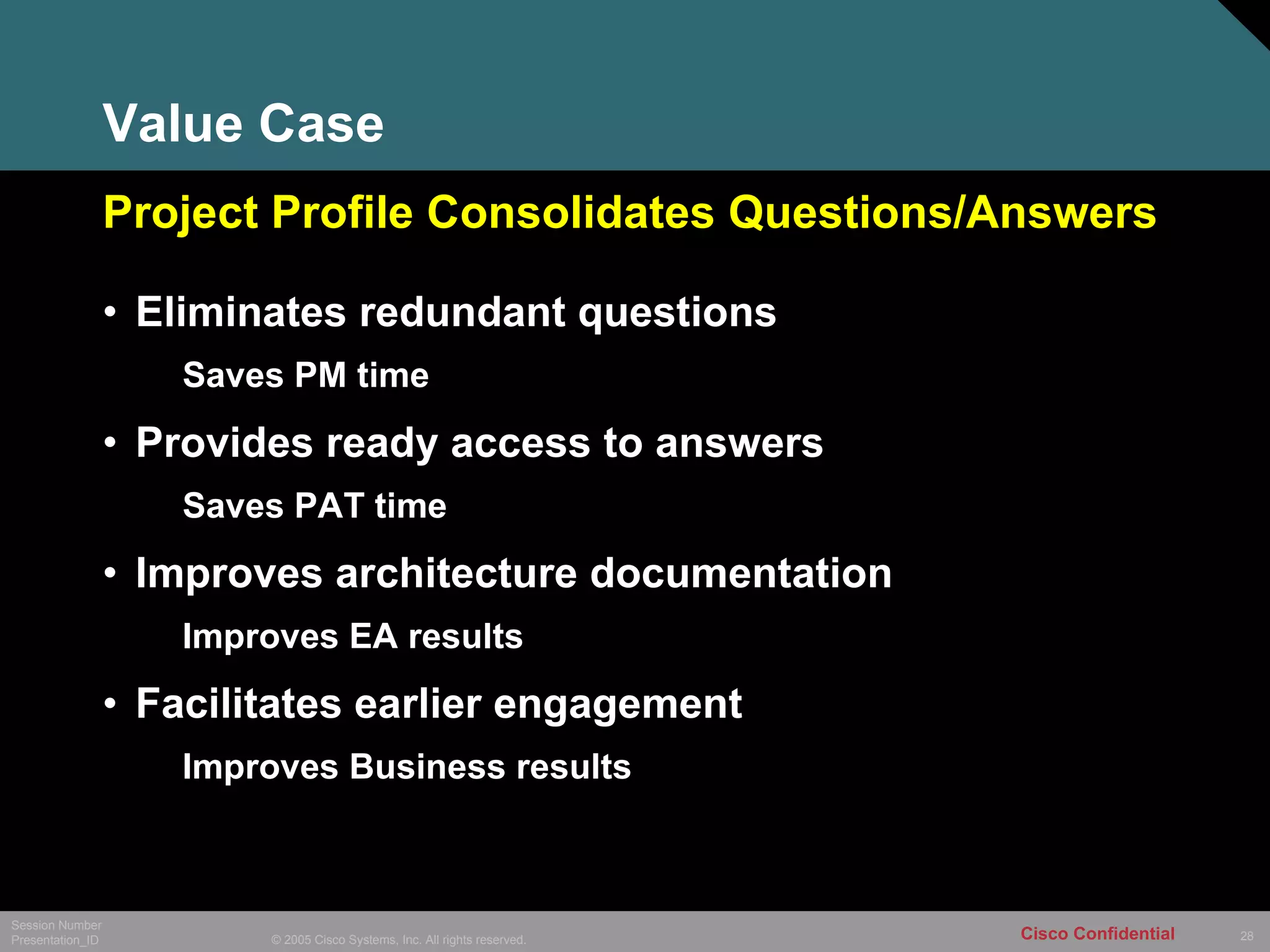
    28. Value Case
      • Eliminates redundant questions
        • Saves PM time
      • Provides ready access to answers
        • Saves PAT time
      • Improves architecture documentation
        • Improves EA results
      • Facilitates earlier engagement
        • Improves Business results
      Project Profile Consolidates Questions/Answers
    29. Alignment Metrics # and Size of Transaction Databases % Projects Using Single-Source-of-Truth (SSOT) Data Data Management # Reusable Business and IT Services Created # Reusable Business and IT Services Consumed Reuse of Business and IT Services % Projects Doing Architecture Reviews % Projects Leveraging Standards Adherence to Principles, Policies and Standards Time to Implement Business Capability Business Agility % Projects Aligned to Business and IT Architecture Roadmaps % Business Capabilities Realized in Target State Alignment of Business and IT Architecture Roadmaps Planned Measure Architecture Alignment Lever
    30. Improving the IT Portfolio
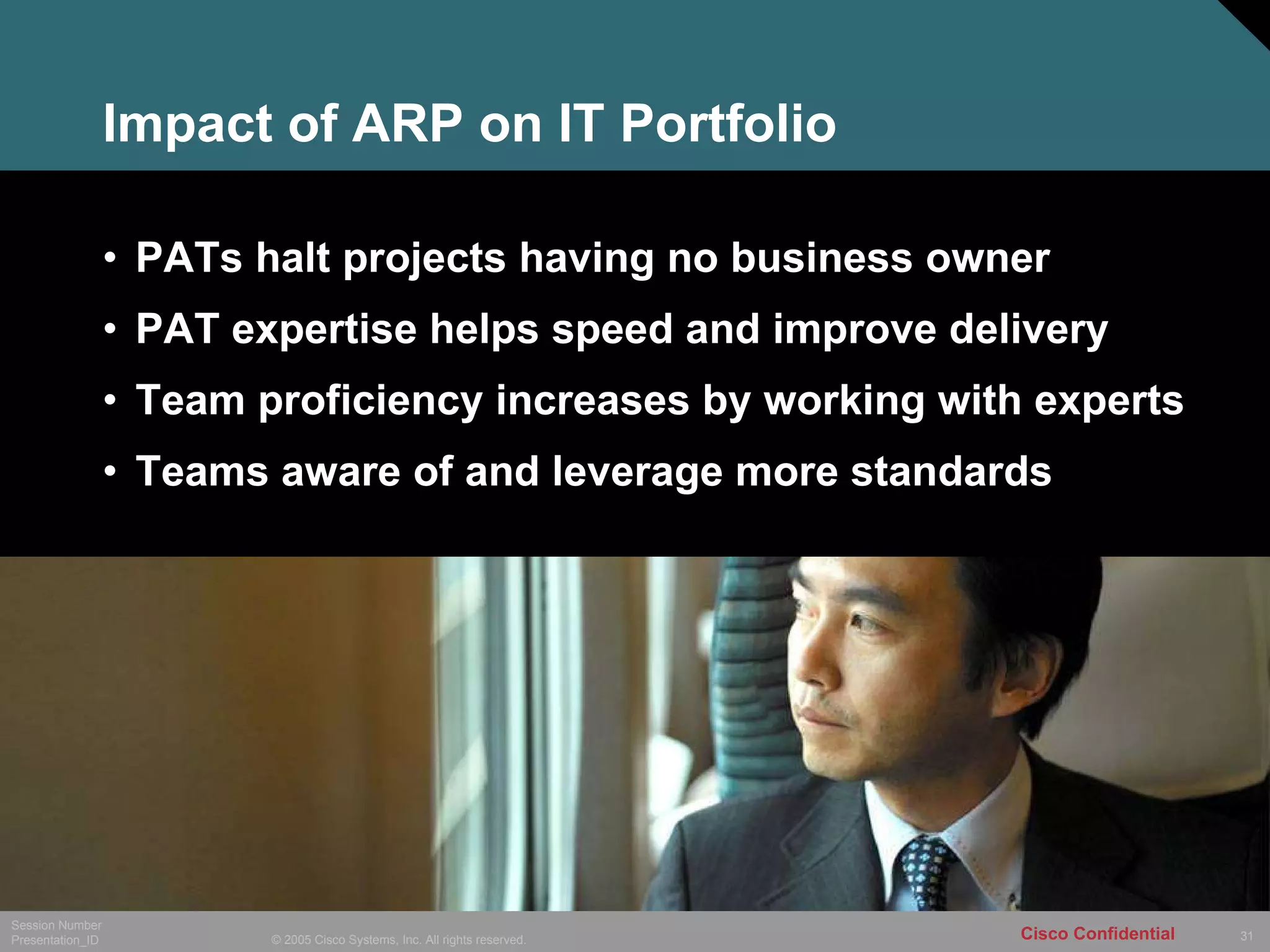
    31. Impact of ARP on IT Portfolio
      • PATs halt projects having no business owner
      • PAT expertise helps speed and improve delivery
      • Team proficiency increases by working with experts
      • Teams aware of and leverage more standards
    32. Next Steps
      • Establish PAT Community of Practice
      • Consolidate/publish Standards and Best Practices
      • Continue to drive ARP Adoption
      • Collect and report Architecture Alignment Metrics
      • Communicate and acknowledge good behavior
    33. Q and A
    34.  

    + Susan BouchardSusan Bouchard, 3 weeks ago

    custom

    168 views, 1 favs, 0 embeds more stats

    Enterprise Architectures Conference, Las Vegas, 26 more

    More info about this document

    © All Rights Reserved

    Go to text version

    • Total Views 168
      • 168 on SlideShare
      • 0 from embeds
    • Comments 0
    • Favorites 1
    • Downloads 14
    Most viewed embeds

    more

    All embeds

    less

    Flagged as inappropriate Flag as inappropriate
    Flag as inappropriate

    Select your reason for flagging this presentation as inappropriate. If needed, use the feedback form to let us know more details.

    Cancel
    File a copyright complaint
    Having problems? Go to our helpdesk?

    Categories