Surgical Instruments and common surgical procedures
Categories of InstrumentsInstrumentusageScissors and ScalpelsHemostats, Forceps,  and ClampsSpecula, Scopes, Probes, Retractors, and DilatorsCuttingGrasping and ClampingDilating and Probing
Cutting
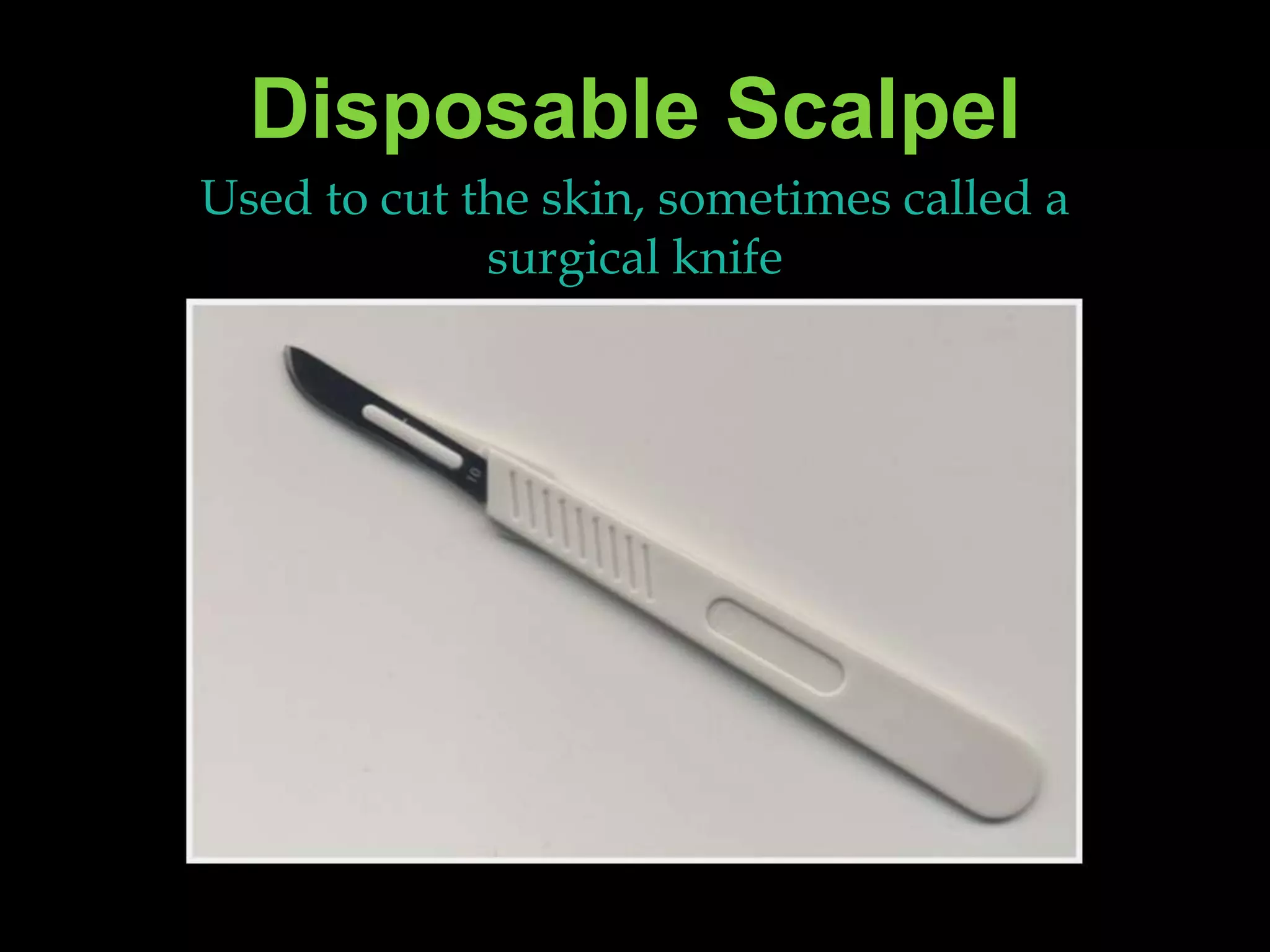
Disposable ScalpelUsed to cut the skin, sometimes called a surgical knife
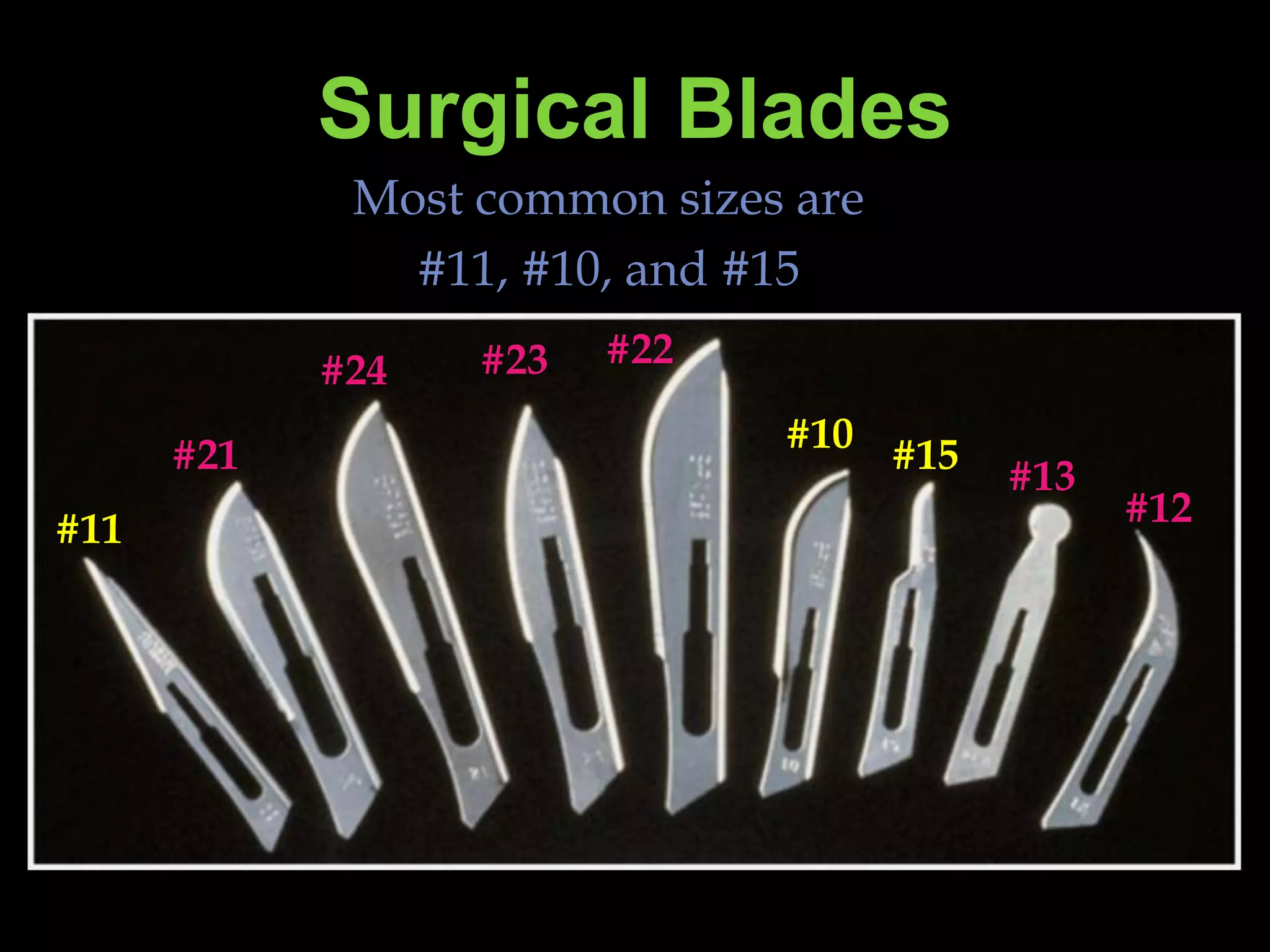
Surgical BladesMost common sizes are #11, #10, and #15#22#23#24#10#15#21#13#12#11
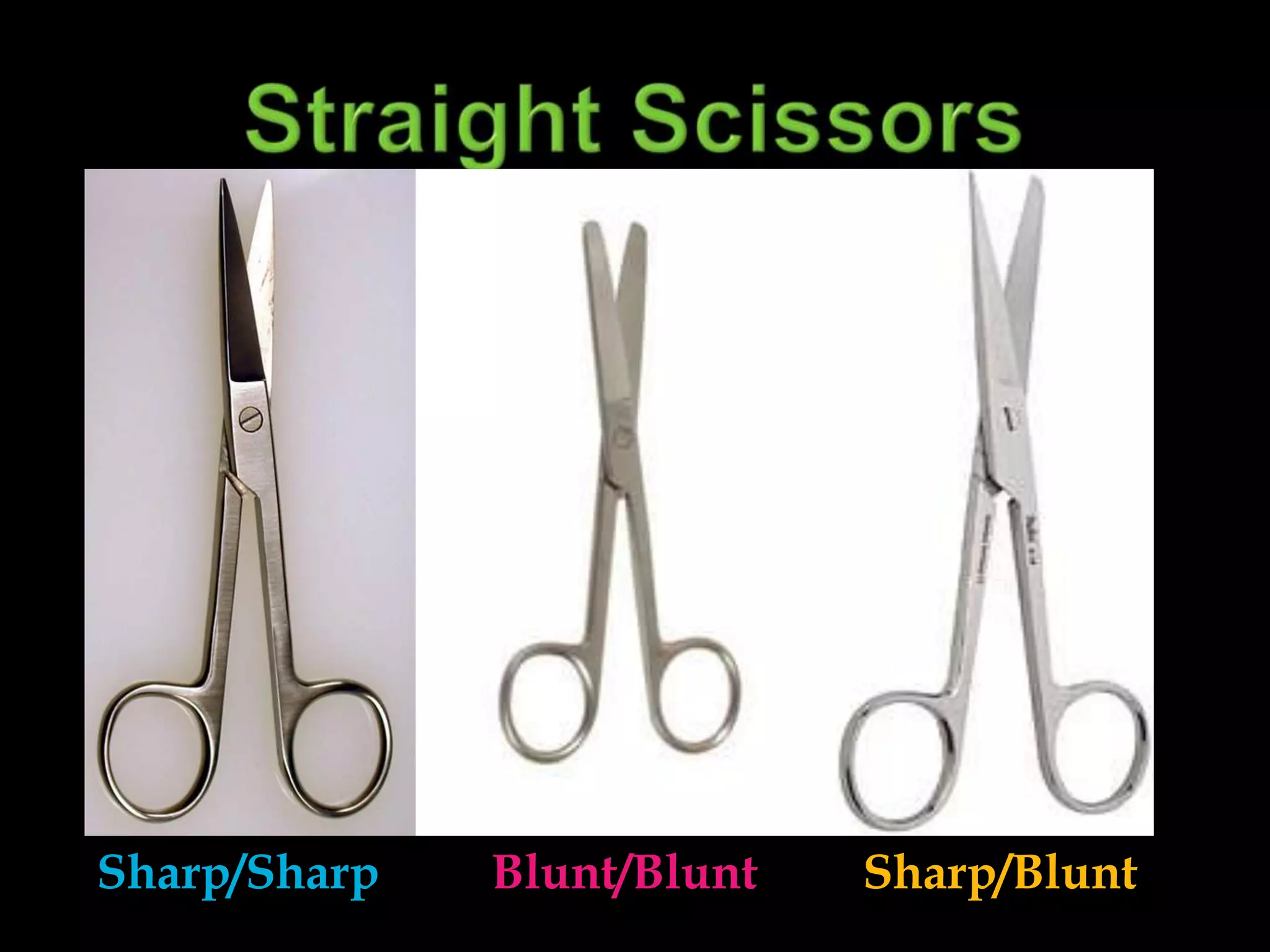
Straight ScissorsSharp/SharpBlunt/BluntSharp/Blunt
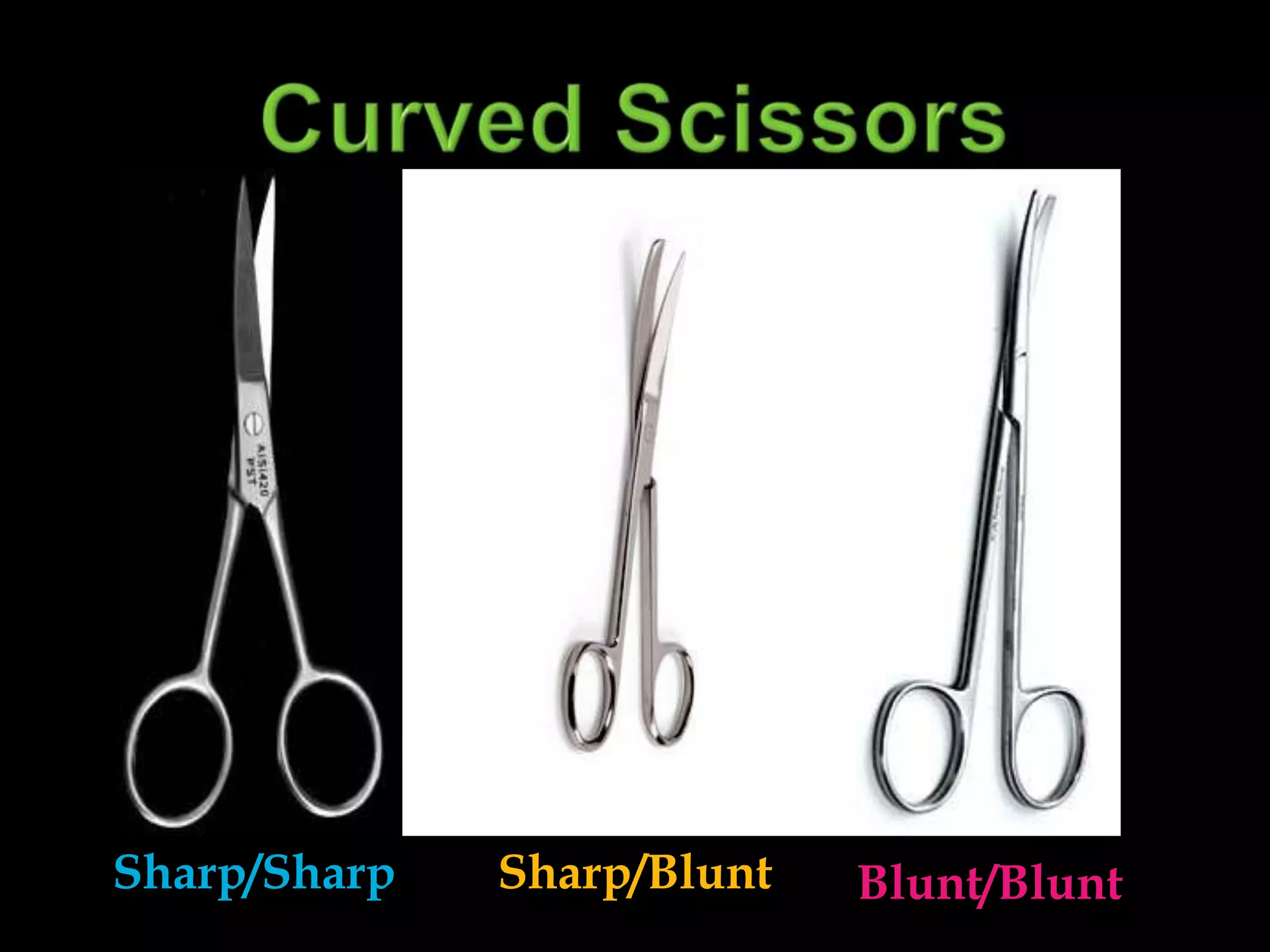
Curved ScissorsSharp/SharpSharp/BluntBlunt/Blunt
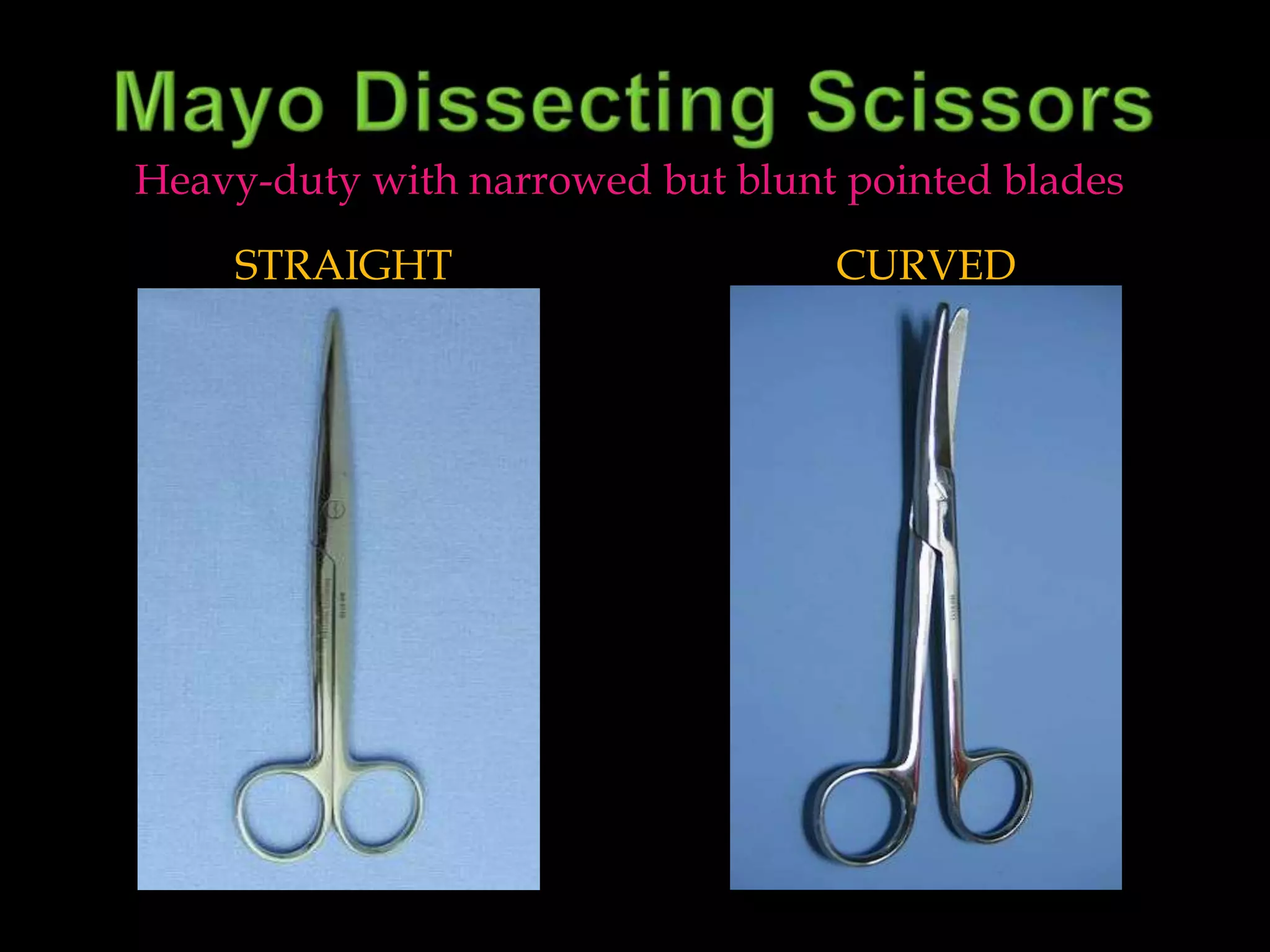
Mayo Dissecting ScissorsStraightCurvedHeavy-duty with narrowed but blunt pointed blades
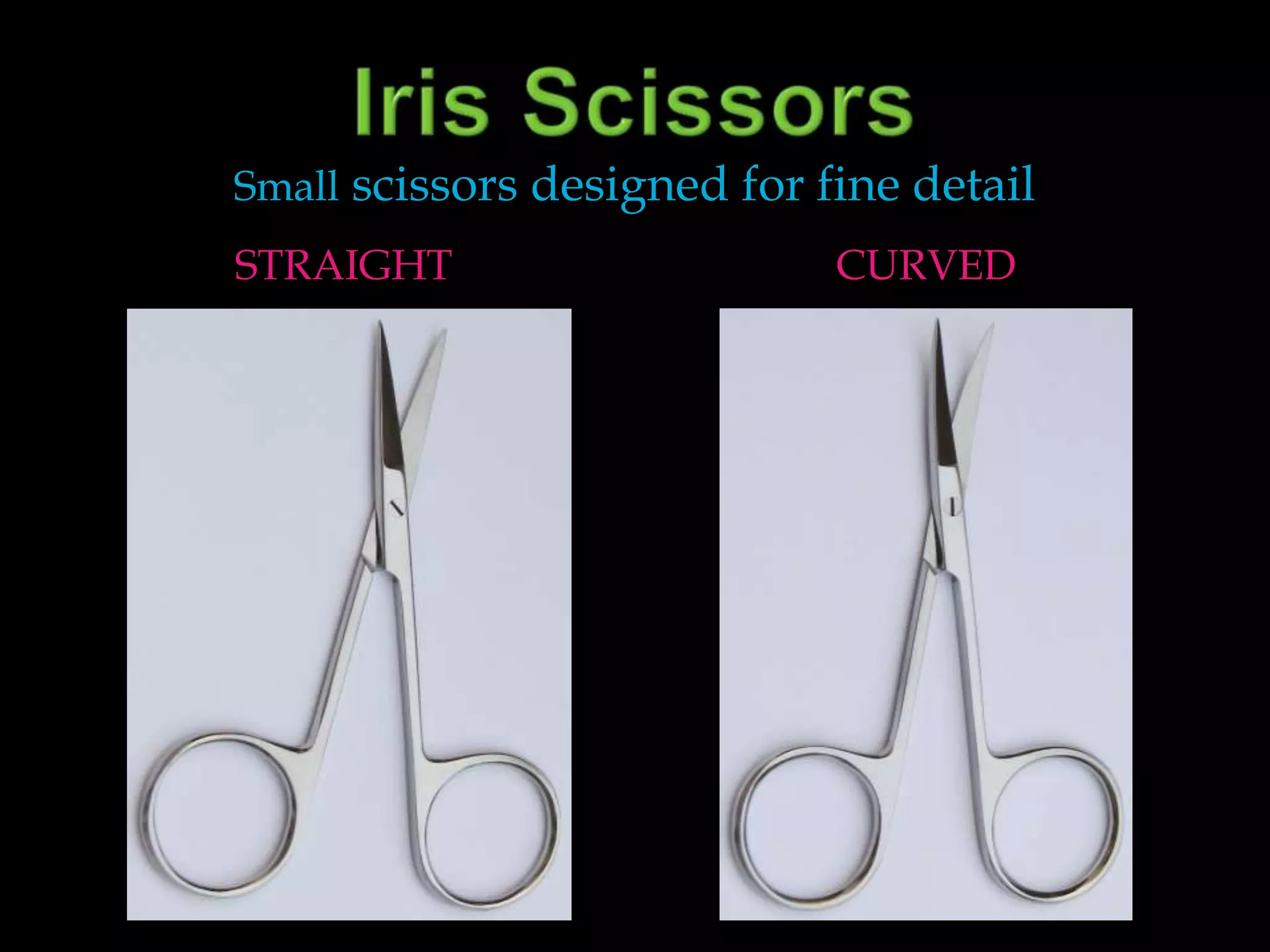
Iris ScissorsstraightcurvedSmall scissors designed for fine detail
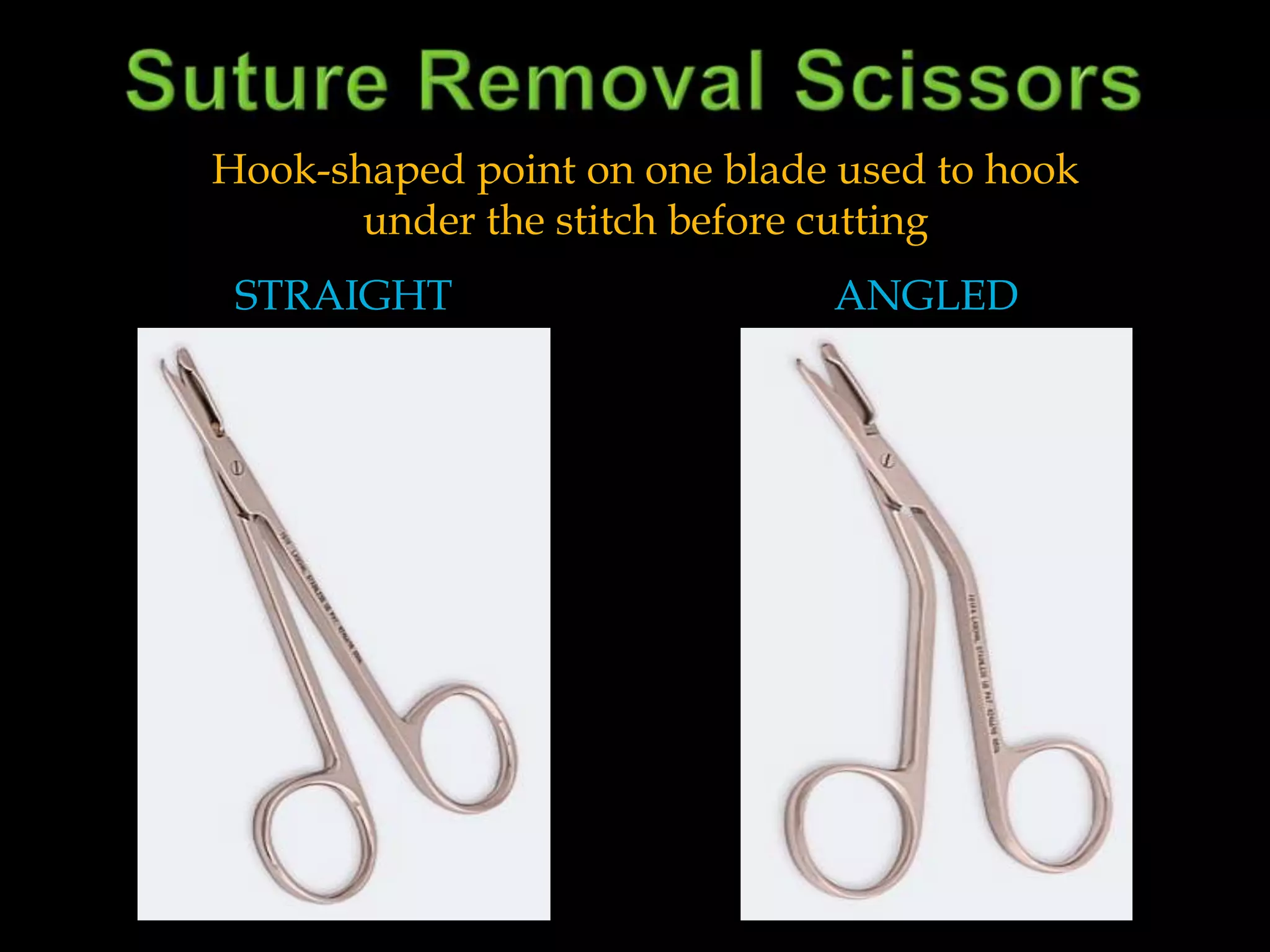
Suture Removal ScissorsHook-shaped point on one blade used to hook under the stitch before cutting Straightangled
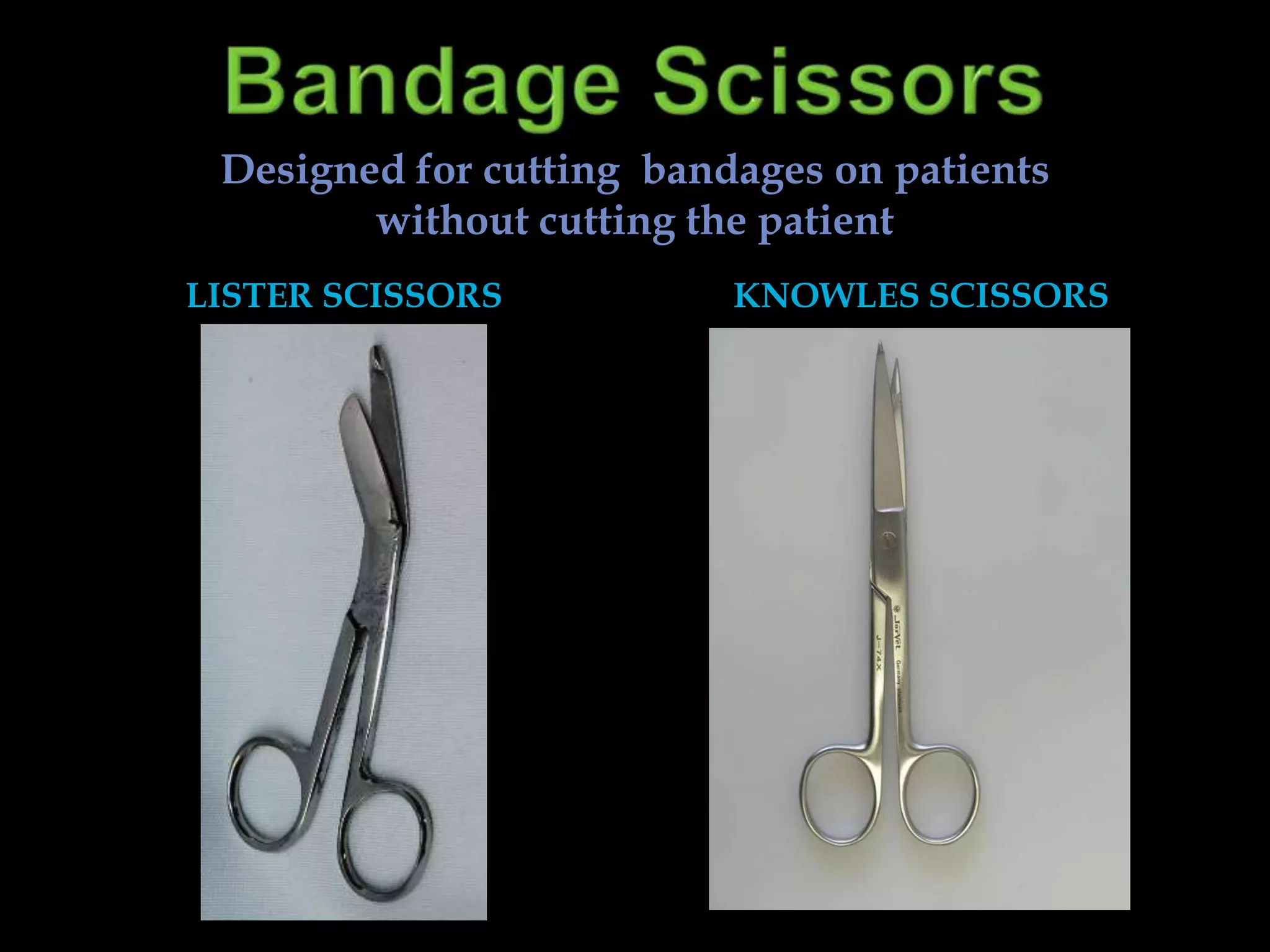
Bandage ScissorsDesigned for cutting bandages on patients without cutting the patientLister scissors Knowles scissors
GraspingandClamping
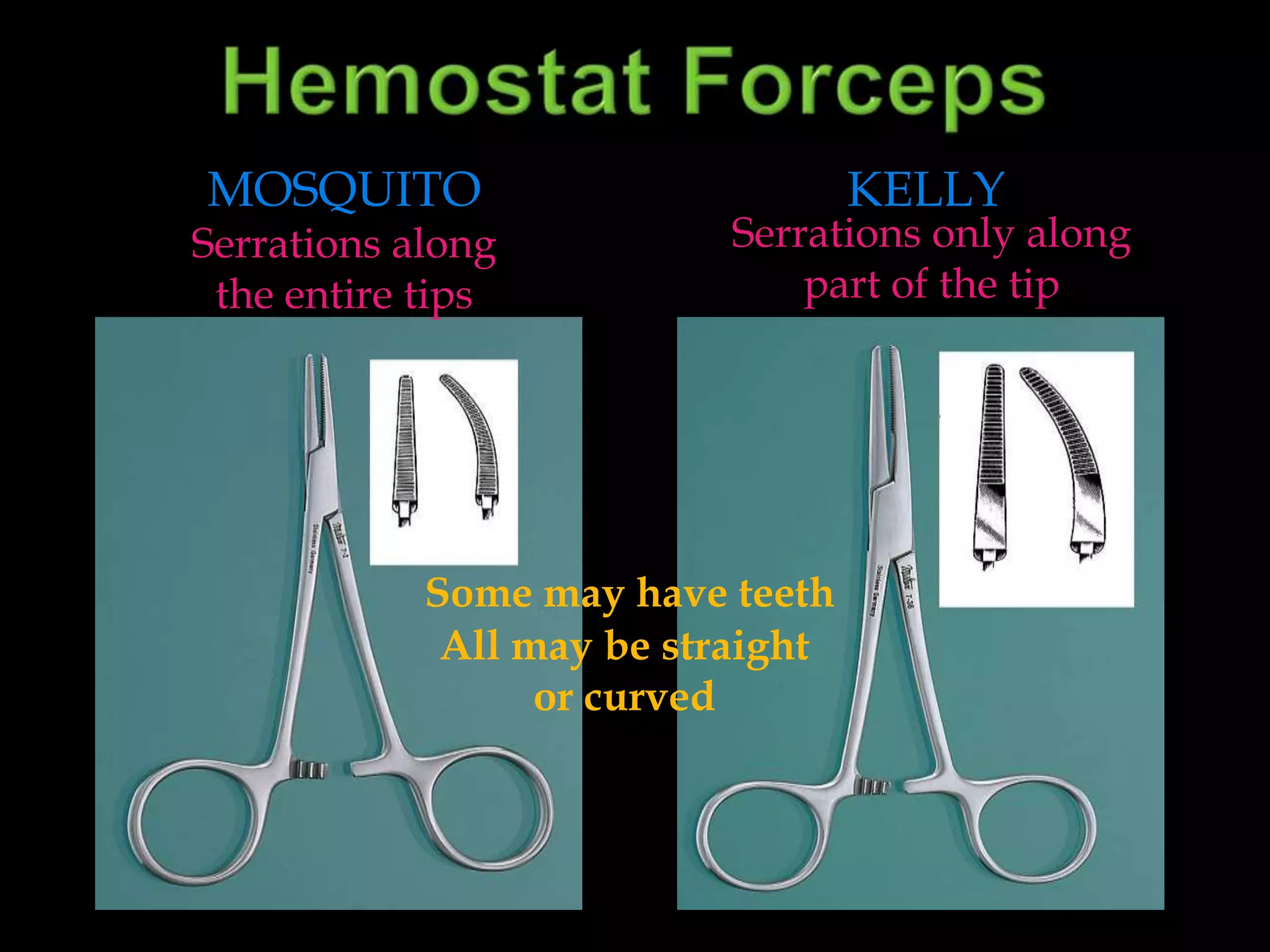
Hemostat ForcepsMosquitoKellySerrations only alongpart of the tipSerrations alongthe entire tips Some may have teethAll may be straight or curved
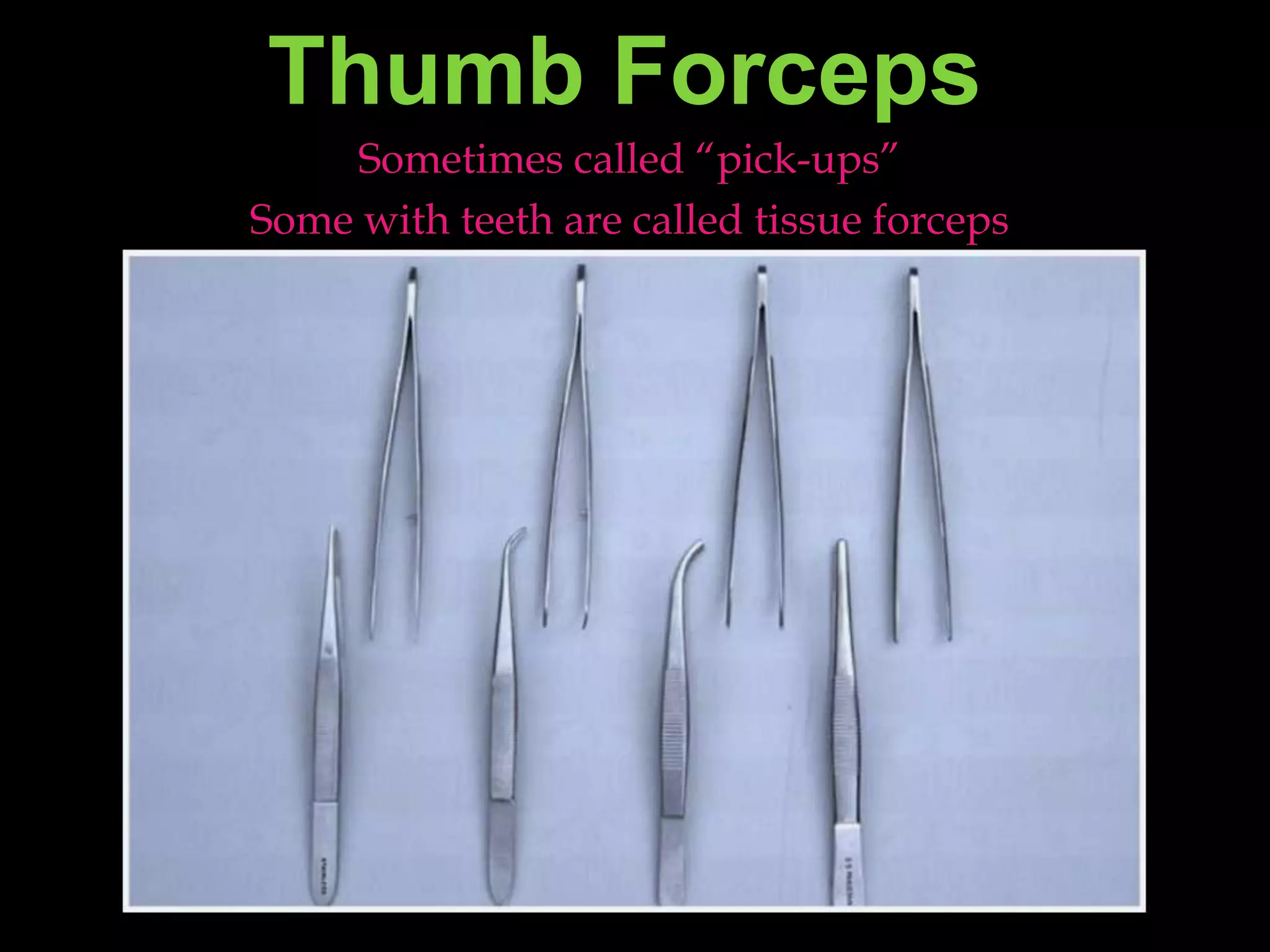
Thumb ForcepsSometimes called “pick-ups”Some with teeth are called tissue forceps
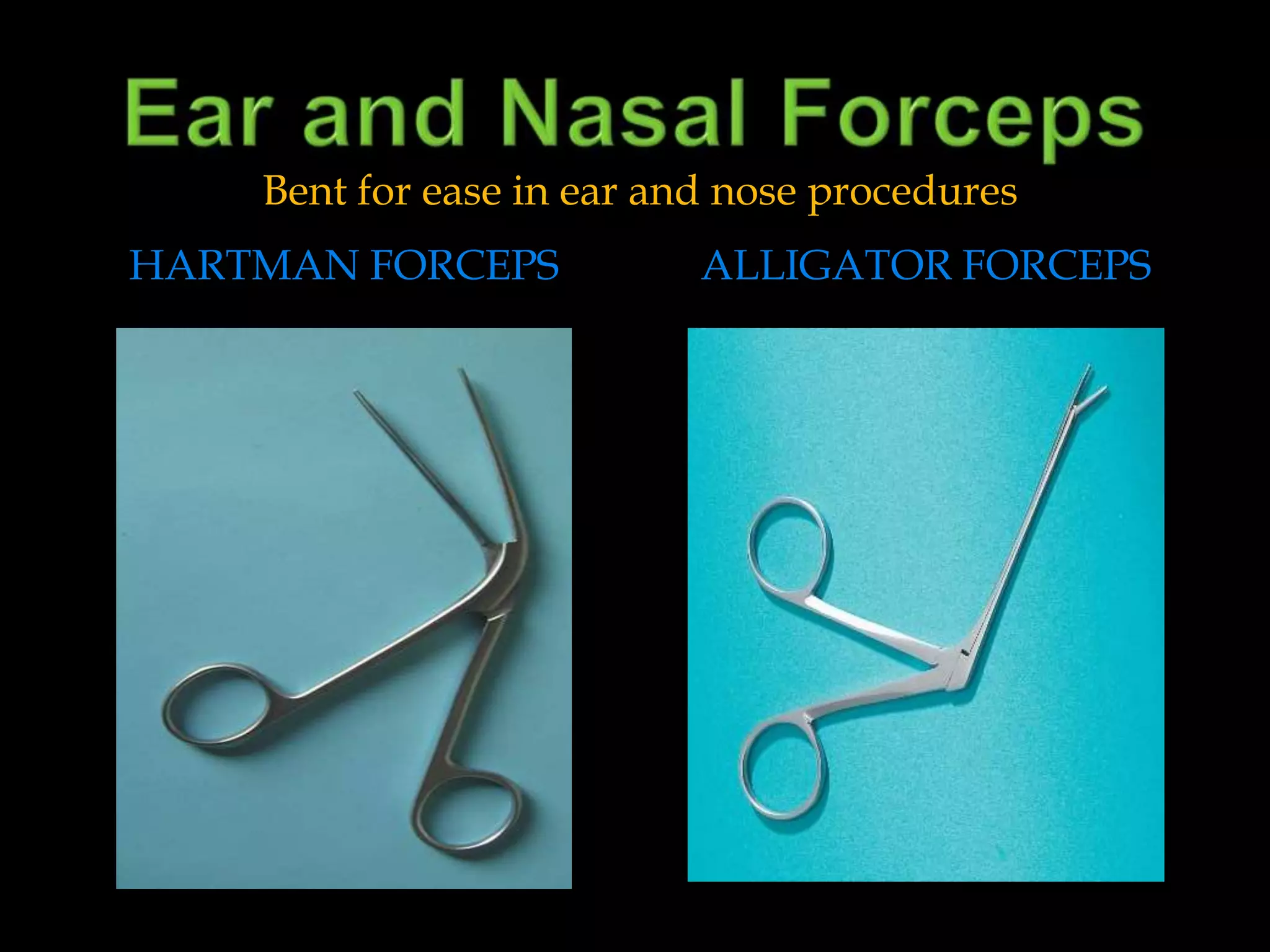
Ear and Nasal ForcepsHartman forcepsAlligator forcepsBent for ease in ear and nose procedures
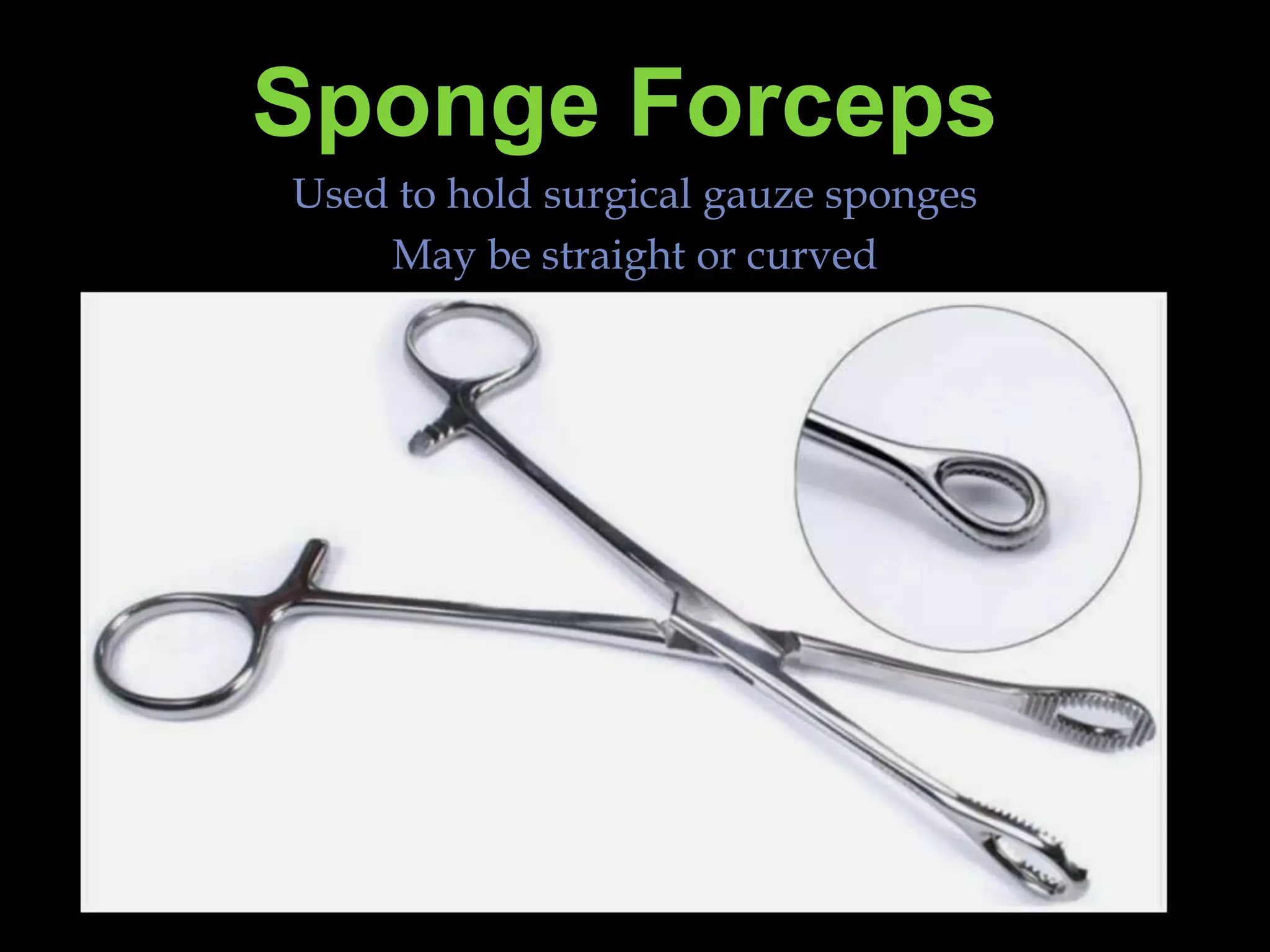
Sponge ForcepsUsed to hold surgical gauze spongesMay be straight or curved
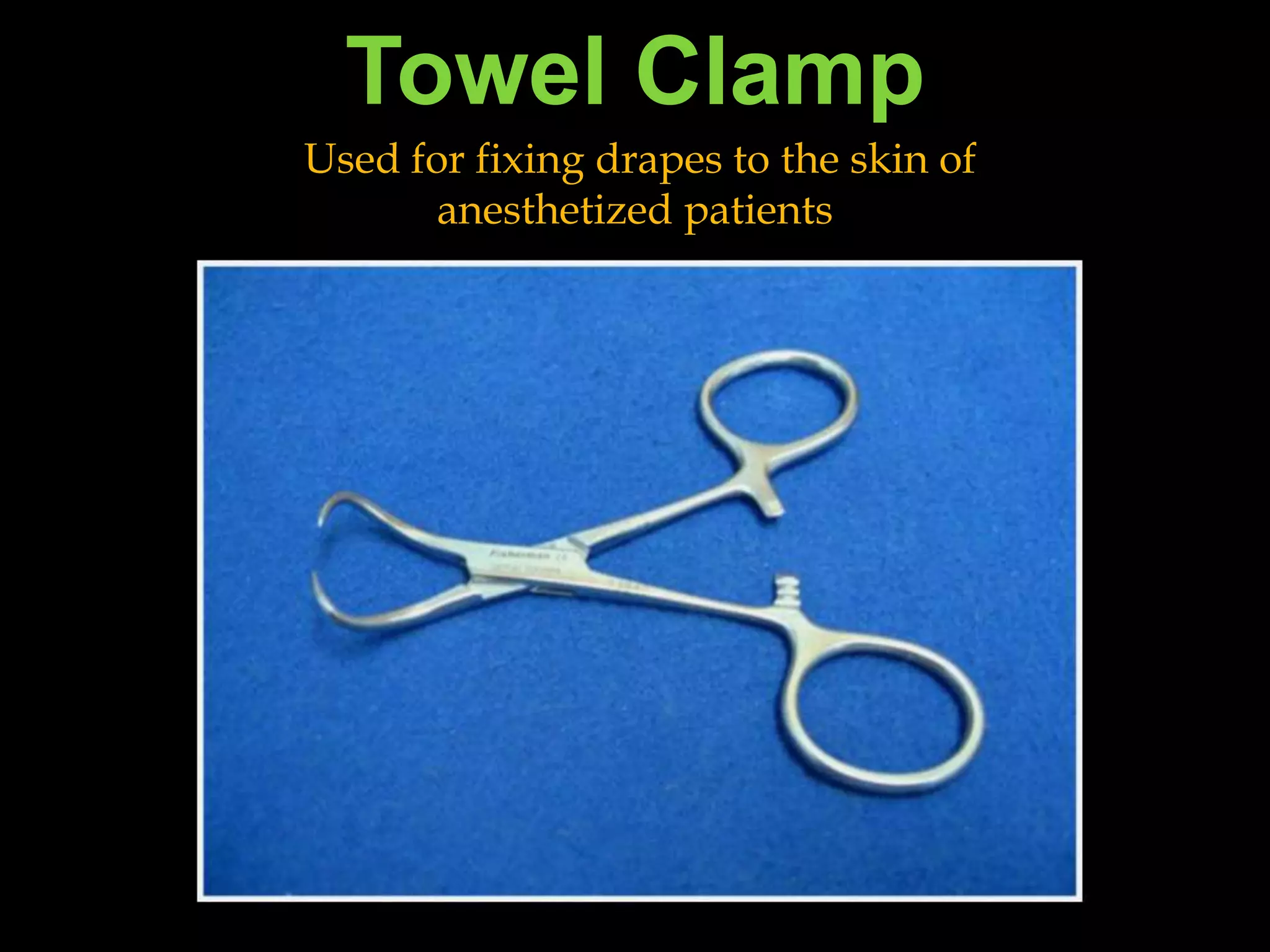
Towel ClampUsed for fixing drapes to the skin of anesthetized patients
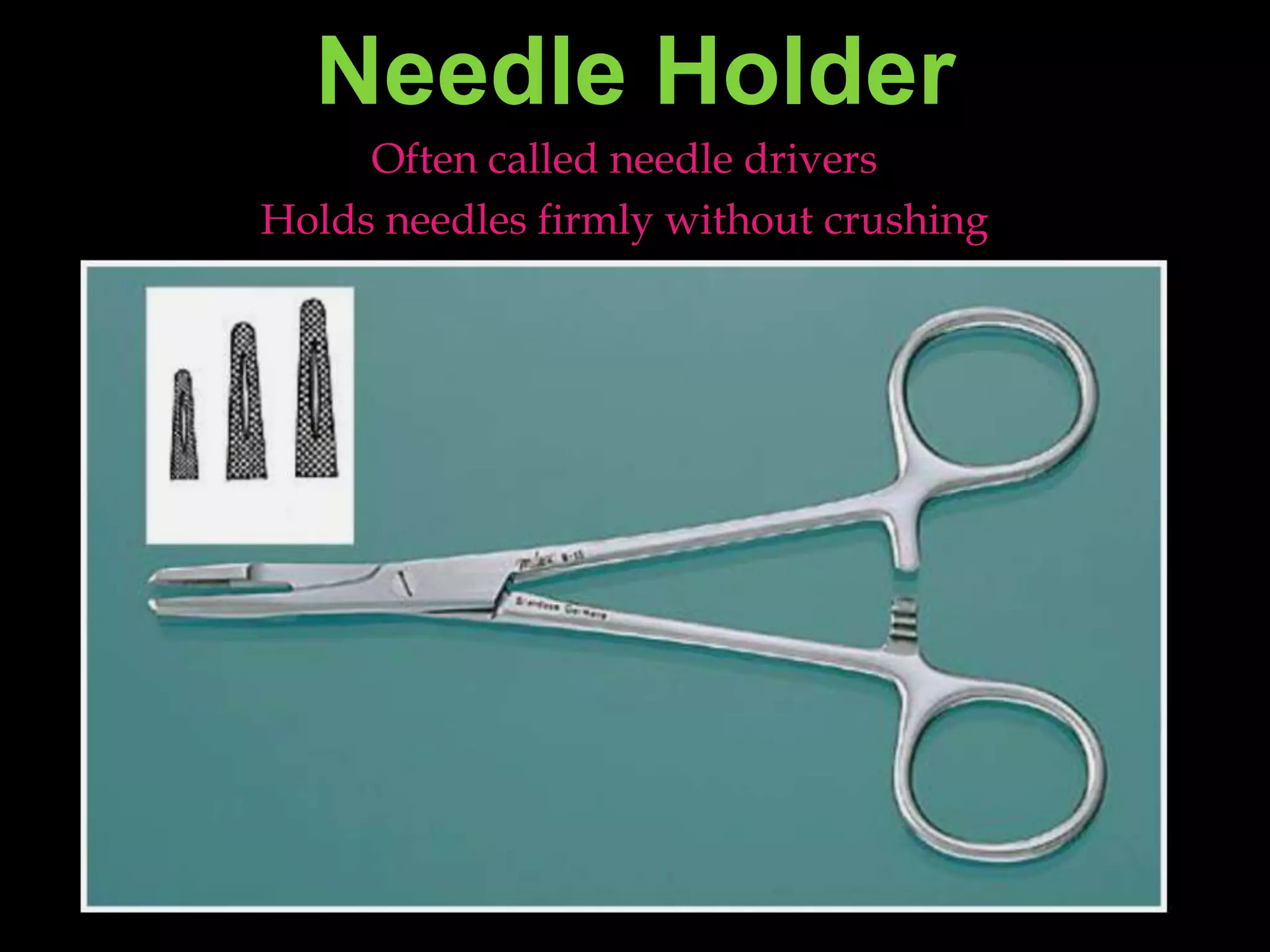
Needle HolderOften called needle driversHolds needles firmly without crushing
Dilatingandprobing
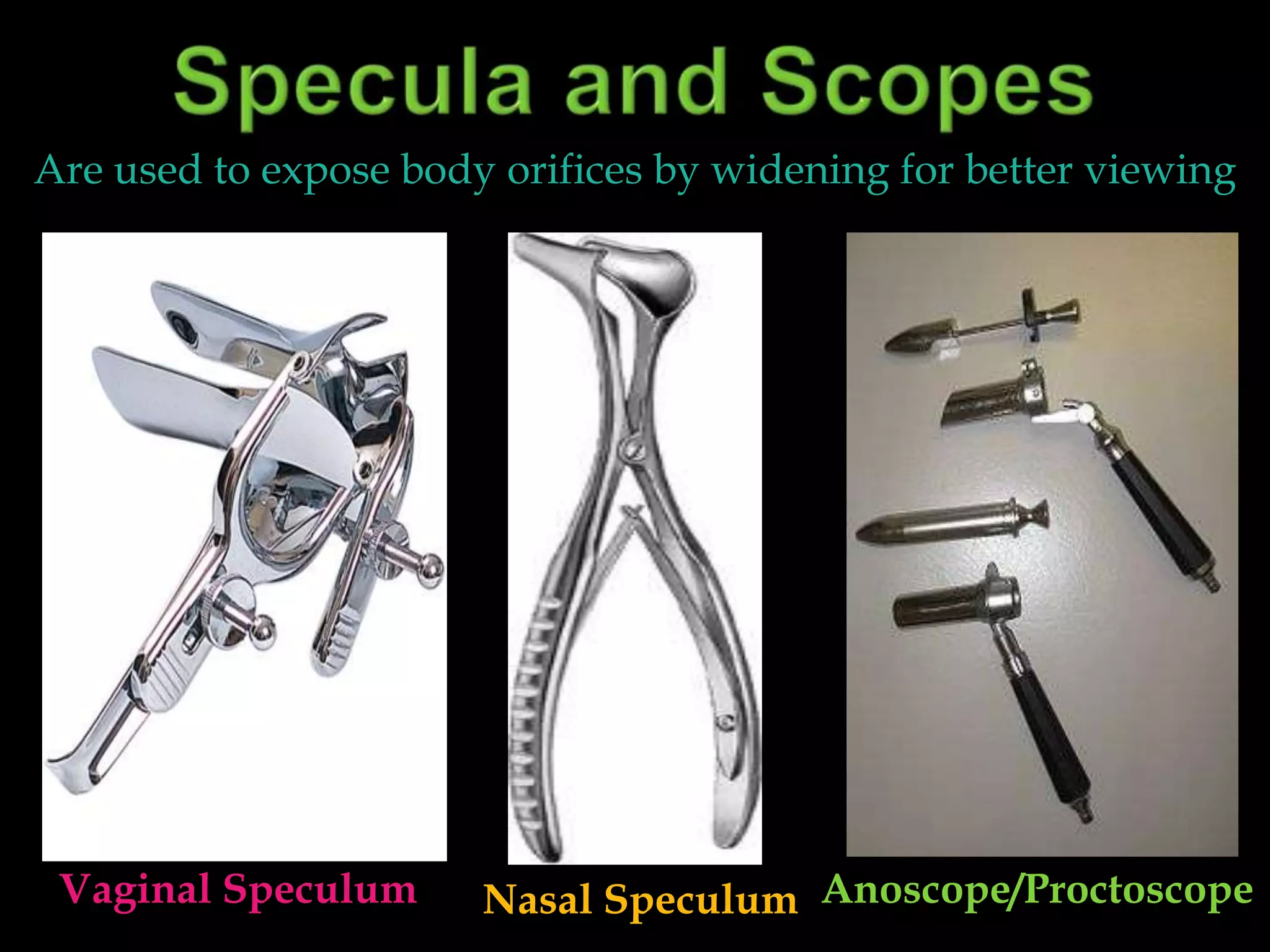
Specula and ScopesAre used to expose body orifices by widening for better viewingVaginal SpeculumAnoscope/ProctoscopeNasal Speculum
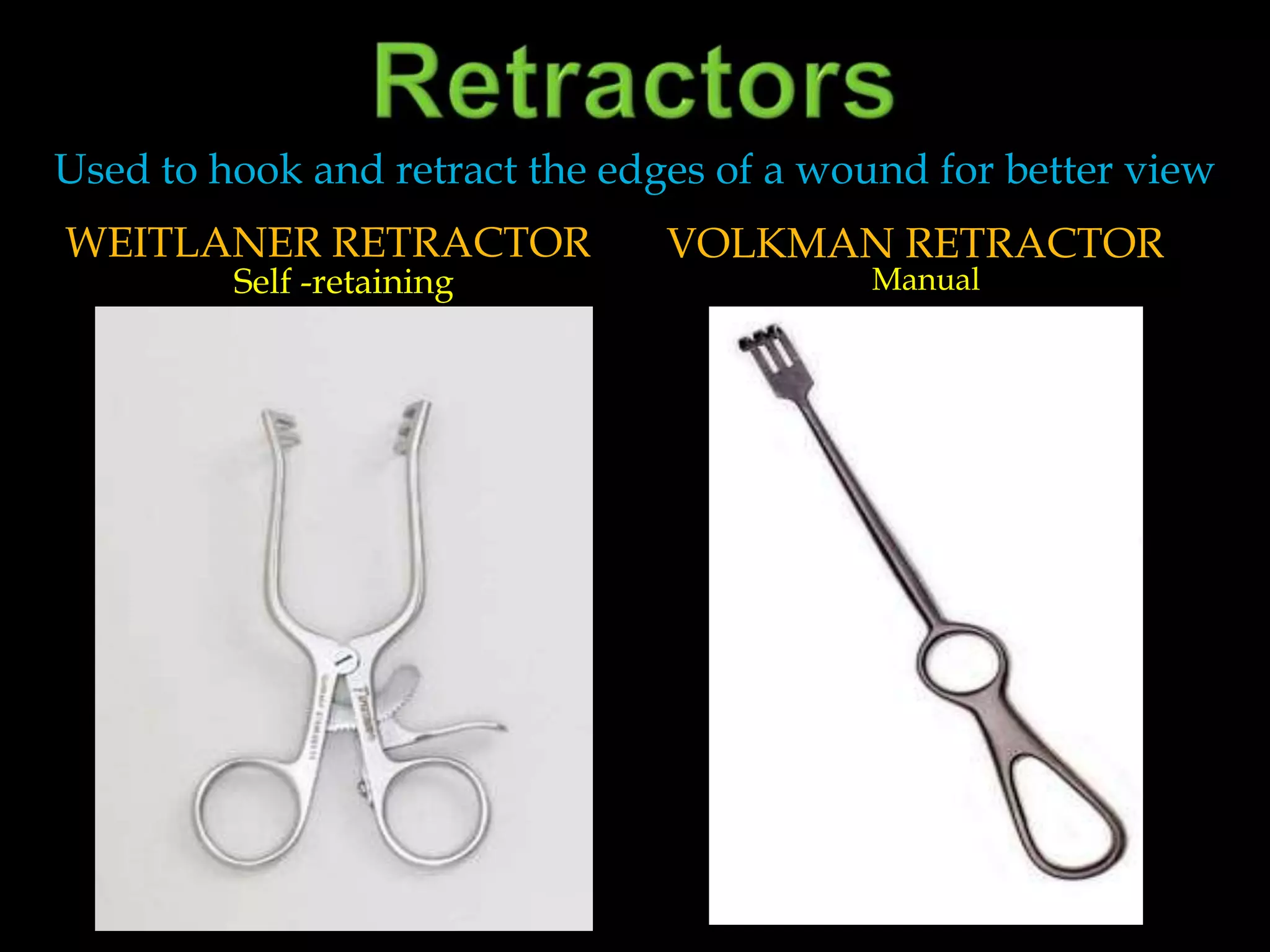
RetractorsUsed to hook and retract the edges of a wound for better viewWeitlaner retractorVolkman RetractorSelf -retainingManual
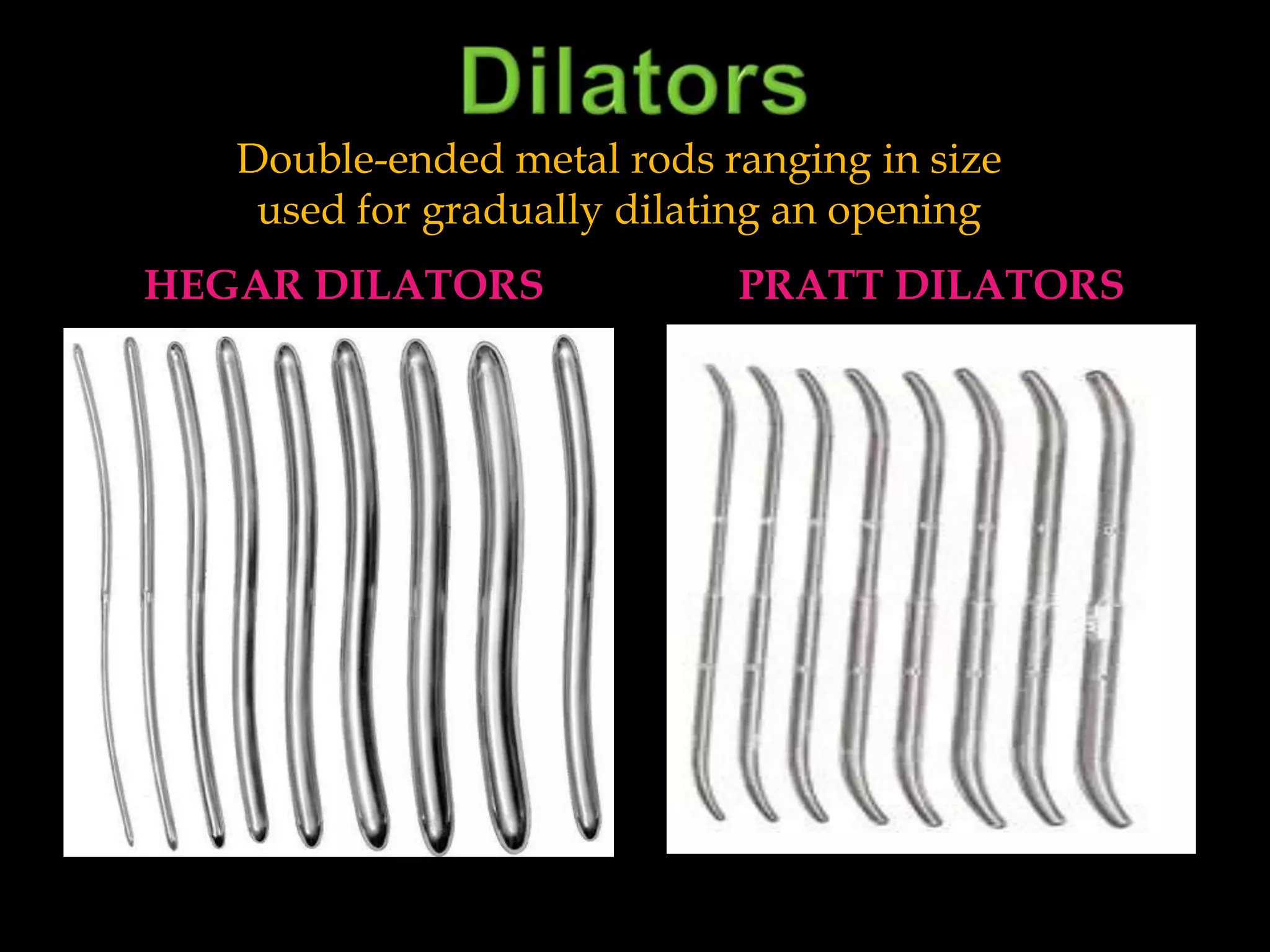
DilatorsDouble-ended metal rods ranging in sizeused for gradually dilating an openingHegar DilatorsPratt Dilators
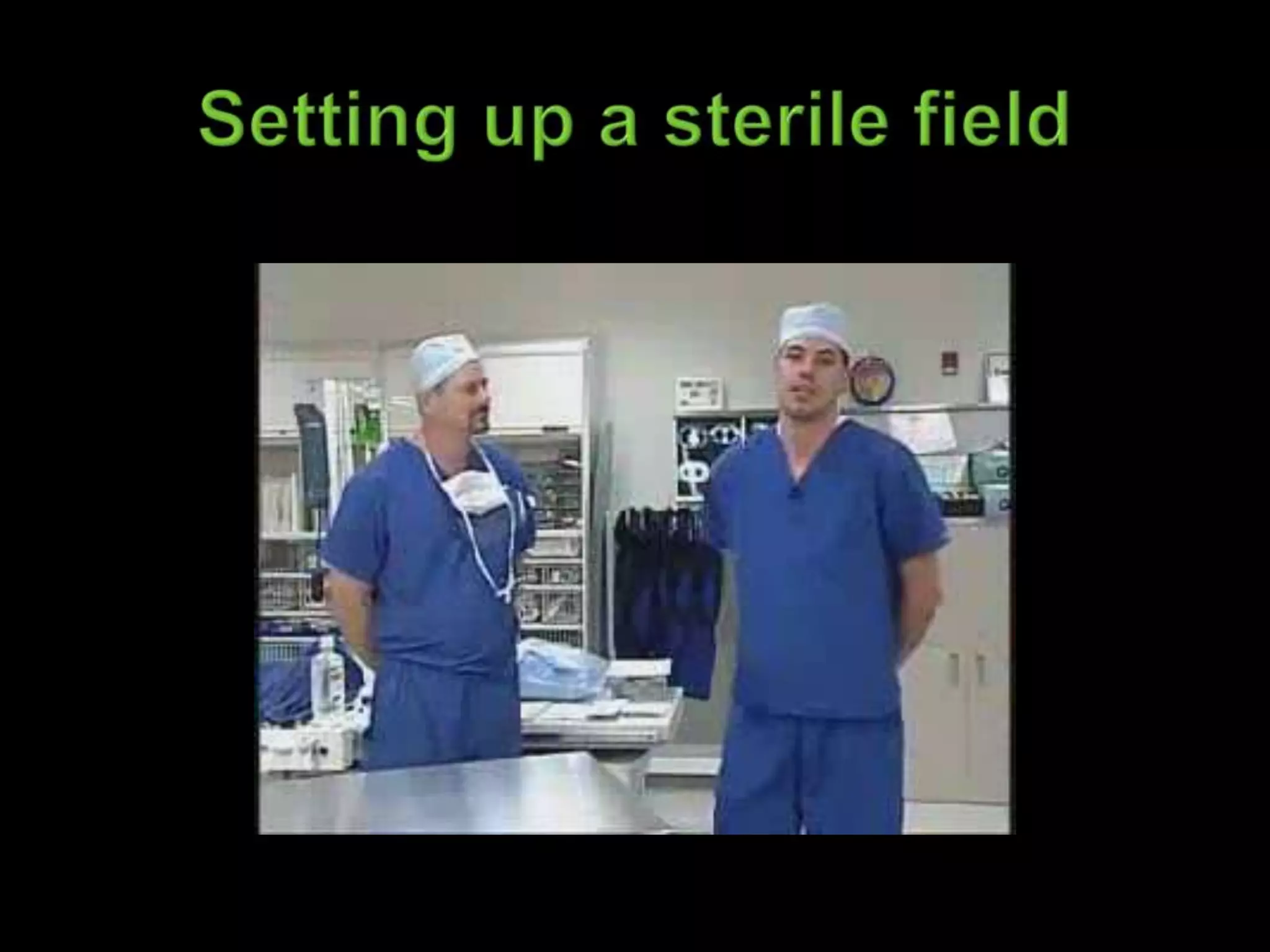
Setting up a sterile field
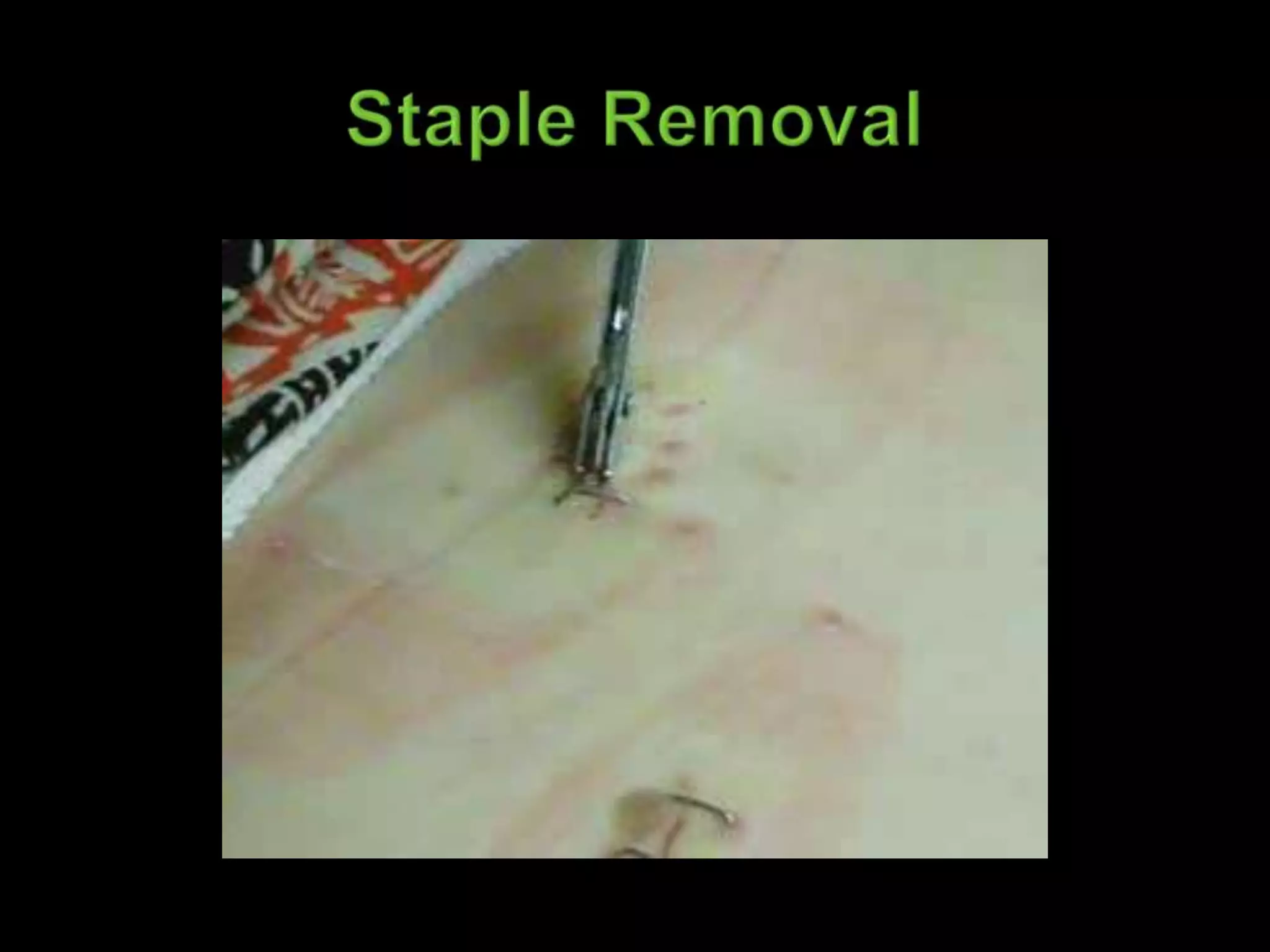
Staple Removal
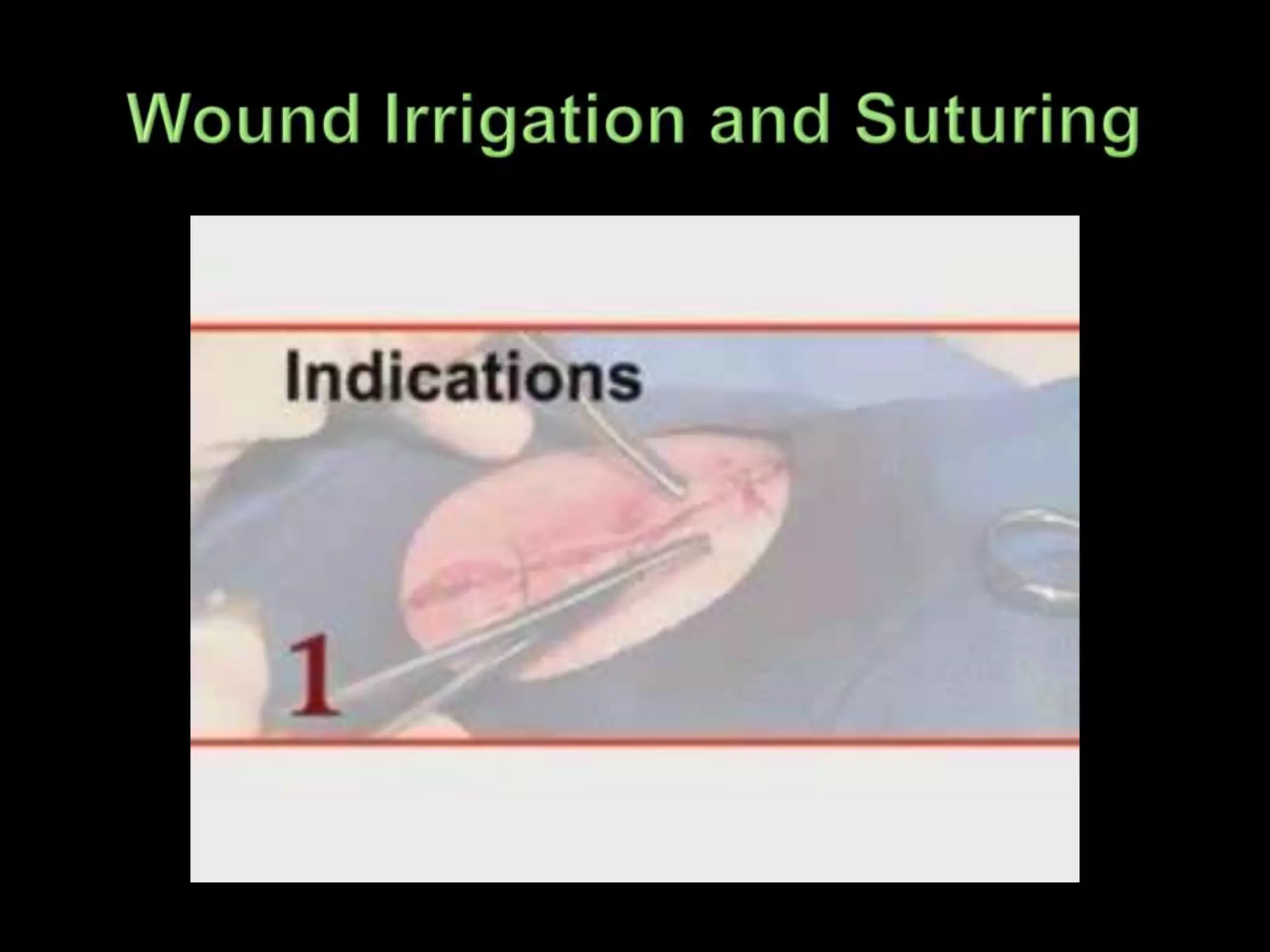
Wound Irrigation and Suturing
Incision and Drainage

Surgical Instruments and Procedures