Fattening up your Docker Images: Multi-architecture
support in the Docker Registry
Phil Estes
IBM Senior Technical Staff, Docker core maintainer
IBM Cloud Open Technologies
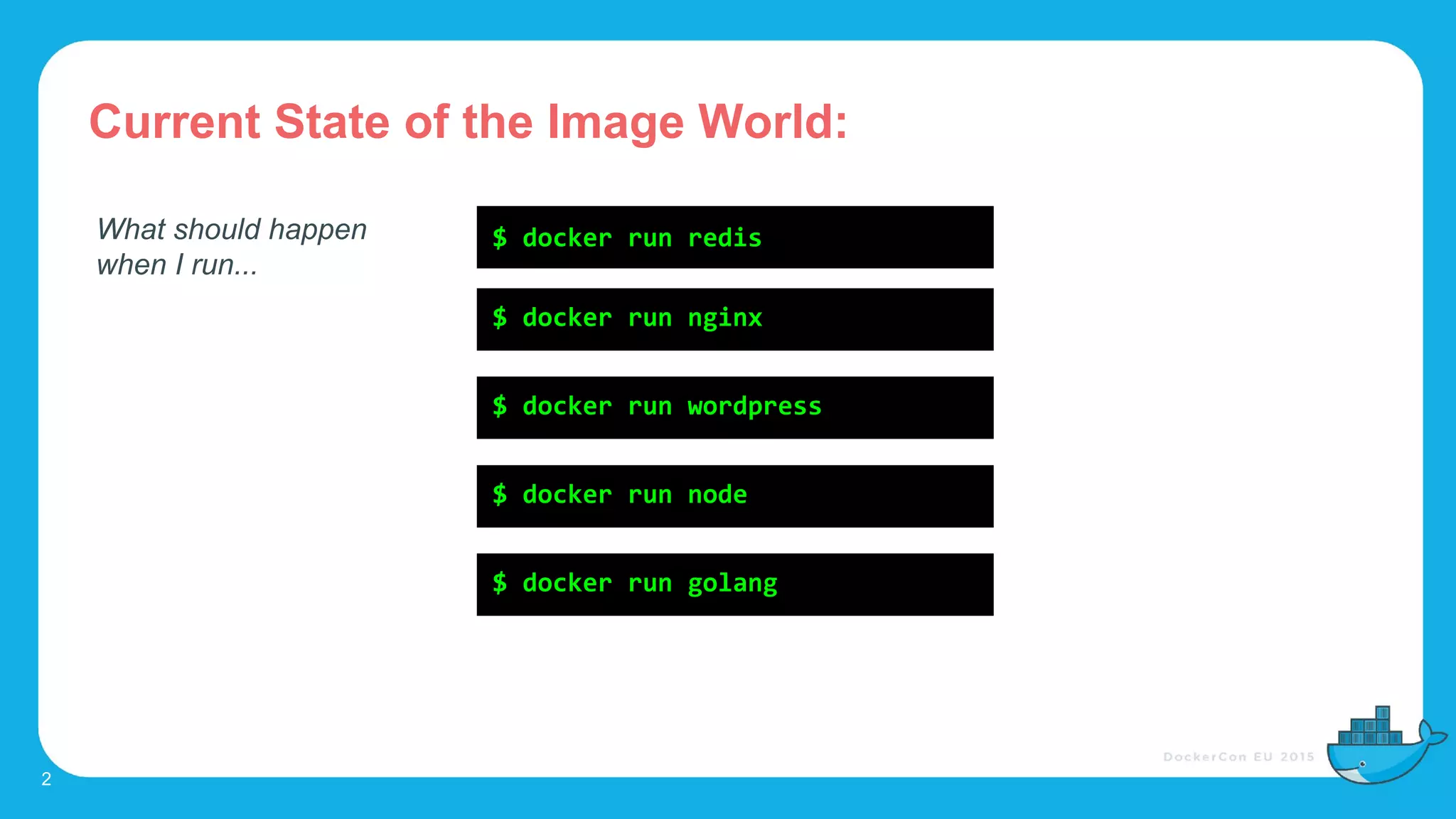
Current State of the Image World:
2
What should happen
when I run...
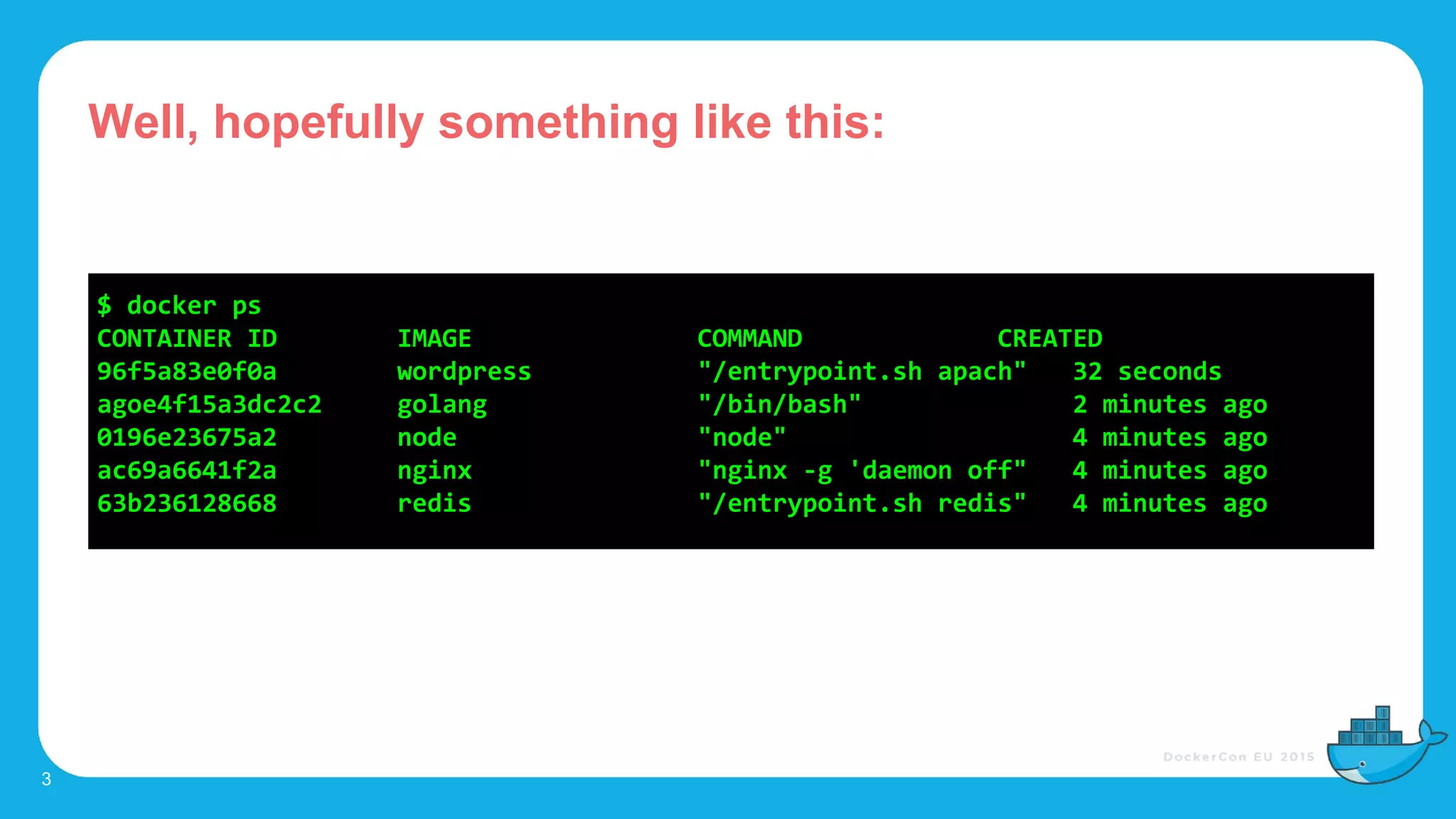
Well, hopefully something like this:
3
4
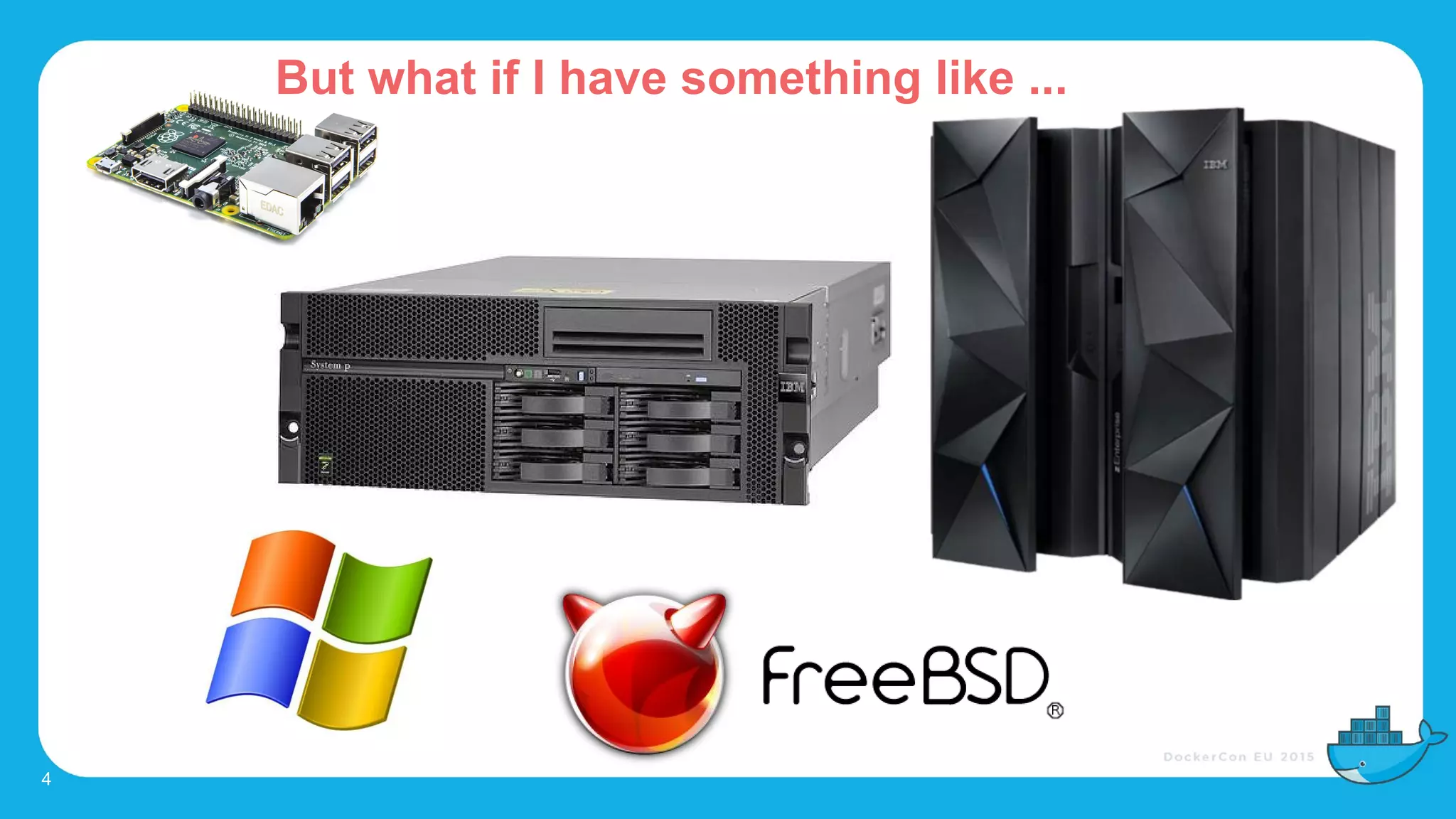
But what if I have something like ...
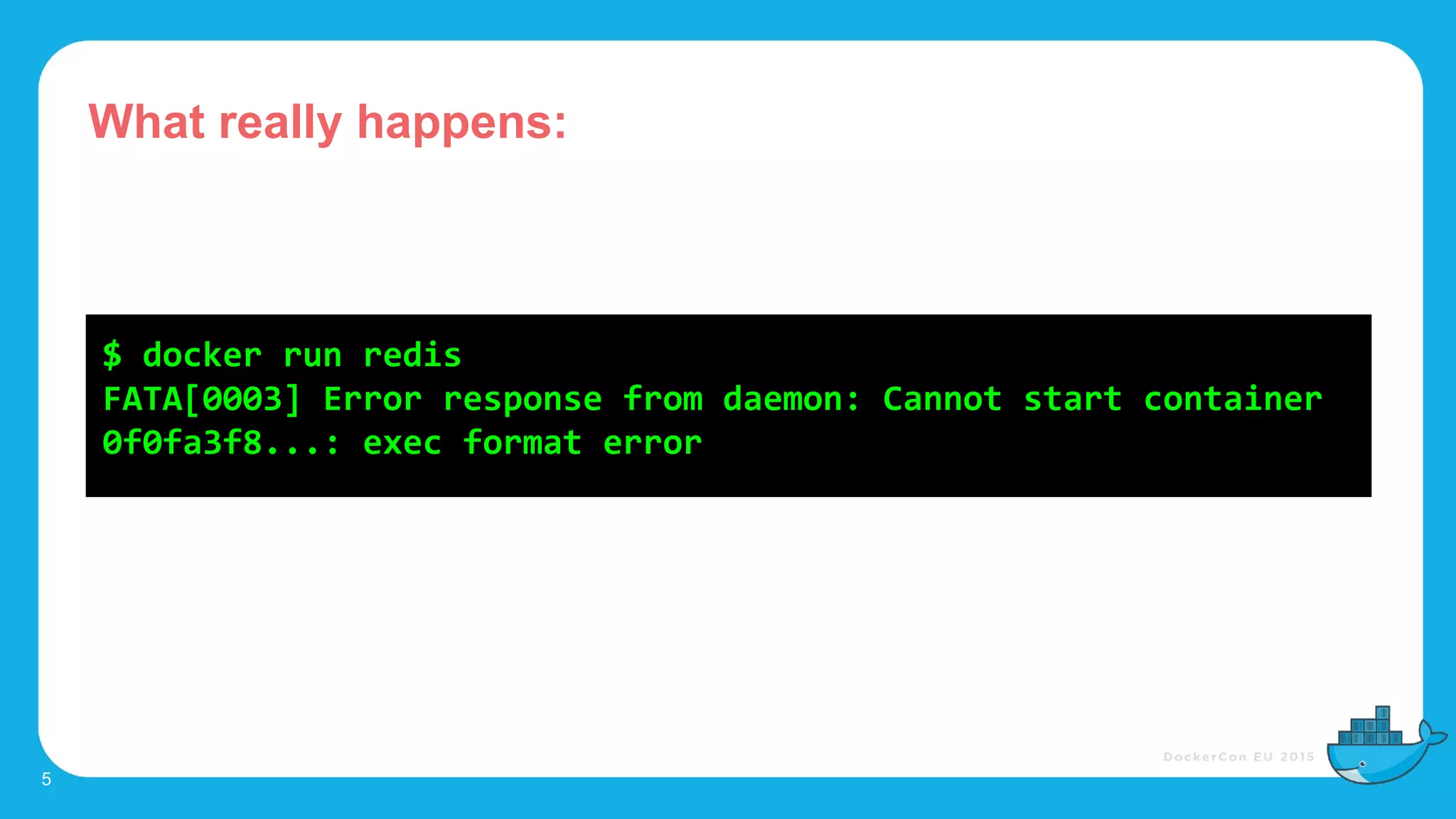
What really happens:
5
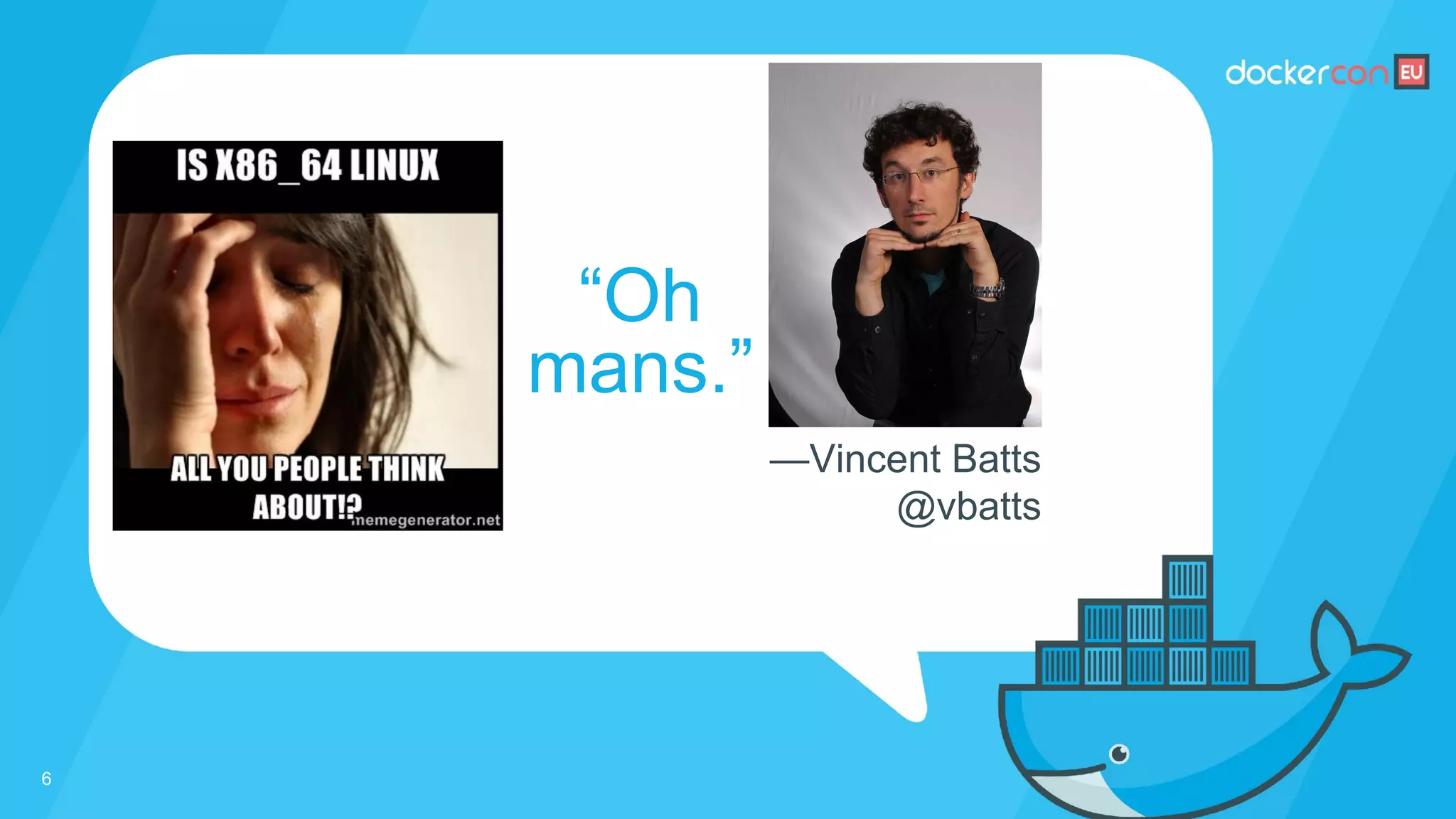
—Vincent Batts
@vbatts
“Oh
mans.”
6
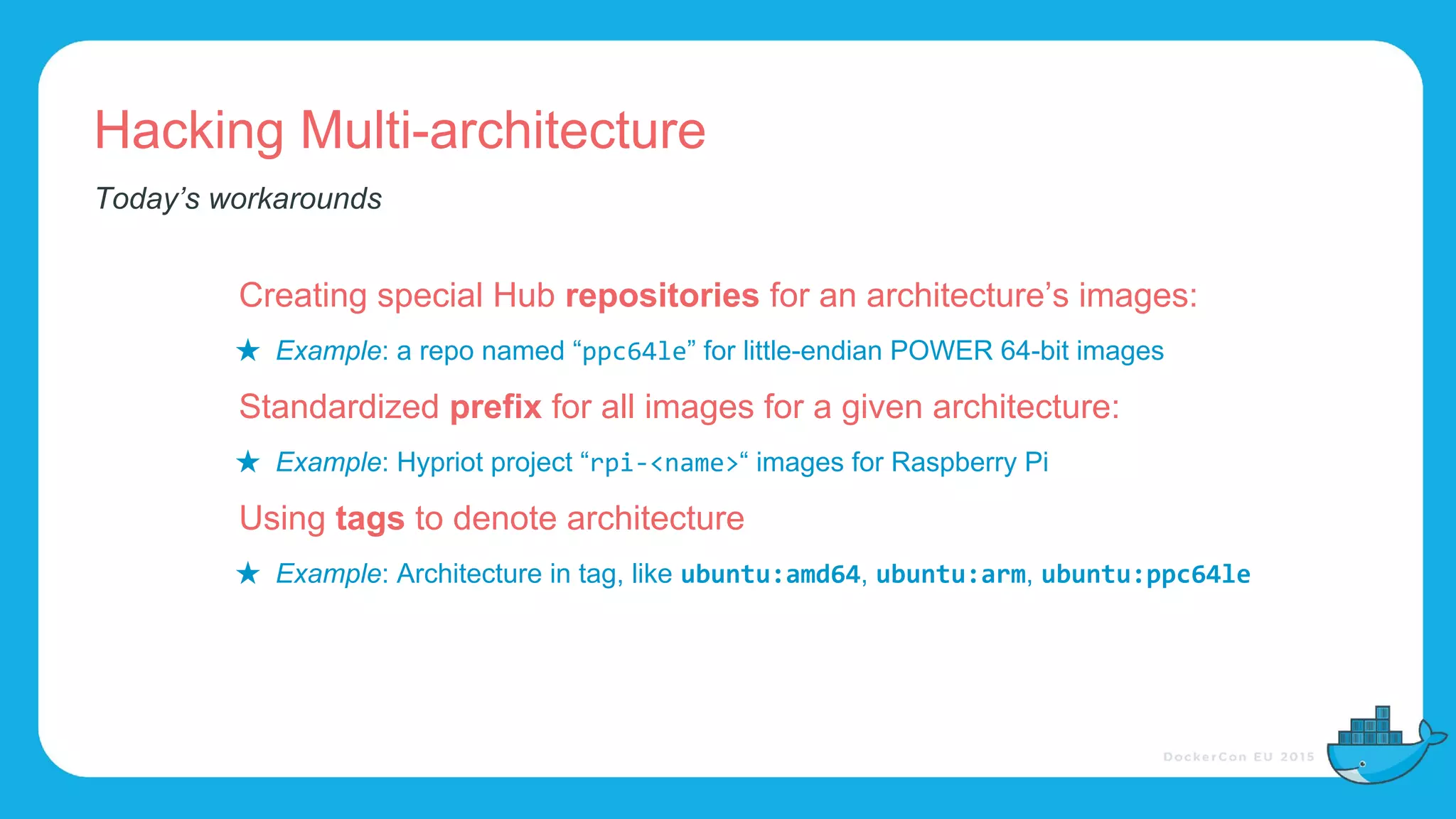
Hacking Multi-architecture
Creating special Hub repositories for an architecture’s images:
★ Example: a repo named “ ” for little-endian POWER 64-bit images
Standardized prefix for all images for a given architecture:
★ Example: Hypriot project “ “ images for Raspberry Pi
Using tags to denote architecture
★ Example: Architecture in tag, like , ,
Today’s workarounds
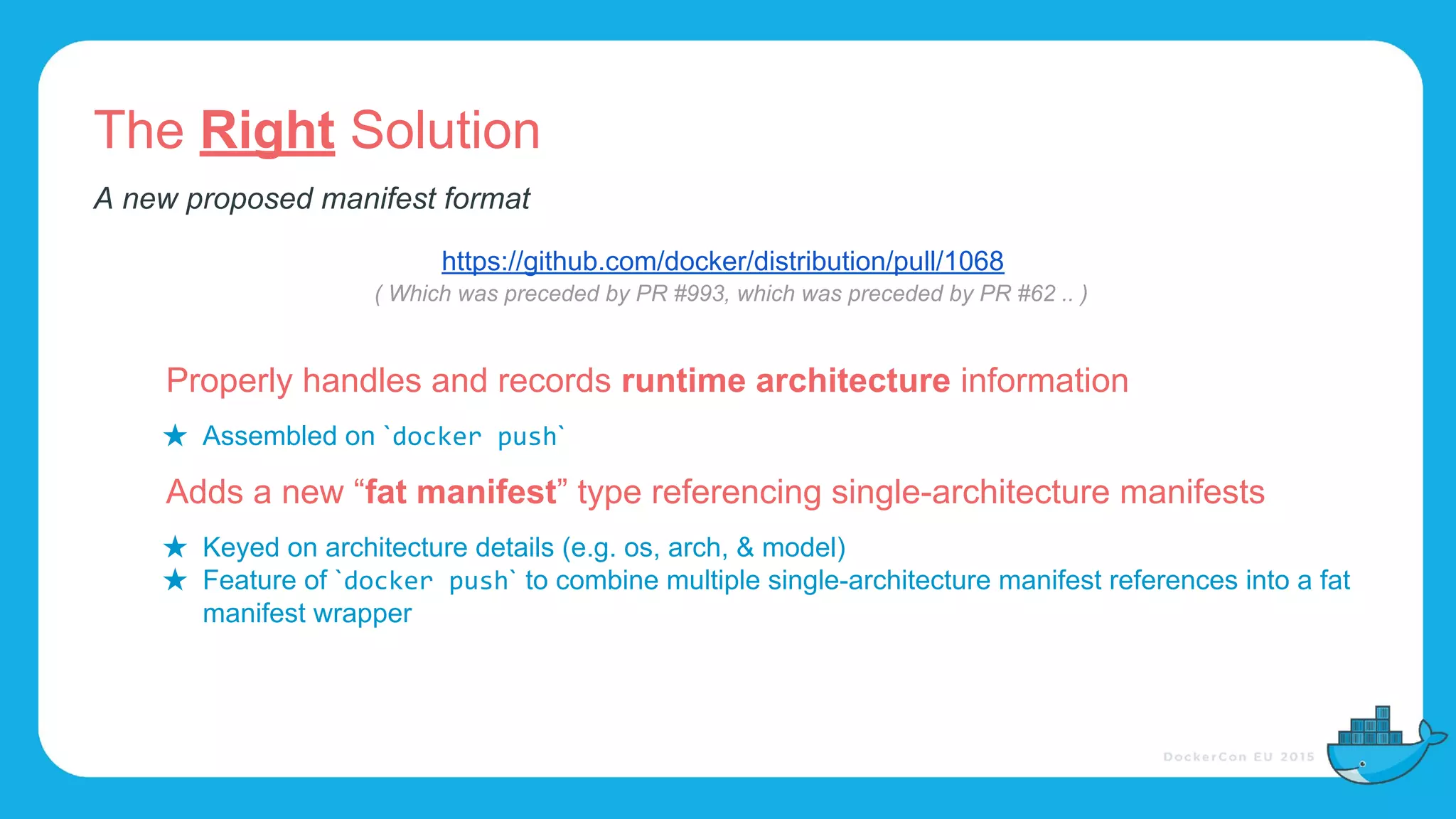
The Right Solution
Properly handles and records runtime architecture information
★ Assembled on ` `
Adds a new “fat manifest” type referencing single-architecture manifests
★ Keyed on architecture details (e.g. os, arch, & model)
★ Feature of ` ` to combine multiple single-architecture manifest references into a fat
manifest wrapper
A new proposed manifest format
https://github.com/docker/distribution/pull/1068
( Which was preceded by PR #993, which was preceded by PR #62 .. )
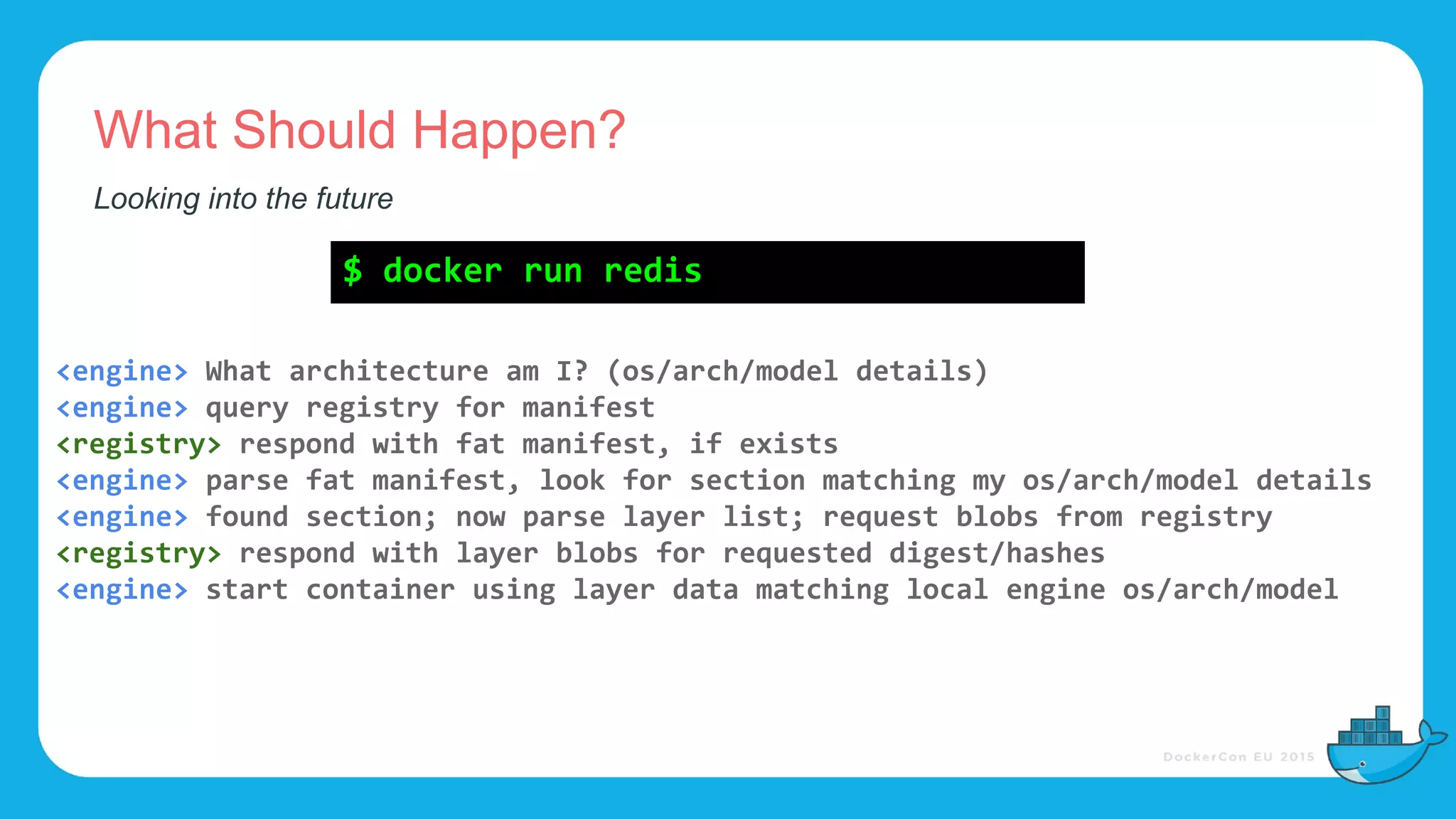
What Should Happen?
Looking into the future
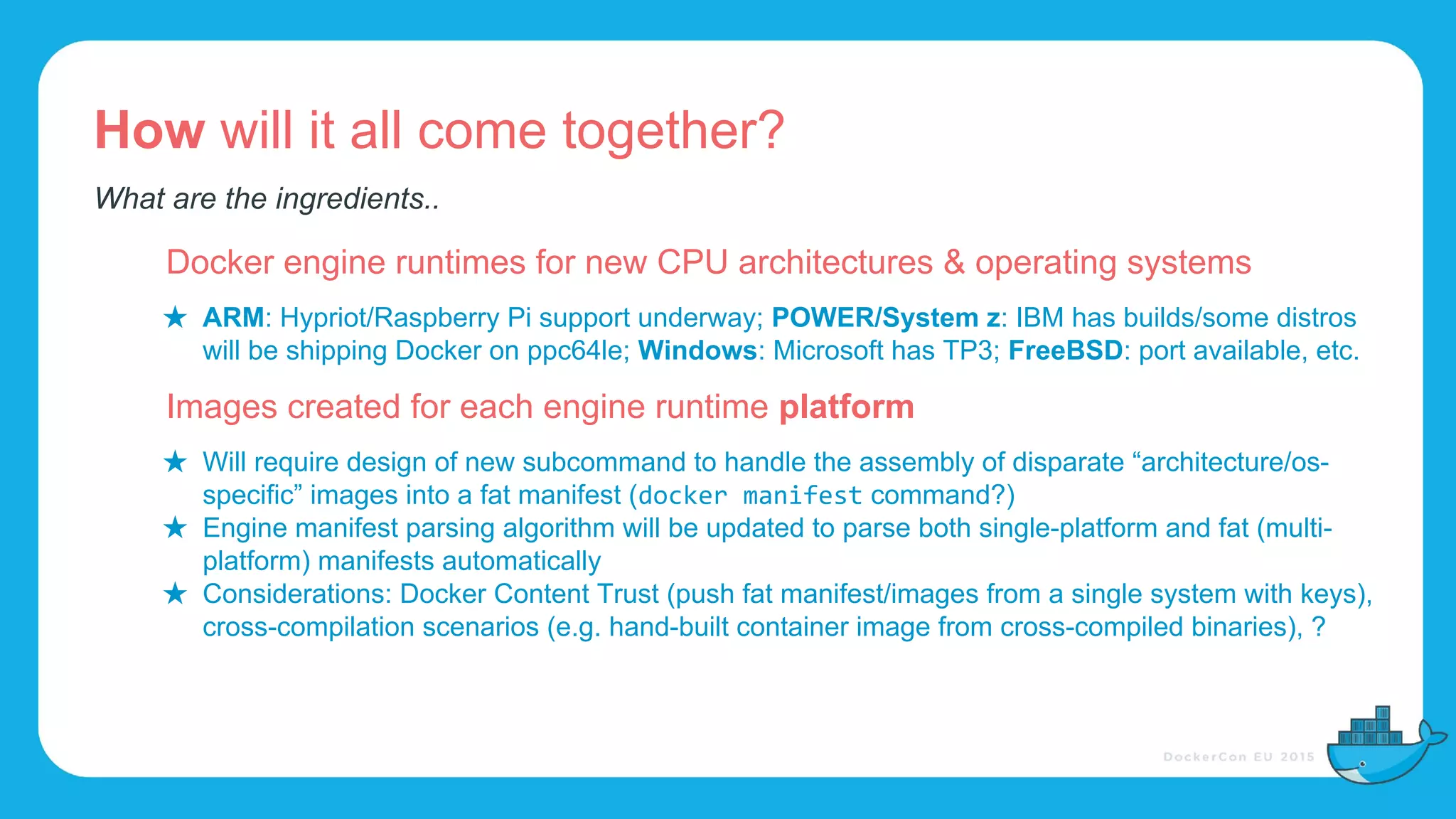
How will it all come together?
Docker engine runtimes for new CPU architectures & operating systems
★ ARM: Hypriot/Raspberry Pi support underway; POWER/System z: IBM has builds/some distros
will be shipping Docker on ppc64le; Windows: Microsoft has TP3; FreeBSD: port available, etc.
Images created for each engine runtime platform
★ Will require design of new subcommand to handle the assembly of disparate “architecture/os-
specific” images into a fat manifest ( command?)
★ Engine manifest parsing algorithm will be updated to parse both single-platform and fat (multi-
platform) manifests automatically
★ Considerations: Docker Content Trust (push fat manifest/images from a single system with keys),
cross-compilation scenarios (e.g. hand-built container image from cross-compiled binaries), ?
What are the ingredients..
Thank you!
Phil Estes
@estesp
estesp@gmail.com

2015 DockerCon Lightning Talk: Multi-arch Registry Support

  • 1.
    Fattening up yourDocker Images: Multi-architecture support in the Docker Registry Phil Estes IBM Senior Technical Staff, Docker core maintainer IBM Cloud Open Technologies
  • 2.
    Current State ofthe Image World: 2 What should happen when I run...
  • 3.
  • 4.
    4 But what ifI have something like ...
  • 5.
  • 6.
  • 7.
    Hacking Multi-architecture Creating specialHub repositories for an architecture’s images: ★ Example: a repo named “ ” for little-endian POWER 64-bit images Standardized prefix for all images for a given architecture: ★ Example: Hypriot project “ “ images for Raspberry Pi Using tags to denote architecture ★ Example: Architecture in tag, like , , Today’s workarounds
  • 8.
    The Right Solution Properlyhandles and records runtime architecture information ★ Assembled on ` ` Adds a new “fat manifest” type referencing single-architecture manifests ★ Keyed on architecture details (e.g. os, arch, & model) ★ Feature of ` ` to combine multiple single-architecture manifest references into a fat manifest wrapper A new proposed manifest format https://github.com/docker/distribution/pull/1068 ( Which was preceded by PR #993, which was preceded by PR #62 .. )
  • 9.
  • 10.
    How will itall come together? Docker engine runtimes for new CPU architectures & operating systems ★ ARM: Hypriot/Raspberry Pi support underway; POWER/System z: IBM has builds/some distros will be shipping Docker on ppc64le; Windows: Microsoft has TP3; FreeBSD: port available, etc. Images created for each engine runtime platform ★ Will require design of new subcommand to handle the assembly of disparate “architecture/os- specific” images into a fat manifest ( command?) ★ Engine manifest parsing algorithm will be updated to parse both single-platform and fat (multi- platform) manifests automatically ★ Considerations: Docker Content Trust (push fat manifest/images from a single system with keys), cross-compilation scenarios (e.g. hand-built container image from cross-compiled binaries), ? What are the ingredients..
  • 11.