Rolling Stones vs.
Soil Erosion
Bienvenido “Nonoy” Oplas, Jr.
Millora Farms
Bugallon, Pangasinan
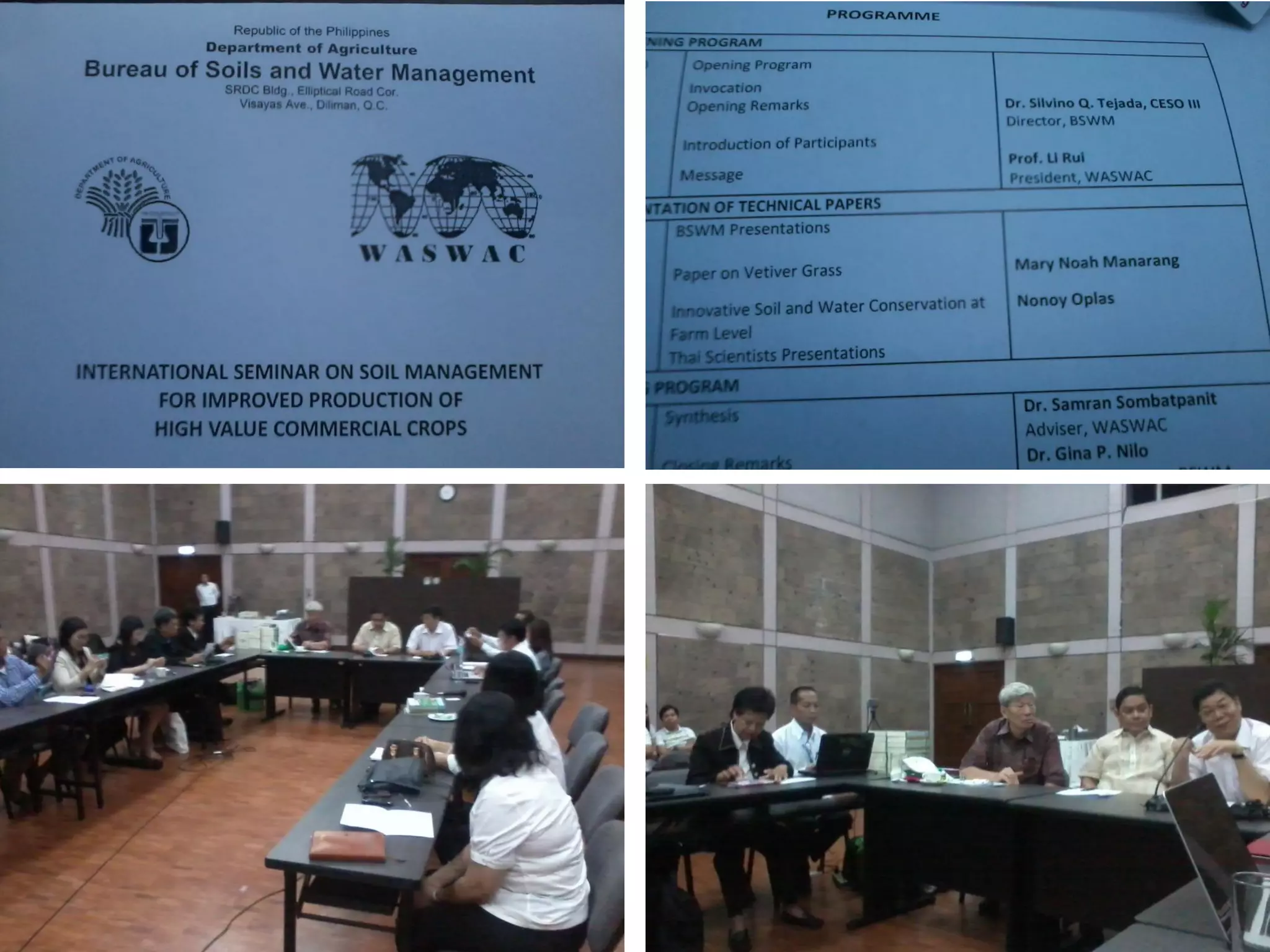
WASWAC-BSWM Seminar on Soil Management
Bureau of Soil and Water Management, DA, Quezon City
May 12, 2014
Outline
1.The Farm, Pangasinan
2.The Rolling Stones
3.Old Terraces
4.Various Terraces
5.Pool in the Creek
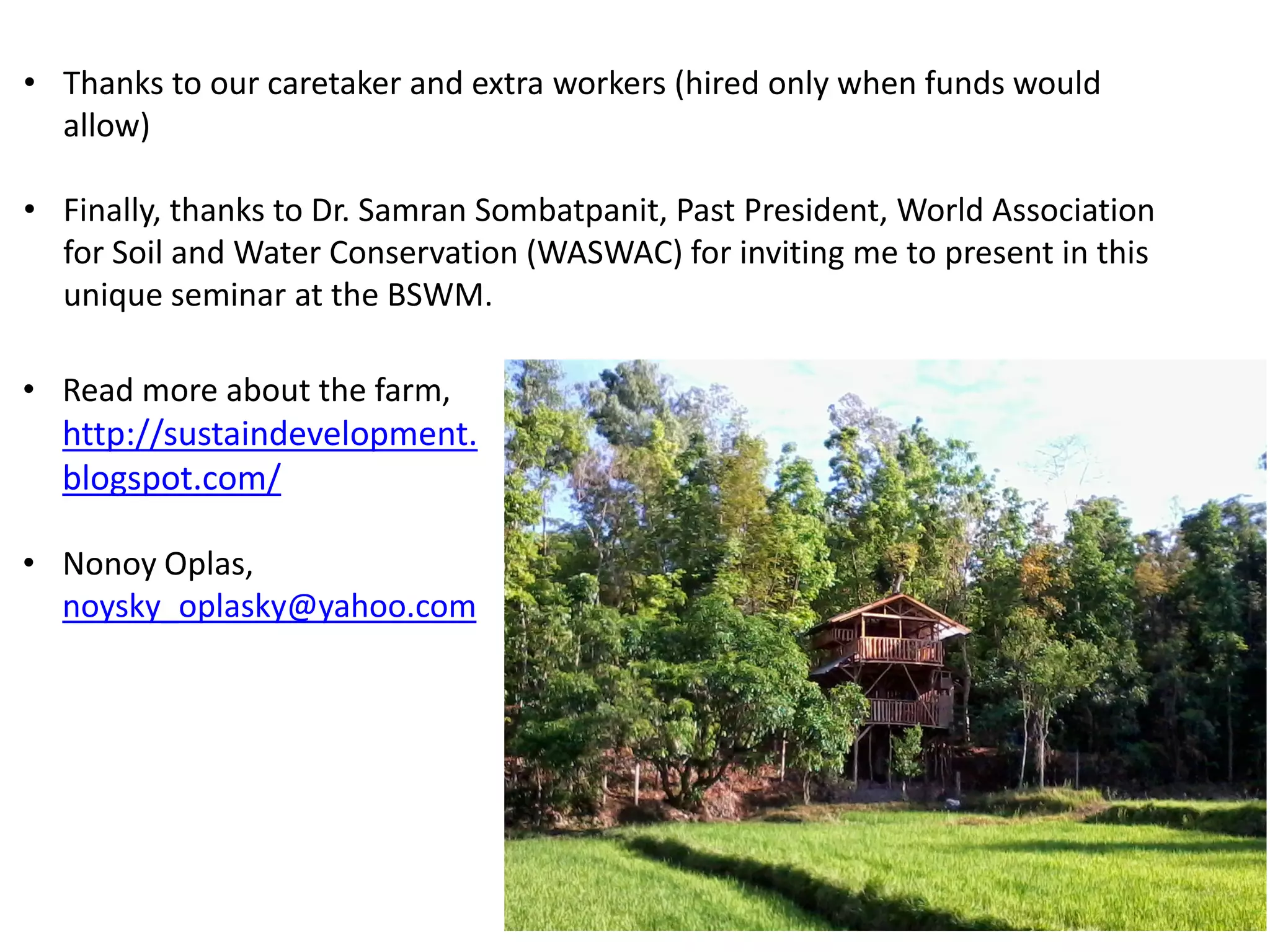
6.Treehouse
7.Irrigation and Ricefields
8.Concluding Notes
1. The Farm, Location
• Brgy. Laguit Padilla, Bugallon,
Pangasinan
• About 7 kms. From the highway in
Bugallon, which is 198 kms. From
Manila
• Midland to upland farm; main crops
are mangos and forest trees
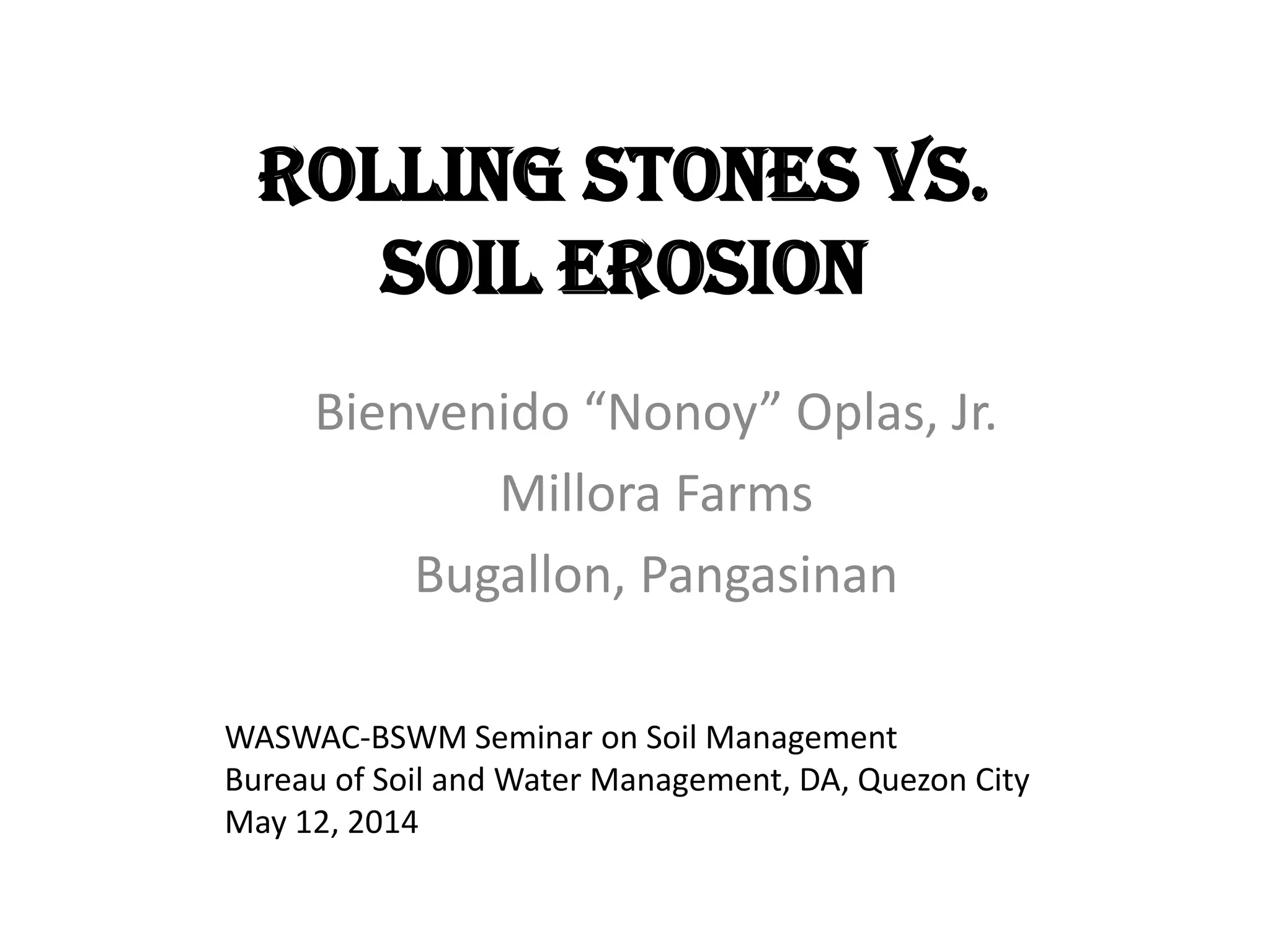
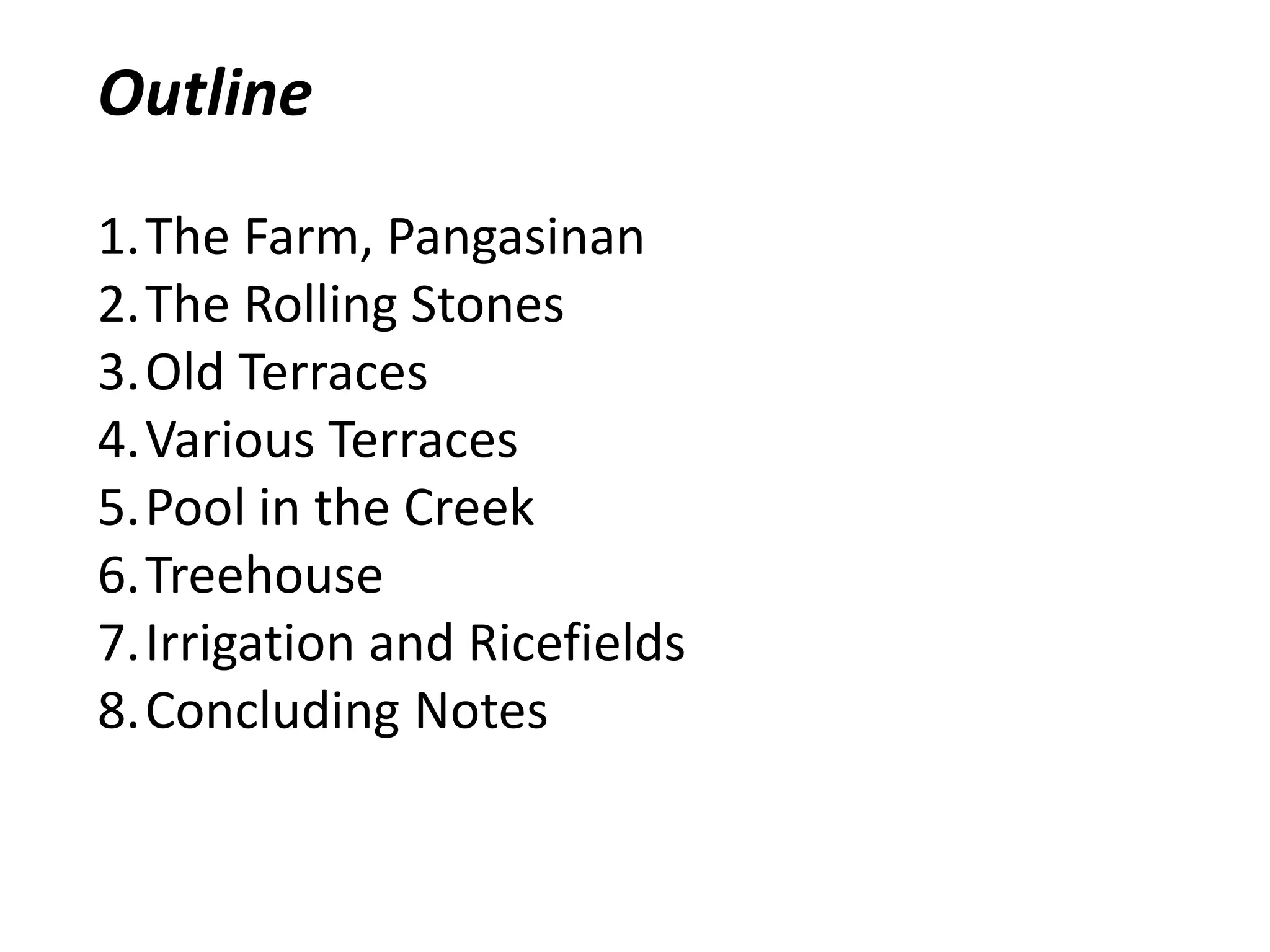
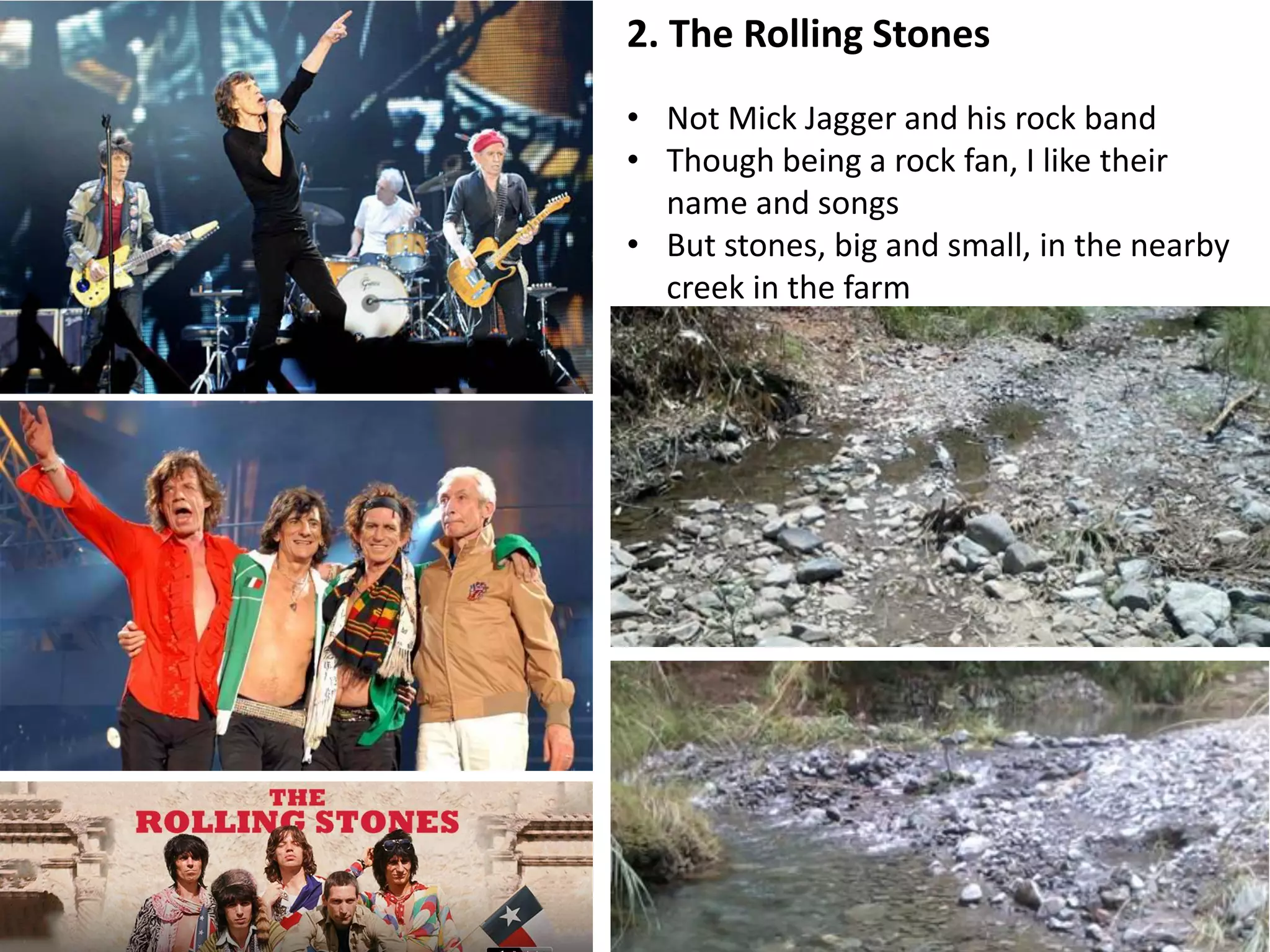
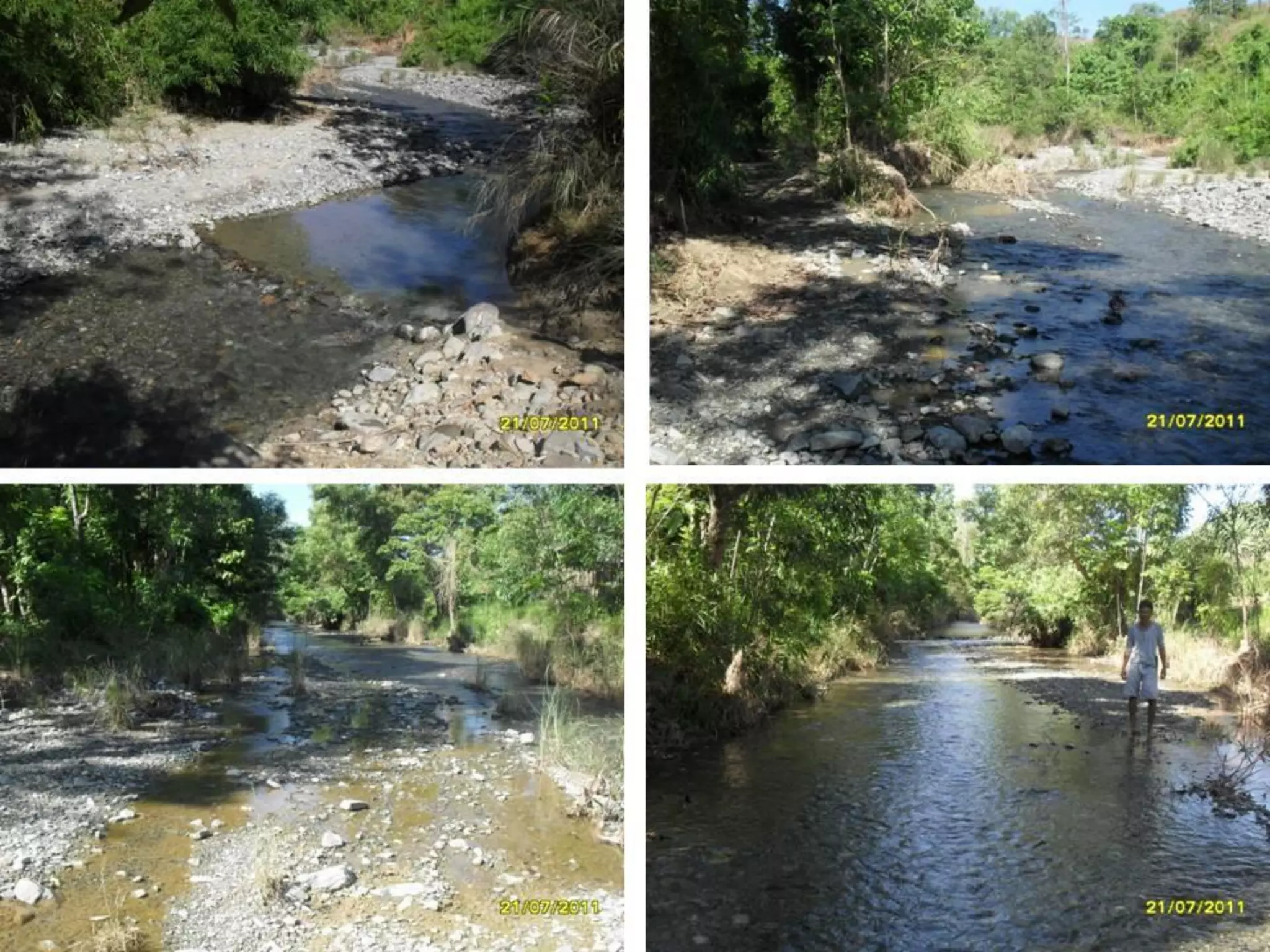
2. The Rolling Stones
• Not Mick Jagger and his rock band
• Though being a rock fan, I like their
name and songs
• But stones, big and small, in the nearby
creek in the farm
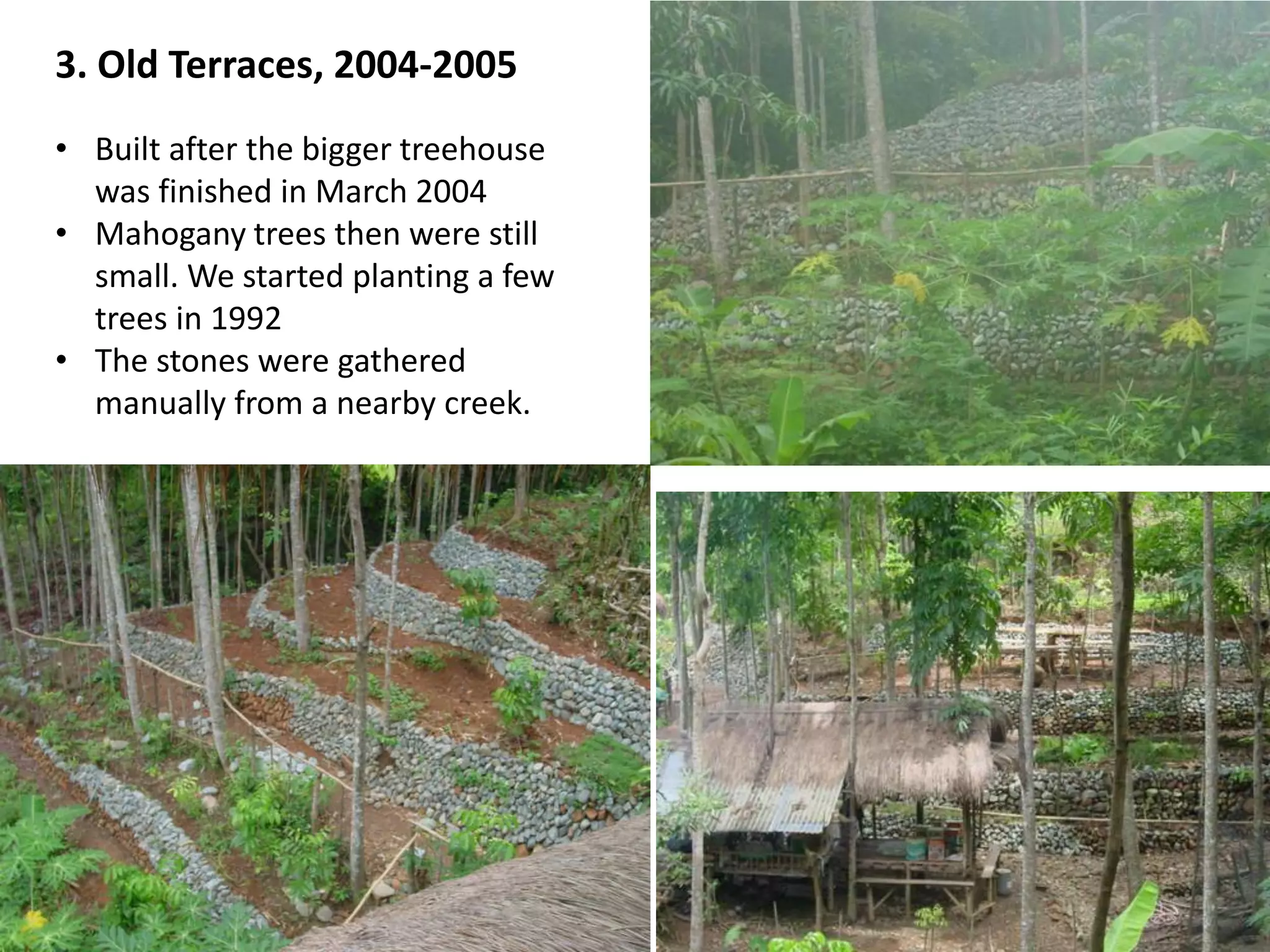
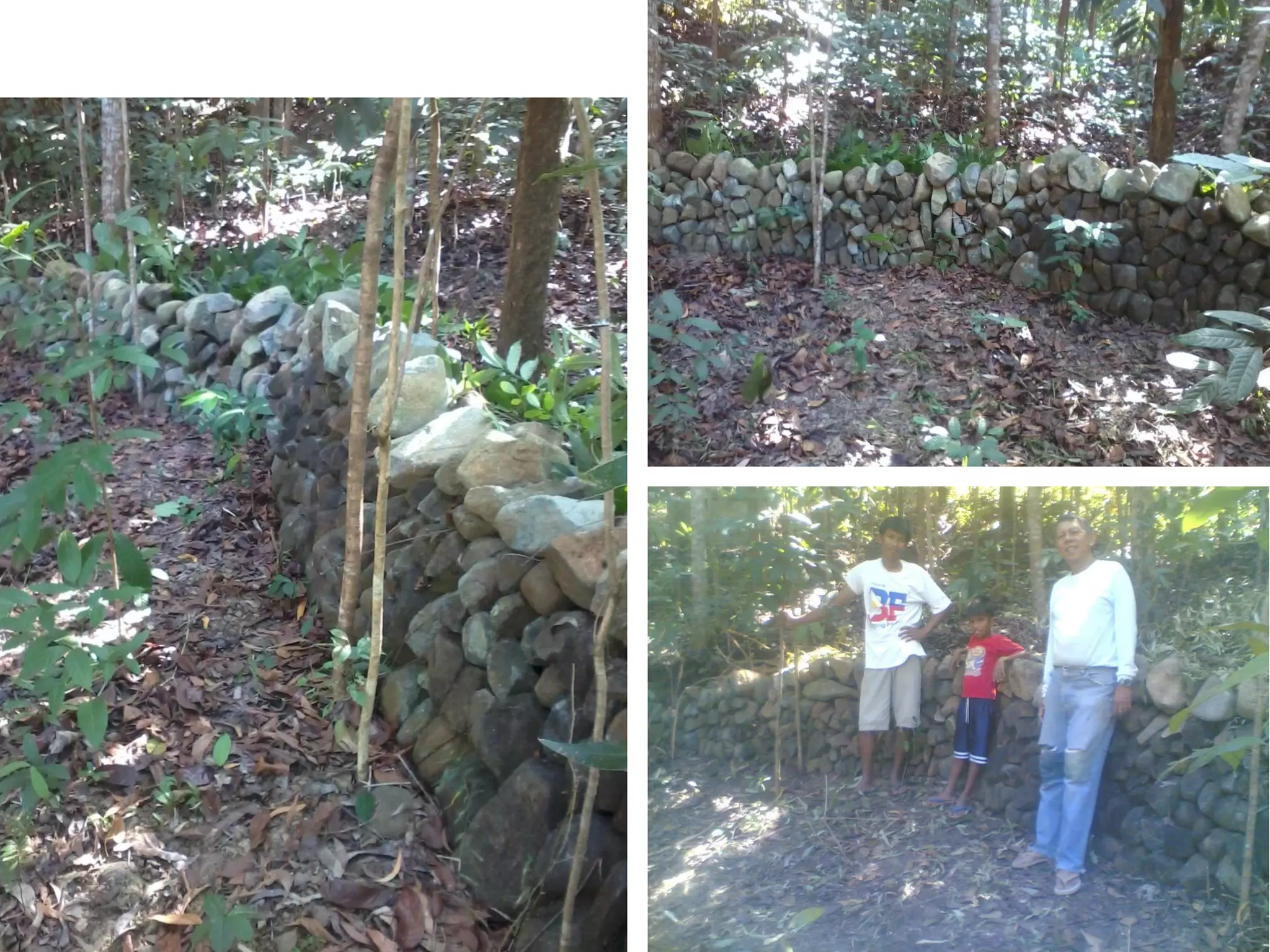
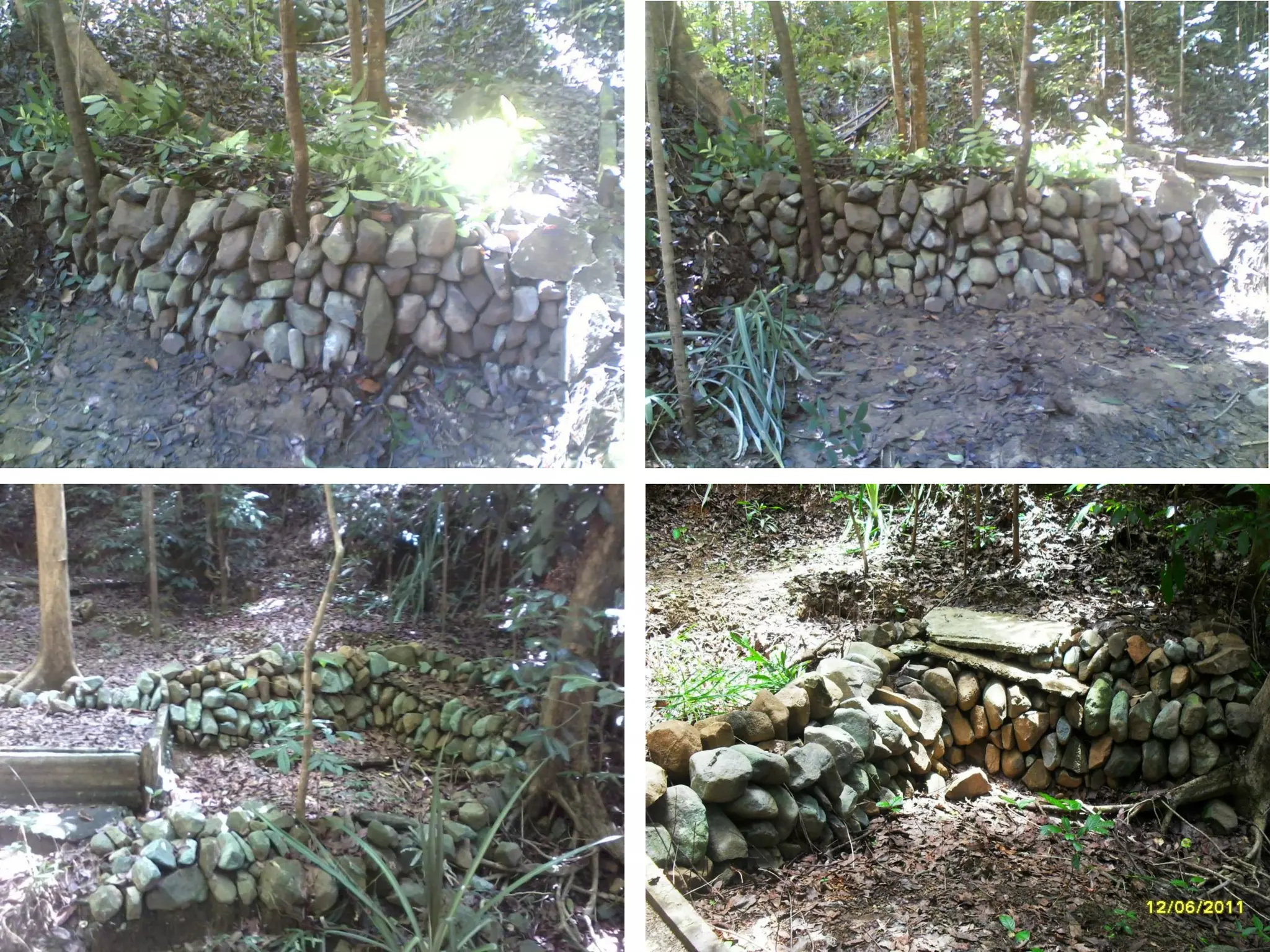
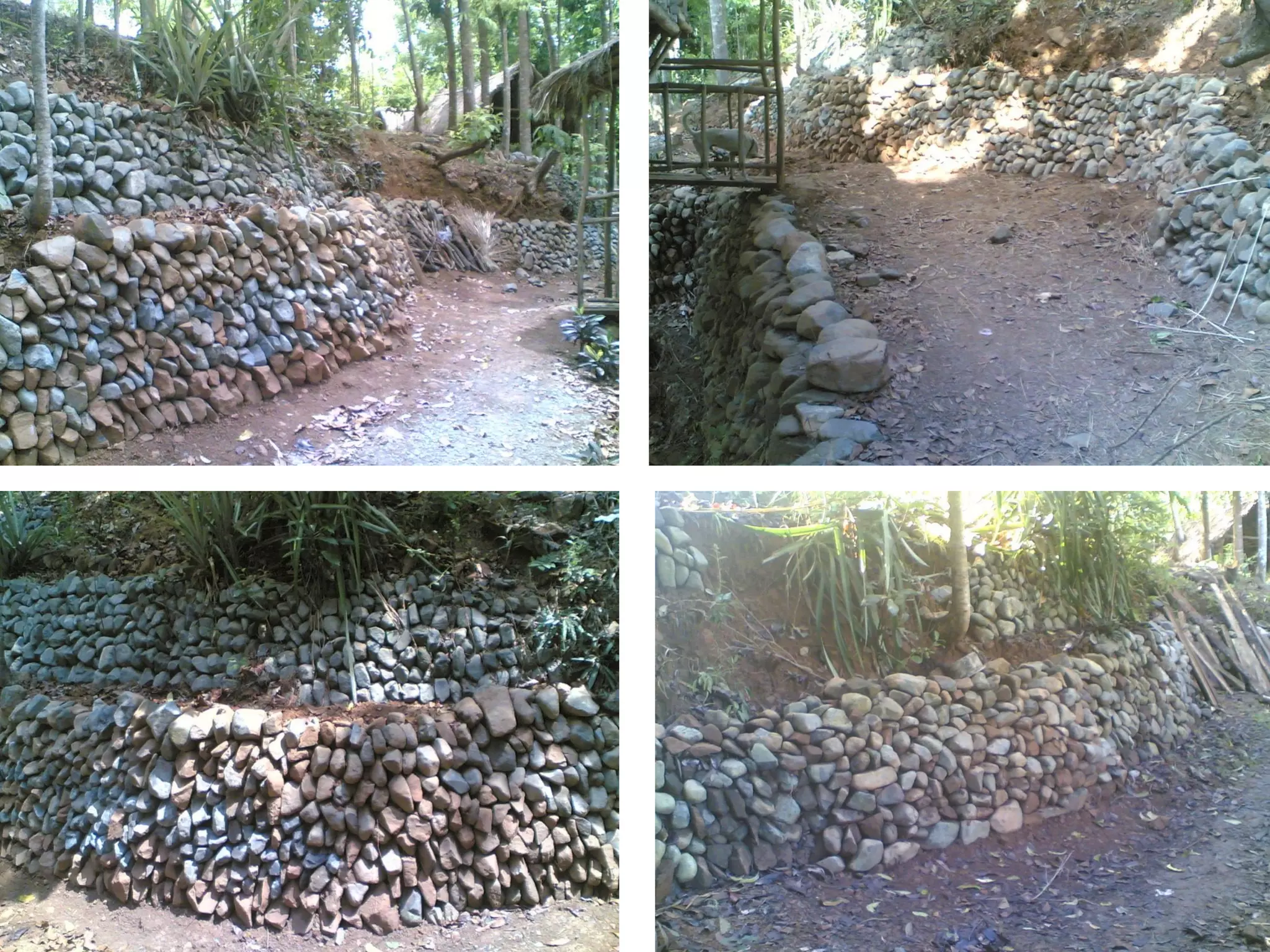
3. Old Terraces, 2004-2005
• Built after the bigger treehouse
was finished in March 2004
• Mahogany trees then were still
small. We started planting a few
trees in 1992
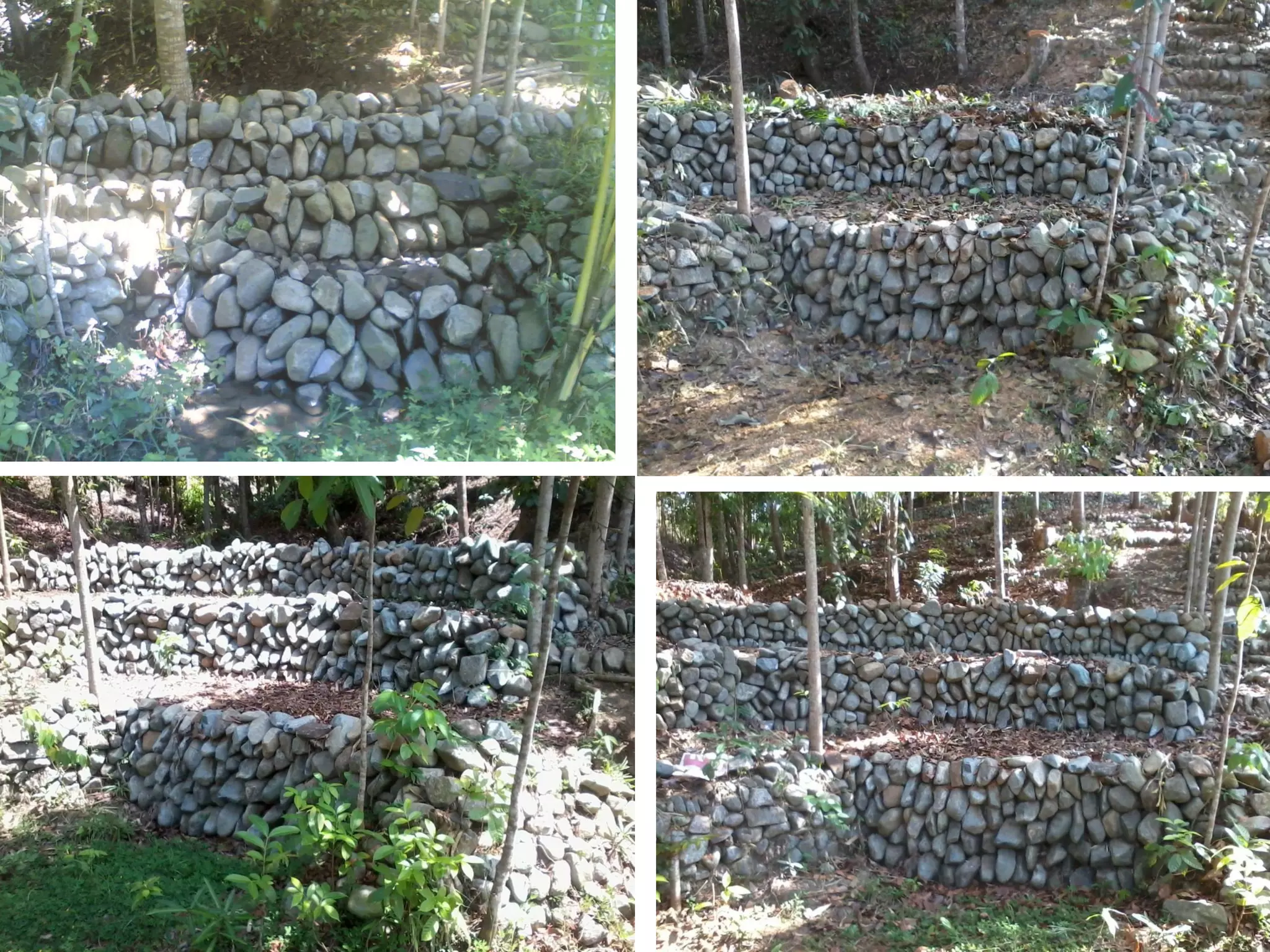
• The stones were gathered
manually from a nearby creek.
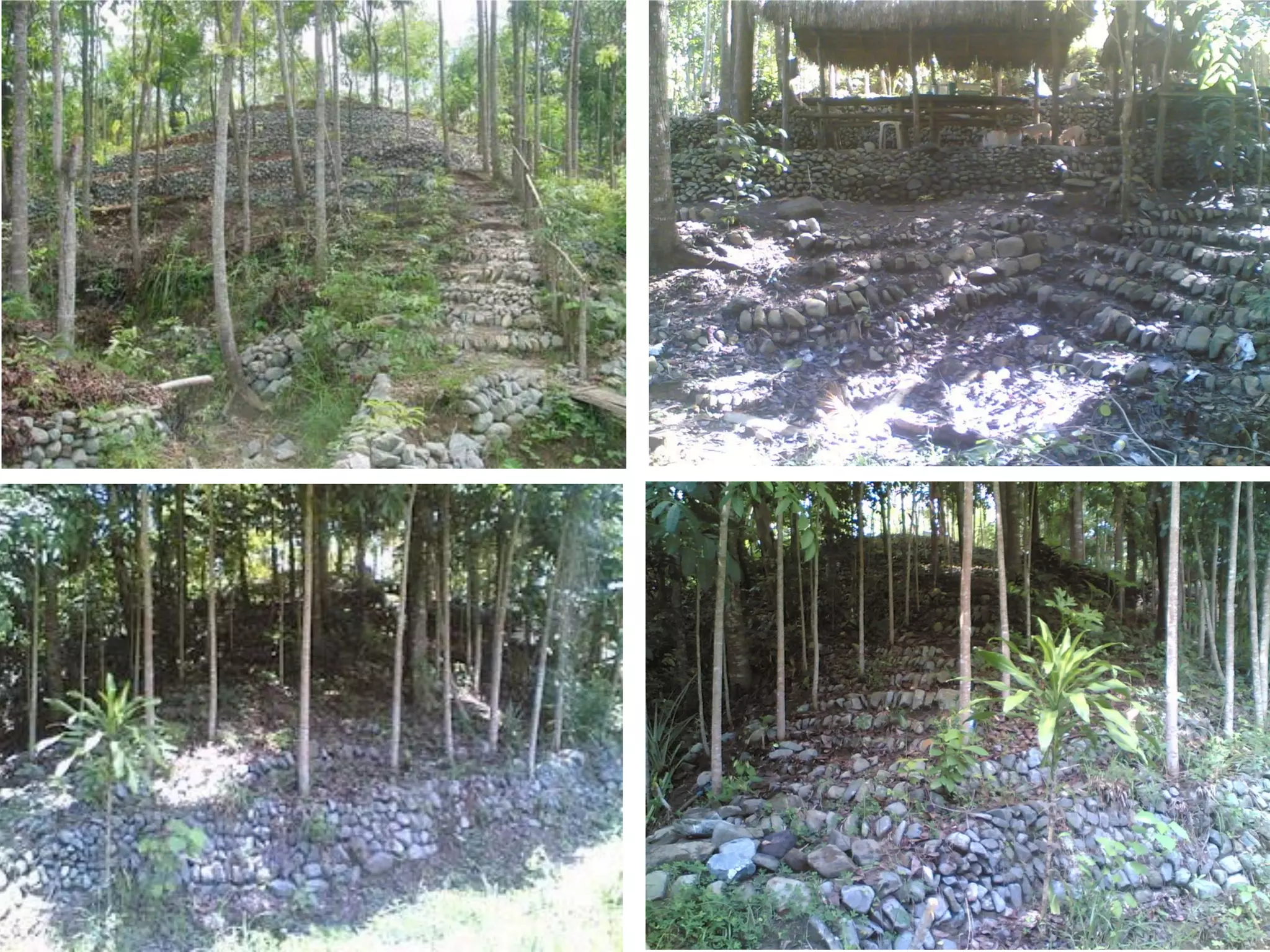
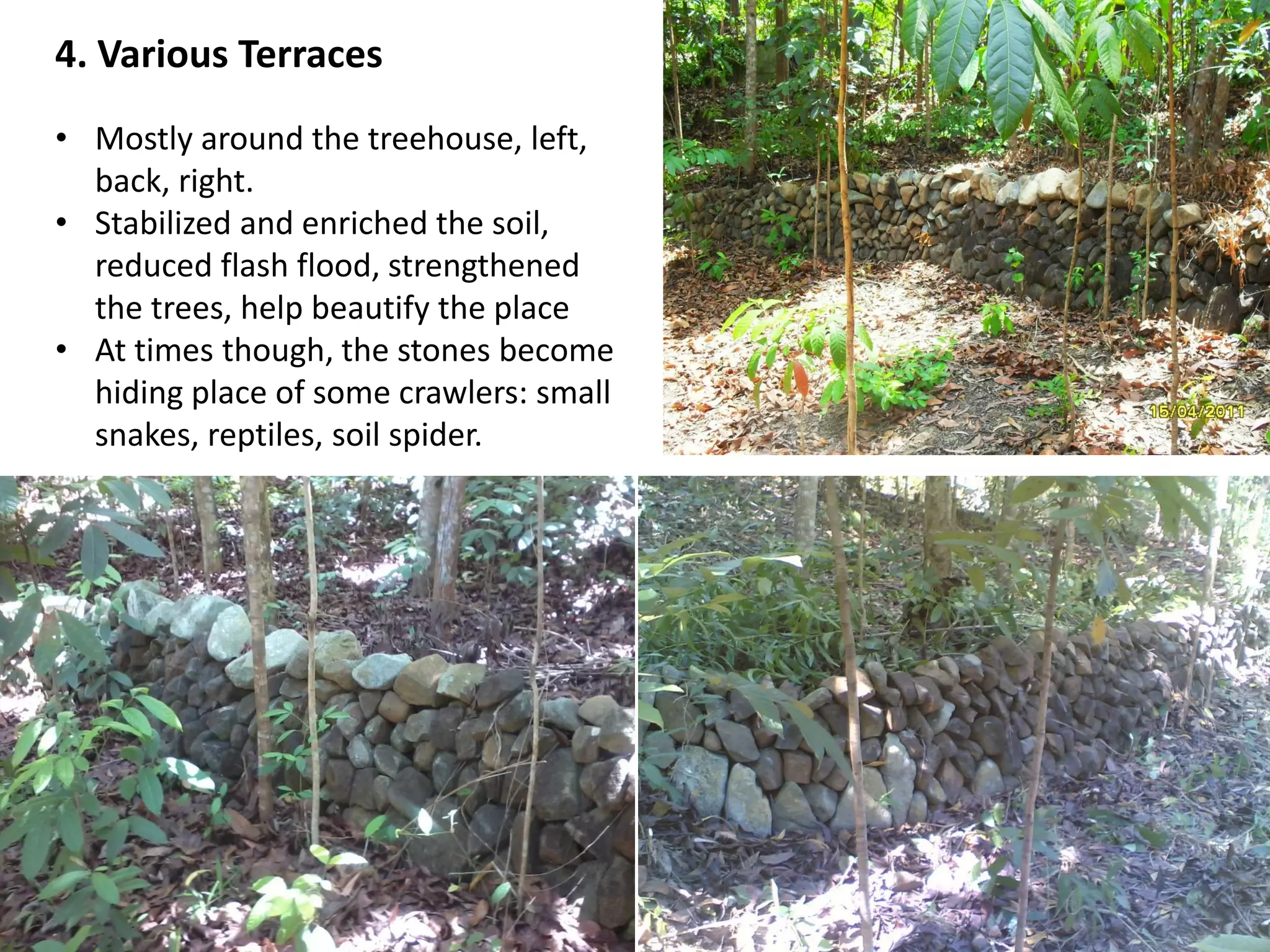
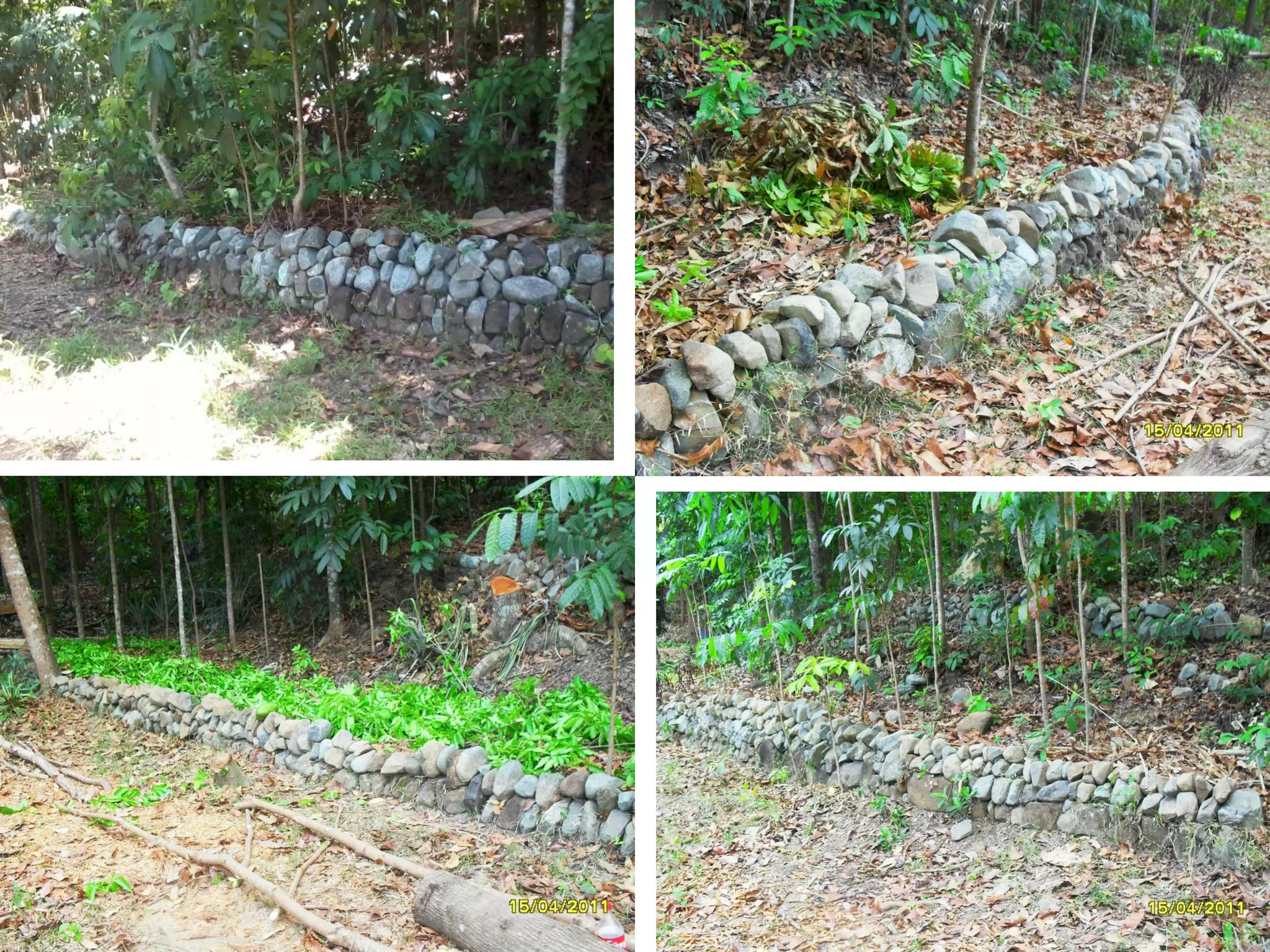
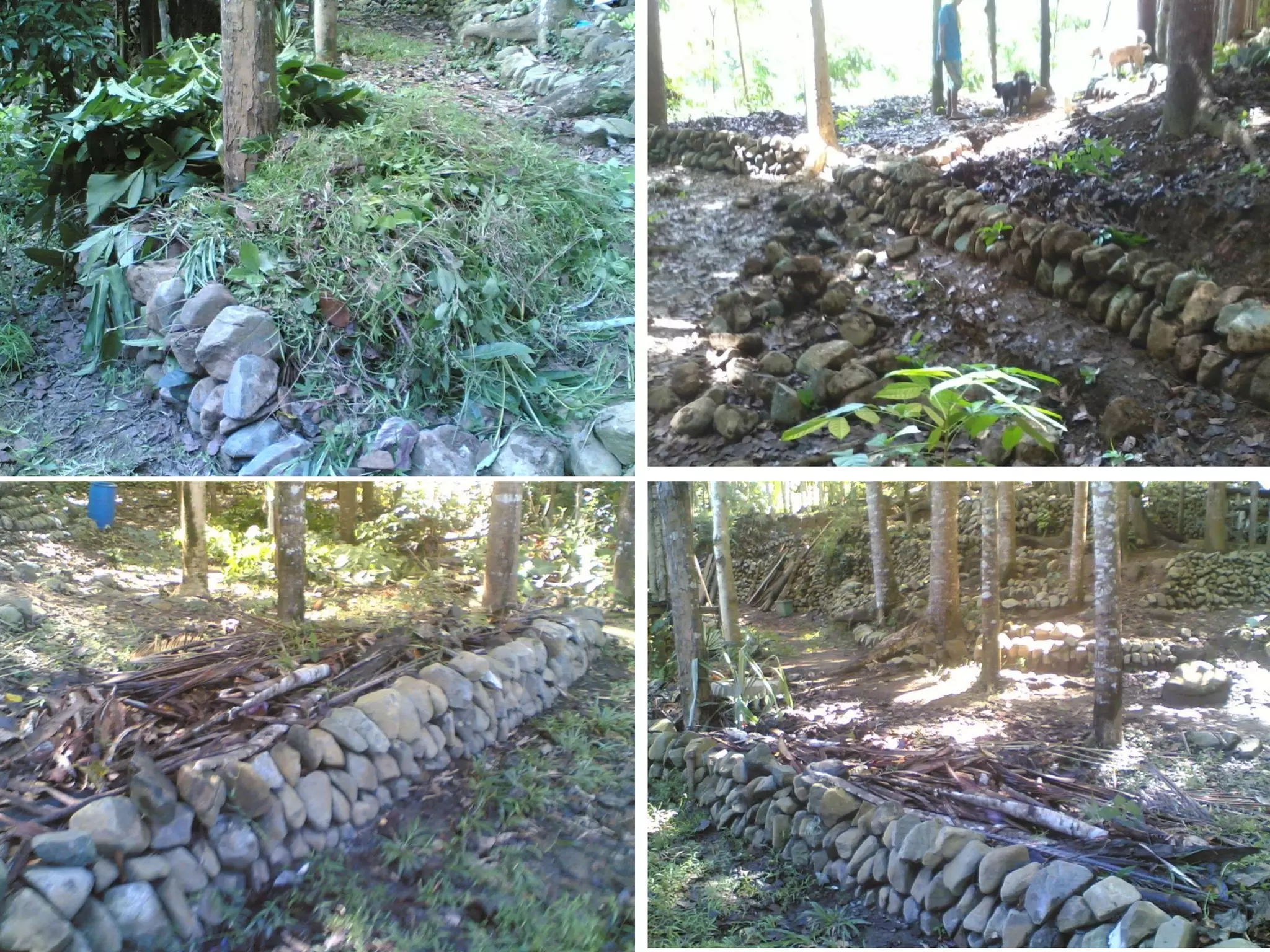
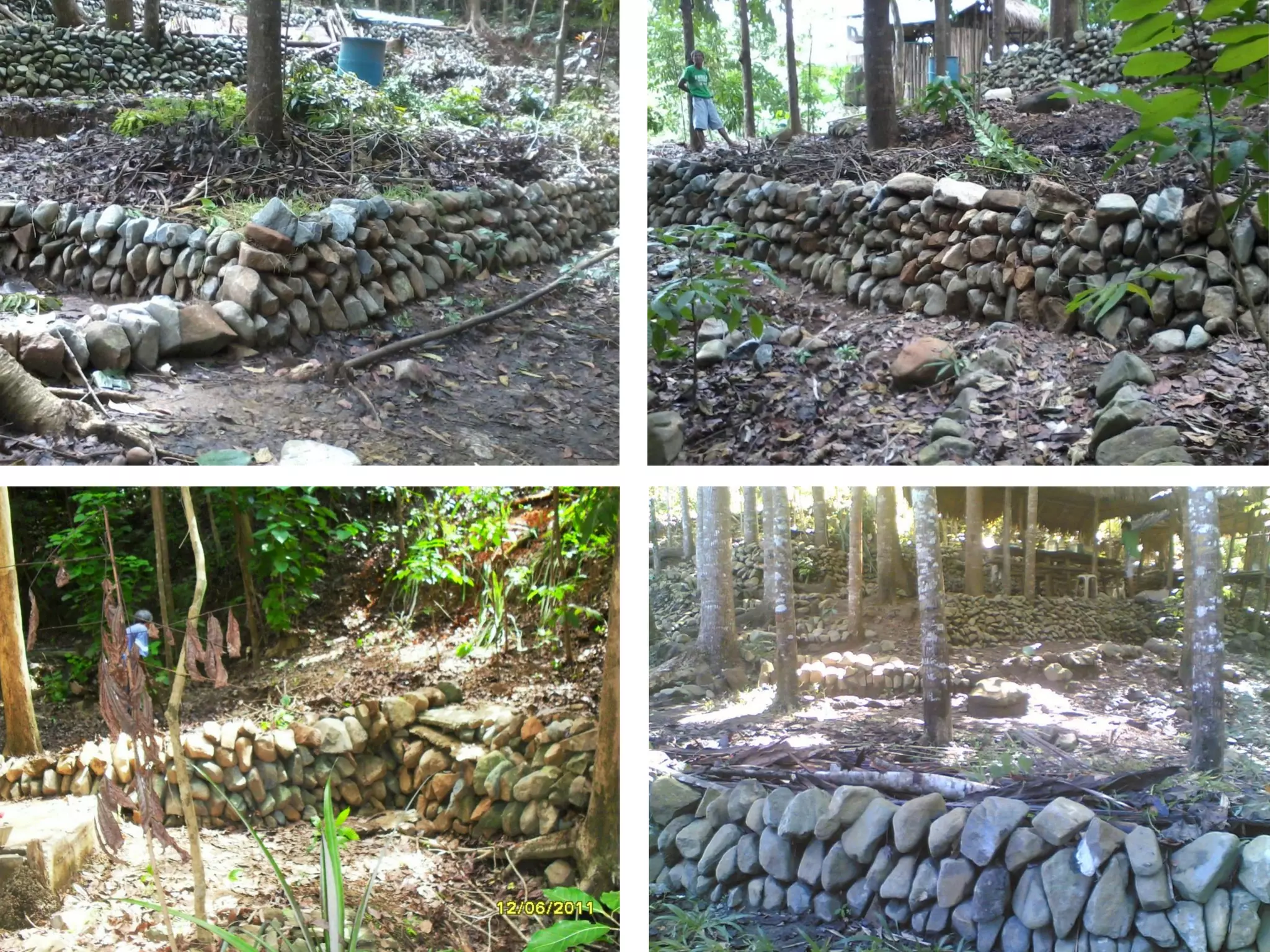
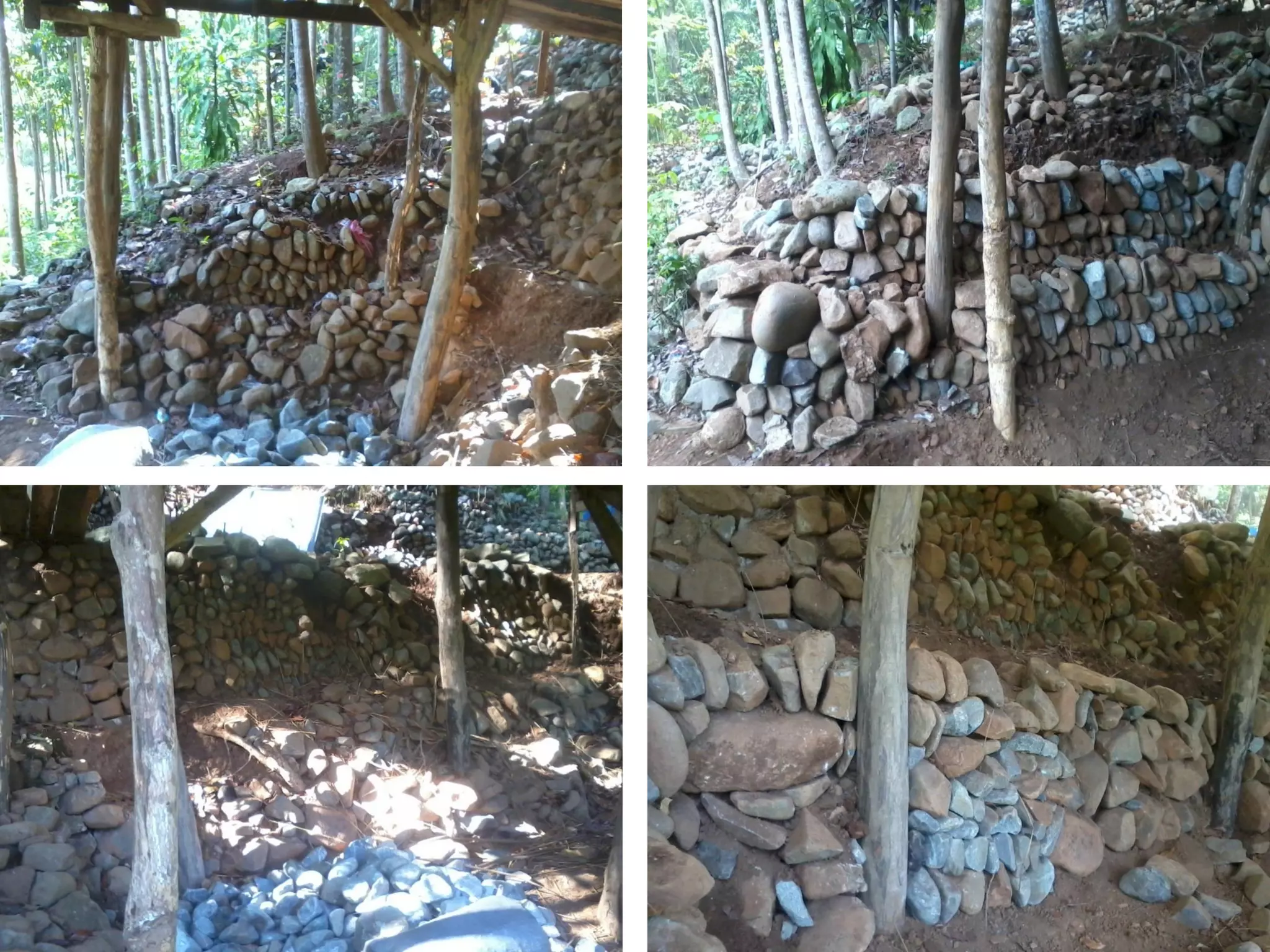
4. Various Terraces
• Mostly around the treehouse, left,
back, right.
• Stabilized and enriched the soil,
reduced flash flood, strengthened
the trees, help beautify the place
• At times though, the stones become
hiding place of some crawlers: small
snakes, reptiles, soil spider.
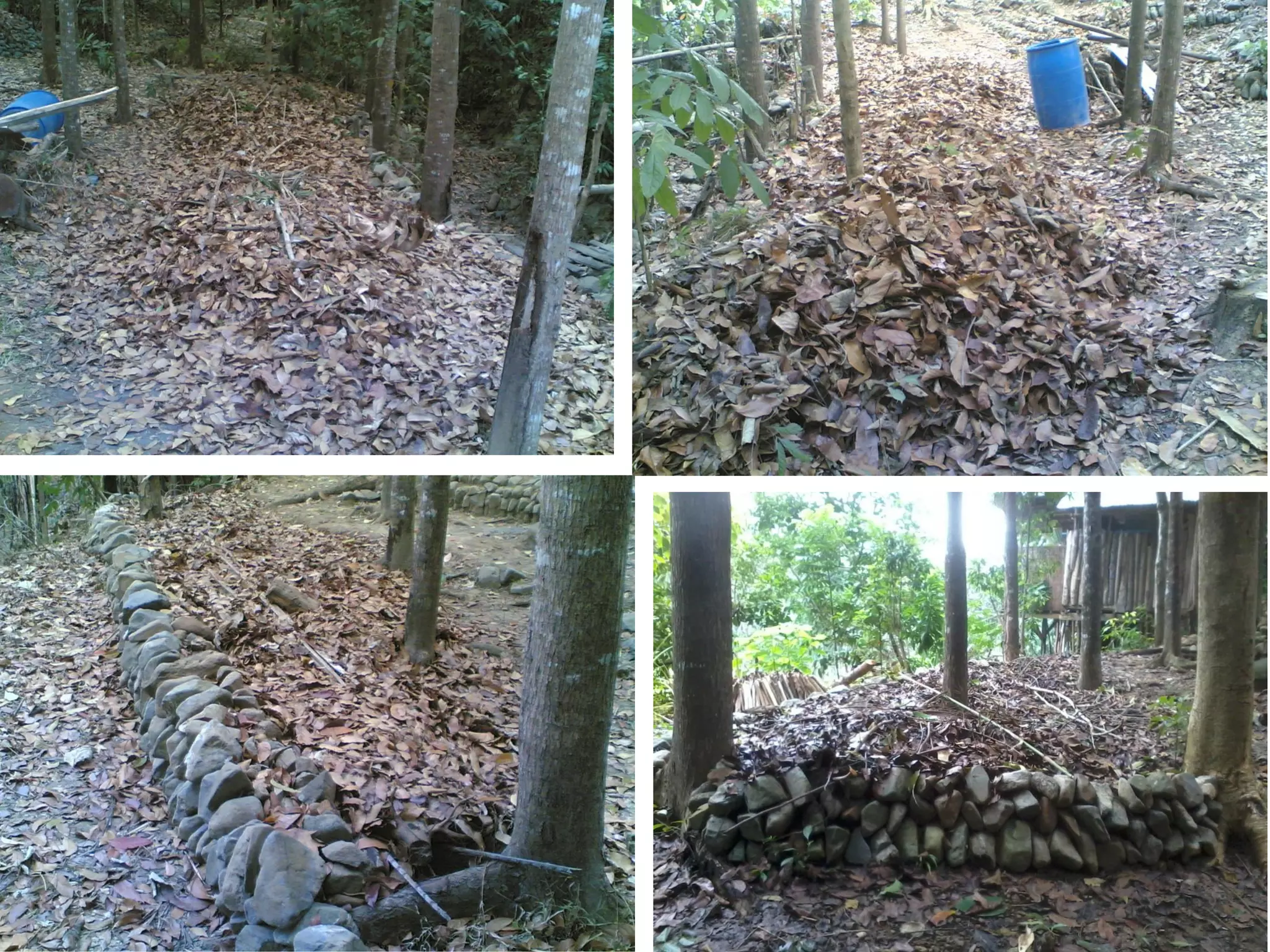
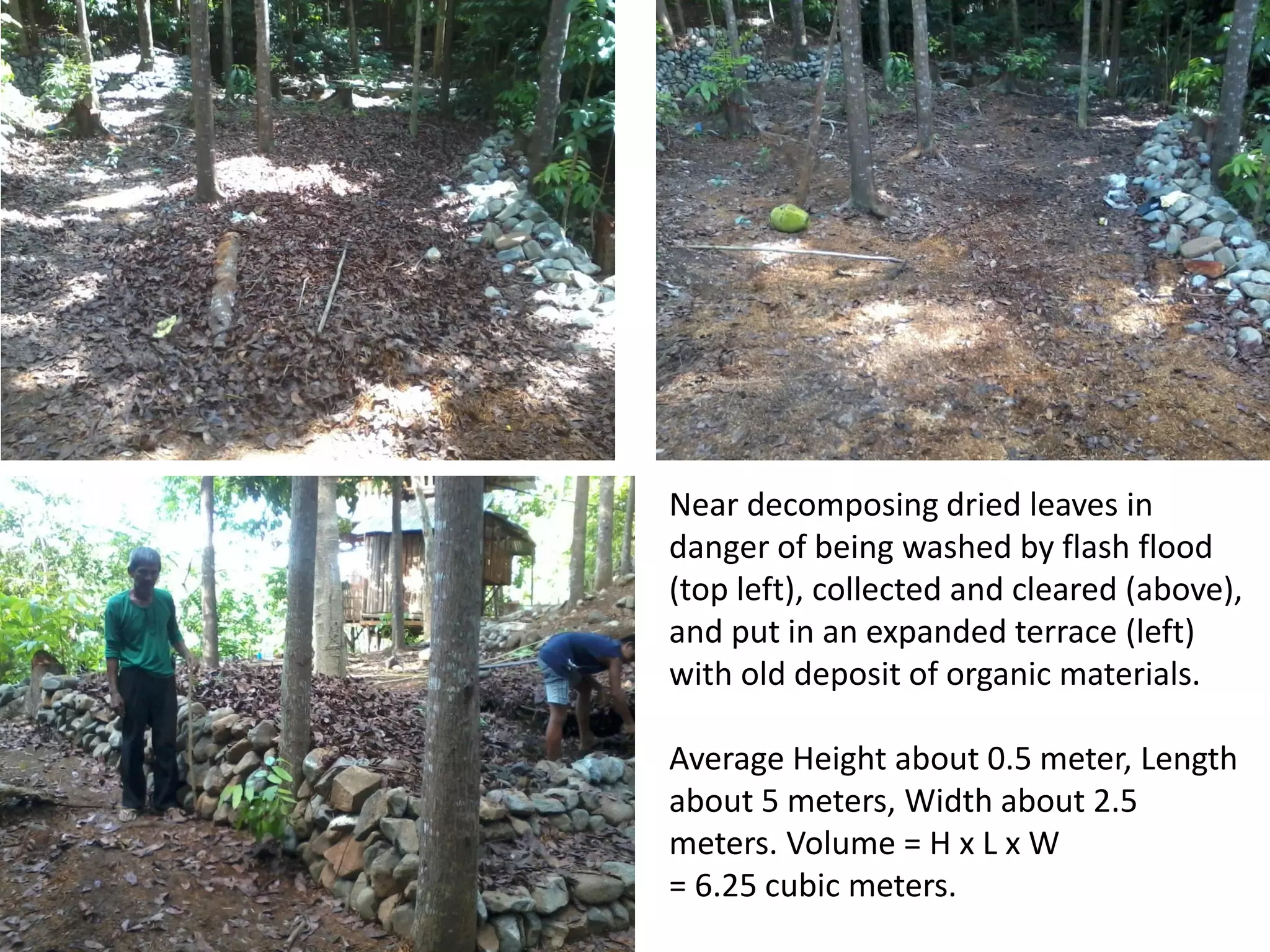
Near decomposing dried leaves in
danger of being washed by flash flood
(top left), collected and cleared (above),
and put in an expanded terrace (left)
with old deposit of organic materials.
Average Height about 0.5 meter, Length
about 5 meters, Width about 2.5
meters. Volume = H x L x W
= 6.25 cubic meters.
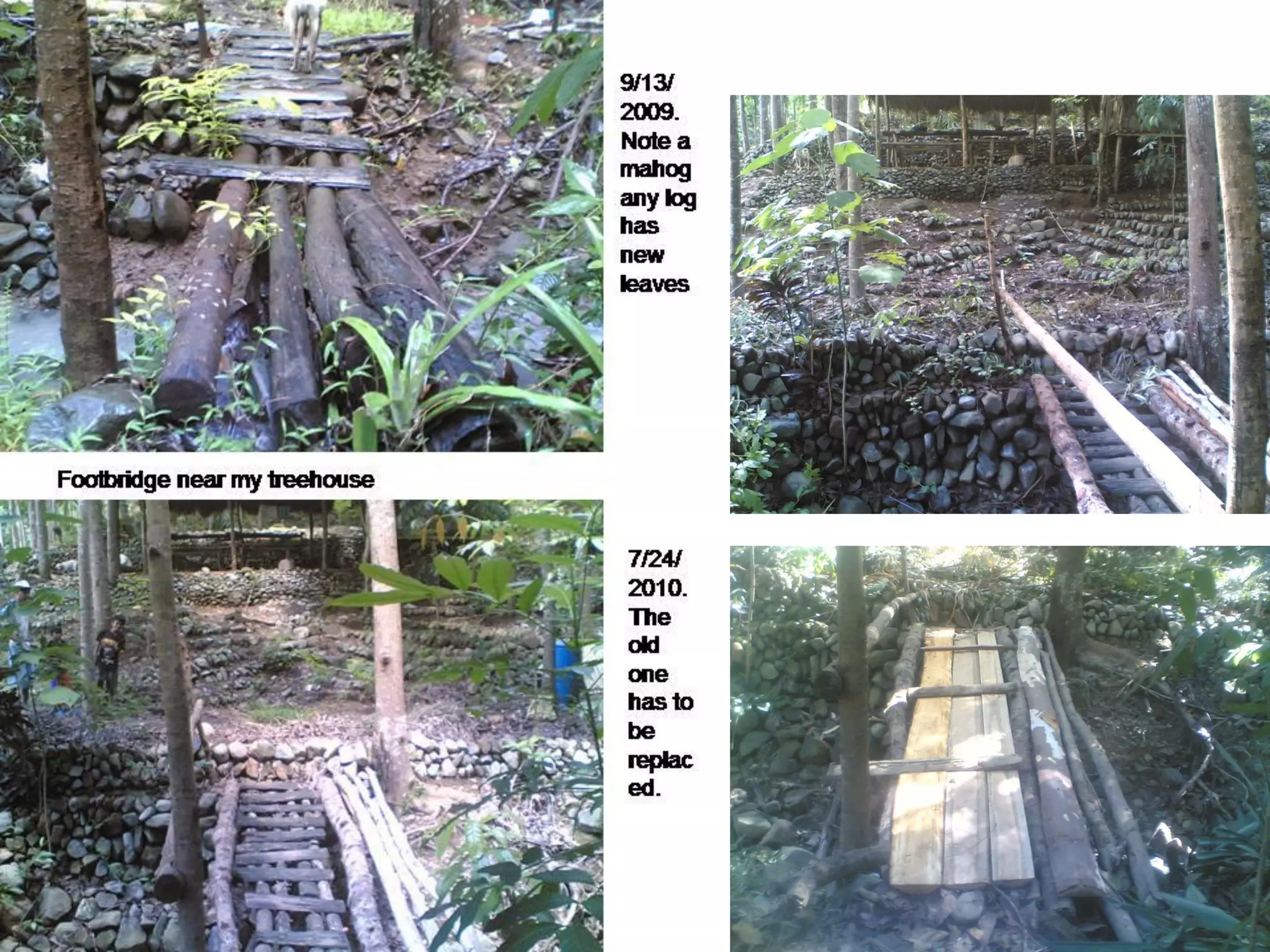
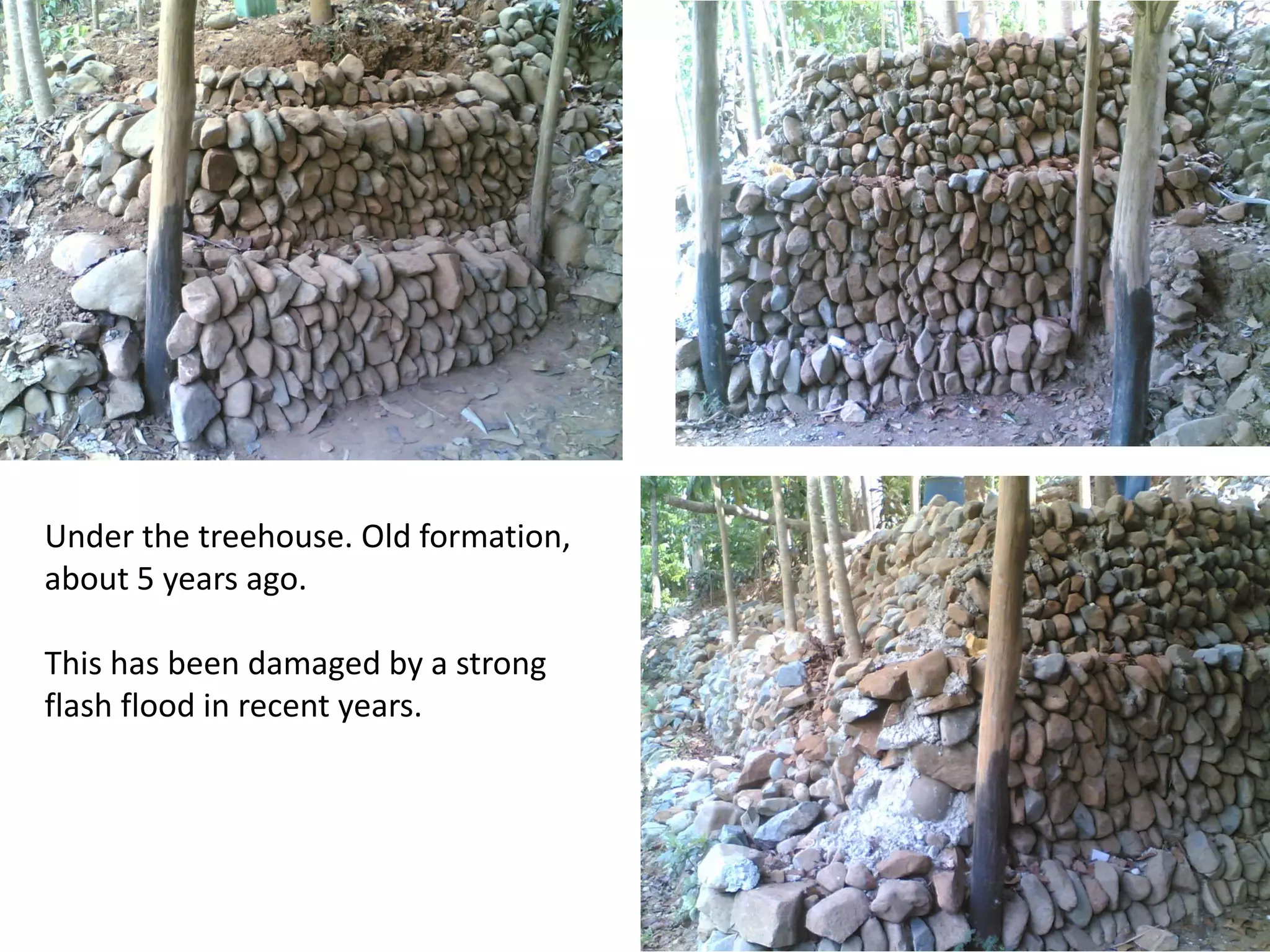
Under the treehouse. Old formation,
about 5 years ago.
This has been damaged by a strong
flash flood in recent years.
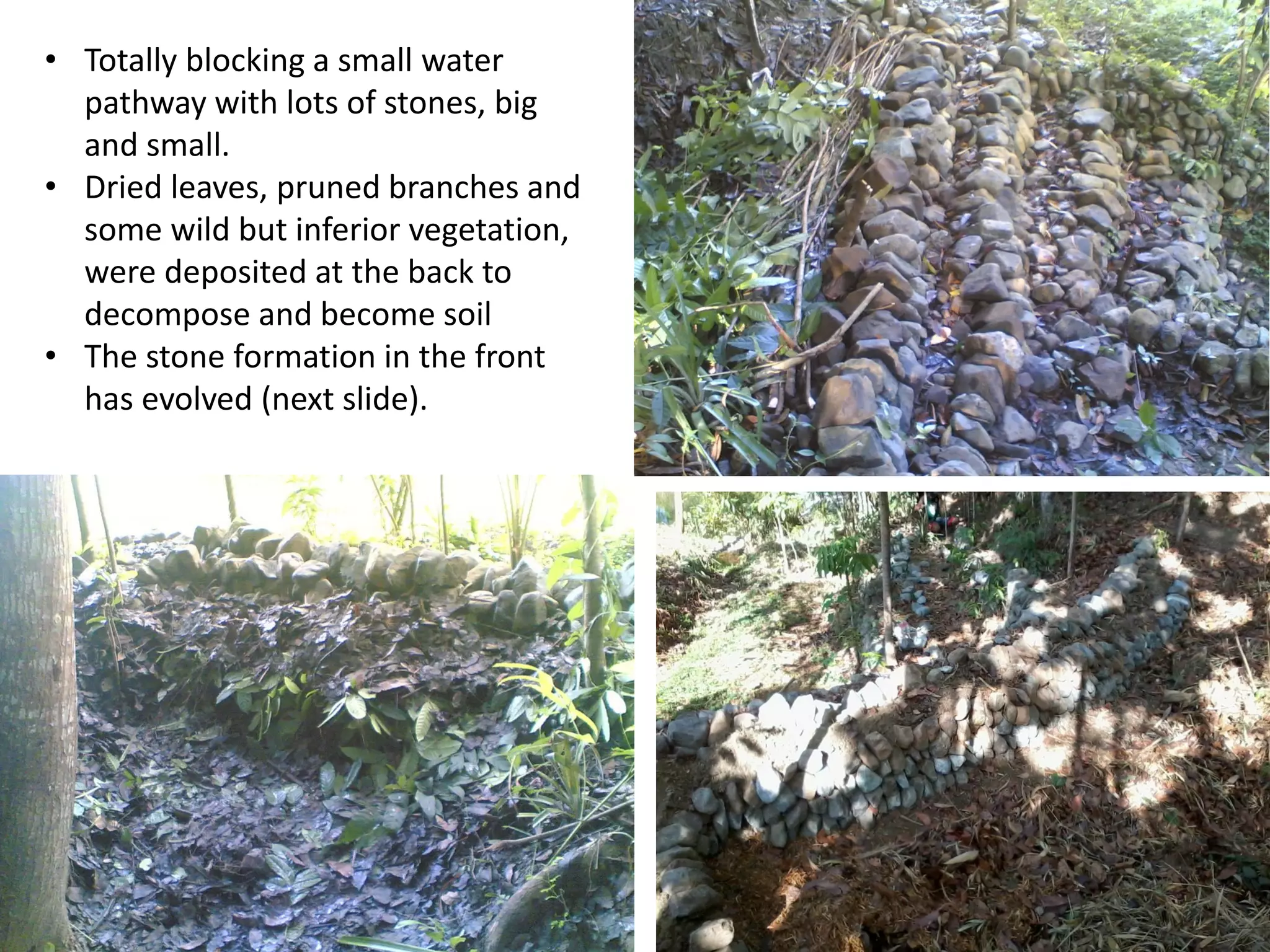
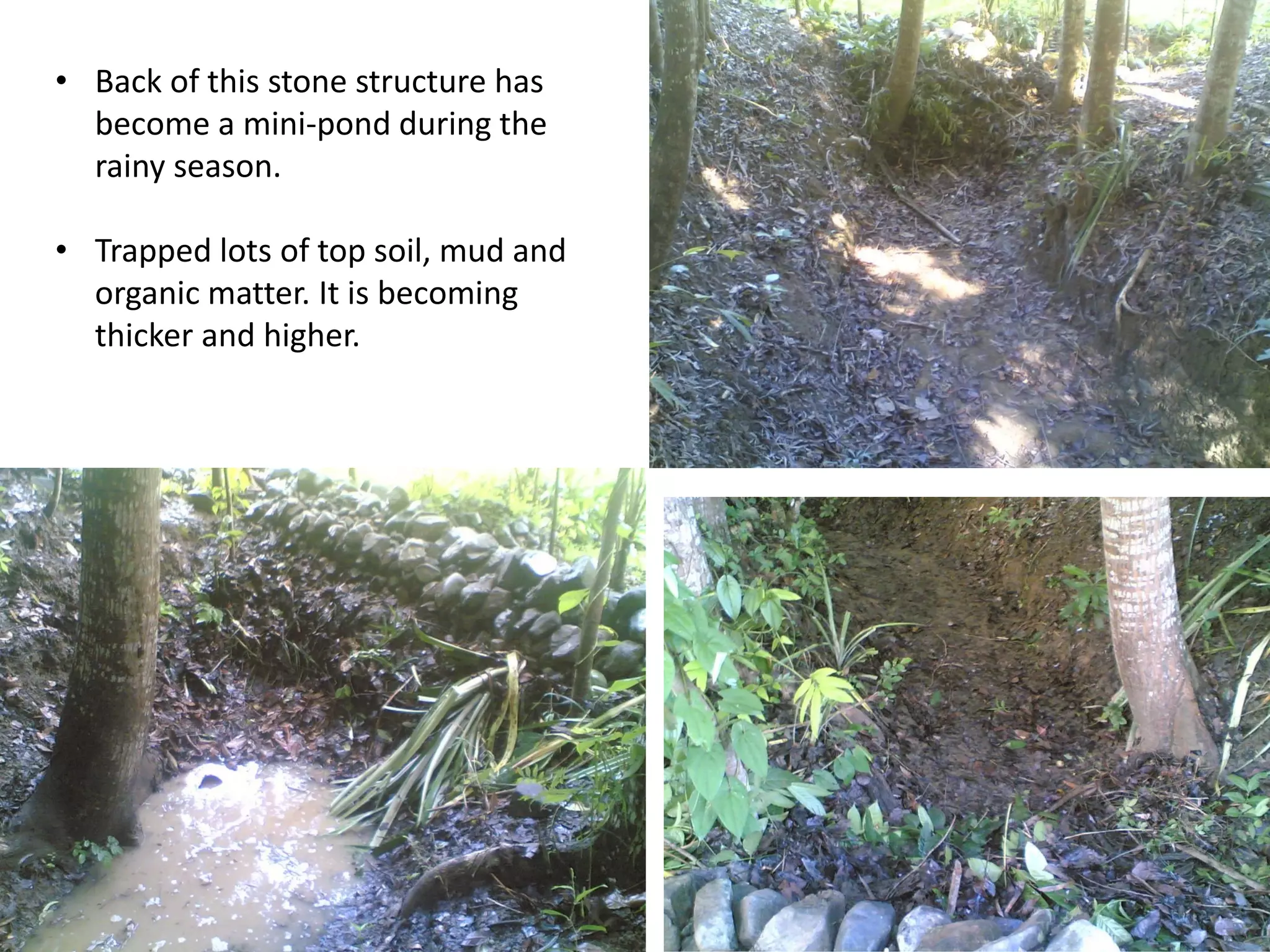
• Totally blocking a small water
pathway with lots of stones, big
and small.
• Dried leaves, pruned branches and
some wild but inferior vegetation,
were deposited at the back to
decompose and become soil
• The stone formation in the front
has evolved (next slide).
• Back of this stone structure has
become a mini-pond during the
rainy season.
• Trapped lots of top soil, mud and
organic matter. It is becoming
thicker and higher.
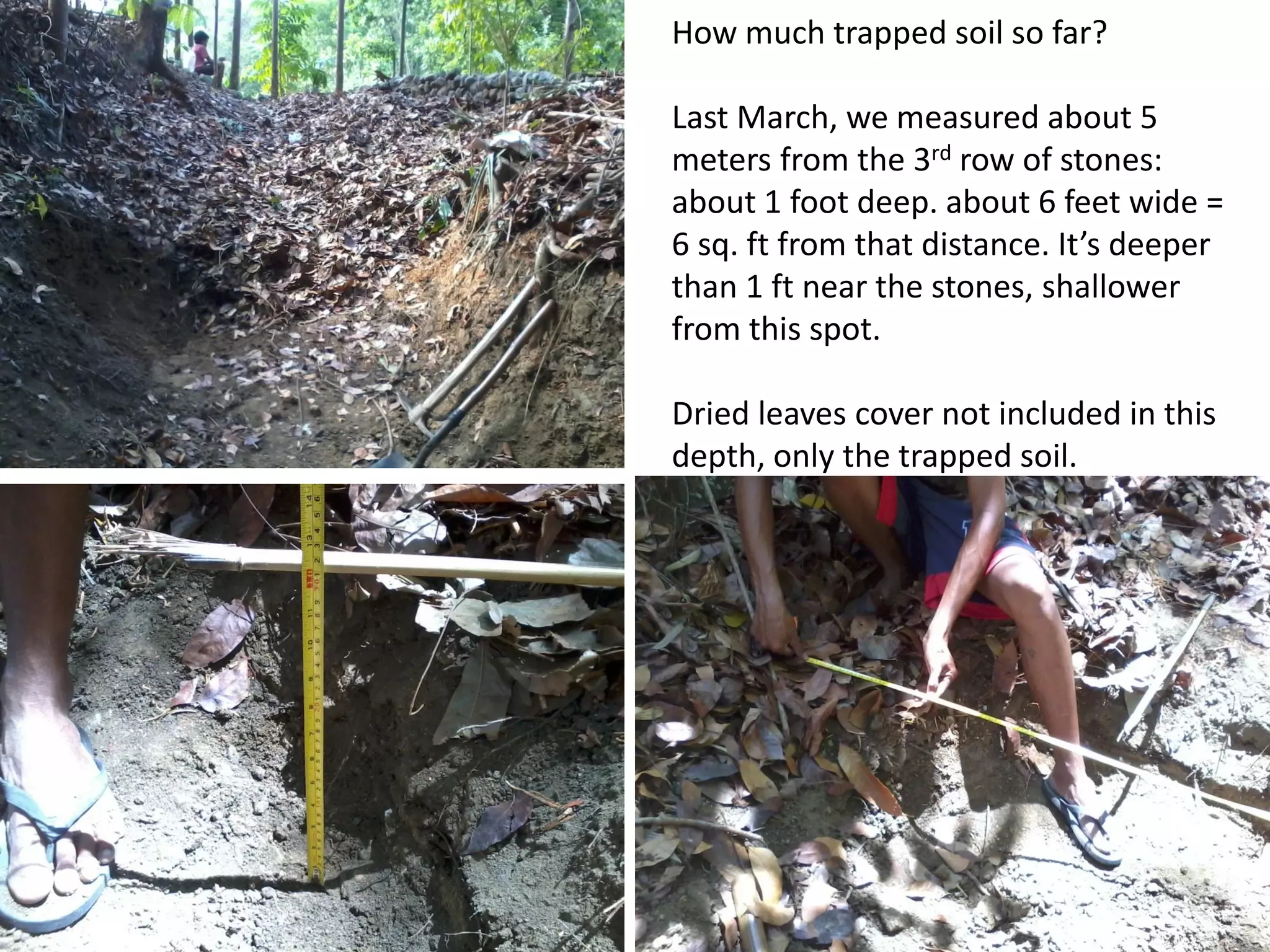
How much trapped soil so far?
Last March, we measured about 5
meters from the 3rd row of stones:
about 1 foot deep. about 6 feet wide =
6 sq. ft from that distance. It’s deeper
than 1 ft near the stones, shallower
from this spot.
Dried leaves cover not included in this
depth, only the trapped soil.
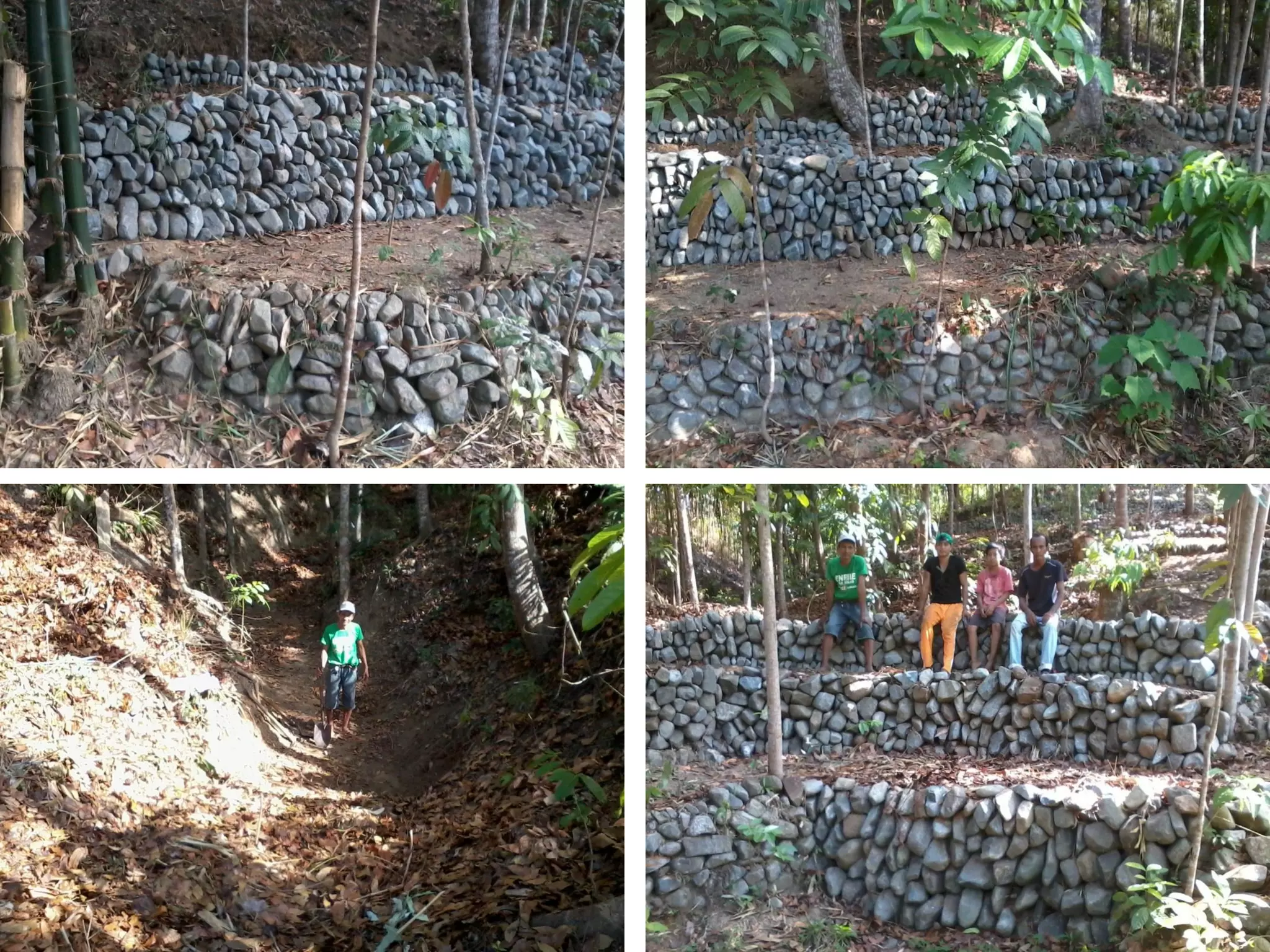
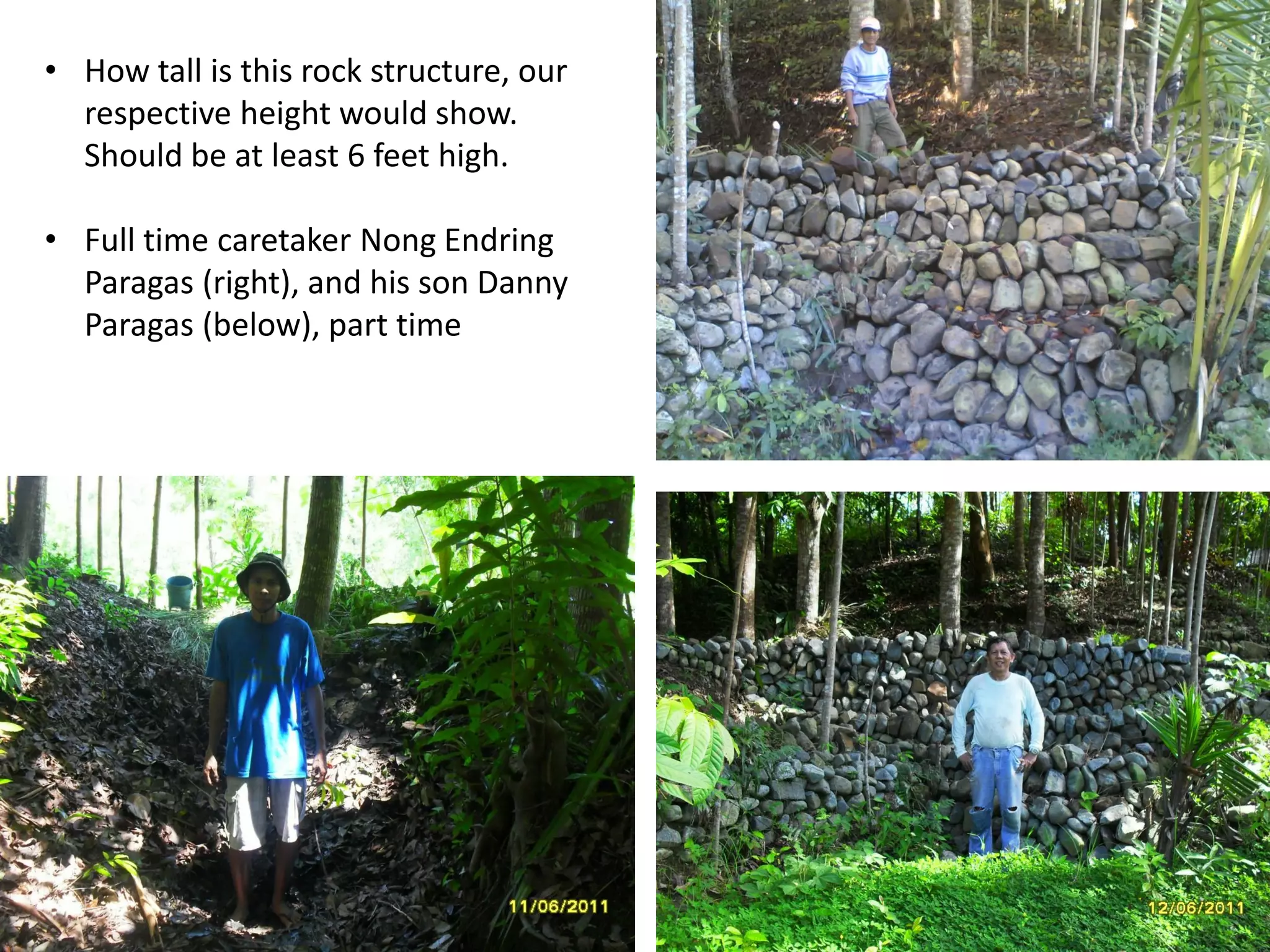
• How tall is this rock structure, our
respective height would show.
Should be at least 6 feet high.
• Full time caretaker Nong Endring
Paragas (right), and his son Danny
Paragas (below), part time
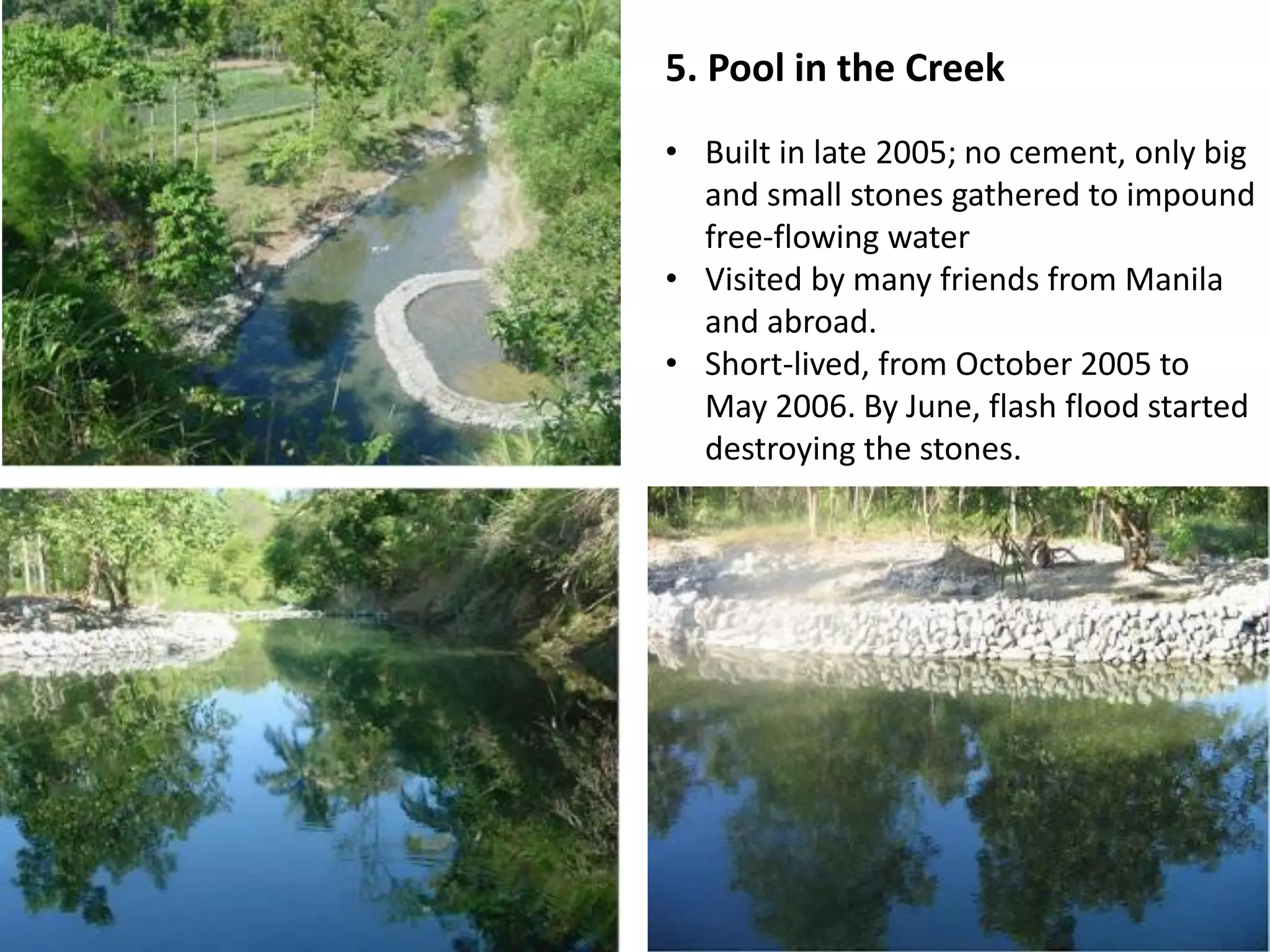
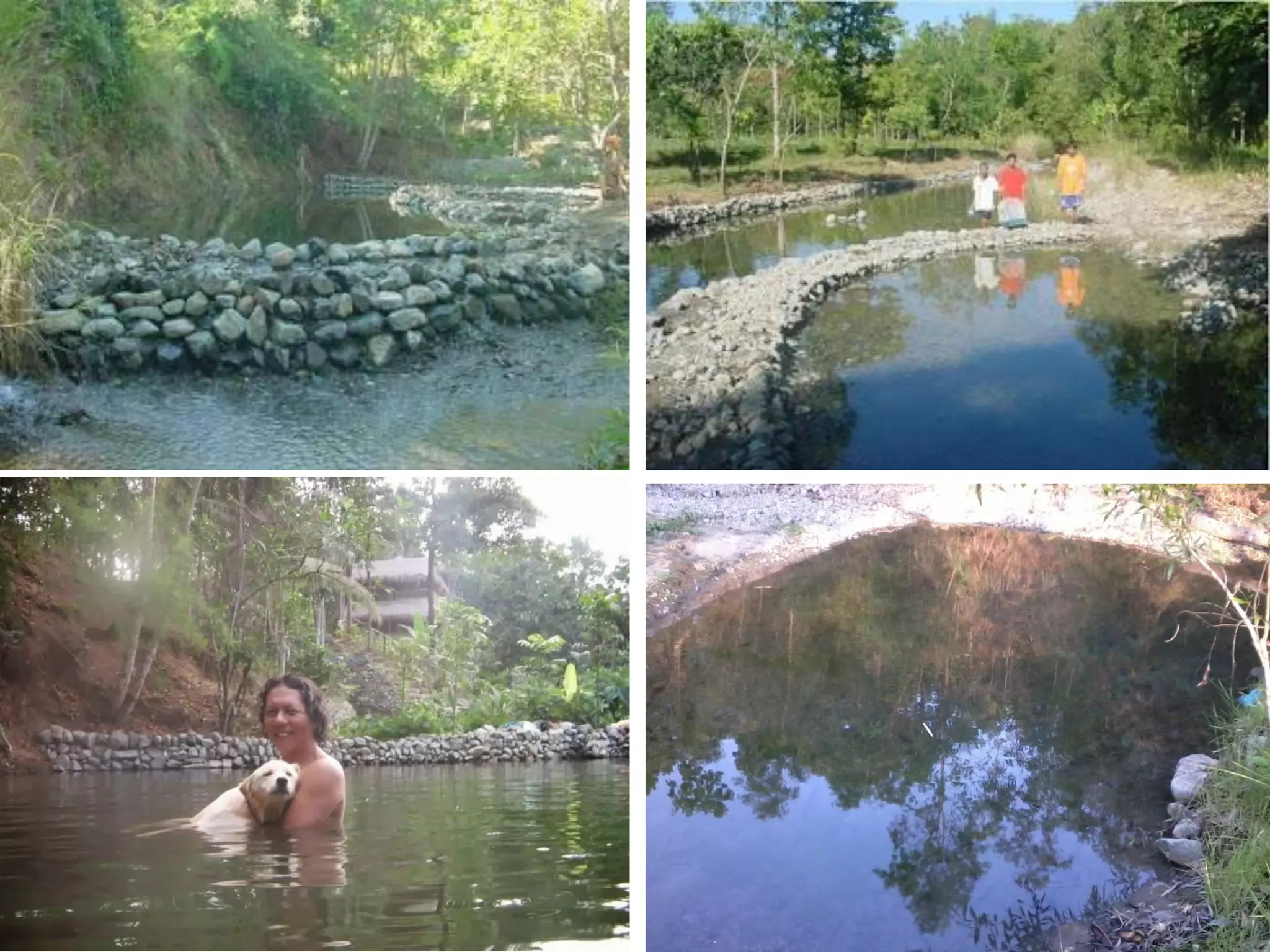
5. Pool in the Creek
• Built in late 2005; no cement, only big
and small stones gathered to impound
free-flowing water
• Visited by many friends from Manila
and abroad.
• Short-lived, from October 2005 to
May 2006. By June, flash flood started
destroying the stones.
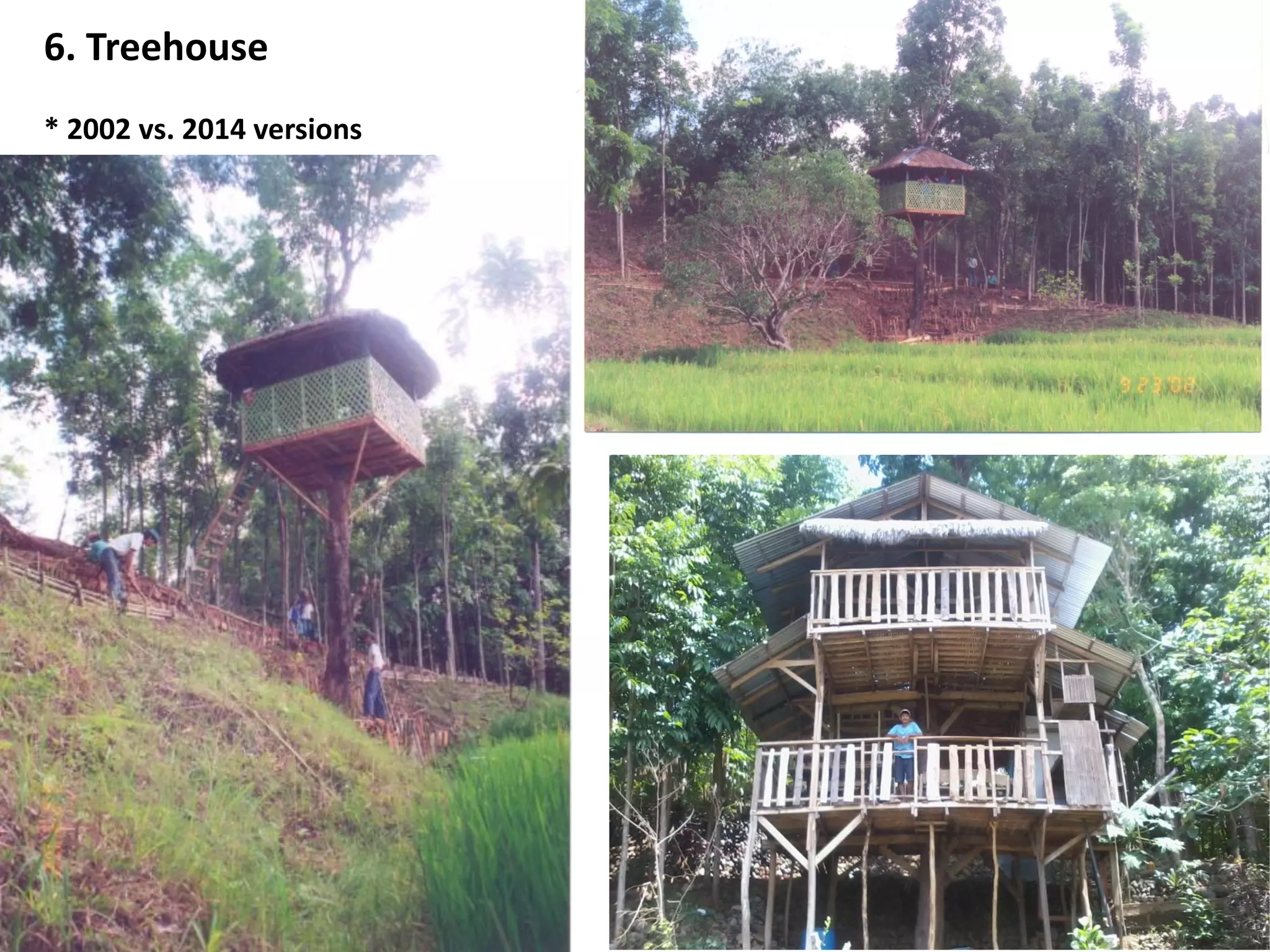
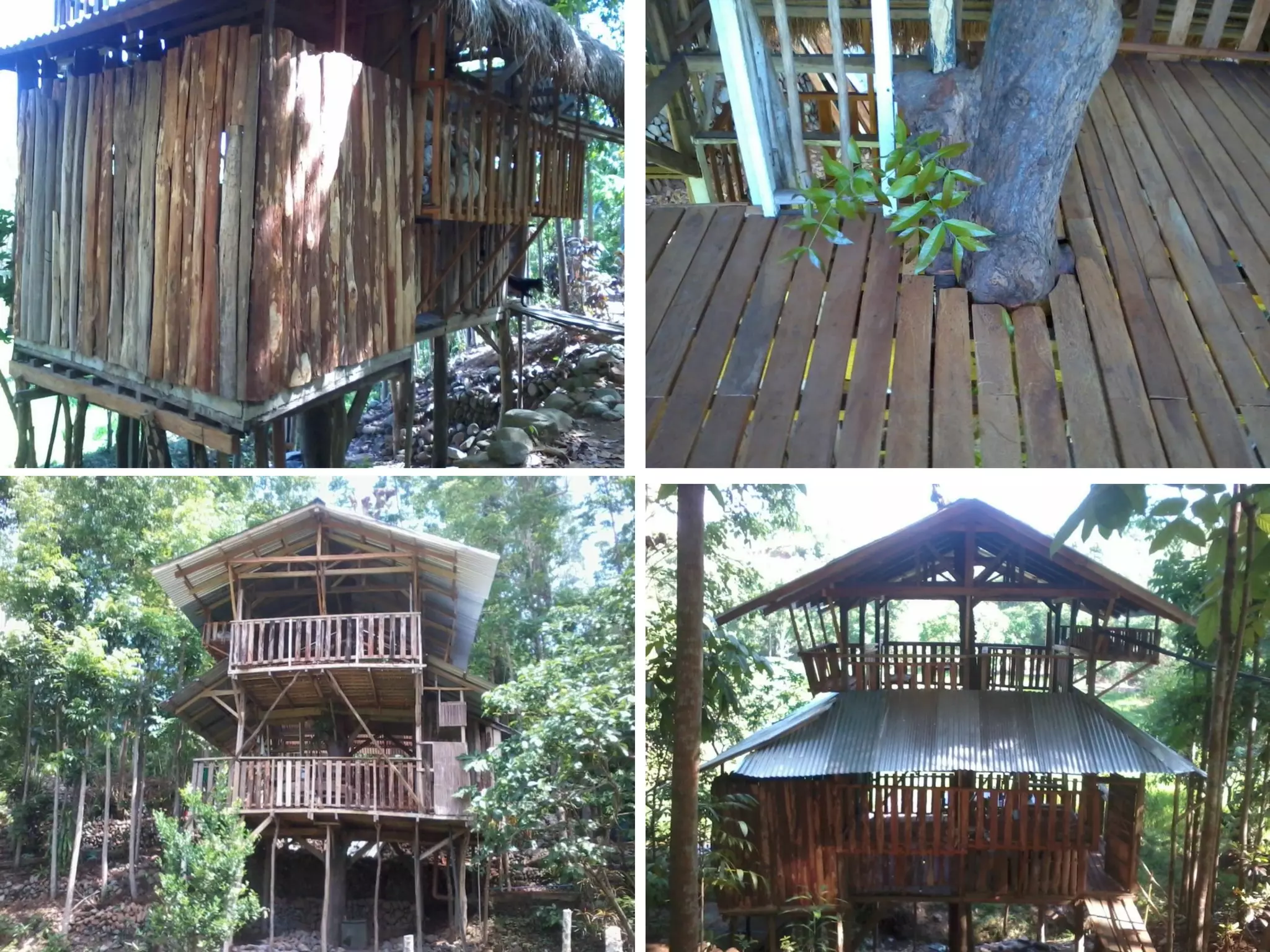
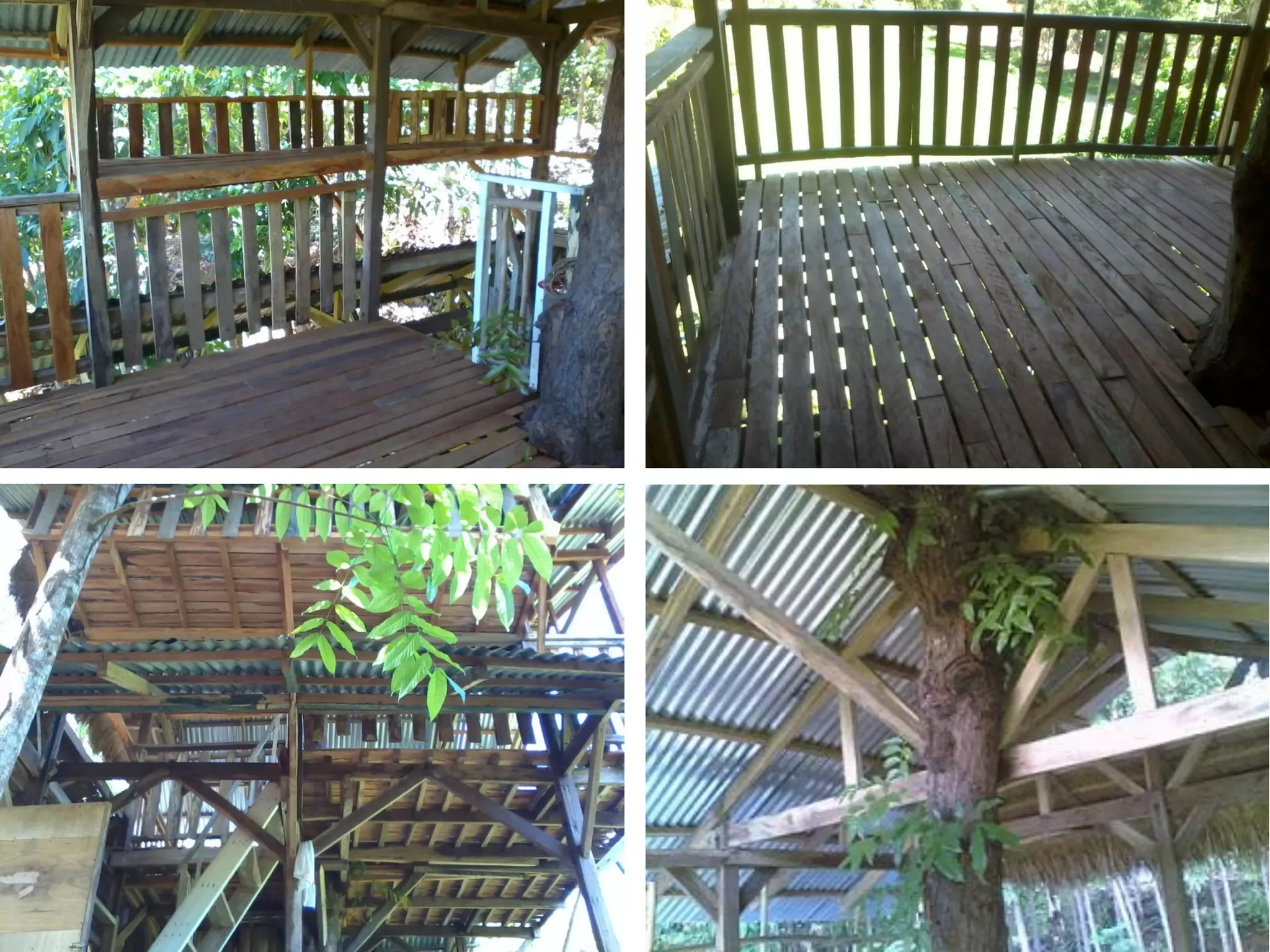
6. Treehouse
* 2002 vs. 2014 versions
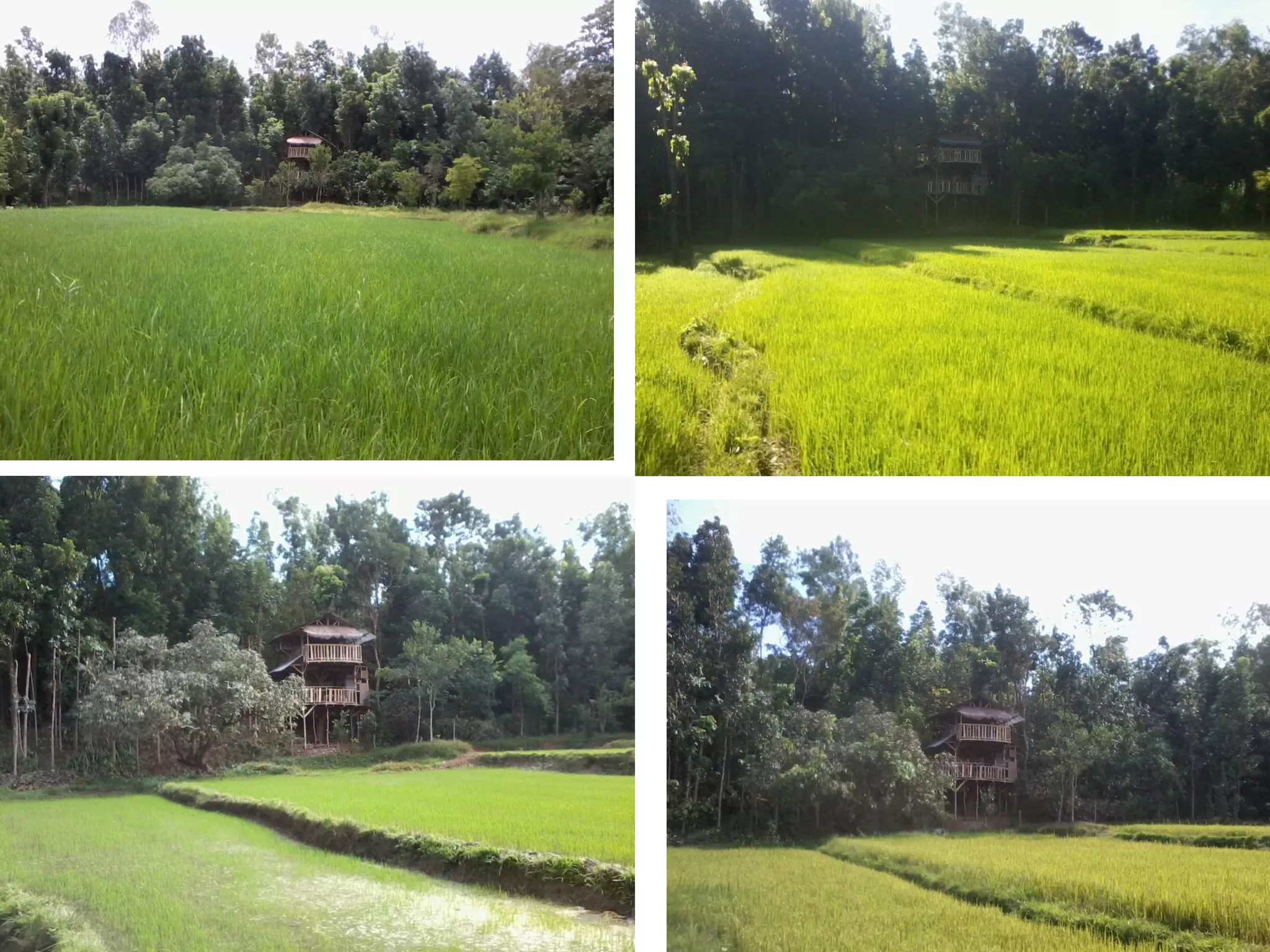
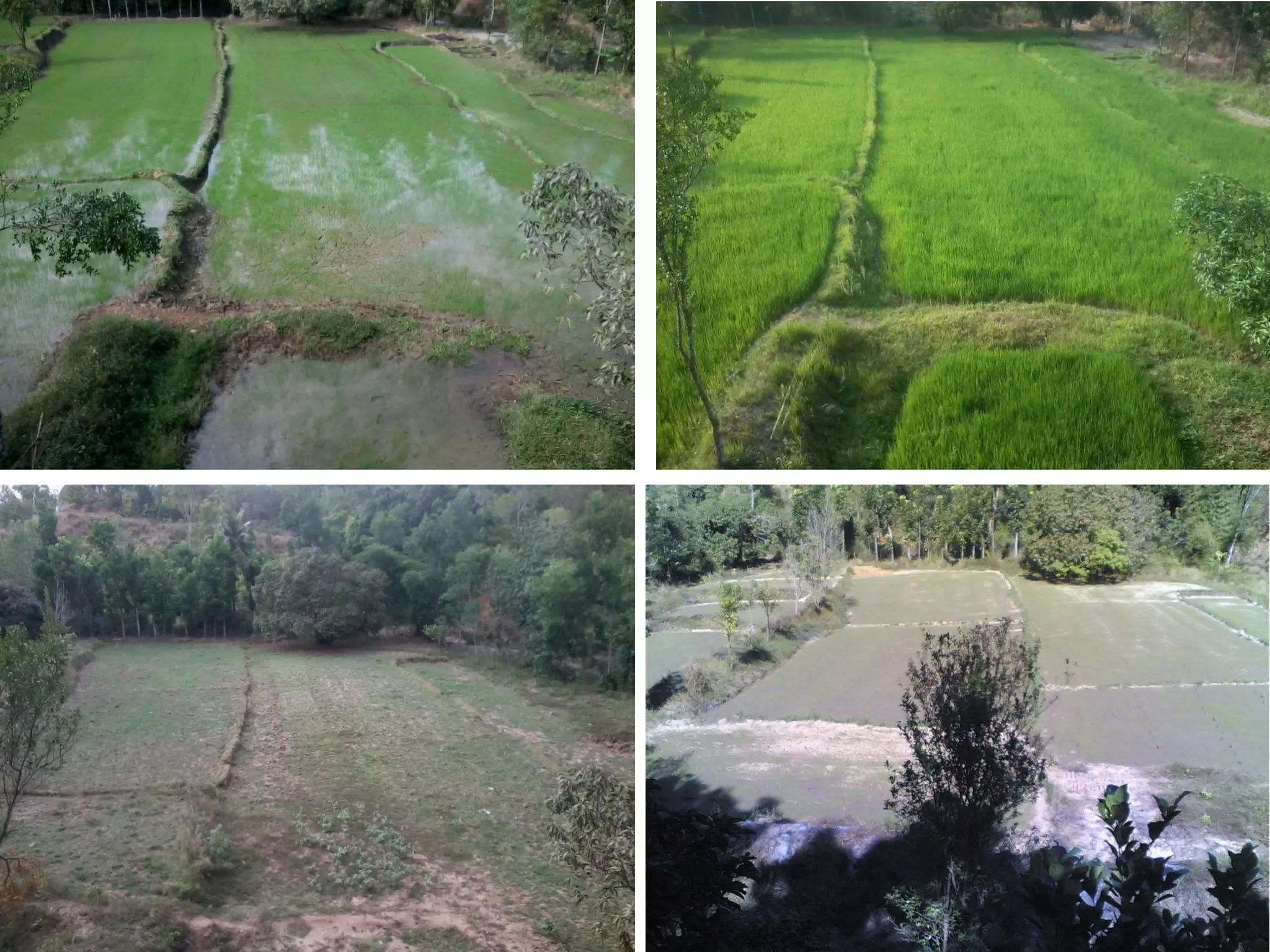
7. Irrigation and ricefields
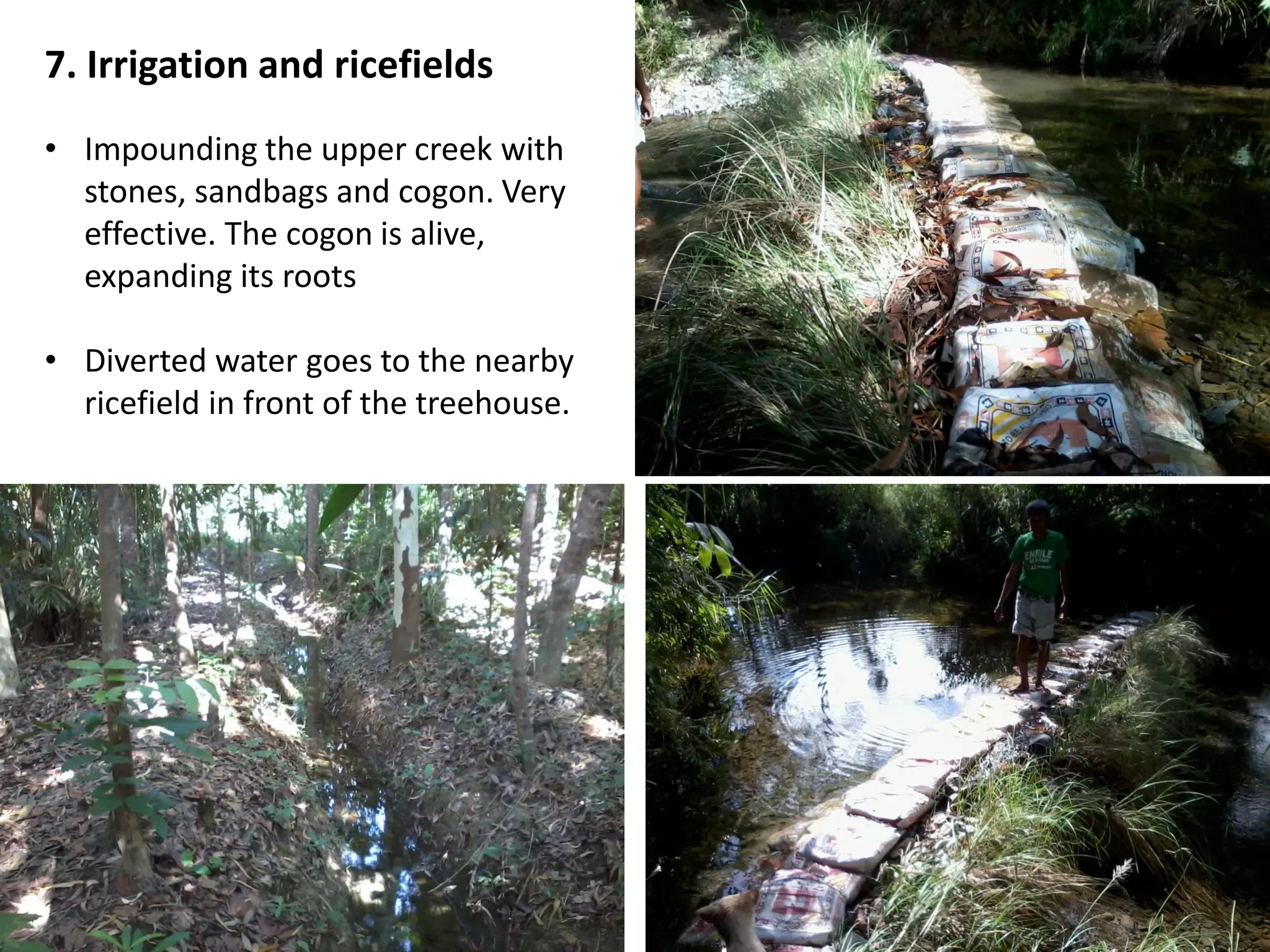
• Impounding the upper creek with
stones, sandbags and cogon. Very
effective. The cogon is alive,
expanding its roots
• Diverted water goes to the nearby
ricefield in front of the treehouse.
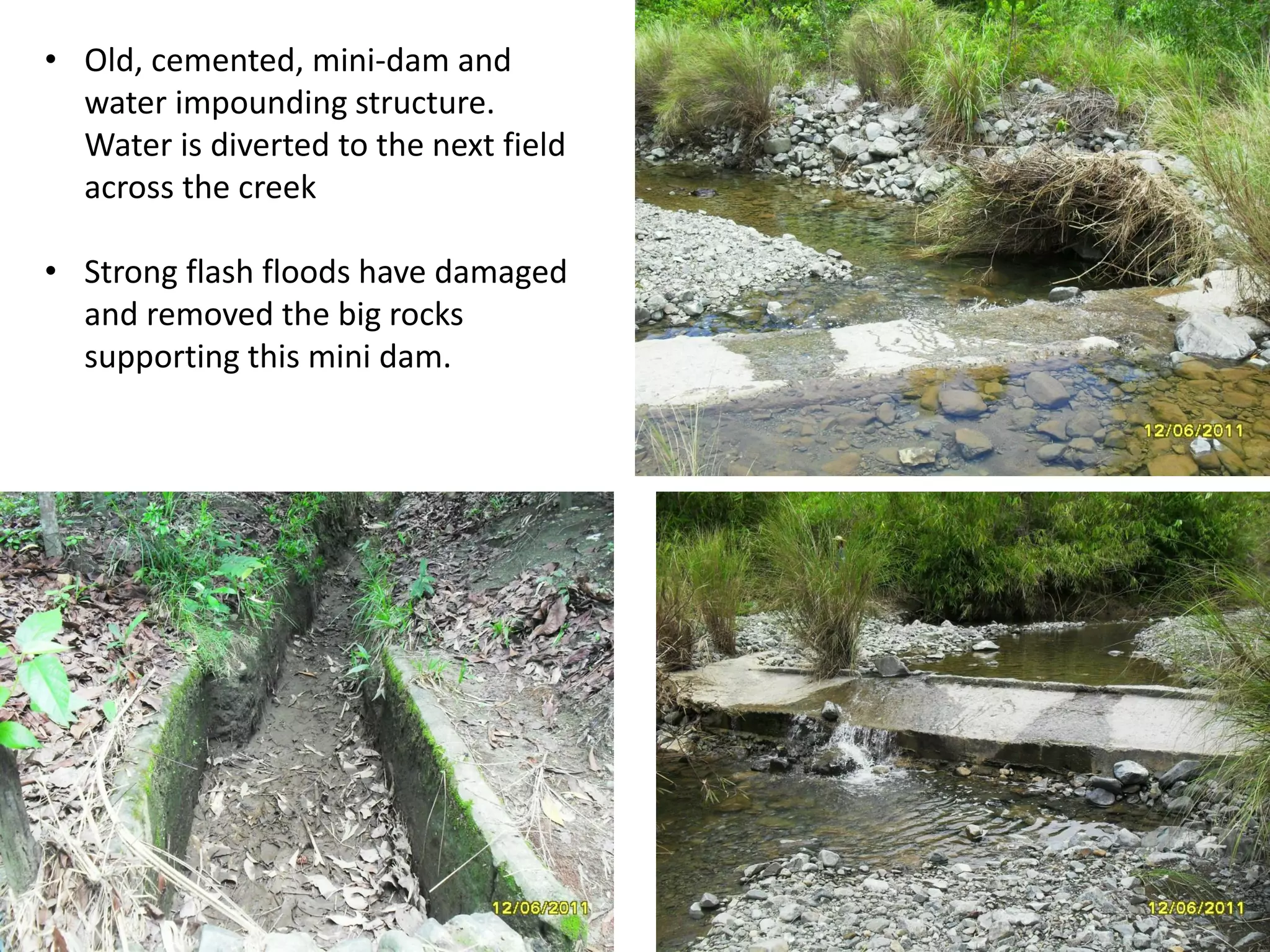
• Old, cemented, mini-dam and
water impounding structure.
Water is diverted to the next field
across the creek
• Strong flash floods have damaged
and removed the big rocks
supporting this mini dam.
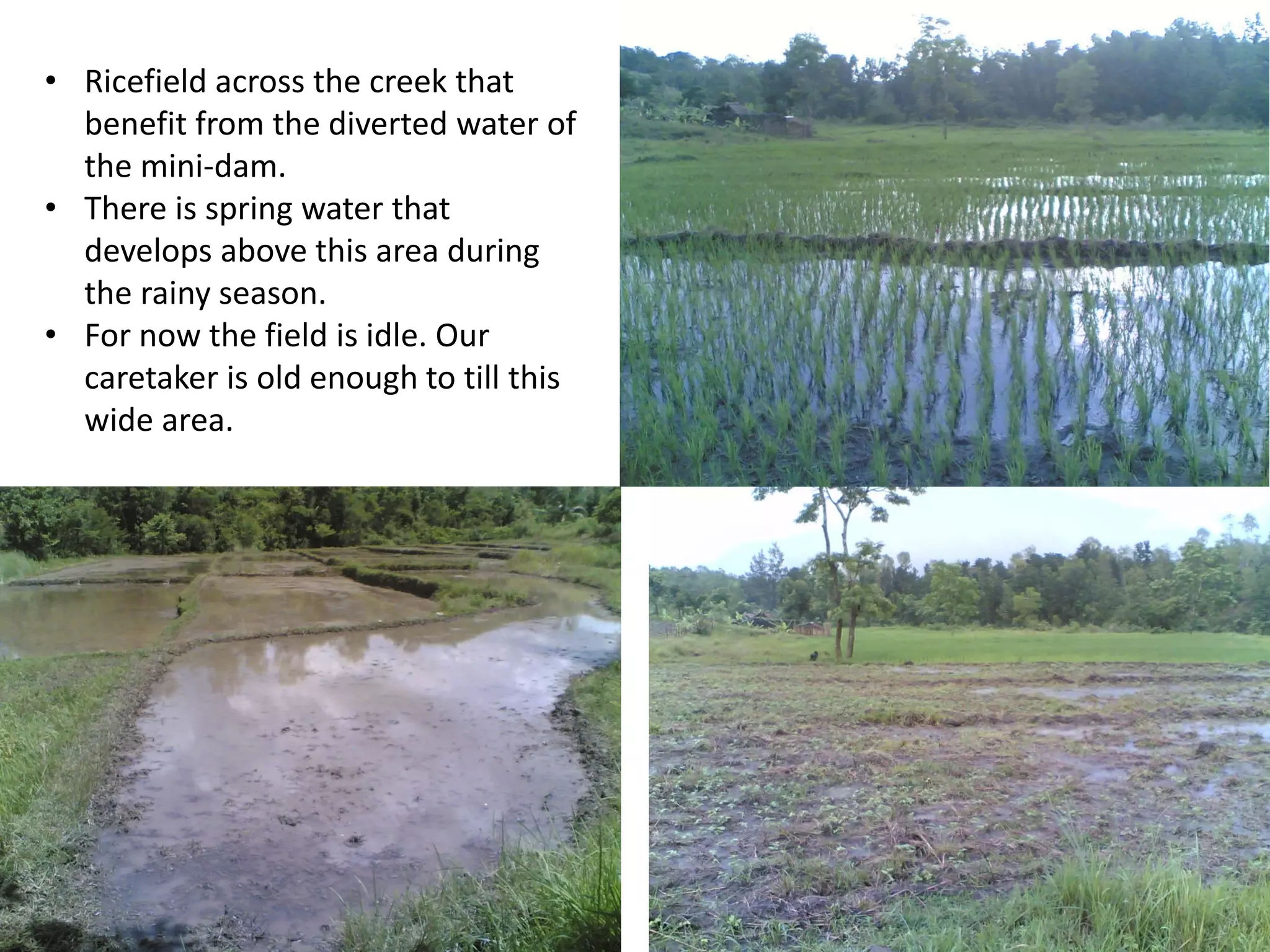
• Ricefield across the creek that
benefit from the diverted water of
the mini-dam.
• There is spring water that
develops above this area during
the rainy season.
• For now the field is idle. Our
caretaker is old enough to till this
wide area.
8. Concluding Notes
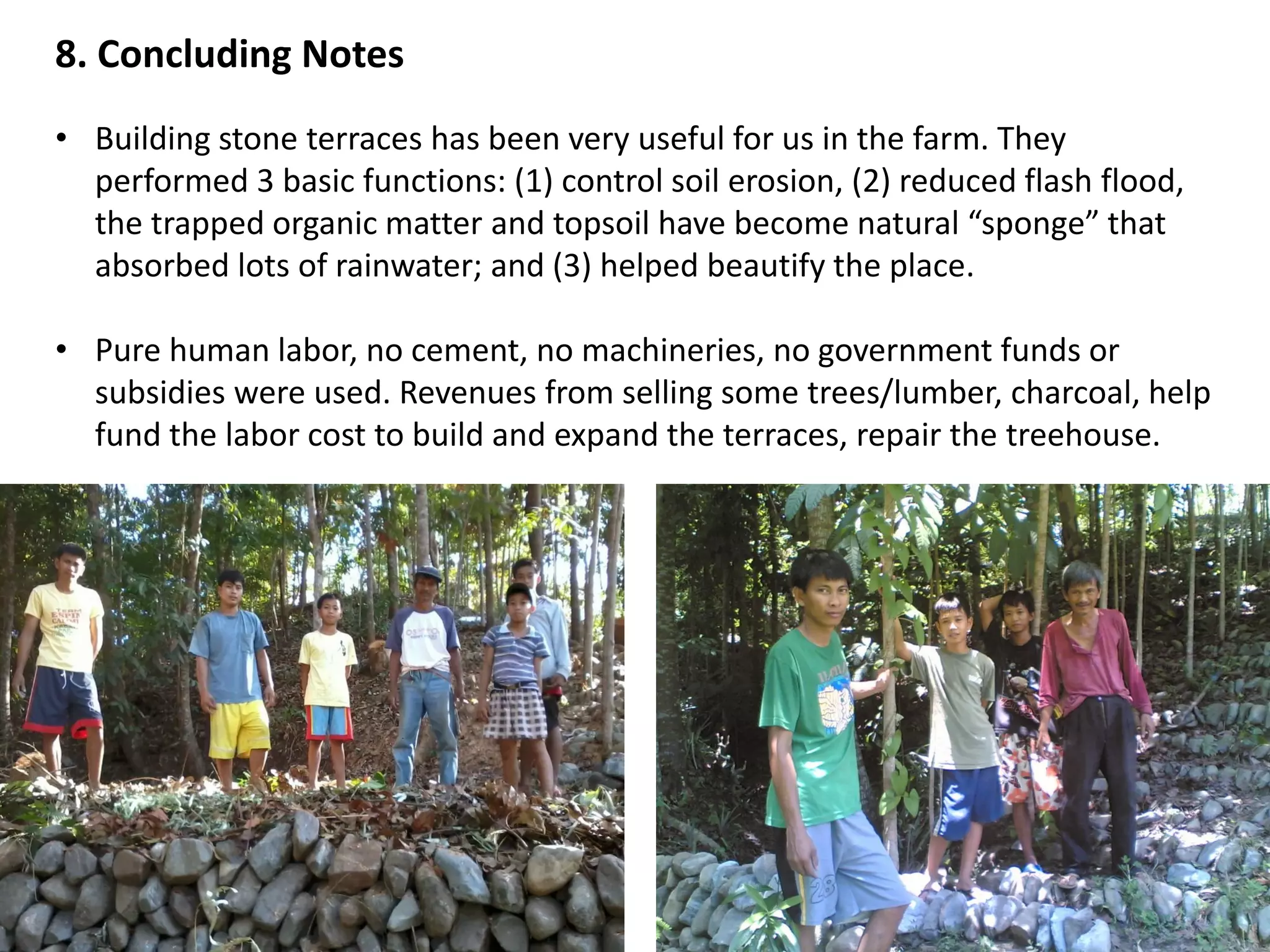
• Building stone terraces has been very useful for us in the farm. They
performed 3 basic functions: (1) control soil erosion, (2) reduced flash flood,
the trapped organic matter and topsoil have become natural “sponge” that
absorbed lots of rainwater; and (3) helped beautify the place.
• Pure human labor, no cement, no machineries, no government funds or
subsidies were used. Revenues from selling some trees/lumber, charcoal, help
fund the labor cost to build and expand the terraces, repair the treehouse.
• Thanks to our caretaker and extra workers (hired only when funds would
allow)
• Finally, thanks to Dr. Samran Sombatpanit, Past President, World Association
for Soil and Water Conservation (WASWAC) for inviting me to present in this
unique seminar at the BSWM.
• Read more about the farm,
http://sustaindevelopment.
blogspot.com/
• Nonoy Oplas,
noysky_oplasky@yahoo.com
Rolling Stones vs. Soil Erosion

Rolling Stones vs. Soil Erosion

  • 1.
    Rolling Stones vs. SoilErosion Bienvenido “Nonoy” Oplas, Jr. Millora Farms Bugallon, Pangasinan WASWAC-BSWM Seminar on Soil Management Bureau of Soil and Water Management, DA, Quezon City May 12, 2014
  • 2.
    Outline 1.The Farm, Pangasinan 2.TheRolling Stones 3.Old Terraces 4.Various Terraces 5.Pool in the Creek 6.Treehouse 7.Irrigation and Ricefields 8.Concluding Notes
  • 3.
    1. The Farm,Location • Brgy. Laguit Padilla, Bugallon, Pangasinan • About 7 kms. From the highway in Bugallon, which is 198 kms. From Manila • Midland to upland farm; main crops are mangos and forest trees
  • 4.
    2. The RollingStones • Not Mick Jagger and his rock band • Though being a rock fan, I like their name and songs • But stones, big and small, in the nearby creek in the farm
  • 6.
    3. Old Terraces,2004-2005 • Built after the bigger treehouse was finished in March 2004 • Mahogany trees then were still small. We started planting a few trees in 1992 • The stones were gathered manually from a nearby creek.
  • 8.
    4. Various Terraces •Mostly around the treehouse, left, back, right. • Stabilized and enriched the soil, reduced flash flood, strengthened the trees, help beautify the place • At times though, the stones become hiding place of some crawlers: small snakes, reptiles, soil spider.
  • 15.
    Near decomposing driedleaves in danger of being washed by flash flood (top left), collected and cleared (above), and put in an expanded terrace (left) with old deposit of organic materials. Average Height about 0.5 meter, Length about 5 meters, Width about 2.5 meters. Volume = H x L x W = 6.25 cubic meters.
  • 18.
    Under the treehouse.Old formation, about 5 years ago. This has been damaged by a strong flash flood in recent years.
  • 20.
    • Totally blockinga small water pathway with lots of stones, big and small. • Dried leaves, pruned branches and some wild but inferior vegetation, were deposited at the back to decompose and become soil • The stone formation in the front has evolved (next slide).
  • 21.
    • Back ofthis stone structure has become a mini-pond during the rainy season. • Trapped lots of top soil, mud and organic matter. It is becoming thicker and higher.
  • 24.
    How much trappedsoil so far? Last March, we measured about 5 meters from the 3rd row of stones: about 1 foot deep. about 6 feet wide = 6 sq. ft from that distance. It’s deeper than 1 ft near the stones, shallower from this spot. Dried leaves cover not included in this depth, only the trapped soil.
  • 25.
    • How tallis this rock structure, our respective height would show. Should be at least 6 feet high. • Full time caretaker Nong Endring Paragas (right), and his son Danny Paragas (below), part time
  • 26.
    5. Pool inthe Creek • Built in late 2005; no cement, only big and small stones gathered to impound free-flowing water • Visited by many friends from Manila and abroad. • Short-lived, from October 2005 to May 2006. By June, flash flood started destroying the stones.
  • 28.
    6. Treehouse * 2002vs. 2014 versions
  • 33.
    7. Irrigation andricefields • Impounding the upper creek with stones, sandbags and cogon. Very effective. The cogon is alive, expanding its roots • Diverted water goes to the nearby ricefield in front of the treehouse.
  • 34.
    • Old, cemented,mini-dam and water impounding structure. Water is diverted to the next field across the creek • Strong flash floods have damaged and removed the big rocks supporting this mini dam.
  • 36.
    • Ricefield acrossthe creek that benefit from the diverted water of the mini-dam. • There is spring water that develops above this area during the rainy season. • For now the field is idle. Our caretaker is old enough to till this wide area.
  • 37.
    8. Concluding Notes •Building stone terraces has been very useful for us in the farm. They performed 3 basic functions: (1) control soil erosion, (2) reduced flash flood, the trapped organic matter and topsoil have become natural “sponge” that absorbed lots of rainwater; and (3) helped beautify the place. • Pure human labor, no cement, no machineries, no government funds or subsidies were used. Revenues from selling some trees/lumber, charcoal, help fund the labor cost to build and expand the terraces, repair the treehouse.
  • 38.
    • Thanks toour caretaker and extra workers (hired only when funds would allow) • Finally, thanks to Dr. Samran Sombatpanit, Past President, World Association for Soil and Water Conservation (WASWAC) for inviting me to present in this unique seminar at the BSWM. • Read more about the farm, http://sustaindevelopment. blogspot.com/ • Nonoy Oplas, noysky_oplasky@yahoo.com