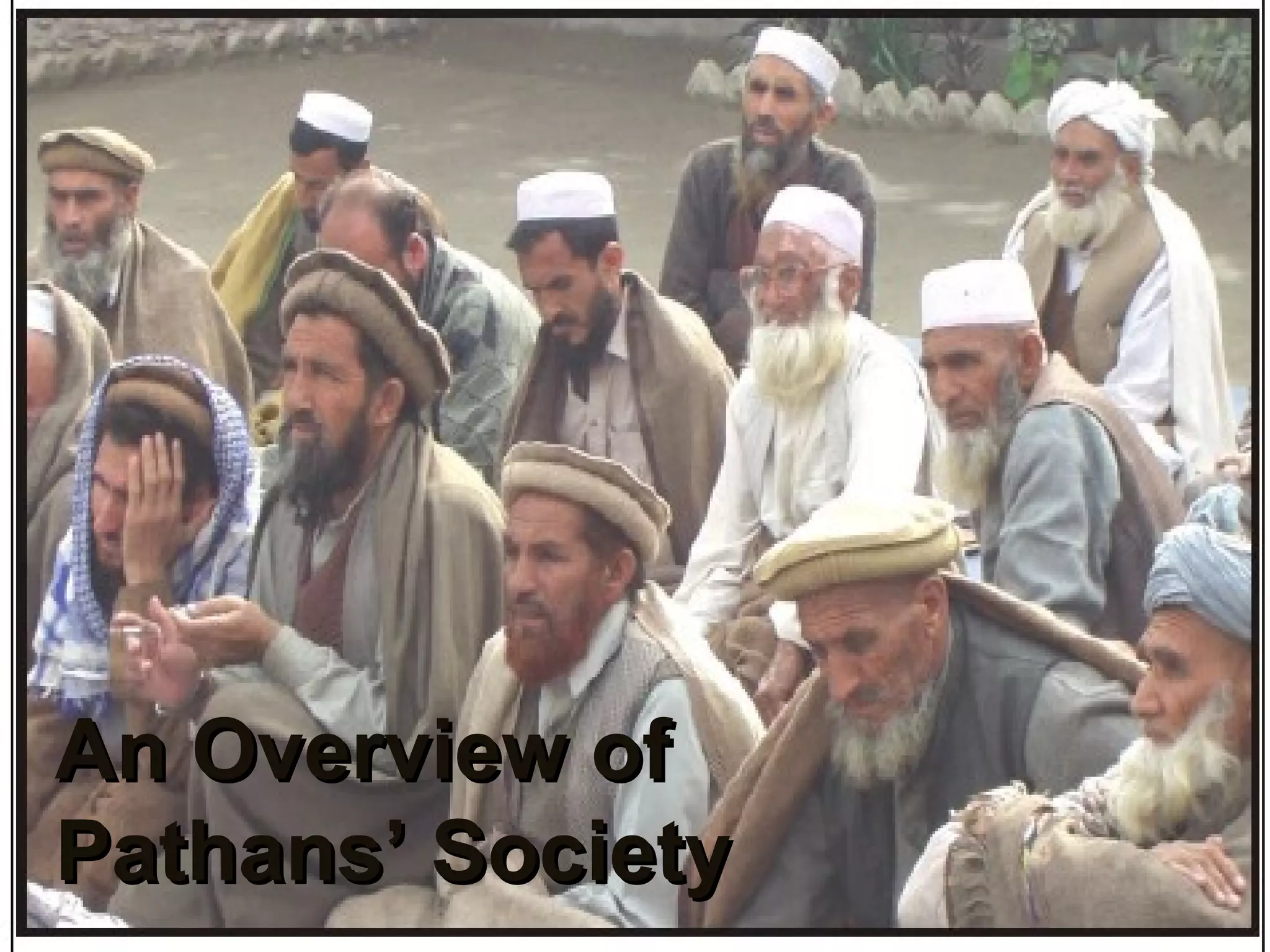
An Overview of  Pathans’ Society
Who are Pathans, Pukhtuns or Pashtuns? The Pathans are known as people who originated from Paktia Province of Afghanistan and are brave, simple, and sincere in their dealings with others. They are noted as fierce fighters, and throughout history they have offered strong resistance to invaders. They staunchly hold on to their cultural traditions and connect with one another in a visceral way.
ALWAYS REMEMBER  That ALL PASHTO SPEAKERS ARE NOT PATHANS  & SIMILARY, ALL PATHANS ARE NOT PASHTO SPEAKERS.
 
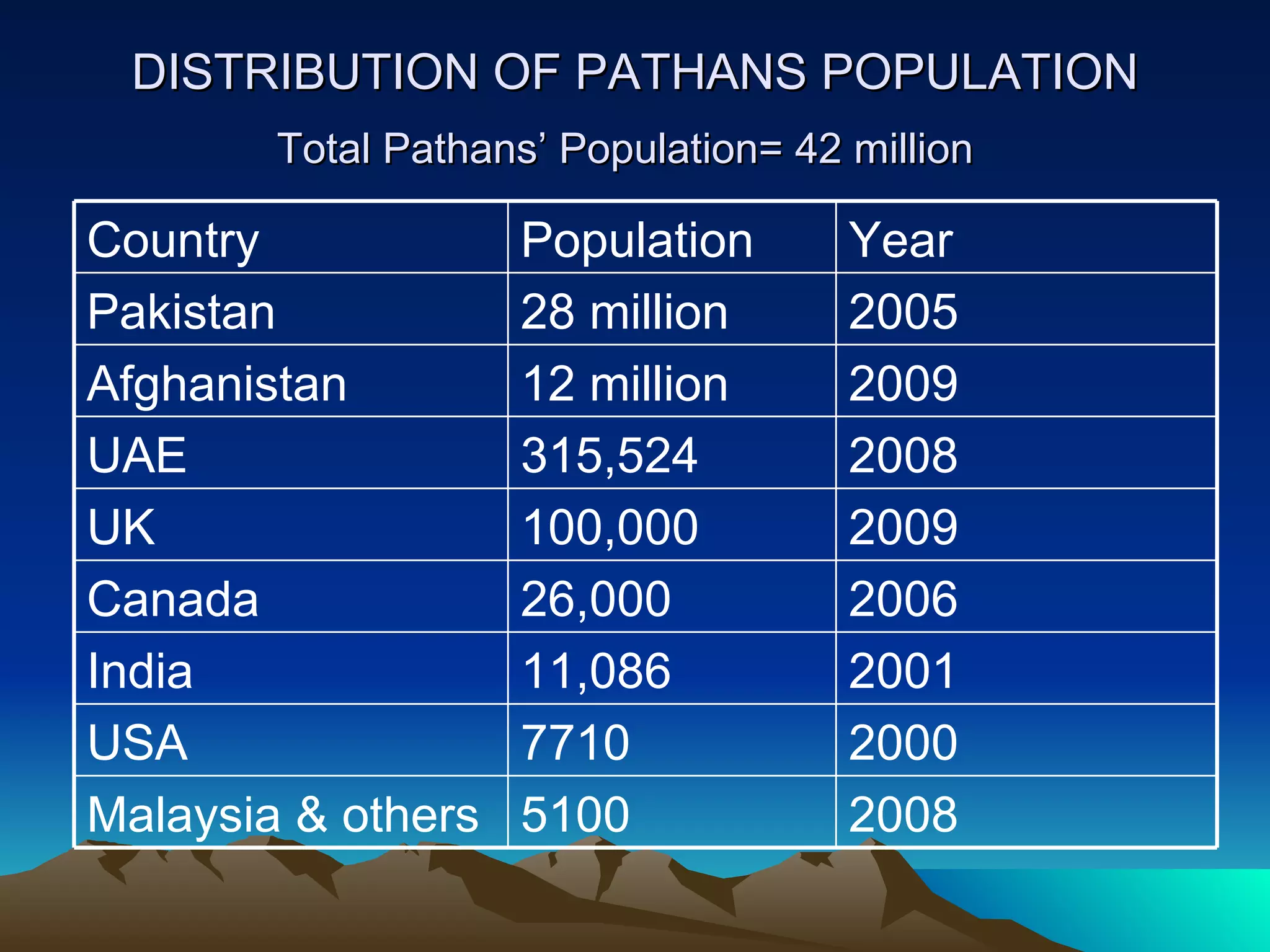
DISTRIBUTION OF PATHANS POPULATION Total Pathans’ Population= 42 million   2008 5100 Malaysia & others 2000 7710 USA 2001 11,086 India 2006 26,000 Canada 2009 100,000 UK 2008 315,524 UAE 2009 12 million Afghanistan 2005 28 million Pakistan Year Population Country
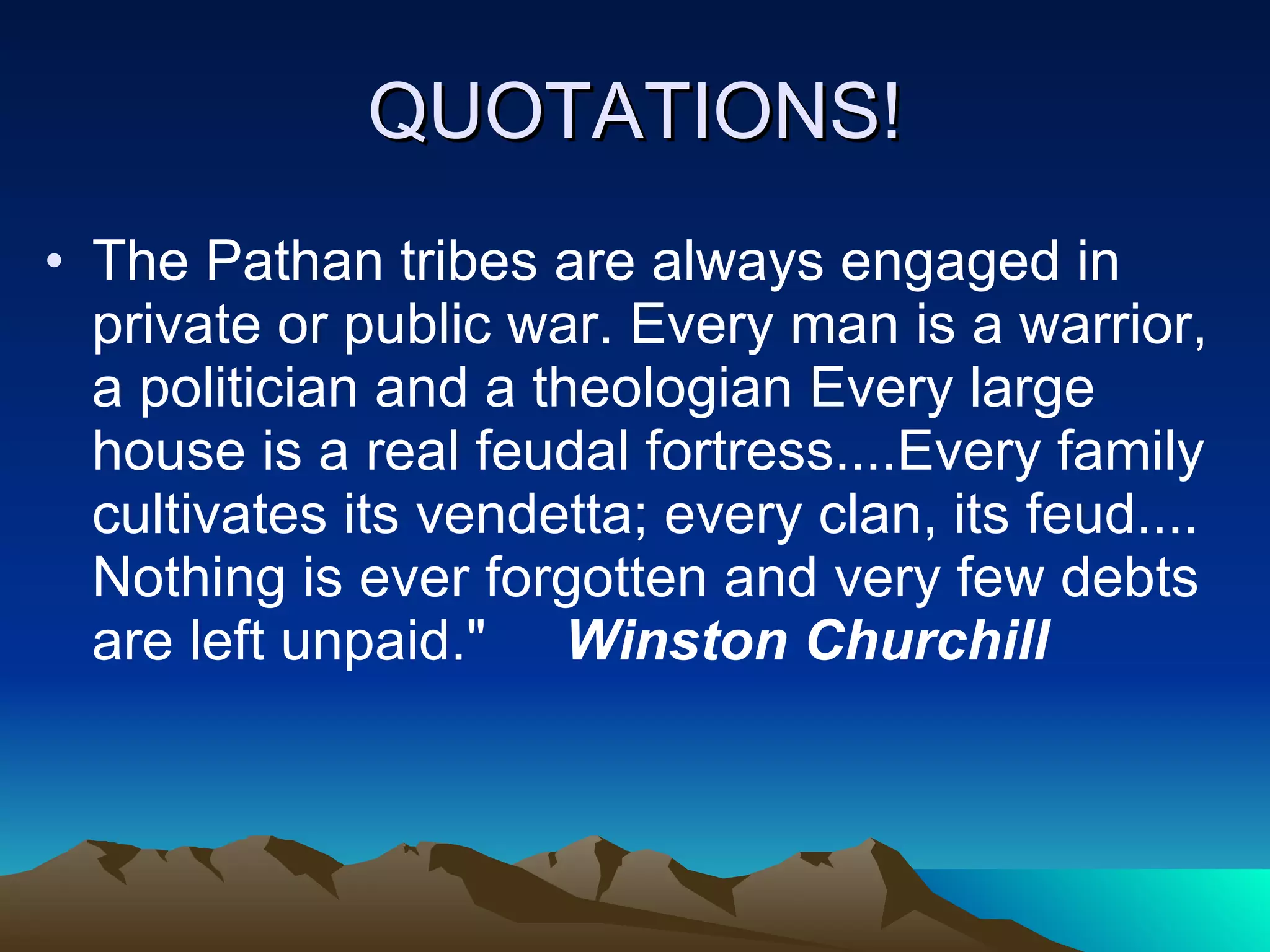
QUOTATIONS! The Pathan tribes are always engaged in private or public war. Every man is a warrior, a politician and a theologian Every large house is a real feudal fortress....Every family cultivates its vendetta; every clan, its feud.... Nothing is ever forgotten and very few debts are left unpaid."  Winston Churchill
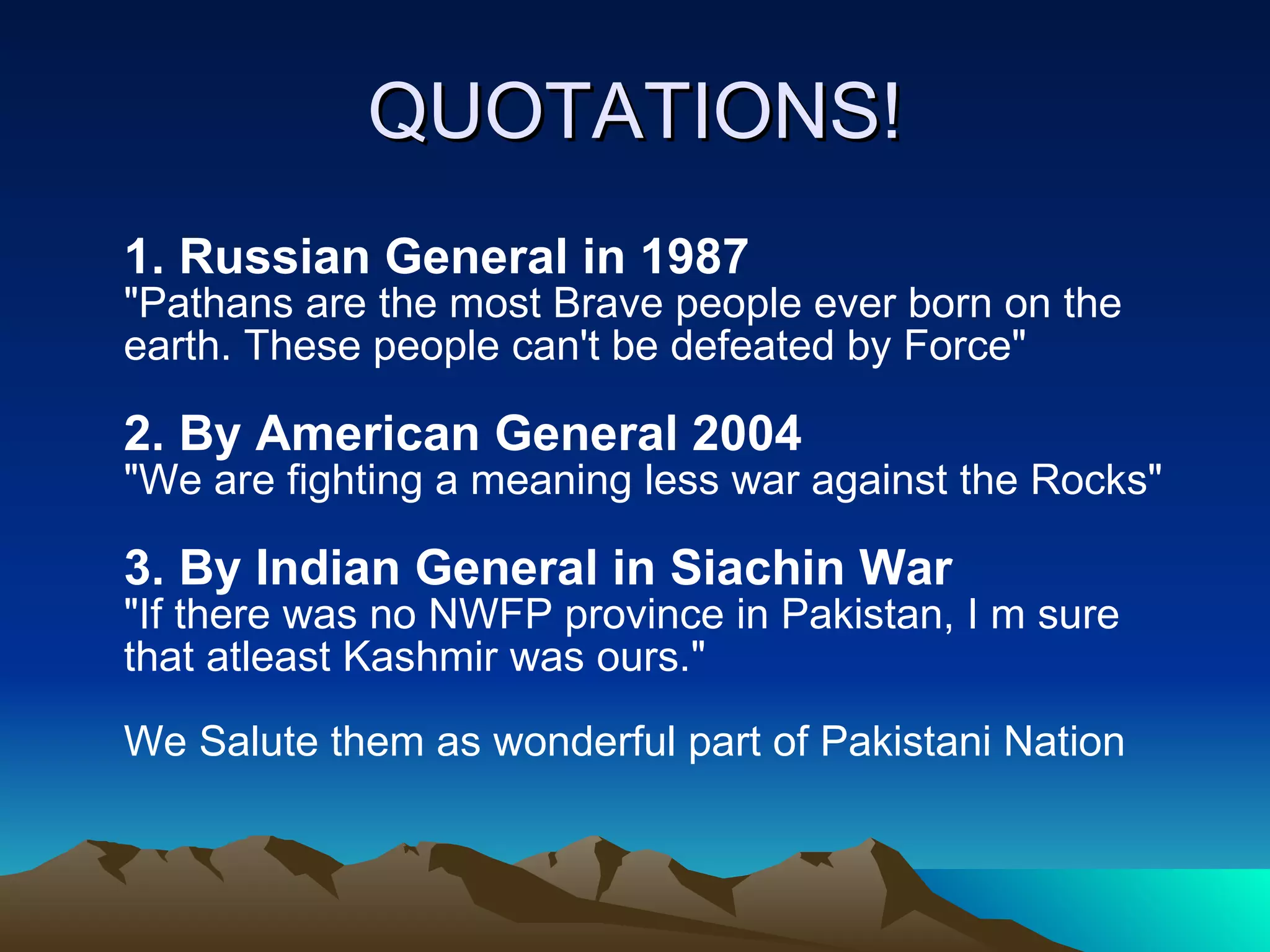
QUOTATIONS! 1. Russian General in 1987   "Pathans are the most Brave people ever born on the earth. These people can't be defeated by Force"  2. By American General 2004  "We are fighting a meaning less war against the Rocks"  3. By Indian General in Siachin War   "If there was no NWFP province in Pakistan, I m sure that atleast Kashmir was ours."  We Salute them as wonderful part of Pakistani Nation
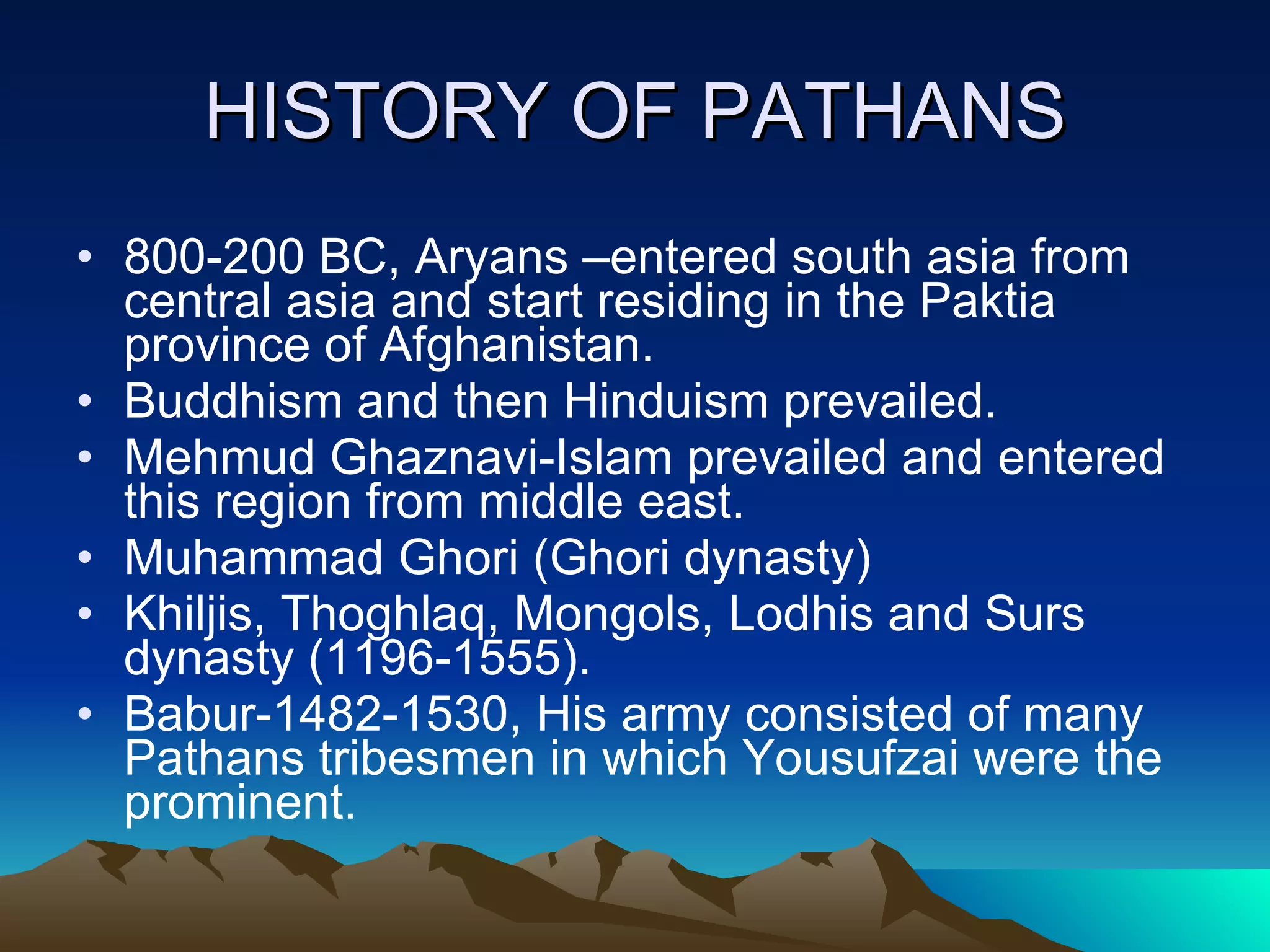
HISTORY OF PATHANS 800-200 BC, Aryans –entered south asia from central asia and start residing in the Paktia province of Afghanistan. Buddhism and then Hinduism prevailed. Mehmud Ghaznavi-Islam prevailed and entered this region from middle east. Muhammad Ghori (Ghori dynasty) Khiljis, Thoghlaq, Mongols, Lodhis and Surs dynasty (1196-1555). Babur-1482-1530, His army consisted of many Pathans tribesmen in which Yousufzai were the prominent.
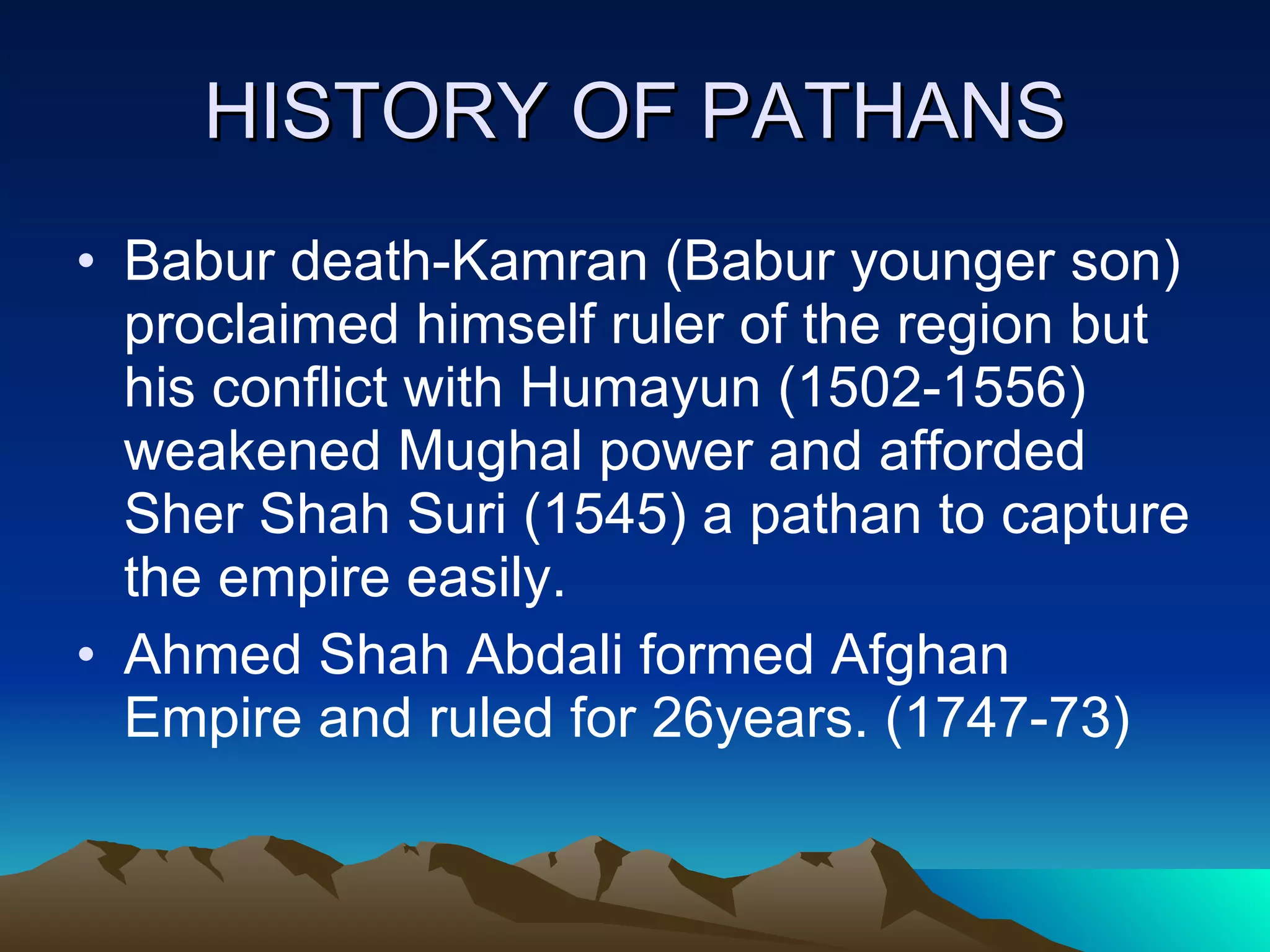
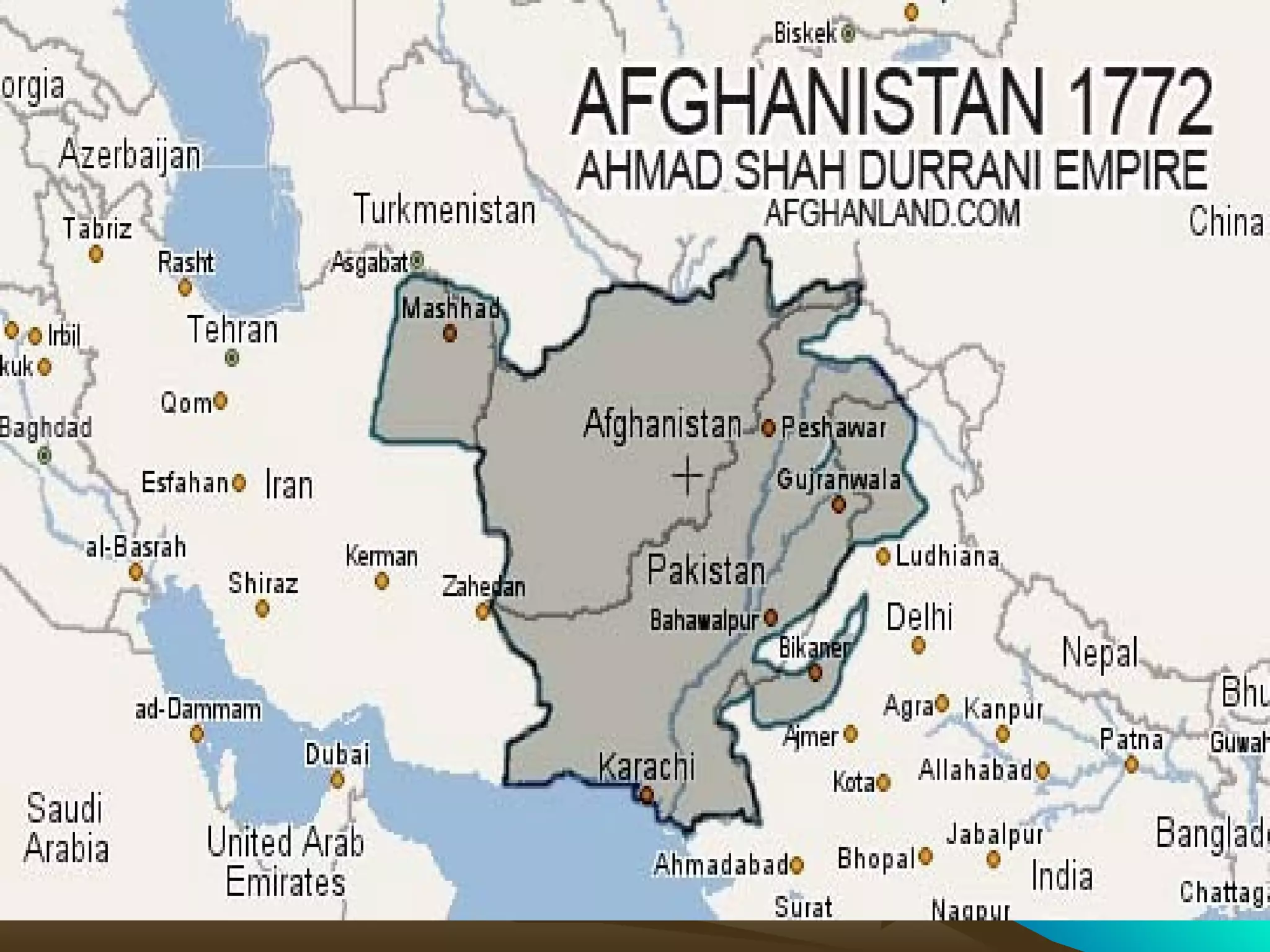
HISTORY OF PATHANS Babur death-Kamran (Babur younger son) proclaimed himself ruler of the region but his conflict with Humayun (1502-1556) weakened Mughal power and afforded Sher Shah Suri (1545) a pathan to capture the empire easily. Ahmed Shah Abdali formed Afghan Empire and ruled for 26years. (1747-73)
 
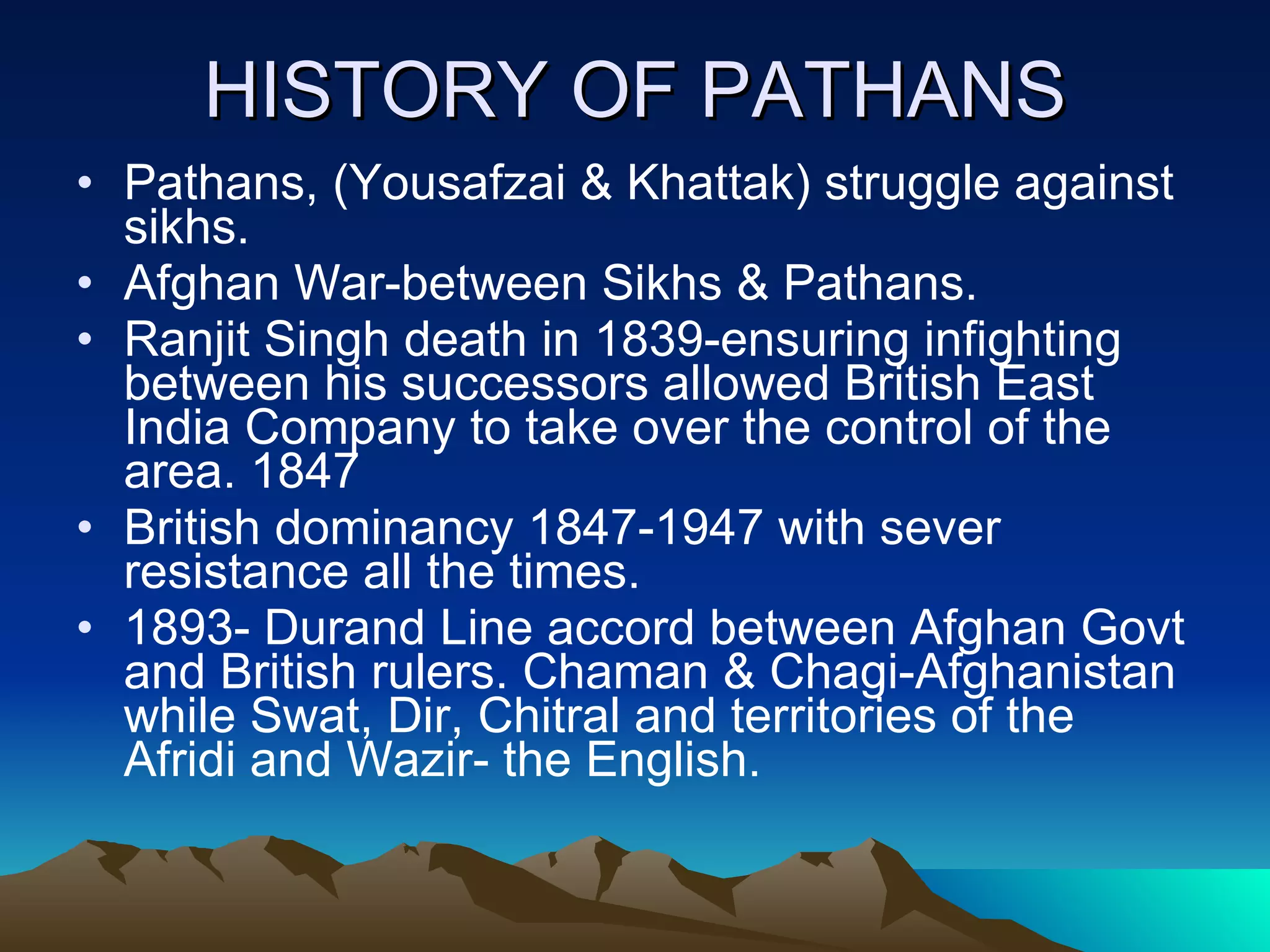
HISTORY OF PATHANS Pathans, (Yousafzai & Khattak) struggle against sikhs. Afghan War-between Sikhs & Pathans. Ranjit Singh death in 1839-ensuring infighting between his successors allowed British East India Company to take over the control of the area. 1847 British dominancy 1847-1947 with sever resistance all the times. 1893- Durand Line accord between Afghan Govt and British rulers. Chaman & Chagi-Afghanistan while Swat, Dir, Chitral and territories of the Afridi and Wazir- the English.
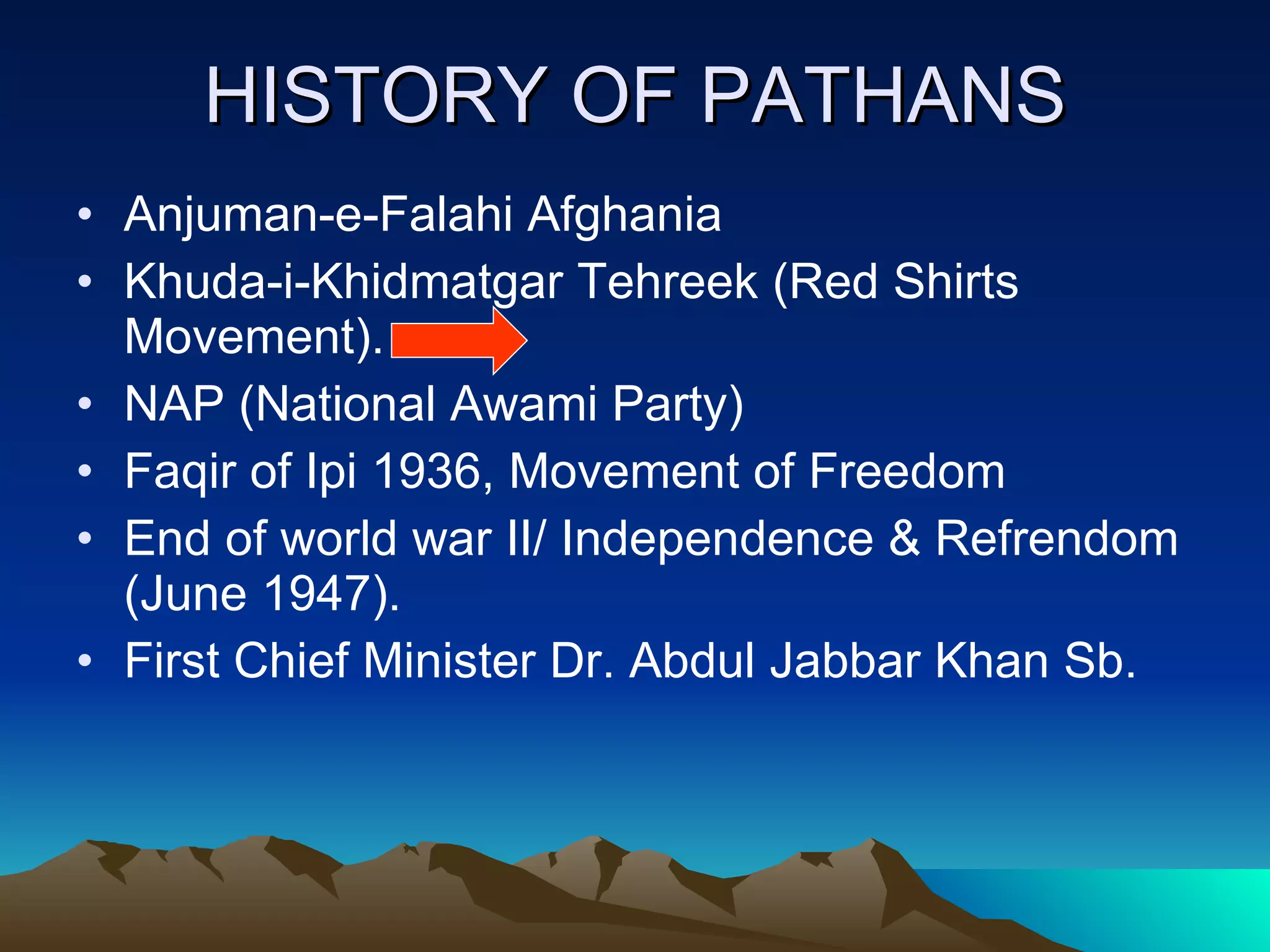
HISTORY OF PATHANS Anjuman-e-Falahi Afghania Khuda-i-Khidmatgar Tehreek (Red Shirts Movement). NAP (National Awami Party) Faqir of Ipi 1936, Movement of Freedom End of world war II/ Independence & Refrendom (June 1947). First Chief Minister Dr. Abdul Jabbar Khan Sb.
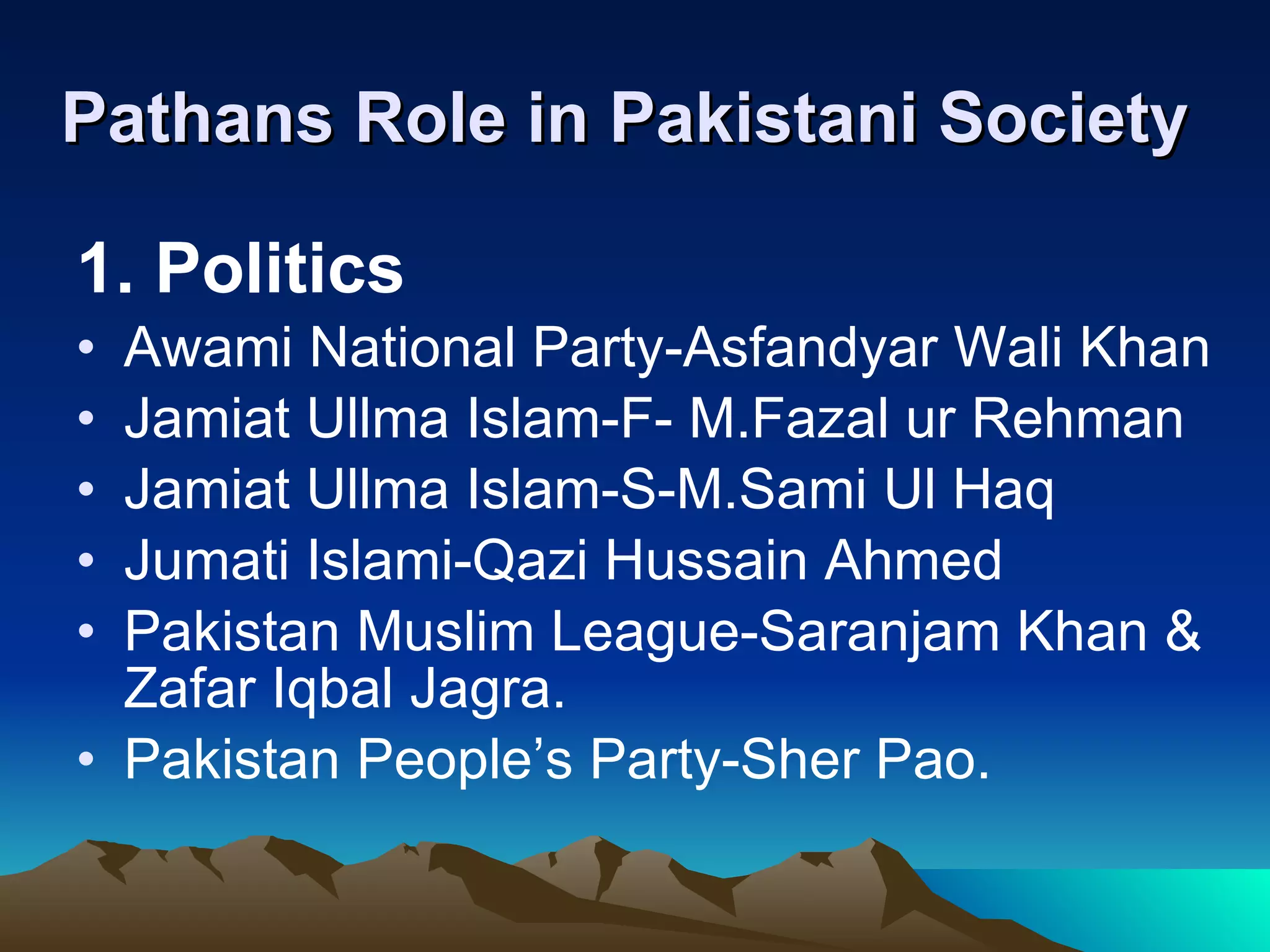
Pathans Role in Pakistani Society 1. Politics Awami National Party-Asfandyar Wali Khan Jamiat Ullma Islam-F- M.Fazal ur Rehman Jamiat Ullma Islam-S-M.Sami Ul Haq Jumati Islami-Qazi Hussain Ahmed Pakistan Muslim League-Saranjam Khan & Zafar Iqbal Jagra. Pakistan People’s Party-Sher Pao.
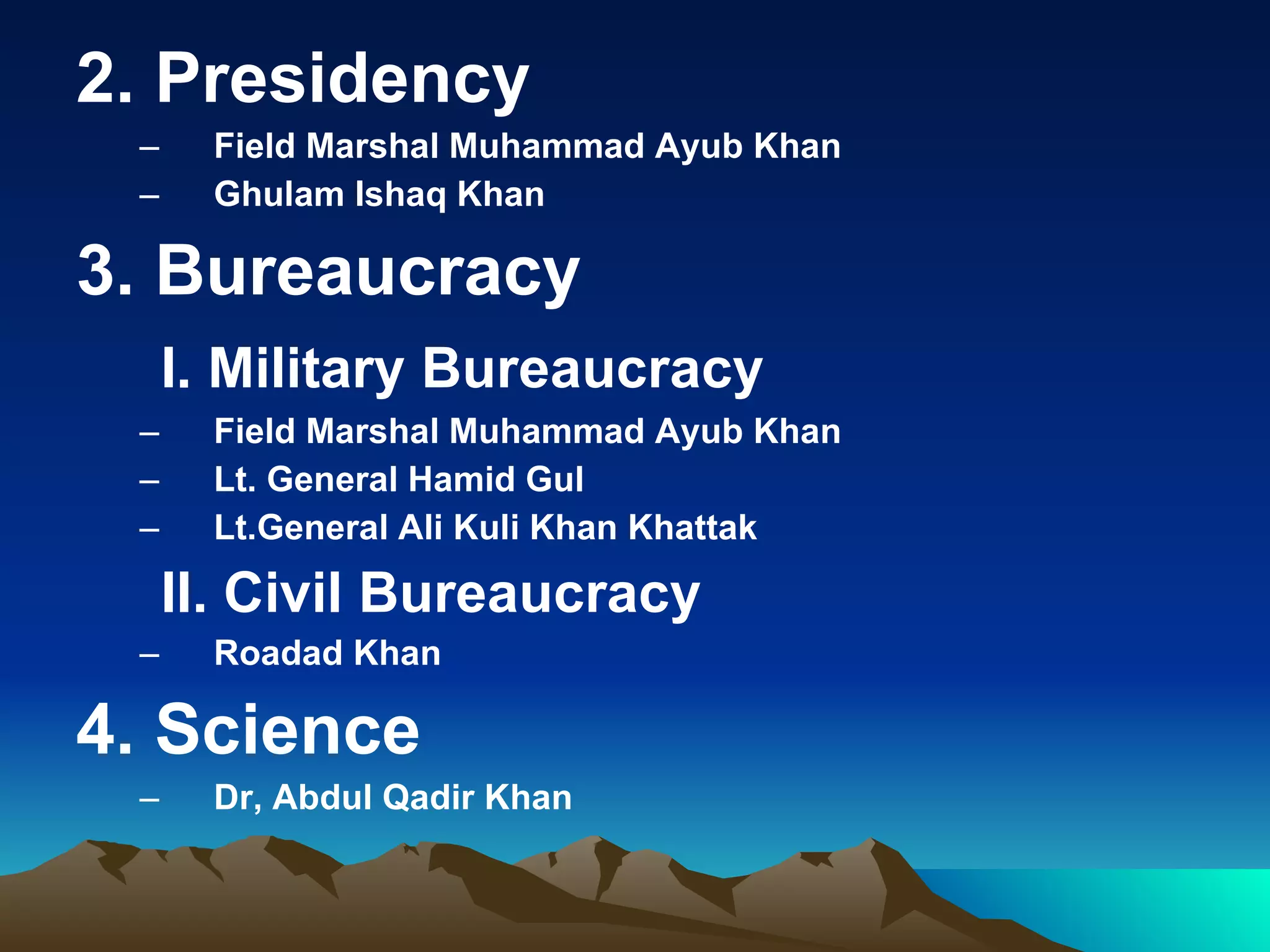
2. Presidency Field Marshal Muhammad Ayub Khan Ghulam Ishaq Khan 3. Bureaucracy  I. Military Bureaucracy Field Marshal Muhammad Ayub Khan Lt. General Hamid Gul Lt.General Ali Kuli Khan Khattak II. Civil Bureaucracy Roadad Khan 4. Science Dr, Abdul Qadir Khan
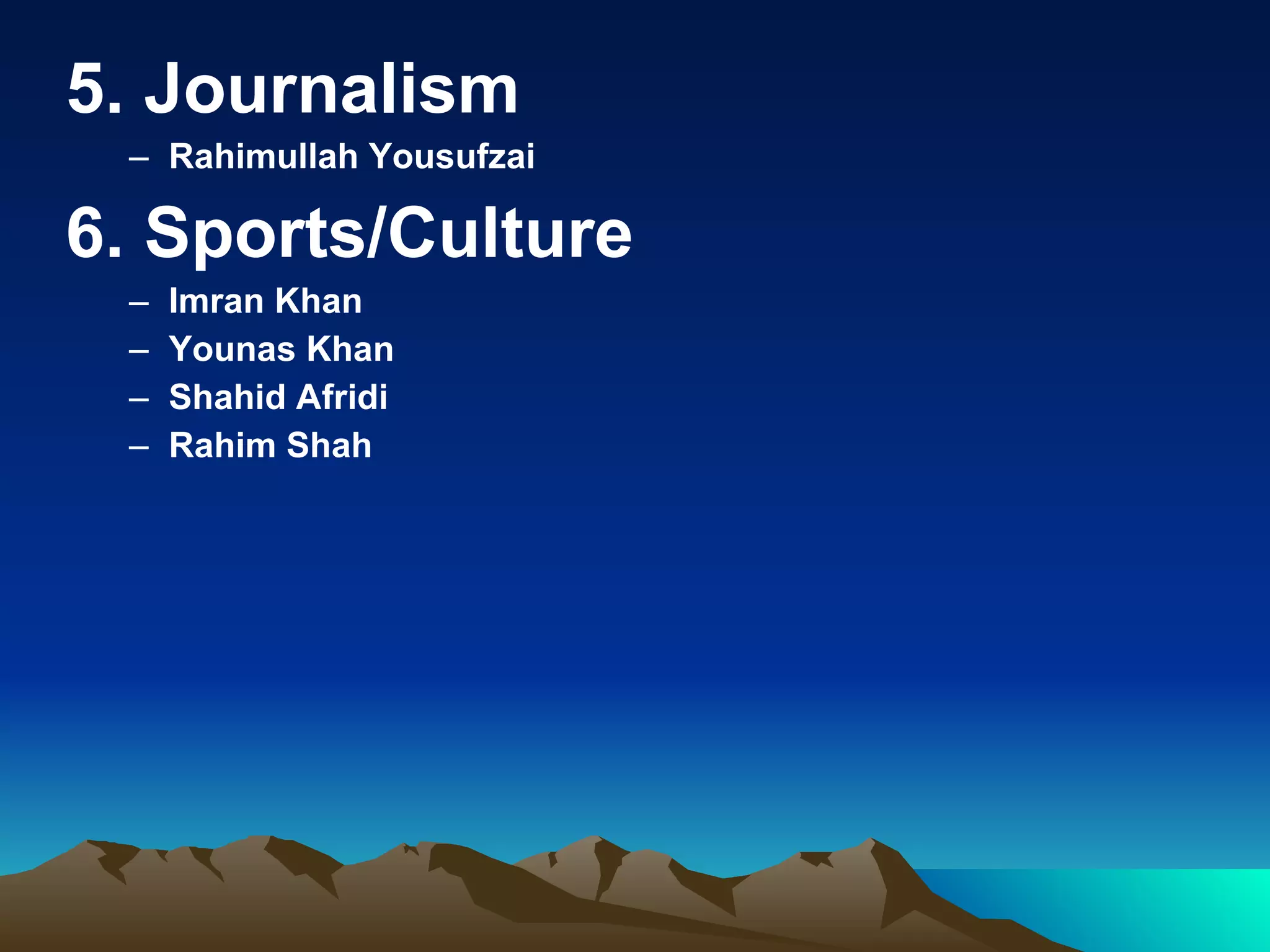
5. Journalism Rahimullah Yousufzai 6. Sports/Culture Imran Khan Younas Khan Shahid Afridi Rahim Shah
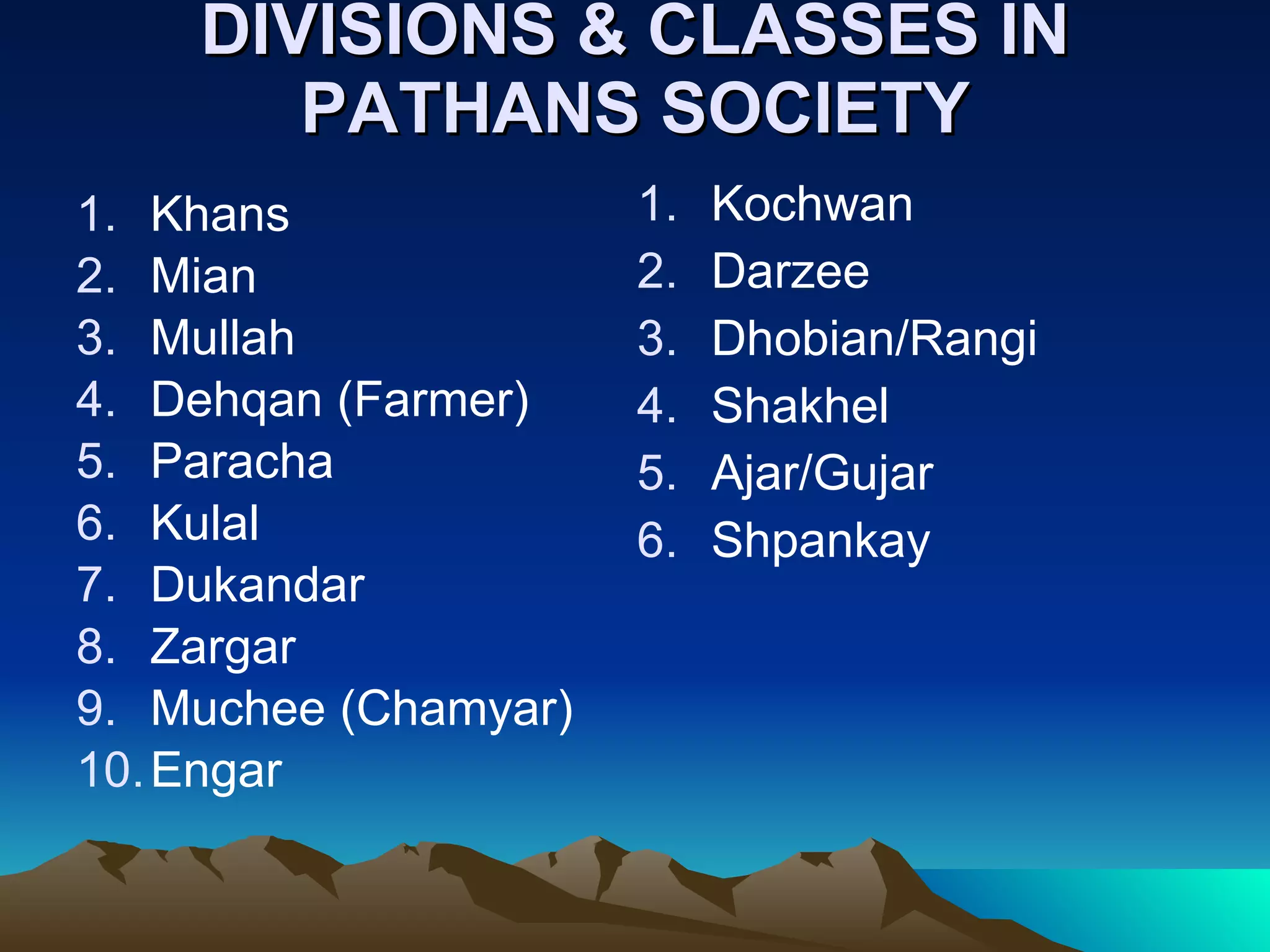
DIVISIONS & CLASSES IN PATHANS SOCIETY Khans Mian Mullah Dehqan (Farmer) Paracha Kulal Dukandar Zargar Muchee (Chamyar) Engar Kochwan Darzee Dhobian/Rangi Shakhel Ajar/Gujar Shpankay
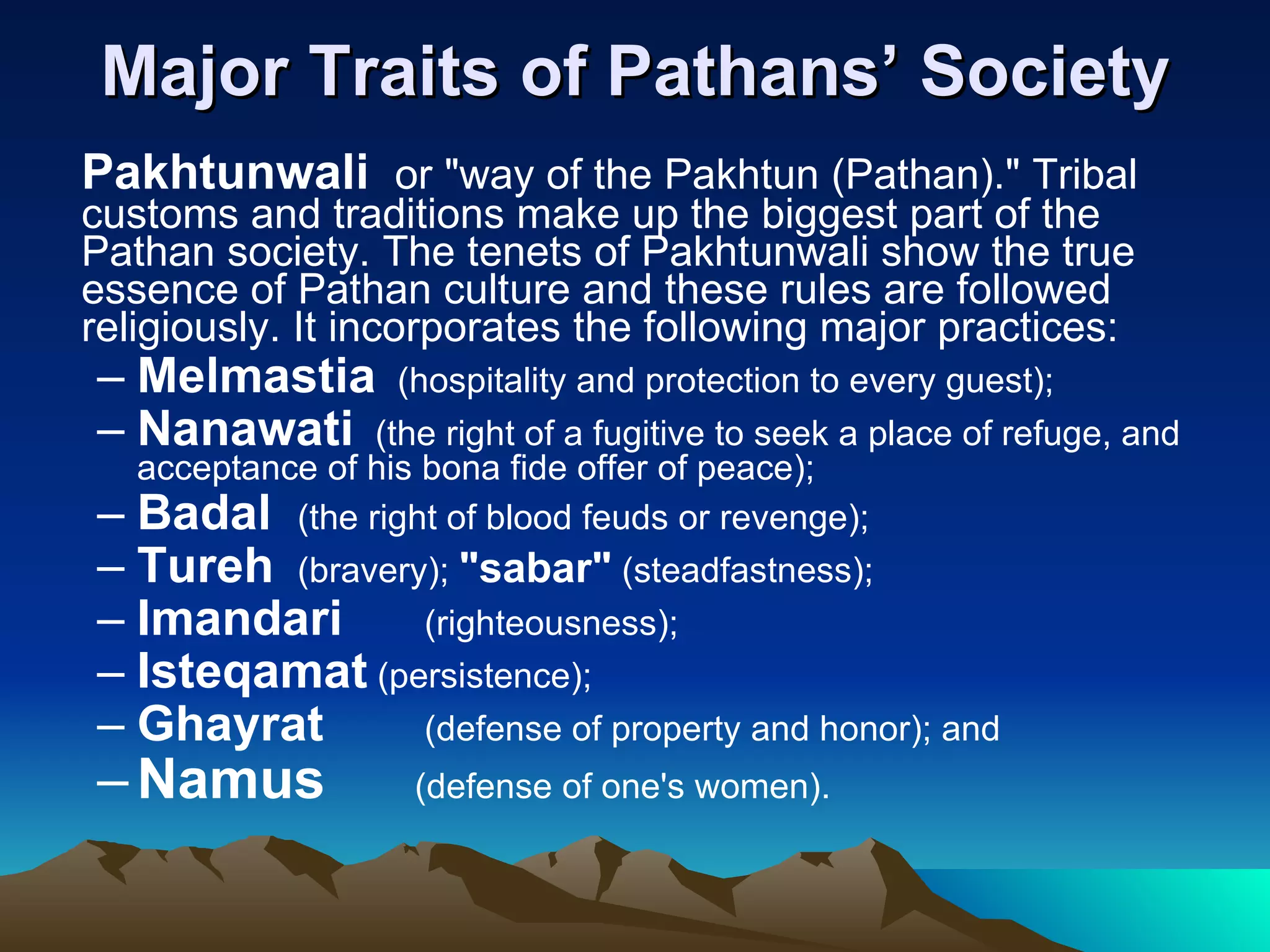
Major Traits of Pathans’ Society Pakhtunwali  or "way of the Pakhtun (Pathan)." Tribal customs and traditions make up the biggest part of the Pathan society. The tenets of Pakhtunwali show the true essence of Pathan culture and these rules are followed religiously. It incorporates the following major practices:  Melmastia   (hospitality and protection to every guest);  Nanawati   (the right of a fugitive to seek a place of refuge, and acceptance of his bona fide offer of peace);  Badal  (the right of blood feuds or revenge);  Tureh  (bravery);  "sabar"  (steadfastness);  Imandari  (righteousness);  Isteqamat  (persistence);  Ghayrat  (defense of property and honor); and  Namus (defense of one's women).
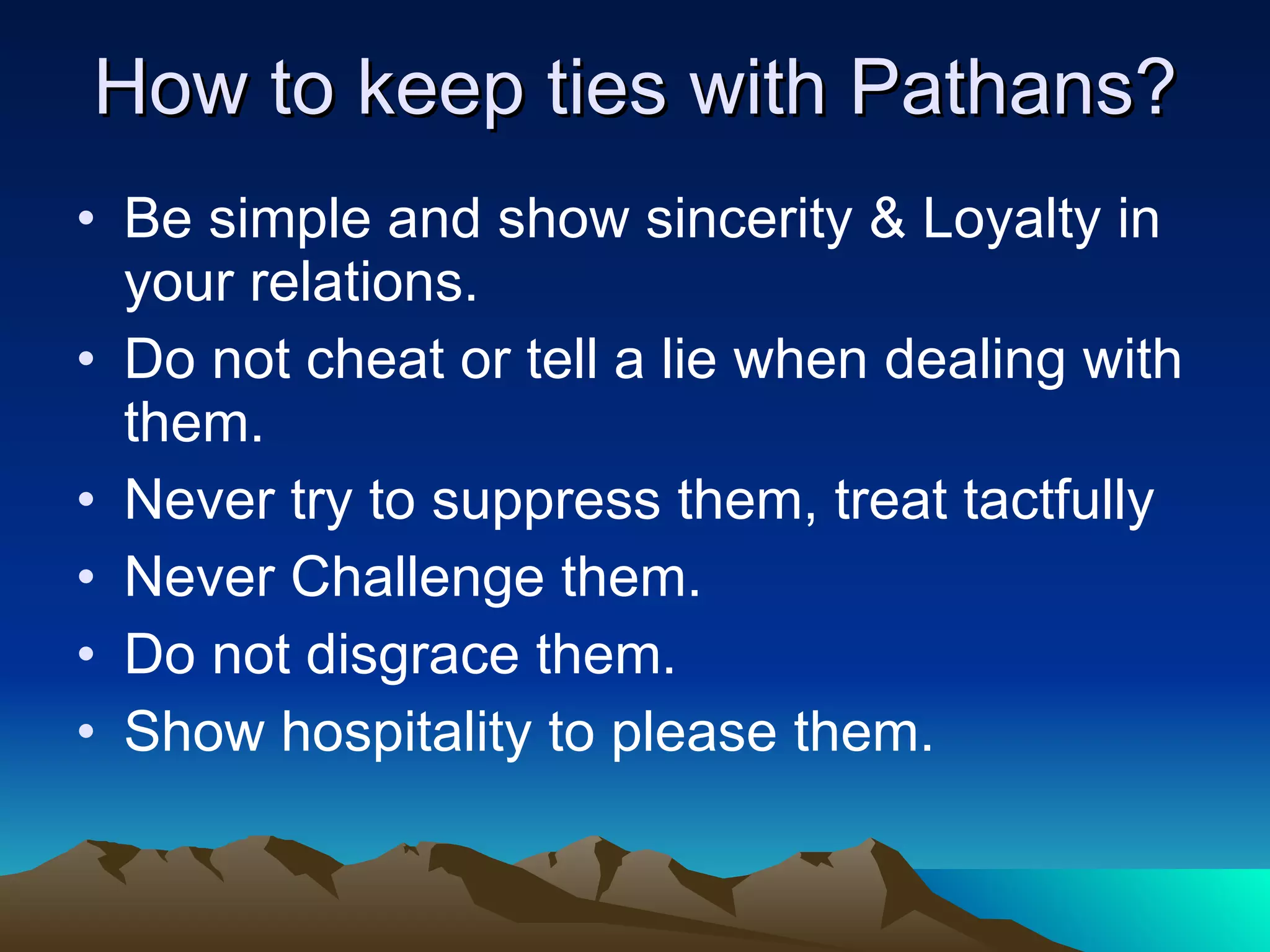
How to keep ties with Pathans? Be simple and show sincerity & Loyalty in your relations. Do not cheat or tell a lie when dealing with them. Never try to suppress them, treat tactfully  Never Challenge them. Do not disgrace them. Show hospitality to please them.
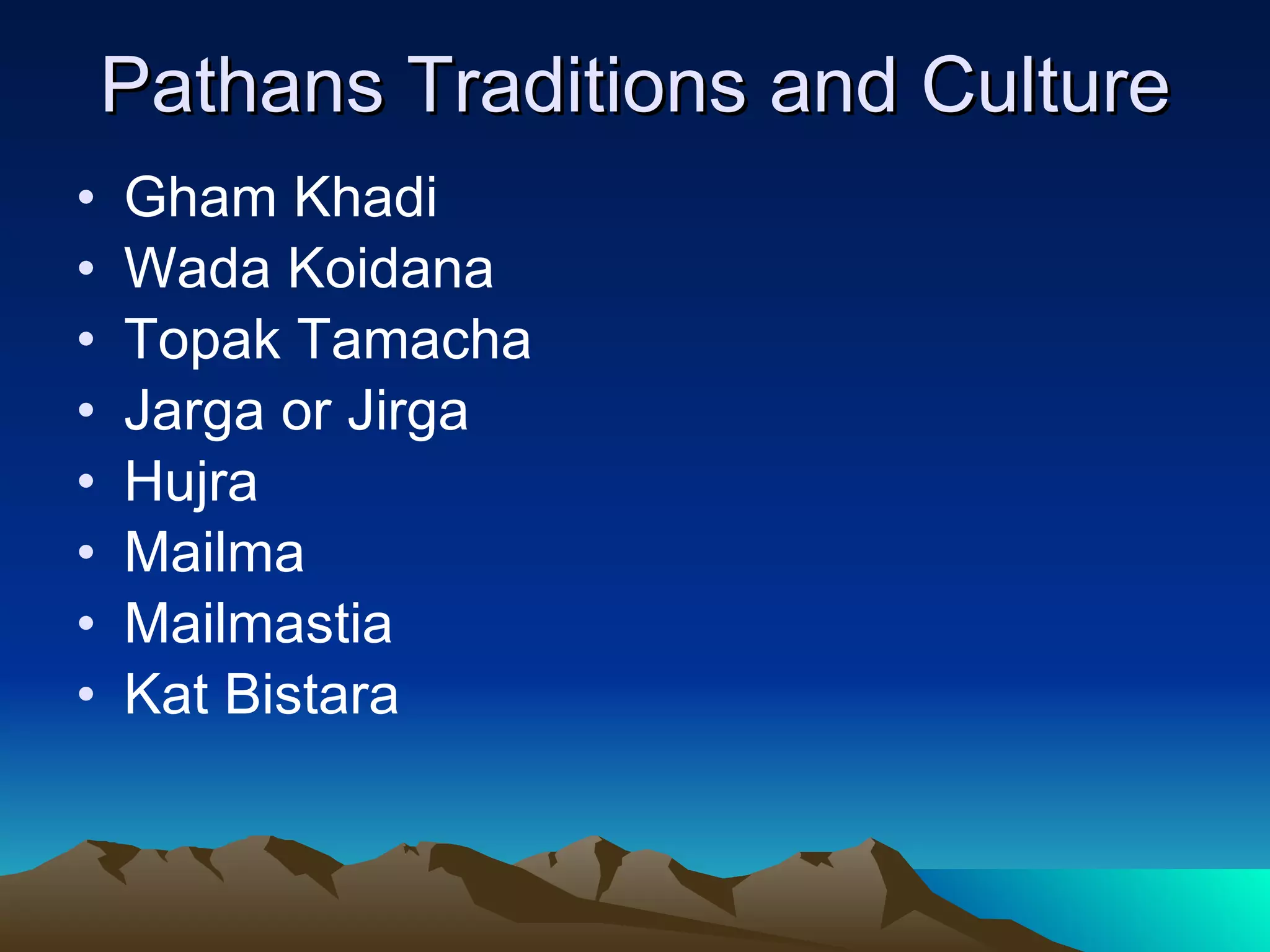
Pathans Traditions and Culture Gham Khadi Wada Koidana Topak Tamacha Jarga or Jirga Hujra Mailma Mailmastia Kat Bistara
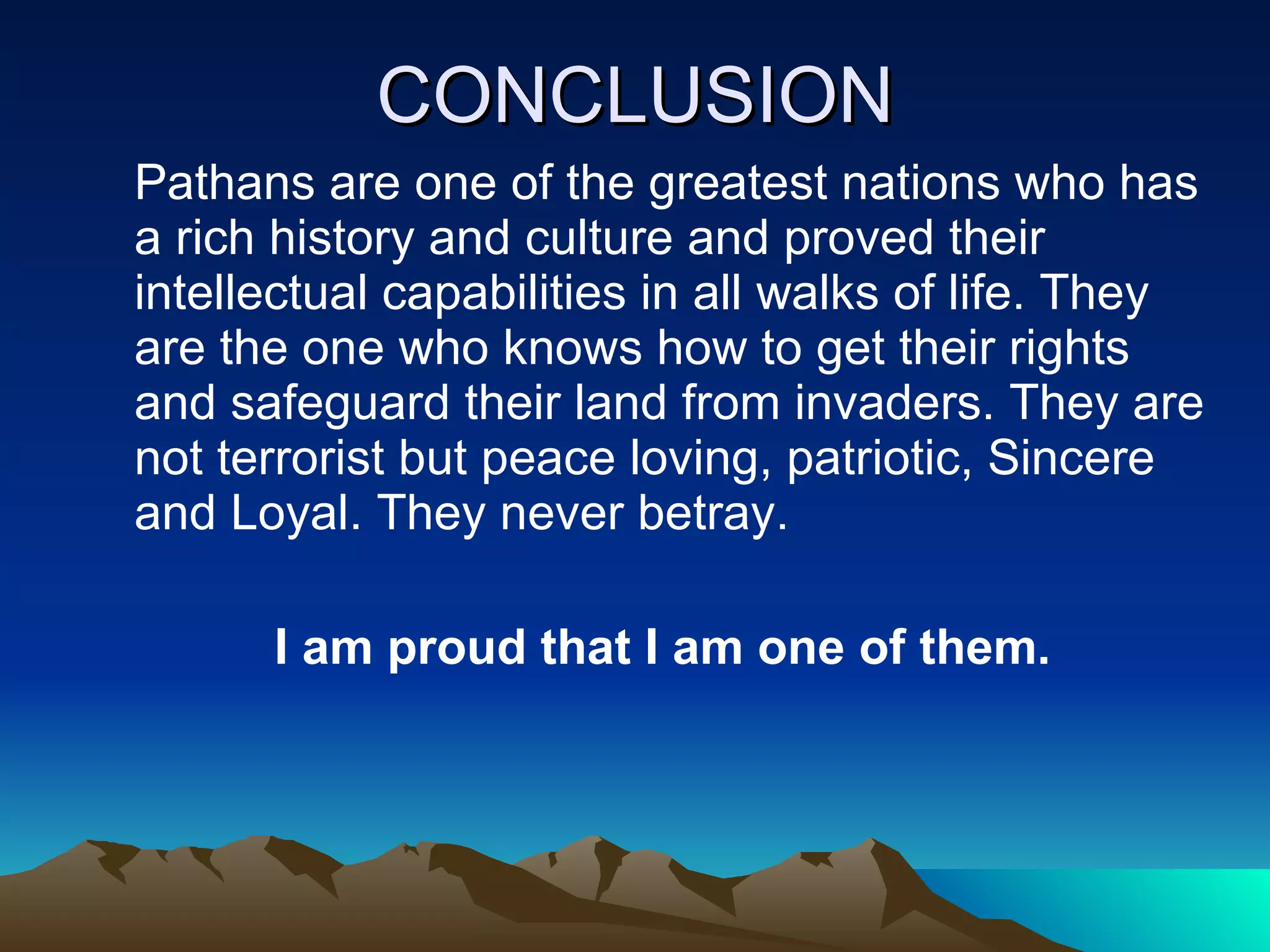
CONCLUSION Pathans are one of the greatest nations who has a rich history and culture and proved their intellectual capabilities in all walks of life. They are the one who knows how to get their rights and safeguard their land from invaders. They are not terrorist but peace loving, patriotic, Sincere and Loyal. They never betray. I am proud that I am one of them.
THANKS

An overview of Pathans' Society

  • 1.
    An Overview of Pathans’ Society
  • 2.
    Who are Pathans,Pukhtuns or Pashtuns? The Pathans are known as people who originated from Paktia Province of Afghanistan and are brave, simple, and sincere in their dealings with others. They are noted as fierce fighters, and throughout history they have offered strong resistance to invaders. They staunchly hold on to their cultural traditions and connect with one another in a visceral way.
  • 3.
    ALWAYS REMEMBER That ALL PASHTO SPEAKERS ARE NOT PATHANS & SIMILARY, ALL PATHANS ARE NOT PASHTO SPEAKERS.
  • 4.
  • 5.
    DISTRIBUTION OF PATHANSPOPULATION Total Pathans’ Population= 42 million 2008 5100 Malaysia & others 2000 7710 USA 2001 11,086 India 2006 26,000 Canada 2009 100,000 UK 2008 315,524 UAE 2009 12 million Afghanistan 2005 28 million Pakistan Year Population Country
  • 6.
    QUOTATIONS! The Pathantribes are always engaged in private or public war. Every man is a warrior, a politician and a theologian Every large house is a real feudal fortress....Every family cultivates its vendetta; every clan, its feud.... Nothing is ever forgotten and very few debts are left unpaid." Winston Churchill
  • 7.
    QUOTATIONS! 1. RussianGeneral in 1987 "Pathans are the most Brave people ever born on the earth. These people can't be defeated by Force" 2. By American General 2004 "We are fighting a meaning less war against the Rocks" 3. By Indian General in Siachin War "If there was no NWFP province in Pakistan, I m sure that atleast Kashmir was ours." We Salute them as wonderful part of Pakistani Nation
  • 8.
    HISTORY OF PATHANS800-200 BC, Aryans –entered south asia from central asia and start residing in the Paktia province of Afghanistan. Buddhism and then Hinduism prevailed. Mehmud Ghaznavi-Islam prevailed and entered this region from middle east. Muhammad Ghori (Ghori dynasty) Khiljis, Thoghlaq, Mongols, Lodhis and Surs dynasty (1196-1555). Babur-1482-1530, His army consisted of many Pathans tribesmen in which Yousufzai were the prominent.
  • 9.
    HISTORY OF PATHANSBabur death-Kamran (Babur younger son) proclaimed himself ruler of the region but his conflict with Humayun (1502-1556) weakened Mughal power and afforded Sher Shah Suri (1545) a pathan to capture the empire easily. Ahmed Shah Abdali formed Afghan Empire and ruled for 26years. (1747-73)
  • 10.
  • 11.
    HISTORY OF PATHANSPathans, (Yousafzai & Khattak) struggle against sikhs. Afghan War-between Sikhs & Pathans. Ranjit Singh death in 1839-ensuring infighting between his successors allowed British East India Company to take over the control of the area. 1847 British dominancy 1847-1947 with sever resistance all the times. 1893- Durand Line accord between Afghan Govt and British rulers. Chaman & Chagi-Afghanistan while Swat, Dir, Chitral and territories of the Afridi and Wazir- the English.
  • 12.
    HISTORY OF PATHANSAnjuman-e-Falahi Afghania Khuda-i-Khidmatgar Tehreek (Red Shirts Movement). NAP (National Awami Party) Faqir of Ipi 1936, Movement of Freedom End of world war II/ Independence & Refrendom (June 1947). First Chief Minister Dr. Abdul Jabbar Khan Sb.
  • 13.
    Pathans Role inPakistani Society 1. Politics Awami National Party-Asfandyar Wali Khan Jamiat Ullma Islam-F- M.Fazal ur Rehman Jamiat Ullma Islam-S-M.Sami Ul Haq Jumati Islami-Qazi Hussain Ahmed Pakistan Muslim League-Saranjam Khan & Zafar Iqbal Jagra. Pakistan People’s Party-Sher Pao.
  • 14.
    2. Presidency FieldMarshal Muhammad Ayub Khan Ghulam Ishaq Khan 3. Bureaucracy I. Military Bureaucracy Field Marshal Muhammad Ayub Khan Lt. General Hamid Gul Lt.General Ali Kuli Khan Khattak II. Civil Bureaucracy Roadad Khan 4. Science Dr, Abdul Qadir Khan
  • 15.
    5. Journalism RahimullahYousufzai 6. Sports/Culture Imran Khan Younas Khan Shahid Afridi Rahim Shah
  • 16.
    DIVISIONS & CLASSESIN PATHANS SOCIETY Khans Mian Mullah Dehqan (Farmer) Paracha Kulal Dukandar Zargar Muchee (Chamyar) Engar Kochwan Darzee Dhobian/Rangi Shakhel Ajar/Gujar Shpankay
  • 17.
    Major Traits ofPathans’ Society Pakhtunwali or "way of the Pakhtun (Pathan)." Tribal customs and traditions make up the biggest part of the Pathan society. The tenets of Pakhtunwali show the true essence of Pathan culture and these rules are followed religiously. It incorporates the following major practices: Melmastia (hospitality and protection to every guest); Nanawati (the right of a fugitive to seek a place of refuge, and acceptance of his bona fide offer of peace); Badal (the right of blood feuds or revenge); Tureh (bravery); "sabar" (steadfastness); Imandari (righteousness); Isteqamat (persistence); Ghayrat (defense of property and honor); and Namus (defense of one's women).
  • 18.
    How to keepties with Pathans? Be simple and show sincerity & Loyalty in your relations. Do not cheat or tell a lie when dealing with them. Never try to suppress them, treat tactfully Never Challenge them. Do not disgrace them. Show hospitality to please them.
  • 19.
    Pathans Traditions andCulture Gham Khadi Wada Koidana Topak Tamacha Jarga or Jirga Hujra Mailma Mailmastia Kat Bistara
  • 20.
    CONCLUSION Pathans areone of the greatest nations who has a rich history and culture and proved their intellectual capabilities in all walks of life. They are the one who knows how to get their rights and safeguard their land from invaders. They are not terrorist but peace loving, patriotic, Sincere and Loyal. They never betray. I am proud that I am one of them.
  • 21.