SDI 2.0
INTO THE 21ST CENTURY
MAURITS VAN DER VLUGT
Spatial Information strategist
OVERVIEW
SDI as we know it
SDI 2.0
Examples
Challenges
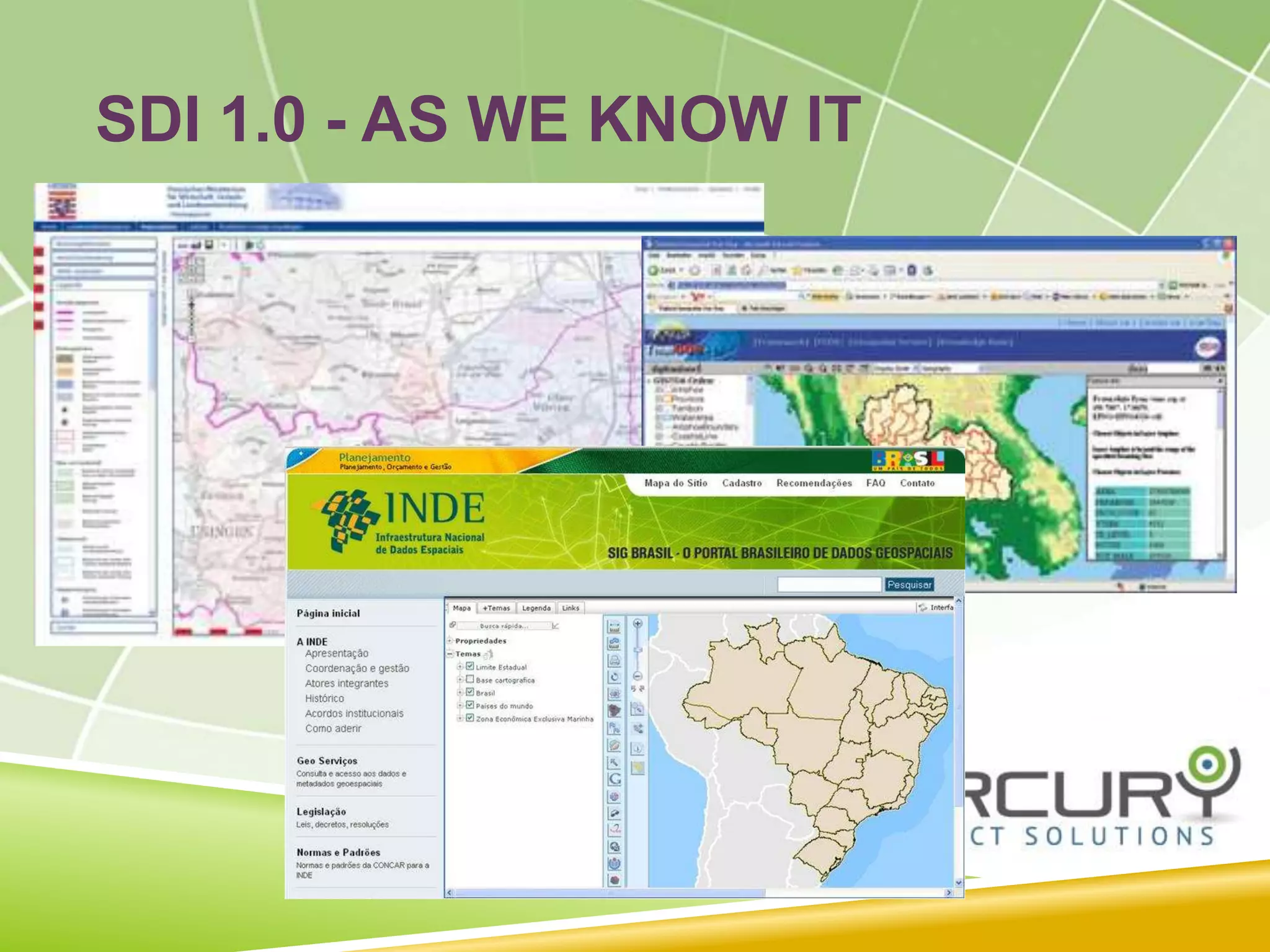
SDI 1.0 - AS WE KNOW IT
BUT… NOT VERY SUCCESSFUL
Expensive
Slow
Supply Driven
Plenty of YAPs – but no users
SO WHAT ABOUT SDI 2.0?
SOME BUZZWORDS
Web 2.0 / Social Media
Crowd Sourcing – Volunteered Geo-
Information (VGI)
User Generated Content
Augmented Reality
Geotagging
And many more…
The “[...] usage of geographical techniques
and tools used for personal and
community activities or for utilization by a
non-expert group of users”
Source:
http://en.wikipedia.org/wiki/Neogeography
NEO-GEOGRAPHY?
The “[...] usage of geographical techniques
and tools used for personal and
community activities or for utilization by a
non-expert group of users”
Source:
http://en.wikipedia.org/wiki/Neogeography
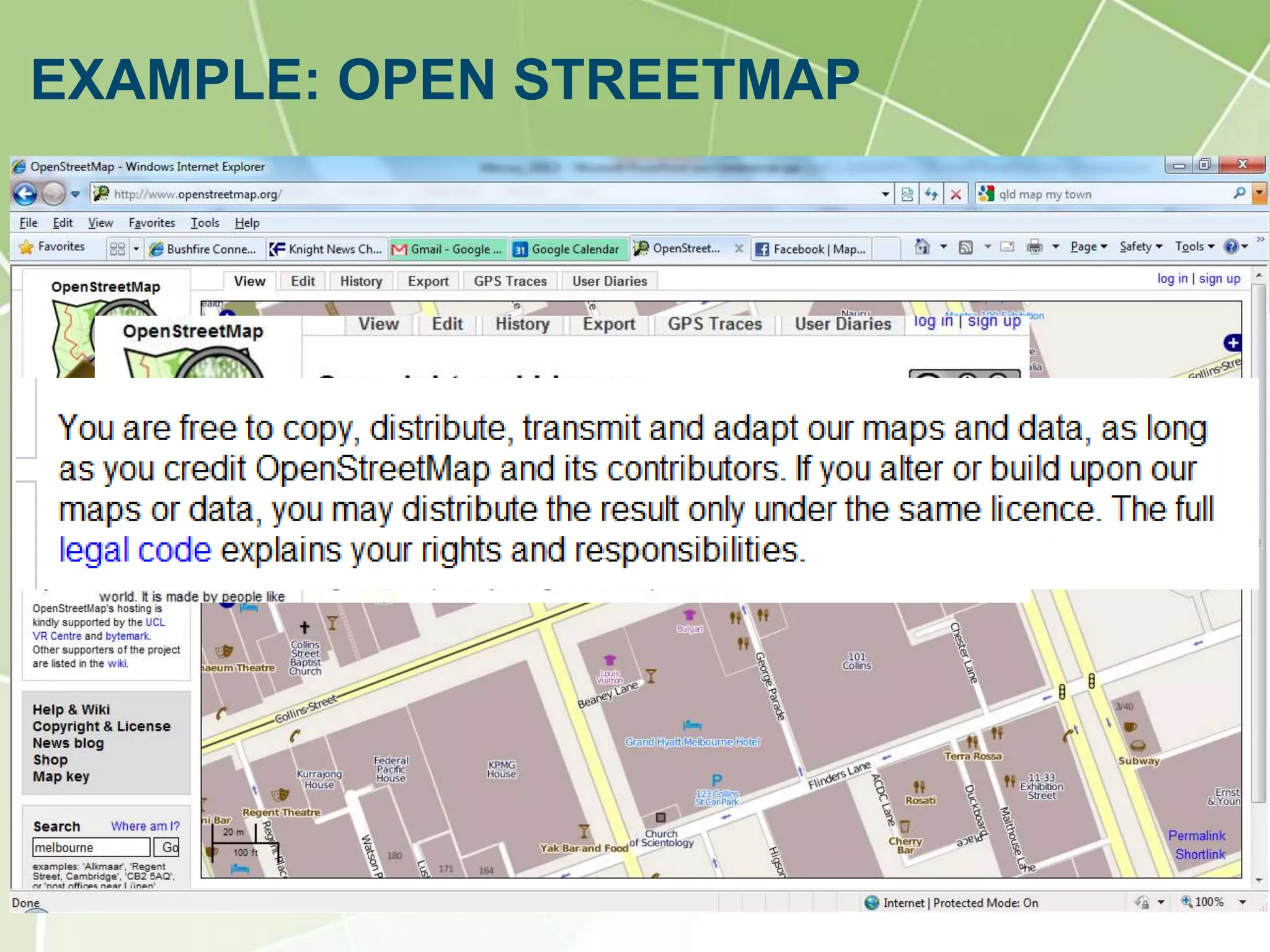
EXAMPLE: OPEN STREETMAP
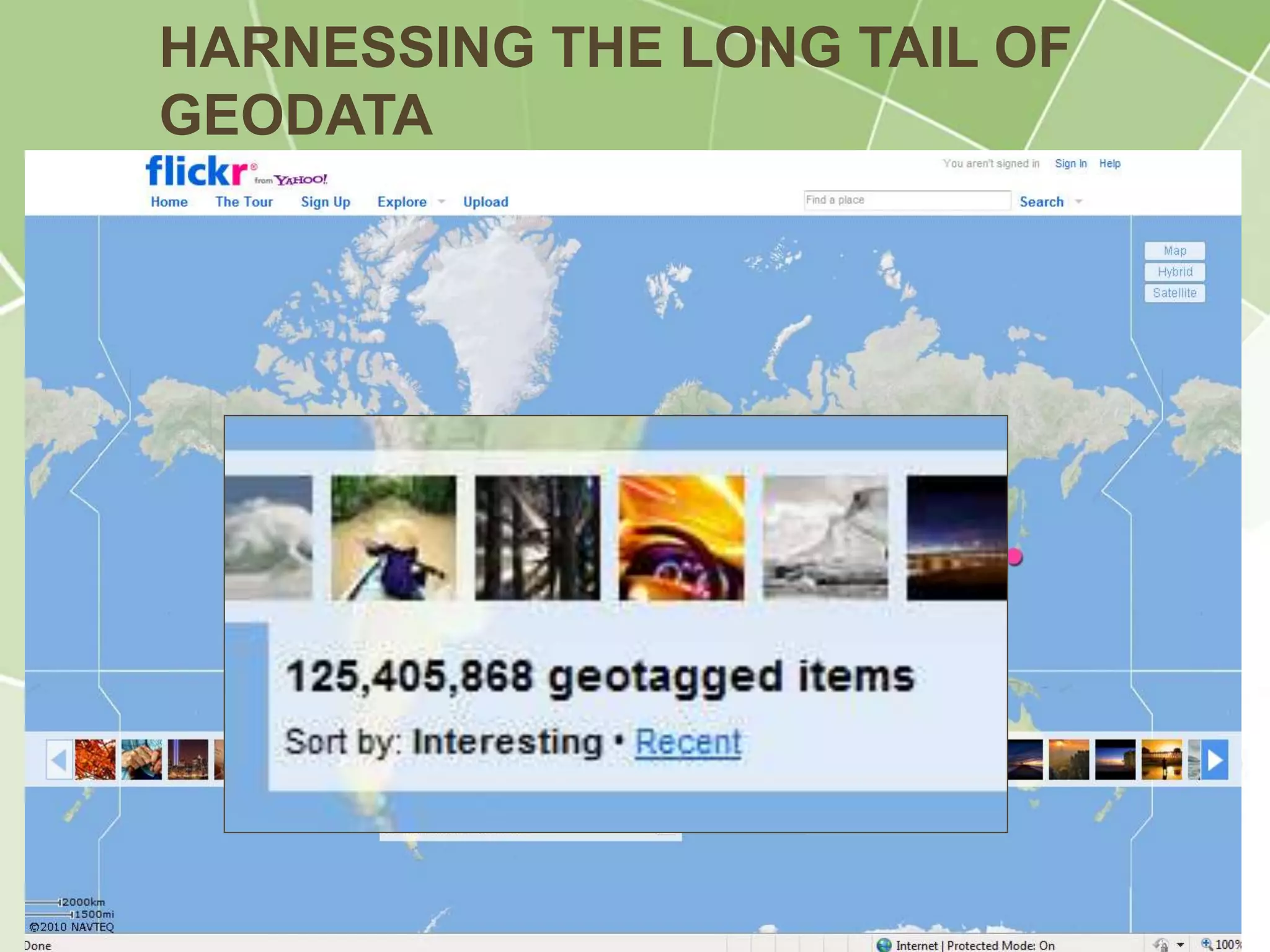
HARNESSING THE LONG TAIL OF
GEODATA
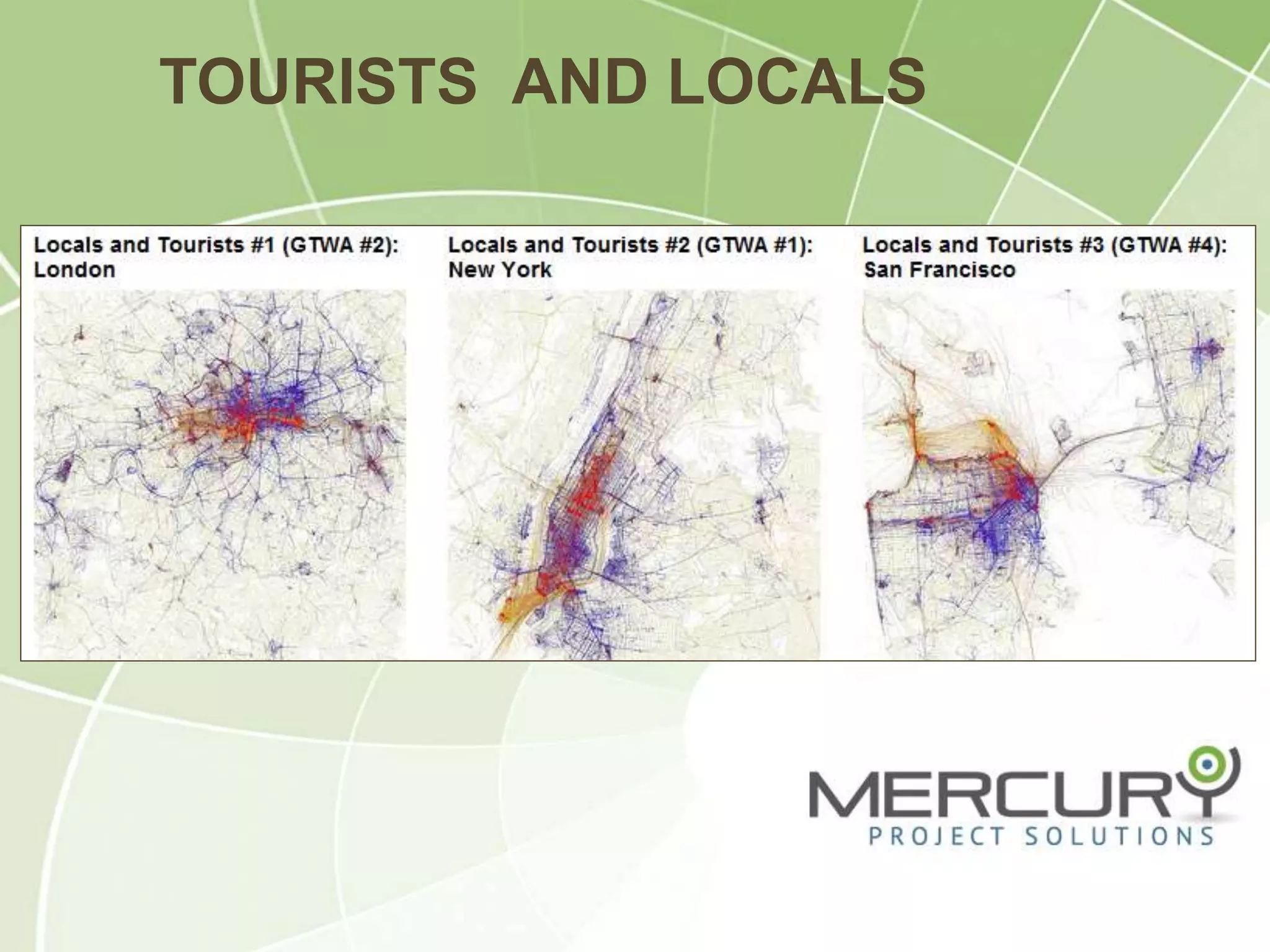
TOURISTS AND LOCALS
KEY DIFFERENCES
Users are Producers
 and there are plenty of them!
Decentralisation of “Authority”
 E.g. Open Streetmap, Wikipedia
Quality is in the eye of the beholder
The Internet is the Marketplace
Fast, Cheap, Demand driven!
From Andrew Turner, Fortius One
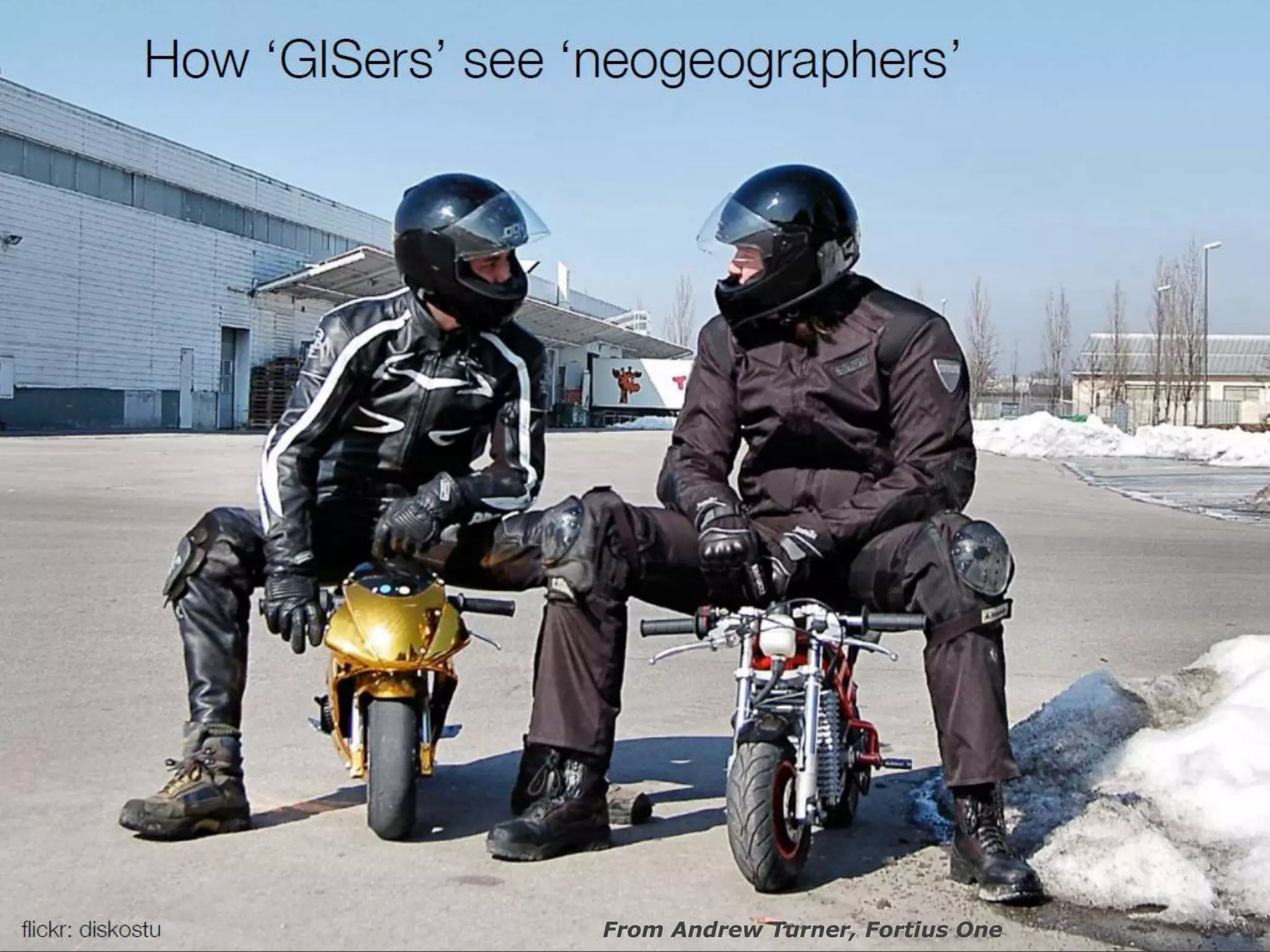
HOW NEOGEOGRAPHERS SEE GIS-ERS
They don’t
From Andrew Turner, Fortius One
CHALLENGES
Ignore at our peril
Where does this leave government?
Next big things
 The long-tail model of Spatial Data Collection
 From YAPs to ‘fine-grained‘APIs for mash-up purposes
 R&D: Validation & Filtering
 R&D: What Licencing and Business models work?
SUMMARY
SDI as we know it? “so last century!”
SDI 2.0
 Driven by Web 2.0 and Neogeography
 No more distinction between users and producers
 Harnessing the long tail
 Dramatically shifting role for government
Ignore at our peril!
MERCURY PROJECT SOLUTIONS
EXCELLENCE IN PROGRAM DELIVERY
 Maurits.vandervlugt@mercuryps.com.au
 http://spatial21.blogspot.com
 Twitter: @mvandervlugt

CRC-SI Soapbox Presentation on SDI 2.0

  • 1.
    SDI 2.0 INTO THE21ST CENTURY MAURITS VAN DER VLUGT Spatial Information strategist
  • 2.
    OVERVIEW SDI as weknow it SDI 2.0 Examples Challenges
  • 3.
    SDI 1.0 -AS WE KNOW IT
  • 4.
    BUT… NOT VERYSUCCESSFUL Expensive Slow Supply Driven Plenty of YAPs – but no users
  • 5.
    SO WHAT ABOUTSDI 2.0?
  • 6.
    SOME BUZZWORDS Web 2.0/ Social Media Crowd Sourcing – Volunteered Geo- Information (VGI) User Generated Content Augmented Reality Geotagging And many more…
  • 7.
    The “[...] usageof geographical techniques and tools used for personal and community activities or for utilization by a non-expert group of users” Source: http://en.wikipedia.org/wiki/Neogeography NEO-GEOGRAPHY? The “[...] usage of geographical techniques and tools used for personal and community activities or for utilization by a non-expert group of users” Source: http://en.wikipedia.org/wiki/Neogeography
  • 8.
  • 9.
    HARNESSING THE LONGTAIL OF GEODATA
  • 10.
  • 11.
    KEY DIFFERENCES Users areProducers  and there are plenty of them! Decentralisation of “Authority”  E.g. Open Streetmap, Wikipedia Quality is in the eye of the beholder The Internet is the Marketplace Fast, Cheap, Demand driven!
  • 12.
  • 13.
    HOW NEOGEOGRAPHERS SEEGIS-ERS They don’t From Andrew Turner, Fortius One
  • 14.
    CHALLENGES Ignore at ourperil Where does this leave government? Next big things  The long-tail model of Spatial Data Collection  From YAPs to ‘fine-grained‘APIs for mash-up purposes  R&D: Validation & Filtering  R&D: What Licencing and Business models work?
  • 15.
    SUMMARY SDI as weknow it? “so last century!” SDI 2.0  Driven by Web 2.0 and Neogeography  No more distinction between users and producers  Harnessing the long tail  Dramatically shifting role for government Ignore at our peril!
  • 16.
    MERCURY PROJECT SOLUTIONS EXCELLENCEIN PROGRAM DELIVERY  Maurits.vandervlugt@mercuryps.com.au  http://spatial21.blogspot.com  Twitter: @mvandervlugt

Editor's Notes

  • #4 Top DownFocus on Fundamental Data, Governance, Licencing, MetadataYAPs
  • #5 20+ years of talk and research. What do we have to show for it?SDI in Australia still not recognised as ‘fundamental infrastructure’
  • #8 Tool-centric  user centric
  • #9 Let’s look at some REAL WORLD examplesOpenStreetMap (OSM) is a collaborative project to create a free editable map of the world’s streetsFasterBetter?More responsive (e.g. PSMA road/Address data: 6 month update cycle)providing a free, open digital map of the planet as a patchwork of contributions by individual volunteers – Volunteered Geographic InformationThe maps are created using data from portable GPS devices and other free sources. Users can also create new routes or update existing ones using the given editing tools.
  • #15 For our industry & the CRC-SI