Forensic and Investigative Science 401: 
Professional Forensic Communications 
Linda Blake, Science Librarian 
Linda.blake@mail.wvu.edu 
(304) 476-5802 
Research Guide: 
http://libguides.wvu.edu/FIS401 
Image from "What's Going On, 2009" by Willie Rodger; 
Bridgeman Education, WVU Libraries 
Information Literacy Sessions 
Fall 2014 
Rachel Mohr
What is a Citation? 
A formatted description of a journal 
article, book, web page, photograph, chart, 
interview, video, or other work you use to 
gain information for your writing. Also, 
referred to as references.
What is a Citation? 
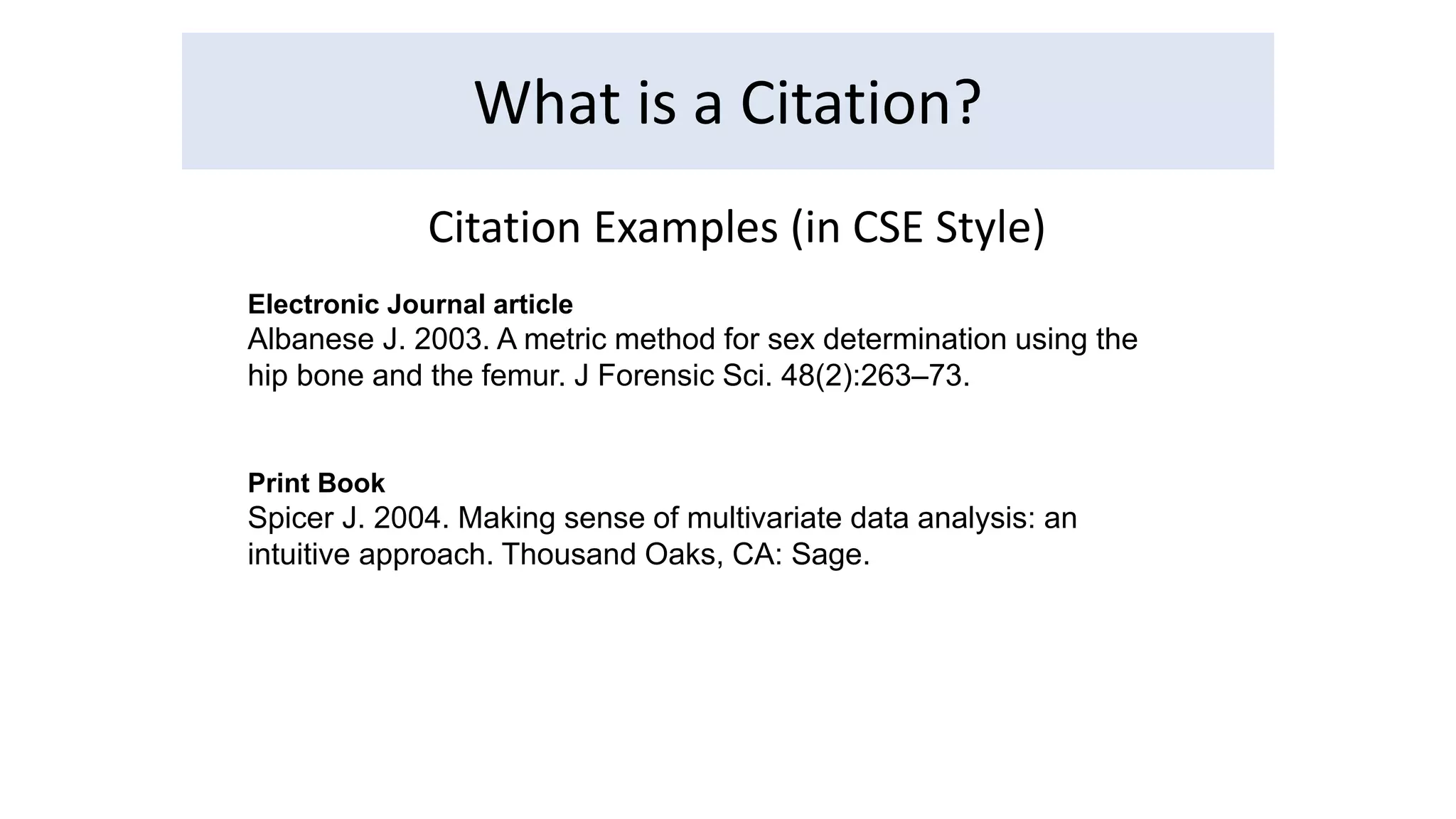
Citation Examples (in CSE Style) 
Electronic Journal article 
Albanese J. 2003. A metric method for sex determination using the 
hip bone and the femur. J Forensic Sci. 48(2):263–73. 
Print Book 
Spicer J. 2004. Making sense of multivariate data analysis: an 
intuitive approach. Thousand Oaks, CA: Sage.
Why Are Citations Important? 
Correct citations serve two purposes: 
They give credit to the person or organization from whom you 
borrowed the ideas and information. Avoids plagiarism. 
They allow your reader to identify and locate the original 
sources.
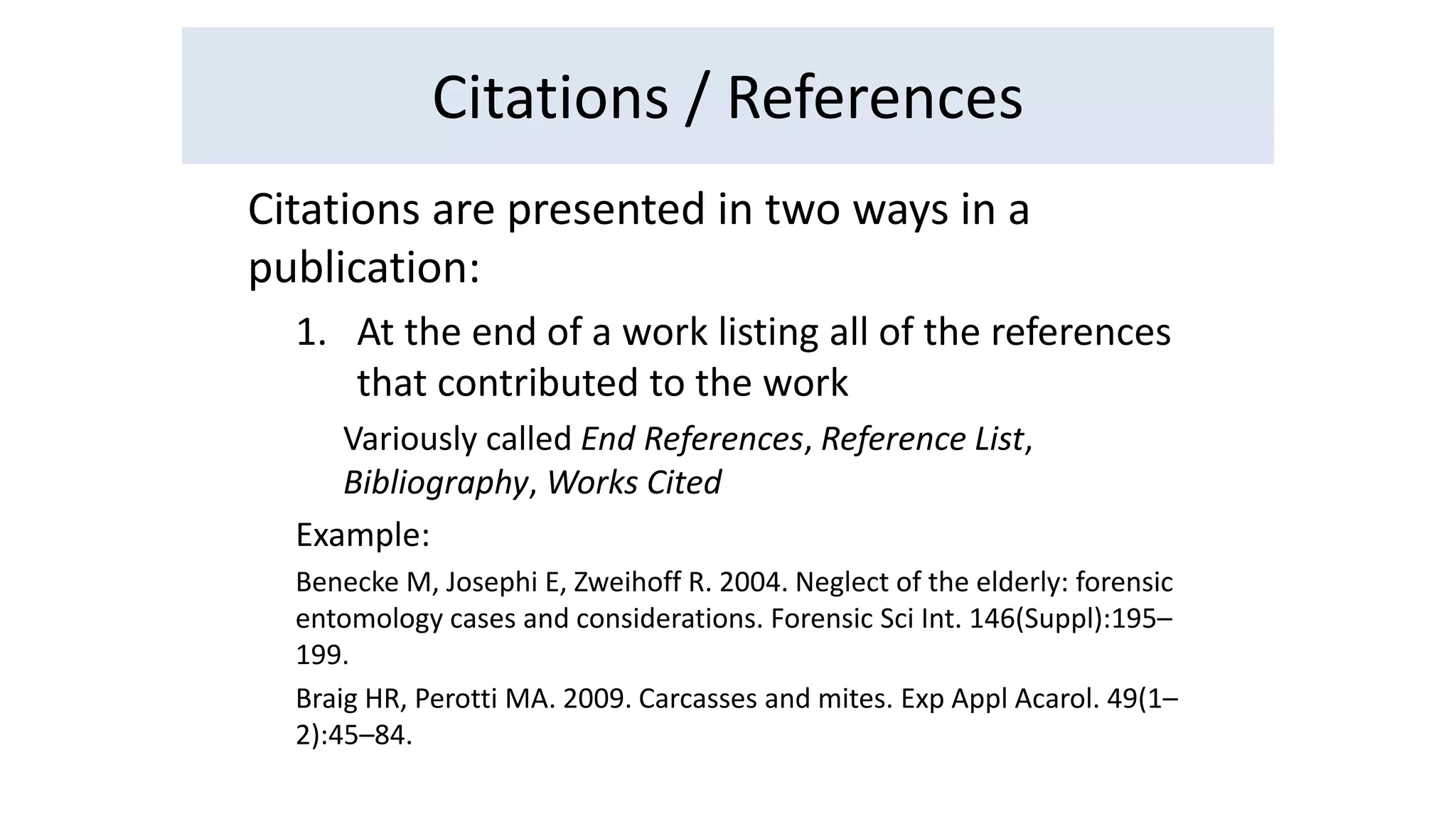
Citations / References 
Citations are presented in two ways in a 
publication: 
1. At the end of a work listing all of the references 
that contributed to the work 
Variously called End References, Reference List, 
Bibliography, Works Cited 
Example: 
Benecke M, Josephi E, Zweihoff R. 2004. Neglect of the elderly: forensic 
entomology cases and considerations. Forensic Sci Int. 146(Suppl):195– 
199. 
Braig HR, Perotti MA. 2009. Carcasses and mites. Exp Appl Acarol. 49(1– 
2):45–84.
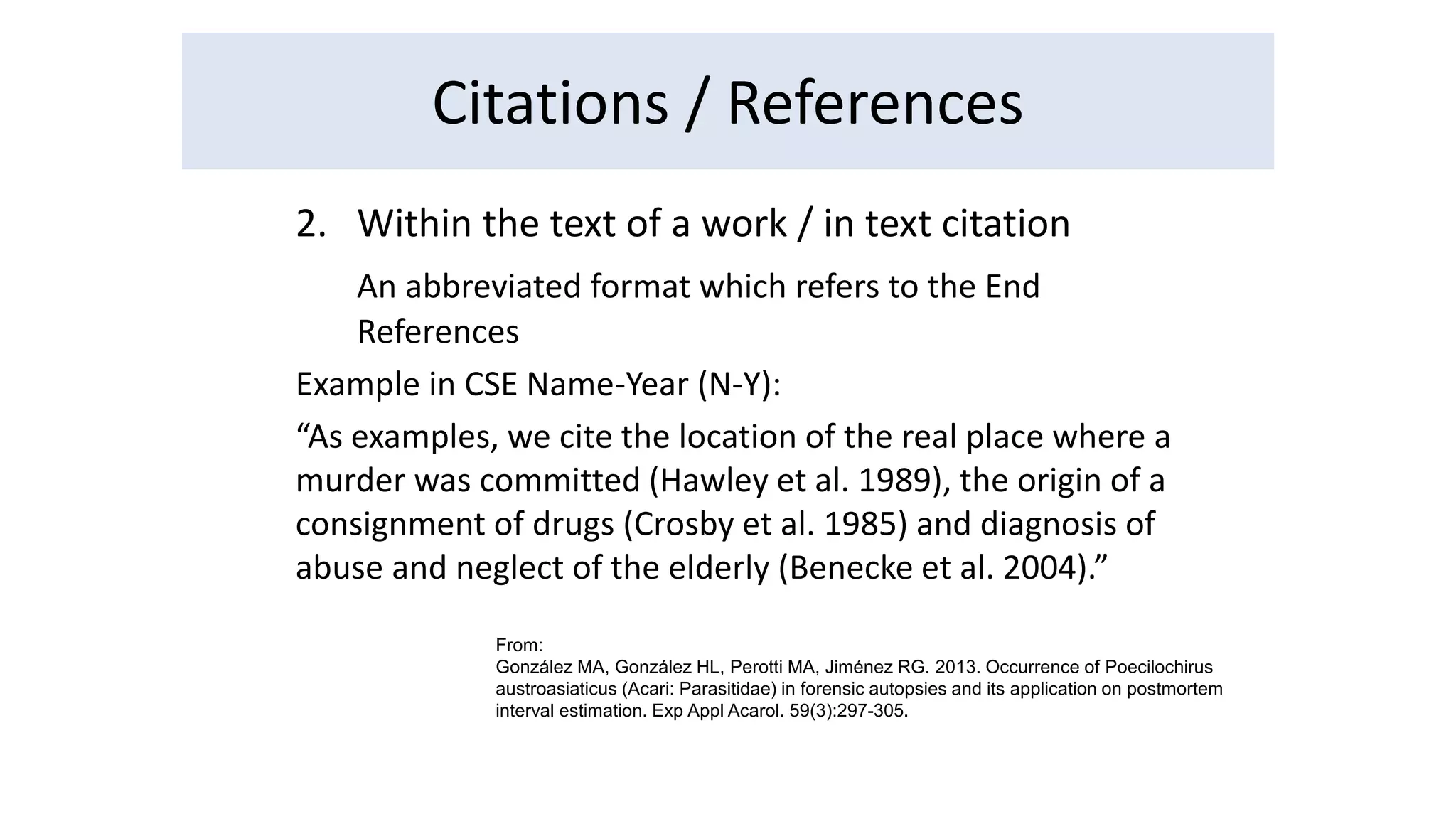
Citations / References 
2. Within the text of a work / in text citation 
An abbreviated format which refers to the End 
References 
Example in CSE Name-Year (N-Y): 
“As examples, we cite the location of the real place where a 
murder was committed (Hawley et al. 1989), the origin of a 
consignment of drugs (Crosby et al. 1985) and diagnosis of 
abuse and neglect of the elderly (Benecke et al. 2004).” 
From: 
González MA, González HL, Perotti MA, Jiménez RG. 2013. Occurrence of Poecilochirus 
austroasiaticus (Acari: Parasitidae) in forensic autopsies and its application on postmortem 
interval estimation. Exp Appl Acarol. 59(3):297-305.
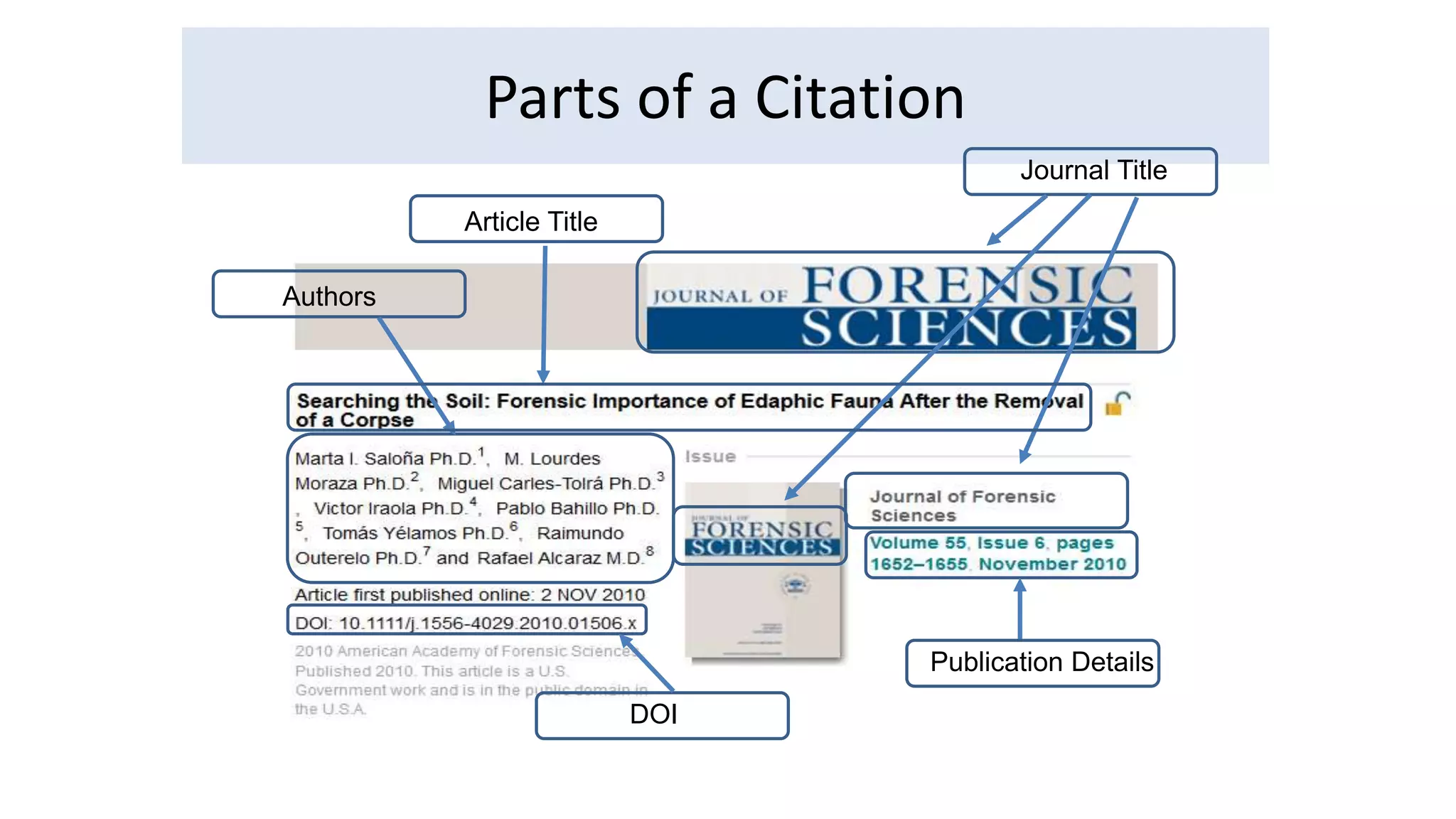
Parts of a Citation 
Journal Title 
Authors 
Article Title 
DOI 
Publication Details
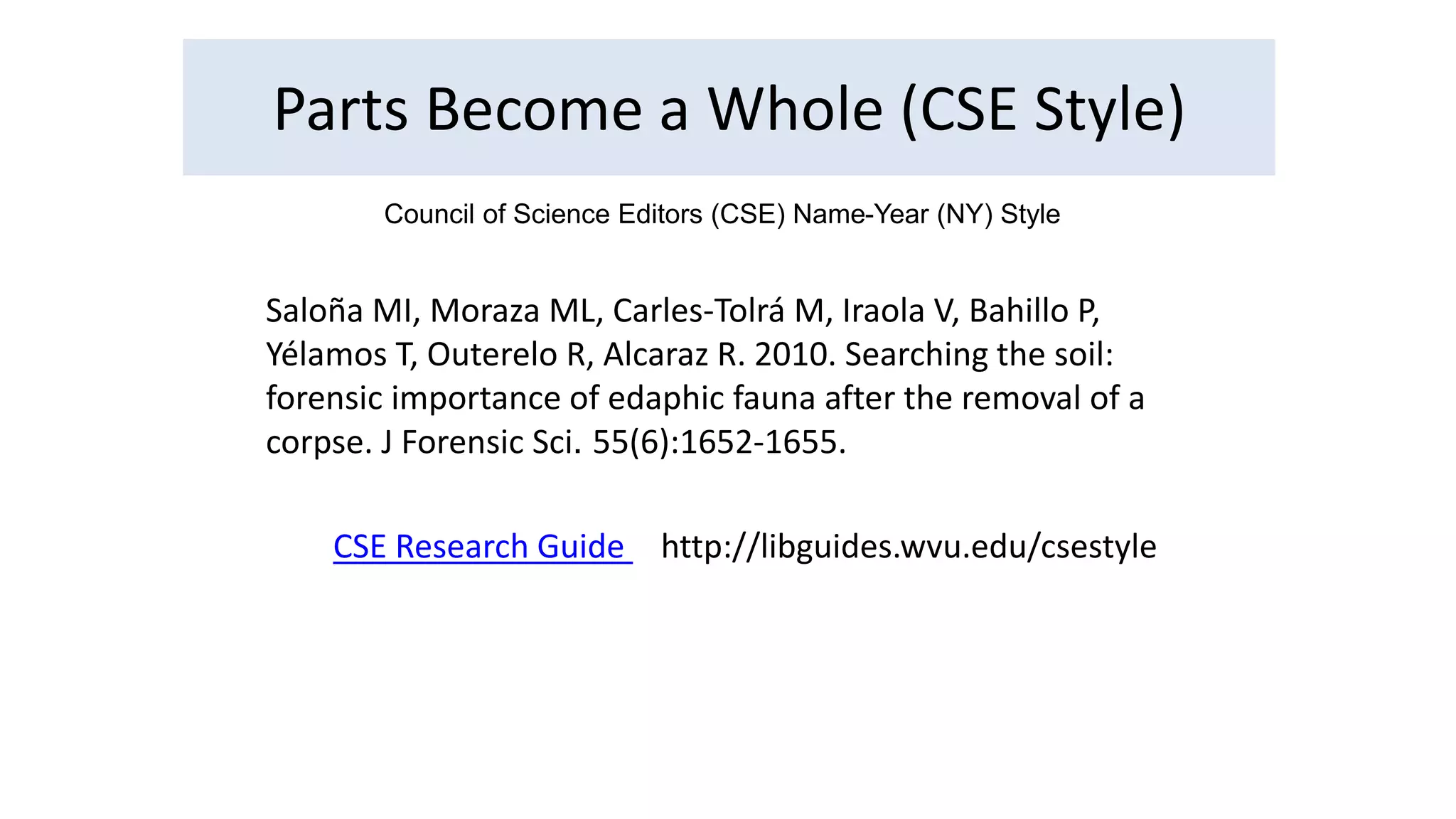
Parts Become a Whole (CSE Style) 
Council of Science Editors (CSE) Name-Year (NY) Style 
Saloña MI, Moraza ML, Carles‐Tolrá M, Iraola V, Bahillo P, 
Yélamos T, Outerelo R, Alcaraz R. 2010. Searching the soil: 
forensic importance of edaphic fauna after the removal of a 
corpse. J Forensic Sci. 55(6):1652-1655. 
CSE Research Guide http://libguides.wvu.edu/csestyle
Let’s Try Some Citations
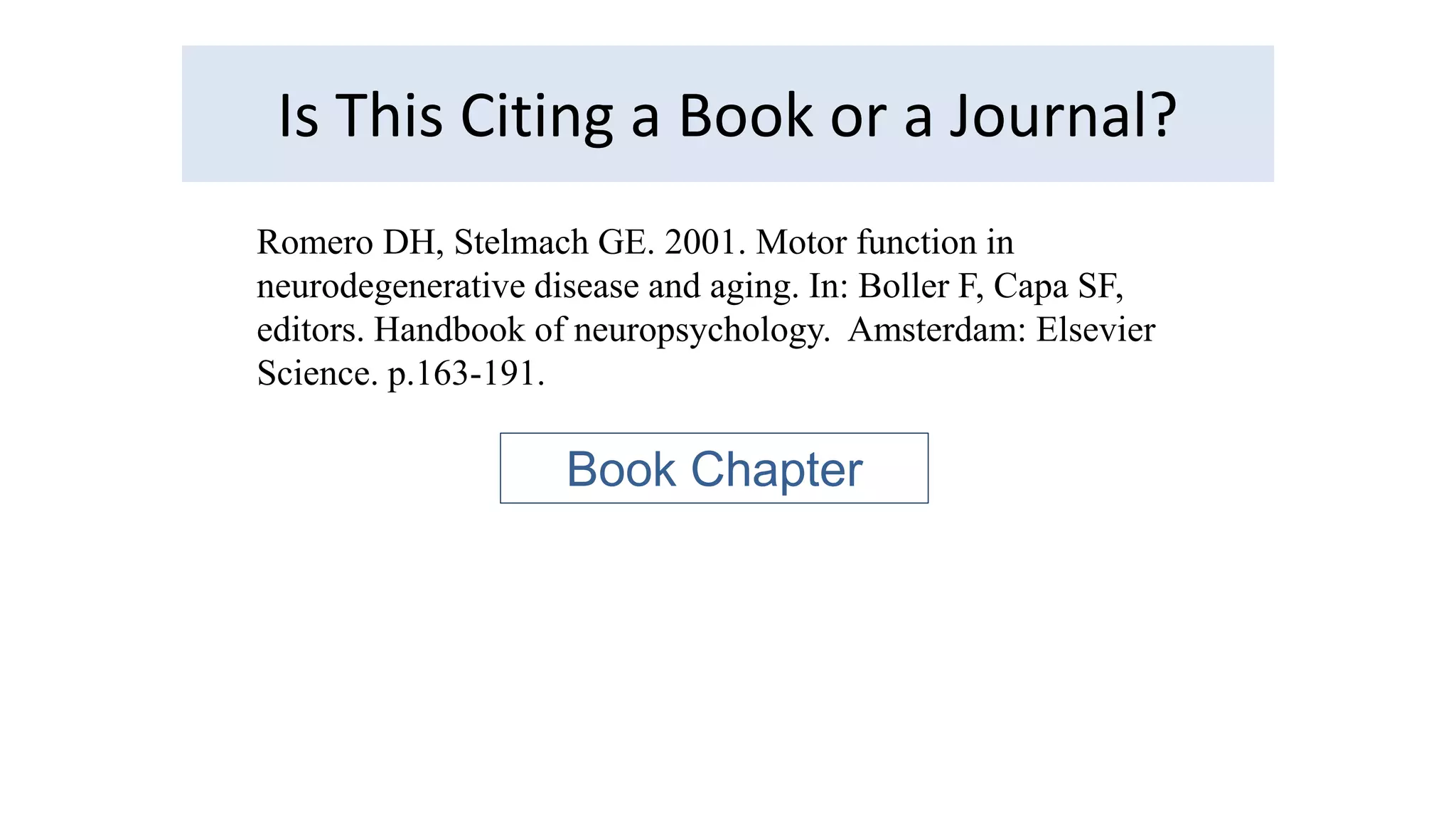
Is This Citing a Book or a Journal? 
Romero DH, Stelmach GE. 2001. Motor function in 
neurodegenerative disease and aging. In: Boller F, Capa SF, 
editors. Handbook of neuropsychology. Amsterdam: Elsevier 
Science. p.163-191. 
Book Chapter
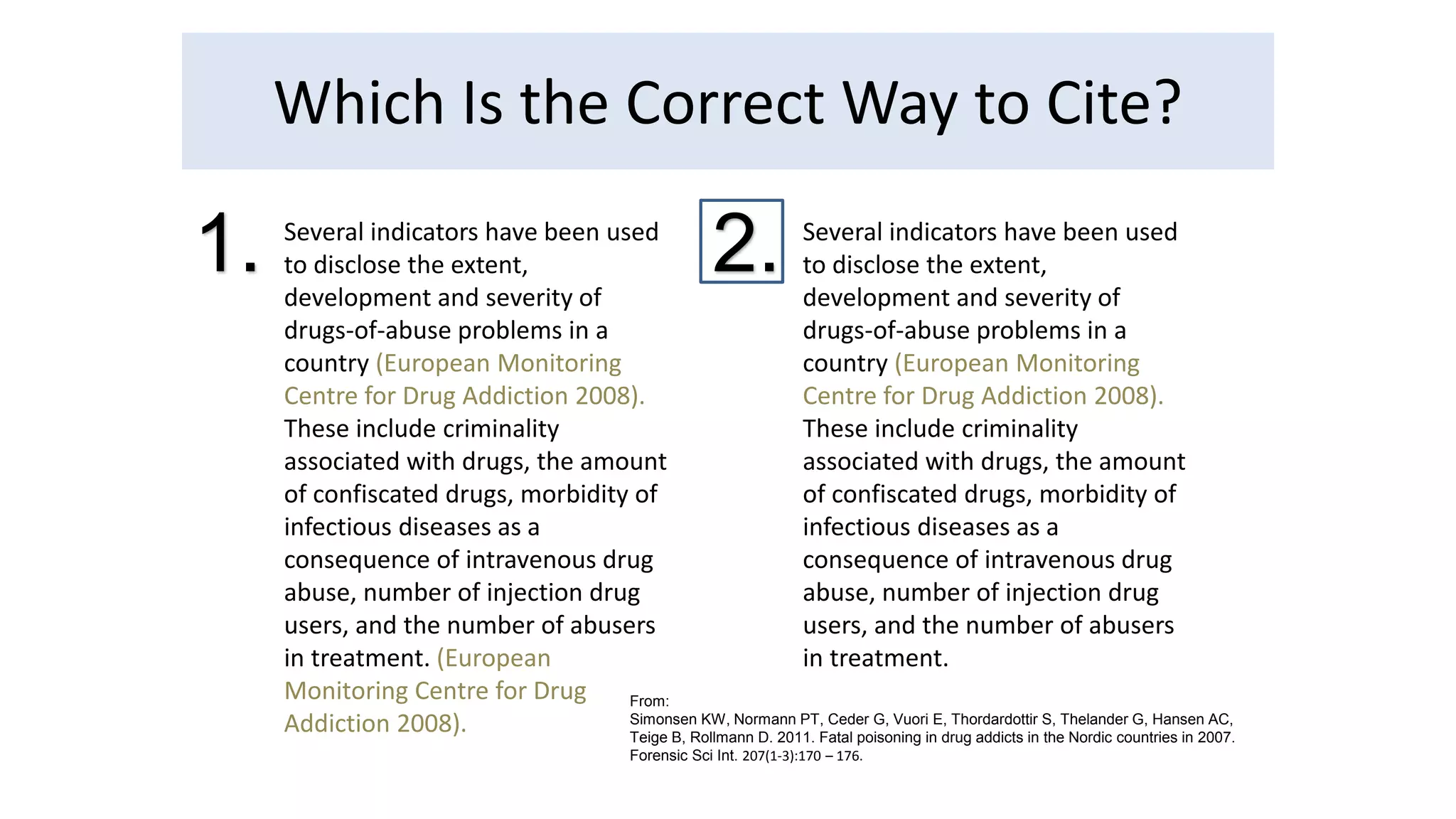
Which Is the Correct Way to Cite? 
Several indicators have been used 
to disclose the extent, 
development and severity of 
drugs-of-abuse problems in a 
country (European Monitoring 
Centre for Drug Addiction 2008). 
These include criminality 
associated with drugs, the amount 
of confiscated drugs, morbidity of 
infectious diseases as a 
consequence of intravenous drug 
abuse, number of injection drug 
users, and the number of abusers 
in treatment. (European 
Monitoring Centre for Drug 
Addiction 2008). 
Several indicators have been used 
to disclose the extent, 
development and severity of 
drugs-of-abuse problems in a 
country (European Monitoring 
Centre for Drug Addiction 2008). 
These include criminality 
associated with drugs, the amount 
of confiscated drugs, morbidity of 
infectious diseases as a 
consequence of intravenous drug 
abuse, number of injection drug 
users, and the number of abusers 
in treatment. 
1. 2. 
From: 
Simonsen KW, Normann PT, Ceder G, Vuori E, Thordardottir S, Thelander G, Hansen AC, 
Teige B, Rollmann D. 2011. Fatal poisoning in drug addicts in the Nordic countries in 2007. 
Forensic Sci Int. 207(1-3):170 – 176.
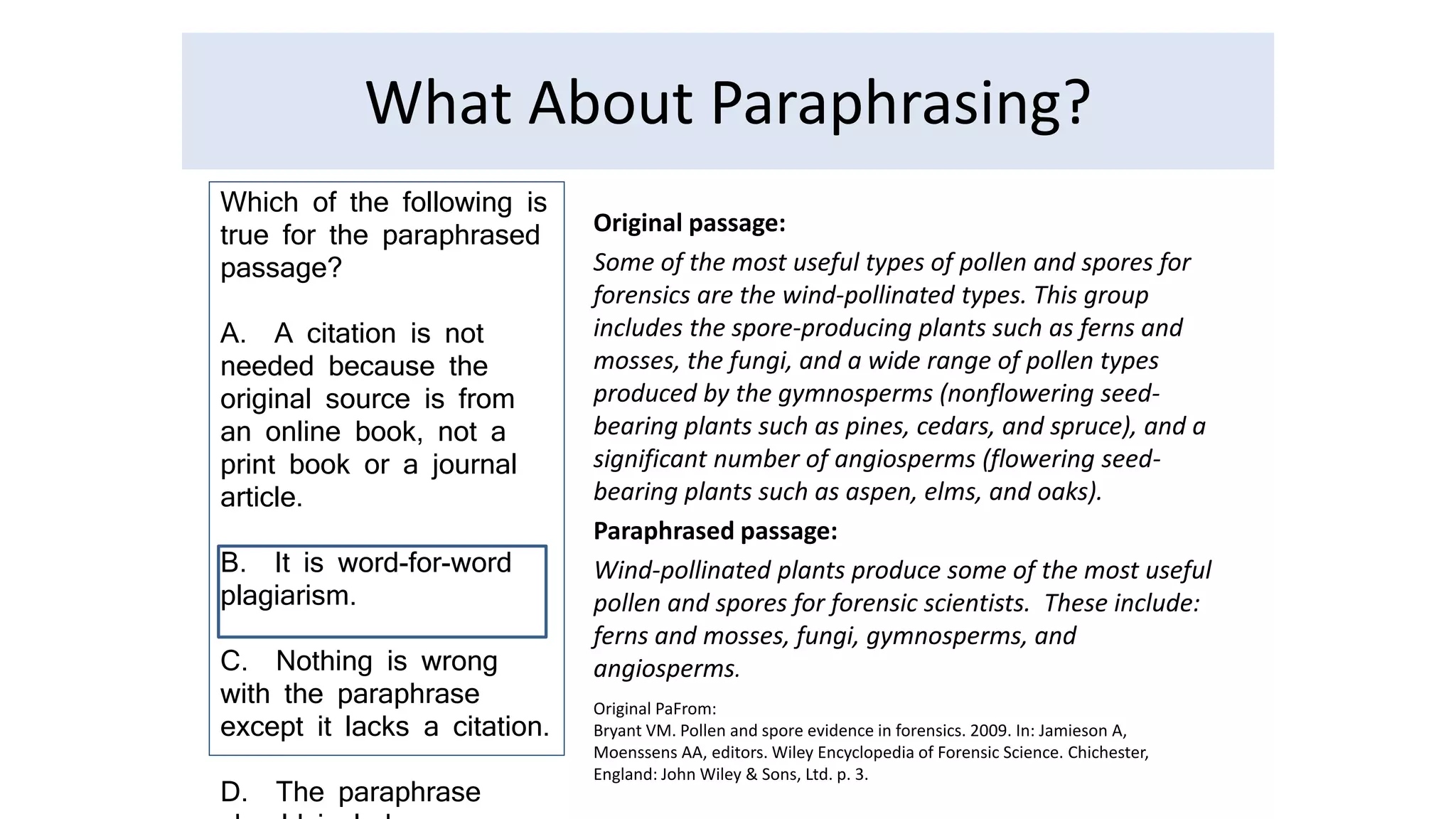
What About Paraphrasing? 
Original passage: 
Some of the most useful types of pollen and spores for 
forensics are the wind-pollinated types. This group 
includes the spore-producing plants such as ferns and 
mosses, the fungi, and a wide range of pollen types 
produced by the gymnosperms (nonflowering seed-bearing 
plants such as pines, cedars, and spruce), and a 
significant number of angiosperms (flowering seed-bearing 
plants such as aspen, elms, and oaks). 
Paraphrased passage: 
Wind-pollinated plants produce some of the most useful 
pollen and spores for forensic scientists. These include: 
ferns and mosses, fungi, gymnosperms, and 
angiosperms. 
Original PaFrom: 
Bryant VM. Pollen and spore evidence in forensics. 2009. In: Jamieson A, 
Moenssens AA, editors. Wiley Encyclopedia of Forensic Science. Chichester, 
England: John Wiley & Sons, Ltd. p. 3. 
Which of the following is 
true for the paraphrased 
passage? 
A. A citation is not 
needed because the 
original source is from 
an online book, not a 
print book or a journal 
article. 
B. It is word-for-word 
plagiarism. 
C. Nothing is wrong 
with the paraphrase 
except it lacks a citation. 
D. The paraphrase 
should include more
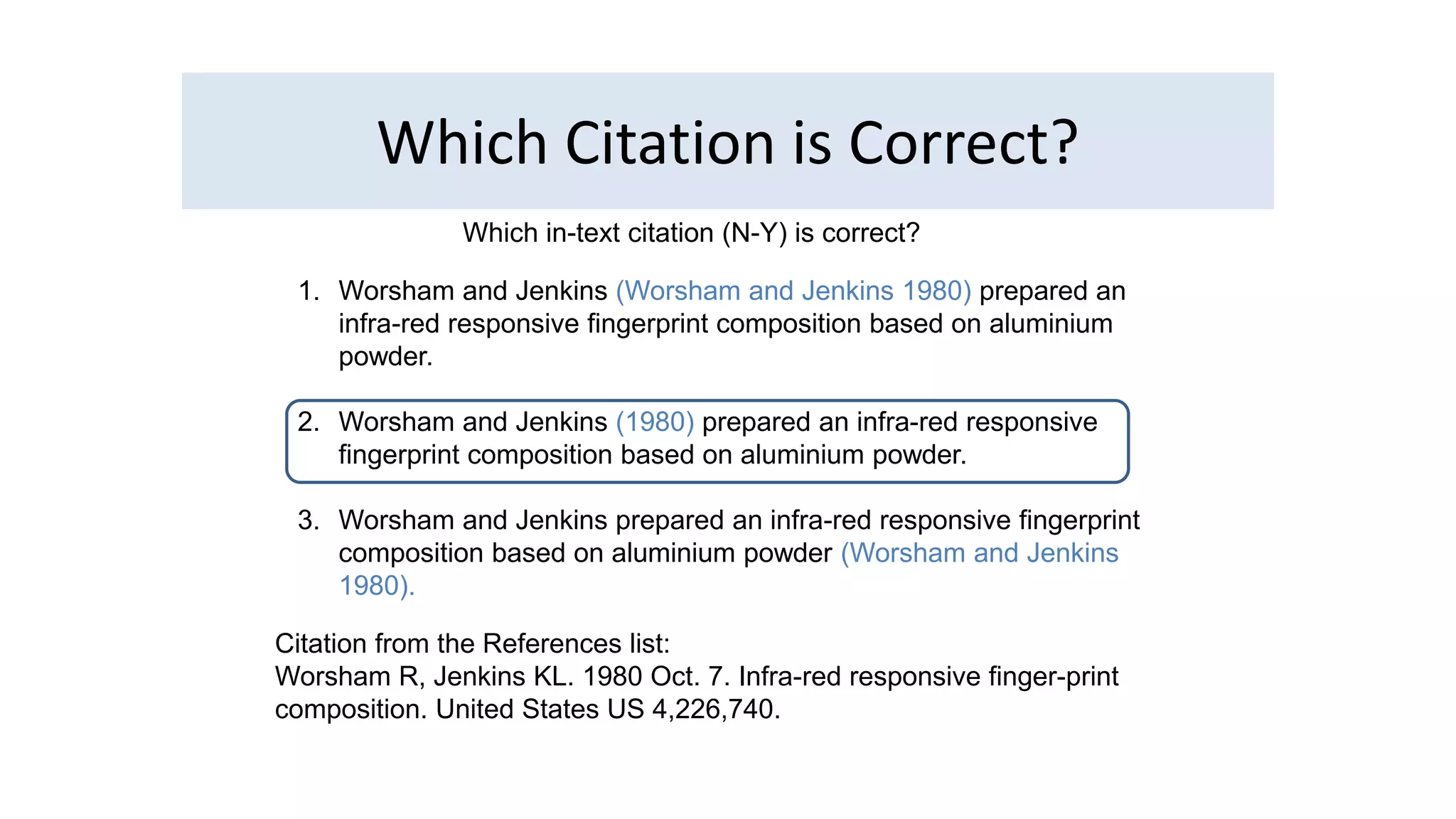
Which Citation is Correct? 
Which in-text citation (N-Y) is correct? 
1. Worsham and Jenkins (Worsham and Jenkins 1980) prepared an 
infra-red responsive fingerprint composition based on aluminium 
powder. 
2. Worsham and Jenkins (1980) prepared an infra-red responsive 
fingerprint composition based on aluminium powder. 
3. Worsham and Jenkins prepared an infra-red responsive fingerprint 
composition based on aluminium powder (Worsham and Jenkins 
1980). 
Citation from the References list: 
Worsham R, Jenkins KL. 1980 Oct. 7. Infra-red responsive finger-print 
composition. United States US 4,226,740.

Proper Citing

  • 1.
    Forensic and InvestigativeScience 401: Professional Forensic Communications Linda Blake, Science Librarian Linda.blake@mail.wvu.edu (304) 476-5802 Research Guide: http://libguides.wvu.edu/FIS401 Image from "What's Going On, 2009" by Willie Rodger; Bridgeman Education, WVU Libraries Information Literacy Sessions Fall 2014 Rachel Mohr
  • 2.
    What is aCitation? A formatted description of a journal article, book, web page, photograph, chart, interview, video, or other work you use to gain information for your writing. Also, referred to as references.
  • 3.
    What is aCitation? Citation Examples (in CSE Style) Electronic Journal article Albanese J. 2003. A metric method for sex determination using the hip bone and the femur. J Forensic Sci. 48(2):263–73. Print Book Spicer J. 2004. Making sense of multivariate data analysis: an intuitive approach. Thousand Oaks, CA: Sage.
  • 4.
    Why Are CitationsImportant? Correct citations serve two purposes: They give credit to the person or organization from whom you borrowed the ideas and information. Avoids plagiarism. They allow your reader to identify and locate the original sources.
  • 5.
    Citations / References Citations are presented in two ways in a publication: 1. At the end of a work listing all of the references that contributed to the work Variously called End References, Reference List, Bibliography, Works Cited Example: Benecke M, Josephi E, Zweihoff R. 2004. Neglect of the elderly: forensic entomology cases and considerations. Forensic Sci Int. 146(Suppl):195– 199. Braig HR, Perotti MA. 2009. Carcasses and mites. Exp Appl Acarol. 49(1– 2):45–84.
  • 6.
    Citations / References 2. Within the text of a work / in text citation An abbreviated format which refers to the End References Example in CSE Name-Year (N-Y): “As examples, we cite the location of the real place where a murder was committed (Hawley et al. 1989), the origin of a consignment of drugs (Crosby et al. 1985) and diagnosis of abuse and neglect of the elderly (Benecke et al. 2004).” From: González MA, González HL, Perotti MA, Jiménez RG. 2013. Occurrence of Poecilochirus austroasiaticus (Acari: Parasitidae) in forensic autopsies and its application on postmortem interval estimation. Exp Appl Acarol. 59(3):297-305.
  • 7.
    Parts of aCitation Journal Title Authors Article Title DOI Publication Details
  • 8.
    Parts Become aWhole (CSE Style) Council of Science Editors (CSE) Name-Year (NY) Style Saloña MI, Moraza ML, Carles‐Tolrá M, Iraola V, Bahillo P, Yélamos T, Outerelo R, Alcaraz R. 2010. Searching the soil: forensic importance of edaphic fauna after the removal of a corpse. J Forensic Sci. 55(6):1652-1655. CSE Research Guide http://libguides.wvu.edu/csestyle
  • 9.
  • 10.
    Is This Citinga Book or a Journal? Romero DH, Stelmach GE. 2001. Motor function in neurodegenerative disease and aging. In: Boller F, Capa SF, editors. Handbook of neuropsychology. Amsterdam: Elsevier Science. p.163-191. Book Chapter
  • 11.
    Which Is theCorrect Way to Cite? Several indicators have been used to disclose the extent, development and severity of drugs-of-abuse problems in a country (European Monitoring Centre for Drug Addiction 2008). These include criminality associated with drugs, the amount of confiscated drugs, morbidity of infectious diseases as a consequence of intravenous drug abuse, number of injection drug users, and the number of abusers in treatment. (European Monitoring Centre for Drug Addiction 2008). Several indicators have been used to disclose the extent, development and severity of drugs-of-abuse problems in a country (European Monitoring Centre for Drug Addiction 2008). These include criminality associated with drugs, the amount of confiscated drugs, morbidity of infectious diseases as a consequence of intravenous drug abuse, number of injection drug users, and the number of abusers in treatment. 1. 2. From: Simonsen KW, Normann PT, Ceder G, Vuori E, Thordardottir S, Thelander G, Hansen AC, Teige B, Rollmann D. 2011. Fatal poisoning in drug addicts in the Nordic countries in 2007. Forensic Sci Int. 207(1-3):170 – 176.
  • 12.
    What About Paraphrasing? Original passage: Some of the most useful types of pollen and spores for forensics are the wind-pollinated types. This group includes the spore-producing plants such as ferns and mosses, the fungi, and a wide range of pollen types produced by the gymnosperms (nonflowering seed-bearing plants such as pines, cedars, and spruce), and a significant number of angiosperms (flowering seed-bearing plants such as aspen, elms, and oaks). Paraphrased passage: Wind-pollinated plants produce some of the most useful pollen and spores for forensic scientists. These include: ferns and mosses, fungi, gymnosperms, and angiosperms. Original PaFrom: Bryant VM. Pollen and spore evidence in forensics. 2009. In: Jamieson A, Moenssens AA, editors. Wiley Encyclopedia of Forensic Science. Chichester, England: John Wiley & Sons, Ltd. p. 3. Which of the following is true for the paraphrased passage? A. A citation is not needed because the original source is from an online book, not a print book or a journal article. B. It is word-for-word plagiarism. C. Nothing is wrong with the paraphrase except it lacks a citation. D. The paraphrase should include more
  • 13.
    Which Citation isCorrect? Which in-text citation (N-Y) is correct? 1. Worsham and Jenkins (Worsham and Jenkins 1980) prepared an infra-red responsive fingerprint composition based on aluminium powder. 2. Worsham and Jenkins (1980) prepared an infra-red responsive fingerprint composition based on aluminium powder. 3. Worsham and Jenkins prepared an infra-red responsive fingerprint composition based on aluminium powder (Worsham and Jenkins 1980). Citation from the References list: Worsham R, Jenkins KL. 1980 Oct. 7. Infra-red responsive finger-print composition. United States US 4,226,740.

Editor's Notes

  • #9 Give the handout