Questions for Exploring Literature Beth Ritter-Guth, Instructor ENG285: Contemporary Fiction DeSales University Summer 2007
Romantic versus Realism Is the story Romantic or Realistic? How do we know? Could this story function as the other; if so, with what changes?
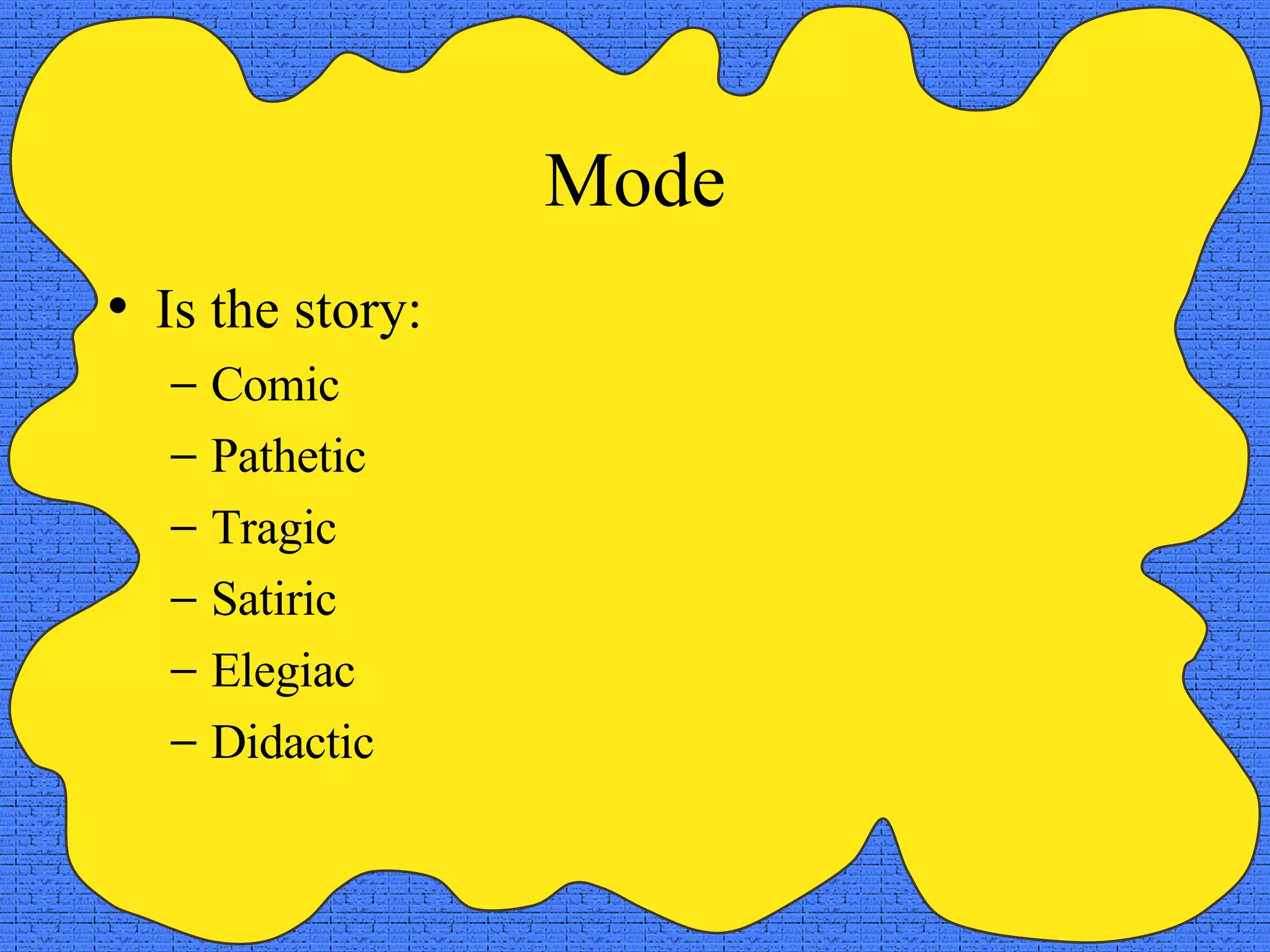
Mode Is the story: Comic Pathetic Tragic Satiric Elegiac Didactic
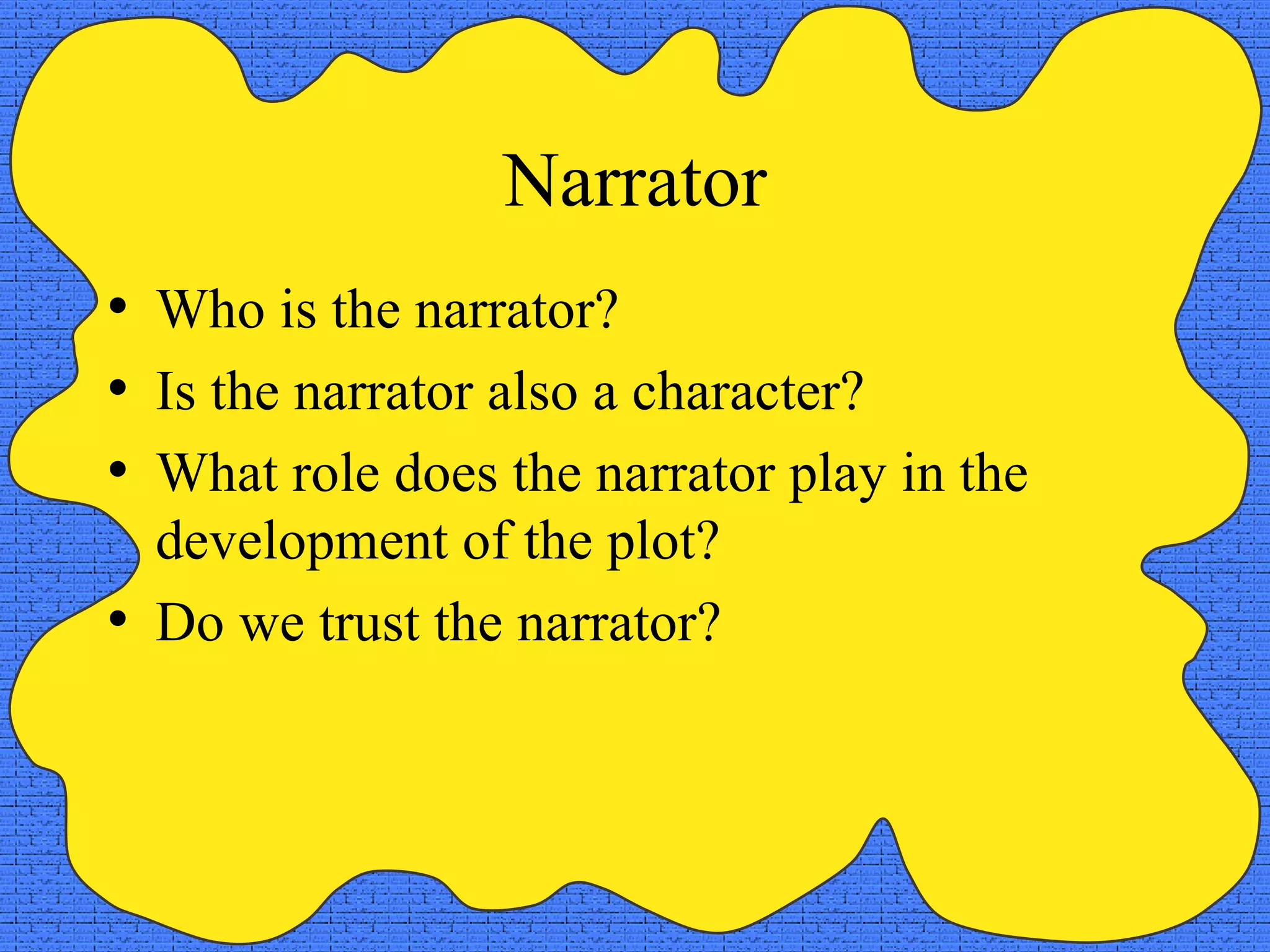
Narrator Who is the narrator? Is the narrator also a character? What role does the narrator play in the development of the plot? Do we trust the narrator?
Characters Who are the main characters?  How are they introduced in the story? When are they introduced? What do we know about these characters? What do we need to know about them? Do they fit any archetypal patterns?
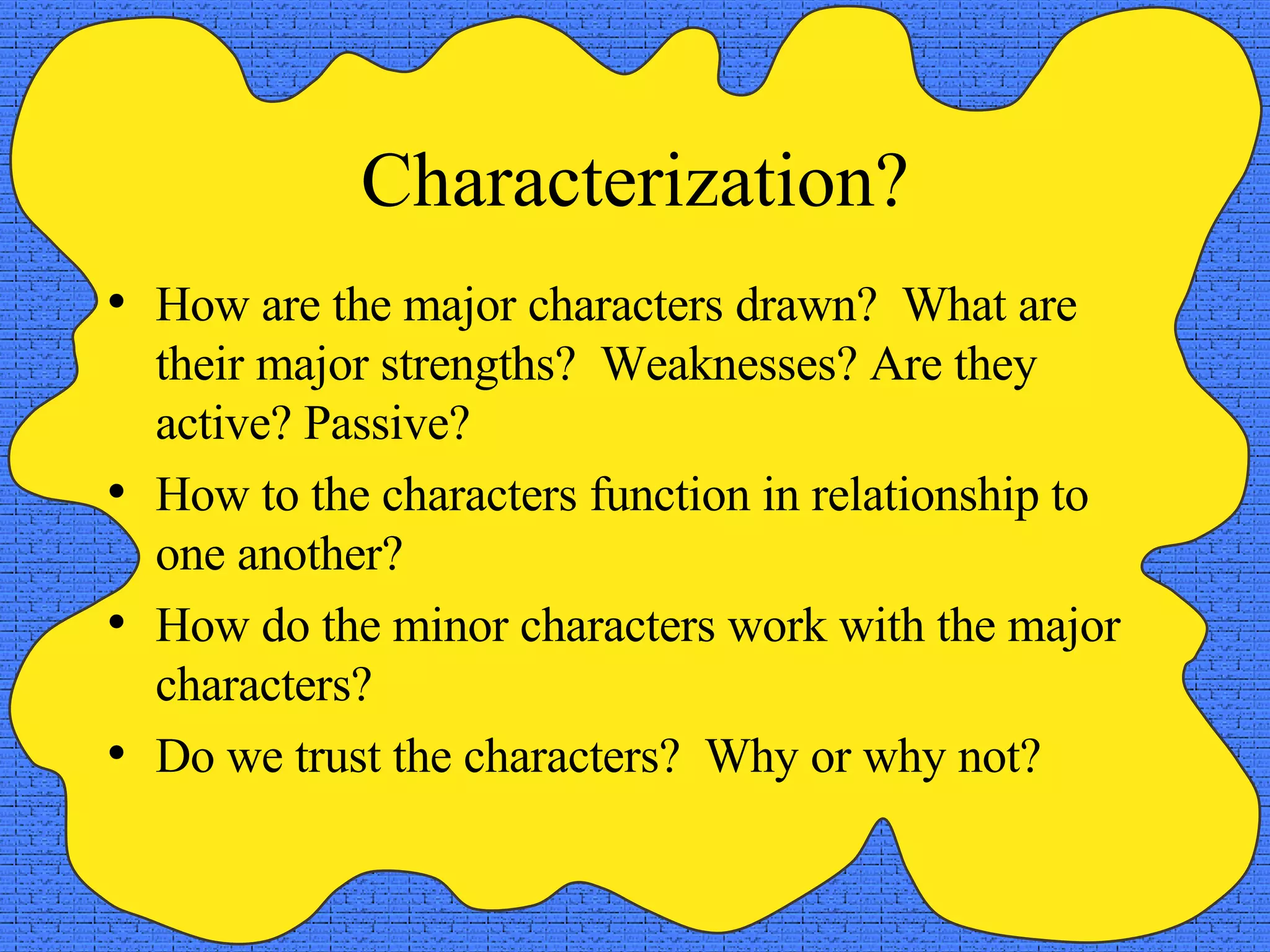
Characterization? How are the major characters drawn?  What are their major strengths?  Weaknesses? Are they active? Passive? How to the characters function in relationship to one another? How do the minor characters work with the major characters? Do we trust the characters?  Why or why not?
Background How does the story start? What happened before the story started? Where does the reader “land” in the story? How do we learn this background? Is the delivery of this background important to the plot of the story?
Point of View Would the POV change if the narrator were changed? Is this story in first person? Do you assume the narrator is the voice of the author?  Why or why not? Would the story be as good (or bad) if the narrator were different?
Action, Speech, Ideas How to characters present their ideas? How is speech crafted to provide characterization? Which is more important to the character - actions or speech? Does the reader “get inside the head of” any character? Do the characters change (for better or worse) during the story?
Character and Setting What time period is the story set? Do the characters behave according to the standards of time and location? What do we need to understand about the time period, customs, language, mores, habits, and traditions of the culture or time period?
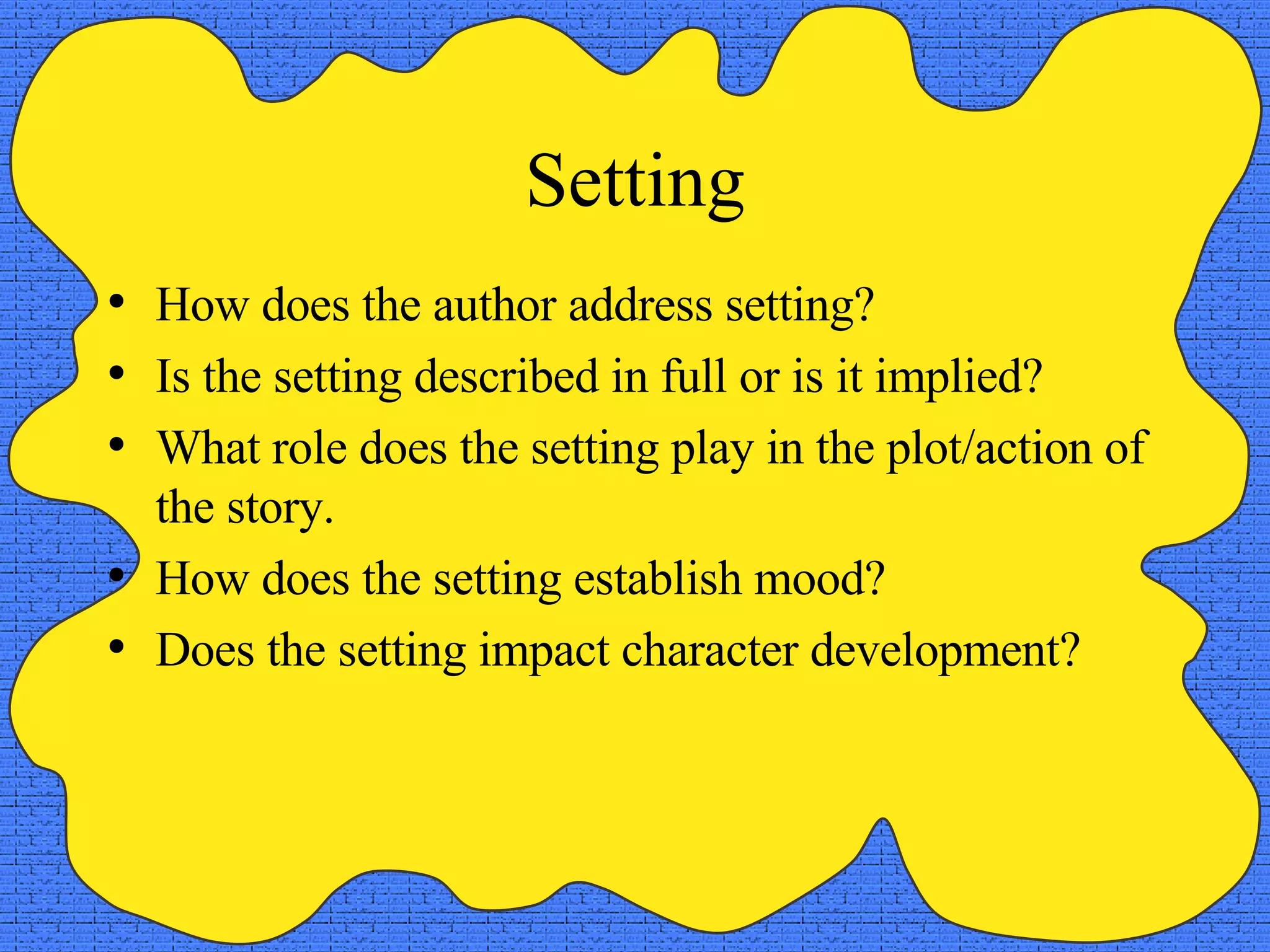
Setting How does the author address setting? Is the setting described in full or is it implied? What role does the setting play in the plot/action of the story. How does the setting establish mood? Does the setting impact character development?
Plot Is the plot of the story the most meaningful part of the story?  If not, what is? Is there anything missing in the plot?  Is this element missing on purpose? Are there any inconsistencies in the plot?  Are these intentional? How does memory play a role in the development of the plot?  Do we trust these memories?
Organization of Plot Is the story organized thematically or chronologically? Would the outcome be different if the events happened differently? What are the motivations of the major and minor characters?
Emotion Does the setting of the story establish emotion? Does the characterization establish emotion? Does the POV establish emotion? Do the symbols establish emotion?
Reality and Believability Is this story believable or fantastical? Does the story need to be believable to achieve the overall effect or impact of the story? How does the plot function in believability? Are the characters believable? Is the setting realistic?  Does it need to be realistic?
Theme Is this story didactic? What is the point of the story - to inform, persuade, or entertain? How does the plot establish the theme? How do the characters function in relationship to the theme? What value statements are implied by the theme?
Traditional Themes Does this story present a new theme or a twist on a familiar theme? What other works exist with a similar theme? Is the theme of this work consistent with the genre or time period of the author or work?
Language How is language used in the story? How are words chosen? How are paragraphs organized? How are quotations used? Does the author use sensory description? Are your senses engaged? Does the author assume your familiarity with the senses needed to appreciate the story? Are you able to fill in gaps for missing speech, ideas, and actions of characters?
Symbols Are symbols used in the story? Do the characters recognize the symbols, or are the symbols used for the benefit of the reader only? Do these symbols add meaning?  Why, or why not?  Are there major and minor symbols? Are the symbols archetypal?
Twists & Manipulations Is anything twisted through exaggeration?  Is this done on purpose? Is this technique effective? What are the consequences of manipulating details?

Literature Questions

  • 1.
    Questions for ExploringLiterature Beth Ritter-Guth, Instructor ENG285: Contemporary Fiction DeSales University Summer 2007
  • 2.
    Romantic versus RealismIs the story Romantic or Realistic? How do we know? Could this story function as the other; if so, with what changes?
  • 3.
    Mode Is thestory: Comic Pathetic Tragic Satiric Elegiac Didactic
  • 4.
    Narrator Who isthe narrator? Is the narrator also a character? What role does the narrator play in the development of the plot? Do we trust the narrator?
  • 5.
    Characters Who arethe main characters? How are they introduced in the story? When are they introduced? What do we know about these characters? What do we need to know about them? Do they fit any archetypal patterns?
  • 6.
    Characterization? How arethe major characters drawn? What are their major strengths? Weaknesses? Are they active? Passive? How to the characters function in relationship to one another? How do the minor characters work with the major characters? Do we trust the characters? Why or why not?
  • 7.
    Background How doesthe story start? What happened before the story started? Where does the reader “land” in the story? How do we learn this background? Is the delivery of this background important to the plot of the story?
  • 8.
    Point of ViewWould the POV change if the narrator were changed? Is this story in first person? Do you assume the narrator is the voice of the author? Why or why not? Would the story be as good (or bad) if the narrator were different?
  • 9.
    Action, Speech, IdeasHow to characters present their ideas? How is speech crafted to provide characterization? Which is more important to the character - actions or speech? Does the reader “get inside the head of” any character? Do the characters change (for better or worse) during the story?
  • 10.
    Character and SettingWhat time period is the story set? Do the characters behave according to the standards of time and location? What do we need to understand about the time period, customs, language, mores, habits, and traditions of the culture or time period?
  • 11.
    Setting How doesthe author address setting? Is the setting described in full or is it implied? What role does the setting play in the plot/action of the story. How does the setting establish mood? Does the setting impact character development?
  • 12.
    Plot Is theplot of the story the most meaningful part of the story? If not, what is? Is there anything missing in the plot? Is this element missing on purpose? Are there any inconsistencies in the plot? Are these intentional? How does memory play a role in the development of the plot? Do we trust these memories?
  • 13.
    Organization of PlotIs the story organized thematically or chronologically? Would the outcome be different if the events happened differently? What are the motivations of the major and minor characters?
  • 14.
    Emotion Does thesetting of the story establish emotion? Does the characterization establish emotion? Does the POV establish emotion? Do the symbols establish emotion?
  • 15.
    Reality and BelievabilityIs this story believable or fantastical? Does the story need to be believable to achieve the overall effect or impact of the story? How does the plot function in believability? Are the characters believable? Is the setting realistic? Does it need to be realistic?
  • 16.
    Theme Is thisstory didactic? What is the point of the story - to inform, persuade, or entertain? How does the plot establish the theme? How do the characters function in relationship to the theme? What value statements are implied by the theme?
  • 17.
    Traditional Themes Doesthis story present a new theme or a twist on a familiar theme? What other works exist with a similar theme? Is the theme of this work consistent with the genre or time period of the author or work?
  • 18.
    Language How islanguage used in the story? How are words chosen? How are paragraphs organized? How are quotations used? Does the author use sensory description? Are your senses engaged? Does the author assume your familiarity with the senses needed to appreciate the story? Are you able to fill in gaps for missing speech, ideas, and actions of characters?
  • 19.
    Symbols Are symbolsused in the story? Do the characters recognize the symbols, or are the symbols used for the benefit of the reader only? Do these symbols add meaning? Why, or why not? Are there major and minor symbols? Are the symbols archetypal?
  • 20.
    Twists & ManipulationsIs anything twisted through exaggeration? Is this done on purpose? Is this technique effective? What are the consequences of manipulating details?