Identity
Your personal issue
Shaping your project
• You must address specific assessment objectives during your
coursework project
• The process you will follow takes you through these:
• AO1 – research into other image-makers (photographers, film-makers, artists)
• AO2 – experiment with the ideas and techniques you have discovered
• AO3 – review and refine (improve) your images
• AO4 – plan and create a final piece that is your own idea, influenced by your
research
• You will probably go backwards and forwards through these steps
• You are working towards creating a final piece on the theme of Identity
• This will be displayed in the summer exhibition “Sensed”
• It must use photography or moving image
• Your final coursework deadline is Tuesday 9th May – you have 11 school
weeks and 3 holiday weeks
• The exhibition evening is Thursday 29th June
• There is an outline on Firefly of how you are expected to use the 11 weeks
On Tuesday 9th May, you will hand in:
• Your sketchbook(s)
• Your portfolio pieces mounted on black card, or a showreel of your best
clips
• Your A3 display book of amazing photographs, or stills from your films
• Your final piece, as it will be seen in the exhibition
In late June you will hang, project or set up your final piece for the exhibition
Work for an exhibition: Jane Bown
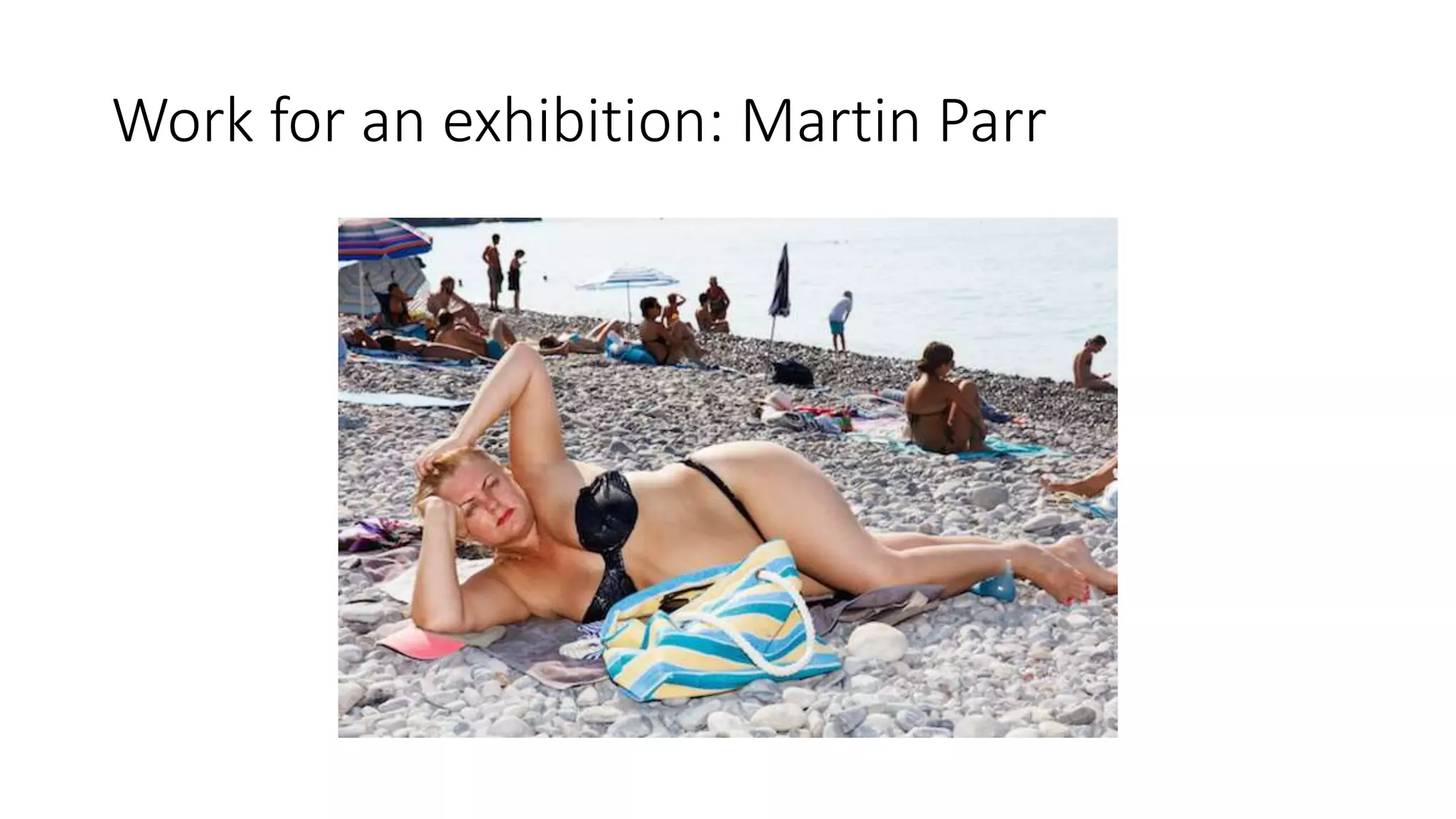
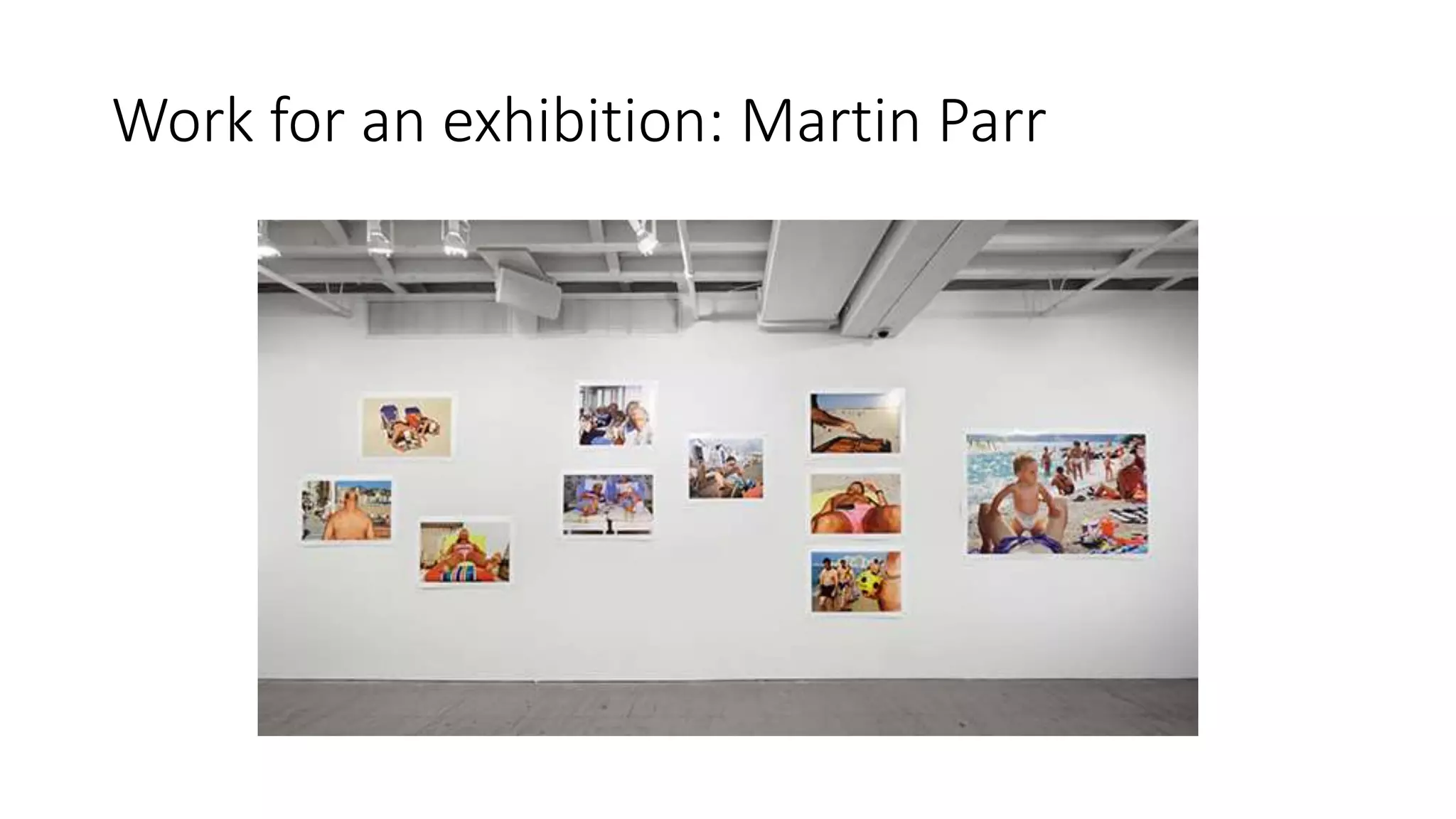
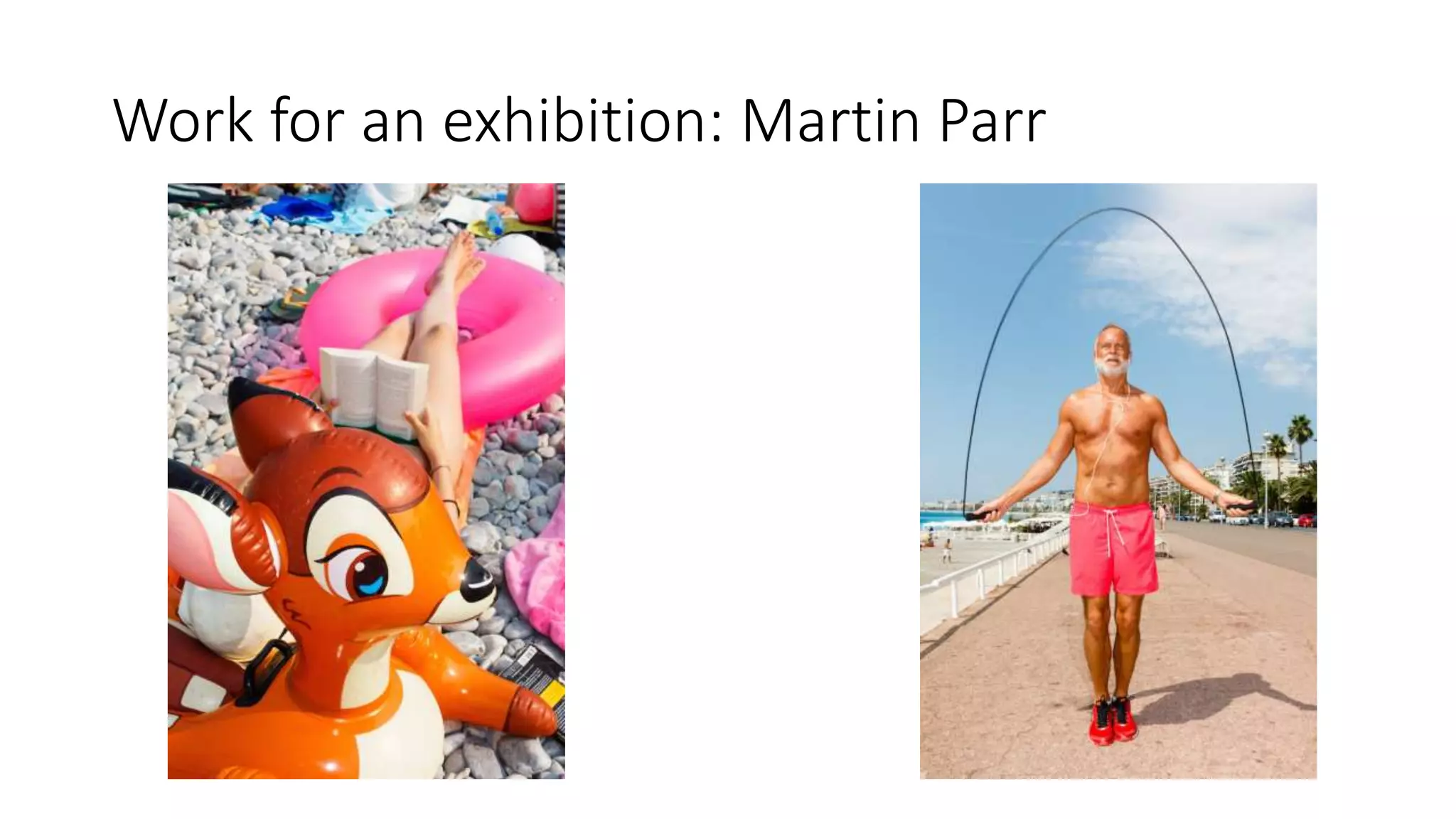
Work for an exhibition: Martin Parr
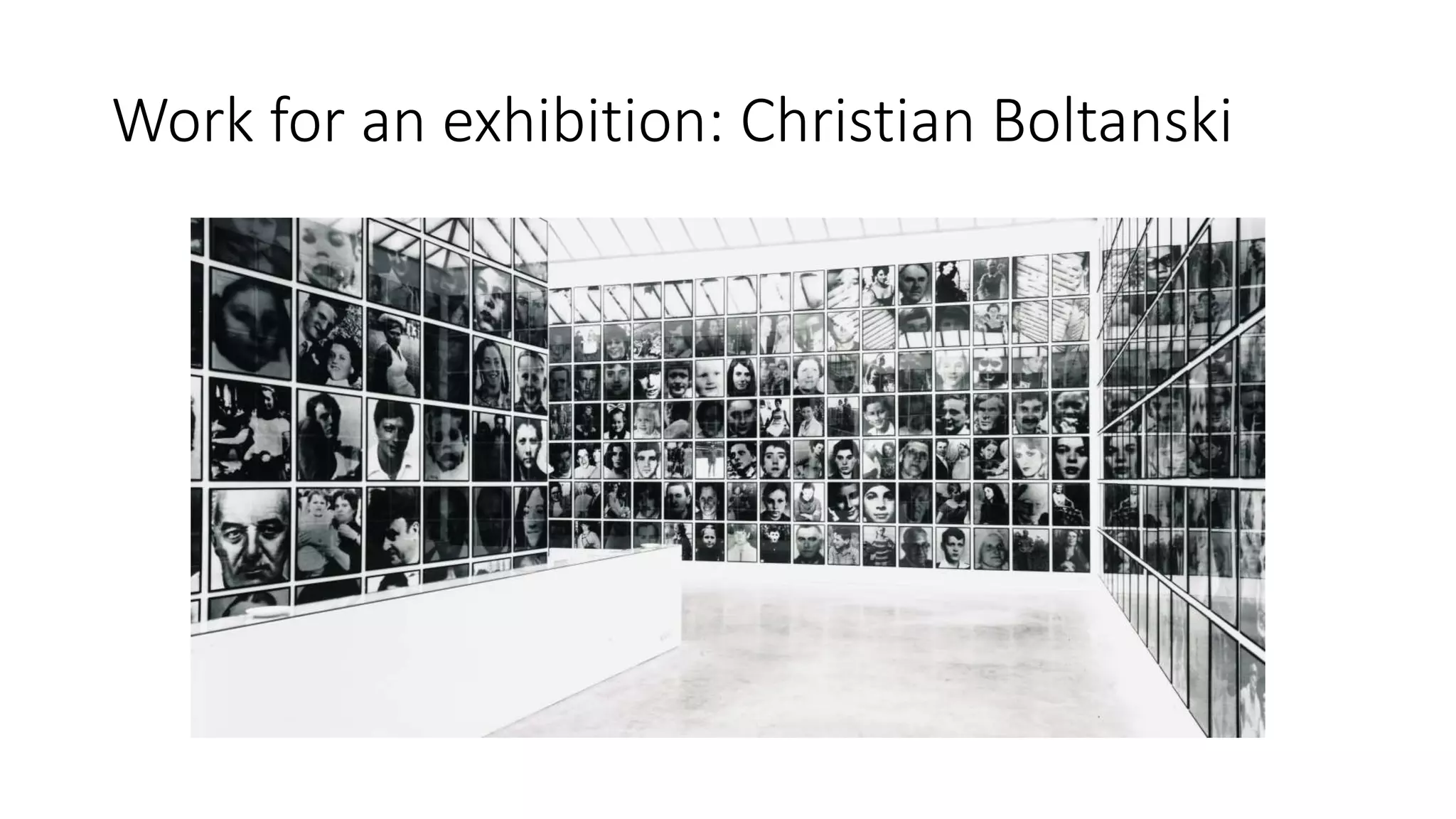
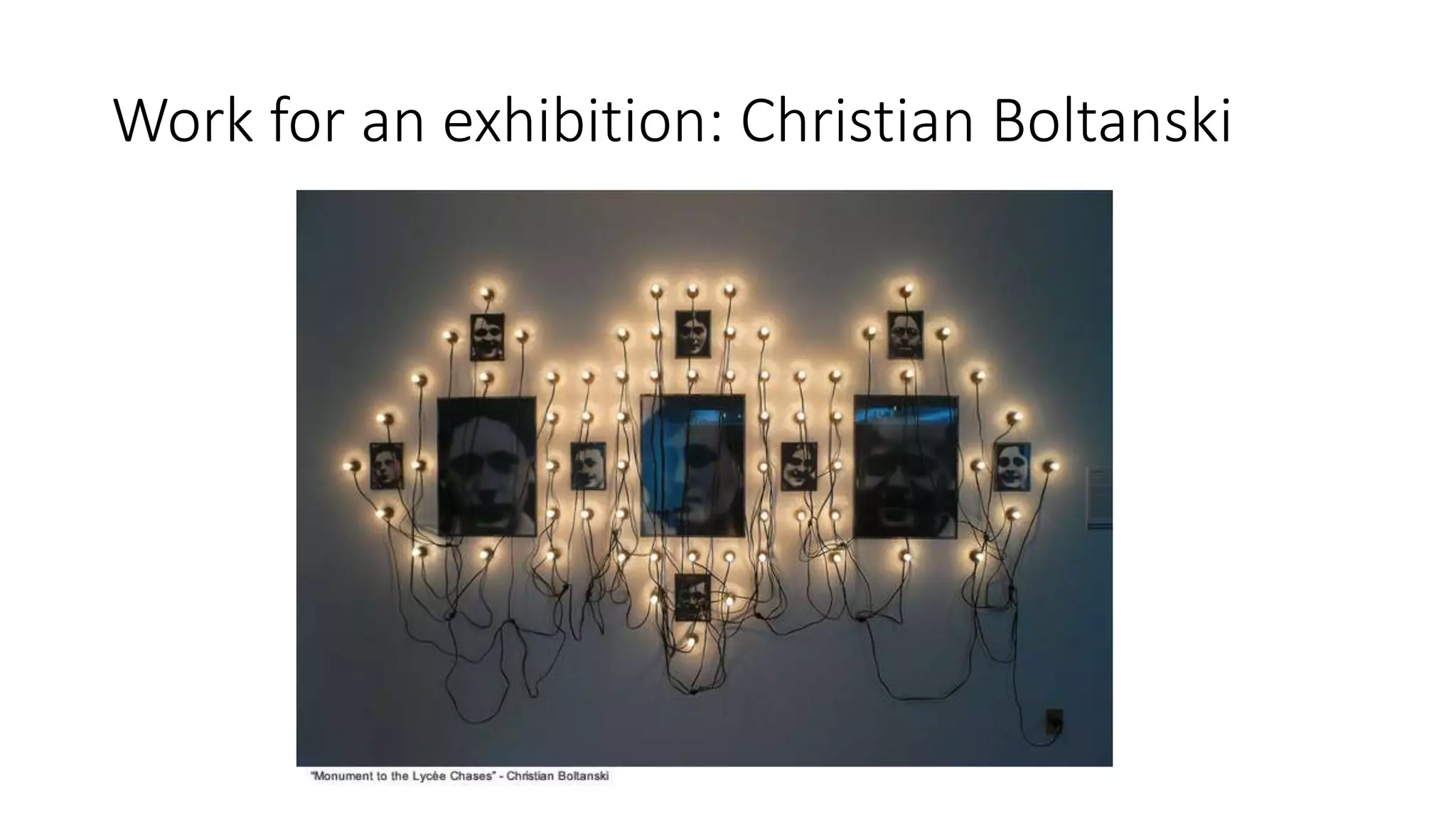
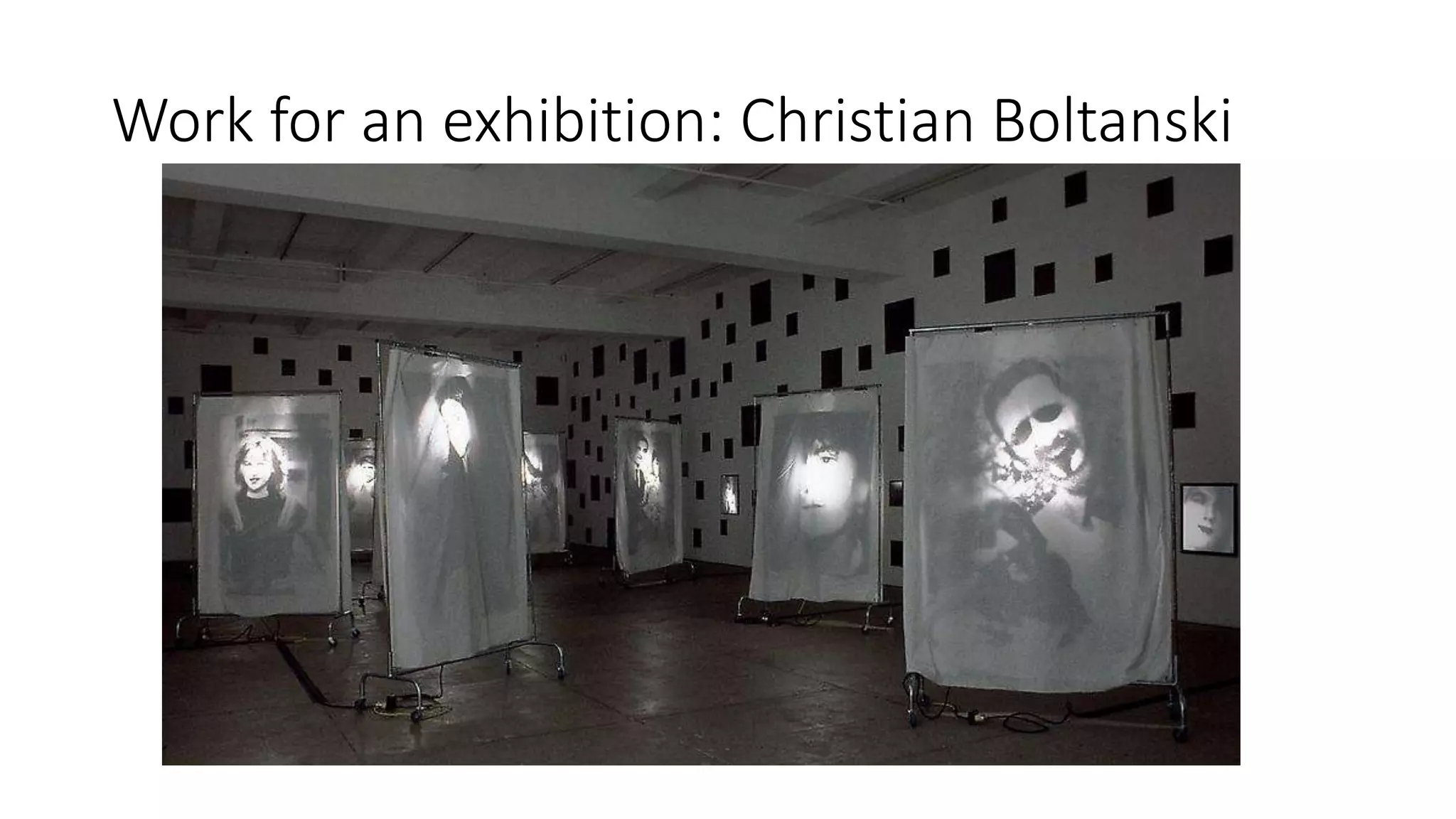
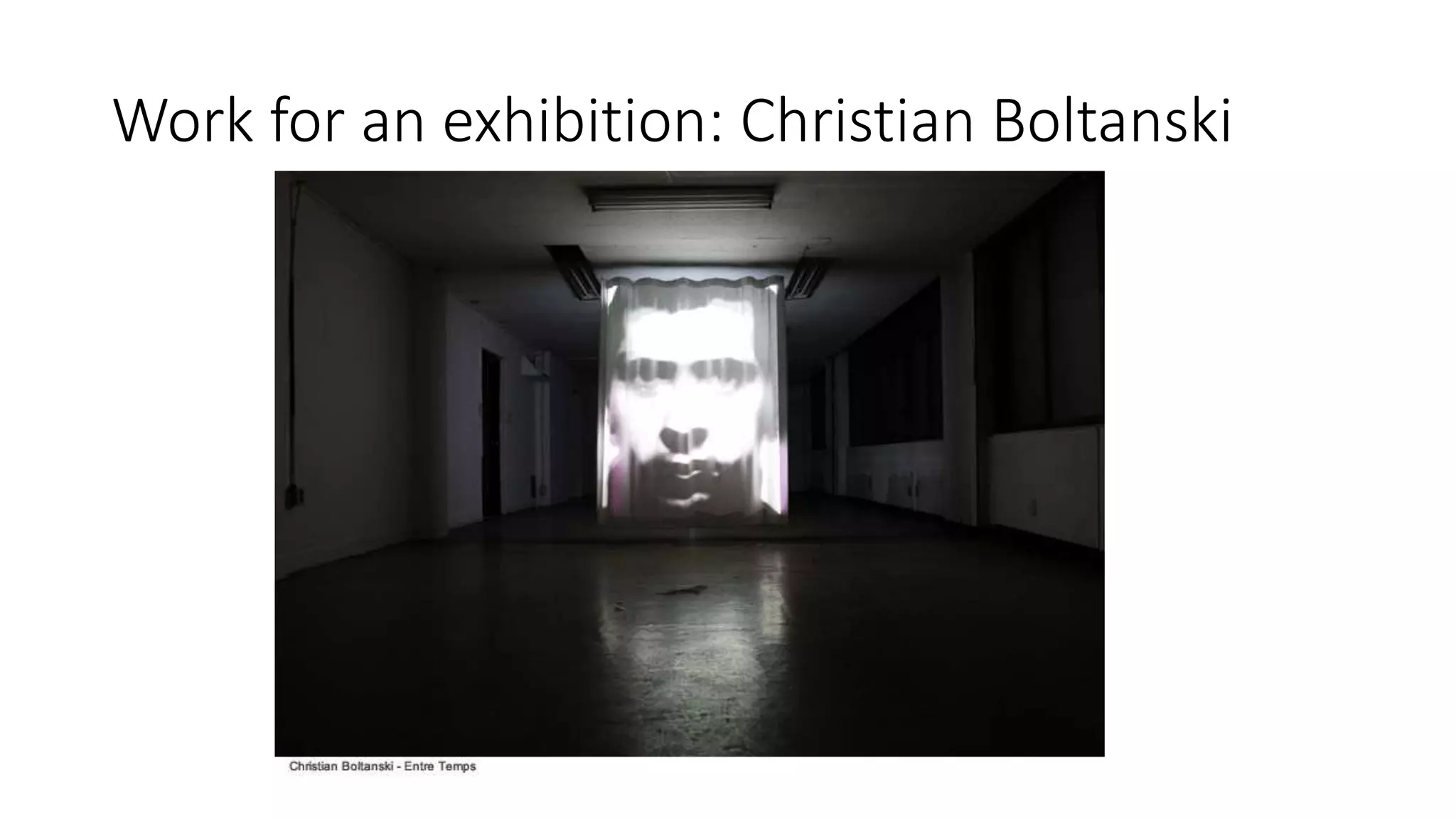
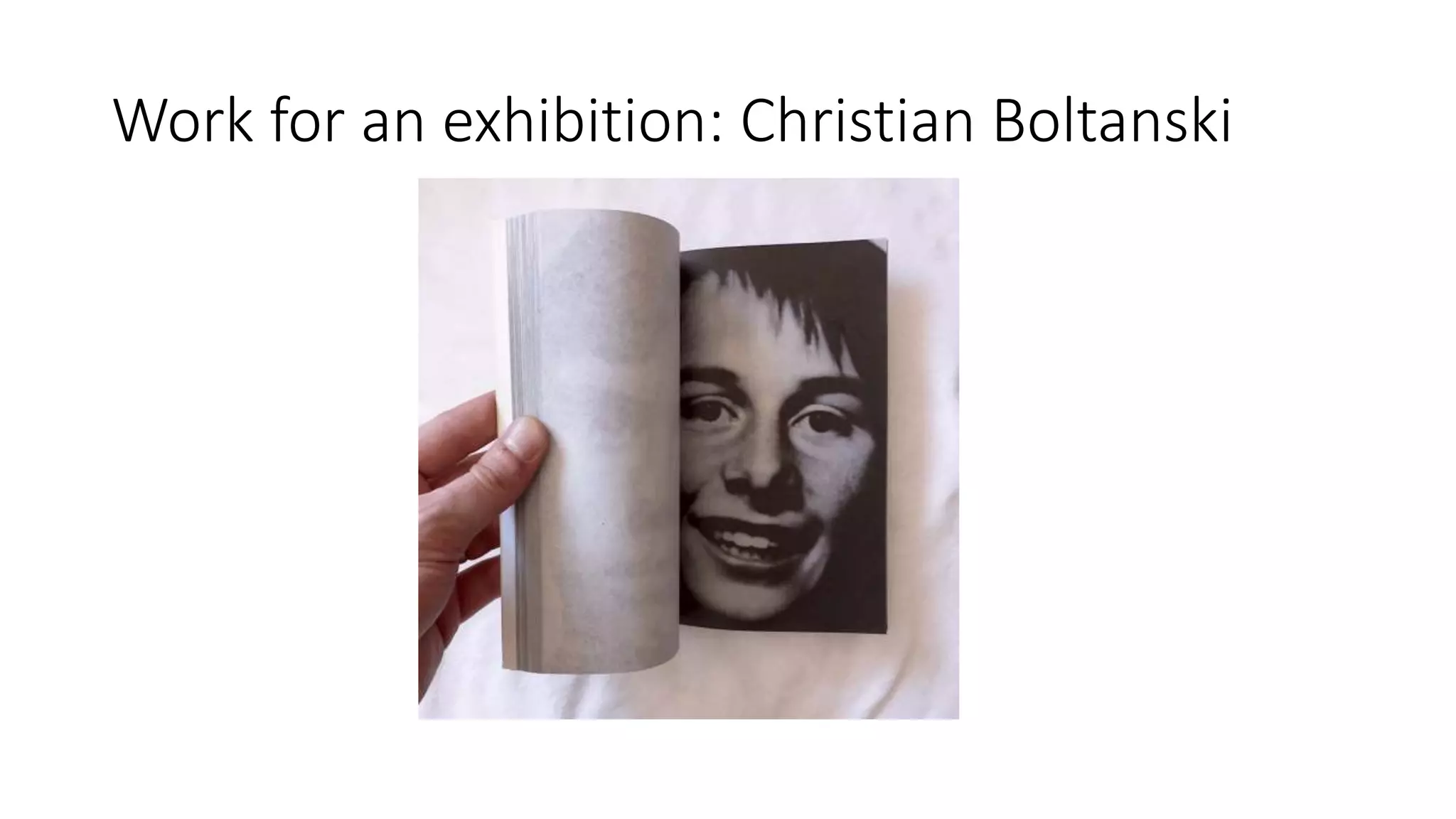
Work for an exhibition: Christian Boltanski
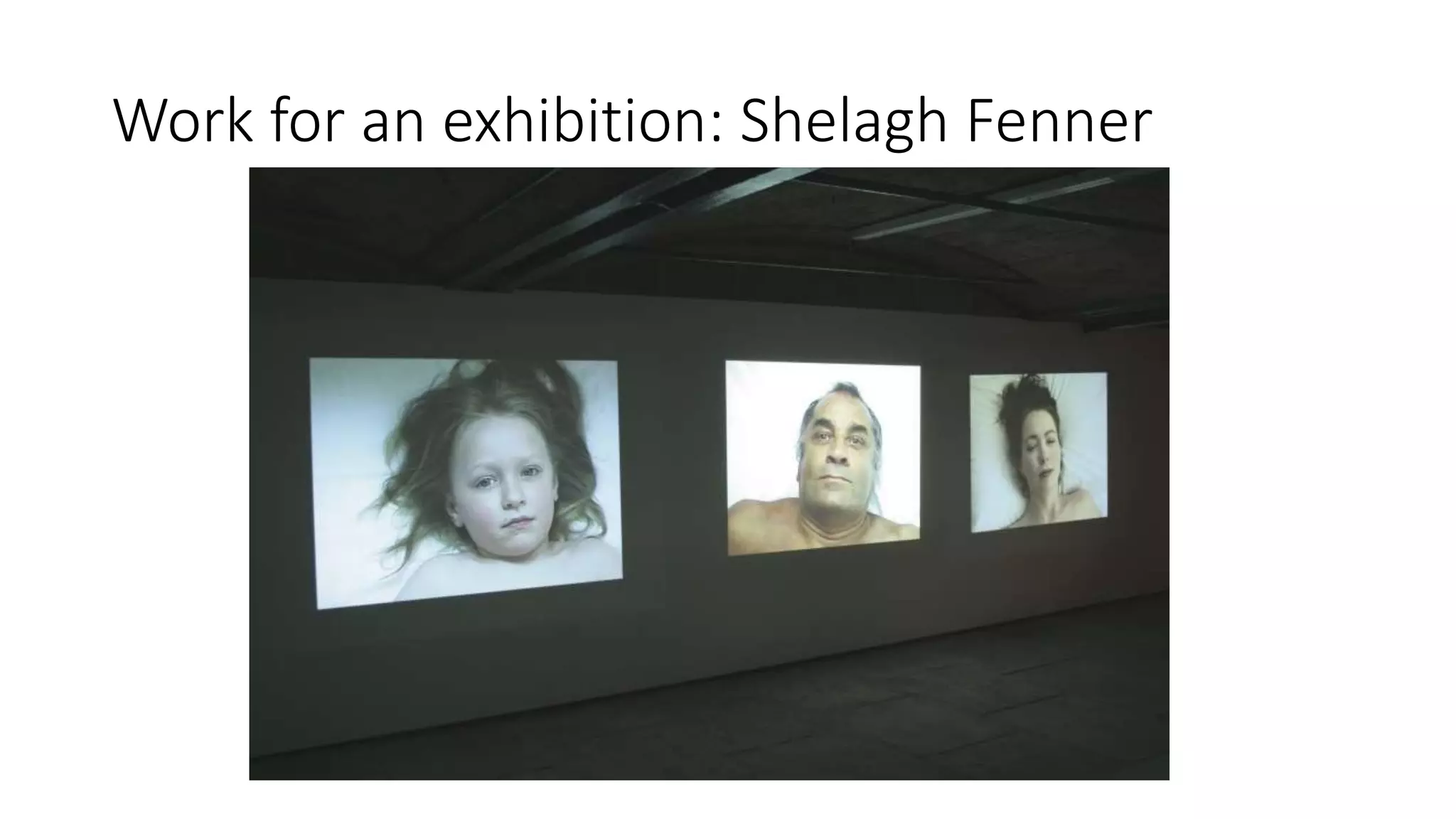
Work for an exhibition: Shelagh Fenner
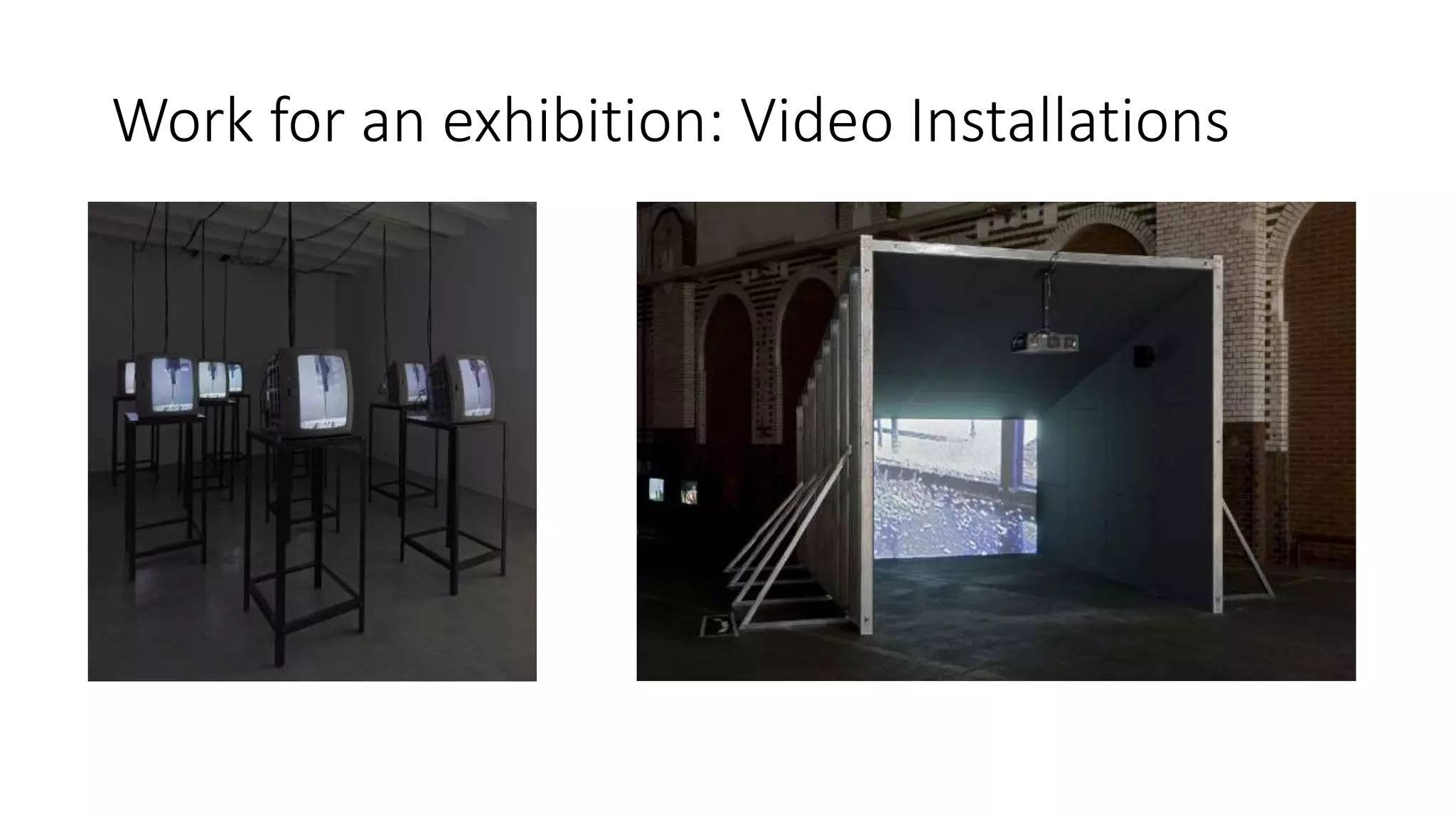
Work for an exhibition: Video Installations
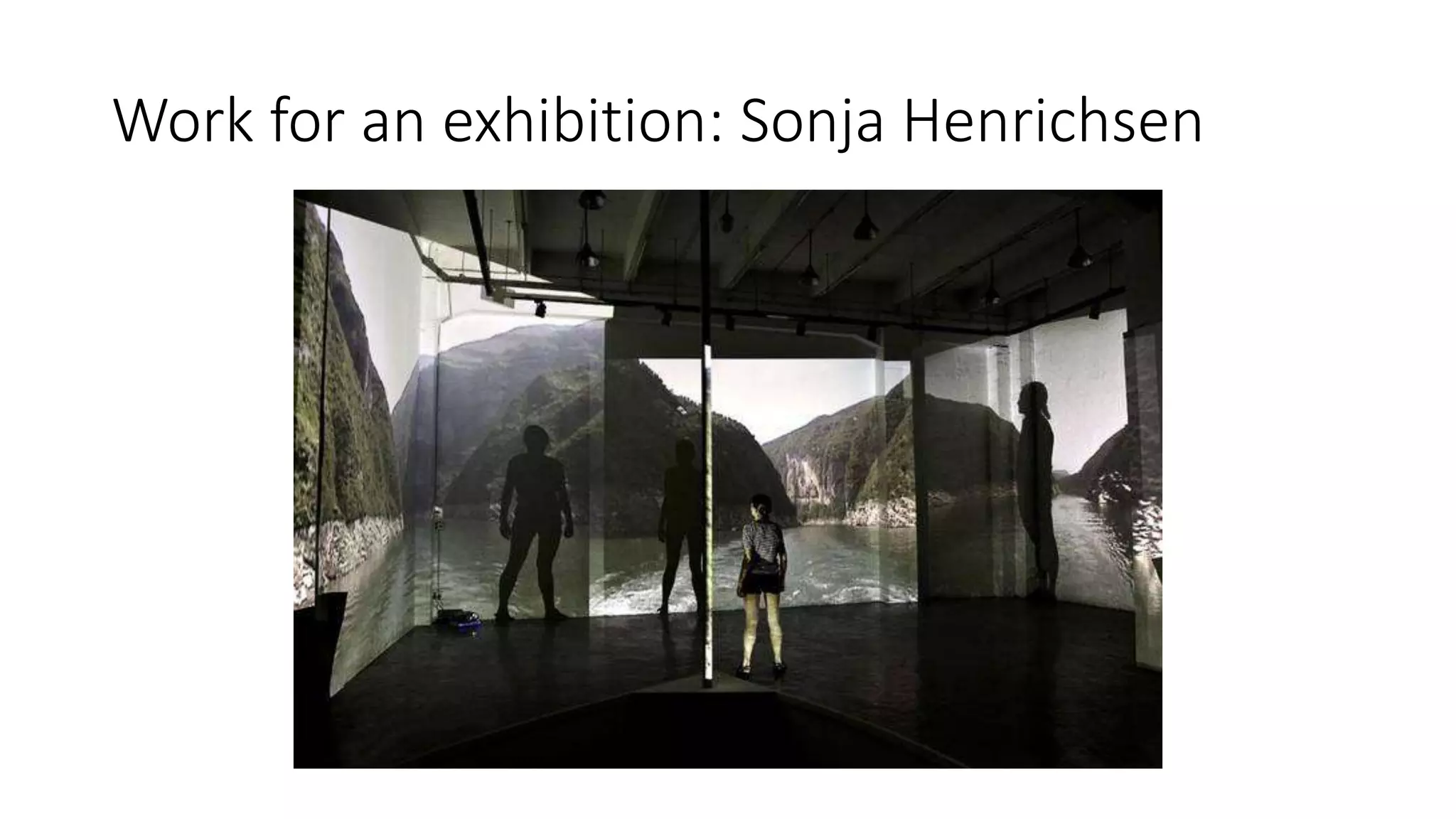
Work for an exhibition: Sonja Henrichsen
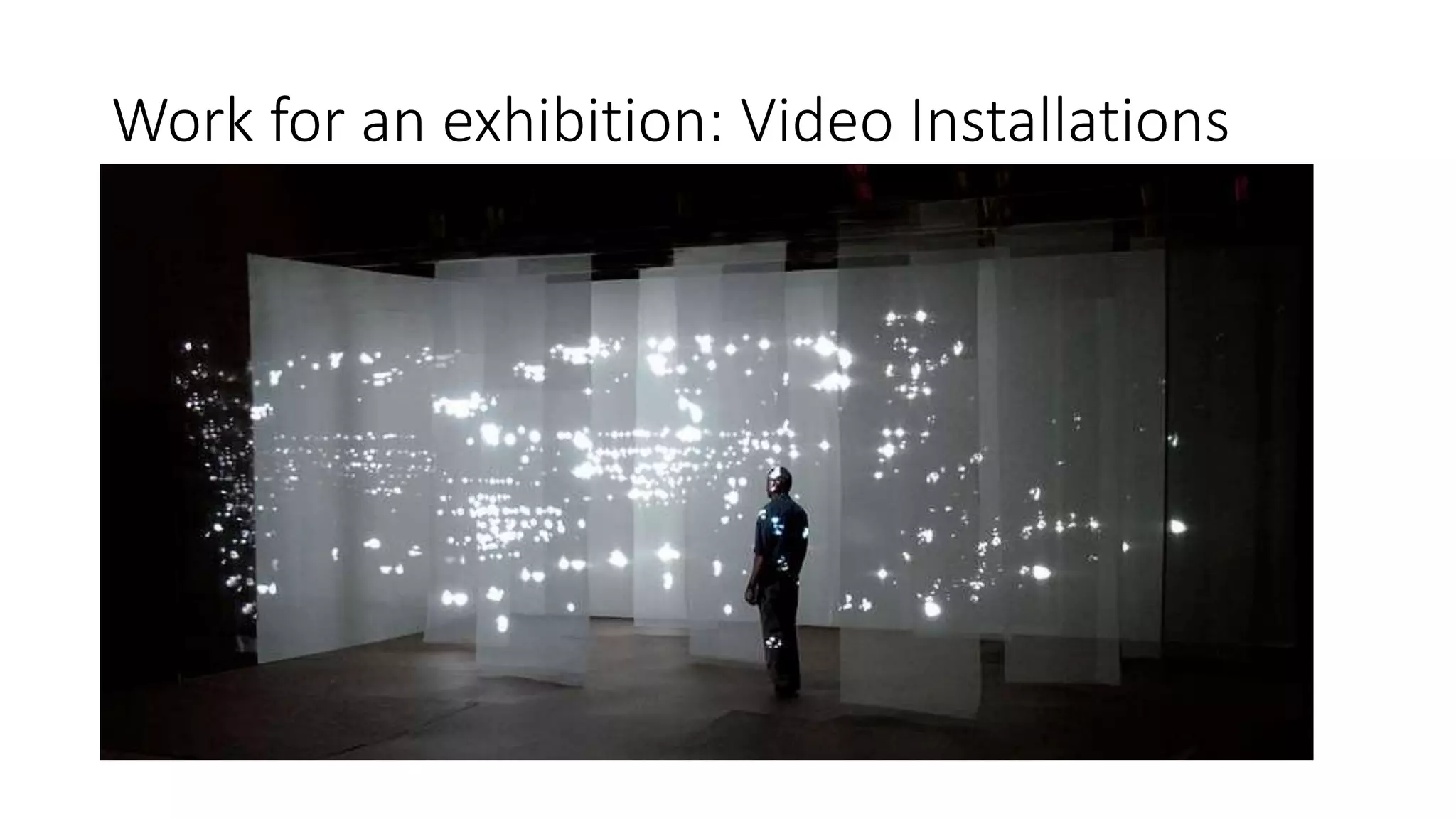
Work for an exhibition: Video Installations
Week One:
• Review the work you have done on Identity.
• Choose one of these pieces as a starting point for new ideas.
• Taking this piece as your inspiration, mind map initial ideas for a presentation
piece for the exhibition, including drawing out some of your ideas.
• From this, decide what aspect of Identity you wish to explore.
• Research how two artists, photographers or film-makers who have explored a
similar theme.
• Plan and take at least one set of shots before the first lesson next week.
• [A set of shots or ‘a film’ from now on is a minimum of 15-20 photographs, or 60
seconds of footage, all exploring the same idea]
Final deadline for all coursework: 9th May

Introduction to Identity Photography project

  • 1.
  • 2.
    Shaping your project •You must address specific assessment objectives during your coursework project • The process you will follow takes you through these: • AO1 – research into other image-makers (photographers, film-makers, artists) • AO2 – experiment with the ideas and techniques you have discovered • AO3 – review and refine (improve) your images • AO4 – plan and create a final piece that is your own idea, influenced by your research • You will probably go backwards and forwards through these steps
  • 10.
    • You areworking towards creating a final piece on the theme of Identity • This will be displayed in the summer exhibition “Sensed” • It must use photography or moving image • Your final coursework deadline is Tuesday 9th May – you have 11 school weeks and 3 holiday weeks • The exhibition evening is Thursday 29th June • There is an outline on Firefly of how you are expected to use the 11 weeks
  • 11.
    On Tuesday 9thMay, you will hand in: • Your sketchbook(s) • Your portfolio pieces mounted on black card, or a showreel of your best clips • Your A3 display book of amazing photographs, or stills from your films • Your final piece, as it will be seen in the exhibition In late June you will hang, project or set up your final piece for the exhibition
  • 12.
    Work for anexhibition: Jane Bown
  • 13.
    Work for anexhibition: Jane Bown
  • 14.
    Work for anexhibition: Jane Bown
  • 15.
    Work for anexhibition: Martin Parr
  • 16.
    Work for anexhibition: Martin Parr
  • 17.
    Work for anexhibition: Martin Parr
  • 18.
    Work for anexhibition: Martin Parr
  • 19.
    Work for anexhibition: Christian Boltanski
  • 20.
    Work for anexhibition: Christian Boltanski
  • 21.
    Work for anexhibition: Christian Boltanski
  • 22.
    Work for anexhibition: Christian Boltanski
  • 23.
    Work for anexhibition: Christian Boltanski
  • 24.
    Work for anexhibition: Shelagh Fenner
  • 25.
    Work for anexhibition: Video Installations
  • 26.
    Work for anexhibition: Sonja Henrichsen
  • 27.
    Work for anexhibition: Video Installations
  • 28.
    Week One: • Reviewthe work you have done on Identity. • Choose one of these pieces as a starting point for new ideas. • Taking this piece as your inspiration, mind map initial ideas for a presentation piece for the exhibition, including drawing out some of your ideas. • From this, decide what aspect of Identity you wish to explore. • Research how two artists, photographers or film-makers who have explored a similar theme. • Plan and take at least one set of shots before the first lesson next week. • [A set of shots or ‘a film’ from now on is a minimum of 15-20 photographs, or 60 seconds of footage, all exploring the same idea] Final deadline for all coursework: 9th May

Editor's Notes

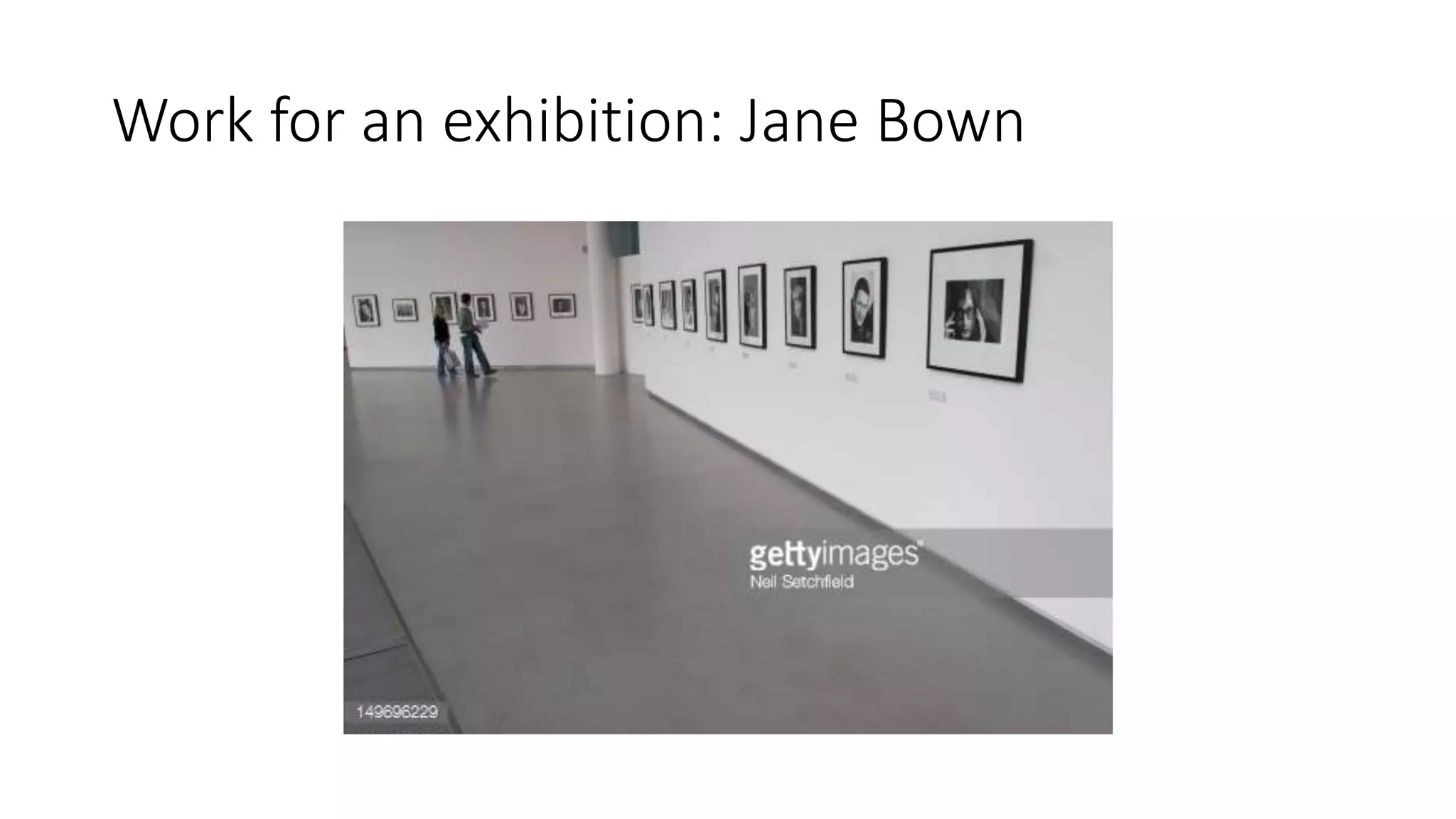
  • #13 Jane Bown, exhibition at Salford Quays
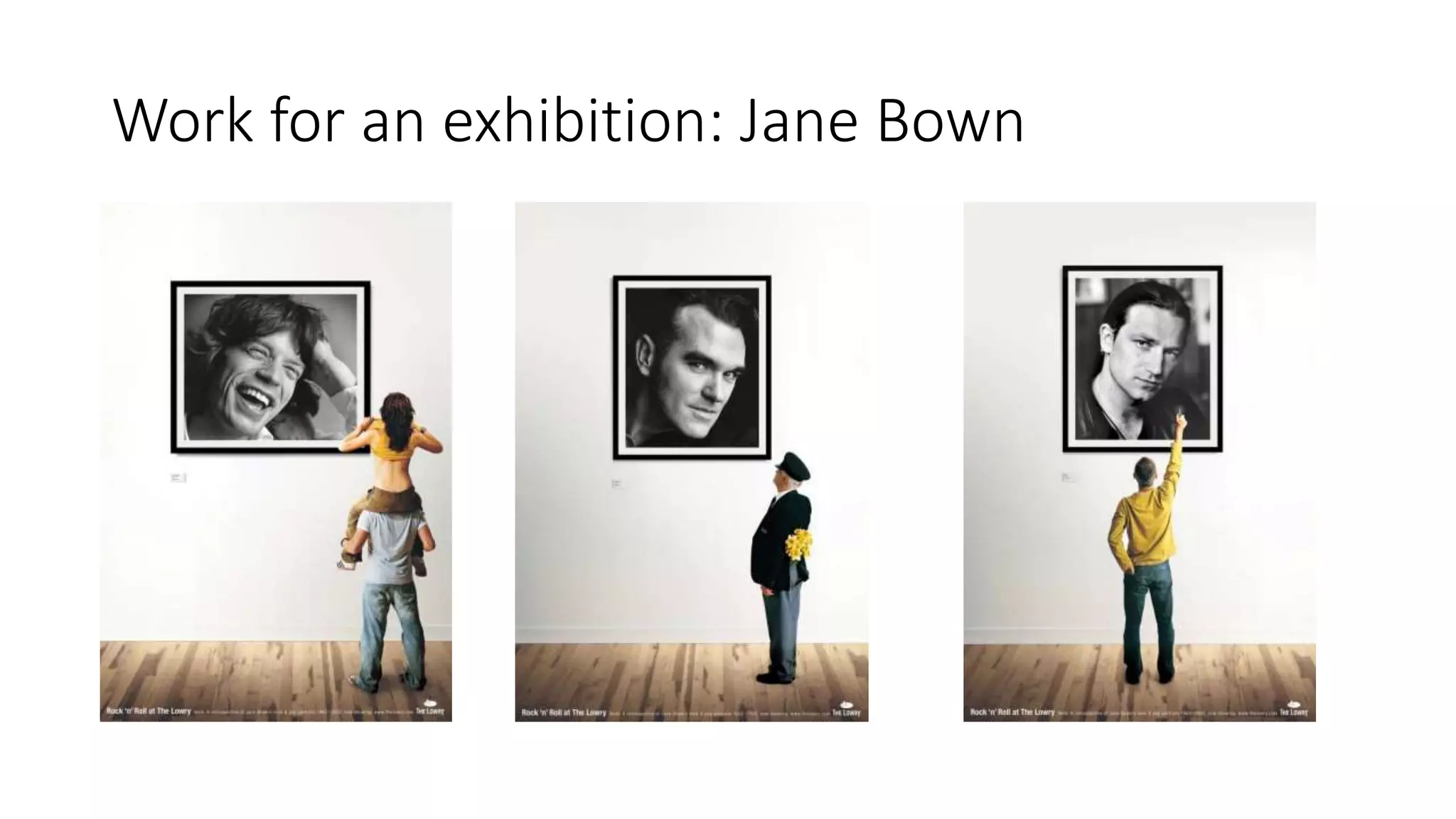
  • #14 Jane Bown, Posters for Rock’n’Roll at the Lowry
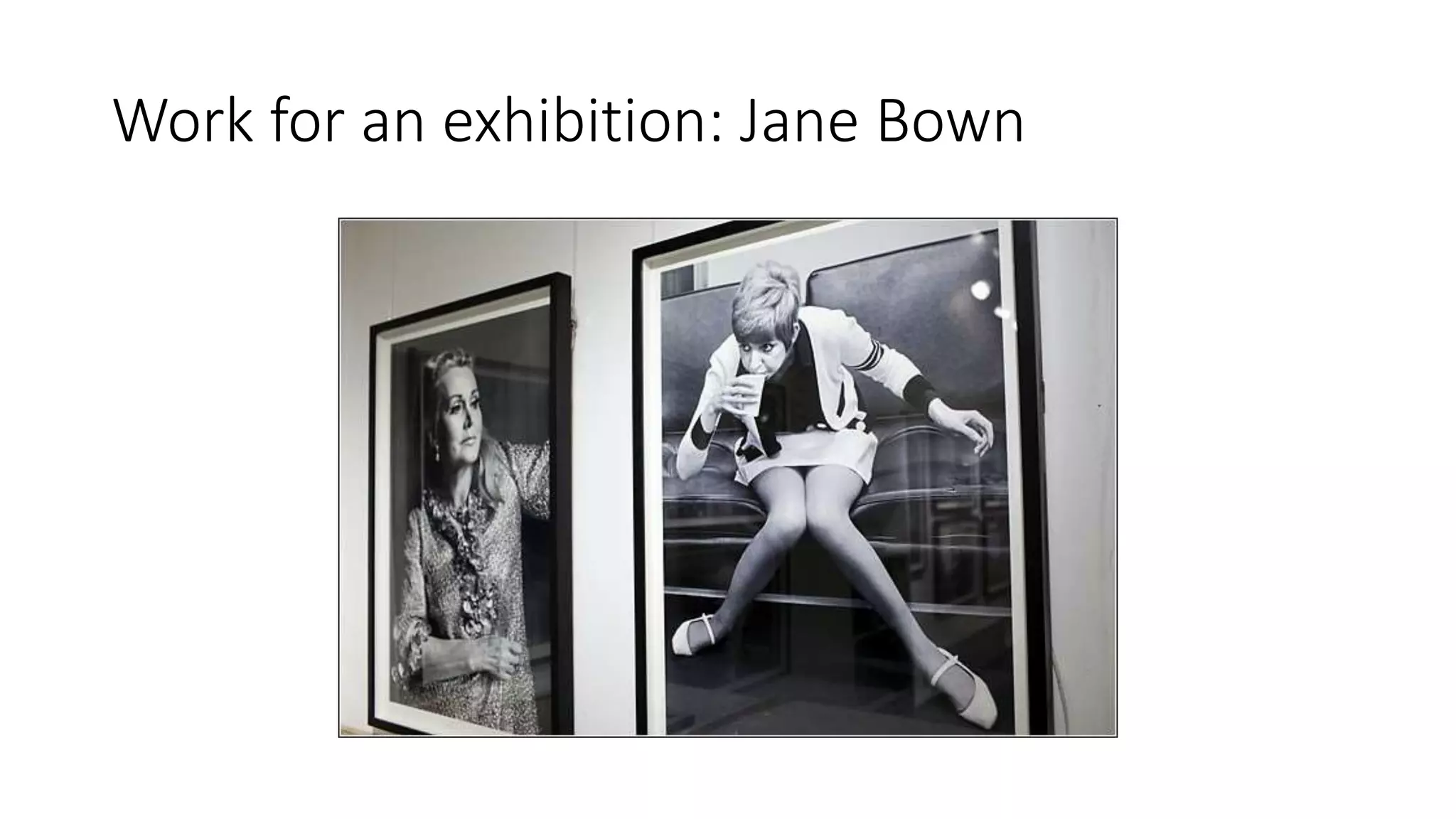
  • #15 Jane Bown, Exposures exhibition, TopFoto Gallery, Edenbridge In her eighties now, Bown is mostly known for her portrait work at The Observer, which started way back in 1949. This long relationship with the paper has led her to photograph the great and good from the past sixty years. Bown developed a quick way of working, capturing candid portraits, yet revealing the private side of many of her famous subjects. Bown’s working practises have remained the same throughout the years; she shows great allegiance to her 40 year old Olympus OM1s, shooting no more than two rolls of film at a time, always just available light, metering from the back of her hand. One of her most famous portraits is that of Samuel Beckett from 1979. The shot was taken in an alleyway by the Royal Court Theatre. Bown only took five frames with the third shot being ‘the one’.
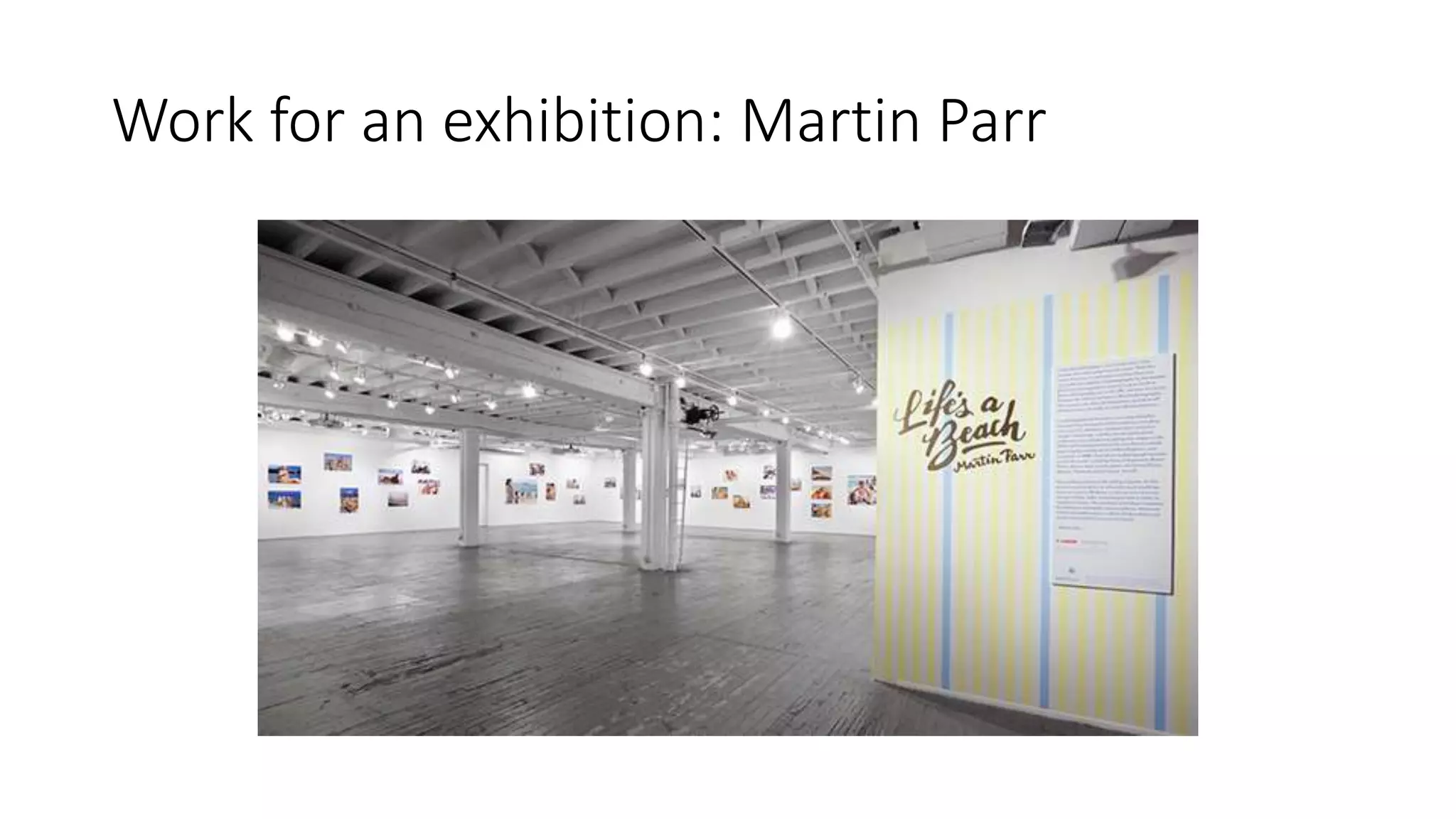
  • #16 Life’s a Beach, by Martin Parr A comprehensive travelling exhibition of his beach photography Life’s a Beach has been making international rounds and is currently on show at Le Théâtre de la Photographie et de l’Image in Nice. In tandem with the show’s stop in Nice, last week Martin and his studio took to the the city’s Promenade des Anglais to capture visitors all along the seafront with the crisp and lushly saturated lens he is so well known for. Shooting and printing this work on the same day, the instantaneous fruits of these excursions on the French Riviera have been turned into a pop-up exhibition running for the duration of Life’s a Beach in Nice. The striking images only further cement Parr’s reputation as an expert documentarian of the melting pot of characters – the peacocking and self-conscious alike – that populate the world’s beaches, finding the universal and the particular in their tan lines, freckles and ill-fitting swimsuits.
  • #17 Life’s a Beach, by Martin Parr
  • #18 Life’s a Beach, by Martin Parr
  • #19 Life’s a Beach, by Martin Parr
  • #20 Menschlich by Christian Boltanski. By making photos of unknown and often forgotten people fill up an entire room, or by attaching them to huge volumes of found objects, Boltanski gives the images a hauntingly human presence. Audiences of Boltanski’s exhibition look into the eyes of the people in the photographs and have no other choice than to wonder about their history and to attempt to reconstruct their pasts. Christian Boltanski transforms old photographs of anonymous people into images with a profound presence that evoke a sense emotion in those who view them. By confronting his audiences with death and tragedy, Boltanski forces them also to appreciate human life.
  • #21 Monument to the Lycee Chasses by Christian Boltanski. By making photos of unknown and often forgotten people fill up an entire room, or by attaching them to huge volumes of found objects, Boltanski gives the images a hauntingly human presence. Audiences of Boltanski’s exhibition look into the eyes of the people in the photographs and have no other choice than to wonder about their history and to attempt to reconstruct their pasts. Christian Boltanski transforms old photographs of anonymous people into images with a profound presence that evoke a sense emotion in those who view them. By confronting his audiences with death and tragedy, Boltanski forces them also to appreciate human life.
  • #22 Reflection by Christian Boltanski. 400 black mirrors, 9 wheeled racks with suspended transparencies on cloth sheets. The exhibition path starts off with a significant installation consisting of large-scale photographs printed on fabric. Moving around the gallery space, they portray faces and images of everyday life taken from Boltanski’s personal archive, which he built through the years and where stories are condensed into a look, a portrait, a snap shot. The constant movement created by the suspended images is an invitation to let oneself go with the flow of time and memory. What happens afterwards? And how many afterwards are already there in people’s lives, in their recollections and fortuitous past events? The photographs fly around like facts of life. Visitors can decide whether to just look at them or physically move after them, but eventually they will have to let them go, and think of what will happen next.
  • #23 Entre Temps by Christian Boltanski. A series of quick sequences—life flashbacks, from young age to adult age—also linger on Boltanski’s face Entre Temps. His photographs lend themselves to the game of time going by, as memories change and shrink until they become shadows. Shadows that appear unexpectedly, like quivering slender shapes stretch out on the walls evoking presences that linger between dream and reality, in a game where the playful aspect is combined with anxiety, illusion and deceit. Like the photographs, these shadows put emphasis on human transience, on the effort to hold onto what is fleeing, insisting especially on man’s personal involvement in this collective narrative called life, history, thought. In the video Clapping Hands, a liberating applause accompanies visitors as they head down to the lower floor of the Fondazione. This is Christian Boltanski’s tribute to Mario Merz’s work and the ability to be present in one’s own time, nurturing it and making it fruitful for those who will come next.
  • #24 Monuments by Christian Boltanski. Artist’s book designed by Christian Boltanski. It’s not actually displayed on a wall, it’s a normal book on a table, but I love the idea that this could be on a wall. Why not?
  • #25 Be by Shelagh Fenner Multi-screen video installation On an aesthetic level, this work creates a tension between our viewing of a still and a moving image. Each projected image is a video portrait. However, as this work has developed, it has increasingly revealed a focus on individual diversity. In many ways, Be sets up the whole ethos of the artist's work, by asking us to stand back and consider more fully the fact of the individual. People often under-estimate individuality; this complexity of thought and emotion which must manage itself within the turmoil that is society. Be offers the viewer a breathing space to consider the individual as self and as other. The aim is to encourage empathy, for the viewer to consider his own musings and time of reflection. This aspect of the work presents a possible point of transference for intellectual and emotive concerns to develop between the relationship of the work and the observer of the work. The work offers a time to reflect upon the self in an active sense and to consider the ramifications of this within the broader context of self, society and other.   Be is ongoing. If you would like to become a part of it, contact the artist.
  • #26 Second photo: Inigo Manglano-Ovalle, Always After (the Glasshouse) 2006
  • #27 Sonja Henrichsen, Three Gorges n the darkened room, the only sounds are the hum of a ship's engine and the water lapping up on its hull. On three sides loom the canyons around the Yangtze River, an area of China dramatically transformed by the building of the Three Gorges Dam. The video images of the Yangtze projected onto the walls of the Organhaus Gallery in Chongqing, China, were shot by artist Sonja Hinrichsen during trips both up and down the river and then stitched together to create "a surreal world, where the viewer could sit or stand inside a 'ship' and cruise through four rivers simultaneously," she told TreeHugger in an email interview. "The video projectors were placed in a way that the viewer's shadow would be cast into the piece several times, so that he/she became a player in the installation (rather than just a viewer)." Questioning Human Interventions In The Landscape In making the multi-screen video installation, "The Three Gorges, 3rd Edition" (2011), Hinrichsen said she hoped to raise questions about how human interventions change the natural world, and what might be left of such landscapes in the future: Will we turn around and decide to protect and preserve what is left of original landscape[s]? ... Or might natural environments vanish altogether sometime in the not-so-far future, as a result of our growing needs for space and resources? Will they continue their existence only as a memory that can be experienced solely in a virtual world? The artist, whose other works have included ephemeral geometric "snow drawings," told TreeHugger she wanted to grapple with how the dam has changed the environment it flows through, especially the Three Gorges area, a natural wonder visited by thousands of tourists a year. "I also wanted to address how the dam has dislocated people whose houses and villages flooded because of the dam -- and are now completely underwater," she added. "And I wanted to address that the rise of the water level has drowned numerous historic sites and archaeological sites from ancient times."
  • #28 “Continua in Light” Two Bay Area artists explore illumination and movement in a new video installation, “Continua in Light,” at the Westmont Ridley-Tree Museum of Art Jan. 12 through Feb. 18. Cheryl Calleri and Thekla Hammond will be at the free, public reception Thursday, Jan. 12, 4-6 p.m., which includes an original, dance performance. The site-specific dance is choreographed by associate professor Erlyne Whiteman and her students. The installation, Hammond and Calleri’s second video collaboration, consists of two tandem video projectors illuminating nine translucent suspended scrims. During the reception, dancers will move between the scrims in a performance that interacts with the visual art. A recording of the performance will be on view throughout the run of the exhibition.