Hikikomori
How private isolation caught the
          public eye
        Sachiko Horiguchi
     Temple University, Japan
            Campus
Hikikomori
In Japan: abnormal avoidance of social
  contact; acute social withdrawal; (also) a
  person, typically adolescent male,
  engaging in this; a recluse, a shut-in.

(Oxford English Dictionary 2010)

Gendered, ethnicized, classed issue
Outline of the presentation
• Methods
• Brief ‘history’ of hikikomori as a social
  problem: moral panics & beyond
• Debates in definitions of hikikomori
• Contemporary concerns
Methods
• Japanese language literature & media
  analysis
• Fieldwork in Tokyo Metropolitan area from
  2003-2005, 2010-
Predecessors
• Futoko (school non-attendance), kateinai
  boryokyu (violence in the home),
  moratorium ningen (moratorium beings),
  otaku, taijinkyofu, taikyaku shinkeisho
  (student apathy)
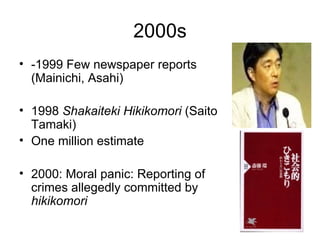
2000s
• -1999 Few newspaper reports
  (Mainichi, Asahi)

• 1998 Shakaiteki Hikikomori (Saito
  Tamaki)
• One million estimate

• 2000: Moral panic: Reporting of
  crimes allegedly committed by
  hikikomori
Definitions?
• MHLW (2003): life centered around the
  home & shun social participation for 6
  months & over; excluding psychosis

• Psychological condition? Labor issue?
  Always at home?

• Local usage of the term: variety in
  understandings, pure vs fake
  hikikomori
‘Hikikomori industry’
Public sector: (Mental) health centers; private
  organizations commissioned by local governments

Private sector:
• Psychiatry <- medicalization!?
• Psychologists, counselors
• Media (NHK)
• Lay supporters
   for tojisha: ‘ibasho’, job training approach, residential/
   non-residential
   for parents: oya no kai
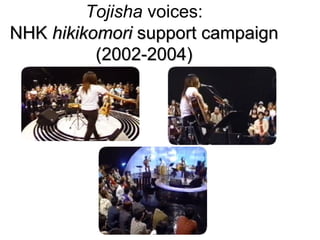
Tojisha voices:
NHK hikikomori support campaign
          (2002-2004)
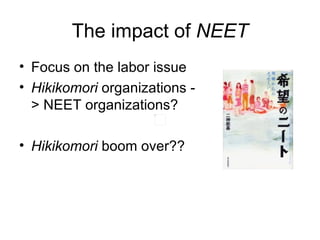
The impact of NEET
• Focus on the labor issue
• Hikikomori organizations -
  > NEET organizations?

• Hikikomori boom over??
Hikikomori now
•   Continuing to be on policy agenda: new guidelines from MHLW & Cabinet
    Office survey (2010); MHLW (mental illness) vs Cabinet Office (youth
    problem)

•   Relationship with hattatsu shogai (developmental disabilities), internet use/
    addiction

•   Concern with aging hikikomori not in employment: disability rather than a
    temporary condition?

•   Global attention (South Korea, France, Italy, U.S.)

•   Hikikomori support organizations becoming an alternative space where
    young people can share difficulties in life

•   Female hikikomori?
Who are hikikomori?
In Japan (?): abnormal avoidance of
  (obsession with?) social contact; acute
  social withdrawal; (also) a person, typically
  adolescent (?) male (?), engaging in this;
  a recluse, a shut-in.

Mentally ill?

Public Lecture PPT (6.1.2012)

  • 1.
    Hikikomori How private isolationcaught the public eye Sachiko Horiguchi Temple University, Japan Campus
  • 2.
    Hikikomori In Japan: abnormalavoidance of social contact; acute social withdrawal; (also) a person, typically adolescent male, engaging in this; a recluse, a shut-in. (Oxford English Dictionary 2010) Gendered, ethnicized, classed issue
  • 3.
    Outline of thepresentation • Methods • Brief ‘history’ of hikikomori as a social problem: moral panics & beyond • Debates in definitions of hikikomori • Contemporary concerns
  • 4.
    Methods • Japanese languageliterature & media analysis • Fieldwork in Tokyo Metropolitan area from 2003-2005, 2010-
  • 5.
    Predecessors • Futoko (schoolnon-attendance), kateinai boryokyu (violence in the home), moratorium ningen (moratorium beings), otaku, taijinkyofu, taikyaku shinkeisho (student apathy)
  • 6.
    2000s • -1999 Fewnewspaper reports (Mainichi, Asahi) • 1998 Shakaiteki Hikikomori (Saito Tamaki) • One million estimate • 2000: Moral panic: Reporting of crimes allegedly committed by hikikomori
  • 7.
    Definitions? • MHLW (2003):life centered around the home & shun social participation for 6 months & over; excluding psychosis • Psychological condition? Labor issue? Always at home? • Local usage of the term: variety in understandings, pure vs fake hikikomori
  • 8.
    ‘Hikikomori industry’ Public sector:(Mental) health centers; private organizations commissioned by local governments Private sector: • Psychiatry <- medicalization!? • Psychologists, counselors • Media (NHK) • Lay supporters for tojisha: ‘ibasho’, job training approach, residential/ non-residential for parents: oya no kai
  • 9.
    Tojisha voices: NHK hikikomorisupport campaign (2002-2004)
  • 11.
    The impact ofNEET • Focus on the labor issue • Hikikomori organizations - > NEET organizations? • Hikikomori boom over??
  • 12.
    Hikikomori now • Continuing to be on policy agenda: new guidelines from MHLW & Cabinet Office survey (2010); MHLW (mental illness) vs Cabinet Office (youth problem) • Relationship with hattatsu shogai (developmental disabilities), internet use/ addiction • Concern with aging hikikomori not in employment: disability rather than a temporary condition? • Global attention (South Korea, France, Italy, U.S.) • Hikikomori support organizations becoming an alternative space where young people can share difficulties in life • Female hikikomori?
  • 13.
    Who are hikikomori? InJapan (?): abnormal avoidance of (obsession with?) social contact; acute social withdrawal; (also) a person, typically adolescent (?) male (?), engaging in this; a recluse, a shut-in. Mentally ill?