Self-Portrait
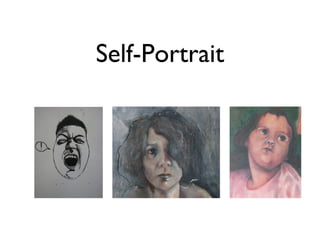
Why do artists make self portraits?
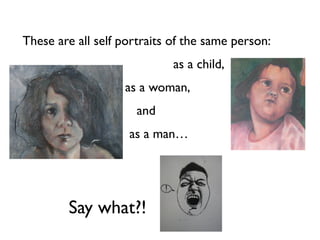
These are all self portraits of the same person: 
as a child, 
as a woman, 
and 
as a man… 
Say what?!
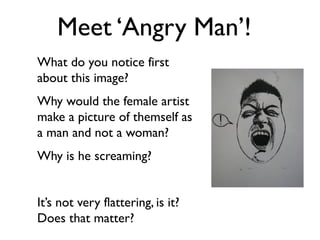
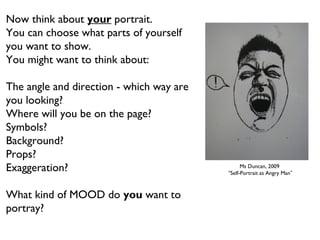
Meet ‘Angry Man’! 
What do you notice first 
about this image? 
Why would the female artist 
make a picture of themself as 
a man and not a woman? 
Why is he screaming? 
It’s not very flattering, is it? 
Does that matter?
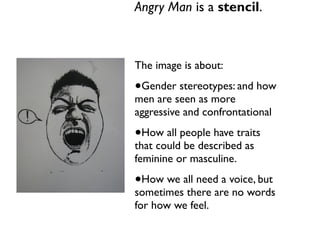
Angry Man is a stencil. 
The image is about: 
•Gender stereotypes: and how 
men are seen as more 
aggressive and confrontational 
•How all people have traits 
that could be described as 
feminine or masculine. 
•How we all need a voice, but 
sometimes there are no words 
for how we feel.
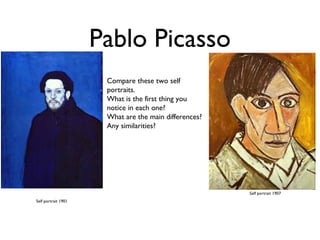
Pablo Picasso 
Self portrait 1901 
Self portrait 1907 
Compare these two self 
portraits. 
What is the first thing you 
notice in each one? 
What are the main differences? 
Any similarities?
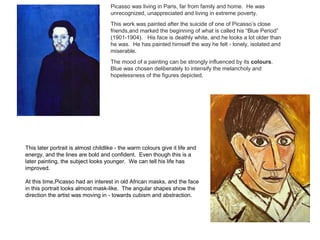
Picasso was living in Paris, far from family and home. He was 
unrecognized, unappreciated and living in extreme poverty. 
This work was painted after the suicide of one of Picasso’s close 
friends,and marked the beginning of what is called his “Blue Period” 
(1901-1904). His face is deathly white, and he looks a lot older than 
he was. He has painted himself the way he felt - lonely, isolated and 
miserable. 
The mood of a painting can be strongly influenced by its colours. 
Blue was chosen deliberately to intensify the melancholy and 
hopelessness of the figures depicted. 
This later portrait is almost childlike - the warm colours give it life and 
energy, and the lines are bold and confident. Even though this is a 
later painting, the subject looks younger. We can tell his life has 
improved. 
At this time,Picasso had an interest in old African masks, and the face 
in this portrait looks almost mask-like. The angular shapes show the 
direction the artist was moving in - towards cubism and abstraction.
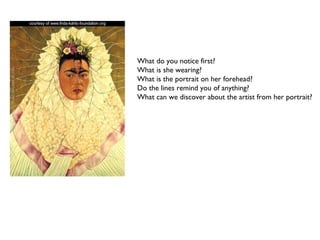
What do you notice first? 
What is she wearing? 
What is the portrait on her forehead? 
Do the lines remind you of anything? 
What can we discover about the artist from her portrait?
Frida Kahlo was the daughter of a Mexican-Indian mother and a German 
father. At age 6, she was stricken with polio, which caused her right leg to 
shrivel (something she later hid beneath her long Mexican dresses). 
When she was 18, she was involved in a serious bus accident which left her 
with a broken spinal column, collarbone, ribs, pelvis, and 11 fractures in her 
right leg. In addition her right foot was dislocated and crushed, and her 
shoulder was out of joint. For a month at a time, Frida was forced to stay flat on 
her back, encased in a plaster cast. 
Frida's recovery was miraculous, and she regained her ability to walk. 
However, she lived with chronic pain her whole life. 
She married a famous Mexican painter called Diego Rivera. He was more 
than 20 years older than Frida, and a notorious womaniser. Their relationship 
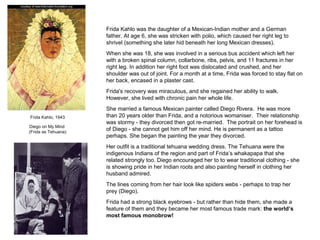
was stormy - they divorced then got re-married. The portrait on her forehead is 
of Diego - she cannot get him off her mind. He is permanent as a tattoo 
perhaps. She began the painting the year they divorced. 
Her outfit is a traditional tehuana wedding dress. The Tehuana were the 
indigenous Indians of the region and part of Frida’s whakapapa that she 
related strongly too. Diego encouraged her to to wear traditional clothing - she 
is showing pride in her Indian roots and also painting herself in clothing her 
husband admired. 
The lines coming from her hair look like spiders webs - perhaps to trap her 
prey (Diego). 
Frida had a strong black eyebrows - but rather than hide them, she made a 
feature of them and they became her most famous trade mark: the world’s 
most famous monobrow! 
Frida Kahlo, 1943 
Diego on My Mind 
(Frida as Tehuana)
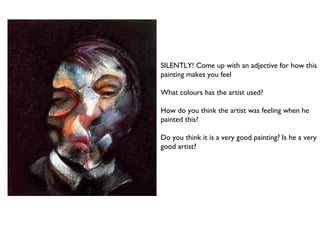
SILENTLY! Come up with an adjective for how this 
painting makes you feel 
What colours has the artist used? 
How do you think the artist was feeling when he 
painted this? 
Do you think it is a very good painting? Is he a very 
good artist?
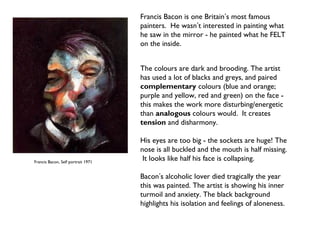
Francis Bacon, Self portrait 1971 
Francis Bacon is one Britain’s most famous 
painters. He wasn’t interested in painting what 
he saw in the mirror - he painted what he FELT 
on the inside. 
The colours are dark and brooding. The artist 
has used a lot of blacks and greys, and paired 
complementary colours (blue and orange; 
purple and yellow, red and green) on the face - 
this makes the work more disturbing/energetic 
than analogous colours would. It creates 
tension and disharmony. 
His eyes are too big - the sockets are huge! The 
nose is all buckled and the mouth is half missing. 
It looks like half his face is collapsing. 
Bacon’s alcoholic lover died tragically the year 
this was painted. The artist is showing his inner 
turmoil and anxiety. The black background 
highlights his isolation and feelings of aloneness.
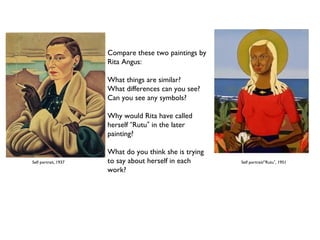
Compare these two paintings by 
Rita Angus: 
What things are similar? 
What differences can you see? 
Can you see any symbols? 
Why would Rita have called 
herself “Rutu” in the later 
painting? 
What do you think she is trying 
to say about herself in each 
work? 
Self portrait, 1937 Self portrait/“Rutu”, 1951
Now think about your portrait. 
You can choose what parts of yourself 
you want to show. 
You might want to think about: 
The angle and direction - which way are 
you looking? 
Where will you be on the page? 
Symbols? 
Background? 
Props? 
Exaggeration? 
What kind of MOOD do you want to 
portray? 
Ms Duncan, 2009 
“Self-Portrait as Angry Man”

Introducing the Self Portrait

  • 1.
  • 2.
    Why do artistsmake self portraits?
  • 3.
    These are allself portraits of the same person: as a child, as a woman, and as a man… Say what?!
  • 4.
    Meet ‘Angry Man’! What do you notice first about this image? Why would the female artist make a picture of themself as a man and not a woman? Why is he screaming? It’s not very flattering, is it? Does that matter?
  • 5.
    Angry Man isa stencil. The image is about: •Gender stereotypes: and how men are seen as more aggressive and confrontational •How all people have traits that could be described as feminine or masculine. •How we all need a voice, but sometimes there are no words for how we feel.
  • 6.
    Pablo Picasso Selfportrait 1901 Self portrait 1907 Compare these two self portraits. What is the first thing you notice in each one? What are the main differences? Any similarities?
  • 7.
    Picasso was livingin Paris, far from family and home. He was unrecognized, unappreciated and living in extreme poverty. This work was painted after the suicide of one of Picasso’s close friends,and marked the beginning of what is called his “Blue Period” (1901-1904). His face is deathly white, and he looks a lot older than he was. He has painted himself the way he felt - lonely, isolated and miserable. The mood of a painting can be strongly influenced by its colours. Blue was chosen deliberately to intensify the melancholy and hopelessness of the figures depicted. This later portrait is almost childlike - the warm colours give it life and energy, and the lines are bold and confident. Even though this is a later painting, the subject looks younger. We can tell his life has improved. At this time,Picasso had an interest in old African masks, and the face in this portrait looks almost mask-like. The angular shapes show the direction the artist was moving in - towards cubism and abstraction.
  • 8.
    What do younotice first? What is she wearing? What is the portrait on her forehead? Do the lines remind you of anything? What can we discover about the artist from her portrait?
  • 9.
    Frida Kahlo wasthe daughter of a Mexican-Indian mother and a German father. At age 6, she was stricken with polio, which caused her right leg to shrivel (something she later hid beneath her long Mexican dresses). When she was 18, she was involved in a serious bus accident which left her with a broken spinal column, collarbone, ribs, pelvis, and 11 fractures in her right leg. In addition her right foot was dislocated and crushed, and her shoulder was out of joint. For a month at a time, Frida was forced to stay flat on her back, encased in a plaster cast. Frida's recovery was miraculous, and she regained her ability to walk. However, she lived with chronic pain her whole life. She married a famous Mexican painter called Diego Rivera. He was more than 20 years older than Frida, and a notorious womaniser. Their relationship was stormy - they divorced then got re-married. The portrait on her forehead is of Diego - she cannot get him off her mind. He is permanent as a tattoo perhaps. She began the painting the year they divorced. Her outfit is a traditional tehuana wedding dress. The Tehuana were the indigenous Indians of the region and part of Frida’s whakapapa that she related strongly too. Diego encouraged her to to wear traditional clothing - she is showing pride in her Indian roots and also painting herself in clothing her husband admired. The lines coming from her hair look like spiders webs - perhaps to trap her prey (Diego). Frida had a strong black eyebrows - but rather than hide them, she made a feature of them and they became her most famous trade mark: the world’s most famous monobrow! Frida Kahlo, 1943 Diego on My Mind (Frida as Tehuana)
  • 10.
    SILENTLY! Come upwith an adjective for how this painting makes you feel What colours has the artist used? How do you think the artist was feeling when he painted this? Do you think it is a very good painting? Is he a very good artist?
  • 11.
    Francis Bacon, Selfportrait 1971 Francis Bacon is one Britain’s most famous painters. He wasn’t interested in painting what he saw in the mirror - he painted what he FELT on the inside. The colours are dark and brooding. The artist has used a lot of blacks and greys, and paired complementary colours (blue and orange; purple and yellow, red and green) on the face - this makes the work more disturbing/energetic than analogous colours would. It creates tension and disharmony. His eyes are too big - the sockets are huge! The nose is all buckled and the mouth is half missing. It looks like half his face is collapsing. Bacon’s alcoholic lover died tragically the year this was painted. The artist is showing his inner turmoil and anxiety. The black background highlights his isolation and feelings of aloneness.
  • 12.
    Compare these twopaintings by Rita Angus: What things are similar? What differences can you see? Can you see any symbols? Why would Rita have called herself “Rutu” in the later painting? What do you think she is trying to say about herself in each work? Self portrait, 1937 Self portrait/“Rutu”, 1951
  • 13.
    Now think aboutyour portrait. You can choose what parts of yourself you want to show. You might want to think about: The angle and direction - which way are you looking? Where will you be on the page? Symbols? Background? Props? Exaggeration? What kind of MOOD do you want to portray? Ms Duncan, 2009 “Self-Portrait as Angry Man”