
THE ANDES FLIGHT
DISASTER
mariacristinajsantos.blogspot.com
http://dlsu.academia.edu/MariaCristinaSantos
ANDES FLIGHT DISASTER
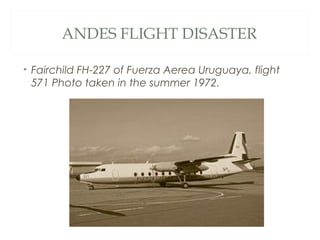
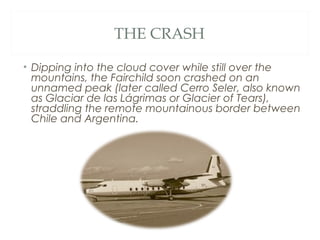
• Fairchild FH-227 of Fuerza Aerea Uruguaya, flight
571 Photo taken in the summer 1972.
THE STORY
• Uruguayan Air Force Flight 571, also known less
formally as the Andes flight disaster, was an airline
flight carrying 45 people that crashed in the Andes
on October 13, 1972.
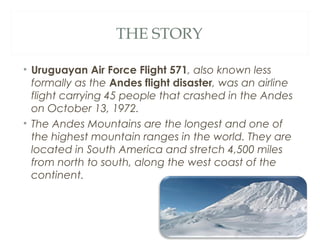
• The Andes Mountains are the longest and one of
the highest mountain ranges in the world. They are
located in South America and stretch 4,500 miles
from north to south, along the west coast of the
continent.
THE BEGINNING
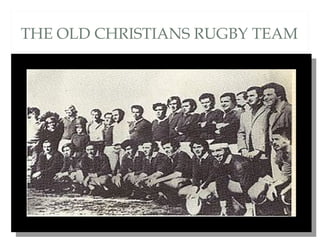
• On Friday the 13th
of October, 1972, Uruguayan Air
Force twin turboprop Fairchild FH-227 D was flying
over the Andes carrying Stella Maris College’s “Old
Christians” rugby union team from Montevideo,
Uruguay to play a match in Santiago, Chile.
THE OLD CHRISTIANS RUGBY TEAM
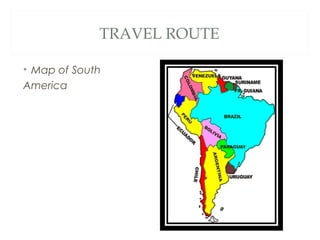
TRAVEL ROUTE
• Map of South
America
THE CRASH
• Dipping into the cloud cover while still over the
mountains, the Fairchild soon crashed on an
unnamed peak (later called Cerro Seler, also known
as Glaciar de las Lágrimas or Glacier of Tears),
straddling the remote mountainous border between
Chile and Argentina.
THE CRASH
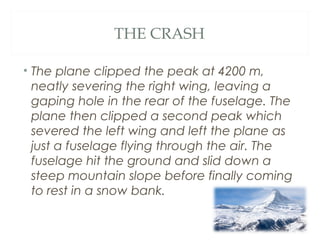
• The plane clipped the peak at 4200 m,
neatly severing the right wing, leaving a
gaping hole in the rear of the fuselage. The
plane then clipped a second peak which
severed the left wing and left the plane as
just a fuselage flying through the air. The
fuselage hit the ground and slid down a
steep mountain slope before finally coming
to rest in a snow bank.
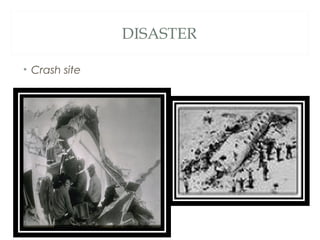
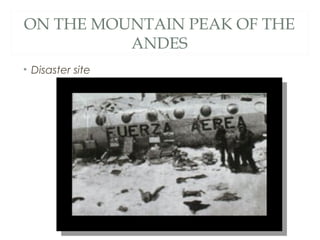
DISASTER
• Crash site
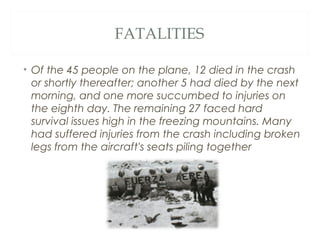
ON THE MOUNTAIN PEAK OF THE
ANDES
• Disaster site
FATALITIES
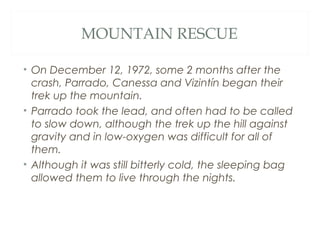
• Of the 45 people on the plane, 12 died in the crash
or shortly thereafter; another 5 had died by the next
morning, and one more succumbed to injuries on
the eighth day. The remaining 27 faced hard
survival issues high in the freezing mountains. Many
had suffered injuries from the crash including broken
legs from the aircraft's seats piling together
MOUNTAIN RESCUE
• On December 12, 1972, some 2 months after the
crash, Parrado, Canessa and Vizintín began their
trek up the mountain.
• Parrado took the lead, and often had to be called
to slow down, although the trek up the hill against
gravity and in low-oxygen was difficult for all of
them.
• Although it was still bitterly cold, the sleeping bag
allowed them to live through the nights.
SUMMARY
• Date: October 13 – December 23, 1972
• Passengers: 40
• Crew: 5
• Fatalities: 29
• Number of days stranded: 72
• Survivors: 16
DISCUSSION POINTS
• The group escaped from the crash site after nearly
three months. But the group that came down from
Andes was not the same group that began the
chartered flight.
• Why? What changes occurred?
CHANGES
• The pattern of relationships among the group
members, or the group's structure, had been
altered.
• How? Why?
CHANGES
• The survivors began the ordeal without a leader but
ended up with a plethora of "commanders,"
"lieutenants," and "explorers."
• Men who were at first afforded little respect or
courtesy eventually earned considerable status
within the group
CHANGES
• Some of the men who were well liked before the
crash became outcasts, and some who hardly
spoke to the others became active communicators
within the group.
CHANGES
• As the harsh environment taxed the group
to the limit, new structures emerged that
redefined
• who would lead, clean, and explore (role
structure)
• who gave orders and who carried them out
(authority structure)
• who was liked and who was treated with
contempt (attraction structure), and
• who communicated frequently or only
infrequently (communication structure). 
INSIGHTS
• What conclusions can be drawn from the Andes
flight disaster?
• What can be said about group development?
• What theoretical frameworks could be applied in
this particular situation (CBT, REBT, Choice Theory
and Logotherapy)? Why? Justify your answer/s.

Andes Flight Disaster

  • 1.
  • 2.
    ANDES FLIGHT DISASTER •Fairchild FH-227 of Fuerza Aerea Uruguaya, flight 571 Photo taken in the summer 1972.
  • 3.
    THE STORY • UruguayanAir Force Flight 571, also known less formally as the Andes flight disaster, was an airline flight carrying 45 people that crashed in the Andes on October 13, 1972. • The Andes Mountains are the longest and one of the highest mountain ranges in the world. They are located in South America and stretch 4,500 miles from north to south, along the west coast of the continent.
  • 4.
    THE BEGINNING • OnFriday the 13th of October, 1972, Uruguayan Air Force twin turboprop Fairchild FH-227 D was flying over the Andes carrying Stella Maris College’s “Old Christians” rugby union team from Montevideo, Uruguay to play a match in Santiago, Chile.
  • 5.
  • 6.
    TRAVEL ROUTE • Mapof South America
  • 7.
    THE CRASH • Dippinginto the cloud cover while still over the mountains, the Fairchild soon crashed on an unnamed peak (later called Cerro Seler, also known as Glaciar de las Lágrimas or Glacier of Tears), straddling the remote mountainous border between Chile and Argentina.
  • 8.
    THE CRASH • Theplane clipped the peak at 4200 m, neatly severing the right wing, leaving a gaping hole in the rear of the fuselage. The plane then clipped a second peak which severed the left wing and left the plane as just a fuselage flying through the air. The fuselage hit the ground and slid down a steep mountain slope before finally coming to rest in a snow bank.
  • 9.
  • 10.
    ON THE MOUNTAINPEAK OF THE ANDES • Disaster site
  • 11.
    FATALITIES • Of the45 people on the plane, 12 died in the crash or shortly thereafter; another 5 had died by the next morning, and one more succumbed to injuries on the eighth day. The remaining 27 faced hard survival issues high in the freezing mountains. Many had suffered injuries from the crash including broken legs from the aircraft's seats piling together
  • 12.
    MOUNTAIN RESCUE • OnDecember 12, 1972, some 2 months after the crash, Parrado, Canessa and Vizintín began their trek up the mountain. • Parrado took the lead, and often had to be called to slow down, although the trek up the hill against gravity and in low-oxygen was difficult for all of them. • Although it was still bitterly cold, the sleeping bag allowed them to live through the nights.
  • 13.
    SUMMARY • Date: October13 – December 23, 1972 • Passengers: 40 • Crew: 5 • Fatalities: 29 • Number of days stranded: 72 • Survivors: 16
  • 14.
    DISCUSSION POINTS • Thegroup escaped from the crash site after nearly three months. But the group that came down from Andes was not the same group that began the chartered flight. • Why? What changes occurred?
  • 15.
    CHANGES • The patternof relationships among the group members, or the group's structure, had been altered. • How? Why?
  • 16.
    CHANGES • The survivorsbegan the ordeal without a leader but ended up with a plethora of "commanders," "lieutenants," and "explorers." • Men who were at first afforded little respect or courtesy eventually earned considerable status within the group
  • 17.
    CHANGES • Some ofthe men who were well liked before the crash became outcasts, and some who hardly spoke to the others became active communicators within the group.
  • 18.
    CHANGES • As theharsh environment taxed the group to the limit, new structures emerged that redefined • who would lead, clean, and explore (role structure) • who gave orders and who carried them out (authority structure) • who was liked and who was treated with contempt (attraction structure), and • who communicated frequently or only infrequently (communication structure). 
  • 19.
    INSIGHTS • What conclusionscan be drawn from the Andes flight disaster? • What can be said about group development? • What theoretical frameworks could be applied in this particular situation (CBT, REBT, Choice Theory and Logotherapy)? Why? Justify your answer/s.