Download as PDF, PPTX
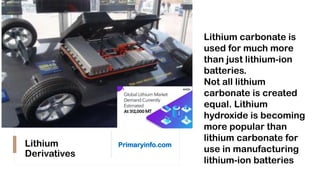
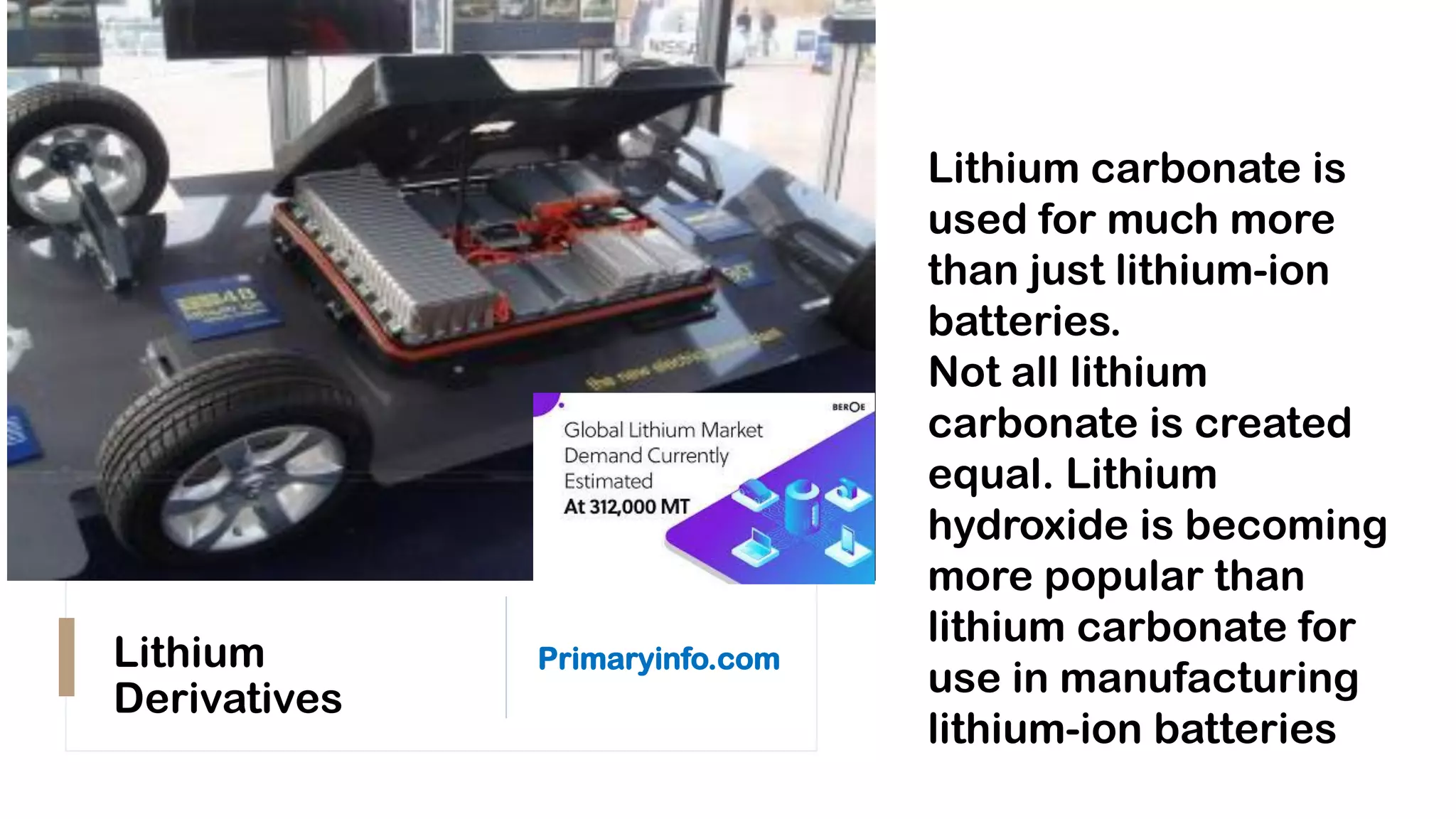
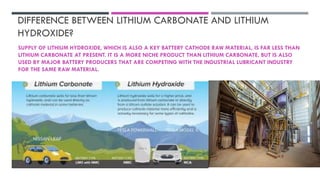
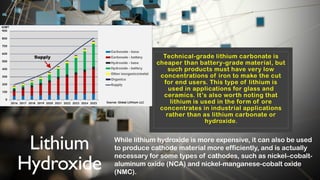
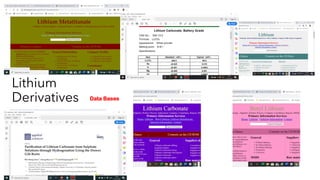

Lithium carbonate and lithium hydroxide are both used in manufacturing lithium-ion batteries, but lithium hydroxide is becoming more popular. Lithium carbonate is also used for applications beyond batteries, such as in ceramics, glass, cement and aluminum processing. While lithium hydroxide is more expensive, it can be used to produce cathode material for batteries more efficiently and is necessary for some cathode types. Technical-grade lithium carbonate must have very low iron concentrations for uses in glass and ceramics applications.


