MDS: Classification and Advances
in Therapy
BTG2013
S. Varma
PGIMER, Chandigarh
India
MDS
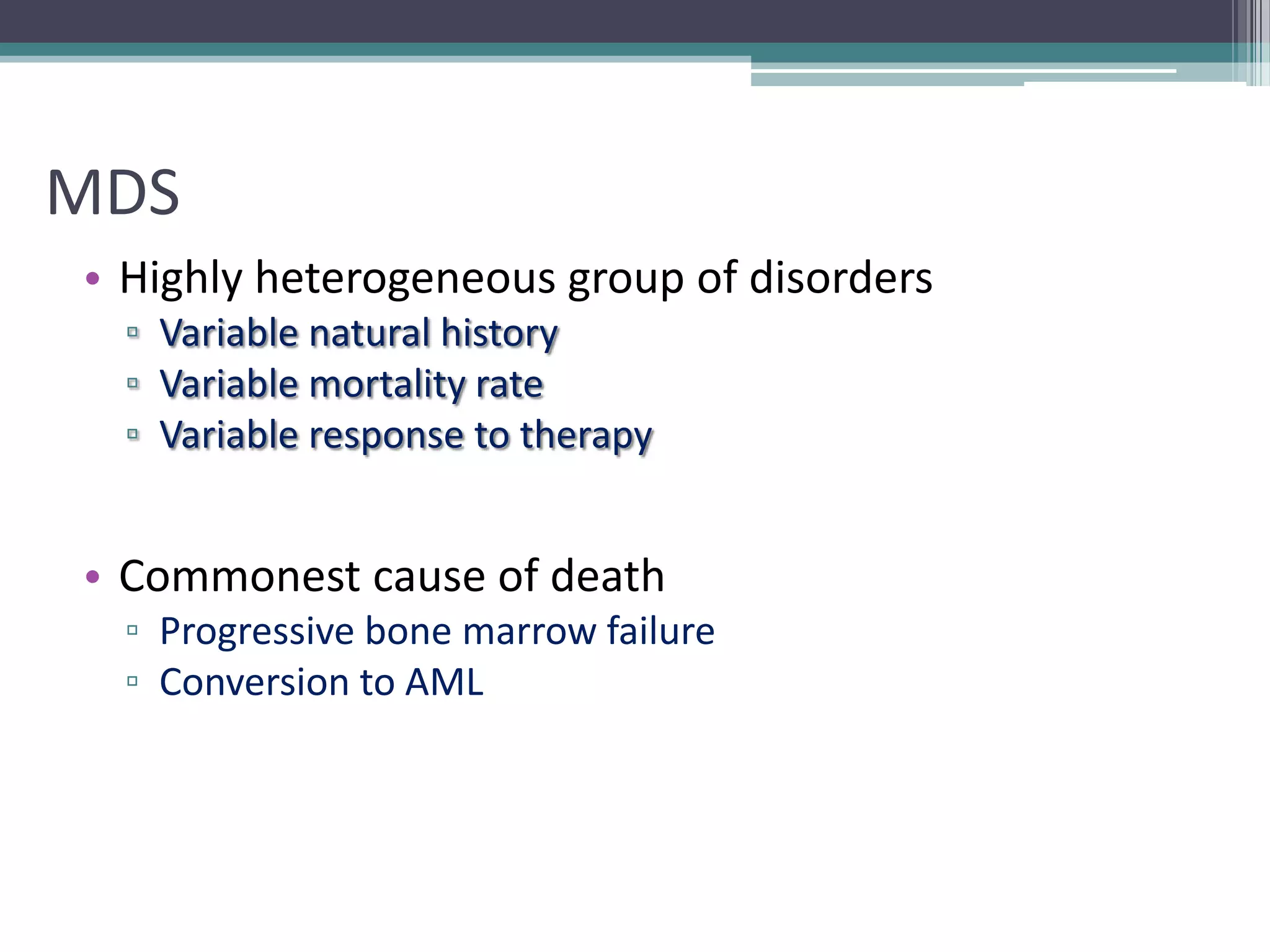
• Highly heterogeneous group of disorders
▫ Variable natural history
▫ Variable mortality rate
▫ Variable response to therapy
• Commonest cause of death
▫ Progressive bone marrow failure
▫ Conversion to AML
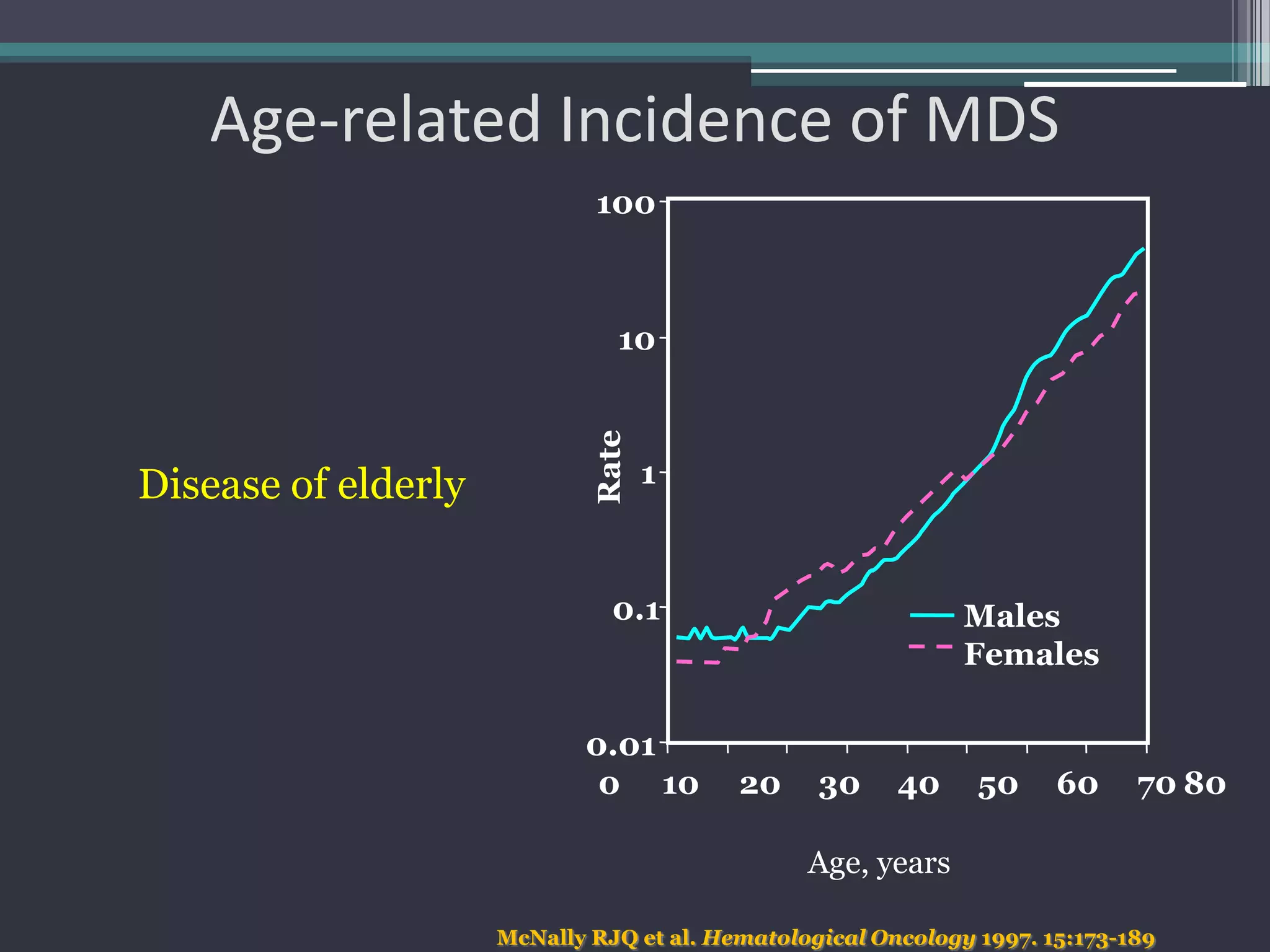
Age-related Incidence of MDS
McNally RJQ et al. Hematological Oncology 1997. 15:173-189
Males
Females
0 10 20 30 40 50 60 70 80
0.01
0.1
1
10
100
Rate
Disease of elderly
Age, years
Historical Perspective
• Pseudo-aplastic anemia
• Refractory Anemia
• Pre-leukemia
• Myelodysplastic syndrome
Luzzatto AM. anemia pseudoaplastica Riv Ven 1907;47:193.
Bomford RR, Rhodes CP. Refractory anemia. Q J Med 1941;10:175-281.
MDS: FAB Classification 1982
FAB
subtype
Blast % RS% Monocyte
s >1x10⁹/l
Survival
(months)
PB BM
RA <1 <5 <15 - 50
RARS <1 <5 >15 - 75
RAEB <5 5-20 variable - 11
CMML <5 <20 variable + 11
RAEB-T >5;
Auer rods
20-30;
Auer rods
variable +/- 5
MDS: Limitations of FAB Classification
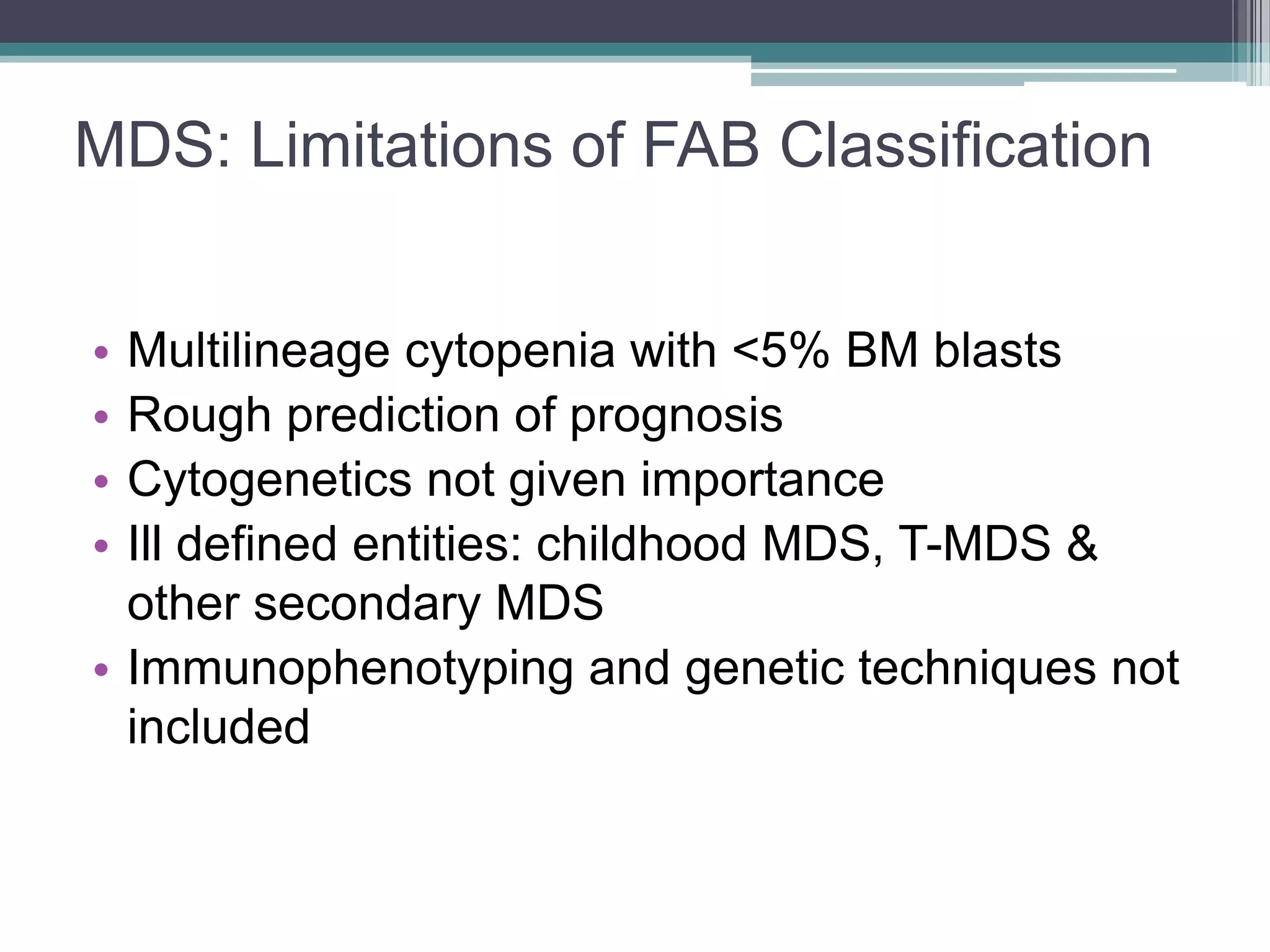
• Multilineage cytopenia with <5% BM blasts
• Rough prediction of prognosis
• Cytogenetics not given importance
• Ill defined entities: childhood MDS, T-MDS &
other secondary MDS
• Immunophenotyping and genetic techniques not
included
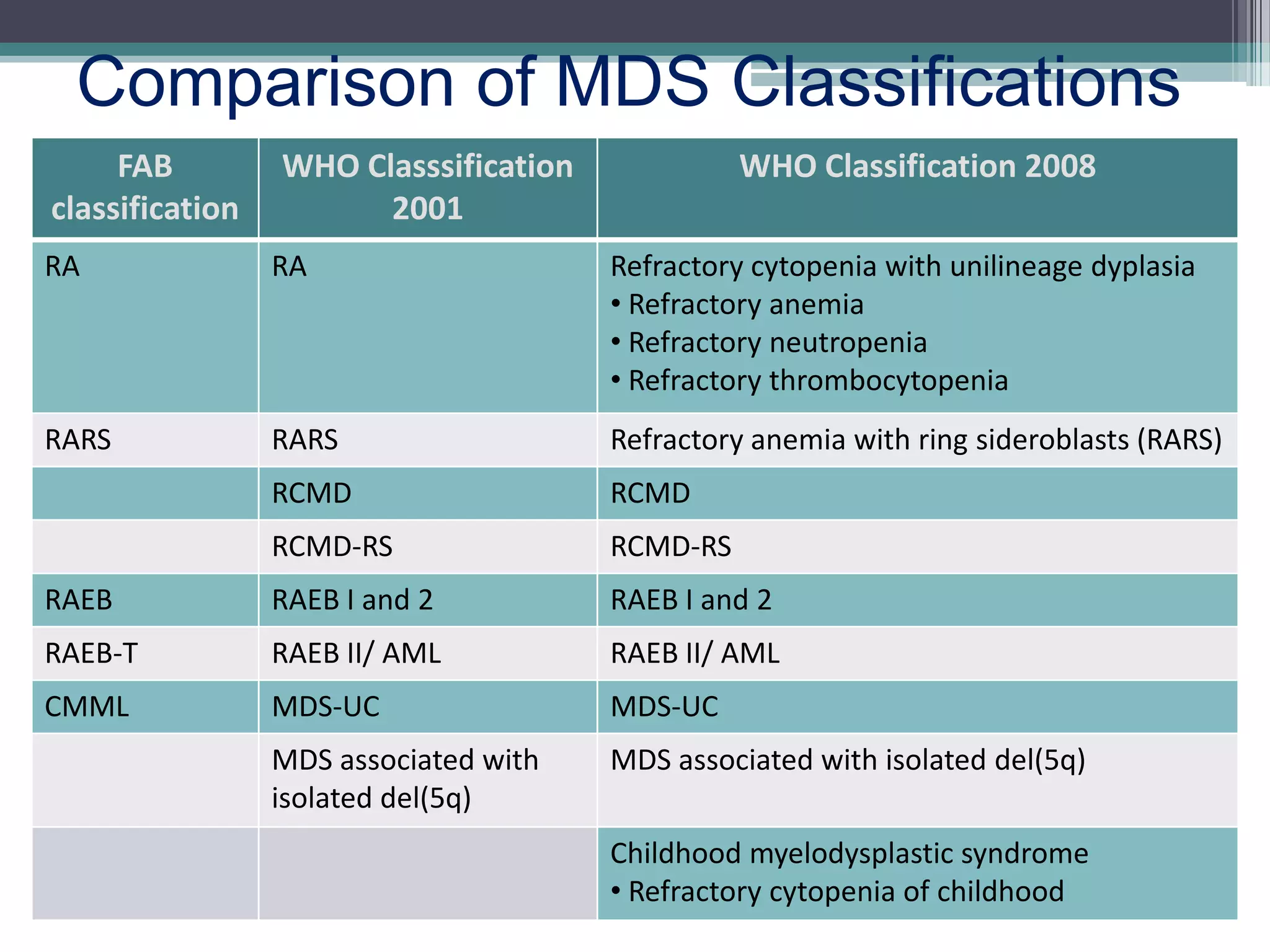
Comparison of MDS Classifications
FAB
classification
WHO Classsification
2001
WHO Classification 2008
RA RA Refractory cytopenia with unilineage dyplasia
• Refractory anemia
• Refractory neutropenia
• Refractory thrombocytopenia
RARS RARS Refractory anemia with ring sideroblasts (RARS)
RCMD RCMD
RCMD-RS RCMD-RS
RAEB RAEB I and 2 RAEB I and 2
RAEB-T RAEB II/ AML RAEB II/ AML
CMML MDS-UC MDS-UC
MDS associated with
isolated del(5q)
MDS associated with isolated del(5q)
Childhood myelodysplastic syndrome
• Refractory cytopenia of childhood
WHO 2008
Bone MarrowBloodSubtype
Dysplasia: ≥10% cellsSingle cell line
Mostly erythroid
RCUD
Erythroid dysplasia
>15% ringed sideroblasts
AnemiaRARS
>10%Dysplasia: ≥2 cell lineage
<5%blasts
Bi/pancytopeniaRCMD
Uni-multi lineage dysplasia
5-9% blasts, No Auer rods
Cytopenia
<5% blast
RAEB-1
Uni-multi lineage dysplasia
10-19% blasts or Auer rods
Cytopenia, 5-19% blasts or
Auer rods
RAEB-2
Uni / multilineage/ no dysplasia
Characteristic MDS CG +
CytopeniaMDS-U
Unilineage erythroid dysplasia,
isolated del 5q, <5%blast
Anemia,
normal or ↑Platelets
MDS with 5q
Cazzola M. Hemaologica 2011
Outcomes in MDS in Different WHO Subtypes
Improved prognostic scores
Disease related variables
Host factors
Appropriate clinical decision
Disease eradication/ control
Prolonging overall survival
Managing complications of disease and therapy
Improving quality of life
Prognostic
scores Most widely used
There are
benefits
and
limitations
of all these
scores
IPSS: Prognostic Variables
0 0.5 1.0 1.5 2.0
Marrow blasts % <5 5-10 — 11-20 21-30
Karyotype Good Intermediate Poor
Cytopenias 0/1 2/3 - - -
Overall score is the sum of the scores for following parameters:
BM blasts %: score 0 =< 5%; 0.5=5-10%; 1.5=11-19%; 2.0=20-30%.
Cytopenias: score 0 = no/ one cytopenia; 0.5 = 2 or 3 cytopenias.
Cytogenetics: score 0 (good)= Normal karyotype, -Y, 5q- or 20q-;
score 1.0 (poor)= 7q- or -7, complex translocations;
score 0.5 (intermediate)= all others.
Risk group Overall score Median survival (years)
Low 0 5.7
Intermediate 1 0.5 or 1.0 3.5
Intermediate 2 1.5 or 2.0 1.2
Poor >/= 2.5 0.4
Greenberg P et al. Blood 1997;89:2079-2088.
Prediction of survival by IPSS
IPSS
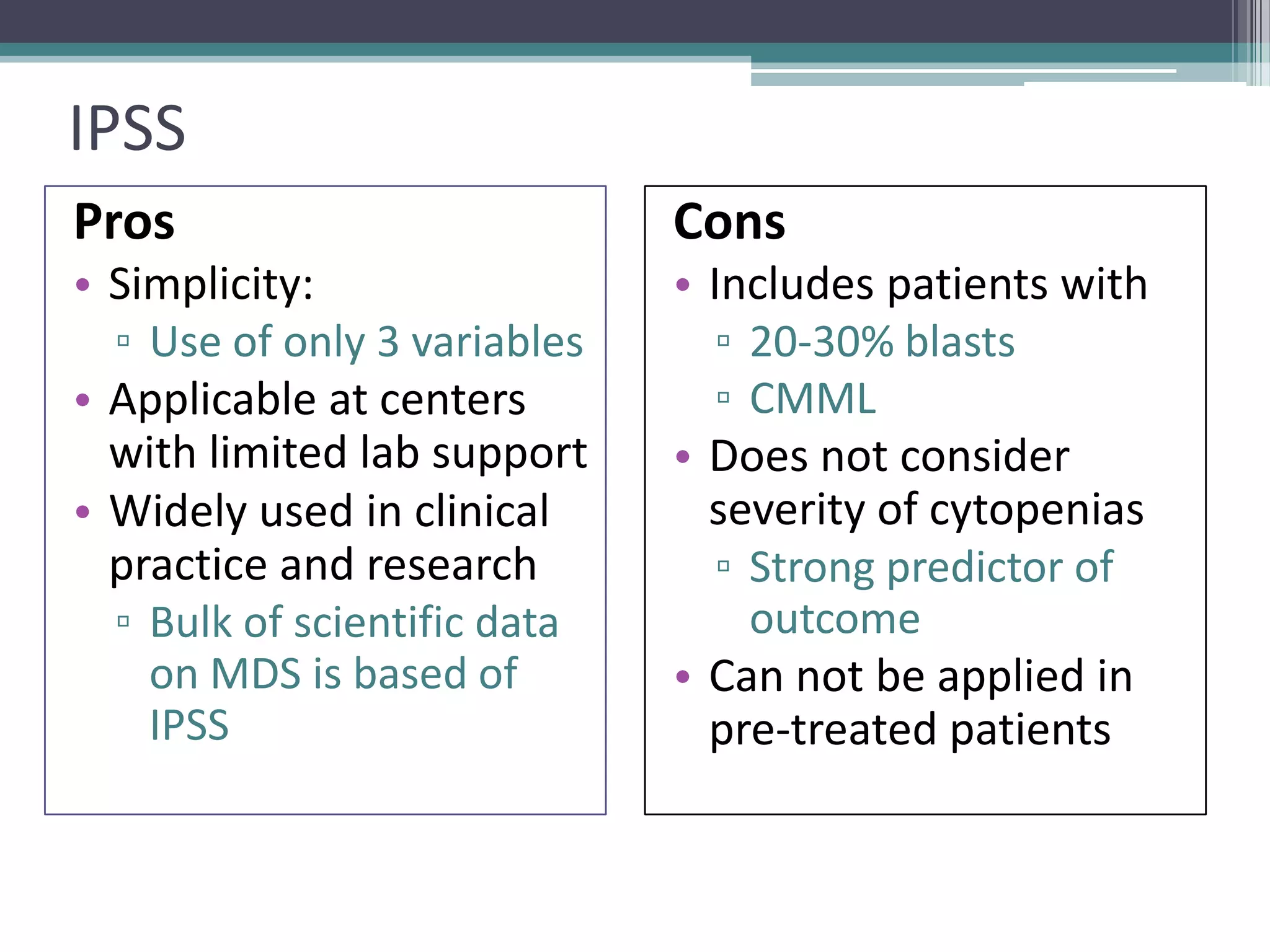
Pros
• Simplicity:
▫ Use of only 3 variables
• Applicable at centers
with limited lab support
• Widely used in clinical
practice and research
▫ Bulk of scientific data
on MDS is based of
IPSS
Cons
• Includes patients with
▫ 20-30% blasts
▫ CMML
• Does not consider
severity of cytopenias
▫ Strong predictor of
outcome
• Can not be applied in
pre-treated patients
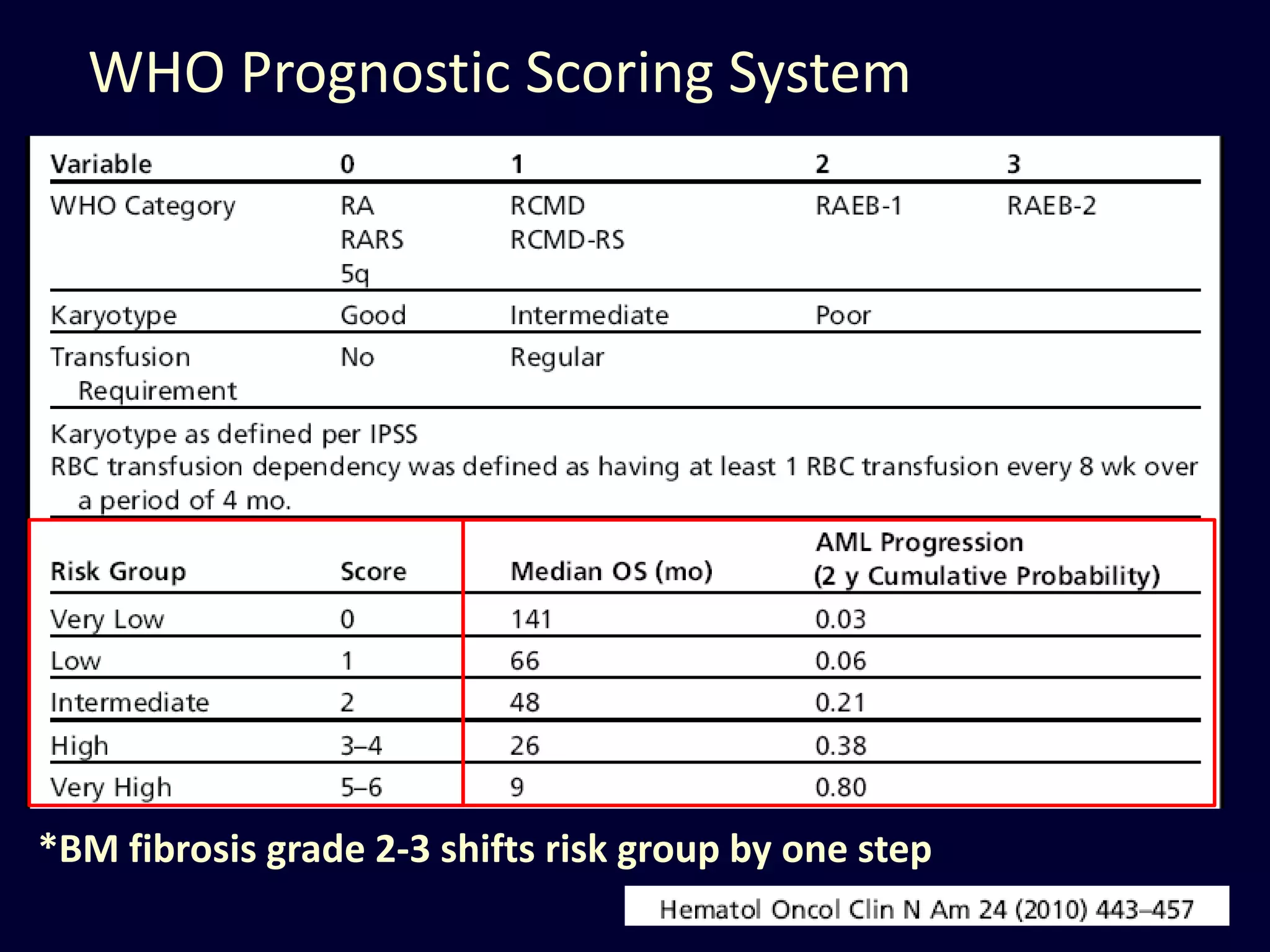
WHO Prognostic Scoring System
*BM fibrosis grade 2-3 shifts risk group by one step
WPSS
Pros
• Simplicity: use of only 3
variables
• Accurate prediction of
survival and risk of leukemic
evolution at any time
during the course of their
disease
• Useful in predicting post
transplant outcome
Cons
• Not applicable for
secondary MDS
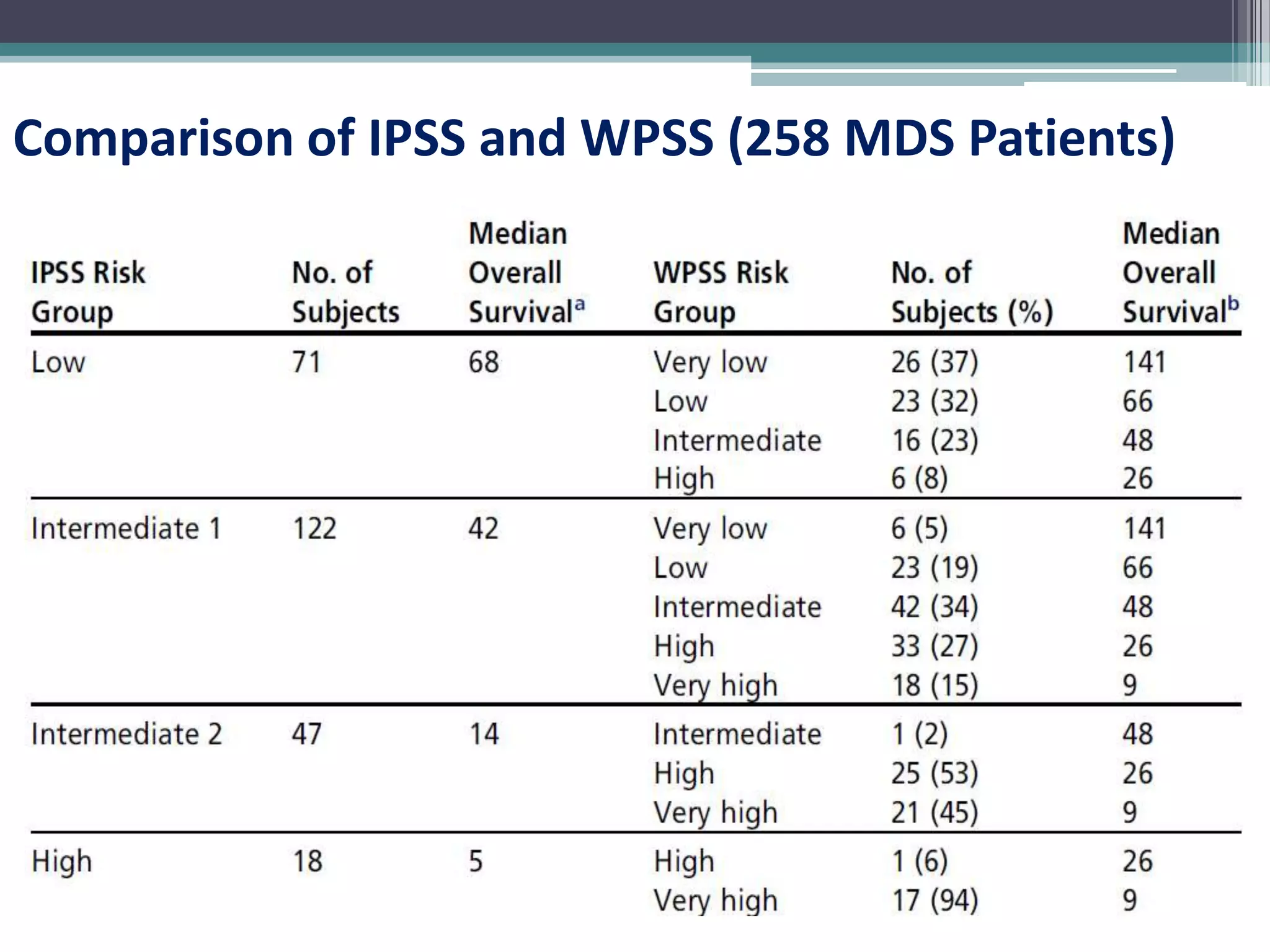
Comparison of IPSS and WPSS (258 MDS Patients)
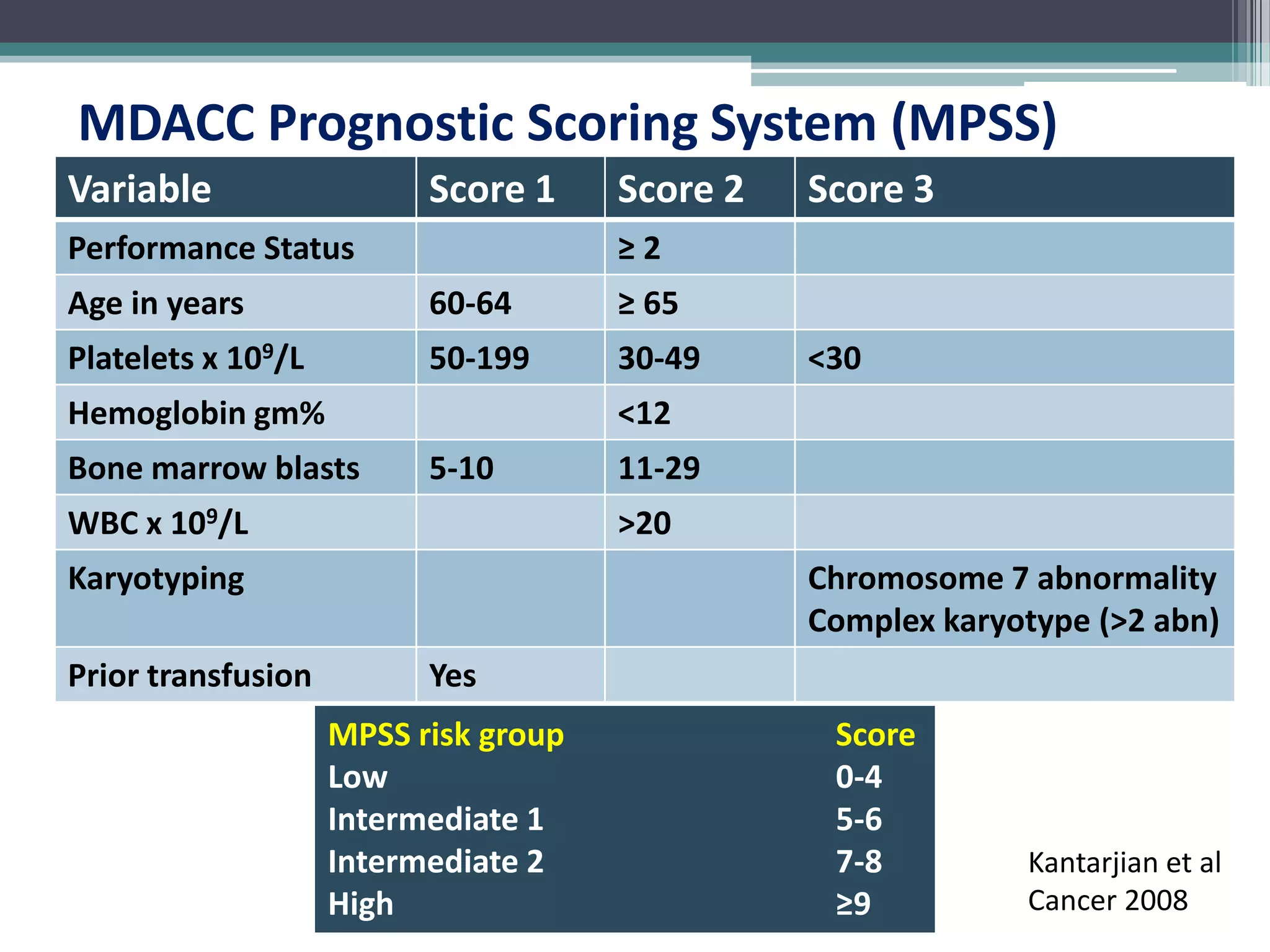
MDACC Prognostic Scoring System (MPSS)
Variable Score 1 Score 2 Score 3
Performance Status ≥ 2
Age in years 60-64 ≥ 65
Platelets x 109/L 50-199 30-49 <30
Hemoglobin gm% <12
Bone marrow blasts 5-10 11-29
WBC x 109/L >20
Karyotyping Chromosome 7 abnormality
Complex karyotype (>2 abn)
Prior transfusion Yes
MPSS risk group Score
Low 0-4
Intermediate 1 5-6
Intermediate 2 7-8
High ≥9
Kantarjian et al
Cancer 2008
2012 Revised IPSS
Schanz J, et al. J Clin Oncol. 2012;30:820-829. Greenberg PL, et al. Blood. 2012;120:2454-2465.
Prognostic
Subgroup
Cytogenetic Abnormality Median OS,
Mos
Median
Time to
AML, Mos
Very good del(11q), -Y 60.8 NR
Good Normal, del(20q), del(5q) alone or double, del(12p) 48.6 NR
Intermediate
+8, del(7q), i(17q), +19, any other single or double,
independent clones
26.0 78.0
Poor
inv(3)/t(3q)/del(eq), -7, double including del(7q),
complex (3)
15.8 21.0
Very poor complex (≥ 3) 5.9 8.2
Fine tune the prognostic impact of
•Cytogenetic abnormalities
•Depth of cytopenia
IPSS-R
Risk Category Risk Score
Very low ≤ 1.5
Low >1.5 - 3
Intermediate >3 – 4.5
High >4.5 - 6
Very High >6
Variable 0 0.5 1 1.5 2 3 4
Cytogenetics V. good - Good - Int Poor V. poor
BM blast% ≤2 - >2 - <5 - 5-10 >10 -
Hgb ≥10 - 8-<10 <8 - - -
Platelets ≥100 50-100 <50 - - - -
ANC ≥0.8 <0.8 - - - - -
Treatment considerations
• Myelodysplasia are incurable without HSCT
• Highly variable natural history
• Treatment considerations must take into account
many factors, including the
▫ Pathologic diagnosis
▫ The prognosis based on the IPSS or WPSS
▫ Cell line /s affected
▫ Feasibility of performing a clinical trial
Tools to treat MDS
• Observation
• Supportive therapy (Transfusions)
• Hematopoietic growth factors
• Iron chelation
• Lenalidomide (Revlimid 2005)
• Hypomethylating agents
▫ Azacitidine (Vidaza 2004)
▫ Decitabine (Dacogen 2006)
• Immunosuppression
• Allogeneic stem cell transplantation
• Newer agents
To Trick or Treat
• Treatment should be reserved and potentially diagnosis to be
transmitted to the patient and family, only if there are
symptoms resulting from anemia or other cytopenias or
perhaps pre-symptomatic anemia or severe
thrombocytopenia.
• Old and frail patients or those who have equivocal diagnostic
features, benefit from a period of observation.
• Neutropenia without infection is a poor justification for
initiation of therapy.
Stone RM. Blood 2009
Role of Growth Factors
GCSF Support improves ANC (75% patients)
Has no impact on overall survival.
Not recommended for routine infection prophylaxis
Thrombopoietic
agents
Most have no significant impact on transfusion needs:
Main utility
–Fewer dose modifications of disease modifying agents
–Romiplostim: 500/750mcg weekly
–Eltrombopag: under study
Erythropoiesis
stimulating agents
(ESA)
–First line therapy for IPSS low or Int-1 risk MDS with
EPO <500U/L (NCCN guidelines)
–Response rates; 20-30%, ?OS/PFS/ QOL, durability:2
years
–Epoeitin alpha: 60,000-80,000 U once per week
–Darbopoietin alpha: 500mcg once 3 weekly
Most widely prescribed class of medications for MDS (55%)
Immunologic suppression of normal BM
function, similar to the situation in aplastic
anemia, has been postulated to account for
cytopenias in some MDS patients
Specific candidates- Refractory anemia with
relatively hypoplastic marrow
Predictor of Response to
Immunosuppressant
• HLA-DR-15-positivity
• RA (<5% blasts)
• IPSS Low/Int-1
• Age <60 years
• Brief transfusion history
• Trisomy 8 abnormality
• Normal cytogenetics
• Marrow cellularity <30%
ATG
• Phase II study (N=35) on MDS-RA
• Both equine and rabbit ATG were found to be active
• Response to
▫ Equine ATG: 29% (34/115)
▫ Rabbit ATG: RR 42%.
▫ 75% responders durable response (median 31.5
months).
Jonasova A, Br J Haematol. 1998;100:304-309.
Molldrem JJ, Br J Haematol. 1997;99:699-705.
Stadler M, Leukemia 2004;18:460-5
Chromosomal Abnormality: del13q
Only del (13 q ) Del (13q) plus other
abnormalities
number 16 6
GPI def clone 16 3
Response to IST 100% (14/14) 40% (2/5)
10 yr OSR 83% 63%
Progression to AML None 2
22 patients with bone marrow failure
MDS U
•MDS-U with del (13q) is a benign disorder with good response to IST
•Del (13q) should not be considered intermediate risk abnormality
Hosokawa et al, Haematologica 2012;97:1845
Biological response modifiers
special case of Del 5q syndrome
Eligibility:
•del(5q)
•IPSS low or Int-1
•platelets > 50K/mm3
•neutrophils > 500/mm3
•transfusion dependent
Study Design
Dose Reduction
5 mg qd
5 mg qod
Week: 0 4 8 12 16 20 24
Eligible
Patients
R
e
g
i
s
t
e
r
R
e
s
p
o
n
s
e
10 mg po x 21
NO Off study
YES Continue
Results
Frequency of Cytogenetic Response According to Karyotype Complexity
Len in non del(5q) MDS
• Can be considered for low risk, adequate ANC and platelet
counts
• Expected response rates are similar to other treatment
alternatives
• Use in high risk MDS remains investigational
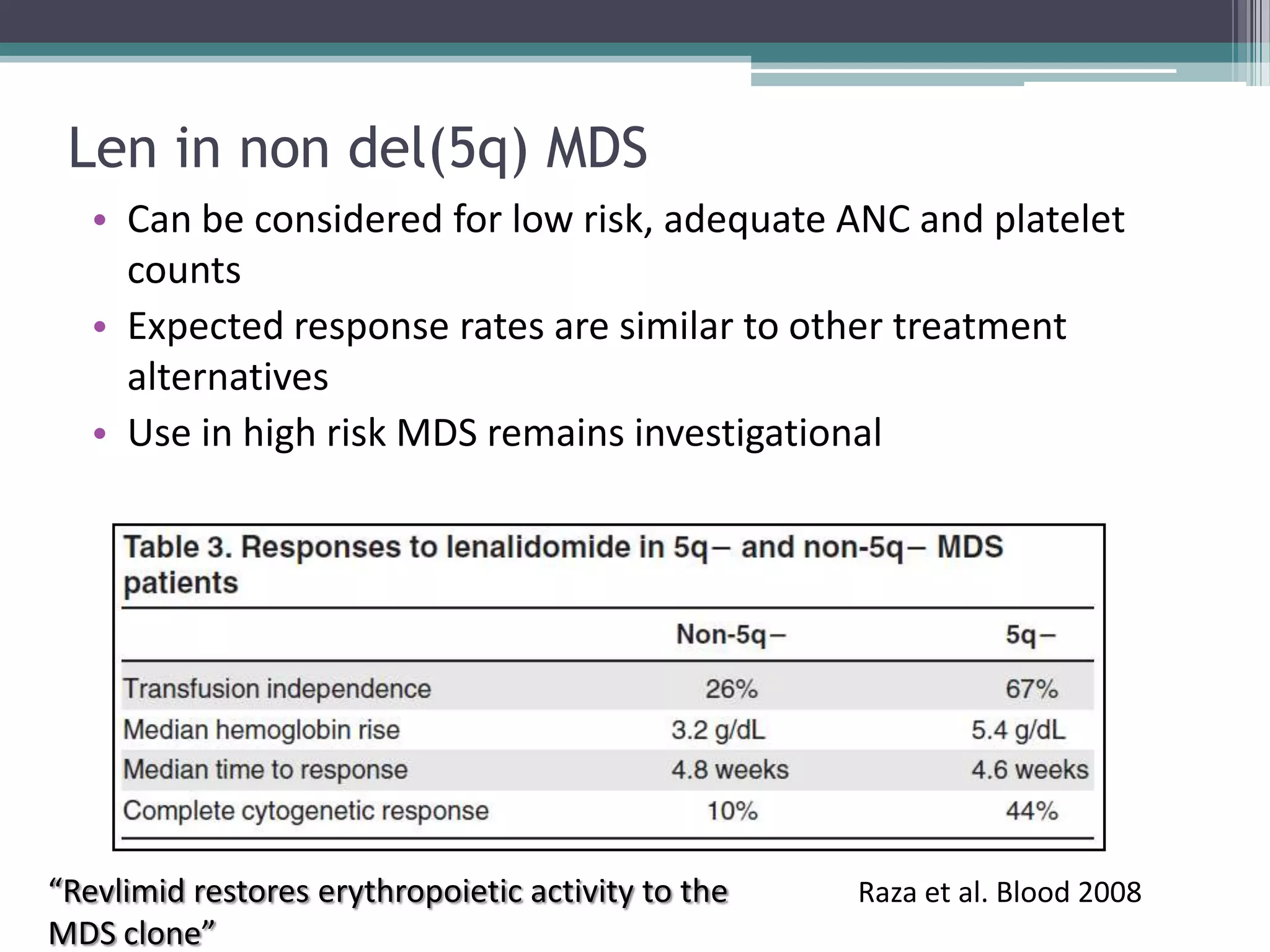
Raza et al. Blood 2008“Revlimid restores erythropoietic activity to the
MDS clone”
Hypomethylating agents
•
• Azacytidine and decitabine
are potent DNMT inhibitors
• This leads to
hypomethylation of CpG
dinucleotides in gene
promoters and reactivation
of previously silent genes
• Cytotoxic activity similar to
cytarabine
5 Azacytidine
• AZA001: Euro study despite
CALGB 9221
• Primary endpoint: survival
AZA Controls
Median survival 24.5 months 15 months
Progression to AML 27 months 13 months
Transfusion independence 45% 11%
Fennaux et al. Lancet Oncol 2009
Decitabine
DAC Controls
Overall survival 10 months 8.5 months
Progression to AML at 1 yr 22% 33%
CR/ PR/ HI 13/6/5% 0/0/2%
Lubbert et al . JCO 2011
Hypomethylating agents
When to start
– Int/ high risk MDS (IPSS)
– Transfusion dependent/ EPO
failure
– Not yet known if early
treatment is better than late
treatment in MDS
Which drug
– NCCN recommends Azacitidine
preference over Decitabine
– EORTC study failed to show
survival benefit.
– MDACC regimen (5 day
20mg/m2/d) highest CR
– Aza vs Decitabine head to head
trial results awaited
Optimal dose, schedule, route
– Azacitidine:
– 7 day 75mg/m2/d sc q 28 days (5-
2-2 or 50mg/m2 5-2-5 schedule)
– Decitabine:
– 3 day 15mg/m2/dose IV 8 hrly
(total dose 135mg/m2) inpatient
– 5 day 20mg/m2 /d over 1 hr (total
dose 100mg/m2) outpatient
Duration
– Optimal duration- not known
– To treat responding pts till disease
progression, as long as tolerated
– At least 4 cycles recommended for
adequate response
Steensma et al. Hematol Oncol clin N Am 2010
Predictive Factors for Achieving Response
to Hypomethylating Agents
Positive
• Mol/ Cyto:
▫ Mutated TET2
▫ Mutated EZH2
▫ Phosphoinositase –
Phospholipase C beta 1
hypomethylation
• Clinical Variable
▫ Doubling of Platelets
• Negative
• Mutated P 53
• Abnormal/ complex
karyotype
• BM Blasts >15%
• Previous therapy
• Transfusion dependency
• BM fibrosis grade 3
Santini V, ASH 2012
MDS
Low risk
(low or Int 1, BM blasts <10%)
Any age
Iron Chelation
Growth factors
DMT Inhibitors
Lenolidamide
Immunomodulation
Clinical trial
Progression/ failure
HSCT
High Risk
(Int 2, High risk, blasts>10%)
Age <60 Age≥60
Intensive chemo
DMTI
Clinical trial
DMTI
Clinical trial
Intensive Chemo
Failure
Attallah: Cancer Therap 2008;26:208-16
Failure
What’s on the Horizon?
• In the quest of effective therapy, currently there
are approximately 200 clinical trials are ongoing
and numerous agents are at various stages of
drug development
• The need for a novel agent is particularly noted
in patients failing hypomethylating agents who
are ineligible for stem cell transplant
Kulasekararaj AG, Semin Hematol ,2012; 49:350-60
Agent Action Current status
Erlotinib Oral TKI tageting EGFR Phase 2,
hypomethylating agent
failed MDS cases
ORR 15%
Stable disease 32%
Tosedostat Aminopeptidase
inhibitor
Phase 1/ 2,
ORR 28% in AML/MDS
patients >60 years
Ezatiostat Glutathione analogue Phase 2 , 40 % efficacy
in lenalidomide treated
MDS patients
Siltuximab Chimaric monoclonal
Ab neutralising IL6
Phase 2 for Anemia
related to MDS
Kulasekararaj AG, Semin Hematol ,2012; 49:350-60
Agent Action Current status
BMN673 PARP inhibiotrs Phase 1 , open label
trial for AML, MDS,
MCL, CLL
MLN4924 Small molecule
inhibitor of
Neddylation
activating enzyme
Phase 1, AML and
MDS
PF-04449913 Hedgehog pathway
inhibitor
Phase 1/ 2, for
myelofibrosis, AML,
MDS
SCIO496 MAP kinase inhibitors Phase 1/ 2 for low
and intermediate risk
MDS
Kulasekararaj AG, Semin Hematol ,2012; 49:350-60
Take Home Message
• Myelo-dysplastic syndromes are heterogeneous
disorders
• Prognostic scores are evolving with use of cyto-
genetics and molecular markers
• Treatment depends upon the prognostic and host
factors
• MTI and IMIDs are being increasingly used
• HSCT is the only curative treatment
• Treatment paradigms are evolving

MDS Classification by Subhash Varma

  • 1.
    MDS: Classification andAdvances in Therapy BTG2013 S. Varma PGIMER, Chandigarh India
  • 2.
    MDS • Highly heterogeneousgroup of disorders ▫ Variable natural history ▫ Variable mortality rate ▫ Variable response to therapy • Commonest cause of death ▫ Progressive bone marrow failure ▫ Conversion to AML
  • 3.
    Age-related Incidence ofMDS McNally RJQ et al. Hematological Oncology 1997. 15:173-189 Males Females 0 10 20 30 40 50 60 70 80 0.01 0.1 1 10 100 Rate Disease of elderly Age, years
  • 5.
    Historical Perspective • Pseudo-aplasticanemia • Refractory Anemia • Pre-leukemia • Myelodysplastic syndrome Luzzatto AM. anemia pseudoaplastica Riv Ven 1907;47:193. Bomford RR, Rhodes CP. Refractory anemia. Q J Med 1941;10:175-281.
  • 6.
    MDS: FAB Classification1982 FAB subtype Blast % RS% Monocyte s >1x10⁹/l Survival (months) PB BM RA <1 <5 <15 - 50 RARS <1 <5 >15 - 75 RAEB <5 5-20 variable - 11 CMML <5 <20 variable + 11 RAEB-T >5; Auer rods 20-30; Auer rods variable +/- 5
  • 7.
    MDS: Limitations ofFAB Classification • Multilineage cytopenia with <5% BM blasts • Rough prediction of prognosis • Cytogenetics not given importance • Ill defined entities: childhood MDS, T-MDS & other secondary MDS • Immunophenotyping and genetic techniques not included
  • 8.
    Comparison of MDSClassifications FAB classification WHO Classsification 2001 WHO Classification 2008 RA RA Refractory cytopenia with unilineage dyplasia • Refractory anemia • Refractory neutropenia • Refractory thrombocytopenia RARS RARS Refractory anemia with ring sideroblasts (RARS) RCMD RCMD RCMD-RS RCMD-RS RAEB RAEB I and 2 RAEB I and 2 RAEB-T RAEB II/ AML RAEB II/ AML CMML MDS-UC MDS-UC MDS associated with isolated del(5q) MDS associated with isolated del(5q) Childhood myelodysplastic syndrome • Refractory cytopenia of childhood
  • 9.
    WHO 2008 Bone MarrowBloodSubtype Dysplasia:≥10% cellsSingle cell line Mostly erythroid RCUD Erythroid dysplasia >15% ringed sideroblasts AnemiaRARS >10%Dysplasia: ≥2 cell lineage <5%blasts Bi/pancytopeniaRCMD Uni-multi lineage dysplasia 5-9% blasts, No Auer rods Cytopenia <5% blast RAEB-1 Uni-multi lineage dysplasia 10-19% blasts or Auer rods Cytopenia, 5-19% blasts or Auer rods RAEB-2 Uni / multilineage/ no dysplasia Characteristic MDS CG + CytopeniaMDS-U Unilineage erythroid dysplasia, isolated del 5q, <5%blast Anemia, normal or ↑Platelets MDS with 5q
  • 10.
    Cazzola M. Hemaologica2011 Outcomes in MDS in Different WHO Subtypes
  • 11.
    Improved prognostic scores Diseaserelated variables Host factors Appropriate clinical decision Disease eradication/ control Prolonging overall survival Managing complications of disease and therapy Improving quality of life
  • 12.
    Prognostic scores Most widelyused There are benefits and limitations of all these scores
  • 13.
    IPSS: Prognostic Variables 00.5 1.0 1.5 2.0 Marrow blasts % <5 5-10 — 11-20 21-30 Karyotype Good Intermediate Poor Cytopenias 0/1 2/3 - - - Overall score is the sum of the scores for following parameters: BM blasts %: score 0 =< 5%; 0.5=5-10%; 1.5=11-19%; 2.0=20-30%. Cytopenias: score 0 = no/ one cytopenia; 0.5 = 2 or 3 cytopenias. Cytogenetics: score 0 (good)= Normal karyotype, -Y, 5q- or 20q-; score 1.0 (poor)= 7q- or -7, complex translocations; score 0.5 (intermediate)= all others. Risk group Overall score Median survival (years) Low 0 5.7 Intermediate 1 0.5 or 1.0 3.5 Intermediate 2 1.5 or 2.0 1.2 Poor >/= 2.5 0.4 Greenberg P et al. Blood 1997;89:2079-2088.
  • 14.
  • 15.
    IPSS Pros • Simplicity: ▫ Useof only 3 variables • Applicable at centers with limited lab support • Widely used in clinical practice and research ▫ Bulk of scientific data on MDS is based of IPSS Cons • Includes patients with ▫ 20-30% blasts ▫ CMML • Does not consider severity of cytopenias ▫ Strong predictor of outcome • Can not be applied in pre-treated patients
  • 16.
    WHO Prognostic ScoringSystem *BM fibrosis grade 2-3 shifts risk group by one step
  • 17.
    WPSS Pros • Simplicity: useof only 3 variables • Accurate prediction of survival and risk of leukemic evolution at any time during the course of their disease • Useful in predicting post transplant outcome Cons • Not applicable for secondary MDS
  • 18.
    Comparison of IPSSand WPSS (258 MDS Patients)
  • 19.
    MDACC Prognostic ScoringSystem (MPSS) Variable Score 1 Score 2 Score 3 Performance Status ≥ 2 Age in years 60-64 ≥ 65 Platelets x 109/L 50-199 30-49 <30 Hemoglobin gm% <12 Bone marrow blasts 5-10 11-29 WBC x 109/L >20 Karyotyping Chromosome 7 abnormality Complex karyotype (>2 abn) Prior transfusion Yes MPSS risk group Score Low 0-4 Intermediate 1 5-6 Intermediate 2 7-8 High ≥9 Kantarjian et al Cancer 2008
  • 20.
    2012 Revised IPSS SchanzJ, et al. J Clin Oncol. 2012;30:820-829. Greenberg PL, et al. Blood. 2012;120:2454-2465. Prognostic Subgroup Cytogenetic Abnormality Median OS, Mos Median Time to AML, Mos Very good del(11q), -Y 60.8 NR Good Normal, del(20q), del(5q) alone or double, del(12p) 48.6 NR Intermediate +8, del(7q), i(17q), +19, any other single or double, independent clones 26.0 78.0 Poor inv(3)/t(3q)/del(eq), -7, double including del(7q), complex (3) 15.8 21.0 Very poor complex (≥ 3) 5.9 8.2 Fine tune the prognostic impact of •Cytogenetic abnormalities •Depth of cytopenia
  • 21.
    IPSS-R Risk Category RiskScore Very low ≤ 1.5 Low >1.5 - 3 Intermediate >3 – 4.5 High >4.5 - 6 Very High >6 Variable 0 0.5 1 1.5 2 3 4 Cytogenetics V. good - Good - Int Poor V. poor BM blast% ≤2 - >2 - <5 - 5-10 >10 - Hgb ≥10 - 8-<10 <8 - - - Platelets ≥100 50-100 <50 - - - - ANC ≥0.8 <0.8 - - - - -
  • 23.
    Treatment considerations • Myelodysplasiaare incurable without HSCT • Highly variable natural history • Treatment considerations must take into account many factors, including the ▫ Pathologic diagnosis ▫ The prognosis based on the IPSS or WPSS ▫ Cell line /s affected ▫ Feasibility of performing a clinical trial
  • 24.
    Tools to treatMDS • Observation • Supportive therapy (Transfusions) • Hematopoietic growth factors • Iron chelation • Lenalidomide (Revlimid 2005) • Hypomethylating agents ▫ Azacitidine (Vidaza 2004) ▫ Decitabine (Dacogen 2006) • Immunosuppression • Allogeneic stem cell transplantation • Newer agents
  • 25.
    To Trick orTreat • Treatment should be reserved and potentially diagnosis to be transmitted to the patient and family, only if there are symptoms resulting from anemia or other cytopenias or perhaps pre-symptomatic anemia or severe thrombocytopenia. • Old and frail patients or those who have equivocal diagnostic features, benefit from a period of observation. • Neutropenia without infection is a poor justification for initiation of therapy. Stone RM. Blood 2009
  • 26.
    Role of GrowthFactors GCSF Support improves ANC (75% patients) Has no impact on overall survival. Not recommended for routine infection prophylaxis Thrombopoietic agents Most have no significant impact on transfusion needs: Main utility –Fewer dose modifications of disease modifying agents –Romiplostim: 500/750mcg weekly –Eltrombopag: under study Erythropoiesis stimulating agents (ESA) –First line therapy for IPSS low or Int-1 risk MDS with EPO <500U/L (NCCN guidelines) –Response rates; 20-30%, ?OS/PFS/ QOL, durability:2 years –Epoeitin alpha: 60,000-80,000 U once per week –Darbopoietin alpha: 500mcg once 3 weekly Most widely prescribed class of medications for MDS (55%)
  • 27.
    Immunologic suppression ofnormal BM function, similar to the situation in aplastic anemia, has been postulated to account for cytopenias in some MDS patients Specific candidates- Refractory anemia with relatively hypoplastic marrow
  • 28.
    Predictor of Responseto Immunosuppressant • HLA-DR-15-positivity • RA (<5% blasts) • IPSS Low/Int-1 • Age <60 years • Brief transfusion history • Trisomy 8 abnormality • Normal cytogenetics • Marrow cellularity <30%
  • 29.
    ATG • Phase IIstudy (N=35) on MDS-RA • Both equine and rabbit ATG were found to be active • Response to ▫ Equine ATG: 29% (34/115) ▫ Rabbit ATG: RR 42%. ▫ 75% responders durable response (median 31.5 months). Jonasova A, Br J Haematol. 1998;100:304-309. Molldrem JJ, Br J Haematol. 1997;99:699-705. Stadler M, Leukemia 2004;18:460-5
  • 30.
    Chromosomal Abnormality: del13q Onlydel (13 q ) Del (13q) plus other abnormalities number 16 6 GPI def clone 16 3 Response to IST 100% (14/14) 40% (2/5) 10 yr OSR 83% 63% Progression to AML None 2 22 patients with bone marrow failure MDS U •MDS-U with del (13q) is a benign disorder with good response to IST •Del (13q) should not be considered intermediate risk abnormality Hosokawa et al, Haematologica 2012;97:1845
  • 31.
    Biological response modifiers specialcase of Del 5q syndrome Eligibility: •del(5q) •IPSS low or Int-1 •platelets > 50K/mm3 •neutrophils > 500/mm3 •transfusion dependent
  • 32.
    Study Design Dose Reduction 5mg qd 5 mg qod Week: 0 4 8 12 16 20 24 Eligible Patients R e g i s t e r R e s p o n s e 10 mg po x 21 NO Off study YES Continue
  • 33.
    Results Frequency of CytogeneticResponse According to Karyotype Complexity
  • 34.
    Len in nondel(5q) MDS • Can be considered for low risk, adequate ANC and platelet counts • Expected response rates are similar to other treatment alternatives • Use in high risk MDS remains investigational Raza et al. Blood 2008“Revlimid restores erythropoietic activity to the MDS clone”
  • 36.
    Hypomethylating agents • • Azacytidineand decitabine are potent DNMT inhibitors • This leads to hypomethylation of CpG dinucleotides in gene promoters and reactivation of previously silent genes • Cytotoxic activity similar to cytarabine
  • 37.
    5 Azacytidine • AZA001:Euro study despite CALGB 9221 • Primary endpoint: survival AZA Controls Median survival 24.5 months 15 months Progression to AML 27 months 13 months Transfusion independence 45% 11% Fennaux et al. Lancet Oncol 2009
  • 38.
    Decitabine DAC Controls Overall survival10 months 8.5 months Progression to AML at 1 yr 22% 33% CR/ PR/ HI 13/6/5% 0/0/2% Lubbert et al . JCO 2011
  • 39.
    Hypomethylating agents When tostart – Int/ high risk MDS (IPSS) – Transfusion dependent/ EPO failure – Not yet known if early treatment is better than late treatment in MDS Which drug – NCCN recommends Azacitidine preference over Decitabine – EORTC study failed to show survival benefit. – MDACC regimen (5 day 20mg/m2/d) highest CR – Aza vs Decitabine head to head trial results awaited Optimal dose, schedule, route – Azacitidine: – 7 day 75mg/m2/d sc q 28 days (5- 2-2 or 50mg/m2 5-2-5 schedule) – Decitabine: – 3 day 15mg/m2/dose IV 8 hrly (total dose 135mg/m2) inpatient – 5 day 20mg/m2 /d over 1 hr (total dose 100mg/m2) outpatient Duration – Optimal duration- not known – To treat responding pts till disease progression, as long as tolerated – At least 4 cycles recommended for adequate response Steensma et al. Hematol Oncol clin N Am 2010
  • 40.
    Predictive Factors forAchieving Response to Hypomethylating Agents Positive • Mol/ Cyto: ▫ Mutated TET2 ▫ Mutated EZH2 ▫ Phosphoinositase – Phospholipase C beta 1 hypomethylation • Clinical Variable ▫ Doubling of Platelets • Negative • Mutated P 53 • Abnormal/ complex karyotype • BM Blasts >15% • Previous therapy • Transfusion dependency • BM fibrosis grade 3 Santini V, ASH 2012
  • 41.
    MDS Low risk (low orInt 1, BM blasts <10%) Any age Iron Chelation Growth factors DMT Inhibitors Lenolidamide Immunomodulation Clinical trial Progression/ failure HSCT High Risk (Int 2, High risk, blasts>10%) Age <60 Age≥60 Intensive chemo DMTI Clinical trial DMTI Clinical trial Intensive Chemo Failure Attallah: Cancer Therap 2008;26:208-16 Failure
  • 43.
    What’s on theHorizon? • In the quest of effective therapy, currently there are approximately 200 clinical trials are ongoing and numerous agents are at various stages of drug development • The need for a novel agent is particularly noted in patients failing hypomethylating agents who are ineligible for stem cell transplant Kulasekararaj AG, Semin Hematol ,2012; 49:350-60
  • 44.
    Agent Action Currentstatus Erlotinib Oral TKI tageting EGFR Phase 2, hypomethylating agent failed MDS cases ORR 15% Stable disease 32% Tosedostat Aminopeptidase inhibitor Phase 1/ 2, ORR 28% in AML/MDS patients >60 years Ezatiostat Glutathione analogue Phase 2 , 40 % efficacy in lenalidomide treated MDS patients Siltuximab Chimaric monoclonal Ab neutralising IL6 Phase 2 for Anemia related to MDS Kulasekararaj AG, Semin Hematol ,2012; 49:350-60
  • 45.
    Agent Action Currentstatus BMN673 PARP inhibiotrs Phase 1 , open label trial for AML, MDS, MCL, CLL MLN4924 Small molecule inhibitor of Neddylation activating enzyme Phase 1, AML and MDS PF-04449913 Hedgehog pathway inhibitor Phase 1/ 2, for myelofibrosis, AML, MDS SCIO496 MAP kinase inhibitors Phase 1/ 2 for low and intermediate risk MDS Kulasekararaj AG, Semin Hematol ,2012; 49:350-60
  • 46.
    Take Home Message •Myelo-dysplastic syndromes are heterogeneous disorders • Prognostic scores are evolving with use of cyto- genetics and molecular markers • Treatment depends upon the prognostic and host factors • MTI and IMIDs are being increasingly used • HSCT is the only curative treatment • Treatment paradigms are evolving

Editor's Notes

  • #3 Myelodysplastic syndromes are a group of heterogeneous disorders characterized by persistent cytopenias, hypercellular marrow and presence of dysplasia that results from increased proliferation as well as increased apoptosis
  • #10 Shows the peripheral blood and bone marrow criteria for diagnosis of various subtypes of MDS that are dependent upon cytopenia, number of blasts, presence of dysplasia and cytogenetic abnormalities.
  • #21 AML, acute myeloid leukemia; IPSS, International Prognostic Scoring System; IPSS-R, revised IPSS; MDS, myelodysplastic syndromes; NR, not reached; OS, overall survival.
  • #39 EORTC/GMDSSG 3 day schedule, inter cycle interval 6 weeks, cap of max 8 cyclesEORTC/GMDSSG3 day schedule, inter cycle interval 6 weeks, cap of max 8 cycles