MS.SNEHAL PATIL.
2ND YR P.B.B.Sc.
DEFINITION :
The individual has devices for
protecting himself against
psychological dangers & distress.
These protective devices are known
as ego defences or defence
mechanism or mental mechanism
or dynamism.
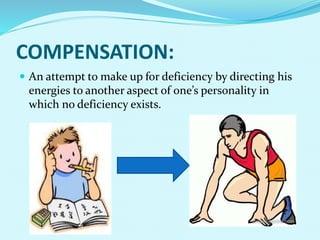
COMPENSATION:
 An attempt to make up for deficiency by directing his
energies to another aspect of one’s personality in
which no deficiency exists.
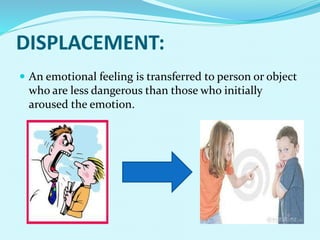
DISPLACEMENT:
 An emotional feeling is transferred to person or object
who are less dangerous than those who initially
aroused the emotion.
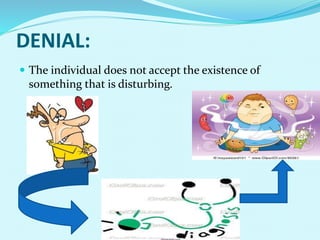
DENIAL:
 The individual does not accept the existence of
something that is disturbing.
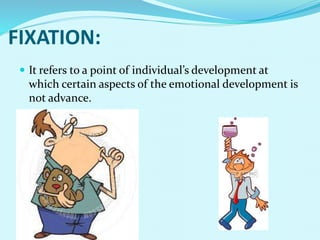
FIXATION:
 It refers to a point of individual’s development at
which certain aspects of the emotional development is
not advance.
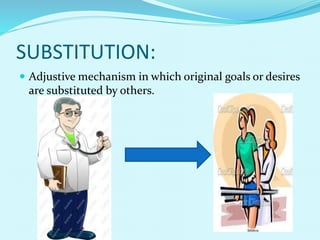
SUBSTITUTION:
 Adjustive mechanism in which original goals or desires
are substituted by others.
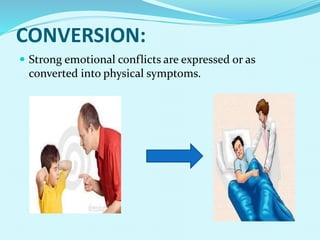
CONVERSION:
 Strong emotional conflicts are expressed or as
converted into physical symptoms.
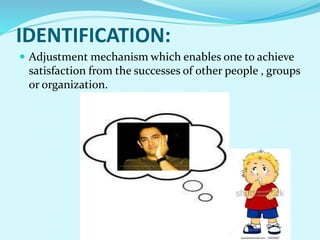
IDENTIFICATION:
 Adjustment mechanism which enables one to achieve
satisfaction from the successes of other people , groups
or organization.
INTROJECTION:
The values & characteristics of
significant persons are incorporated in
one’s personality.
E.g. A woman who likes to live in a
simple way introjects in her the
sophisticated way, of living like her
husband.
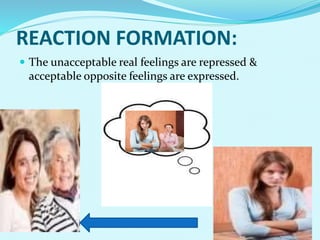
REACTION FORMATION:
 The unacceptable real feelings are repressed &
acceptable opposite feelings are expressed.
TRANSFERENCE :
Image of one person is unconsciously
identified with that of another.
e.g. A patient who is fond of his daughter
finds the nurse of the same age &
height as his daughter. So he transfers
his positive emotions to his nurse as his
daughter.
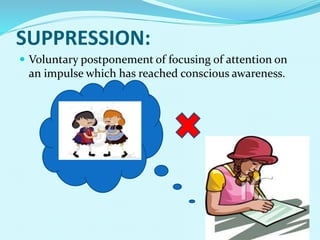
SUPPRESSION:
 Voluntary postponement of focusing of attention on
an impulse which has reached conscious awareness.
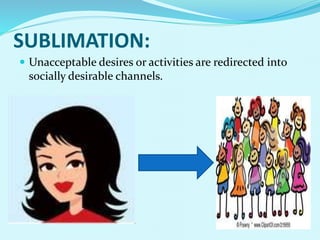
SUBLIMATION:
 Unacceptable desires or activities are redirected into
socially desirable channels.
REPRESSION:
Strong emotional ideas or unpleasant
memories which do not fit in with our
social values & norms , are split off
from consciousness & thrown into the
unconscious.
e.g. a man is jealous of his success but is
unaware of his feelings of jealousy.
REGRESSION:
It is a mechanism of going from the
present pattern to the past level of
behaviour. The individual returns to
pattern of behaviour that were
successful in earlier stages of
development.
e.g. Tears & temper tantrums in adult.
RATIONALIZATION:
Providing logical explanations for
irrational behaviour motivated by
unacceptable unconscious wishes.
PROJECTION:
 Popular method of resolving conflict. One’s own
unacceptable feelings & thoughts are expressed as if
they are due to others.
INCORPORATION:
 A lost or something prohibited source of identification
is introduced into the ego structure with out
transformation of ego.
e.g. A young married woman who has referred for
treatment by her husband because of her recent crying
spells & inability to care for her home & infant. The
patient stated that she was afraid as she was like her
mother & she disliked her self for these traits of her
mother which she has incorporated with her.
APPLICATION IN NURSING
Defence mechanism

Defence mechanism

  • 1.
  • 2.
    DEFINITION : The individualhas devices for protecting himself against psychological dangers & distress. These protective devices are known as ego defences or defence mechanism or mental mechanism or dynamism.
  • 3.
    COMPENSATION:  An attemptto make up for deficiency by directing his energies to another aspect of one’s personality in which no deficiency exists.
  • 4.
    DISPLACEMENT:  An emotionalfeeling is transferred to person or object who are less dangerous than those who initially aroused the emotion.
  • 5.
    DENIAL:  The individualdoes not accept the existence of something that is disturbing.
  • 6.
    FIXATION:  It refersto a point of individual’s development at which certain aspects of the emotional development is not advance.
  • 7.
    SUBSTITUTION:  Adjustive mechanismin which original goals or desires are substituted by others.
  • 8.
    CONVERSION:  Strong emotionalconflicts are expressed or as converted into physical symptoms.
  • 9.
    IDENTIFICATION:  Adjustment mechanismwhich enables one to achieve satisfaction from the successes of other people , groups or organization.
  • 10.
    INTROJECTION: The values &characteristics of significant persons are incorporated in one’s personality. E.g. A woman who likes to live in a simple way introjects in her the sophisticated way, of living like her husband.
  • 11.
    REACTION FORMATION:  Theunacceptable real feelings are repressed & acceptable opposite feelings are expressed.
  • 12.
    TRANSFERENCE : Image ofone person is unconsciously identified with that of another. e.g. A patient who is fond of his daughter finds the nurse of the same age & height as his daughter. So he transfers his positive emotions to his nurse as his daughter.
  • 13.
    SUPPRESSION:  Voluntary postponementof focusing of attention on an impulse which has reached conscious awareness.
  • 14.
    SUBLIMATION:  Unacceptable desiresor activities are redirected into socially desirable channels.
  • 15.
    REPRESSION: Strong emotional ideasor unpleasant memories which do not fit in with our social values & norms , are split off from consciousness & thrown into the unconscious. e.g. a man is jealous of his success but is unaware of his feelings of jealousy.
  • 16.
    REGRESSION: It is amechanism of going from the present pattern to the past level of behaviour. The individual returns to pattern of behaviour that were successful in earlier stages of development. e.g. Tears & temper tantrums in adult.
  • 17.
    RATIONALIZATION: Providing logical explanationsfor irrational behaviour motivated by unacceptable unconscious wishes.
  • 18.
    PROJECTION:  Popular methodof resolving conflict. One’s own unacceptable feelings & thoughts are expressed as if they are due to others.
  • 19.
    INCORPORATION:  A lostor something prohibited source of identification is introduced into the ego structure with out transformation of ego. e.g. A young married woman who has referred for treatment by her husband because of her recent crying spells & inability to care for her home & infant. The patient stated that she was afraid as she was like her mother & she disliked her self for these traits of her mother which she has incorporated with her.
  • 20.