ZOOLOGY
BOTANY
Navotas National Science High
School
Presented by Mrs. Katryn G. Tan
Let’s start our day with an
energizer.
Let’s play categories!
WELCOME
TO OUR CLASS
ESSENTIAL
QUESTION
OF THE DAY
"WHAT DO
PLANTS AND
ANIMALS HAVE
IN COMMON,
AND HOW ARE
THEY
LEARNING OBJECTIVES
a.) To define botany and zoology accurately
and distinguish between the two disciplines.
b.) To explore the broad scope of botany and
zoology, encompassing their key areas of
study and research.
c.) To understand the interdisciplinary nature
of botany and zoology and their connections
to other scientific fields.
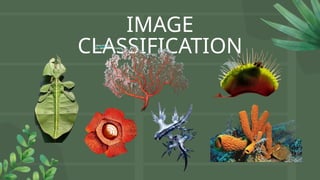
IMAGE CLASSIFICATION
a.) Students will be divided into groups.
b.) Each group will receive a set of pictures
or images of different organisms (plants and
animals).
c.) Then they will be asked to categorize the
organisms into two groups based on
observable characteristics.
d.) Then they will discuss among themselves
the basis of their groupings.
IMAGE
CLASSIFICATION
PLANTS VS ANIMALS
Nutrition
Movement
Cell Structure
Growth and Reproduction
Response to stimuli
Energy Storage
PLANTS VS ANIMALS
Autotrophs vs. Heterotrophs
The most fundamental difference in nutrition between
plants and animals lies in their methods of acquiring food.
Plants are autotrophs, meaning they can produce food
using sunlight, water, and carbon dioxide through
photosynthesis. They create organic compounds like
glucose, which serve as their energy source.
Animals are heterotrophs, relying on consuming other
organisms or organic matter to obtain the nutrients and
energy they need. They cannot produce their own food.
PLANTS VS ANIMALS
Nutrient Requirements
While both plants and animals require essential
nutrients for survival, their specific needs differ.
Plants primarily need water, carbon dioxide, and
minerals from the soil to carry out photosynthesis.
They also require nitrogen for protein synthesis.
Animals need a variety of nutrients, including
carbohydrates, proteins, fats, vitamins, and minerals,
which they obtain from their diet.
PLANTS VS ANIMALS
Digestive Systems
The complexity of digestive systems is another key
difference.
Plants have simpler digestive processes. They absorb
nutrients directly from the soil through their roots.
Animals have evolved complex digestive systems with
specialized organs to break down food into absorbable
nutrients. These systems vary depending on the
animal's diet.
TYPE OF MOVEMENT
Plants: Generally exhibit localized or slow movement. Plant
movements include growth towards light (phototropism), the
opening and closing of flowers or leaves (nyctinasty), and
responses to touch or injury (thigmotropism). These movements
are typically driven by growth processes or changes in turgor
pressure within cells rather than by muscle contractions.
Animals: Display active, often rapid movement using muscles and
a nervous system. Animals can move from one place to another
(locomotion) and perform complex actions like hunting, foraging,
and social interactions. Movement involves muscle contractions
and the coordination of nervous system signals.
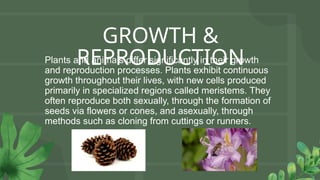
Plants and animals differ significantly in their growth
and reproduction processes. Plants exhibit continuous
growth throughout their lives, with new cells produced
primarily in specialized regions called meristems. They
often reproduce both sexually, through the formation of
seeds via flowers or cones, and asexually, through
methods such as cloning from cuttings or runners.
GROWTH &
REPRODUCTION
GROWTH &
REPRODUCTION
In contrast, animals typically have a more fixed growth
pattern, reaching a certain size and then ceasing growth,
with growth often limited to specific stages of
development. Animals reproduce primarily through
sexual means, involving complex behaviors and mating
rituals, though some can also reproduce asexually in
certain conditions (e.g., budding in hydra). Additionally,
animal reproduction generally involves a more defined
developmental sequence from embryo to adult, whereas
plant growth and reproduction can be more flexible and
influenced by environmental conditions.
BOTANY
Botany is the scientific study of plants, encompassing a wide
range of topics such as plant anatomy, physiology, and ecology. It
includes the classification and evolutionary relationships of plants
(taxonomy and systematics), their genetics and genomics, and
their interactions with humans (ethnobotany). Botany also covers
the study of plant diseases (plant pathology), fossil plants
(paleobotany), and the cultivation of crops and ornamental plants
(agronomy and horticulture). Additionally, it includes the study of
algae (phycology). As an interdisciplinary science, botany plays a
crucial role in understanding and improving plant life,
ecosystems, and human well-being.
ZOOLOGY
Zoology is the scientific study of animals, covering their anatomy,
physiology, behavior, and interactions with their environments. It
includes the classification and evolutionary relationships of
animals (taxonomy and systematics), the study of genetics and
development, and the investigation of animal behavior and
ecology. Specialized fields within zoology, such as entomology
(the study of insects) and marine biology (the study of aquatic
animals), further explore specific aspects of animal life. By
integrating knowledge from various scientific disciplines, zoology
provides insights into animal diversity, adaptation, and the roles
animals play in ecosystems.
IMAGINE A
WORLD
WITHOUT
PLANTS AND
ANIMALS.
WHAT
GROUP DISCUSSION
a.) Divide students into groups.
b.) Assign each group a specific topic: food,
medicine, clothing, shelter, or ecosystem
services.
c.) Provide research materials or online
resources.
d.) Ask groups to brainstorm and discuss
how plants and animals contribute to their
assigned topic.
THANK YOU!
www.reallygreatsite.c
om

Zoology & Botany Week 2 scope and coverage.pptx

  • 1.
    ZOOLOGY BOTANY Navotas National ScienceHigh School Presented by Mrs. Katryn G. Tan
  • 2.
    Let’s start ourday with an energizer. Let’s play categories! WELCOME TO OUR CLASS
  • 3.
  • 4.
    "WHAT DO PLANTS AND ANIMALSHAVE IN COMMON, AND HOW ARE THEY
  • 5.
    LEARNING OBJECTIVES a.) Todefine botany and zoology accurately and distinguish between the two disciplines. b.) To explore the broad scope of botany and zoology, encompassing their key areas of study and research. c.) To understand the interdisciplinary nature of botany and zoology and their connections to other scientific fields.
  • 6.
    IMAGE CLASSIFICATION a.) Studentswill be divided into groups. b.) Each group will receive a set of pictures or images of different organisms (plants and animals). c.) Then they will be asked to categorize the organisms into two groups based on observable characteristics. d.) Then they will discuss among themselves the basis of their groupings.
  • 7.
  • 8.
    PLANTS VS ANIMALS Nutrition Movement CellStructure Growth and Reproduction Response to stimuli Energy Storage
  • 9.
    PLANTS VS ANIMALS Autotrophsvs. Heterotrophs The most fundamental difference in nutrition between plants and animals lies in their methods of acquiring food. Plants are autotrophs, meaning they can produce food using sunlight, water, and carbon dioxide through photosynthesis. They create organic compounds like glucose, which serve as their energy source. Animals are heterotrophs, relying on consuming other organisms or organic matter to obtain the nutrients and energy they need. They cannot produce their own food.
  • 10.
    PLANTS VS ANIMALS NutrientRequirements While both plants and animals require essential nutrients for survival, their specific needs differ. Plants primarily need water, carbon dioxide, and minerals from the soil to carry out photosynthesis. They also require nitrogen for protein synthesis. Animals need a variety of nutrients, including carbohydrates, proteins, fats, vitamins, and minerals, which they obtain from their diet.
  • 11.
    PLANTS VS ANIMALS DigestiveSystems The complexity of digestive systems is another key difference. Plants have simpler digestive processes. They absorb nutrients directly from the soil through their roots. Animals have evolved complex digestive systems with specialized organs to break down food into absorbable nutrients. These systems vary depending on the animal's diet.
  • 12.
    TYPE OF MOVEMENT Plants:Generally exhibit localized or slow movement. Plant movements include growth towards light (phototropism), the opening and closing of flowers or leaves (nyctinasty), and responses to touch or injury (thigmotropism). These movements are typically driven by growth processes or changes in turgor pressure within cells rather than by muscle contractions. Animals: Display active, often rapid movement using muscles and a nervous system. Animals can move from one place to another (locomotion) and perform complex actions like hunting, foraging, and social interactions. Movement involves muscle contractions and the coordination of nervous system signals.
  • 13.
    Plants and animalsdiffer significantly in their growth and reproduction processes. Plants exhibit continuous growth throughout their lives, with new cells produced primarily in specialized regions called meristems. They often reproduce both sexually, through the formation of seeds via flowers or cones, and asexually, through methods such as cloning from cuttings or runners. GROWTH & REPRODUCTION
  • 14.
    GROWTH & REPRODUCTION In contrast,animals typically have a more fixed growth pattern, reaching a certain size and then ceasing growth, with growth often limited to specific stages of development. Animals reproduce primarily through sexual means, involving complex behaviors and mating rituals, though some can also reproduce asexually in certain conditions (e.g., budding in hydra). Additionally, animal reproduction generally involves a more defined developmental sequence from embryo to adult, whereas plant growth and reproduction can be more flexible and influenced by environmental conditions.
  • 15.
    BOTANY Botany is thescientific study of plants, encompassing a wide range of topics such as plant anatomy, physiology, and ecology. It includes the classification and evolutionary relationships of plants (taxonomy and systematics), their genetics and genomics, and their interactions with humans (ethnobotany). Botany also covers the study of plant diseases (plant pathology), fossil plants (paleobotany), and the cultivation of crops and ornamental plants (agronomy and horticulture). Additionally, it includes the study of algae (phycology). As an interdisciplinary science, botany plays a crucial role in understanding and improving plant life, ecosystems, and human well-being.
  • 16.
    ZOOLOGY Zoology is thescientific study of animals, covering their anatomy, physiology, behavior, and interactions with their environments. It includes the classification and evolutionary relationships of animals (taxonomy and systematics), the study of genetics and development, and the investigation of animal behavior and ecology. Specialized fields within zoology, such as entomology (the study of insects) and marine biology (the study of aquatic animals), further explore specific aspects of animal life. By integrating knowledge from various scientific disciplines, zoology provides insights into animal diversity, adaptation, and the roles animals play in ecosystems.
  • 17.
  • 18.
    GROUP DISCUSSION a.) Dividestudents into groups. b.) Assign each group a specific topic: food, medicine, clothing, shelter, or ecosystem services. c.) Provide research materials or online resources. d.) Ask groups to brainstorm and discuss how plants and animals contribute to their assigned topic.
  • 19.