





















2
Practical and entertaining education for
attorneys, accountants, business owners and
executives, and investors.
Disclaimer
The material in this webinar is for informational purposes only. It should not be considered
legal, financial or other professional advice. You should consult with an attorney or other
appropriate professional to determine what may be best for your individual needs. While
Financial Poise™ takes reasonable steps to ensure that information it publishes is accurate,
Financial Poise™ makes no guaranty in this regard.
4
Meet the Faculty
MODERATOR:
Chris Cahill - Sugar Felsenthal Grais & Helsinger LLP
PANELISTS:
Bernard Citron - Thompson Coburn
Michael Noonan - Foley & Lardner LLP
Jennifer Tammen - Ernst & Young LLP
5
About This Webinar
Zoning & Land Use-101
Navigating the complexities of local land-use and zoning laws is critical to virtually any
commercial real estate transaction as well as to the long-term flexibility and continued use
and operation of a property. Zoning laws may limit the types of operations that can go on at
the property. Legal issues relating to land use include easements (the right of access or other
limited non-ownership interest in property) by government, utilities, and other entities, and
issues relating to eminent domain. The ability of an owner or potential owner of property to
obtain required permits and approvals from local planning boards, zoning boards,
construction officials and other government/public entities is central to the interests of sellers,
buyers, lenders, neighbors, and in some cases even competitors, all of which may take a
position in the applicable proceedings. This webinar covers these topics.
6
About This Series
Cross-Training for Business Lawyers
Looking to strengthen and condition your cross-disciplinary skills? Develop your flexibility by
increasing your familiarity with issues affecting a vast array of businesses? This series delves
into cutting edge issues in dynamic fields to help the audience understand (i) the role of local
land-use and zoning laws in property use and development; (ii) the reliance on credit
insurance by businesses to protect against non-payment of commercial debt, (iii) the use,
types and perceived benefits of employee stock ownership plans, and (iv) the complex maze
employers and employees must navigate in the quest for immigrant or non-immigrant visa
status for workers. These issues may present themselves in any number of contexts,
regardless of how you spend most of your working hours.
Each Financial Poise Webinar is delivered in Plain English, understandable to investors, business owners, and
executives without much background in these areas, yet is of primary value to attorneys, accountants, and other
seasoned professionals. Each episode brings you into engaging, sometimes humorous, conversations designed to
entertain as it teaches. Each episode in the series is designed to be viewed independently of the other episodes so that
participants will enhance their knowledge of this area whether they attend one, some, or all episodes.
7
Episodes in this Series
#1: ESOPs-101
Premiere date: 4/8/21
#2: Immigration Law-101
Premiere date: 5/6/21
#3: Zoning & Land Use-101
Premiere date: 6/3/21
#4: Credit Insurance-101
Premiere date: 7/8/21
8
Episode #4
Zoning & Land Use-101
9
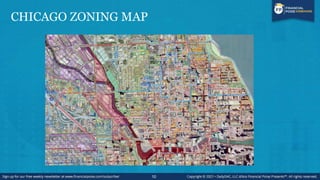
CHICAGO ZONING MAP
10
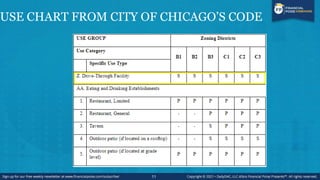
USE CHART FROM CITY OF CHICAGO’S CODE
11
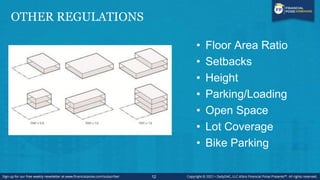
OTHER REGULATIONS
12
• Floor Area Ratio
• Setbacks
• Height
• Parking/Loading
• Open Space
• Lot Coverage
• Bike Parking
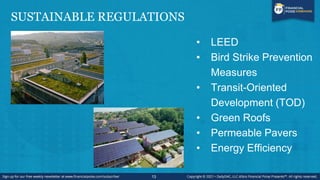
SUSTAINABLE REGULATIONS
13
• LEED
• Bird Strike Prevention
Measures
• Transit-Oriented
Development (TOD)
• Green Roofs
• Permeable Pavers
• Energy Efficiency
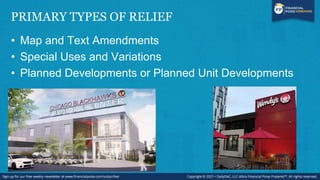
PRIMARY TYPES OF RELIEF
• Map and Text Amendments
• Special Uses and Variations
• Planned Developments or Planned Unit Developments
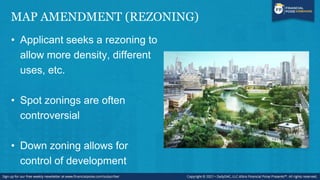
MAP AMENDMENT (REZONING)
• Applicant seeks a rezoning to
allow more density, different
uses, etc.
• Spot zonings are often
controversial
• Down zoning allows for
control of development
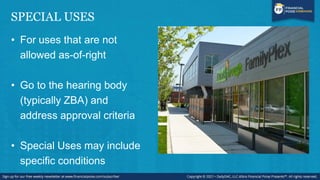
SPECIAL USES
• For uses that are not
allowed as-of-right
• Go to the hearing body
(typically ZBA) and
address approval criteria
• Special Uses may include
specific conditions
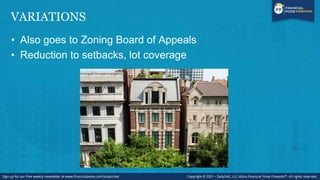
VARIATIONS
• Also goes to Zoning Board of Appeals
• Reduction to setbacks, lot coverage
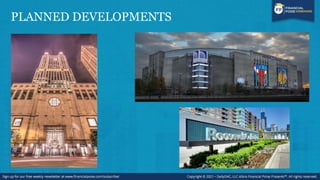
PLANNED DEVELOPMENTS
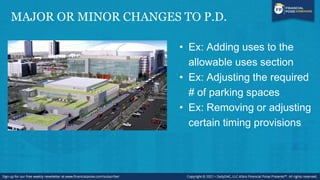
MAJOR OR MINOR CHANGES TO P.D.
• Ex: Adding uses to the
allowable uses section
• Ex: Adjusting the required
# of parking spaces
• Ex: Removing or adjusting
certain timing provisions
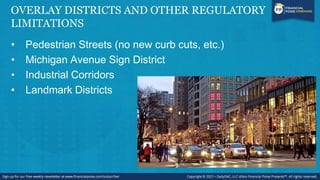
OVERLAY DISTRICTS AND OTHER REGULATORY
LIMITATIONS
• Pedestrian Streets (no new curb cuts, etc.)
• Michigan Avenue Sign District
• Industrial Corridors
• Landmark Districts
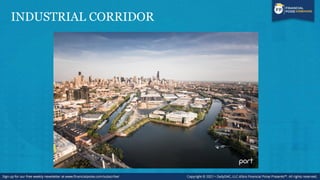
INDUSTRIAL CORRIDOR
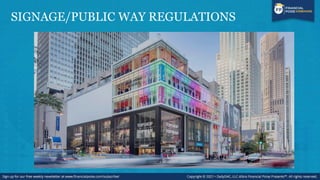
SIGNAGE/PUBLIC WAY REGULATIONS
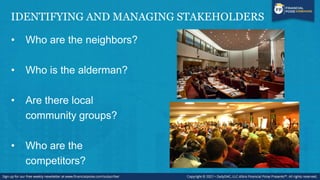
IDENTIFYING AND MANAGING STAKEHOLDERS
• Who are the neighbors?
• Who is the alderman?
• Are there local
community groups?
• Who are the
competitors?
ORGANIZATION OF MUNICIPALITY
(EX: CHICAGO)
• Department of Planning and Development
• Department of Transportation
• Department of Buildings
• Public Works/Engineering/Fire Prevention
PLANNING PROCESS
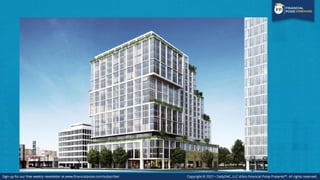
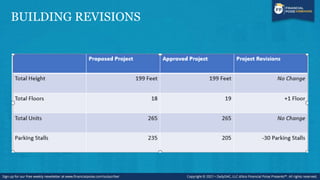
Throughout 6 Plan Commission meetings Albion Residential presented its case for an 18-
story, 265-unit apartment building with 235 parking stalls and ground floor retail.
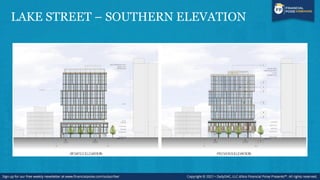
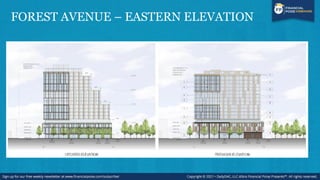
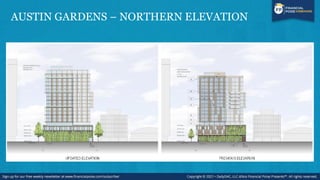
After hearing the concerns presented during Plan Commission, Albion redesigned the
northern elevation of the building to include 3 distinct setbacks that are approximately 42 feet,
69 feet, and 96 feet from the northern property line, respectively. Additionally, the planned
development application called for a building with a total height of 199 Feet, which was
inclusive of rooftop amenity and outdoor space. With the implementation of 3 new outdoor
rooftop amenity spaces, Albion found it suitable to reposition the rooftop amenity floor into
livable apartment space in order to gain back the rentable square footage that had been
reduced during the redesign process.
PLANNING PROCESS (CONT’D)
After continuous collaboration with residents, consultants, and The Village of Oak Park, The
Village Board of Oak Park voted in favor of the project 6-1 in October 2017. Ultimately the
planning and entitlement process set the path for a thoughtful discussion that addressed
many of the concerns expressed and resulted in a project that will meet the future demands of
the growing community.
The approved development will consist of a 19-story tower with 265 apartment units, 205
parking stalls and ground floor retail set to activate the northwest corner of Lake Street and
Forest Avenue in Oak Park.
BUILDING REVISIONS
LAKE STREET – SOUTHERN ELEVATION
FOREST AVENUE – EASTERN ELEVATION
AUSTIN GARDENS – NORTHERN ELEVATION
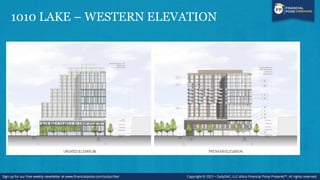
1010 LAKE – WESTERN ELEVATION
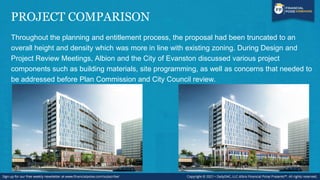
PROJECT COMPARISON
Throughout the planning and entitlement process, the proposal had been truncated to an
overall height and density which was more in line with existing zoning. During Design and
Project Review Meetings, Albion and the City of Evanston discussed various project
components such as building materials, site programming, as well as concerns that needed to
be addressed before Plan Commission and City Council review.
PLANNING PROCESS
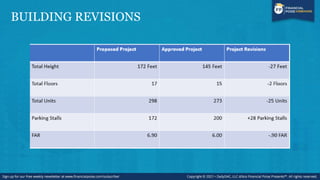
In Evanston, Albion Residential presented its case for an 17-story, 298-unit apartment
building with 172 parking stalls and ground floor retail to local residents, Evanston’s Design
and Project Review Team, The Plan Commission, and City Council.
Throughout planning and entitlement process Albion Residential collaborated with residents,
consultants, The City of Evanston, and various organizations to refine the building and study
the impact on the surrounding community.
Albion originally committed to the city’s affordable housing ordinance, which would have
required a $2.9 Million contribution to the City of Evanston’s Affordable Housing Fund. In an
effort to advance affordable housing initiatives in Evanston, Albion worked with the City of
Evanston to come up with an equivalent alternate proposal focused on providing on-site
affordable housing units in-lieu of making the contribution to the affordable housing fund.
PLANNING PROCESS (CONT’D)
The project was approved by Evanston City Council who voted in favor of the project 5-4 in
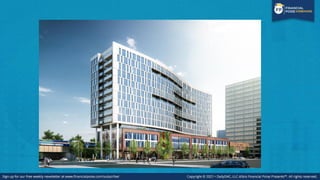
November of 2017. The Development will consist of a 15-story, 273-unit apartment building
with 200 parking stalls and ground floor retail. The development will also include 15 affordable
studio, one-bedroom, and two- bedroom apartments at 50%, 60%, and 80% of the Chicago
Area Median Income.
BUILDING REVISIONS
ZONING CODES:
EUCLIDEAN V. FORM-BASED
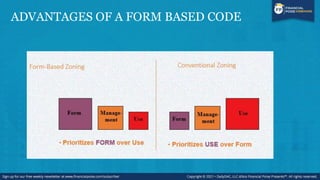
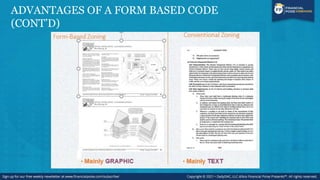
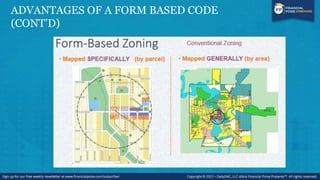
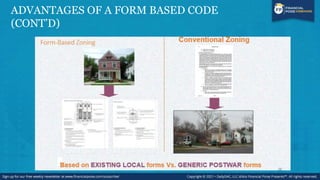
ADVANTAGES OF A FORM BASED CODE
(CONT’D)
ADVANTAGES OF A FORM BASED CODE
(CONT’D)
ADVANTAGES OF A FORM BASED CODE
(CONT’D)
TOOLS TO SET YOUR LEVEL OF DESIGN
REQUIREMENTS
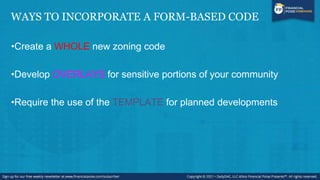
WAYS TO INCORPORATE A FORM-BASED CODE
•Create a WHOLE new zoning code
•Develop OVERLAYS for sensitive portions of your community
•Require the use of the TEMPLATE for planned developments
WORKING WITH DIVIDED COMMUNITIES
(THE POWER OF SMALL TABLES AND VISUALS)
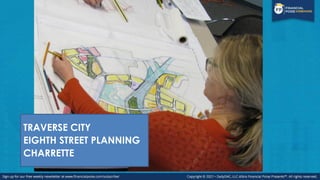
TRAVERSE CITY
EIGHTH STREET PLANNING
CHARRETTE
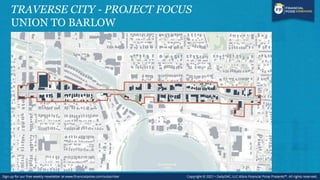
TRAVERSE CITY - PROJECT FOCUS
UNION TO BARLOW
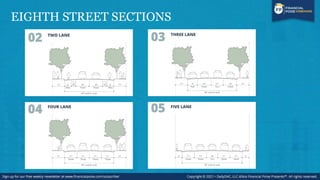
EIGHTH STREET SECTIONS
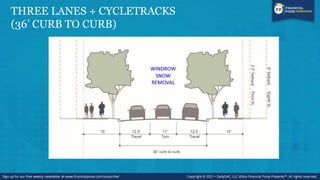
THREE LANES + CYCLETRACKS
(36’ CURB TO CURB)
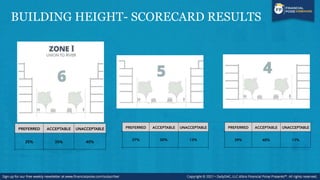
BUILDING HEIGHT- SCORECARD RESULTS
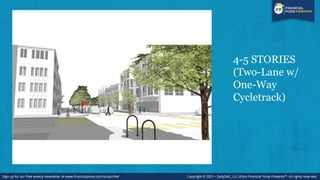
4-5 STORIES
(Two-Lane w/
One-Way
Cycletrack)
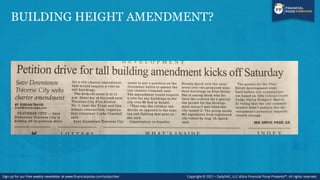
BUILDING HEIGHT AMENDMENT?
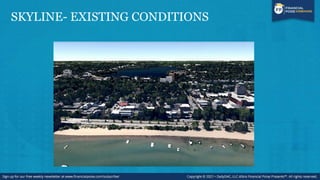
SKYLINE- EXISTING CONDITIONS
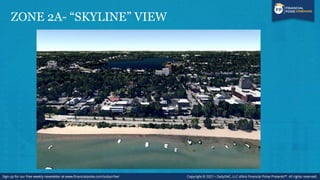
ZONE 2A- “SKYLINE” VIEW
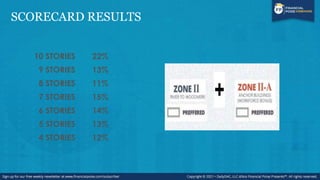
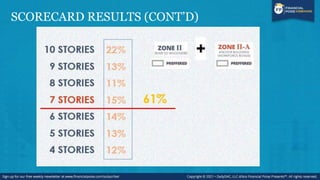
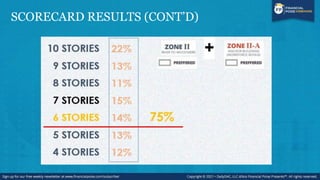
SCORECARD RESULTS
10 STORIES
9 STORIES
8 STORIES
7 STORIES
6 STORIES
5 STORIES
4 STORIES
22%
13%
11%
15%
14%
13%
12%
SCORECARD RESULTS (CONT’D)
WORKING IN HOSTILE SETTINGS
(THE POWER OF CHARRETTES AND FRAMING)
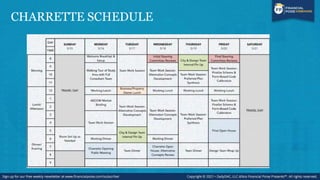
CHARRETTE SCHEDULE
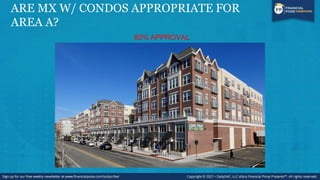
ARE MX W/ CONDOS APPROPRIATE FOR
AREA A?
80% APPROVAL
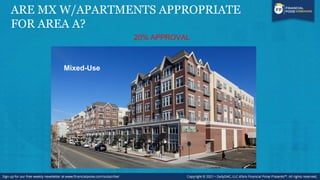
ARE MX W/APARTMENTS APPROPRIATE
FOR AREA A?
20% APPROVAL
Mixed-Use
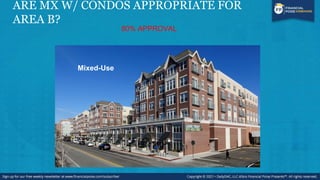
ARE MX W/ CONDOS APPROPRIATE FOR
AREA B?
Mixed-Use
80% APPROVAL
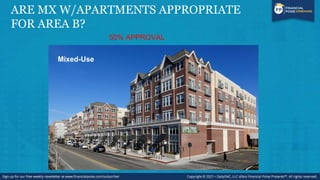
ARE MX W/APARTMENTS APPROPRIATE
FOR AREA B?
50% APPROVAL
Mixed-Use
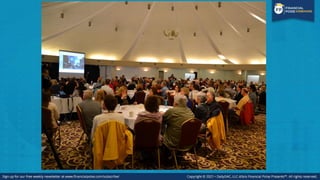
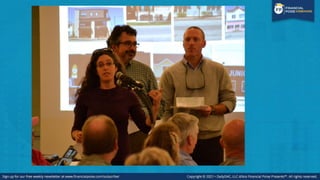
EXAMPLE OF A COMMUNITY ENGAGEMENT
STRATEGY
AUDIENCE POLL
WHAT WAS THE FIRST PLACE YOU LIVED AS
AN ADULT?
INFORMAL AUDIENCE POLL
1. STAYED WITH FAMILY MEMBERS (PARENTS INCL.)
2. CRASHED WITH FRIENDS
3. RENTED AN APARTMENT WITH ROOMMATES
4. RENTED AN APARTMENT BY YOURSELF
5. BOUGHT A CONDOMIUM
6. BOUGHT A HOUSE
7. OTHER ARRANGEMENTS
AUDIENCE POLL
WHAT WAS THE FIRST PLACE YOUR CHILDREN
WILL LIVE AS ADULTS?
AUDIENCE POLL
DO YOU HAVE FAMILY OR FRIENDS WHO HOLD
THESE JOBS?
DYER
AUDIENCE POLL
SHOULD YOUR NEIGHBORHOOD HAVE HOUSING
ATTAINABLE BY PEOPLE HOLDING THESE JOBS?
DYER
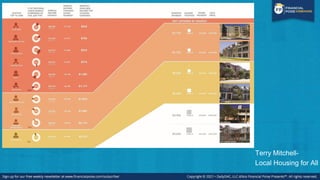
Terry Mitchell-
Local Housing for All
About the Faculty
78
About The Faculty
Chris Cahill - CCahill@sfgh.com
Mr. Cahill is partner at Sugar Felsenthal Grais & Helsinger LLP, in Chicago, Illinois. He guides
secured lenders, creditors, debtors, creditors’ committees, potential purchasers and others
through bankruptcy cases, out-of-court workouts, assignments for the benefit of creditors, and
receiverships. Mr. Cahill has substantial mega-case experience representing very large
debtors, and counsels and litigates on behalf of manufacturers and secured lenders in large
and middle-market cases. Mr. Cahill also publishes frequently and speaks regularly on
commercial insolvency issues. For example, he is an executive editor of Commercial
Bankruptcy Litigation, 2d Edition (Jonathan P. Friedland, Elizabeth Vandesteeg & Christopher
M. Cahill eds., 2020).
79
About The Faculty
Bernard I. Citron - bcitron@thompsoncoburn.com
Bernie represents developers, land owners and building owners in the areas of land use and municipal law in
the city of Chicago and its surrounding municipalities. He counsels on zoning issues, annexation, economic
redevelopment and historic preservation matters. His clients have included senior citizen housing developers,
hotels operators, retail developers, hospitals, restaurant developers and residential developers ranging from
single-family homes to high-rise multi-family projects. His emphasis has been both in the City of Chicago and
surrounding municipalities, as far afield as Waukegan and Sugar Grove. He has represented both national
companies and entrepreneurial developers.
In recent years more and more of his business has involved adoptive re-uses of both buildings and properties.
The projects have ranged from rehabbing older office buildings into residential projects to adopting shopping
centers to new uses. Many of these projects have involved various forms of economic incentives including tax
credits, tax abatements and Tax Increment Financing.
To learn more about Bernard Citron, please visit: https://www.financialpoise.com/webinar-faculty/bernard-citron/
80
About The Faculty
Michael Noonan - MNoonan@foley.com
Michael Noonan is a special counsel and real estate business lawyer with Foley & Lardner LLP. He focuses his practice
on obtaining land use and zoning entitlements and working to build consensus between property owners, government
officials, and community groups.
Michael has experience securing special uses, rezonings, text amendments, administrative relief, subdivisions, public
way and sign permits, as well as other land use approvals for a wide variety of property owners. He represents owners of
institutional, commercial, office, and residential property, as well as developers in securing land use and zoning
entitlements from state and local governments.As a problem solver, Michael works with his clients and regulating bodies
to come up with creative solutions to the legal problems facing building owners and developers.
In addition to land use and zoning, Michael also has experience handling eminent domain matters in Illinois, matters
before the Chicago Department of Administrative Hearings, and in the Municipal Department of the Circuit Court of Cook
County.
To learn more about Michael Noonan, please visit: https://www.financialpoise.com/webinar-faculty/michael-noonan/
81
About The Faculty
Jennifer M. Tammen - jennifer.tammen@ey.com
Jennifer M. Tammen is based in Chicago and is part of EY’s Global Location Investment Services-
Credits & Incentives Advisory Practice. She works with both private corporations and local governments
and economic development officials on matters related to real estate development and incentives. A
proven deal maker, Jennifer has over 20 years of success in working with developers, property owners,
municipalities, and quasi-public agencies on all aspects of tax increment financing (TIF), zoning and
entitlements, planning, deal structuring, redevelopment agreement negotiation, early-stage project
management, and creative approaches to capital and public-private project evaluation and funding. She
recently served as the municipal TIF consultant for the Bell Works redevelopment, a transformational,
150-acre project that includes the former AT&T headquarters located north of Interstate 90 in Hoffman
Estates, IL. Jennifer has prepared financial analysis and negotiation services to secure the approval of
nearly $3 billion in new real estate development projects and business retention and more than $500
million in TIF and other financial subsidies throughout the Midwest market. In addition, she has assisted
dozens of clients with economic development projects and initiatives throughout the US including new TIF
District and Business District designations, feasibility analyses, and special studies.
82
Questions or Comments?
If you have any questions about this webinar that you did not get to ask during the live
premiere, or if you are watching this webinar On Demand, please do not hesitate to email us
at info@financialpoise.com with any questions or comments you may have. Please include
the name of the webinar in your email and we will do our best to provide a timely response.
IMPORTANT NOTE: The material in this presentation is for general educational purposes
only. It has been prepared primarily for attorneys and accountants for use in the pursuit of
their continuing legal education and continuing professional education.
83
About Financial Poise
84
DailyDAC LLC, d/b/a Financial Poise™ provides
continuing education to attorneys, accountants,
business owners and executives, and investors. It’s
websites, webinars, and books provide Plain English,
entertaining, explanations about legal, financial, and
other subjects of interest to these audiences.
Visit us at www.financialpoise.com
Our free weekly newsletter, Financial Poise
Weekly, updates you on new articles published
on our website and Upcoming Webinars you
may be interested in.
To join our email list, please visit:
https://www.financialpoise.com/subscribe/

Zoning & Land Use 101

  • 2.
    2 Practical and entertainingeducation for attorneys, accountants, business owners and executives, and investors.
  • 4.
    Disclaimer The material inthis webinar is for informational purposes only. It should not be considered legal, financial or other professional advice. You should consult with an attorney or other appropriate professional to determine what may be best for your individual needs. While Financial Poise™ takes reasonable steps to ensure that information it publishes is accurate, Financial Poise™ makes no guaranty in this regard. 4
  • 5.
    Meet the Faculty MODERATOR: ChrisCahill - Sugar Felsenthal Grais & Helsinger LLP PANELISTS: Bernard Citron - Thompson Coburn Michael Noonan - Foley & Lardner LLP Jennifer Tammen - Ernst & Young LLP 5
  • 6.
    About This Webinar Zoning& Land Use-101 Navigating the complexities of local land-use and zoning laws is critical to virtually any commercial real estate transaction as well as to the long-term flexibility and continued use and operation of a property. Zoning laws may limit the types of operations that can go on at the property. Legal issues relating to land use include easements (the right of access or other limited non-ownership interest in property) by government, utilities, and other entities, and issues relating to eminent domain. The ability of an owner or potential owner of property to obtain required permits and approvals from local planning boards, zoning boards, construction officials and other government/public entities is central to the interests of sellers, buyers, lenders, neighbors, and in some cases even competitors, all of which may take a position in the applicable proceedings. This webinar covers these topics. 6
  • 7.
    About This Series Cross-Trainingfor Business Lawyers Looking to strengthen and condition your cross-disciplinary skills? Develop your flexibility by increasing your familiarity with issues affecting a vast array of businesses? This series delves into cutting edge issues in dynamic fields to help the audience understand (i) the role of local land-use and zoning laws in property use and development; (ii) the reliance on credit insurance by businesses to protect against non-payment of commercial debt, (iii) the use, types and perceived benefits of employee stock ownership plans, and (iv) the complex maze employers and employees must navigate in the quest for immigrant or non-immigrant visa status for workers. These issues may present themselves in any number of contexts, regardless of how you spend most of your working hours. Each Financial Poise Webinar is delivered in Plain English, understandable to investors, business owners, and executives without much background in these areas, yet is of primary value to attorneys, accountants, and other seasoned professionals. Each episode brings you into engaging, sometimes humorous, conversations designed to entertain as it teaches. Each episode in the series is designed to be viewed independently of the other episodes so that participants will enhance their knowledge of this area whether they attend one, some, or all episodes. 7
  • 8.
    Episodes in thisSeries #1: ESOPs-101 Premiere date: 4/8/21 #2: Immigration Law-101 Premiere date: 5/6/21 #3: Zoning & Land Use-101 Premiere date: 6/3/21 #4: Credit Insurance-101 Premiere date: 7/8/21 8
  • 9.
    Episode #4 Zoning &Land Use-101 9
  • 10.
  • 11.
    USE CHART FROMCITY OF CHICAGO’S CODE 11
  • 12.
    OTHER REGULATIONS 12 • FloorArea Ratio • Setbacks • Height • Parking/Loading • Open Space • Lot Coverage • Bike Parking
  • 13.
    SUSTAINABLE REGULATIONS 13 • LEED •Bird Strike Prevention Measures • Transit-Oriented Development (TOD) • Green Roofs • Permeable Pavers • Energy Efficiency
  • 14.
    PRIMARY TYPES OFRELIEF • Map and Text Amendments • Special Uses and Variations • Planned Developments or Planned Unit Developments
  • 15.
    MAP AMENDMENT (REZONING) •Applicant seeks a rezoning to allow more density, different uses, etc. • Spot zonings are often controversial • Down zoning allows for control of development
  • 16.
    SPECIAL USES • Foruses that are not allowed as-of-right • Go to the hearing body (typically ZBA) and address approval criteria • Special Uses may include specific conditions
  • 17.
    VARIATIONS • Also goesto Zoning Board of Appeals • Reduction to setbacks, lot coverage
  • 18.
  • 19.
    MAJOR OR MINORCHANGES TO P.D. • Ex: Adding uses to the allowable uses section • Ex: Adjusting the required # of parking spaces • Ex: Removing or adjusting certain timing provisions
  • 20.
    OVERLAY DISTRICTS ANDOTHER REGULATORY LIMITATIONS • Pedestrian Streets (no new curb cuts, etc.) • Michigan Avenue Sign District • Industrial Corridors • Landmark Districts
  • 21.
  • 22.
  • 23.
    IDENTIFYING AND MANAGINGSTAKEHOLDERS • Who are the neighbors? • Who is the alderman? • Are there local community groups? • Who are the competitors?
  • 24.
    ORGANIZATION OF MUNICIPALITY (EX:CHICAGO) • Department of Planning and Development • Department of Transportation • Department of Buildings • Public Works/Engineering/Fire Prevention
  • 26.
    PLANNING PROCESS Throughout 6Plan Commission meetings Albion Residential presented its case for an 18- story, 265-unit apartment building with 235 parking stalls and ground floor retail. After hearing the concerns presented during Plan Commission, Albion redesigned the northern elevation of the building to include 3 distinct setbacks that are approximately 42 feet, 69 feet, and 96 feet from the northern property line, respectively. Additionally, the planned development application called for a building with a total height of 199 Feet, which was inclusive of rooftop amenity and outdoor space. With the implementation of 3 new outdoor rooftop amenity spaces, Albion found it suitable to reposition the rooftop amenity floor into livable apartment space in order to gain back the rentable square footage that had been reduced during the redesign process.
  • 27.
    PLANNING PROCESS (CONT’D) Aftercontinuous collaboration with residents, consultants, and The Village of Oak Park, The Village Board of Oak Park voted in favor of the project 6-1 in October 2017. Ultimately the planning and entitlement process set the path for a thoughtful discussion that addressed many of the concerns expressed and resulted in a project that will meet the future demands of the growing community. The approved development will consist of a 19-story tower with 265 apartment units, 205 parking stalls and ground floor retail set to activate the northwest corner of Lake Street and Forest Avenue in Oak Park.
  • 28.
  • 29.
    LAKE STREET –SOUTHERN ELEVATION
  • 30.
    FOREST AVENUE –EASTERN ELEVATION
  • 31.
    AUSTIN GARDENS –NORTHERN ELEVATION
  • 32.
    1010 LAKE –WESTERN ELEVATION
  • 33.
    PROJECT COMPARISON Throughout theplanning and entitlement process, the proposal had been truncated to an overall height and density which was more in line with existing zoning. During Design and Project Review Meetings, Albion and the City of Evanston discussed various project components such as building materials, site programming, as well as concerns that needed to be addressed before Plan Commission and City Council review.
  • 34.
    PLANNING PROCESS In Evanston,Albion Residential presented its case for an 17-story, 298-unit apartment building with 172 parking stalls and ground floor retail to local residents, Evanston’s Design and Project Review Team, The Plan Commission, and City Council. Throughout planning and entitlement process Albion Residential collaborated with residents, consultants, The City of Evanston, and various organizations to refine the building and study the impact on the surrounding community. Albion originally committed to the city’s affordable housing ordinance, which would have required a $2.9 Million contribution to the City of Evanston’s Affordable Housing Fund. In an effort to advance affordable housing initiatives in Evanston, Albion worked with the City of Evanston to come up with an equivalent alternate proposal focused on providing on-site affordable housing units in-lieu of making the contribution to the affordable housing fund.
  • 35.
    PLANNING PROCESS (CONT’D) Theproject was approved by Evanston City Council who voted in favor of the project 5-4 in November of 2017. The Development will consist of a 15-story, 273-unit apartment building with 200 parking stalls and ground floor retail. The development will also include 15 affordable studio, one-bedroom, and two- bedroom apartments at 50%, 60%, and 80% of the Chicago Area Median Income.
  • 36.
  • 38.
  • 39.
    ADVANTAGES OF AFORM BASED CODE
  • 40.
    ADVANTAGES OF AFORM BASED CODE (CONT’D)
  • 41.
    ADVANTAGES OF AFORM BASED CODE (CONT’D)
  • 42.
    ADVANTAGES OF AFORM BASED CODE (CONT’D)
  • 43.
    TOOLS TO SETYOUR LEVEL OF DESIGN REQUIREMENTS
  • 44.
    WAYS TO INCORPORATEA FORM-BASED CODE •Create a WHOLE new zoning code •Develop OVERLAYS for sensitive portions of your community •Require the use of the TEMPLATE for planned developments
  • 45.
    WORKING WITH DIVIDEDCOMMUNITIES (THE POWER OF SMALL TABLES AND VISUALS)
  • 47.
    TRAVERSE CITY EIGHTH STREETPLANNING CHARRETTE
  • 48.
    TRAVERSE CITY -PROJECT FOCUS UNION TO BARLOW
  • 51.
  • 52.
    THREE LANES +CYCLETRACKS (36’ CURB TO CURB)
  • 53.
  • 54.
  • 55.
  • 56.
  • 57.
  • 58.
    SCORECARD RESULTS 10 STORIES 9STORIES 8 STORIES 7 STORIES 6 STORIES 5 STORIES 4 STORIES 22% 13% 11% 15% 14% 13% 12%
  • 59.
  • 60.
  • 61.
    WORKING IN HOSTILESETTINGS (THE POWER OF CHARRETTES AND FRAMING)
  • 63.
  • 64.
    ARE MX W/CONDOS APPROPRIATE FOR AREA A? 80% APPROVAL
  • 65.
    ARE MX W/APARTMENTSAPPROPRIATE FOR AREA A? 20% APPROVAL Mixed-Use
  • 67.
    ARE MX W/CONDOS APPROPRIATE FOR AREA B? Mixed-Use 80% APPROVAL
  • 68.
    ARE MX W/APARTMENTSAPPROPRIATE FOR AREA B? 50% APPROVAL Mixed-Use
  • 69.
    EXAMPLE OF ACOMMUNITY ENGAGEMENT STRATEGY
  • 70.
    AUDIENCE POLL WHAT WASTHE FIRST PLACE YOU LIVED AS AN ADULT?
  • 71.
    INFORMAL AUDIENCE POLL 1.STAYED WITH FAMILY MEMBERS (PARENTS INCL.) 2. CRASHED WITH FRIENDS 3. RENTED AN APARTMENT WITH ROOMMATES 4. RENTED AN APARTMENT BY YOURSELF 5. BOUGHT A CONDOMIUM 6. BOUGHT A HOUSE 7. OTHER ARRANGEMENTS
  • 72.
    AUDIENCE POLL WHAT WASTHE FIRST PLACE YOUR CHILDREN WILL LIVE AS ADULTS?
  • 73.
    AUDIENCE POLL DO YOUHAVE FAMILY OR FRIENDS WHO HOLD THESE JOBS?
  • 74.
  • 75.
    AUDIENCE POLL SHOULD YOURNEIGHBORHOOD HAVE HOUSING ATTAINABLE BY PEOPLE HOLDING THESE JOBS?
  • 76.
  • 77.
  • 78.
  • 79.
    About The Faculty ChrisCahill - CCahill@sfgh.com Mr. Cahill is partner at Sugar Felsenthal Grais & Helsinger LLP, in Chicago, Illinois. He guides secured lenders, creditors, debtors, creditors’ committees, potential purchasers and others through bankruptcy cases, out-of-court workouts, assignments for the benefit of creditors, and receiverships. Mr. Cahill has substantial mega-case experience representing very large debtors, and counsels and litigates on behalf of manufacturers and secured lenders in large and middle-market cases. Mr. Cahill also publishes frequently and speaks regularly on commercial insolvency issues. For example, he is an executive editor of Commercial Bankruptcy Litigation, 2d Edition (Jonathan P. Friedland, Elizabeth Vandesteeg & Christopher M. Cahill eds., 2020). 79
  • 80.
    About The Faculty BernardI. Citron - bcitron@thompsoncoburn.com Bernie represents developers, land owners and building owners in the areas of land use and municipal law in the city of Chicago and its surrounding municipalities. He counsels on zoning issues, annexation, economic redevelopment and historic preservation matters. His clients have included senior citizen housing developers, hotels operators, retail developers, hospitals, restaurant developers and residential developers ranging from single-family homes to high-rise multi-family projects. His emphasis has been both in the City of Chicago and surrounding municipalities, as far afield as Waukegan and Sugar Grove. He has represented both national companies and entrepreneurial developers. In recent years more and more of his business has involved adoptive re-uses of both buildings and properties. The projects have ranged from rehabbing older office buildings into residential projects to adopting shopping centers to new uses. Many of these projects have involved various forms of economic incentives including tax credits, tax abatements and Tax Increment Financing. To learn more about Bernard Citron, please visit: https://www.financialpoise.com/webinar-faculty/bernard-citron/ 80
  • 81.
    About The Faculty MichaelNoonan - MNoonan@foley.com Michael Noonan is a special counsel and real estate business lawyer with Foley & Lardner LLP. He focuses his practice on obtaining land use and zoning entitlements and working to build consensus between property owners, government officials, and community groups. Michael has experience securing special uses, rezonings, text amendments, administrative relief, subdivisions, public way and sign permits, as well as other land use approvals for a wide variety of property owners. He represents owners of institutional, commercial, office, and residential property, as well as developers in securing land use and zoning entitlements from state and local governments.As a problem solver, Michael works with his clients and regulating bodies to come up with creative solutions to the legal problems facing building owners and developers. In addition to land use and zoning, Michael also has experience handling eminent domain matters in Illinois, matters before the Chicago Department of Administrative Hearings, and in the Municipal Department of the Circuit Court of Cook County. To learn more about Michael Noonan, please visit: https://www.financialpoise.com/webinar-faculty/michael-noonan/ 81
  • 82.
    About The Faculty JenniferM. Tammen - jennifer.tammen@ey.com Jennifer M. Tammen is based in Chicago and is part of EY’s Global Location Investment Services- Credits & Incentives Advisory Practice. She works with both private corporations and local governments and economic development officials on matters related to real estate development and incentives. A proven deal maker, Jennifer has over 20 years of success in working with developers, property owners, municipalities, and quasi-public agencies on all aspects of tax increment financing (TIF), zoning and entitlements, planning, deal structuring, redevelopment agreement negotiation, early-stage project management, and creative approaches to capital and public-private project evaluation and funding. She recently served as the municipal TIF consultant for the Bell Works redevelopment, a transformational, 150-acre project that includes the former AT&T headquarters located north of Interstate 90 in Hoffman Estates, IL. Jennifer has prepared financial analysis and negotiation services to secure the approval of nearly $3 billion in new real estate development projects and business retention and more than $500 million in TIF and other financial subsidies throughout the Midwest market. In addition, she has assisted dozens of clients with economic development projects and initiatives throughout the US including new TIF District and Business District designations, feasibility analyses, and special studies. 82
  • 83.
    Questions or Comments? Ifyou have any questions about this webinar that you did not get to ask during the live premiere, or if you are watching this webinar On Demand, please do not hesitate to email us at info@financialpoise.com with any questions or comments you may have. Please include the name of the webinar in your email and we will do our best to provide a timely response. IMPORTANT NOTE: The material in this presentation is for general educational purposes only. It has been prepared primarily for attorneys and accountants for use in the pursuit of their continuing legal education and continuing professional education. 83
  • 84.
    About Financial Poise 84 DailyDACLLC, d/b/a Financial Poise™ provides continuing education to attorneys, accountants, business owners and executives, and investors. It’s websites, webinars, and books provide Plain English, entertaining, explanations about legal, financial, and other subjects of interest to these audiences. Visit us at www.financialpoise.com Our free weekly newsletter, Financial Poise Weekly, updates you on new articles published on our website and Upcoming Webinars you may be interested in. To join our email list, please visit: https://www.financialpoise.com/subscribe/