Activity Sheet:
                                                 Your Relationship With Money

    NAME: Shuntavis Dixson

    Your Relationship with Money

    Getting a handle on money anxiety starts with an honest examination of how you relate to it.

    BUILD BASIC SKILLS. Analyze yourself as a money manager. Look back to Key 11.1 on page 297
    for a description of what influences how people handle money. Make notes about your personal
    specifics in the following areas.

    I most value spending money on clothes and food.


    As a money manager, I would describe myself as somewhat good at it. I tend to lose focus on
    saving it sometimes.


    My culture tends to view money as a way of living. It is a necessity of everyday life.


    In handling money, my family and friends tend to do a good job at saving it and not spending it
    like it is nothing.


    TAKE IT TO THE NEXT LEVEL. Generate ideas about what you want to do with your money. If you had
    enough money for your expenses and then some, what would you do with the extra? Would you save it,
    spend it, or do a little of both? Imagine what you would do if you had an extra $10,000 to spend this
    year. Describe your plan here:

    If I had an extra 10,000 dollars, I would save a majority of it and the little spending that I will
    do will go towards important things. I would try to spend money on my needs more than my
    wants.


    MOVE TOWARD MASTERY. Look for practical ways to move toward the scenario you
    imagined. Realistically, how can you make that $10,000 a reality? You may need to change how
    you operate as a money manager. You may need to make some sacrifices in the short term.
    Come up with two specific plans here about changes and sacrifices that will move you toward
    your goal.

    1.    I would spend more on needs than my wants
    2.    Do my best to stay away from stores and other locations that have different things I like to
          spend money on.


Part II
Answer the Following Questions:
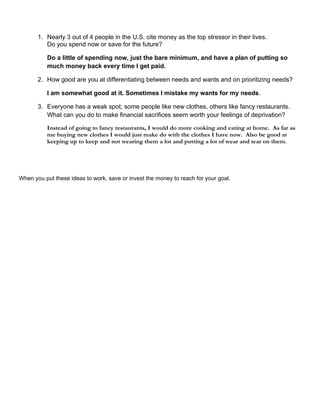
1. Nearly 3 out of 4 people in the U.S. cite money as the top stressor in their lives.
          Do you spend now or save for the future?

          Do a little of spending now, just the bare minimum, and have a plan of putting so
          much money back every time I get paid.

       2. How good are you at differentiating between needs and wants and on prioritizing needs?

          I am somewhat good at it. Sometimes I mistake my wants for my needs.

       3. Everyone has a weak spot; some people like new clothes, others like fancy restaurants.
          What can you do to make financial sacrifices seem worth your feelings of deprivation?

          Instead of going to fancy restaurants, I would do more cooking and eating at home. As far as
          me buying new clothes I would just make do with the clothes I have now. Also be good at
          keeping up to keep and not wearing them a lot and putting a lot of wear and tear on them.


When you put these ideas to work, save or invest the money to reach for your goal.
CHAPTER 11: Managing Money

Your relationship with money

  • 1.
    Activity Sheet: Your Relationship With Money NAME: Shuntavis Dixson Your Relationship with Money Getting a handle on money anxiety starts with an honest examination of how you relate to it. BUILD BASIC SKILLS. Analyze yourself as a money manager. Look back to Key 11.1 on page 297 for a description of what influences how people handle money. Make notes about your personal specifics in the following areas. I most value spending money on clothes and food. As a money manager, I would describe myself as somewhat good at it. I tend to lose focus on saving it sometimes. My culture tends to view money as a way of living. It is a necessity of everyday life. In handling money, my family and friends tend to do a good job at saving it and not spending it like it is nothing. TAKE IT TO THE NEXT LEVEL. Generate ideas about what you want to do with your money. If you had enough money for your expenses and then some, what would you do with the extra? Would you save it, spend it, or do a little of both? Imagine what you would do if you had an extra $10,000 to spend this year. Describe your plan here: If I had an extra 10,000 dollars, I would save a majority of it and the little spending that I will do will go towards important things. I would try to spend money on my needs more than my wants. MOVE TOWARD MASTERY. Look for practical ways to move toward the scenario you imagined. Realistically, how can you make that $10,000 a reality? You may need to change how you operate as a money manager. You may need to make some sacrifices in the short term. Come up with two specific plans here about changes and sacrifices that will move you toward your goal. 1. I would spend more on needs than my wants 2. Do my best to stay away from stores and other locations that have different things I like to spend money on. Part II Answer the Following Questions:
  • 2.
    1. Nearly 3out of 4 people in the U.S. cite money as the top stressor in their lives. Do you spend now or save for the future? Do a little of spending now, just the bare minimum, and have a plan of putting so much money back every time I get paid. 2. How good are you at differentiating between needs and wants and on prioritizing needs? I am somewhat good at it. Sometimes I mistake my wants for my needs. 3. Everyone has a weak spot; some people like new clothes, others like fancy restaurants. What can you do to make financial sacrifices seem worth your feelings of deprivation? Instead of going to fancy restaurants, I would do more cooking and eating at home. As far as me buying new clothes I would just make do with the clothes I have now. Also be good at keeping up to keep and not wearing them a lot and putting a lot of wear and tear on them. When you put these ideas to work, save or invest the money to reach for your goal.
  • 3.