
You Have the Money - Now
What?
Finance & Accounting for Startups Post Investment
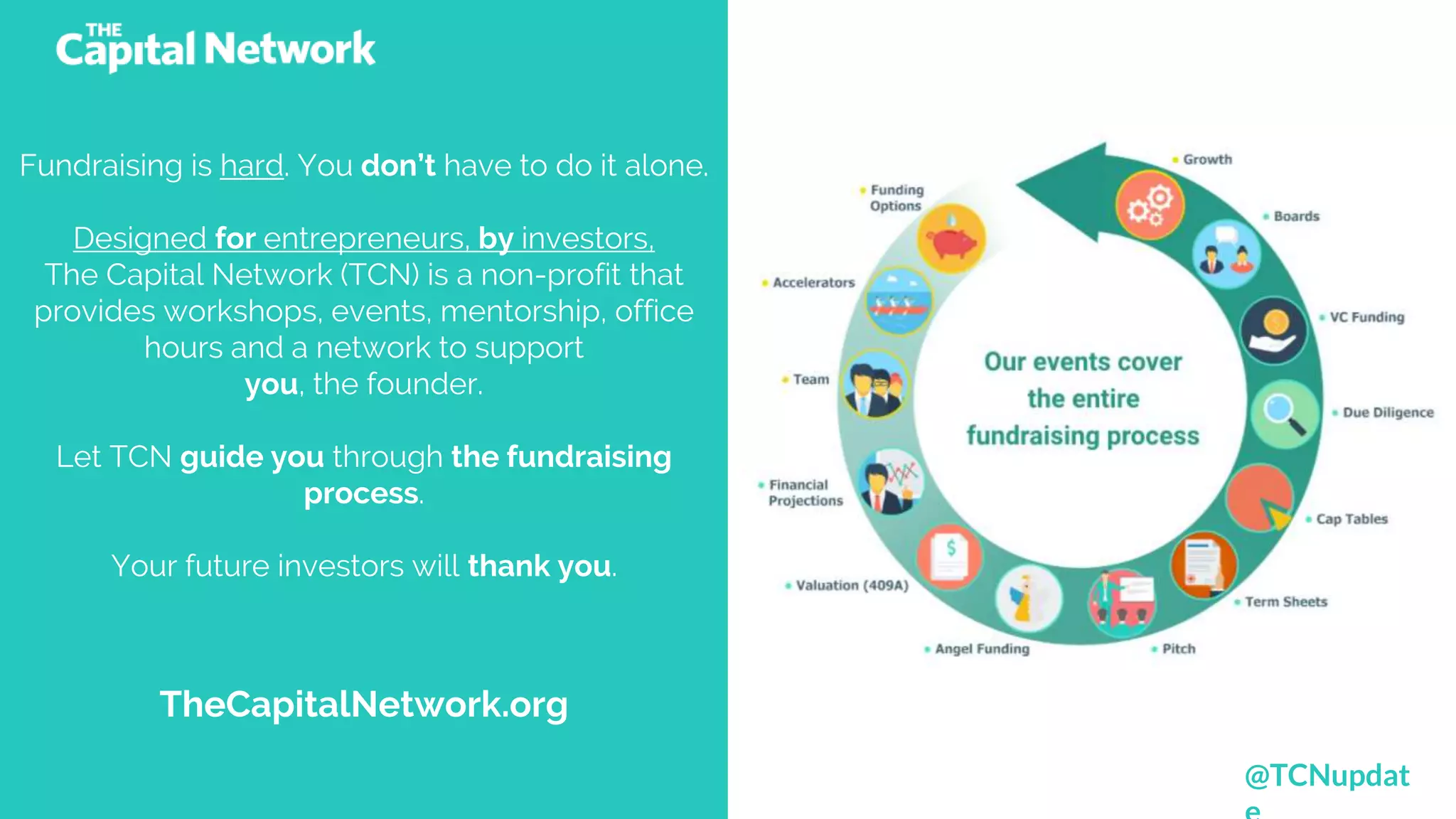
Fundraising is hard. You don’t have to do it alone.
Designed for entrepreneurs, by investors,
The Capital Network (TCN) is a non-profit that
provides workshops, events, mentorship, office
hours and a network to support
you, the founder.
Let TCN guide you through the fundraising
process.
Your future investors will thank you.
TheCapitalNetwork.org
@TCNupdat
Your Guides
Jason Pulsifer
Global Financial Controller,
MassChallenge
18 years experience in startup
finance/accounting
@jasonpulsifer13
jason@masschallenge.org
Cecilia Frerotte
Principal, Wolf & Company,
P.C.
14 years experience in
accounting/auditing
@bostoncpafirm
cfrerotte@wolfandco.com
Agenda
1. To help you understand your new
responsibilities
1. To outline some
finance/accounting best practices
1. To help you communicate with
your investors
Objective
Introductions
Processes, Systems and People Exercise
Investor Questions
Budget Overview
Q&A
You’ve raised your Seed
• Putting your pitch into action
• New responsibilities
• Board interactions
Systems
People
Process
Uses of Cash How does it happen? Who is responsible System/Technology
Employees/Rent/Equipment Payroll/Check/Credit Card You/Partner/Employee/Contractor ADP/Expensify/Online Bill Pay
Outgoing Cash
Sources of Cash How does it happen? Who is responsible System/Technology
SaaS company sells software
subscriptions
Customers order directly from
website using credit card
You/Partner/Employee/Contractor Paypal/Stripe/Etc
Incoming Cash
Process
Best Practice: Automate process workflow, Document Internal Controls
Order to
Cash
Accounts
Payable
Payroll
Employee
Expenses
Reporting
Questions Every Investor Wants to
Know:
1. What are you doing with the money?
2. When are you going to run out of money?
3. How is the business performing?
1. What are you doing with the money?
Financial Reporting
• Income Statement, Balance Sheet, Statement of Cash
flow
Standard Financial
Reporting
• Period Income Statement compared to budget with
variancesComparison to Budget
Financial Results - Income Statement
Financial Results - Cash Flow
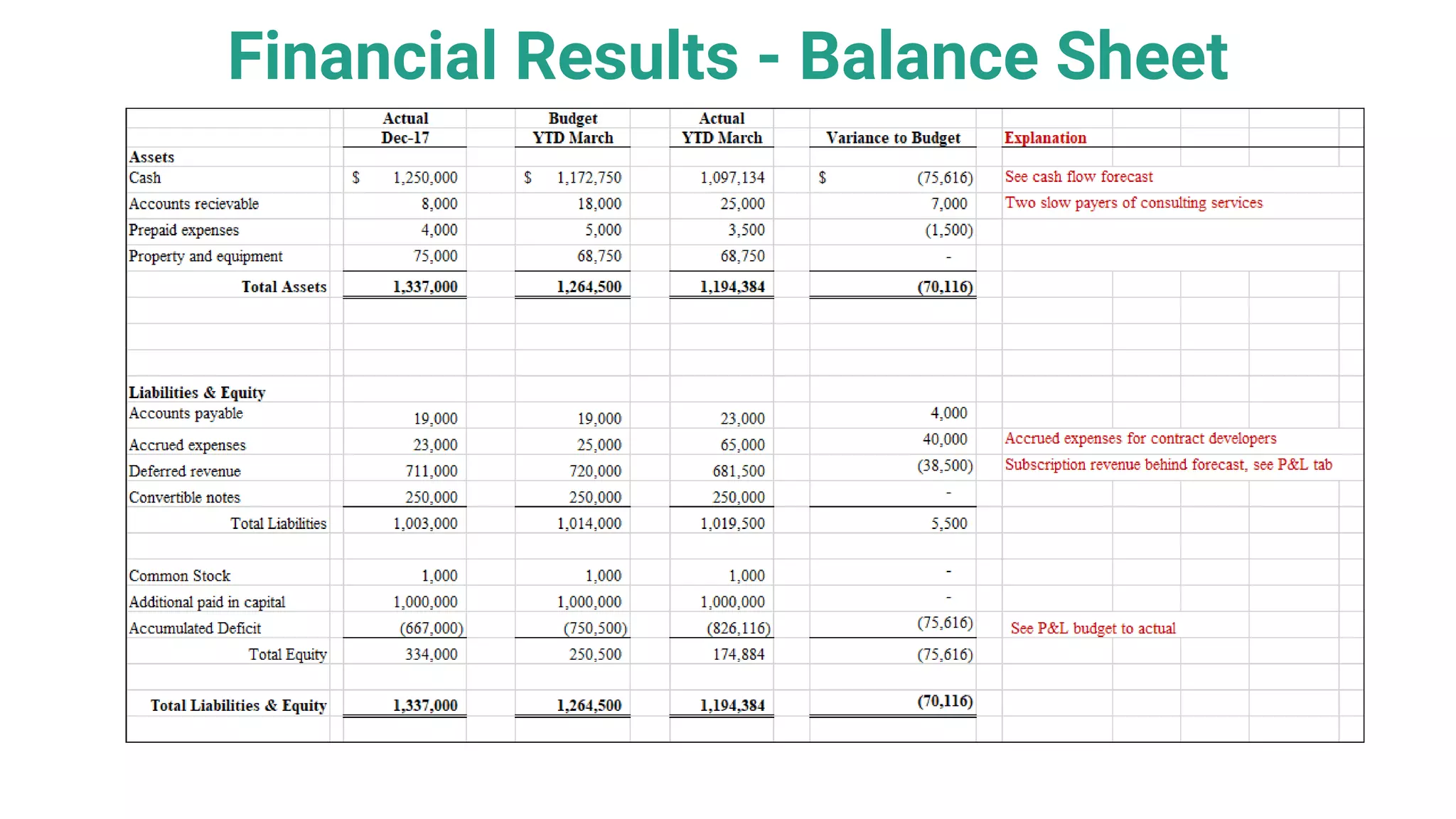
Financial Results - Balance Sheet
2. When are you going to run out of money?
Cash Forecast
Impact of actual results on future consideration
Update Burn Rate Monthly
Project “fume date”
Better to raise money when you don’t need it
Cash Forecast
3. How is the business performing?
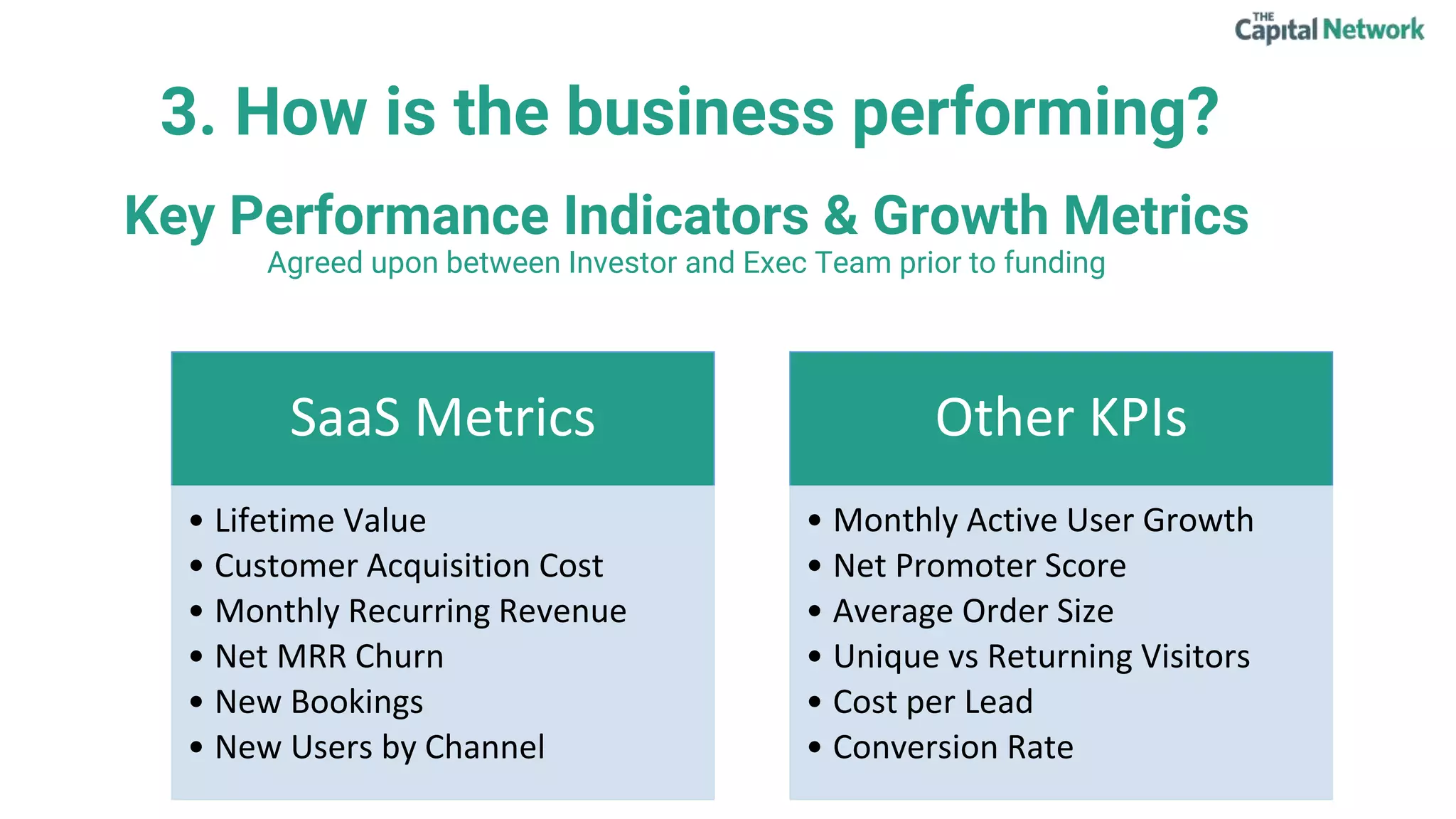
Key Performance Indicators & Growth Metrics
Agreed upon between Investor and Exec Team prior to funding
SaaS Metrics
• Lifetime Value
• Customer Acquisition Cost
• Monthly Recurring Revenue
• Net MRR Churn
• New Bookings
• New Users by Channel
Other KPIs
• Monthly Active User Growth
• Net Promoter Score
• Average Order Size
• Unique vs Returning Visitors
• Cost per Lead
• Conversion Rate
Taxes
Compliance
Choice of
Entity
• C Corp vs
Pass-thru
• Fit for future
plans?
Federal Filing
Requirements
• Don’t buy
into the
myth!
State Tax
Issues
• Nexus
• Implications?
Operating
Losses
• What are
they?
Contractors
• Contractor vs
Employee
• Form 1099
Audits
Compliance
Investor
Requirement
• Audit history validates
results
• Required in an exit,
additional financing
round
• Facilitates due diligence
Internal
Controls
• Segregation of duties
• Custody
• Authorization
• Recordkeeping
• Document Retention
Common
Issues
• GAAP ≠ logic
• Revenue recognition
• Equity & debt
transactions
• Non-cash transactions
RESOURCES
Important Terms & Definitions
Income Statement/Profit & Loss/P&L: Revenue – Expenses =
Net Profit/(Loss)
Balance Sheet: Assets = Liabilities + Equity
Statement of Cash Flow: Sources/Uses of Cash – Operating,
Financing, Investing
GAAP: Generally Accepted Accounting Principles, rules &
standards for financial reporting
Audit: Independent verification of a company’s financial records
Internal Controls: Set of policies, procedures, activities designed
to maintain integrity & reduce risk
Compliance: Ability to acct in accordance with GAAP, Federal,
State, Etc Regulations
Fiduciary: Obligation to act in the best interest of another
Finance: management of money; plan-forecast-budget (what’s
going to happen)
Accounting: process of summarizing & reporting financial
transactions (what’s happened)
Key Performance Indicators (KPI): Financial/non-financial
metrics used to measure progress
Garbage In – Garbage Out: Sloppy accounting means sloppy
results
Due Diligence: Analysis & confirmation of facts, data, etc. prior
to investment or sale
Budget/Forecast/Projection: Forward looking financial plans –
almost always excel
Bookkeeping: process of recording transactions in accounting
(what’s happening now)
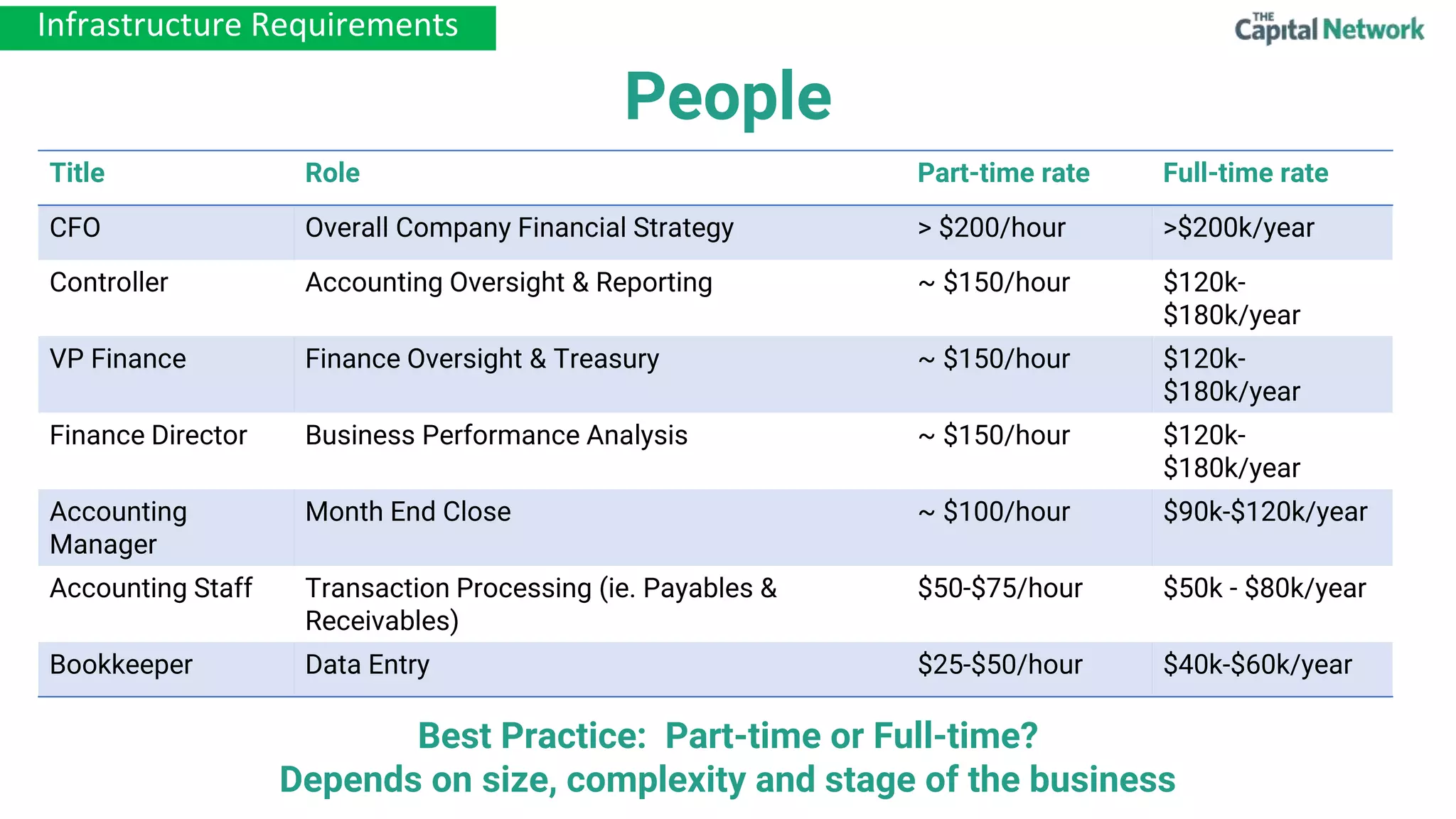
People
Infrastructure Requirements
Best Practice: Part-time or Full-time?
Depends on size, complexity and stage of the business
Title Role Part-time rate Full-time rate
CFO Overall Company Financial Strategy > $200/hour >$200k/year
Controller Accounting Oversight & Reporting ~ $150/hour $120k-
$180k/year
VP Finance Finance Oversight & Treasury ~ $150/hour $120k-
$180k/year
Finance Director Business Performance Analysis ~ $150/hour $120k-
$180k/year
Accounting
Manager
Month End Close ~ $100/hour $90k-$120k/year
Accounting Staff Transaction Processing (ie. Payables &
Receivables)
$50-$75/hour $50k - $80k/year
Bookkeeper Data Entry $25-$50/hour $40k-$60k/year
Systems
Infrastructure Requirements
Best Practice: Integrate systems to automate process
General
Ledger
AP/AR Payroll CRM Cap Table Payment Employee
Expenses
Reporting/
Dashboard
s
QuickBook
s
Bill.com ADP Salesforce eShares Stripe Concur Domo
Xero Freshbooks Connect
Pay
Hubspot Capshare Square Expensify Grow
Netsuite Mineral
Tree
Gusto Zoho Shoobx Paypal Nexonia Visible.vc
Intacct Paysimple Paychex Pipedrive Captable
.io
Braintree Tallie Tableau
Botkeeper

You have the Money - Now What?

  • 1.
    You Have theMoney - Now What? Finance & Accounting for Startups Post Investment
  • 2.
    Fundraising is hard.You don’t have to do it alone. Designed for entrepreneurs, by investors, The Capital Network (TCN) is a non-profit that provides workshops, events, mentorship, office hours and a network to support you, the founder. Let TCN guide you through the fundraising process. Your future investors will thank you. TheCapitalNetwork.org @TCNupdat
  • 3.
    Your Guides Jason Pulsifer GlobalFinancial Controller, MassChallenge 18 years experience in startup finance/accounting @jasonpulsifer13 jason@masschallenge.org Cecilia Frerotte Principal, Wolf & Company, P.C. 14 years experience in accounting/auditing @bostoncpafirm cfrerotte@wolfandco.com
  • 4.
    Agenda 1. To helpyou understand your new responsibilities 1. To outline some finance/accounting best practices 1. To help you communicate with your investors Objective Introductions Processes, Systems and People Exercise Investor Questions Budget Overview Q&A
  • 5.
    You’ve raised yourSeed • Putting your pitch into action • New responsibilities • Board interactions Systems People Process
  • 6.
    Uses of CashHow does it happen? Who is responsible System/Technology Employees/Rent/Equipment Payroll/Check/Credit Card You/Partner/Employee/Contractor ADP/Expensify/Online Bill Pay Outgoing Cash
  • 7.
    Sources of CashHow does it happen? Who is responsible System/Technology SaaS company sells software subscriptions Customers order directly from website using credit card You/Partner/Employee/Contractor Paypal/Stripe/Etc Incoming Cash
  • 8.
    Process Best Practice: Automateprocess workflow, Document Internal Controls Order to Cash Accounts Payable Payroll Employee Expenses Reporting
  • 9.
    Questions Every InvestorWants to Know: 1. What are you doing with the money? 2. When are you going to run out of money? 3. How is the business performing?
  • 10.
    1. What areyou doing with the money? Financial Reporting • Income Statement, Balance Sheet, Statement of Cash flow Standard Financial Reporting • Period Income Statement compared to budget with variancesComparison to Budget
  • 11.
    Financial Results -Income Statement
  • 12.
  • 13.
    Financial Results -Balance Sheet
  • 14.
    2. When areyou going to run out of money? Cash Forecast Impact of actual results on future consideration Update Burn Rate Monthly Project “fume date” Better to raise money when you don’t need it
  • 15.
  • 16.
    3. How isthe business performing? Key Performance Indicators & Growth Metrics Agreed upon between Investor and Exec Team prior to funding SaaS Metrics • Lifetime Value • Customer Acquisition Cost • Monthly Recurring Revenue • Net MRR Churn • New Bookings • New Users by Channel Other KPIs • Monthly Active User Growth • Net Promoter Score • Average Order Size • Unique vs Returning Visitors • Cost per Lead • Conversion Rate
  • 17.
    Taxes Compliance Choice of Entity • CCorp vs Pass-thru • Fit for future plans? Federal Filing Requirements • Don’t buy into the myth! State Tax Issues • Nexus • Implications? Operating Losses • What are they? Contractors • Contractor vs Employee • Form 1099
  • 18.
    Audits Compliance Investor Requirement • Audit historyvalidates results • Required in an exit, additional financing round • Facilitates due diligence Internal Controls • Segregation of duties • Custody • Authorization • Recordkeeping • Document Retention Common Issues • GAAP ≠ logic • Revenue recognition • Equity & debt transactions • Non-cash transactions
  • 19.
  • 20.
    Important Terms &Definitions Income Statement/Profit & Loss/P&L: Revenue – Expenses = Net Profit/(Loss) Balance Sheet: Assets = Liabilities + Equity Statement of Cash Flow: Sources/Uses of Cash – Operating, Financing, Investing GAAP: Generally Accepted Accounting Principles, rules & standards for financial reporting Audit: Independent verification of a company’s financial records Internal Controls: Set of policies, procedures, activities designed to maintain integrity & reduce risk Compliance: Ability to acct in accordance with GAAP, Federal, State, Etc Regulations Fiduciary: Obligation to act in the best interest of another Finance: management of money; plan-forecast-budget (what’s going to happen) Accounting: process of summarizing & reporting financial transactions (what’s happened) Key Performance Indicators (KPI): Financial/non-financial metrics used to measure progress Garbage In – Garbage Out: Sloppy accounting means sloppy results Due Diligence: Analysis & confirmation of facts, data, etc. prior to investment or sale Budget/Forecast/Projection: Forward looking financial plans – almost always excel Bookkeeping: process of recording transactions in accounting (what’s happening now)
  • 21.
    People Infrastructure Requirements Best Practice:Part-time or Full-time? Depends on size, complexity and stage of the business Title Role Part-time rate Full-time rate CFO Overall Company Financial Strategy > $200/hour >$200k/year Controller Accounting Oversight & Reporting ~ $150/hour $120k- $180k/year VP Finance Finance Oversight & Treasury ~ $150/hour $120k- $180k/year Finance Director Business Performance Analysis ~ $150/hour $120k- $180k/year Accounting Manager Month End Close ~ $100/hour $90k-$120k/year Accounting Staff Transaction Processing (ie. Payables & Receivables) $50-$75/hour $50k - $80k/year Bookkeeper Data Entry $25-$50/hour $40k-$60k/year
  • 22.
    Systems Infrastructure Requirements Best Practice:Integrate systems to automate process General Ledger AP/AR Payroll CRM Cap Table Payment Employee Expenses Reporting/ Dashboard s QuickBook s Bill.com ADP Salesforce eShares Stripe Concur Domo Xero Freshbooks Connect Pay Hubspot Capshare Square Expensify Grow Netsuite Mineral Tree Gusto Zoho Shoobx Paypal Nexonia Visible.vc Intacct Paysimple Paychex Pipedrive Captable .io Braintree Tallie Tableau Botkeeper