“You Had Me At Hello”
Connecting With Customers in a Tech Savvy World


                 Presented by: Liz Provo
                Mass Marketing Resources
            www.massmarketingresources.com
Liz Provo
 Mass Marketing
 Resources
• Provider of marketing services
  for small businesses
• Extensive background in sales,
  marketing and customer service
• Small business owner for 11
  years
• Early adopter of blogging, email
  marketing & social media
• Member of HBRAWM since 2001
Communication in Business
 Creating your personal brand

 Recognizing, remembering
  and rewarding existing
  customers

 Building new relationships
  based on trust

 Choosing the right
  communication tools for your
  demographic

 Social media – the ultimate
  referral tool
You Are Your Brand
 What makes you YOU?

 What makes you different?

 What are your personal strengths?

 What are your biggest weaknesses?

 What are you most proud of?

 Who do you serve?

 How have you added value?

 How do others perceive you?

 Who is your ideal client?
Branding Your Business
 Also known as “good will”
  expectations
 You do not OWN your brand
 You cannot CONTROL your
  brand
 You CAN make sure all actions
  align with your brand
 Your employees represent
  your brand too!

                                  Source: Owner Builder Custom Homes
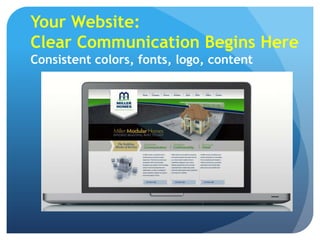
Your Website:
Clear Communication Begins Here
Consistent colors, fonts, logo, content
Communication Materials
Stationary, cards, envelopes, postcards
Collateral Materials:
Brochures, Sell sheets, folders
Vehicles:
Wraps & Lettering
Signage:
Business location, on-site
Phone, Fax Email
 Voice mail message
   Professional

 Fax Cover
   Logo, links

 Email signature
   Logo, links
Only 2 Places To Look For
               More Business

1. Existing customers
  1. Already know you
  2. Already trust you
  3. Already bought from you
2. New customers
  1. Cost 5 times more to acquire vs. retaining existing customers
  2. May not know you
  3. May not trust you


    Truth is….you need both!
“Every sale has five
basic obstacles:
no need, no money,
no hurry, no desire,
no trust.”
~Zig Ziglar
How Do You Attract Customers?
 Website (HUB): Calls to action, FREE information, newsletter
  signup, social media links, lead capture, customer expectations

 Directory Placements & Review Websites: Google Places, Referral
  websites (ServiceMagic), Angies List, Manta, Yelp

 Social media

 Email Marketing

 Direct mail

 Paid advertising: Print, radio, TV, Internet      We want your
                                                     business!
 Customer referrals

 Volunteerism, PR, networking
A Look At Existing Customers
 When was the last time you
  communicated with your clients?
 What did you communicate?
 How did you communicate?
     Snail mail
     Email
     Newsletter (print or electronic)
     Phone
     In person

 How often do you reach out to your
  customers?
Charting Your Demographics
 Databases: Customer records
  & Reports: Quickbooks,
  spreadsheets (Excel), CRM
  (Customer Relations
  Management) software, sales
  data/invoices
 Website analytics: Google
  Analytics
 Social media metrics:
  Facebook Insights, YouTube
  Analytics, LinkedIn Follower &
  Page Insights
Your Communication Strategy –
Hit or miss, or well structured?
 Use data to develop
  comprehensive strategy

 Focus on relationship
  marketing

 Be pro-active – reach out –
  7, 10 or more “touches”

 Use your marketing
  calendar and editorial
  calendar wisely
Crafting & Communicating Your
Message
                  Email
                 Marketing


      Personal                Email
      Contact                (Trad.)


                 Website

       Phone                  Print


                  Social
                  Media
Social Media:
   Facebook, Twitter, LinkedIn, YouTube,
   Pinterest, Blogs, Google+, etc.

 People trust their SM
  friends to refer quality
  brands
 SM is KEY to building
  relationships & trust
  today
 Should be linked from
  website and each
  platform
 Take SM “offline” for
  personal contact
Print, Phone, Personal
    Contact
 Print media – think
  postcards, personal
  note cards, good
  presentation materials

 Personal phone calls
  (not a sales calls) are
  appreciated after a sale

 VALUE a client by
  sending kudos, meeting
  for coffee,
  acknowledging them
Good Communication Takes
  Time, Money, Energy & Effort…

Remember, on average,
it takes 7 touches for a
sale to occur.
• Some buy right away
• Others research and try
• Some show interest but
    don’t trust you yet
                            How Do You Stay In Touch???
Email Marketing – The Glue
 People who WANT to receive
  your message

 Permission-based

 Ties well with social media
  and your website

 Share content seamlessly

 Instant communication

 Promote, educate, enlighten

 Low cost- high ROI
Provide Value To Your Audience
Determine Appropriate Format
Newsletters:
• Frequency: Regular i.e. monthly / weekly
• Educational content (typically non-promotional)
• Use bullets, summarize information, be concise
• Click-through to website for more info.
Promotions / Invitations / Surveys:
• Frequency: Depends on your business and sales cycle
• Focus on promotion / limited content
• Use content to invite click-through or other action
Announcements:
• Frequency: Event-driven
• Press releases, holiday greetings, thank you cards…
• Use content to build deeper relationships
Frequency & Delivery Time
How often to send
• Create a master schedule
• Include frequency in online sign-
  up “Monthly Newsletter”
• Keep content concise
When to send
• Day of week (Tuesday &
  Wednesday)
• Time of day (10am to 3pm)
• Send at different times and
  compare results
Maximum impact with
minimum intrusion
Getting Email Opened
The “Subject” Line
 Keep it short and simple

 30-40 characters including spaces, (5-
  8 words)

 Incorporate the immediate benefit of
  opening the email

 Capitalize and punctuate carefully

 Avoid copying the techniques inherent
  in spam emails (excessive punctuation,
  symbols, guarantee, free, etc.)
Track Results & Improve Lists
 Monitor open rates, click through
  rates

 Monitor bounce rates, spam alerts

 Remove non-existent addresses

 Check spellings of email addresses
  for accuracy

 Make phone calls to assure
  correctness
In Closing
 Create your personal brand

 Recognize, remember and
  reward existing customers

 Build new relationships based
  on trust

 Choose the right
  communication tools for your
  demographic

 Combine social media w/
  email marketing for best
  results
A Special Offer . . . . .


    Return your completed form tonite to get started!


                 THANK YOU!

You Had Me At Hello - Connecting With Customers in a Tech Savvy World

  • 1.
    “You Had MeAt Hello” Connecting With Customers in a Tech Savvy World Presented by: Liz Provo Mass Marketing Resources www.massmarketingresources.com
  • 2.
    Liz Provo MassMarketing Resources • Provider of marketing services for small businesses • Extensive background in sales, marketing and customer service • Small business owner for 11 years • Early adopter of blogging, email marketing & social media • Member of HBRAWM since 2001
  • 3.
    Communication in Business Creating your personal brand  Recognizing, remembering and rewarding existing customers  Building new relationships based on trust  Choosing the right communication tools for your demographic  Social media – the ultimate referral tool
  • 4.
    You Are YourBrand  What makes you YOU?  What makes you different?  What are your personal strengths?  What are your biggest weaknesses?  What are you most proud of?  Who do you serve?  How have you added value?  How do others perceive you?  Who is your ideal client?
  • 5.
    Branding Your Business Also known as “good will” expectations  You do not OWN your brand  You cannot CONTROL your brand  You CAN make sure all actions align with your brand  Your employees represent your brand too! Source: Owner Builder Custom Homes
  • 6.
    Your Website: Clear CommunicationBegins Here Consistent colors, fonts, logo, content
  • 7.
  • 8.
  • 9.
  • 10.
  • 11.
    Phone, Fax Email Voice mail message  Professional  Fax Cover  Logo, links  Email signature  Logo, links
  • 12.
    Only 2 PlacesTo Look For More Business 1. Existing customers 1. Already know you 2. Already trust you 3. Already bought from you 2. New customers 1. Cost 5 times more to acquire vs. retaining existing customers 2. May not know you 3. May not trust you Truth is….you need both!
  • 13.
    “Every sale hasfive basic obstacles: no need, no money, no hurry, no desire, no trust.” ~Zig Ziglar
  • 14.
    How Do YouAttract Customers?  Website (HUB): Calls to action, FREE information, newsletter signup, social media links, lead capture, customer expectations  Directory Placements & Review Websites: Google Places, Referral websites (ServiceMagic), Angies List, Manta, Yelp  Social media  Email Marketing  Direct mail  Paid advertising: Print, radio, TV, Internet We want your business!  Customer referrals  Volunteerism, PR, networking
  • 15.
    A Look AtExisting Customers  When was the last time you communicated with your clients?  What did you communicate?  How did you communicate?  Snail mail  Email  Newsletter (print or electronic)  Phone  In person  How often do you reach out to your customers?
  • 16.
    Charting Your Demographics Databases: Customer records & Reports: Quickbooks, spreadsheets (Excel), CRM (Customer Relations Management) software, sales data/invoices  Website analytics: Google Analytics  Social media metrics: Facebook Insights, YouTube Analytics, LinkedIn Follower & Page Insights
  • 17.
    Your Communication Strategy– Hit or miss, or well structured?  Use data to develop comprehensive strategy  Focus on relationship marketing  Be pro-active – reach out – 7, 10 or more “touches”  Use your marketing calendar and editorial calendar wisely
  • 18.
    Crafting & CommunicatingYour Message Email Marketing Personal Email Contact (Trad.) Website Phone Print Social Media
  • 19.
    Social Media: Facebook, Twitter, LinkedIn, YouTube, Pinterest, Blogs, Google+, etc.  People trust their SM friends to refer quality brands  SM is KEY to building relationships & trust today  Should be linked from website and each platform  Take SM “offline” for personal contact
  • 20.
    Print, Phone, Personal Contact  Print media – think postcards, personal note cards, good presentation materials  Personal phone calls (not a sales calls) are appreciated after a sale  VALUE a client by sending kudos, meeting for coffee, acknowledging them
  • 21.
    Good Communication Takes Time, Money, Energy & Effort… Remember, on average, it takes 7 touches for a sale to occur. • Some buy right away • Others research and try • Some show interest but don’t trust you yet How Do You Stay In Touch???
  • 22.
    Email Marketing –The Glue  People who WANT to receive your message  Permission-based  Ties well with social media and your website  Share content seamlessly  Instant communication  Promote, educate, enlighten  Low cost- high ROI
  • 23.
    Provide Value ToYour Audience
  • 24.
    Determine Appropriate Format Newsletters: •Frequency: Regular i.e. monthly / weekly • Educational content (typically non-promotional) • Use bullets, summarize information, be concise • Click-through to website for more info. Promotions / Invitations / Surveys: • Frequency: Depends on your business and sales cycle • Focus on promotion / limited content • Use content to invite click-through or other action Announcements: • Frequency: Event-driven • Press releases, holiday greetings, thank you cards… • Use content to build deeper relationships
  • 25.
    Frequency & DeliveryTime How often to send • Create a master schedule • Include frequency in online sign- up “Monthly Newsletter” • Keep content concise When to send • Day of week (Tuesday & Wednesday) • Time of day (10am to 3pm) • Send at different times and compare results Maximum impact with minimum intrusion
  • 26.
    Getting Email Opened The“Subject” Line  Keep it short and simple  30-40 characters including spaces, (5- 8 words)  Incorporate the immediate benefit of opening the email  Capitalize and punctuate carefully  Avoid copying the techniques inherent in spam emails (excessive punctuation, symbols, guarantee, free, etc.)
  • 27.
    Track Results &Improve Lists  Monitor open rates, click through rates  Monitor bounce rates, spam alerts  Remove non-existent addresses  Check spellings of email addresses for accuracy  Make phone calls to assure correctness
  • 28.
    In Closing  Createyour personal brand  Recognize, remember and reward existing customers  Build new relationships based on trust  Choose the right communication tools for your demographic  Combine social media w/ email marketing for best results
  • 29.
    A Special Offer. . . . . Return your completed form tonite to get started! THANK YOU!