Deer 
Although pleasant to look at in the wild, deer 
can be very destructive in gardens, orchards, and 
landscaped areas, feeding upon a wide variety of 
plants. To confirm deer caused the damage, look for tracks, 
droppings, and trails. Excluding deer with fences or plant 
protectors provides the best long-term control. 
Deer biology and behavior: 
✦ Deer often feed late in the evening and very early in 
the morning, so you won’t always see them. 
✦ They are a special problem in gardens next to 
woodlands that can provide cover during the day. 
✦ The two most common deer in California are the mule 
deer and the blacktailed deer. 
✦ Deer eat shrubs, vines, fruit and nut trees, garden 
vegetables, grasses, and small flowering plants. 
Look for these signs to confirm deer damage: 
✦ Hoofprints, 2 to 3 inches long, split in the middle, 
pointed at the front, and more rounded at the rear 
✦ Piles of small jellybean-shaped droppings 
✦ Trampled plants and shredded or ragged foliage, buds, 
or terminals 
✦ Girdled trunks or branches broken by deer rubbing 
against them with their antlers 
Be aware of legal restrictions. 
✦ The California Fish and Game Code classifies deer as game 
animals. If deer are damaging your property or crops, 
you must get a permit to shoot them; shooting, however, 
isn’t recommended around homes and gardens. 
✦ All traps and poisons are illegal and can’t be used. 
Protect your garden with fences. 
✦ A properly built and maintained fence 7 or 8 feet high 
is the most effective control method. Fence height 
may need to be extended for steep slopes. 
✦ Most existing fences can be made deer-proof by 
extending them 3 or 4 feet with mesh or smooth wire. 
Be sure the fence is sturdy and fitted to the ground, 
so deer can’t crawl under it. 
✦ Use wire or plastic plant protectors to 
shield individual plants. 
✦ Standard electric fences haven’t proven 
very effective. The New Zealand type may 
be effective but should be profes­sionally 
installed and constantly monitored. 
University of California 
Statewide Integrated Pest 
Management Program 
Repellents and frightening devices: 
✦ Chemical repellents that give off foul tastes or odors, 
such as the scent of a predator, can be useful in some 
situations. 
✦ Repellents must be reapplied at frequent intervals, 
depending on what is used and the weather. 
✦ Repellents may not work if preferred food sources for 
deer are available. 
✦ Many repellents aren’t allowed on food crops or can 
damage some plants. Read the product label. 
✦ Deer quickly adjust to most noisemaking devices such 
as propane cannons and electronic alarms, making 
them ineffective. However, new devices featuring deer 
distress sounds show promise. 
Consider deer-resistant plants. 
✦ There are plant species deer don’t prefer to eat, 
especially when other more palatable plants are 
available. However, when food is scarce, deer will eat 
most plants including many deer-resistant species. 
✦ Consult your local nursery and garden center, UC 
Cooperative Extension office, or Master Gardeners, or 
refer to gardening publications about deer-resistant 
plants suitable for your area. 
See Pest Notes: Deer 
at www.ipm.ucanr.edu for more details. 
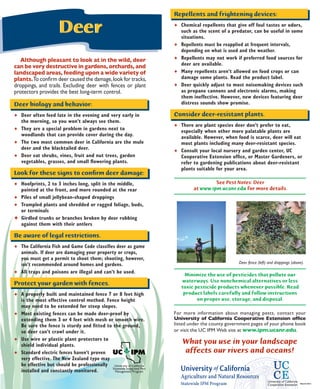
Deer fence (left) and droppings (above). 
Minimize the use of pesticides that pollute our 
waterways. Use nonchemical alternatives or less 
toxic pesticide products whenever possible. Read 
product labels carefully and follow instructions 
on proper use, storage, and disposal. 
For more information about managing pests, contact your 
University of California Cooperative Extension office 
listed under the county government pages of your phone book 
or visit the UC IPM Web site at www.ipm.ucanr.edu. 
What you use in your landscape 
affects our rivers and oceans! 
University of California 
Statewide IPM Program Cooperative Extension March 2014

Deer Quick Tips Natural Pest Control

  • 1.
    Deer Although pleasantto look at in the wild, deer can be very destructive in gardens, orchards, and landscaped areas, feeding upon a wide variety of plants. To confirm deer caused the damage, look for tracks, droppings, and trails. Excluding deer with fences or plant protectors provides the best long-term control. Deer biology and behavior: ✦ Deer often feed late in the evening and very early in the morning, so you won’t always see them. ✦ They are a special problem in gardens next to woodlands that can provide cover during the day. ✦ The two most common deer in California are the mule deer and the blacktailed deer. ✦ Deer eat shrubs, vines, fruit and nut trees, garden vegetables, grasses, and small flowering plants. Look for these signs to confirm deer damage: ✦ Hoofprints, 2 to 3 inches long, split in the middle, pointed at the front, and more rounded at the rear ✦ Piles of small jellybean-shaped droppings ✦ Trampled plants and shredded or ragged foliage, buds, or terminals ✦ Girdled trunks or branches broken by deer rubbing against them with their antlers Be aware of legal restrictions. ✦ The California Fish and Game Code classifies deer as game animals. If deer are damaging your property or crops, you must get a permit to shoot them; shooting, however, isn’t recommended around homes and gardens. ✦ All traps and poisons are illegal and can’t be used. Protect your garden with fences. ✦ A properly built and maintained fence 7 or 8 feet high is the most effective control method. Fence height may need to be extended for steep slopes. ✦ Most existing fences can be made deer-proof by extending them 3 or 4 feet with mesh or smooth wire. Be sure the fence is sturdy and fitted to the ground, so deer can’t crawl under it. ✦ Use wire or plastic plant protectors to shield individual plants. ✦ Standard electric fences haven’t proven very effective. The New Zealand type may be effective but should be profes­sionally installed and constantly monitored. University of California Statewide Integrated Pest Management Program Repellents and frightening devices: ✦ Chemical repellents that give off foul tastes or odors, such as the scent of a predator, can be useful in some situations. ✦ Repellents must be reapplied at frequent intervals, depending on what is used and the weather. ✦ Repellents may not work if preferred food sources for deer are available. ✦ Many repellents aren’t allowed on food crops or can damage some plants. Read the product label. ✦ Deer quickly adjust to most noisemaking devices such as propane cannons and electronic alarms, making them ineffective. However, new devices featuring deer distress sounds show promise. Consider deer-resistant plants. ✦ There are plant species deer don’t prefer to eat, especially when other more palatable plants are available. However, when food is scarce, deer will eat most plants including many deer-resistant species. ✦ Consult your local nursery and garden center, UC Cooperative Extension office, or Master Gardeners, or refer to gardening publications about deer-resistant plants suitable for your area. See Pest Notes: Deer at www.ipm.ucanr.edu for more details. Deer fence (left) and droppings (above). Minimize the use of pesticides that pollute our waterways. Use nonchemical alternatives or less toxic pesticide products whenever possible. Read product labels carefully and follow instructions on proper use, storage, and disposal. For more information about managing pests, contact your University of California Cooperative Extension office listed under the county government pages of your phone book or visit the UC IPM Web site at www.ipm.ucanr.edu. What you use in your landscape affects our rivers and oceans! University of California Statewide IPM Program Cooperative Extension March 2014