MMoossqquuiittooeess 
Mosquito adults are small flying insects 
that often bite and are annoying. The 
females require blood from humans or other animals 
to develop eggs, and mosquito bites may transmit 
organisms causing diseases such as West Nile Virus. 
Mosquito larvae live and grow in ponds, objects 
containing standing water, and other aquatic sites. 
Decrease your chances of getting bitten by reducing 
standing water around your home, using repellents, 
and wearing protective clothing when outdoors. 
Minimize mosquito-friendly habitats. 
✦ Empty water from unused garden pots and other 
objects. Store containers upside down or cover or 
dispose of them, so mosquitoes can’t lay eggs. 
✦ Change water in pet dishes, watering troughs, and 
bird baths at least weekly. 
✦ Avoid overwatering, which can lead to standing water. 
✦ Keep litter and garden debris out of street gutters. 
Clean rain gutters and downspouts at least once a 
year to remove debris. 
✦ Seal rain barrels, so mosquitoes can’t breed in 
them. Keep all filters and prefilters clean and free 
of moisture-retaining debris and inspect regularly 
for leaks. 
✦ For ponds, remove excess vegetation, stock with 
fish, or use Bacillus thuringiensis (Bt) products such 
as Mosquito Dunks, Plunks, or Bits, which contain 
a bacterial agent that kills mosquito larvae but 
doesn’t affect people, other animals, or plants. 
✦ Maintain water quality in swimming pools with 
chemical treatments. Keep water off swimming 
pool covers. Cover or drain water from plastic 
pools when not in use, so mosquitoes can’t lay 
eggs in them. 
✦ Fill open tree holes with sand or mortar. 
What is West Nile Virus? 
West Nile Virus is spread by mosquitoes that get the virus 
from infected birds. Once infected, mosquitoes then transfer 
the virus to humans and other animals. Infected humans can 
become ill. The disease usually is most serious in children, 
people with weakened immune systems, and the elderly. 
University of California 
Statewide Integrated Pest 
Management Program 
For more information about 
West Nile Virus, contact the 
California Department of Health 
Services, www.westnile.ca.gov. 
Minimize the use of pesticides that pollute our 
waterways. Use nonchemical alternatives or less 
toxic pesticide products whenever possible. Read 
product labels carefully and follow instructions 
on proper use, storage, and disposal. 
For more information about managing pests, contact your 
University of California Cooperative Extension office 
listed under the county government pages of your phone book 
or visit the UC IPM Web site at www.ipm.ucdavis.edu. 
What you use in your landscape 
affects our rivers and oceans! 
University of California 
Statewide IPM Program Cooperative Extension May 2013 
The best defense is to avoid mosquito bites! 
✦ Be sure doors and windows are properly screened. 
✦ Avoid being outdoors at times of the day when 
mosquito activity is high in your area, especially 
at dawn and dusk. 
✦ Wear long-sleeved shirts, long trousers, socks, and 
a hat if you must be outside when mosquitoes 
are present. 
✦ Use insect repellents containing DEET, picardin, or 
the slightly less effective Oil of Lemon Eucalyptus 
(PMD). Repellents containing other ingredients are 
less effective, so you must frequently reapply them. 
✦ Outdoor insecticide sprays can temporarily reduce 
the number of adult mosquitoes but have no 
lasting effect. 
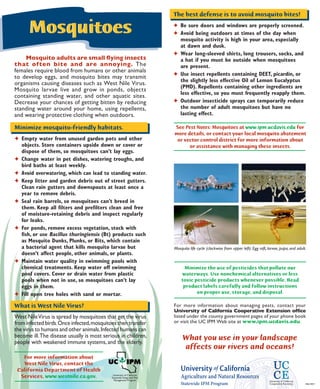
Mosquito life cycle (clockwise from upper left): Egg raft, larvae, pupa, and adult. 
See Pest Notes: Mosquitoes at www.ipm.ucdavis.edu for 
more details, or contact your local mosquito abatement 
or vector control district for more information about 
or assistance with managing these insects.

Mosquitoes Quick Tips Natural Pest Control

  • 1.
    MMoossqquuiittooeess Mosquito adultsare small flying insects that often bite and are annoying. The females require blood from humans or other animals to develop eggs, and mosquito bites may transmit organisms causing diseases such as West Nile Virus. Mosquito larvae live and grow in ponds, objects containing standing water, and other aquatic sites. Decrease your chances of getting bitten by reducing standing water around your home, using repellents, and wearing protective clothing when outdoors. Minimize mosquito-friendly habitats. ✦ Empty water from unused garden pots and other objects. Store containers upside down or cover or dispose of them, so mosquitoes can’t lay eggs. ✦ Change water in pet dishes, watering troughs, and bird baths at least weekly. ✦ Avoid overwatering, which can lead to standing water. ✦ Keep litter and garden debris out of street gutters. Clean rain gutters and downspouts at least once a year to remove debris. ✦ Seal rain barrels, so mosquitoes can’t breed in them. Keep all filters and prefilters clean and free of moisture-retaining debris and inspect regularly for leaks. ✦ For ponds, remove excess vegetation, stock with fish, or use Bacillus thuringiensis (Bt) products such as Mosquito Dunks, Plunks, or Bits, which contain a bacterial agent that kills mosquito larvae but doesn’t affect people, other animals, or plants. ✦ Maintain water quality in swimming pools with chemical treatments. Keep water off swimming pool covers. Cover or drain water from plastic pools when not in use, so mosquitoes can’t lay eggs in them. ✦ Fill open tree holes with sand or mortar. What is West Nile Virus? West Nile Virus is spread by mosquitoes that get the virus from infected birds. Once infected, mosquitoes then transfer the virus to humans and other animals. Infected humans can become ill. The disease usually is most serious in children, people with weakened immune systems, and the elderly. University of California Statewide Integrated Pest Management Program For more information about West Nile Virus, contact the California Department of Health Services, www.westnile.ca.gov. Minimize the use of pesticides that pollute our waterways. Use nonchemical alternatives or less toxic pesticide products whenever possible. Read product labels carefully and follow instructions on proper use, storage, and disposal. For more information about managing pests, contact your University of California Cooperative Extension office listed under the county government pages of your phone book or visit the UC IPM Web site at www.ipm.ucdavis.edu. What you use in your landscape affects our rivers and oceans! University of California Statewide IPM Program Cooperative Extension May 2013 The best defense is to avoid mosquito bites! ✦ Be sure doors and windows are properly screened. ✦ Avoid being outdoors at times of the day when mosquito activity is high in your area, especially at dawn and dusk. ✦ Wear long-sleeved shirts, long trousers, socks, and a hat if you must be outside when mosquitoes are present. ✦ Use insect repellents containing DEET, picardin, or the slightly less effective Oil of Lemon Eucalyptus (PMD). Repellents containing other ingredients are less effective, so you must frequently reapply them. ✦ Outdoor insecticide sprays can temporarily reduce the number of adult mosquitoes but have no lasting effect. Mosquito life cycle (clockwise from upper left): Egg raft, larvae, pupa, and adult. See Pest Notes: Mosquitoes at www.ipm.ucdavis.edu for more details, or contact your local mosquito abatement or vector control district for more information about or assistance with managing these insects.