Photo album (1929-1945) By: Michael Slayton Block: D Date: 1-16-07
The depression New York city 1929. Concerned citizens  flood wall street during  the Stock market crash of October 29, 1929. This was the beginning of the  great depression.
Beggars A feeding line During the great depression. These were common because people were jobless due too the the economy crash.
Homelessness  Here a Man waits at a homeless bureau. This scene was  all to common with the  great depression when over 24% of  the workforce was jobless.
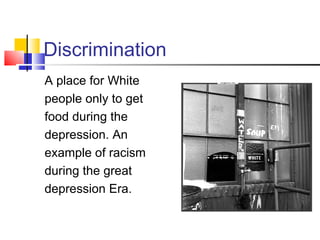
Discrimination A place for White people only to get  food during the  depression. An example of racism during the great  depression Era.
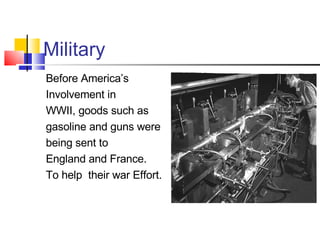
Military Before America’s Involvement in WWII, goods such as gasoline and guns were being sent to  England and France. To help  their war Effort.
America’s Isolationism During the time of Hitler absorbing much of Europe,  America ignored much of what was happening. America  believed isolationism was the right choice  because it was decided Americas involvement In WW1 was a costly mistake.
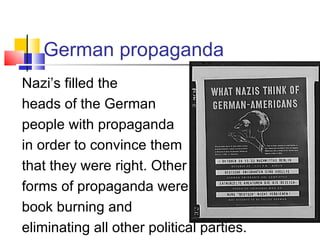
German propaganda Nazi’s filled the  heads of the German  people with propaganda in order to convince them  that they were right. Other forms of propaganda were book burning and  eliminating all other political parties.
Non-aggression pact In 1939 the Soviet Union’s ruler, Joseph Stalin knew that Hitler would eventually want to invade the Soviet Union. Knowing this, he signed the signed the  Non-aggression pact.
Japan In February 1942, the  Japanese took land such  as Wake island, Hong Kong and the Gilbert islands. The Japanese even managed to  take Singapore which was known as one of the worlds strongest fortresses. In March the Japanese took multiple pacific islands as well.
Pearl Harbor “ December 7, 1941 a  date which will live in infamy. The United  States was suddenly and deliberately  attacked by naval and air forces of the empire of Japan.” -FDR
Interment camps After the pearl harbor attack of 1941, many Japanese-Americans were placed in  internment camps.  This picture was  taken at a camp in  Tule lake, Oregon.
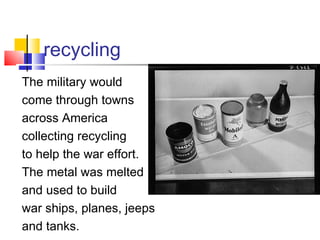
recycling  The military would come through towns across America  collecting recycling to help the war effort. The metal was melted and used to build  war ships, planes, jeeps and tanks.
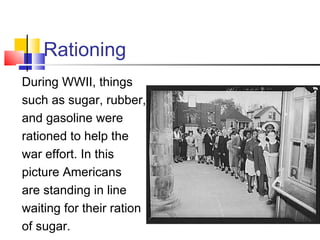
Rationing During WWII, things such as sugar, rubber, and gasoline were  rationed to help the war effort. In this  picture Americans are standing in line  waiting for their ration of sugar.
Enlistment During WWII men stood in line to  enlist in the Army. Recruitment centers experienced long lines after the media exposed what was happening in WWII
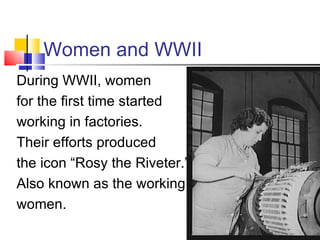
Women and WWII During WWII, women for the first time started working in factories.  Their efforts produced the icon “Rosy the Riveter.” Also known as the working women.
D-Day June 6, 1944. The U.S. invades German occupied Normandy,  France. This was the first major battle  against Germany.
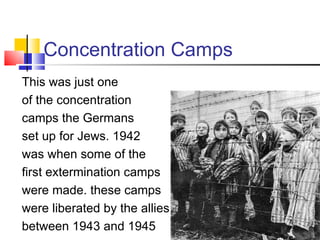
Concentration Camps This was just one of the concentration camps the Germans set up for Jews. 1942 was when some of the first extermination camps were made. these camps  were liberated by the allies  between 1943 and 1945
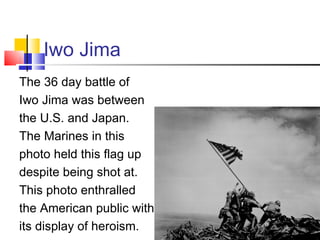
Iwo Jima The 36 day battle of  Iwo Jima was between the U.S. and Japan.  The Marines in this photo held this flag up despite being shot at. This photo enthralled the American public with  its display of heroism.
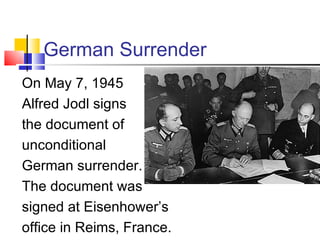
German Surrender On May 7, 1945  Alfred Jodl signs  the document of  unconditional  German surrender. The document was signed at Eisenhower’s office in Reims, France.
Japan’s surrender After accepting the allies terms of  surrender, Japan surrendered on September 2 1945. The surrender took place on the USS  Missouri.

WWII slide show

  • 1.
    Photo album (1929-1945)By: Michael Slayton Block: D Date: 1-16-07
  • 2.
    The depression NewYork city 1929. Concerned citizens flood wall street during the Stock market crash of October 29, 1929. This was the beginning of the great depression.
  • 3.
    Beggars A feedingline During the great depression. These were common because people were jobless due too the the economy crash.
  • 4.
    Homelessness Herea Man waits at a homeless bureau. This scene was all to common with the great depression when over 24% of the workforce was jobless.
  • 5.
    Discrimination A placefor White people only to get food during the depression. An example of racism during the great depression Era.
  • 6.
    Military Before America’sInvolvement in WWII, goods such as gasoline and guns were being sent to England and France. To help their war Effort.
  • 7.
    America’s Isolationism Duringthe time of Hitler absorbing much of Europe, America ignored much of what was happening. America believed isolationism was the right choice because it was decided Americas involvement In WW1 was a costly mistake.
  • 8.
    German propaganda Nazi’sfilled the heads of the German people with propaganda in order to convince them that they were right. Other forms of propaganda were book burning and eliminating all other political parties.
  • 9.
    Non-aggression pact In1939 the Soviet Union’s ruler, Joseph Stalin knew that Hitler would eventually want to invade the Soviet Union. Knowing this, he signed the signed the Non-aggression pact.
  • 10.
    Japan In February1942, the Japanese took land such as Wake island, Hong Kong and the Gilbert islands. The Japanese even managed to take Singapore which was known as one of the worlds strongest fortresses. In March the Japanese took multiple pacific islands as well.
  • 11.
    Pearl Harbor “December 7, 1941 a date which will live in infamy. The United States was suddenly and deliberately attacked by naval and air forces of the empire of Japan.” -FDR
  • 12.
    Interment camps Afterthe pearl harbor attack of 1941, many Japanese-Americans were placed in internment camps. This picture was taken at a camp in Tule lake, Oregon.
  • 13.
    recycling Themilitary would come through towns across America collecting recycling to help the war effort. The metal was melted and used to build war ships, planes, jeeps and tanks.
  • 14.
    Rationing During WWII,things such as sugar, rubber, and gasoline were rationed to help the war effort. In this picture Americans are standing in line waiting for their ration of sugar.
  • 15.
    Enlistment During WWIImen stood in line to enlist in the Army. Recruitment centers experienced long lines after the media exposed what was happening in WWII
  • 16.
    Women and WWIIDuring WWII, women for the first time started working in factories. Their efforts produced the icon “Rosy the Riveter.” Also known as the working women.
  • 17.
    D-Day June 6,1944. The U.S. invades German occupied Normandy, France. This was the first major battle against Germany.
  • 18.
    Concentration Camps Thiswas just one of the concentration camps the Germans set up for Jews. 1942 was when some of the first extermination camps were made. these camps were liberated by the allies between 1943 and 1945
  • 19.
    Iwo Jima The36 day battle of Iwo Jima was between the U.S. and Japan. The Marines in this photo held this flag up despite being shot at. This photo enthralled the American public with its display of heroism.
  • 20.
    German Surrender OnMay 7, 1945 Alfred Jodl signs the document of unconditional German surrender. The document was signed at Eisenhower’s office in Reims, France.
  • 21.
    Japan’s surrender Afteraccepting the allies terms of surrender, Japan surrendered on September 2 1945. The surrender took place on the USS Missouri.