Writing Efficient
Code for Embedded
Systems
By: Harshit Singh Khati
What is an Embedded System ?
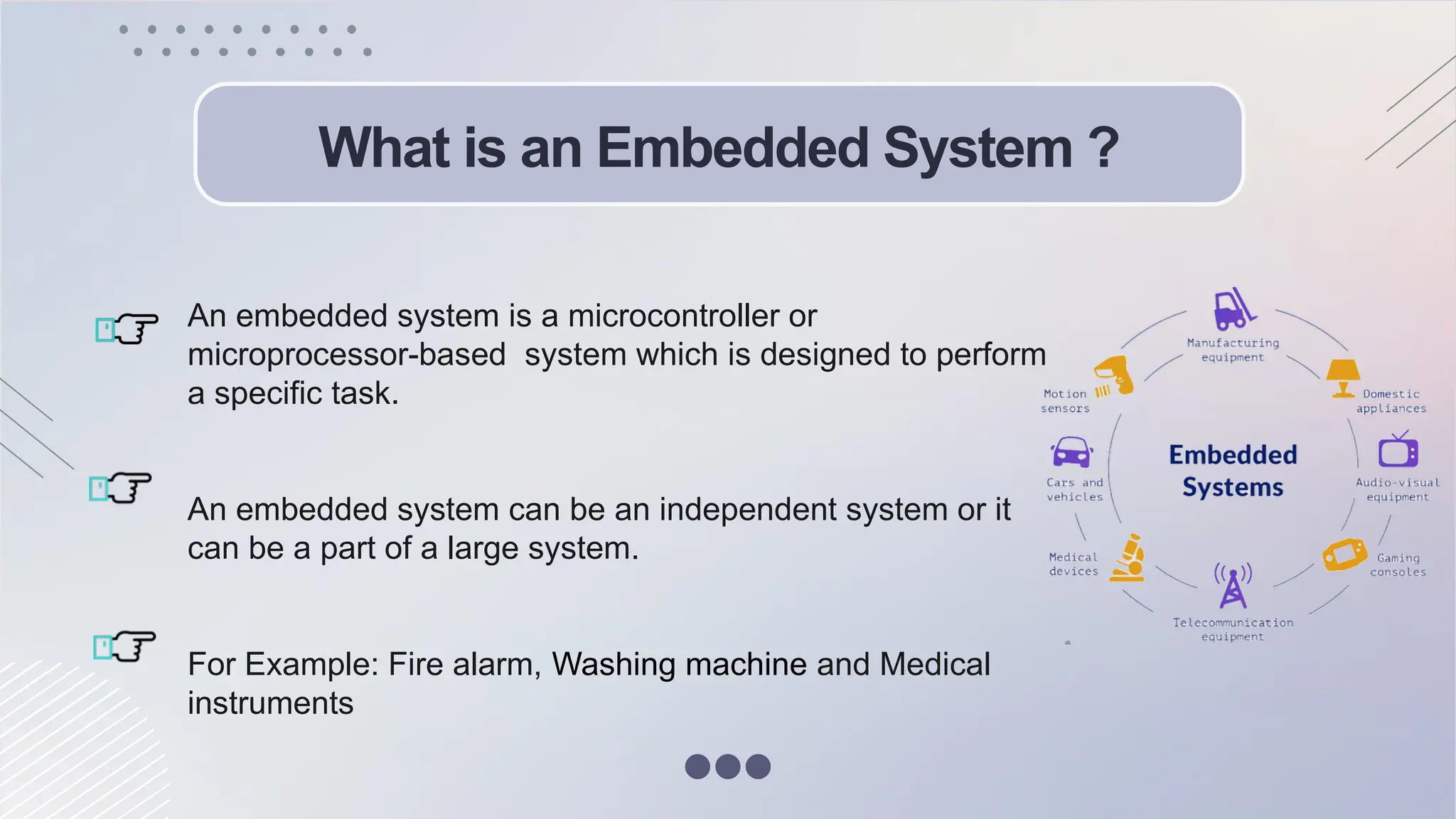
An embedded system is a microcontroller or
microprocessor-based system which is designed to perform
a specific task.
An embedded system can be an independent system or it
can be a part of a large system.
For Example: Fire alarm, Washing machine and Medical
instruments
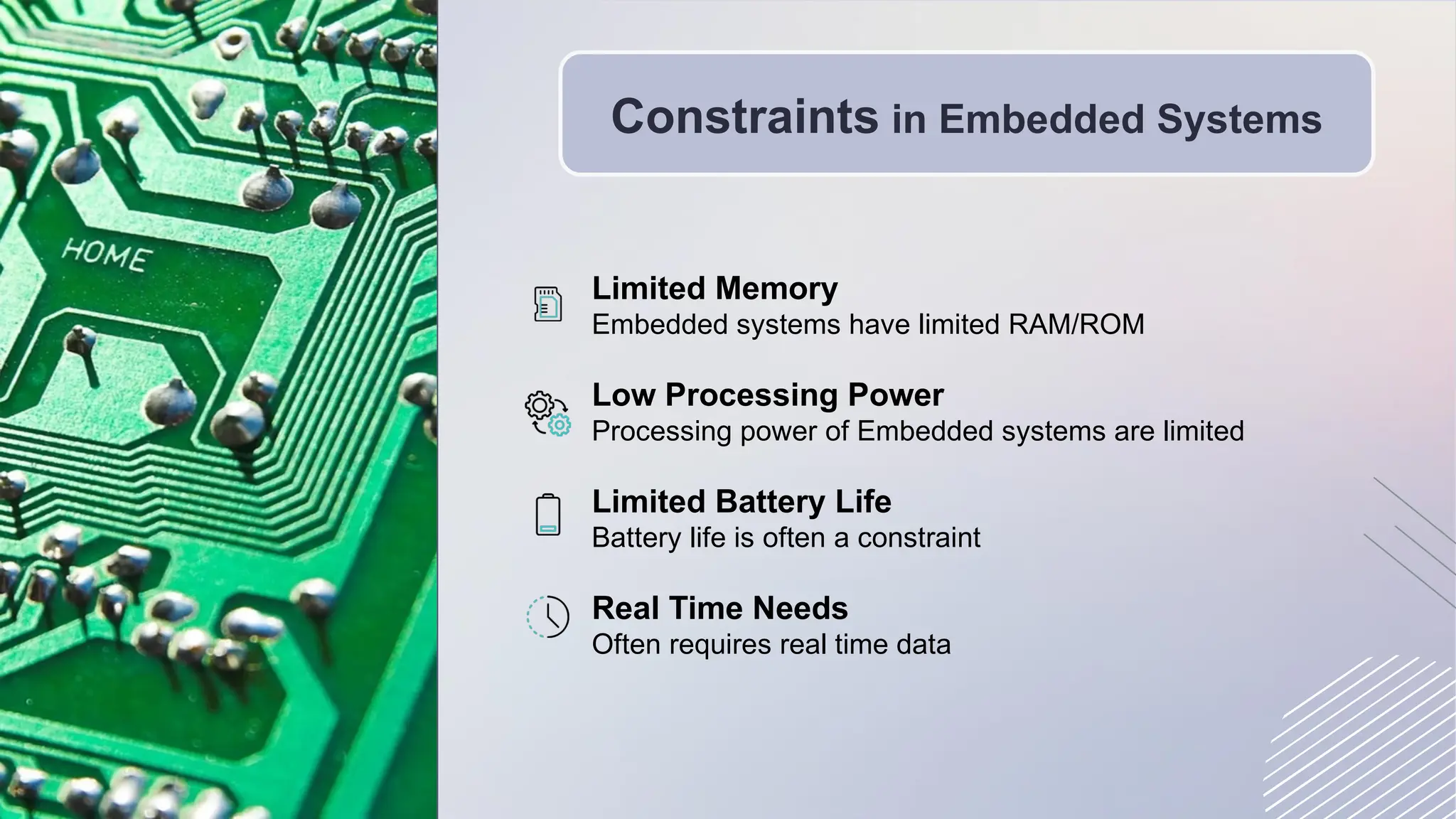
Constraints in Embedded Systems
Limited Memory
Embedded systems have limited RAM/ROM
Low Processing Power
Processing power of Embedded systems are limited
Limited Battery Life
Battery life is often a constraint
Real Time Needs
Often requires real time data
What Does “Efficient Code” Mean?
• In embedded systems, memory is often limited. Efficient
code minimizes the memory usage.
• Many embedded systems are battery-powered, and efficient
code can significantly extend the device's operational
lifespan. By minimizing power consumption.
• Efficient code optimizes processing speed. Faster execution
speeds lead to quicker response times and improved
system performance.
Tips for Writing Efficient Code
Prefer using efficient data types like uint8_t instead of int to reduce memory usage and
improve performance.
Avoid floating-point arithmetic whenever possible, as it tends to be slower and more
power-hungry than fixed-point or integer operations.
Optimize loops and conditional logic by minimizing nesting and checking the most likely
conditions first.
Reduce function calls in time-critical code.
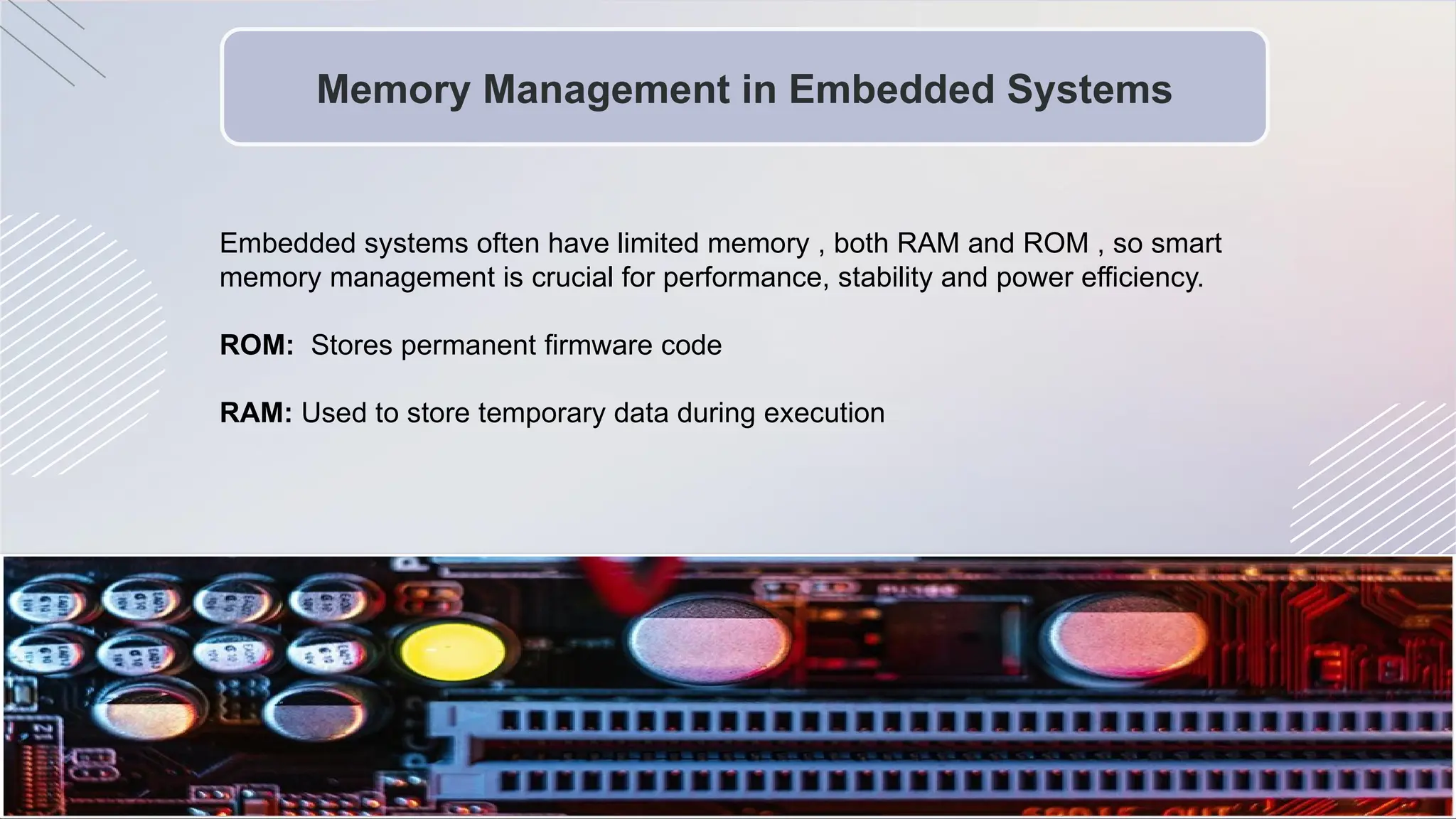
Memory Management in Embedded Systems
Embedded systems often have limited memory , both RAM and ROM , so smart
memory management is crucial for performance, stability and power efficiency.
ROM: Stores permanent firmware code
RAM: Used to store temporary data during execution
Key Points to Remember While Working with Memory
• Avoid dynamic memory allocation like malloc() in real-time systems, as it
can cause fragmentation and lead to unpredictable behavior.
• Clean up unused variables to reduce memory footprint and avoid wasting
space in embedded systems.
• Use the smallest appropriate data types.
• Enable compiler warnings to catch errors early during development.
• Use static or global Variables When Needed.
Conclusion
Efficient Code
In simple terms efficient code is Faster,
Smaller, and smart. Importance
It improves execution speed, makes
efficient use of memory, and enhances
code readability for long-term maintenance.
In embedded systems, even small decisions make a big impact

Writing Efficient Code for Embedded Systems.pptx

Writing Efficient Code for Embedded Systems.pptx

  • 1.
    Writing Efficient Code forEmbedded Systems By: Harshit Singh Khati
  • 2.
    What is anEmbedded System ? An embedded system is a microcontroller or microprocessor-based system which is designed to perform a specific task. An embedded system can be an independent system or it can be a part of a large system. For Example: Fire alarm, Washing machine and Medical instruments
  • 3.
    Constraints in EmbeddedSystems Limited Memory Embedded systems have limited RAM/ROM Low Processing Power Processing power of Embedded systems are limited Limited Battery Life Battery life is often a constraint Real Time Needs Often requires real time data
  • 4.
    What Does “EfficientCode” Mean? • In embedded systems, memory is often limited. Efficient code minimizes the memory usage. • Many embedded systems are battery-powered, and efficient code can significantly extend the device's operational lifespan. By minimizing power consumption. • Efficient code optimizes processing speed. Faster execution speeds lead to quicker response times and improved system performance.
  • 5.
    Tips for WritingEfficient Code Prefer using efficient data types like uint8_t instead of int to reduce memory usage and improve performance. Avoid floating-point arithmetic whenever possible, as it tends to be slower and more power-hungry than fixed-point or integer operations. Optimize loops and conditional logic by minimizing nesting and checking the most likely conditions first. Reduce function calls in time-critical code.
  • 6.
    Memory Management inEmbedded Systems Embedded systems often have limited memory , both RAM and ROM , so smart memory management is crucial for performance, stability and power efficiency. ROM: Stores permanent firmware code RAM: Used to store temporary data during execution
  • 7.
    Key Points toRemember While Working with Memory • Avoid dynamic memory allocation like malloc() in real-time systems, as it can cause fragmentation and lead to unpredictable behavior. • Clean up unused variables to reduce memory footprint and avoid wasting space in embedded systems. • Use the smallest appropriate data types. • Enable compiler warnings to catch errors early during development. • Use static or global Variables When Needed.
  • 8.
    Conclusion Efficient Code In simpleterms efficient code is Faster, Smaller, and smart. Importance It improves execution speed, makes efficient use of memory, and enhances code readability for long-term maintenance. In embedded systems, even small decisions make a big impact