Download as PDF, PPTX
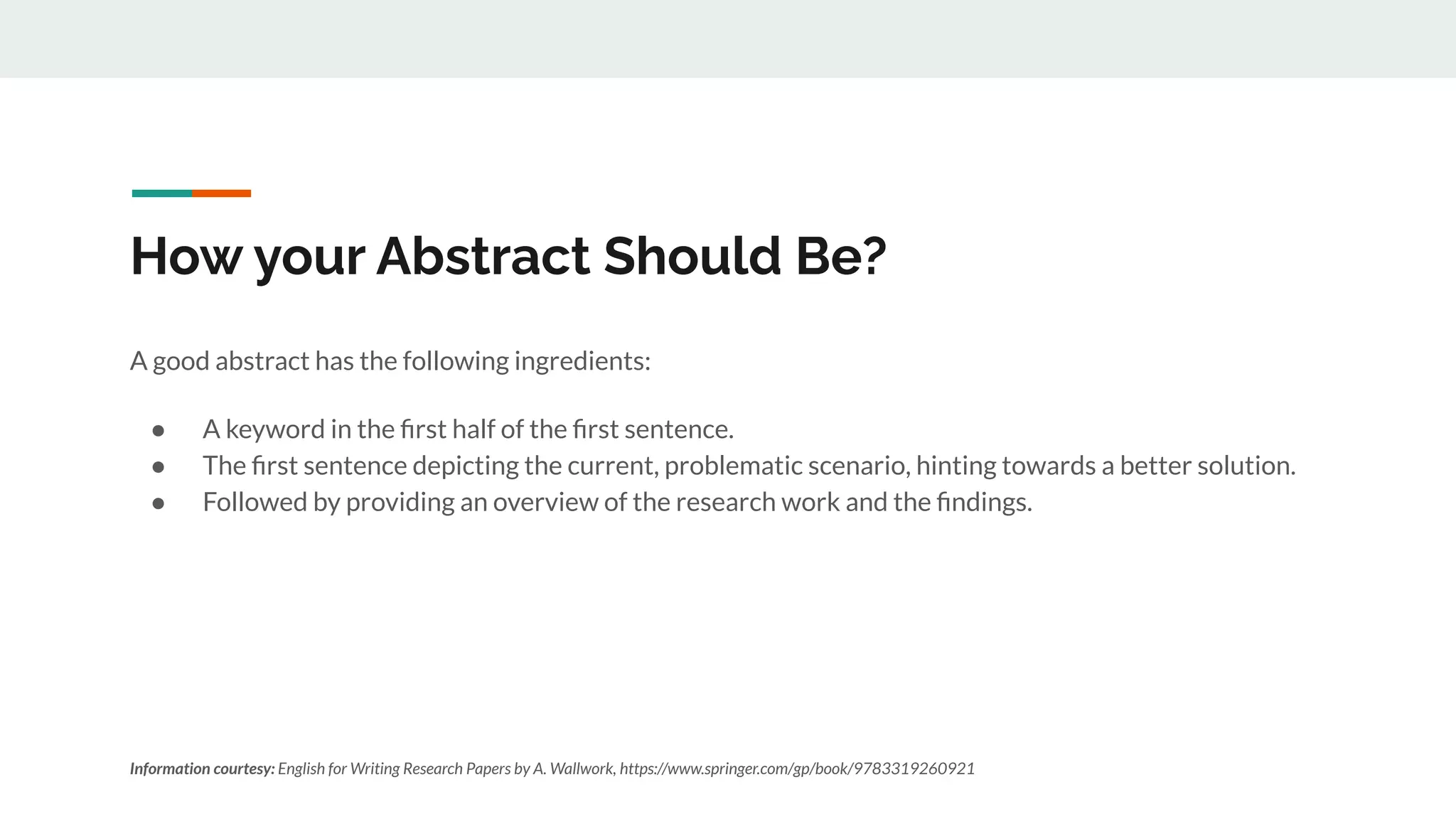


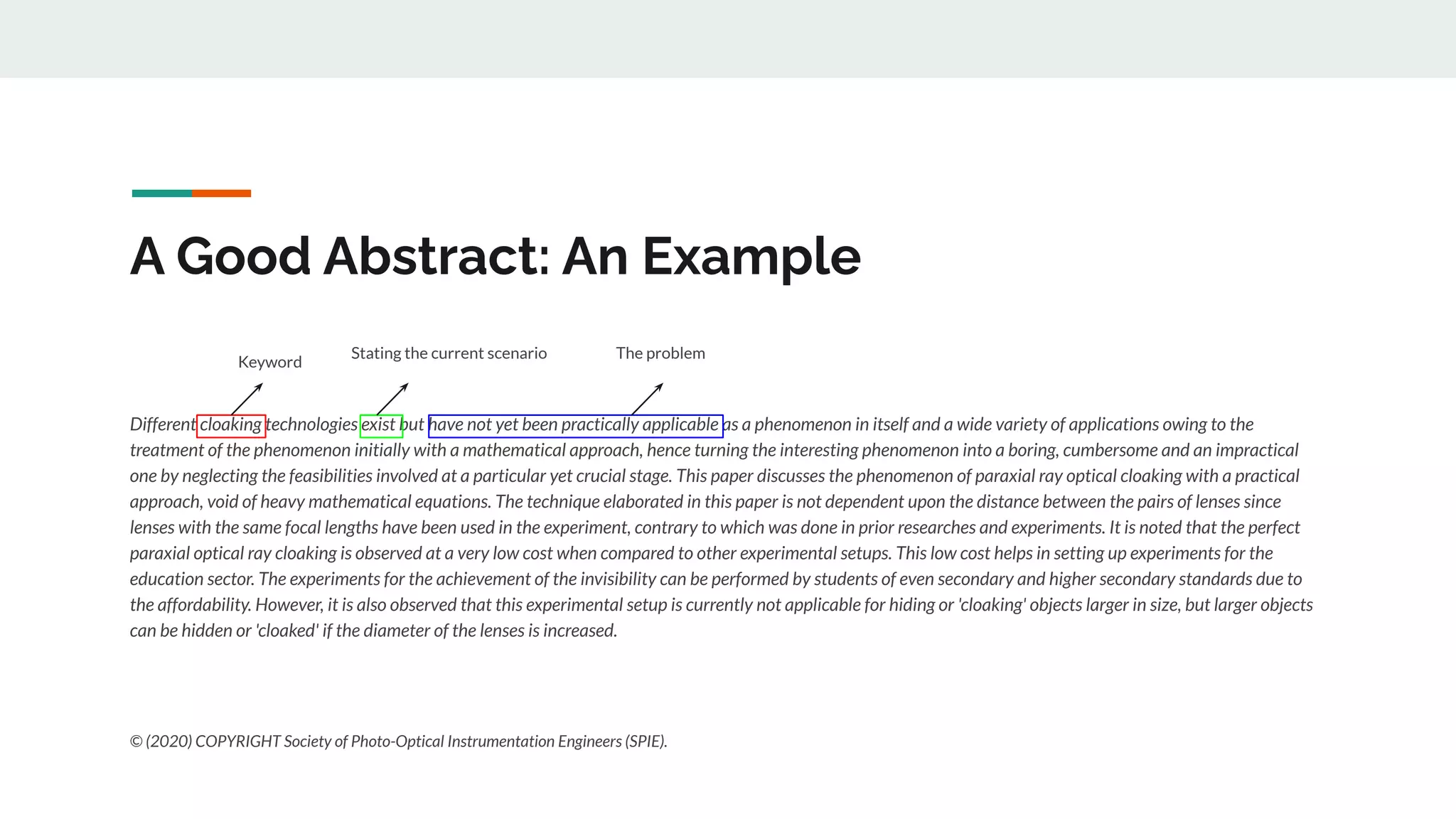
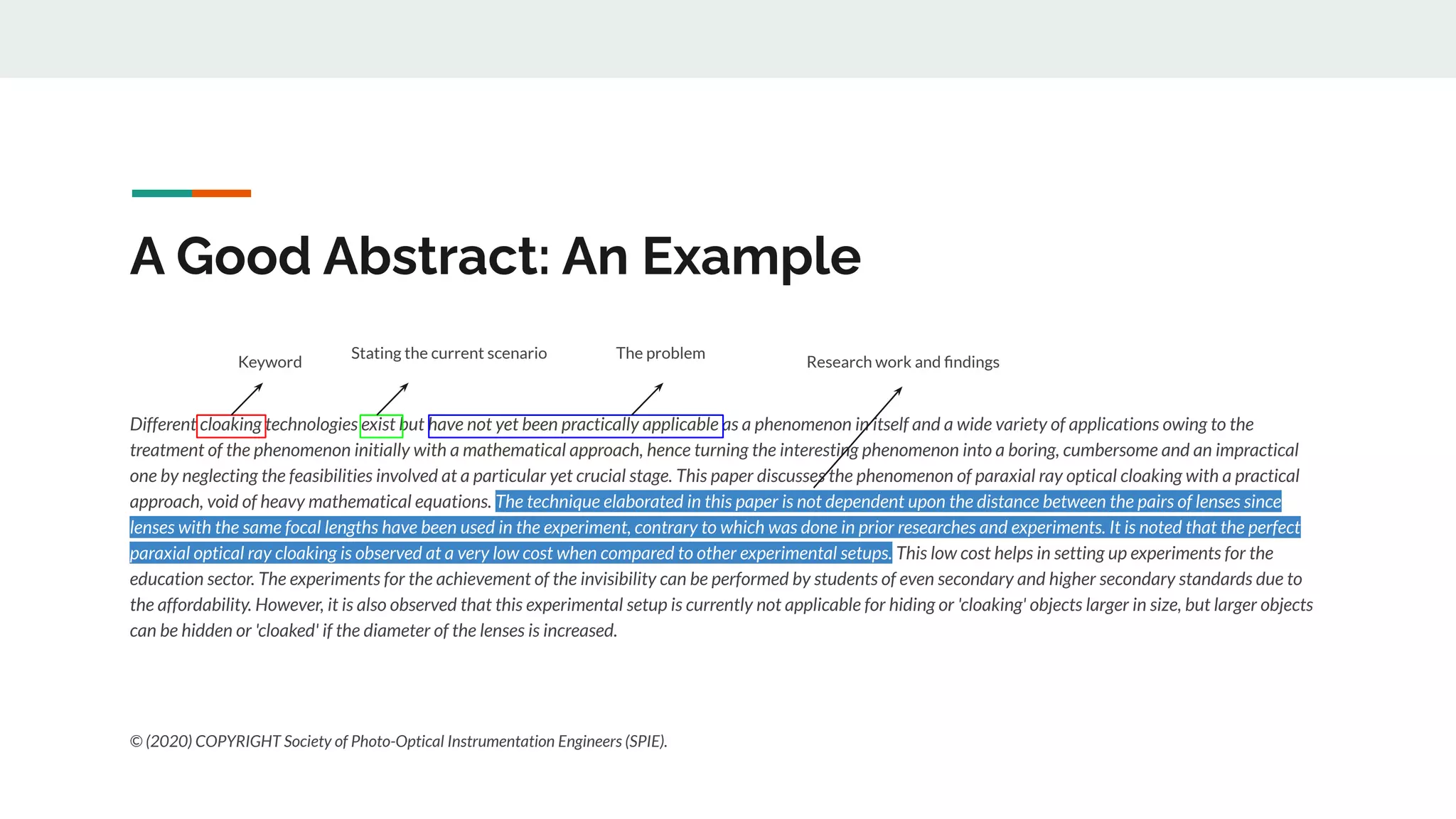
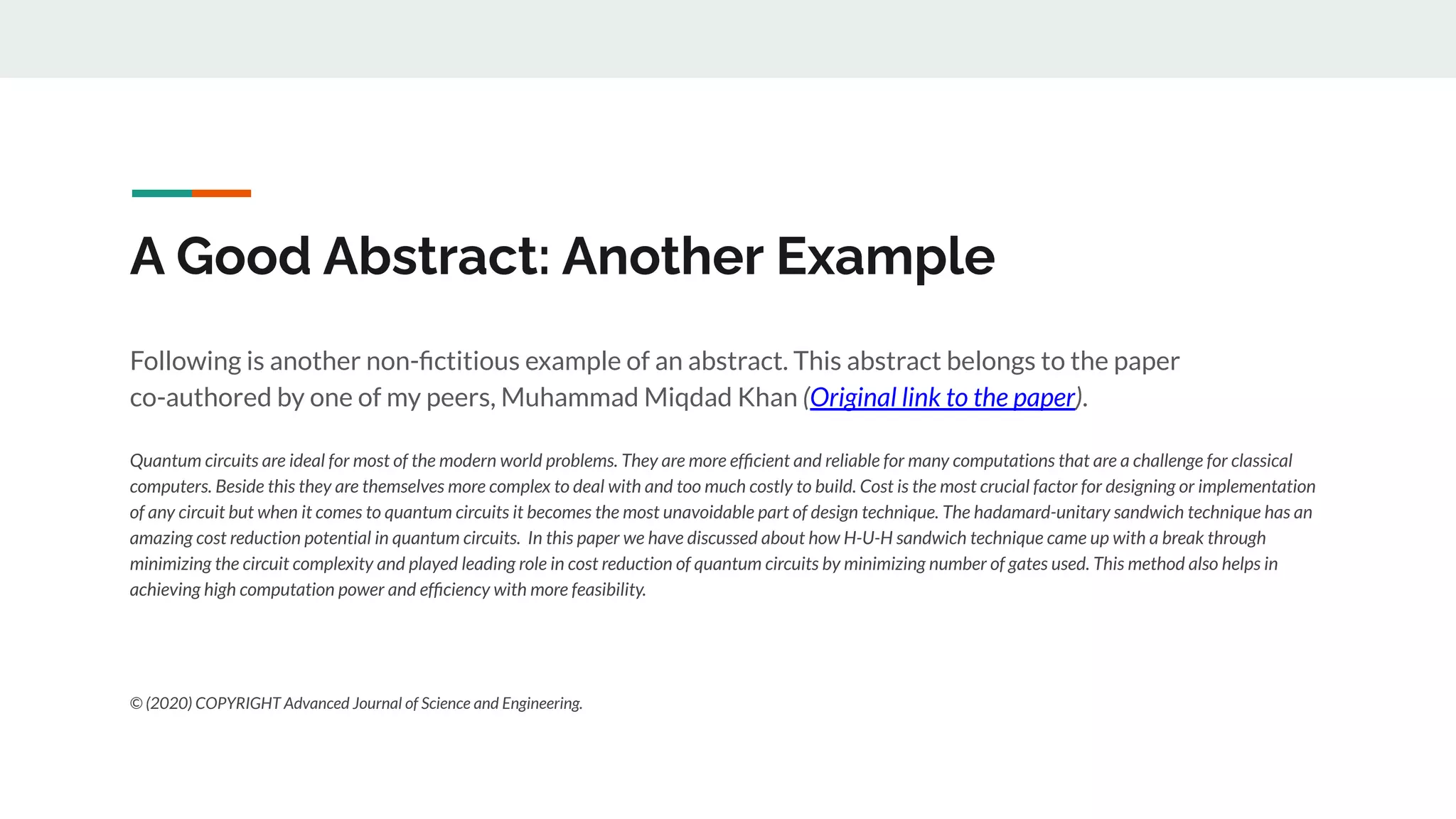
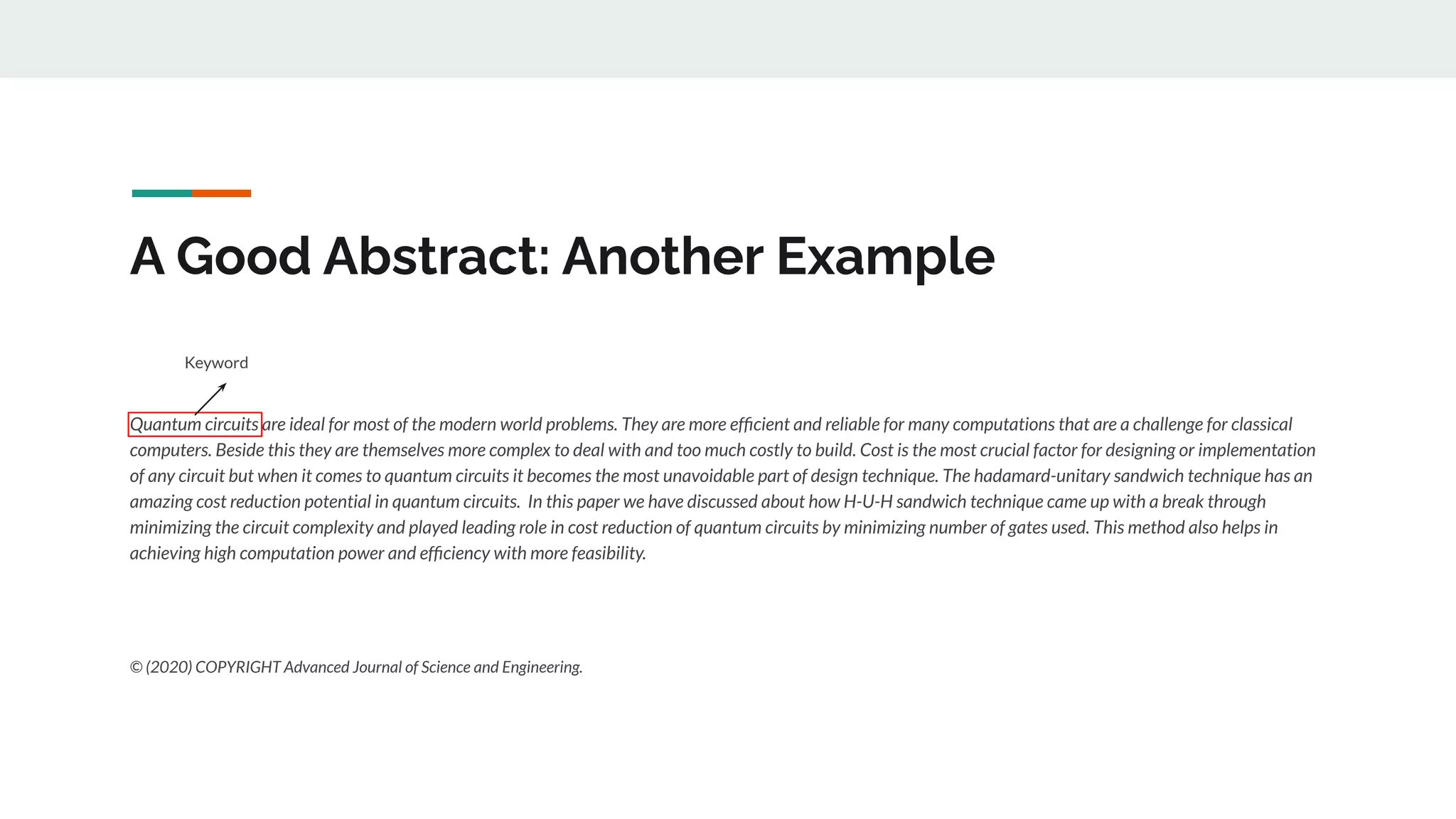


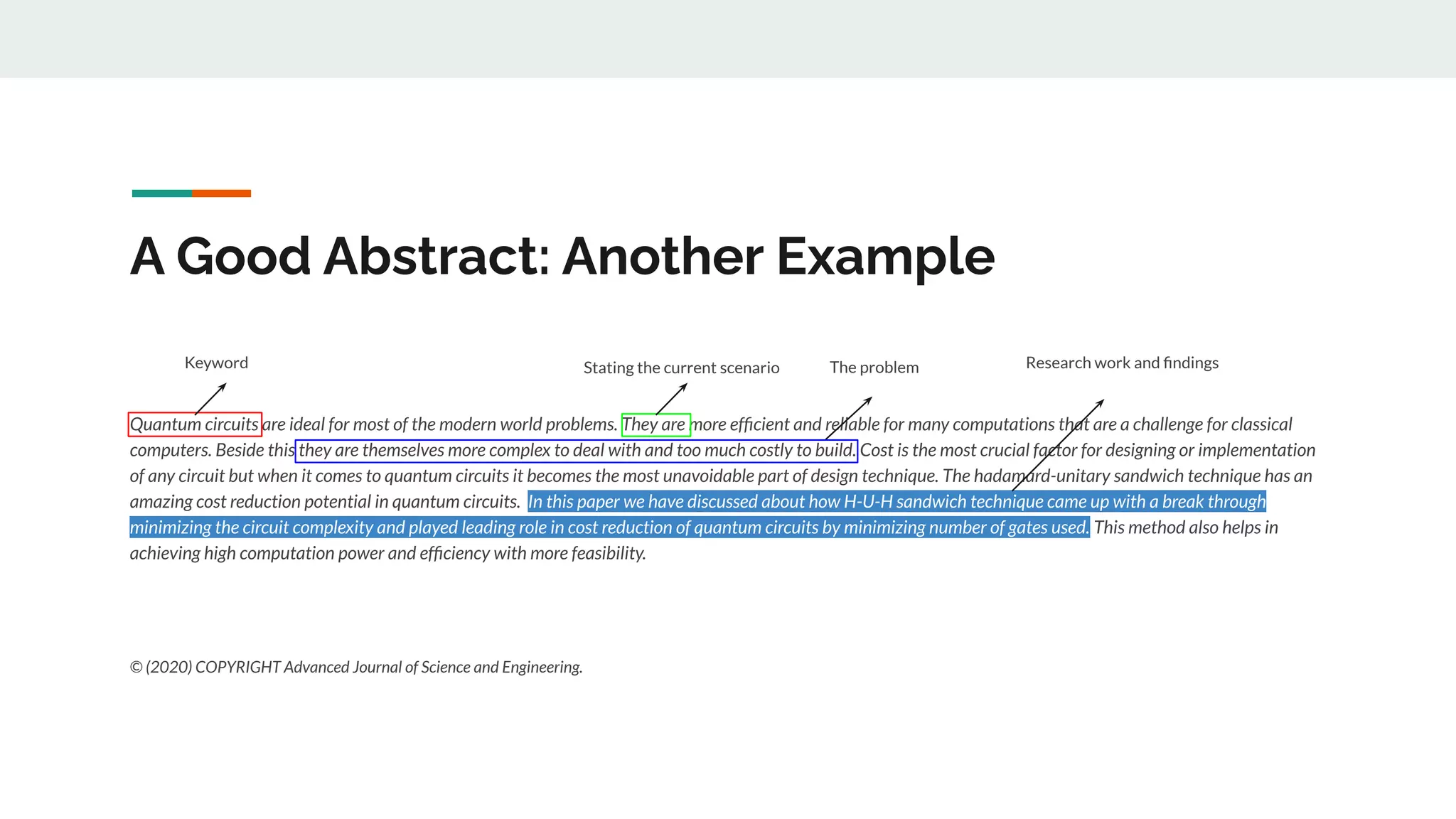
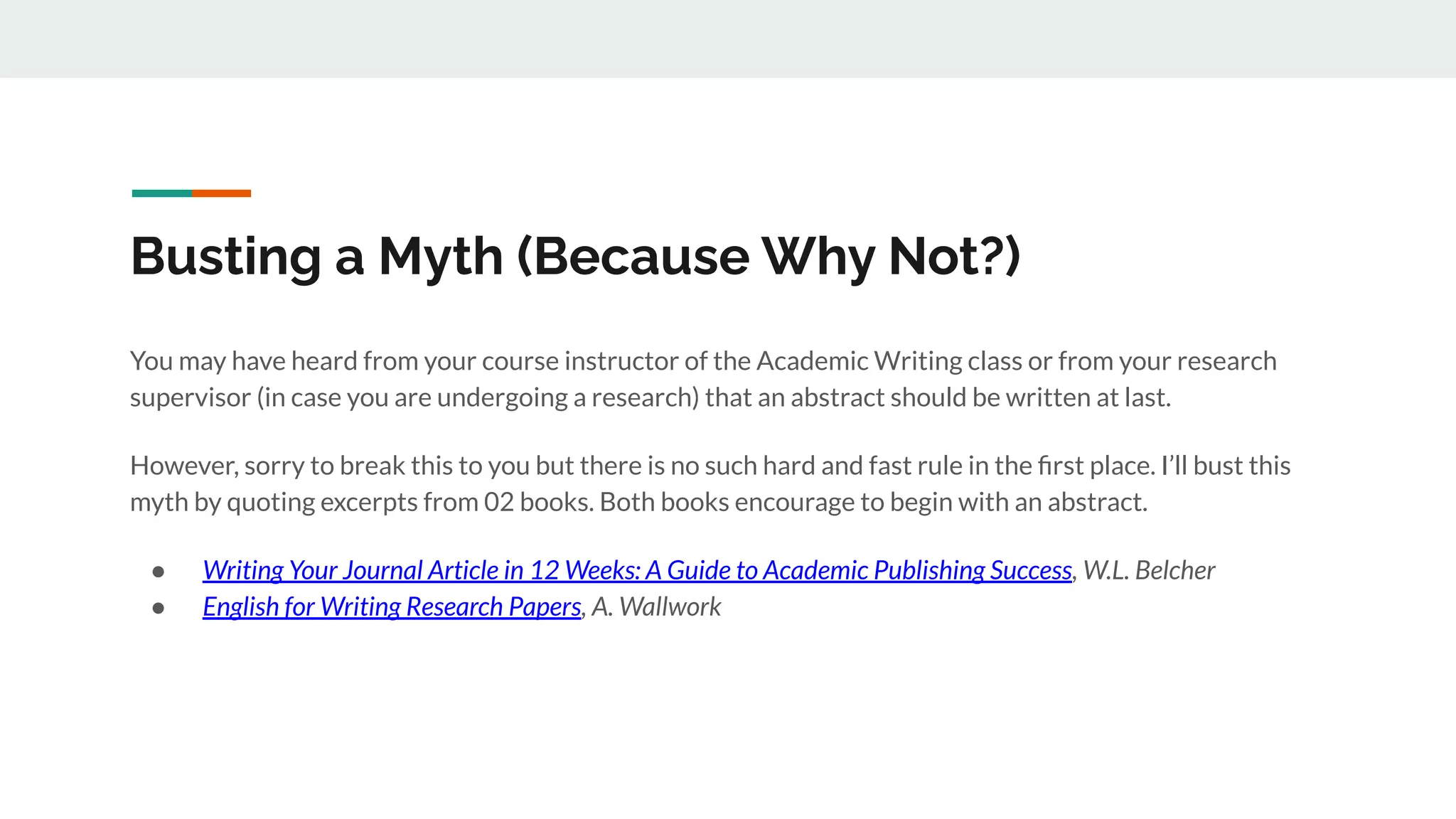


The document provides guidance on writing effective research paper abstracts, emphasizing key components such as the inclusion of keywords, addressing current problems, and summarizing research findings. It highlights practical examples, particularly in the area of paraxial ray optical cloaking and quantum circuits, demonstrating cost-effective and accessible experimentation methods for educational purposes. Additionally, it dispels the myth that abstracts should be written only after the main paper, suggesting instead that drafting an abstract can help focus the researcher's ideas.


