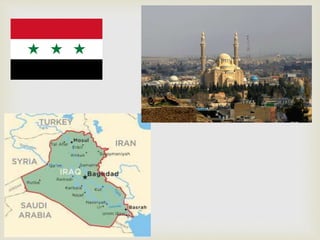
Iraq

 1. Huynh Thanh Nguyen 1258042
 2. Le Hoang Phuong Anh 1258004
 3. Ngo Thi Xuan Uyen 1258092
 4. Pham Hung Thinh 1258076
 5. Nguyen Tan Huy 1258023
Members

 From earliest time Iraq was known as
Mesopotamia, the land between the Tigris and
Euphrates rivers.
 The people built advanced irrigation systems,
developed cereal agriculture, and invented the
earliest form of writing. They created a math
system which our system is based on today as
well as the wheel and first plow
Ancient History

Iraq land mass: 437,367
sq km
 Desert
 Mid-cool winters
 Dry/hot/cloudless
summer
 Extensive floods caused
by Near by mountain

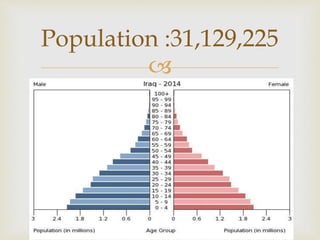
Population :31,129,225

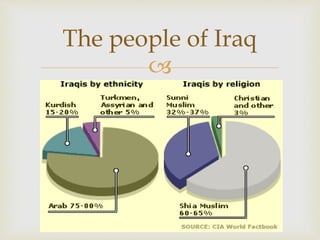
The people of Iraq
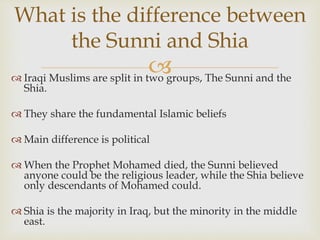
 Iraqi Muslims are split in two groups, The Sunni and the
Shia.
 They share the fundamental Islamic beliefs
 Main difference is political
 When the Prophet Mohamed died, the Sunni believed
anyone could be the religious leader, while the Shia believe
only descendants of Mohamed could.
 Shia is the majority in Iraq, but the minority in the middle
east.
What is the difference between
the Sunni and Shia

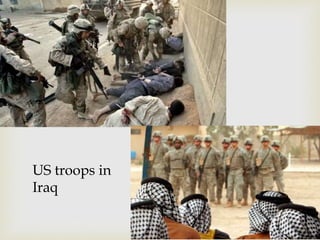
US troops in
Iraq

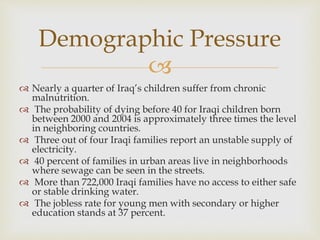
 Nearly a quarter of Iraq’s children suffer from chronic
malnutrition.
 The probability of dying before 40 for Iraqi children born
between 2000 and 2004 is approximately three times the level
in neighboring countries.
 Three out of four Iraqi families report an unstable supply of
electricity.
 40 percent of families in urban areas live in neighborhoods
where sewage can be seen in the streets.
 More than 722,000 Iraqi families have no access to either safe
or stable drinking water.
 The jobless rate for young men with secondary or higher
education stands at 37 percent.
Demographic Pressure

Group Grievance
 Religious Violence
 Discrimination
Religious conflict
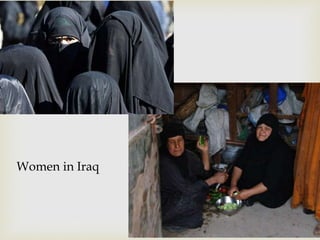
Women in Iraq
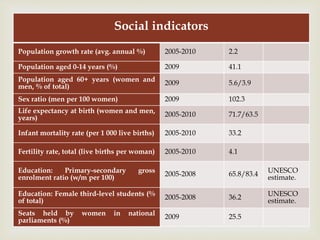
Social indicators
Population growth rate (avg. annual %) 2005-2010 2.2
Population aged 0-14 years (%) 2009 41.1
Population aged 60+ years (women and
men, % of total) 2009 5.6/3.9
Sex ratio (men per 100 women) 2009 102.3
Life expectancy at birth (women and men,
years) 2005-2010 71.7/63.5
Infant mortality rate (per 1 000 live births) 2005-2010 33.2
Fertility rate, total (live births per woman) 2005-2010 4.1
Education: Primary-secondary gross
enrolment ratio (w/m per 100) 2005-2008 65.8/83.4
UNESCO
estimate.
Education: Female third-level students (%
of total) 2005-2008 36.2
UNESCO
estimate.
Seats held by women in national
parliaments (%) 2009 25.5
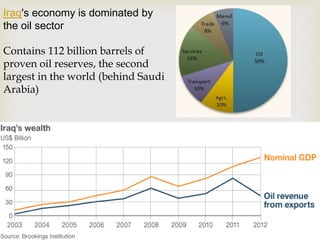
Iraq's economy is dominated by
the oil sector
Contains 112 billion barrels of
proven oil reserves, the second
largest in the world (behind Saudi
Arabia)

Military Expenditures
 8 years war with Iran
 Before the war:
Oil production: 560,000 m³ (3.5 million barrels)/day in
1979
Oil revenues: 21 billion dollars
After the war:
Depleted Iraq's foreign exchange reserves
Devastated its economy
Iraq suffered economic losses of at least $80 billion from
the war

2. International economic
sanctions
 A near-total financial and trade embargo imposed by
the United Nations Security Council on the Iraqi Republic
 Limitations on imports: no complete list of items that
could not be imported into Iraq
 Limitations on exports and the Oil For Food Program:
the Iraqi people may face a further imminent
catastrophe, which could include epidemic and famine

 Allocation of export proceeds
 72% was allocated to the humanitarian Program
 25% was allocated to the Compensation Fund for war
reparation payments
 2.2% for United Nations administrative and operational
costs
 0.8% for the weapons inspection program
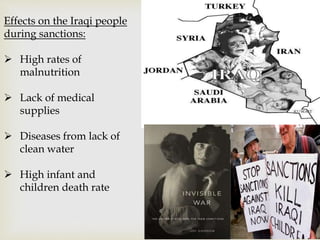
Effects on the Iraqi people
during sanctions:
 High rates of
malnutrition
 Lack of medical
supplies
 Diseases from lack of
clean water
 High infant and
children death rate

3. International Debt
 Iraq’s external debt following
the end of the Saddam regime
was approximately $130 billion.
 Paris Club Debt Claims : $37.15
billion, including interest
 Iraq’s debt to the United States:
debt to approximately $4.1
billion.

 Non-Paris Club Debt
Claims :
Two-thirds of Iraq’s debt is
held by non-Paris Club
countries.

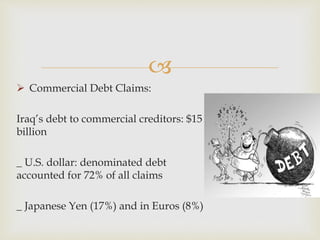
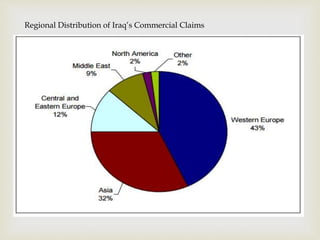
 Commercial Debt Claims:
Iraq’s debt to commercial creditors: $15
billion
_ U.S. dollar: denominated debt
accounted for 72% of all claims
_ Japanese Yen (17%) and in Euros (8%)
Regional Distribution of Iraq’s Commercial Claims

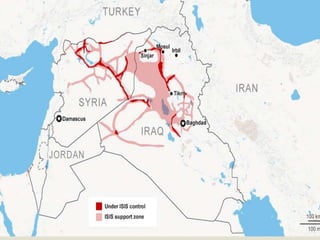
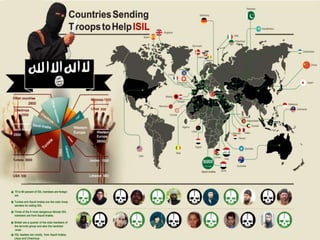
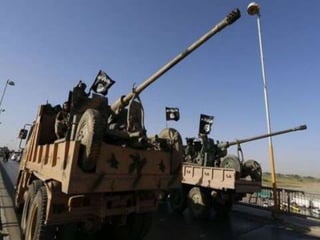
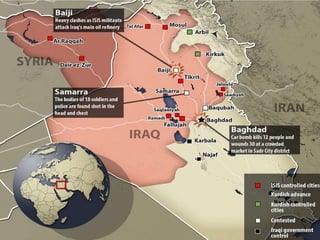
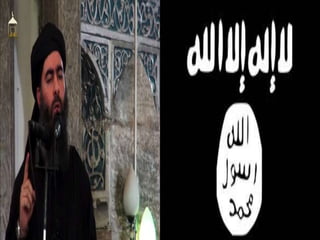
Islamic State Army has
more man than expected
 Islamic State (IS) - formerly the "Islamic State of
Iraq and Syria" (ISIS)
 Foreign observers estimated 20,000-50,000
 IS have more than 100,000
 The IS is extended from previous groups
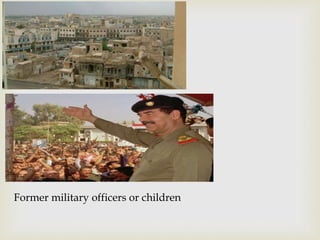
 Former military officers or children.
Former military officers or children
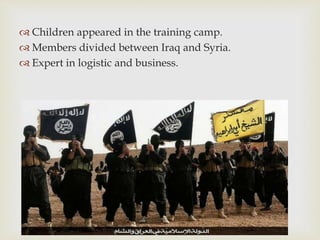
 Children appeared in the training camp.
 Members divided between Iraq and Syria.
 Expert in logistic and business.
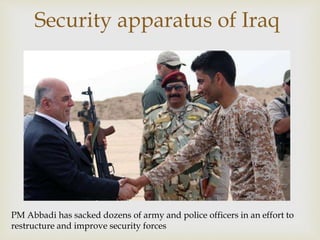
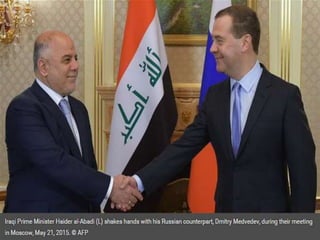
Security apparatus of Iraq
PM Abbadi has sacked dozens of army and police officers in an effort to
restructure and improve security forces
World politics 2
World politics 2
World politics 2
World politics 2
World politics 2
World politics 2
World politics 2
World politics 2
World politics 2

World politics 2

  • 1.
  • 2.
      1. HuynhThanh Nguyen 1258042  2. Le Hoang Phuong Anh 1258004  3. Ngo Thi Xuan Uyen 1258092  4. Pham Hung Thinh 1258076  5. Nguyen Tan Huy 1258023 Members
  • 5.
      From earliesttime Iraq was known as Mesopotamia, the land between the Tigris and Euphrates rivers.  The people built advanced irrigation systems, developed cereal agriculture, and invented the earliest form of writing. They created a math system which our system is based on today as well as the wheel and first plow Ancient History
  • 6.
     Iraq land mass:437,367 sq km  Desert  Mid-cool winters  Dry/hot/cloudless summer  Extensive floods caused by Near by mountain
  • 7.
  • 8.
  • 9.
     Iraqi Muslimsare split in two groups, The Sunni and the Shia.  They share the fundamental Islamic beliefs  Main difference is political  When the Prophet Mohamed died, the Sunni believed anyone could be the religious leader, while the Shia believe only descendants of Mohamed could.  Shia is the majority in Iraq, but the minority in the middle east. What is the difference between the Sunni and Shia
  • 10.
  • 12.
  • 13.
      Nearly aquarter of Iraq’s children suffer from chronic malnutrition.  The probability of dying before 40 for Iraqi children born between 2000 and 2004 is approximately three times the level in neighboring countries.  Three out of four Iraqi families report an unstable supply of electricity.  40 percent of families in urban areas live in neighborhoods where sewage can be seen in the streets.  More than 722,000 Iraqi families have no access to either safe or stable drinking water.  The jobless rate for young men with secondary or higher education stands at 37 percent. Demographic Pressure
  • 15.
     Group Grievance  ReligiousViolence  Discrimination
  • 16.
  • 17.
  • 18.
    Social indicators Population growthrate (avg. annual %) 2005-2010 2.2 Population aged 0-14 years (%) 2009 41.1 Population aged 60+ years (women and men, % of total) 2009 5.6/3.9 Sex ratio (men per 100 women) 2009 102.3 Life expectancy at birth (women and men, years) 2005-2010 71.7/63.5 Infant mortality rate (per 1 000 live births) 2005-2010 33.2 Fertility rate, total (live births per woman) 2005-2010 4.1 Education: Primary-secondary gross enrolment ratio (w/m per 100) 2005-2008 65.8/83.4 UNESCO estimate. Education: Female third-level students (% of total) 2005-2008 36.2 UNESCO estimate. Seats held by women in national parliaments (%) 2009 25.5
  • 20.
    Iraq's economy isdominated by the oil sector Contains 112 billion barrels of proven oil reserves, the second largest in the world (behind Saudi Arabia)
  • 21.
     Military Expenditures  8years war with Iran  Before the war: Oil production: 560,000 m³ (3.5 million barrels)/day in 1979 Oil revenues: 21 billion dollars
  • 22.
    After the war: DepletedIraq's foreign exchange reserves Devastated its economy Iraq suffered economic losses of at least $80 billion from the war
  • 24.
     2. International economic sanctions A near-total financial and trade embargo imposed by the United Nations Security Council on the Iraqi Republic  Limitations on imports: no complete list of items that could not be imported into Iraq  Limitations on exports and the Oil For Food Program: the Iraqi people may face a further imminent catastrophe, which could include epidemic and famine
  • 25.
      Allocation ofexport proceeds  72% was allocated to the humanitarian Program  25% was allocated to the Compensation Fund for war reparation payments  2.2% for United Nations administrative and operational costs  0.8% for the weapons inspection program
  • 26.
    Effects on theIraqi people during sanctions:  High rates of malnutrition  Lack of medical supplies  Diseases from lack of clean water  High infant and children death rate
  • 27.
     3. International Debt Iraq’s external debt following the end of the Saddam regime was approximately $130 billion.  Paris Club Debt Claims : $37.15 billion, including interest  Iraq’s debt to the United States: debt to approximately $4.1 billion.
  • 28.
      Non-Paris ClubDebt Claims : Two-thirds of Iraq’s debt is held by non-Paris Club countries.
  • 29.
      Commercial DebtClaims: Iraq’s debt to commercial creditors: $15 billion _ U.S. dollar: denominated debt accounted for 72% of all claims _ Japanese Yen (17%) and in Euros (8%)
  • 30.
    Regional Distribution ofIraq’s Commercial Claims
  • 33.
     Islamic State Armyhas more man than expected  Islamic State (IS) - formerly the "Islamic State of Iraq and Syria" (ISIS)  Foreign observers estimated 20,000-50,000  IS have more than 100,000  The IS is extended from previous groups
  • 34.
     Former militaryofficers or children. Former military officers or children
  • 35.
     Children appearedin the training camp.  Members divided between Iraq and Syria.  Expert in logistic and business.
  • 37.
    Security apparatus ofIraq PM Abbadi has sacked dozens of army and police officers in an effort to restructure and improve security forces