WORKPLACE
ETIQUETTE
RE-ORIENTATION
January 23, 2025
( Thursday)
Daisee’s Function Room
2PM-4PM
WHAT IS WORKPLACE
ETIQUETTE?
Workplace etiquette refers to the set of accepted behaviors, norms, and
manners that guide how people interact in a professional environment.
It encompasses the expectations for how employees should communicate,
behave, and treat one another in the workplace.
This can include everything from how you dress and how you speak to
colleagues, to how you handle conflicts or use office resources.
WHY IS IT IMPORTANT?
● Fostering respectful and cooperative atmosphere
● Managing communications
● Making everyone feel valued, respected and understood
● Build healthy office environment
● Workplace conflict-free
Things that were observed:
● Unprofessional Attitude (e.g respect your superiors)
● Miscommunication
● Overlooking of Hygiene and Cleanliness
● Role Delegation
● Inappropriate habits (e.g eating in prohibited areas like
staff lockers)
● Taking initiative
● Reenactment
RULES FOR INTERACTING WITH
COLLEAGUES AT WORK
Rules for
interacting with
colleagues at
work
1.BE PUNCTUAL.
Being on time is key to
keeping things for
professional.
2. DRESS
APPROPRIATELY.
Following workplace dress code shows
your professionalism and respect for
workplace culture.
Complete prescribed uniform
1. White t-shirt
2. Black pants
3. Closed shoes
4. Hairnet
5. Apron
Prohibited
6. Long nails/nail extensions/nail polish
7. Fake lashes/lash extensions
8. Jewelry (Accessories, earrings etc.)
9. Make-up
3. BE RESPECTFUL.
● Showing kindness
to everyone.
● Being considerate is
also a sign of
respect.
4. GREET EVERYONE
Make it a point to say “Good
morning” to your team when you
arrive in the morning before you
make it to your work area.
A simple act will help foster a
friendly and inclusive office
environment.
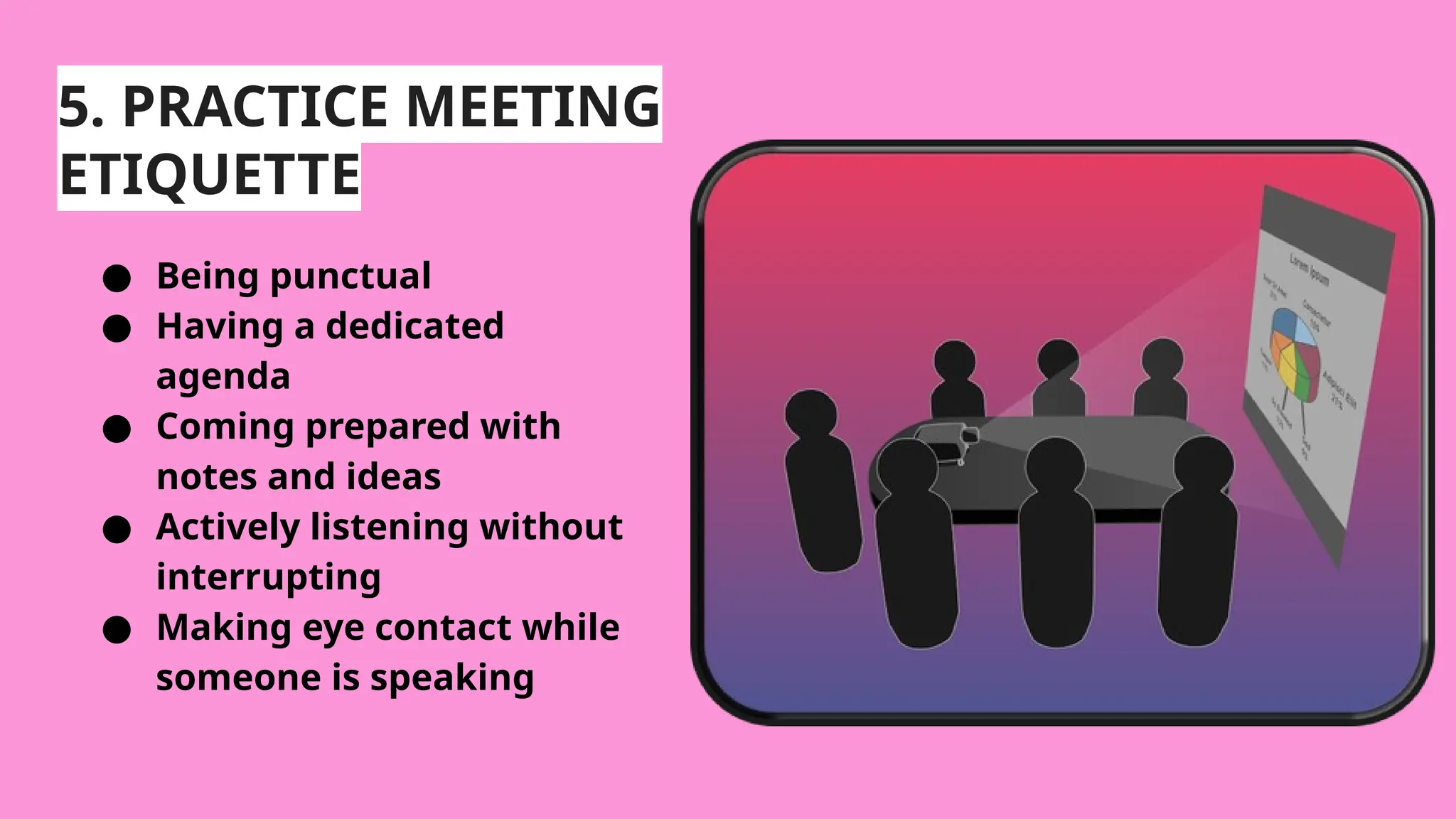
5. PRACTICE MEETING
ETIQUETTE
● Being punctual
● Having a dedicated
agenda
● Coming prepared with
notes and ideas
● Actively listening without
interrupting
● Making eye contact while
someone is speaking
6. PROVIDE CLARITY ON
YOUR AVAILABILITY.
Be responsive.
Through email, chats, texts or
call.
7. BRIDGE GAPS
BETWEEN OFFICE
AND REMOTE
INTERACTIONS.
Make a conscious effort to
keep your remote peers in the
loop about anything going at
work.
8.COMMUNICATE
EFFECTIVELY TO
AVOID CONFUSION
Clear communication
minimizes confusion and
promotes
straightforward and
effective communication
sharing.
9. BE AWARE OF
NON-VERBAL
CUES
Be mindful of your
attitude. It’s not about
what we say, it’s about
what we do.
10. USE SHARED
RESOURCES
RESPONSIBLY.
Always assume that everything in the
workplace is public property. Ensure
that supplies and equipment are used
responsibly and left in good condition
for others.
11. BE MINDFUL
OF SPACE.
Office spaces’ aim is to
foster effective
collaboration. Be also
considerate of others’
space and comfort
levels.
12. AVOID GOSSIP AND
RESPECT YOUR CO-
WORKERS’ PRIVACY.
Social interactions in the
workplace are important
but they shouldn’t make
anyone feel uncomfortable.
13. Secure confidential
documents.
Always store
sensitive files in
cabinets.
14. OFFER HELP
TO OTHERS.
Offer assistance to a
struggling coworker.
15. STAY HOME IF
YOU ARE UNWELL.
Prioritize your health.
16. KEEP IT
CLEAN AND
UNTIDY.
Cleanliness improves
productivity.
17. BE MINDFUL
OF SMELLS
Smells can be quite
distracting. Be mindful
of smells as a sign of
respect.
THANK YOU.
Game:
Pass the
charades
(Action word +
object)

WORKPLACE ETIQUETTE Orientation for employees.pptx

  • 1.
    WORKPLACE ETIQUETTE RE-ORIENTATION January 23, 2025 (Thursday) Daisee’s Function Room 2PM-4PM
  • 2.
    WHAT IS WORKPLACE ETIQUETTE? Workplaceetiquette refers to the set of accepted behaviors, norms, and manners that guide how people interact in a professional environment. It encompasses the expectations for how employees should communicate, behave, and treat one another in the workplace. This can include everything from how you dress and how you speak to colleagues, to how you handle conflicts or use office resources.
  • 3.
    WHY IS ITIMPORTANT? ● Fostering respectful and cooperative atmosphere ● Managing communications ● Making everyone feel valued, respected and understood ● Build healthy office environment ● Workplace conflict-free
  • 4.
    Things that wereobserved: ● Unprofessional Attitude (e.g respect your superiors) ● Miscommunication ● Overlooking of Hygiene and Cleanliness ● Role Delegation ● Inappropriate habits (e.g eating in prohibited areas like staff lockers) ● Taking initiative ● Reenactment
  • 5.
    RULES FOR INTERACTINGWITH COLLEAGUES AT WORK Rules for interacting with colleagues at work
  • 6.
    1.BE PUNCTUAL. Being ontime is key to keeping things for professional.
  • 7.
    2. DRESS APPROPRIATELY. Following workplacedress code shows your professionalism and respect for workplace culture.
  • 8.
    Complete prescribed uniform 1.White t-shirt 2. Black pants 3. Closed shoes 4. Hairnet 5. Apron Prohibited 6. Long nails/nail extensions/nail polish 7. Fake lashes/lash extensions 8. Jewelry (Accessories, earrings etc.) 9. Make-up
  • 9.
    3. BE RESPECTFUL. ●Showing kindness to everyone. ● Being considerate is also a sign of respect.
  • 10.
    4. GREET EVERYONE Makeit a point to say “Good morning” to your team when you arrive in the morning before you make it to your work area. A simple act will help foster a friendly and inclusive office environment.
  • 11.
    5. PRACTICE MEETING ETIQUETTE ●Being punctual ● Having a dedicated agenda ● Coming prepared with notes and ideas ● Actively listening without interrupting ● Making eye contact while someone is speaking
  • 12.
    6. PROVIDE CLARITYON YOUR AVAILABILITY. Be responsive. Through email, chats, texts or call.
  • 13.
    7. BRIDGE GAPS BETWEENOFFICE AND REMOTE INTERACTIONS. Make a conscious effort to keep your remote peers in the loop about anything going at work.
  • 14.
    8.COMMUNICATE EFFECTIVELY TO AVOID CONFUSION Clearcommunication minimizes confusion and promotes straightforward and effective communication sharing.
  • 15.
    9. BE AWAREOF NON-VERBAL CUES Be mindful of your attitude. It’s not about what we say, it’s about what we do.
  • 16.
    10. USE SHARED RESOURCES RESPONSIBLY. Alwaysassume that everything in the workplace is public property. Ensure that supplies and equipment are used responsibly and left in good condition for others.
  • 17.
    11. BE MINDFUL OFSPACE. Office spaces’ aim is to foster effective collaboration. Be also considerate of others’ space and comfort levels.
  • 18.
    12. AVOID GOSSIPAND RESPECT YOUR CO- WORKERS’ PRIVACY. Social interactions in the workplace are important but they shouldn’t make anyone feel uncomfortable.
  • 19.
    13. Secure confidential documents. Alwaysstore sensitive files in cabinets.
  • 20.
    14. OFFER HELP TOOTHERS. Offer assistance to a struggling coworker.
  • 21.
    15. STAY HOMEIF YOU ARE UNWELL. Prioritize your health.
  • 22.
    16. KEEP IT CLEANAND UNTIDY. Cleanliness improves productivity.
  • 23.
    17. BE MINDFUL OFSMELLS Smells can be quite distracting. Be mindful of smells as a sign of respect.
  • 24.
  • 25.