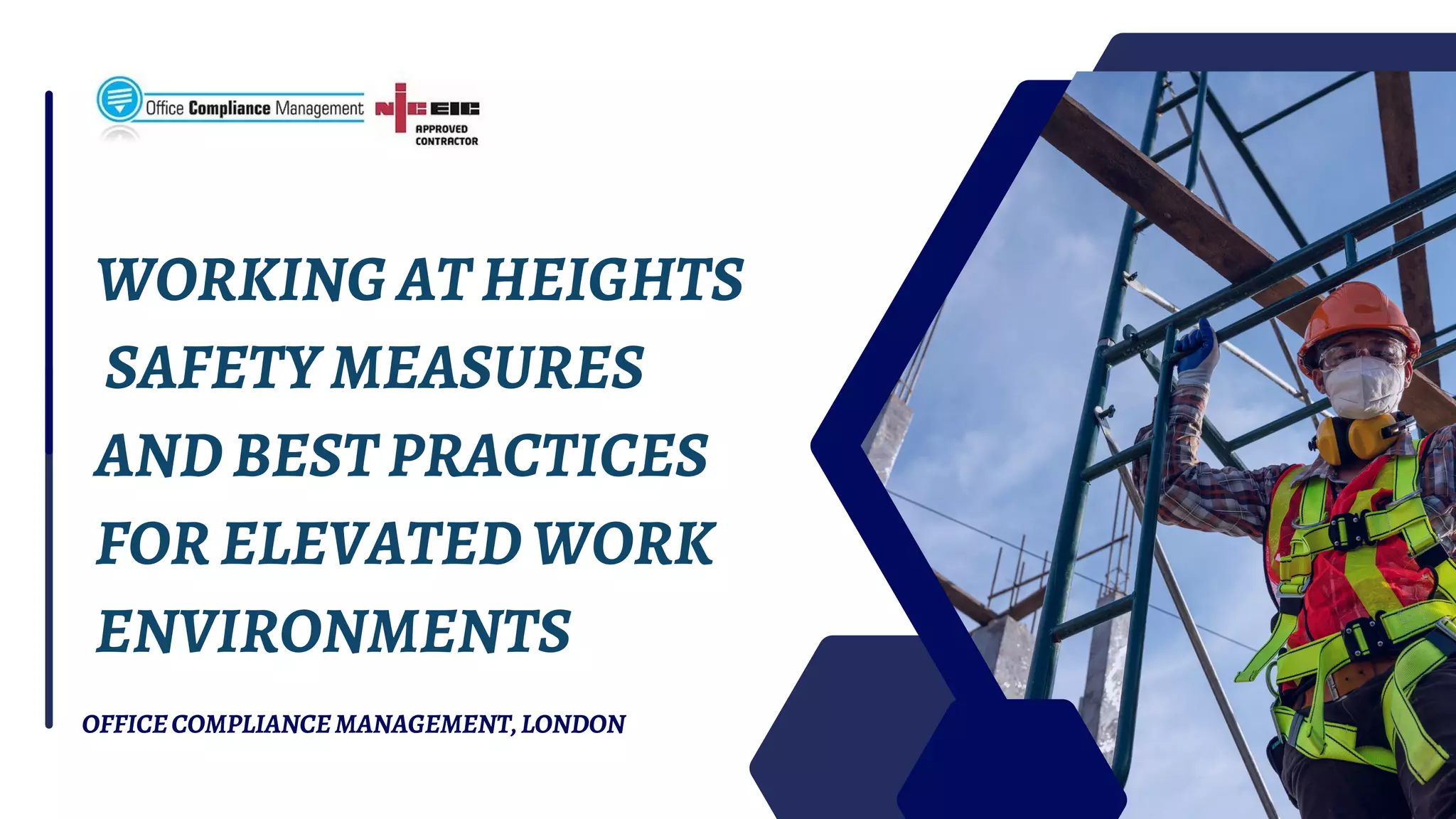
WORKINGATHEIGHTS
SAFETYMEASURES
ANDBESTPRACTICES
FORELEVATEDWORK
ENVIRONMENTS
OFFICECOMPLIANCEMANAGEMENT,LONDON
INTRODUCTION
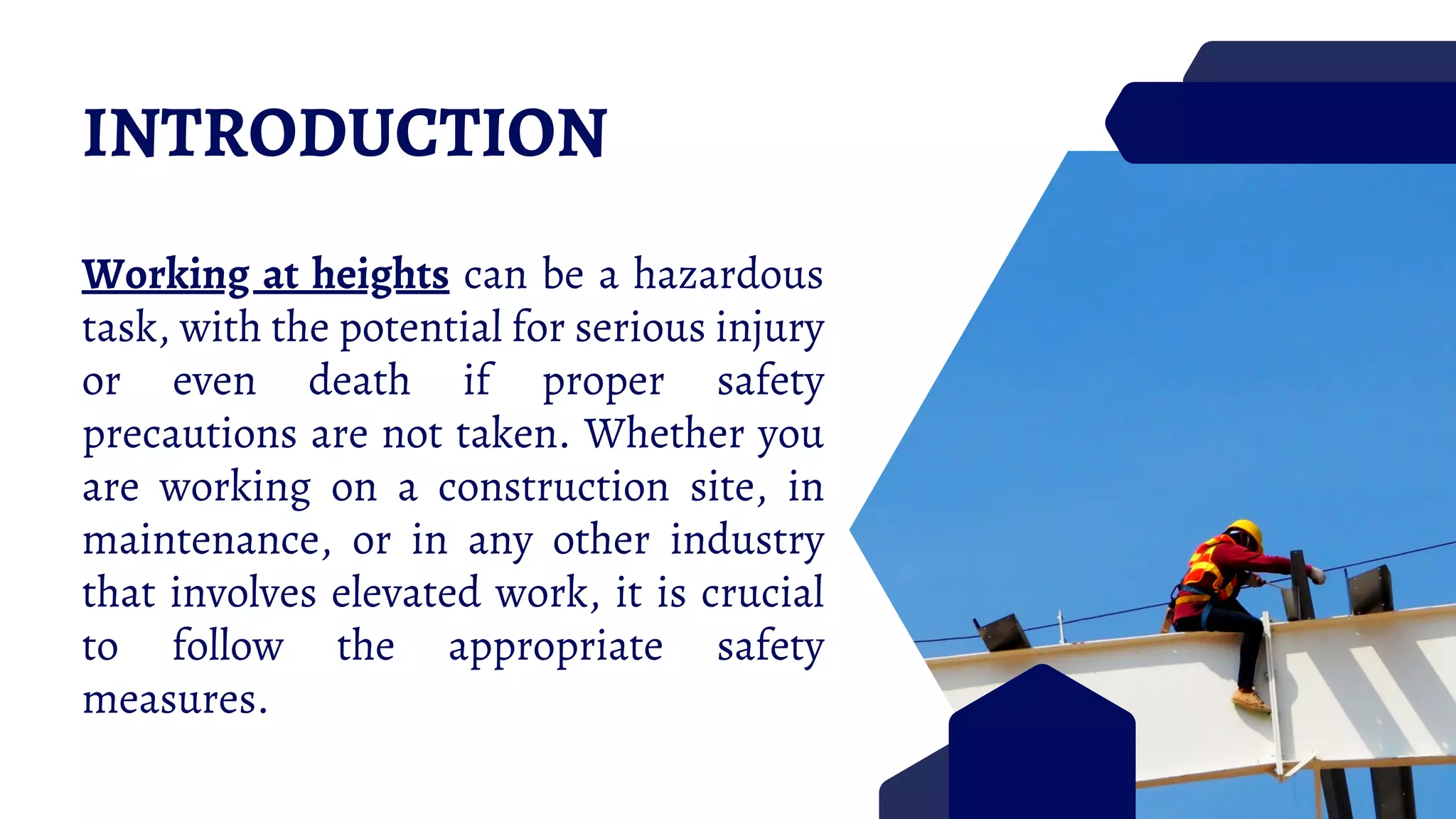
Working at heights can be a hazardous
task, with the potential for serious injury
or even death if proper safety
precautions are not taken. Whether you
are working on a construction site, in
maintenance, or in any other industry
that involves elevated work, it is crucial
to follow the appropriate safety
measures.
10IMPORTANT
SAFETYTIPSOF
WORKINGAT
HEIGHTSIN2023
working at
heights
The right equipment is essential when
working at height. This includes ladders,
scaffolds, and harnesses, among others.
Make sure that the equipment is in good
condition, is rated for the weight and
height requirements of the job, and is
appropriate for the task at hand.
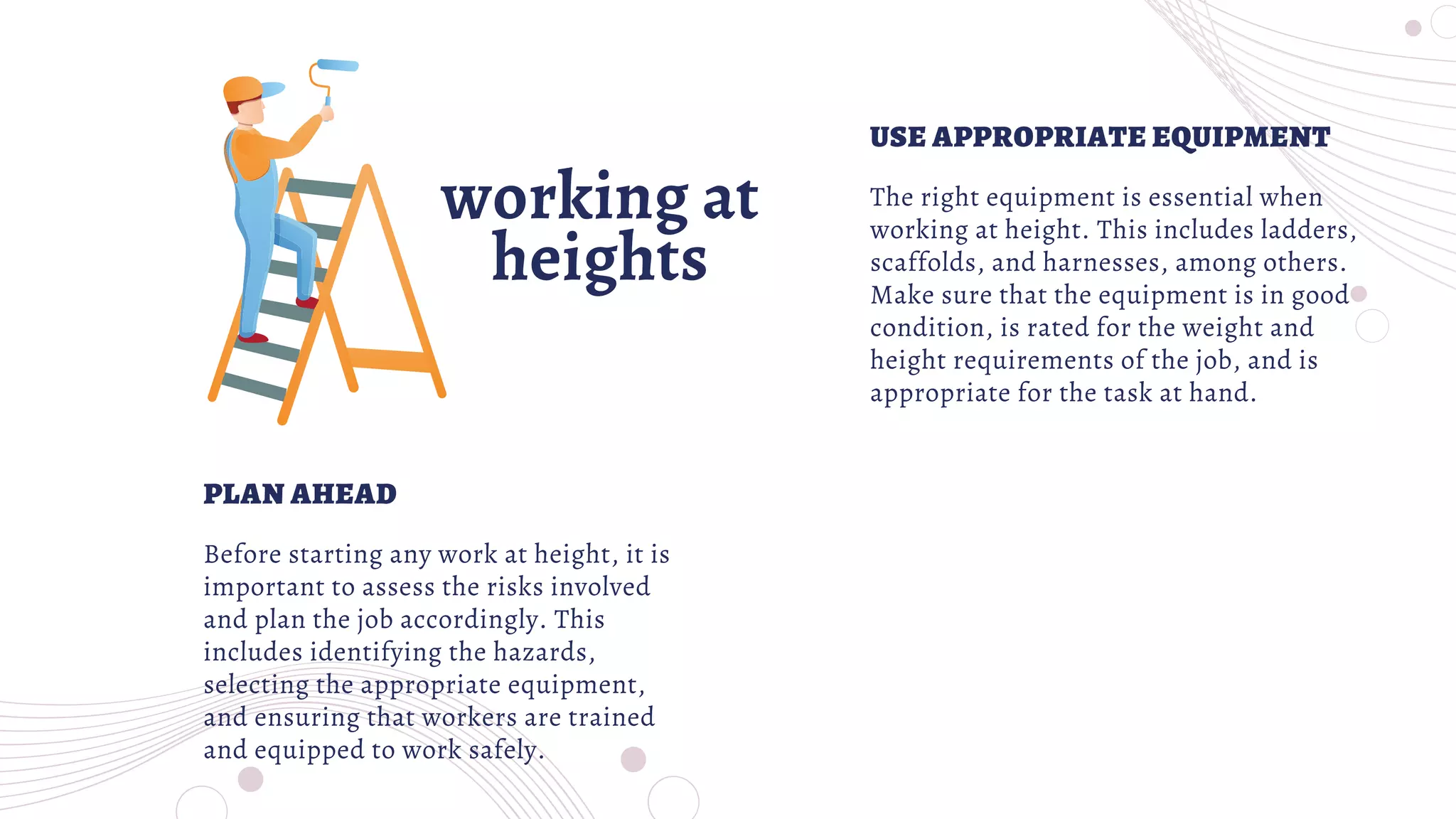
Before starting any work at height, it is
important to assess the risks involved
and plan the job accordingly. This
includes identifying the hazards,
selecting the appropriate equipment,
and ensuring that workers are trained
and equipped to work safely.
USE APPROPRIATE EQUIPMENT
PLAN AHEAD
working at
heights
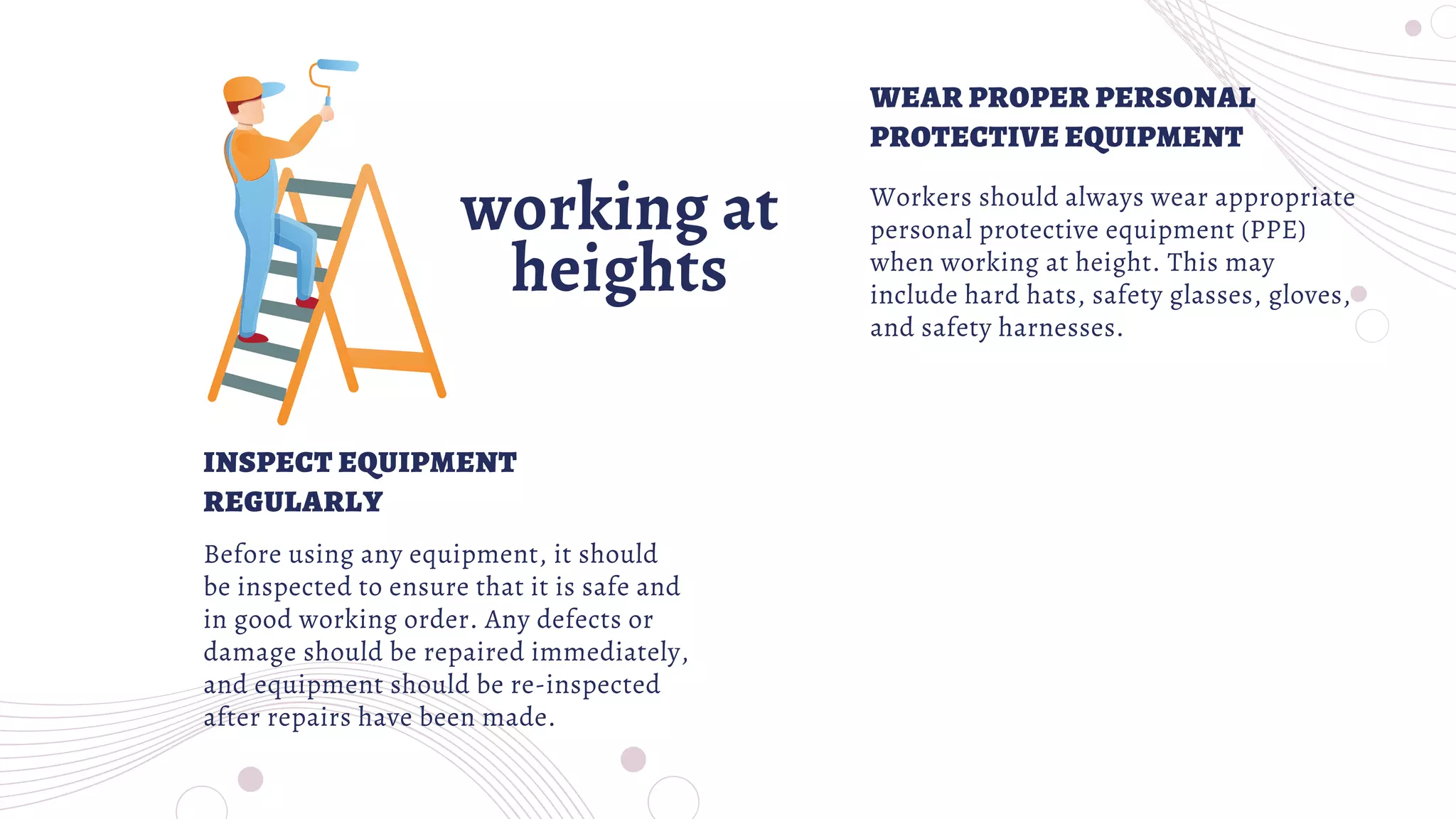
Workers should always wear appropriate
personal protective equipment (PPE)
when working at height. This may
include hard hats, safety glasses, gloves,
and safety harnesses.
Before using any equipment, it should
be inspected to ensure that it is safe and
in good working order. Any defects or
damage should be repaired immediately,
and equipment should be re-inspected
after repairs have been made.
WEAR PROPER PERSONAL
PROTECTIVE EQUIPMENT
INSPECT EQUIPMENT
REGULARLY
working at
heights
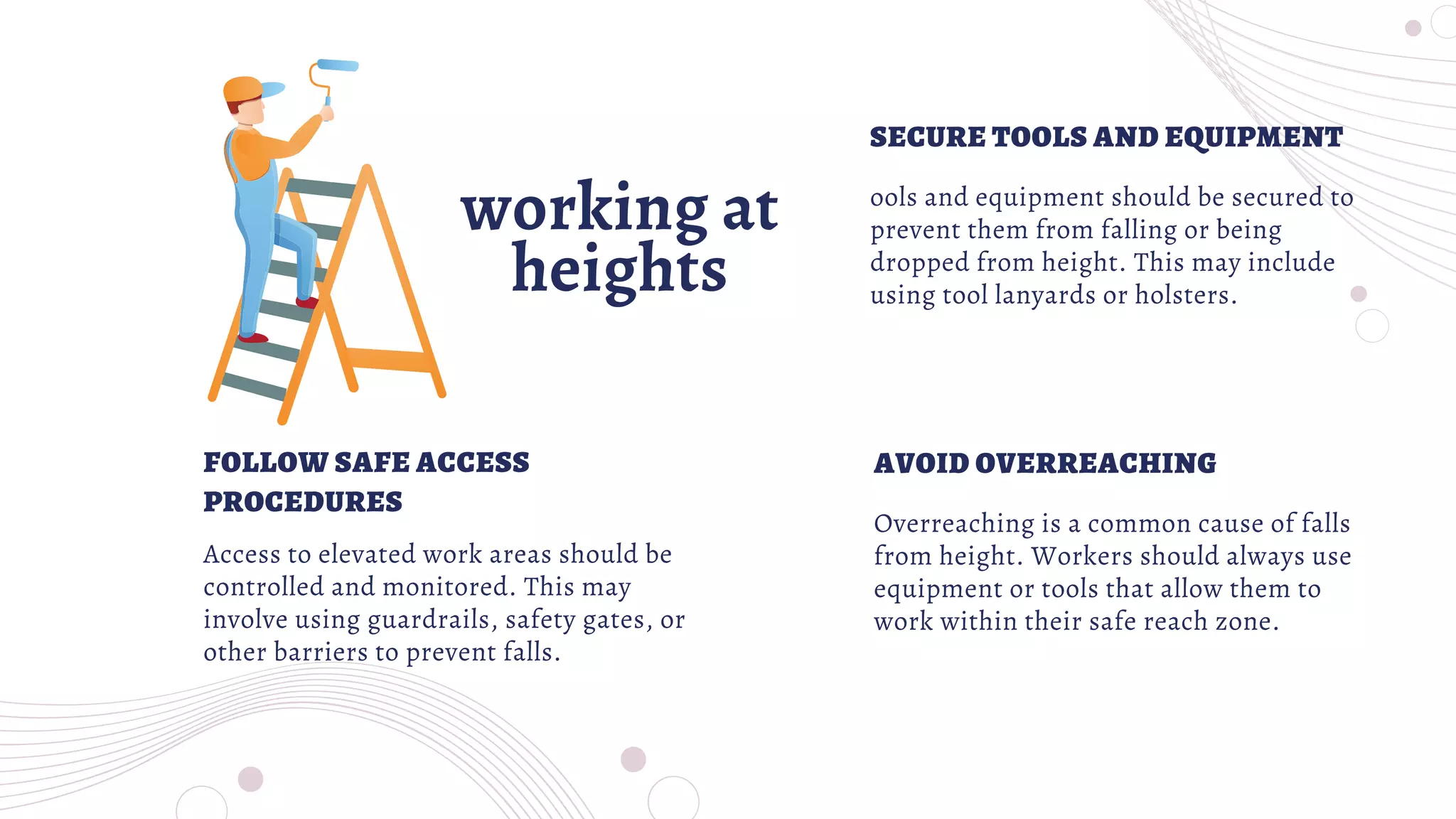
ools and equipment should be secured to
prevent them from falling or being
dropped from height. This may include
using tool lanyards or holsters.
Access to elevated work areas should be
controlled and monitored. This may
involve using guardrails, safety gates, or
other barriers to prevent falls.
SECURE TOOLS AND EQUIPMENT
FOLLOW SAFE ACCESS
PROCEDURES
Overreaching is a common cause of falls
from height. Workers should always use
equipment or tools that allow them to
work within their safe reach zone.
AVOID OVERREACHING
working at
heights
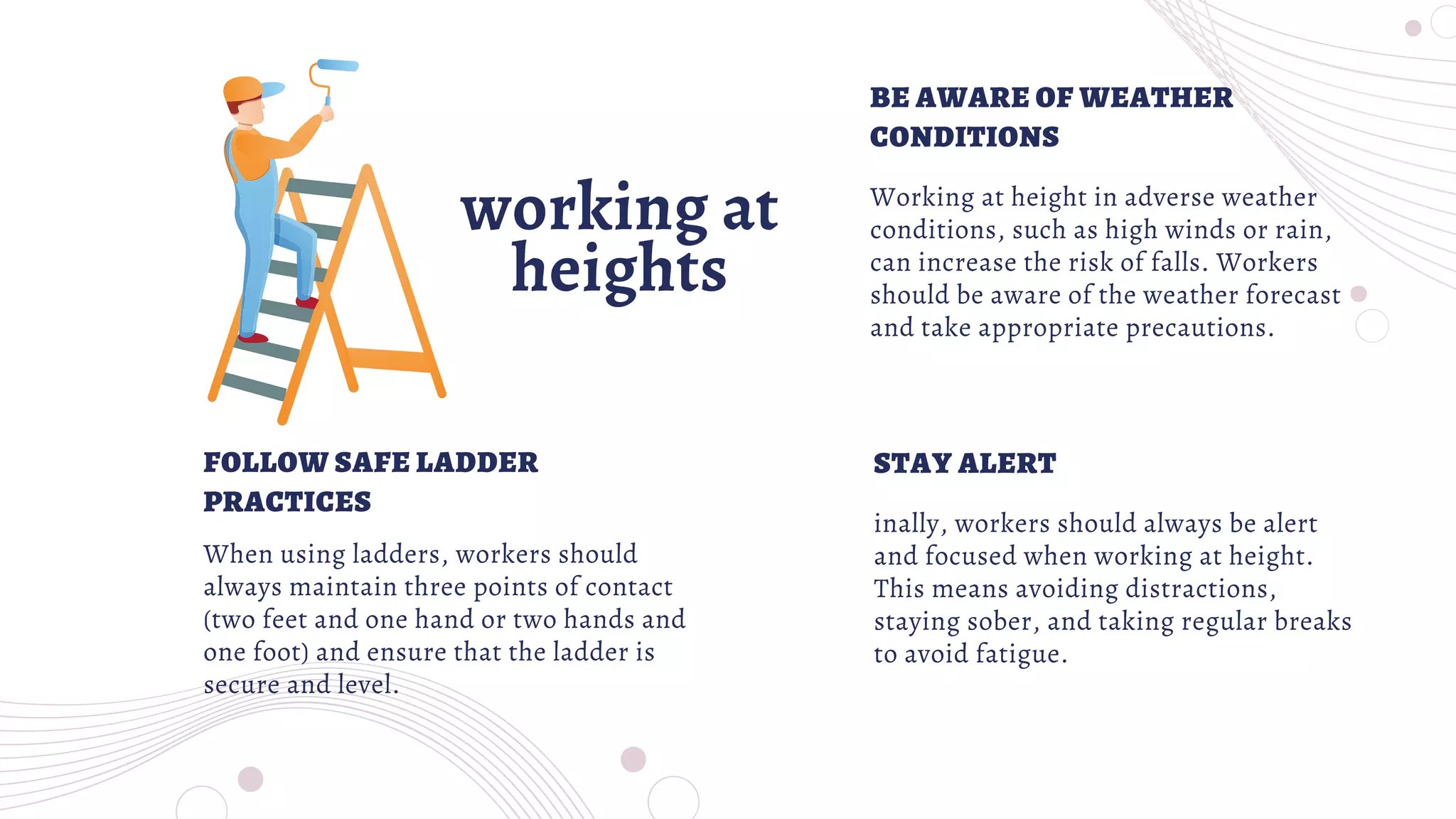
Working at height in adverse weather
conditions, such as high winds or rain,
can increase the risk of falls. Workers
should be aware of the weather forecast
and take appropriate precautions.
When using ladders, workers should
always maintain three points of contact
(two feet and one hand or two hands and
one foot) and ensure that the ladder is
secure and level.
BE AWARE OF WEATHER
CONDITIONS
FOLLOW SAFE LADDER
PRACTICES
inally, workers should always be alert
and focused when working at height.
This means avoiding distractions,
staying sober, and taking regular breaks
to avoid fatigue.
STAY ALERT
CONCLUSION
working at height can be a dangerous task, but by
following these top 10 safety tips, workers can
minimize the risk of falls and other accidents. It is the
responsibility of employers to provide the appropriate
training and equipment, and it is the responsibility of
workers to follow safe working practices. By working
together, we can create a safer work environment for
all.
CONTACTUS
020 3856 9802
https://www.office-compliance.co.uk/
info@office-compliance.co.uk
Newton Chambers Rd Chapeltown England
Sheffield, south Yorkshire S35 2PH
Get in touch with us
THANKYOU
FOR YOUR ATTENTION

Working at Heights Safety Measures and Best Practices for Elevated Work Environments

  • 1.
  • 2.
    INTRODUCTION Working at heightscan be a hazardous task, with the potential for serious injury or even death if proper safety precautions are not taken. Whether you are working on a construction site, in maintenance, or in any other industry that involves elevated work, it is crucial to follow the appropriate safety measures.
  • 3.
  • 4.
    working at heights The rightequipment is essential when working at height. This includes ladders, scaffolds, and harnesses, among others. Make sure that the equipment is in good condition, is rated for the weight and height requirements of the job, and is appropriate for the task at hand. Before starting any work at height, it is important to assess the risks involved and plan the job accordingly. This includes identifying the hazards, selecting the appropriate equipment, and ensuring that workers are trained and equipped to work safely. USE APPROPRIATE EQUIPMENT PLAN AHEAD
  • 5.
    working at heights Workers shouldalways wear appropriate personal protective equipment (PPE) when working at height. This may include hard hats, safety glasses, gloves, and safety harnesses. Before using any equipment, it should be inspected to ensure that it is safe and in good working order. Any defects or damage should be repaired immediately, and equipment should be re-inspected after repairs have been made. WEAR PROPER PERSONAL PROTECTIVE EQUIPMENT INSPECT EQUIPMENT REGULARLY
  • 6.
    working at heights ools andequipment should be secured to prevent them from falling or being dropped from height. This may include using tool lanyards or holsters. Access to elevated work areas should be controlled and monitored. This may involve using guardrails, safety gates, or other barriers to prevent falls. SECURE TOOLS AND EQUIPMENT FOLLOW SAFE ACCESS PROCEDURES Overreaching is a common cause of falls from height. Workers should always use equipment or tools that allow them to work within their safe reach zone. AVOID OVERREACHING
  • 7.
    working at heights Working atheight in adverse weather conditions, such as high winds or rain, can increase the risk of falls. Workers should be aware of the weather forecast and take appropriate precautions. When using ladders, workers should always maintain three points of contact (two feet and one hand or two hands and one foot) and ensure that the ladder is secure and level. BE AWARE OF WEATHER CONDITIONS FOLLOW SAFE LADDER PRACTICES inally, workers should always be alert and focused when working at height. This means avoiding distractions, staying sober, and taking regular breaks to avoid fatigue. STAY ALERT
  • 8.
    CONCLUSION working at heightcan be a dangerous task, but by following these top 10 safety tips, workers can minimize the risk of falls and other accidents. It is the responsibility of employers to provide the appropriate training and equipment, and it is the responsibility of workers to follow safe working practices. By working together, we can create a safer work environment for all.
  • 9.
    CONTACTUS 020 3856 9802 https://www.office-compliance.co.uk/ info@office-compliance.co.uk NewtonChambers Rd Chapeltown England Sheffield, south Yorkshire S35 2PH Get in touch with us
  • 10.