Working at Height:
Safety, Procedures,
and Best Practices
Working at height is defined as being above the ground level,
where a fall could result in injury. This presentation covers the
importance of safety, risk assessment, and best practices.
Risk Assessment
Identifying Potential
Hazards
Look for hazards like fragile
surfaces, unprotected
edges, and power lines that
could cause harm.
Assessing the
Risks
Determine the likelihood
and severity of each
identified hazard to
prioritize safety measures.
Controlling the
Risks
Mitigate the identified risks
with measures like
guardrails, safety nets, or
personal protective
equipment.
Best Practices
Use of Protective
Equipment
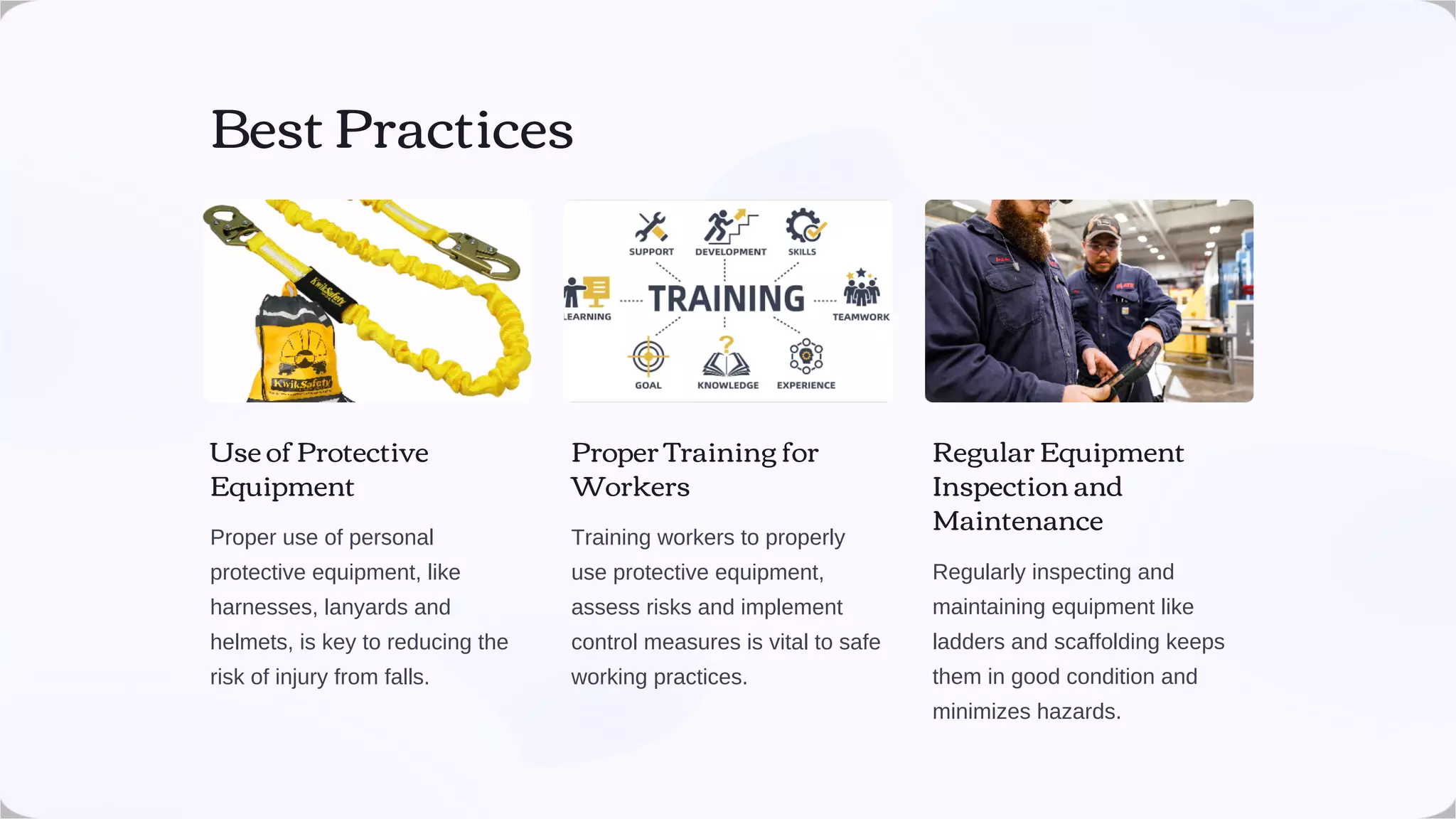
Proper use of personal
protective equipment, like
harnesses, lanyards and
helmets, is key to reducing the
risk of injury from falls.
Proper Training for
Workers
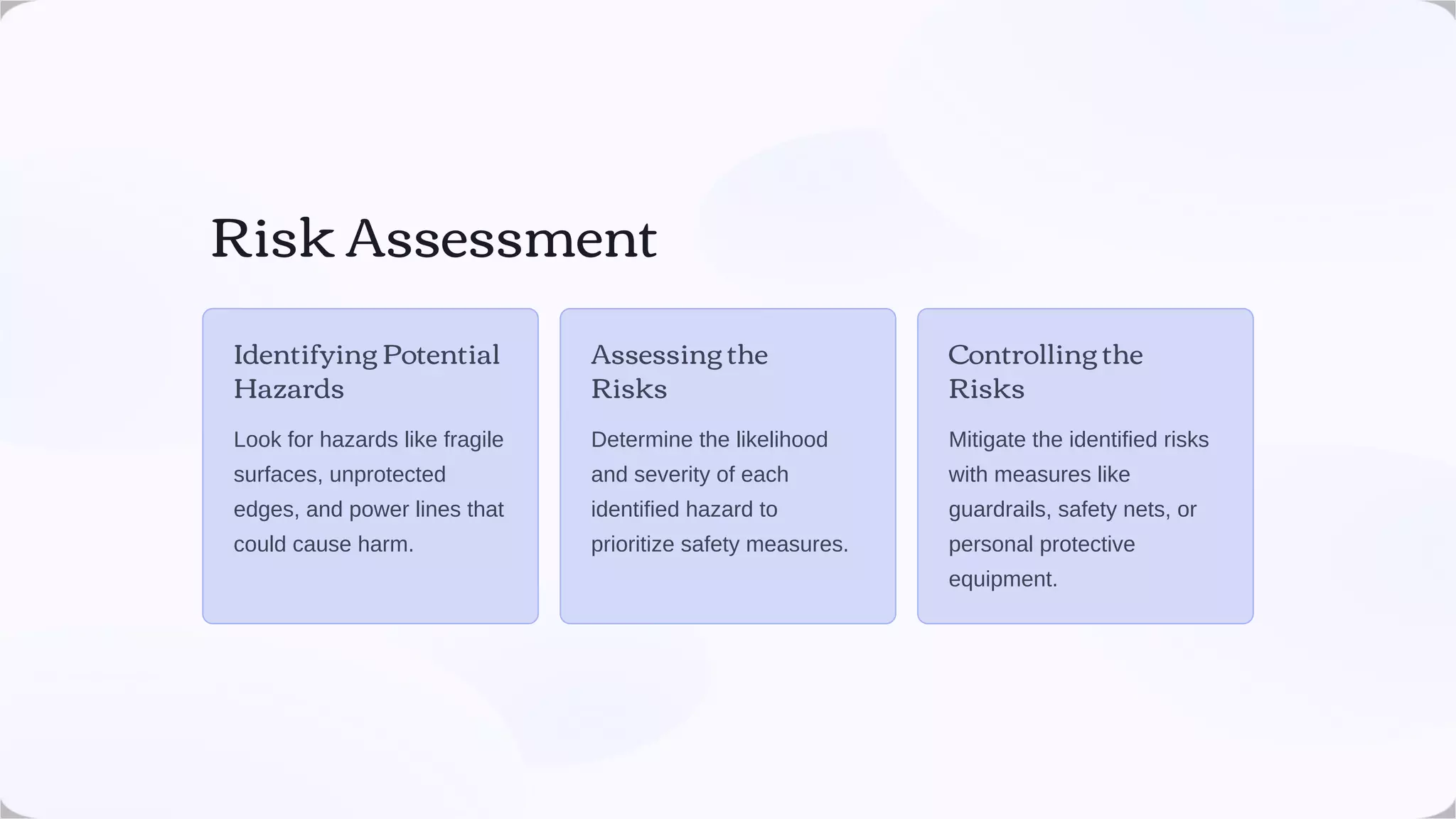
Training workers to properly
use protective equipment,
assess risks and implement
control measures is vital to safe
working practices.
Regular Equipment
Inspection and
Maintenance
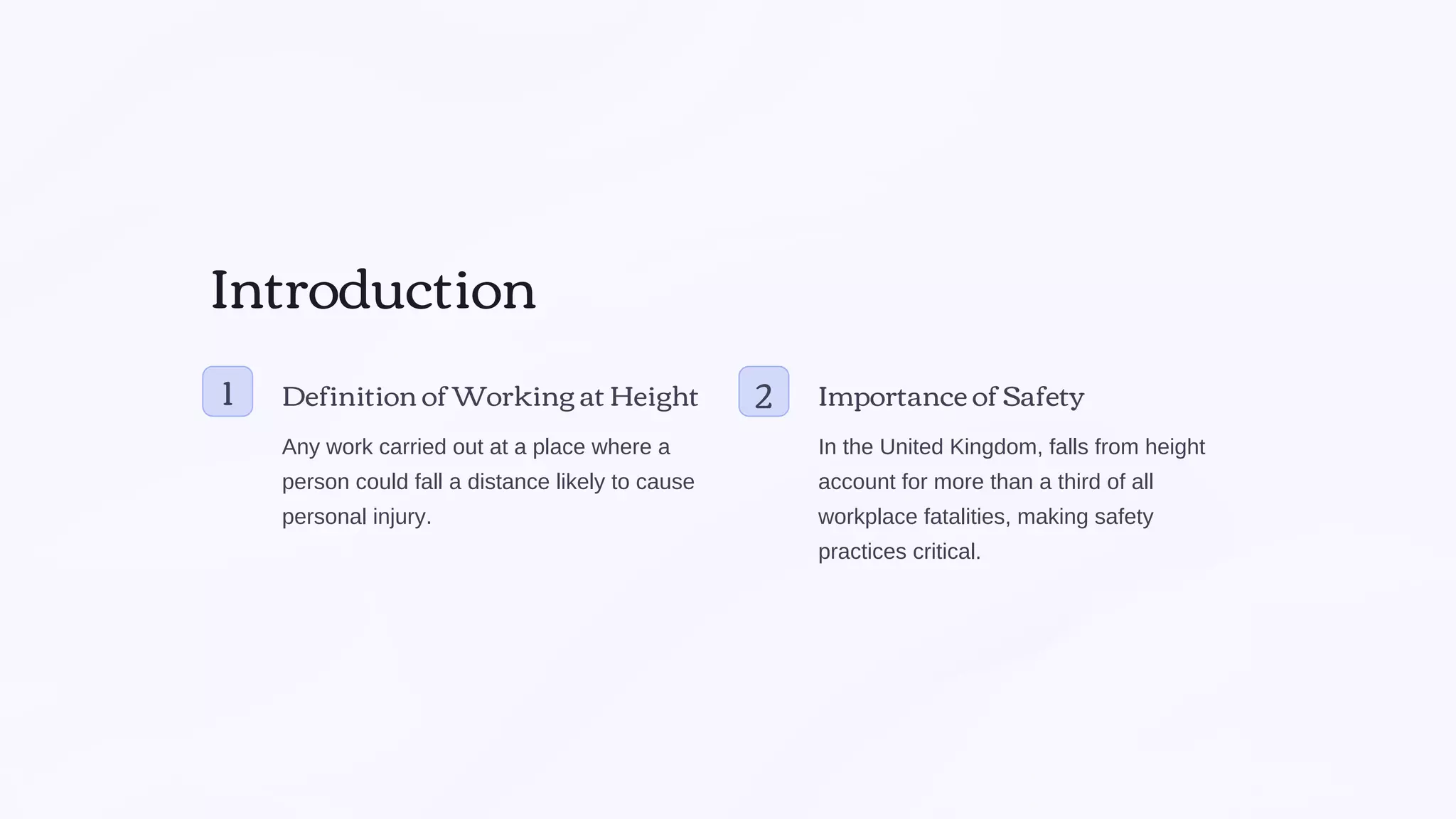
Regularly inspecting and
maintaining equipment like
ladders and scaffolding keeps
them in good condition and
minimizes hazards.
Introduction
Definition of Working at Height
Any work carried out at a place where a
person could fall a distance likely to cause
personal injury.
2 Importance of Safety
In the United Kingdom, falls from height
account for more than a third of all
workplace fatalities, making safety
practices critical.
1
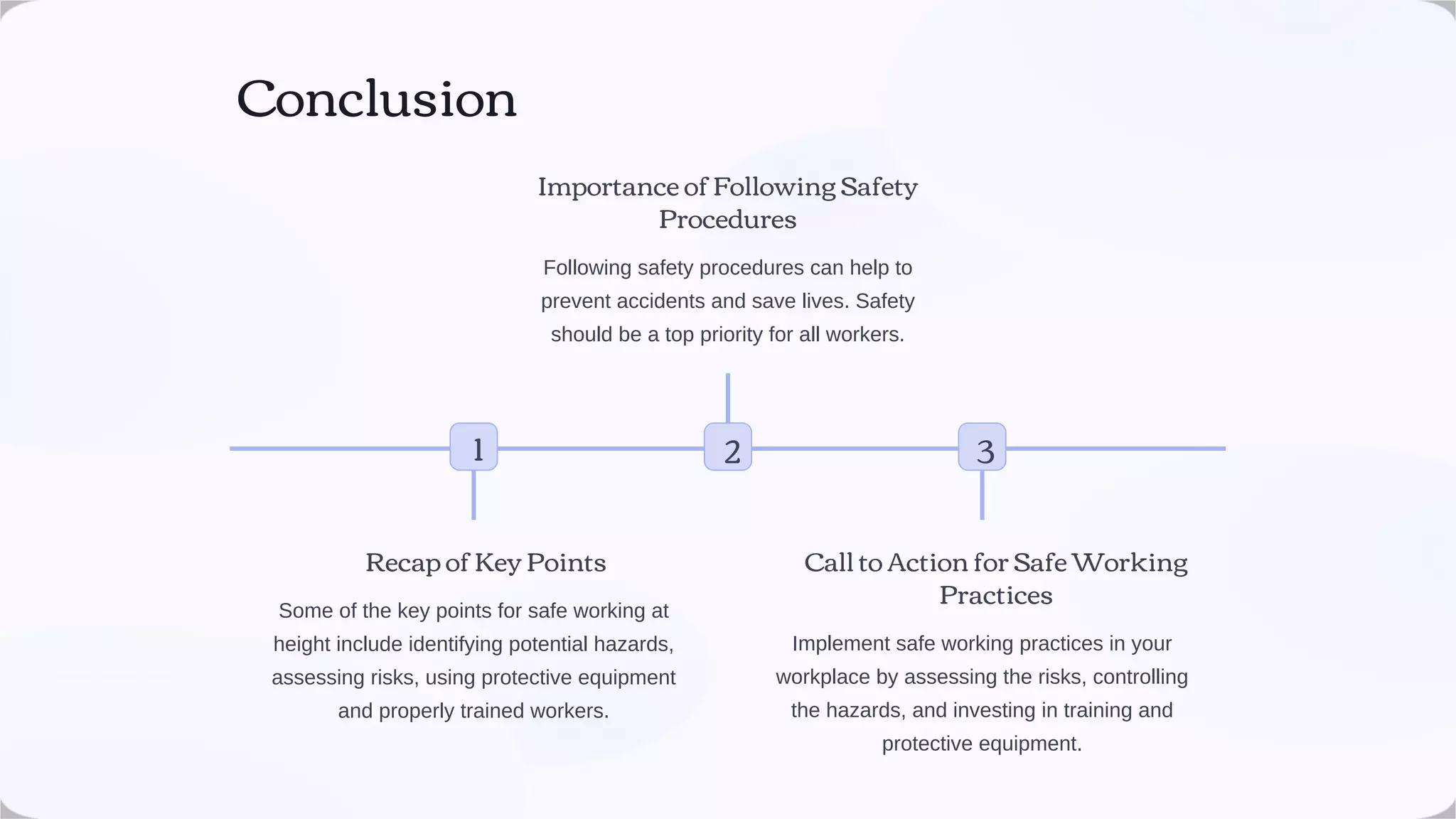
Conclusion
Recap of Key Points
Some of the key points for safe working at
height include identifying potential hazards,
assessing risks, using protective equipment
and properly trained workers.
2
Importance of Following Safety
Procedures
Following safety procedures can help to
prevent accidents and save lives. Safety
should be a top priority for all workers.
3
Call to Action for Safe Working
Practices
Implement safe working practices in your
workplace by assessing the risks, controlling
the hazards, and investing in training and
protective equipment.
1
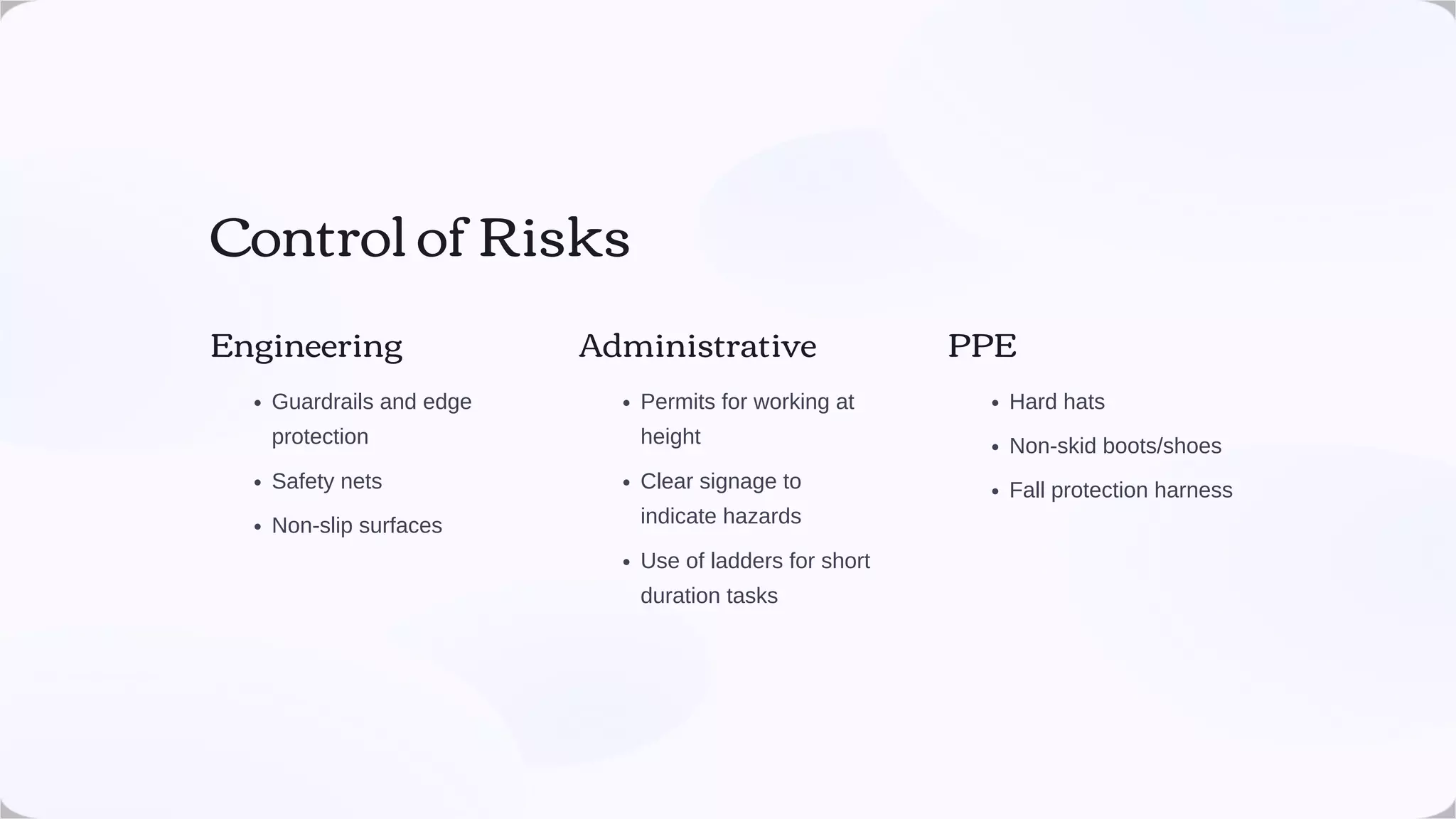
Control of Risks
Engineering
Guardrails and edge
protection
Safety nets
Non-slip surfaces
Administrative
Permits for working at
height
Clear signage to
indicate hazards
Use of ladders for short
duration tasks
PPE
Hard hats
Non-skid boots/shoes
Fall protection harness
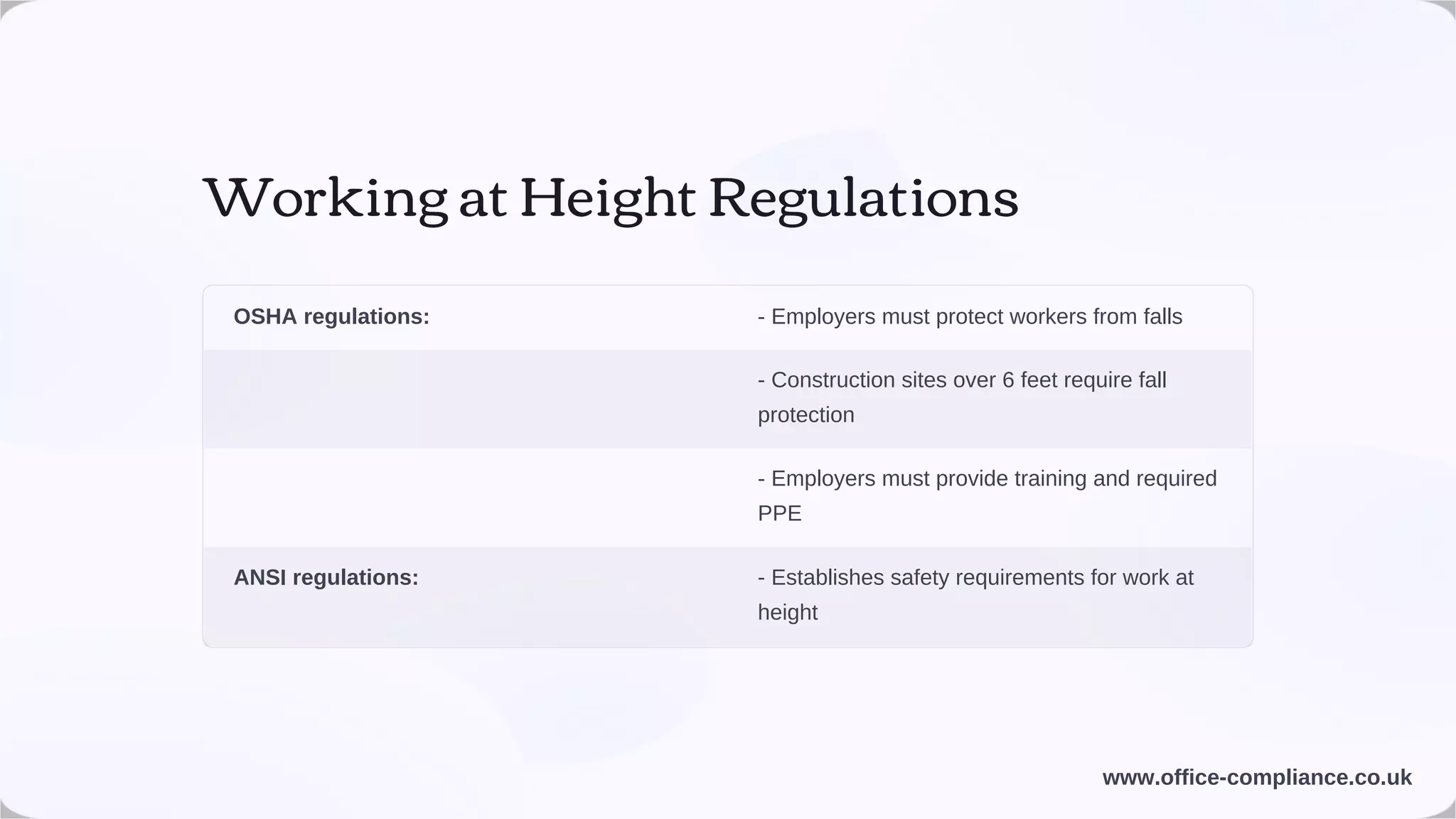
Working at Height Regulations
OSHA regulations: - Employers must protect workers from falls
- Construction sites over 6 feet require fall
protection
- Employers must provide training and required
PPE
ANSI regulations: - Establishes safety requirements for work at
height
www.office-compliance.co.uk

Working at Height Safety, Procedures, and Best Practices

  • 1.
    Working at Height: Safety,Procedures, and Best Practices Working at height is defined as being above the ground level, where a fall could result in injury. This presentation covers the importance of safety, risk assessment, and best practices.
  • 2.
    Risk Assessment Identifying Potential Hazards Lookfor hazards like fragile surfaces, unprotected edges, and power lines that could cause harm. Assessing the Risks Determine the likelihood and severity of each identified hazard to prioritize safety measures. Controlling the Risks Mitigate the identified risks with measures like guardrails, safety nets, or personal protective equipment.
  • 3.
    Best Practices Use ofProtective Equipment Proper use of personal protective equipment, like harnesses, lanyards and helmets, is key to reducing the risk of injury from falls. Proper Training for Workers Training workers to properly use protective equipment, assess risks and implement control measures is vital to safe working practices. Regular Equipment Inspection and Maintenance Regularly inspecting and maintaining equipment like ladders and scaffolding keeps them in good condition and minimizes hazards.
  • 4.
    Introduction Definition of Workingat Height Any work carried out at a place where a person could fall a distance likely to cause personal injury. 2 Importance of Safety In the United Kingdom, falls from height account for more than a third of all workplace fatalities, making safety practices critical. 1
  • 5.
    Conclusion Recap of KeyPoints Some of the key points for safe working at height include identifying potential hazards, assessing risks, using protective equipment and properly trained workers. 2 Importance of Following Safety Procedures Following safety procedures can help to prevent accidents and save lives. Safety should be a top priority for all workers. 3 Call to Action for Safe Working Practices Implement safe working practices in your workplace by assessing the risks, controlling the hazards, and investing in training and protective equipment. 1
  • 6.
    Control of Risks Engineering Guardrailsand edge protection Safety nets Non-slip surfaces Administrative Permits for working at height Clear signage to indicate hazards Use of ladders for short duration tasks PPE Hard hats Non-skid boots/shoes Fall protection harness
  • 7.
    Working at HeightRegulations OSHA regulations: - Employers must protect workers from falls - Construction sites over 6 feet require fall protection - Employers must provide training and required PPE ANSI regulations: - Establishes safety requirements for work at height www.office-compliance.co.uk