Working at Height
WorkingSafely at Height means
- preventing accidents when a person working at
height
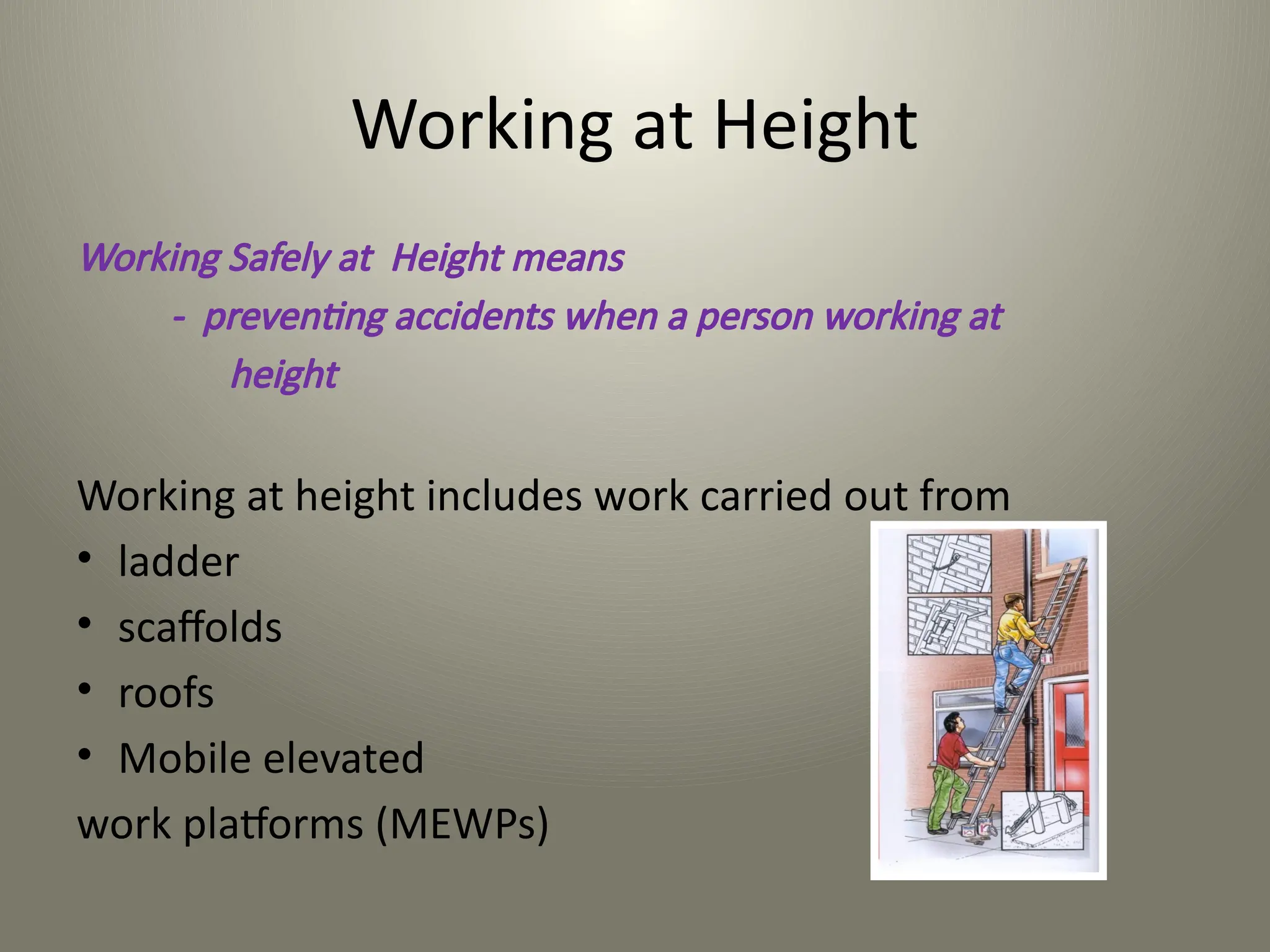
Working at height includes work carried out from
• ladder
• scaffolds
• roofs
• Mobile elevated
work platforms (MEWPs)
Working at Height
Ifa person is required to
work at height, he is at risk of
falling and requires to take
special precautions
5.
Working at Height
•Falls from height are common accidents at
workplace. If a person is required to work at
height, the employer and the individual share
the responsibility for safety.
6.
Working at Height
Responsibilities
Theemployer
• Identify hazards and assess the risks involved
• Take adequate steps to eliminate or reduce risks
• Provide and maintain safe system of work and
safe equipment
• Provide proper personal protective equipment
(PPE) and training to use it
• Provide proper training for the job
7.
Working at Height
Individualresponsibilities
• Understand the dangers of the job so that
reduce any risk level
• Follow safety rules and procedures
• Use the PPE provided and use / maintain it
properly
• Take suitable care for the safety of yourself and
others
• Report any hazards to the supervisor / manager
8.
Working at Height
•The cost of accidents
• Direct Cost
• Indirect Cost
Team work helps to keep safe when working at height
9.
Working at Height
Whatcauses falls from height ?
Lack of Training or experience
Horseplay
10.
Working at Height
Failingto check equipment before using it
Not using equipment properly
Equipment failure
11.
Working at Height
Changes in weather conditions
No established safety procedure
Not following safety procedures
12.
Working at Height
Sudden illness
Exposure to heat
Personal tiredness
The right actions and attitudes can prevent accidents
Know what the individual can do to prevent falling
accidents
Understand what as an individual capable of doing
Do not try to do anything unsafely. Only do tasks the
individual is trained and authorized to do
13.
Working at Height
•Know the equipment
What it is to be used for.
Ensure it is in good working condition
• Check the condition for example
• ladder stiles and rungs
• hooks, bolts, braces, supports
• ropes, cables, slings
• personal protective equipment required
• Report defective equipment and unsafe
conditions
14.
Working at Height
•Look for hazards
Before start of the work -
• Consider weather conditions -
windy / rainy conditions
• Plan your work
• Before start, ensure you can work
from proper platform with railing
or other secured place
15.
Working at Height
•Do not smoke or consume alcohol, drugs or
pan
• Follow safety procedures
• In the workplace and use appropriate
personal protective equipment where
required
16.
Working at Height
•Personal protective equipment (PPE)
• PPE can reduce the risk of injury if you do fail The
PPE requirement
• fall-arrest equipment such as safety harness to stop fall
• a safety helmet to protect head from hit and falling
objects
• safety shoes to protect feet and reduce the risk of slip
and fall
• gloves to protect your hands
• appropriate clothing to protect against weather
conditions
17.
Working at Height
WearPPE
• failure to wear PPE will not protect you from
the risk of injury
• trained to use the PPE
• follow the manufacturer's instructions
• Always check the PPE
• select the appropriate PPE for the job and
maintain it in good condition.



![WAH Safety Awareness 04.12.2019 [Autosaved].pptx](https://cdn.slidesharecdn.com/ss_thumbnails/wahsafetyawareness04-250326150415-38c03f56-thumbnail.jpg?width=640&height=640&fit=bounds)


