Work at Height
Hazardsand
Precautions
Work at height is the practice of working at a height from the ground
or other surfaces. It can range from working on a ladder or scaffold
to working on a roof or skyscraper. This presentation covers the
common hazards at work at height and the necessary precautions to
ensure safety.
2.
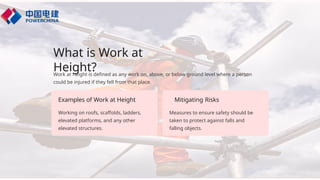
What is Workat
Height?
Working on roofs, scaffolds, ladders,
elevated platforms, and any other
elevated structures.
Work at height is defined as any work on, above, or below ground level where a person
could be injured if they fell from that place.
Examples of Work at Height Mitigating Risks
Measures to ensure safety should be
taken to protect against falls and
falling objects.
3.
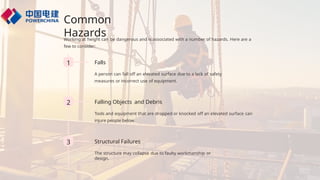
Common
Hazards
Working at heightcan be dangerous and is associated with a number of hazards. Here are a
few to consider:
1 Falls
A person can fall off an elevated surface due to a lack of safety
measures or incorrect use of equipment.
2 Falling Objects and Debris
Tools and equipment that are dropped or knocked off an elevated surface can
injure people below.
3 Structural Failures
The structure may collapse due to faulty workmanship or
design.
4.
Preparation and
Planning
Preparation andplanning are critical when it comes to working at height. Here are some
important considerations:
Appropriate
Equipment
Ensure that
appropriate
equipment and tools
are available and in
good condition.
Correct Use
of
Equipment
Site Ins
pection
Conduct regular site
inspections to identify
potential hazards and
to ensure employees
follow recommended
safety procedures.
Ensure employees are
trained to use
equipment correctly,
including proper
installation and use of
personal fall protection
5.
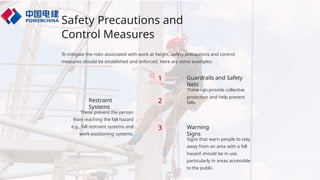
Safety Precautions and
ControlMeasures
To mitigate the risks associated with work at height, safety precautions and control
measures should be established and enforced. Here are some examples:
1 Guardrails and Safety
Nets
These can provide collective
protection and help prevent
falls.
2
Restraint
Systems
These prevent the person
from reaching the fall hazard
e.g., fall restraint systems and
work positioning systems.
3 Warning
Signs
Signs that warn people to stay
away from an area with a fall
hazard should be in use,
particularly in areas accessible
to the public.
6.
Personal Protective Equipment
(PPE)
Designedto protect
the head from falling
objects and debris.
Used in conjunction
with a fall arrest
system to protect
against falls.
PPE is an essential component when it comes to working at height. Here are a few
examples:
Hard Hats Harnesses Non-Slip Shoes
Footwear that provides
good traction can
reduce the likelihood
of falls.
7.
Regulations and Legal
Requirements
Thereare a number of regulations and legal requirements that must be followed related to
work at
height. Here are a few to keep in mind:
Building
Regulations
Building regulations set
out minimum standards
for health and safety.
OSHA
Regulations
OSHA sets out
workplace safety
regulations in the
United States.
Constructio
n
Regulations
Construction sites
must comply with
specific regulations
related to working at
height.
8.
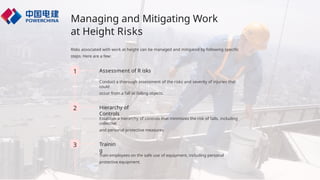
Managing and MitigatingWork
at Height Risks
Risks associated with work at height can be managed and mitigated by following specific
steps. Here are a few:
1 Assessment of R isks
Conduct a thorough assessment of the risks and severity of injuries that
could
occur from a fall or falling objects.
2 Hierarchy of
Controls
Establish a hierarchy of controls that minimizes the risk of falls, including
collective
and personal protective measures.
3 Trainin
g
Train employees on the safe use of equipment, including personal
protective equipment.
9.
Conclusion: Ensuring Safetyin Work
at Height
Work at height poses significant risks, but by implementing proper safety measures, we
can mitigate these risks and protect workers. By conducting risk assessments,
establishing control measures, and providing thorough training, we can create a safer
work environment. Remember, safety should always be the top priority in any work at
height activity.






![WAH Safety Awareness 04.12.2019 [Autosaved].pptx](https://cdn.slidesharecdn.com/ss_thumbnails/wahsafetyawareness04-250326150415-38c03f56-thumbnail.jpg?width=640&height=640&fit=bounds)


