WORK LIFE BALANCE
GROUP-24
Sakina Electricwala- 2304018
Surekha Khatal- 2304054
Unnati Mal- 2304061
Vruddhi Sarang- 2304087
Jamin Pinto- 2304112
WHAT IS WORK LIFE BALANCE?
 Work life balance is a method which helps employees of an organization to balance their
personal and professional lives. Work life balance encourages employees to divide their
time on the basis on priorities and maintain a balance by devoting time to family, health,
vacations etc. along with making a career, business travel etc.
 It is an important concept in the world of business as it helps to motivate the employees
and increases their loyalty towards the company.
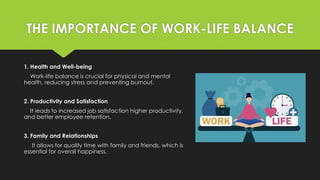
THE IMPORTANCE OF WORK-LIFE BALANCE
1. Health and Well-being
Work-life balance is crucial for physical and mental
health, reducing stress and preventing burnout.
2. Productivity and Satisfaction
It leads to increased job satisfaction higher productivity,
and better employee retention.
3. Family and Relationships
It allows for quality time with family and friends, which is
essential for overall happiness.
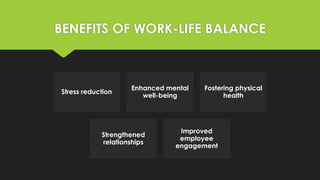
BENEFITS OF WORK-LIFE BALANCE
Stress reduction
Enhanced mental
well-being
Fostering physical
health
Strengthened
relationships
Improved
employee
engagement
CASE STUDY
BACKGROUND:
Jane is a 35-year-old marketing manager at a fast-
paced advertising agency. She is passionate
about her work and often finds herself staying late
at the office to meet deadlines and brainstorm
new campaign ideas. Recently, Jane has been
feeling overwhelmed and burnt out, as she
struggles to find time for herself and her family.
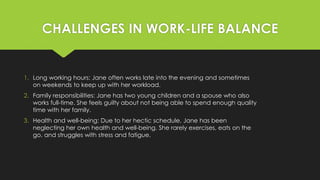
CHALLENGES IN WORK-LIFE BALANCE
1. Long working hours: Jane often works late into the evening and sometimes
on weekends to keep up with her workload.
2. Family responsibilities: Jane has two young children and a spouse who also
works full-time. She feels guilty about not being able to spend enough quality
time with her family.
3. Health and well-being: Due to her hectic schedule, Jane has been
neglecting her own health and well-being. She rarely exercises, eats on the
go, and struggles with stress and fatigue.
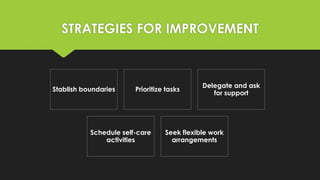
STRATEGIES FOR IMPROVEMENT
Stablish boundaries Prioritize tasks
Delegate and ask
for support
Schedule self-care
activities
Seek flexible work
arrangements
OUTCOME
By implementing these strategies, Jane was able to
achieve a better work-life balance. She learned to
prioritize her tasks, set boundaries, and make time
for herself and her family. As a result, she felt
happier, healthier, and more fulfilled both at work
and at home.
CONCLUSION
Work-life balance is a best elusive ideal and useful in everybody’s life. Through work life
balance the individual will feel relaxed and organized as well as the productivity of the
person increases which will lead to accomplishing tasks efficiently as well as to attain greater
success. It will improve relationships with families and friends. Moreover, there will be better
mental and physical health as well as enough leisure time.

WORK LIFE BALANCE Visualisation chart.pdf

  • 1.
    WORK LIFE BALANCE GROUP-24 SakinaElectricwala- 2304018 Surekha Khatal- 2304054 Unnati Mal- 2304061 Vruddhi Sarang- 2304087 Jamin Pinto- 2304112
  • 2.
    WHAT IS WORKLIFE BALANCE?  Work life balance is a method which helps employees of an organization to balance their personal and professional lives. Work life balance encourages employees to divide their time on the basis on priorities and maintain a balance by devoting time to family, health, vacations etc. along with making a career, business travel etc.  It is an important concept in the world of business as it helps to motivate the employees and increases their loyalty towards the company.
  • 3.
    THE IMPORTANCE OFWORK-LIFE BALANCE 1. Health and Well-being Work-life balance is crucial for physical and mental health, reducing stress and preventing burnout. 2. Productivity and Satisfaction It leads to increased job satisfaction higher productivity, and better employee retention. 3. Family and Relationships It allows for quality time with family and friends, which is essential for overall happiness.
  • 4.
    BENEFITS OF WORK-LIFEBALANCE Stress reduction Enhanced mental well-being Fostering physical health Strengthened relationships Improved employee engagement
  • 5.
    CASE STUDY BACKGROUND: Jane isa 35-year-old marketing manager at a fast- paced advertising agency. She is passionate about her work and often finds herself staying late at the office to meet deadlines and brainstorm new campaign ideas. Recently, Jane has been feeling overwhelmed and burnt out, as she struggles to find time for herself and her family.
  • 6.
    CHALLENGES IN WORK-LIFEBALANCE 1. Long working hours: Jane often works late into the evening and sometimes on weekends to keep up with her workload. 2. Family responsibilities: Jane has two young children and a spouse who also works full-time. She feels guilty about not being able to spend enough quality time with her family. 3. Health and well-being: Due to her hectic schedule, Jane has been neglecting her own health and well-being. She rarely exercises, eats on the go, and struggles with stress and fatigue.
  • 7.
    STRATEGIES FOR IMPROVEMENT Stablishboundaries Prioritize tasks Delegate and ask for support Schedule self-care activities Seek flexible work arrangements
  • 8.
    OUTCOME By implementing thesestrategies, Jane was able to achieve a better work-life balance. She learned to prioritize her tasks, set boundaries, and make time for herself and her family. As a result, she felt happier, healthier, and more fulfilled both at work and at home.
  • 9.
    CONCLUSION Work-life balance isa best elusive ideal and useful in everybody’s life. Through work life balance the individual will feel relaxed and organized as well as the productivity of the person increases which will lead to accomplishing tasks efficiently as well as to attain greater success. It will improve relationships with families and friends. Moreover, there will be better mental and physical health as well as enough leisure time.