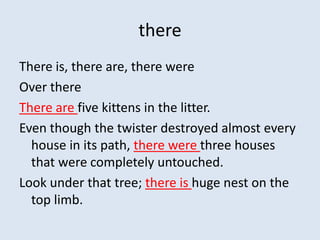
there
There is, thereare, there were
Over there
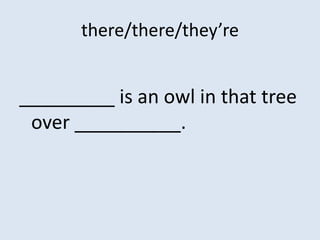
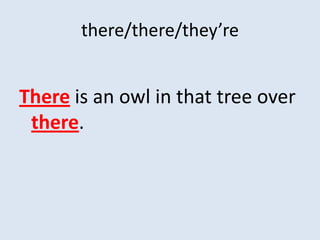
There are five kittens in the litter.
Even though the twister destroyed almost every
house in its path, there were three houses
that were completely untouched.
Look under that tree; there is huge nest on the
top limb.
4.
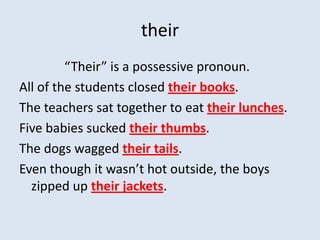
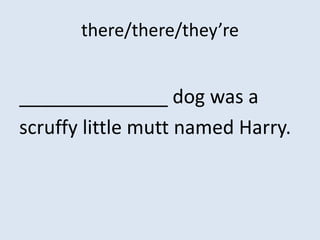
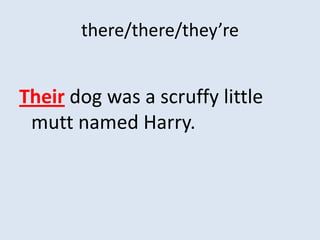
their
“Their” is a possessive pronoun.
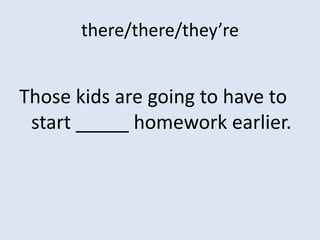
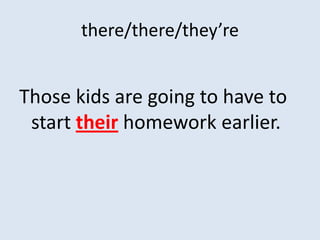
All of the students closed their books.
The teachers sat together to eat their lunches.
Five babies sucked their thumbs.
The dogs wagged their tails.
Even though it wasn’t hot outside, the boys
zipped up their jackets.
5.
they’re
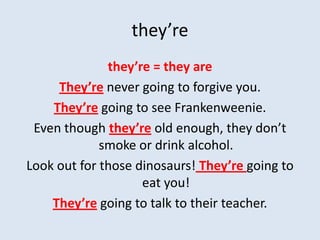
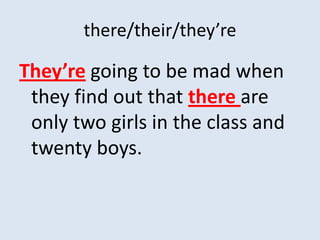
they’re = they are
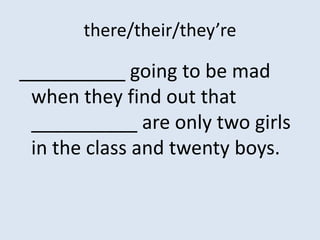
They’re never going to forgive you.
They’re going to see Frankenweenie.
Even though they’re old enough, they don’t
smoke or drink alcohol.
Look out for those dinosaurs! They’re going to
eat you!
They’re going to talk to their teacher.
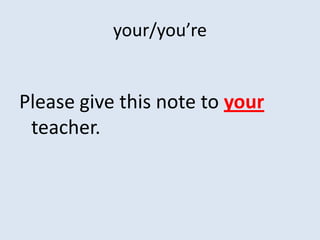
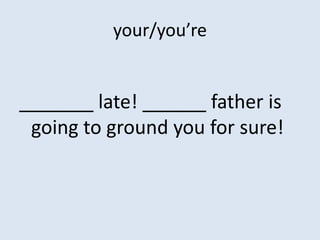
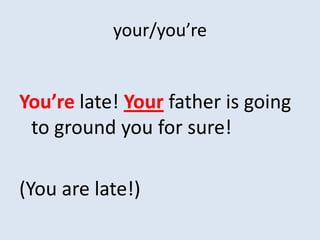
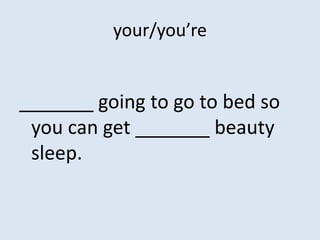
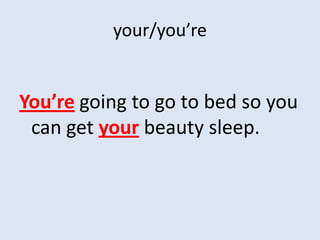
your/you’re
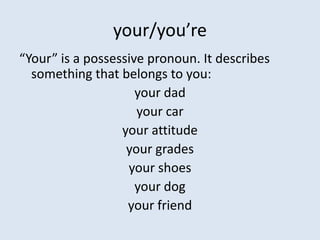
“Your” is apossessive pronoun. It describes
something that belongs to you:
your dad
your car
your attitude
your grades
your shoes
your dog
your friend
15.
your/you’re
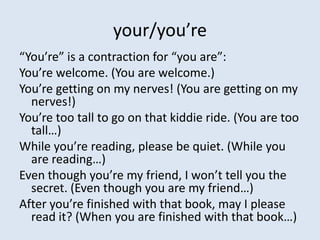
“You’re” is acontraction for “you are”:
You’re welcome. (You are welcome.)
You’re getting on my nerves! (You are getting on my
nerves!)
You’re too tall to go on that kiddie ride. (You are too
tall…)
While you’re reading, please be quiet. (While you
are reading…)
Even though you’re my friend, I won’t tell you the
secret. (Even though you are my friend…)
After you’re finished with that book, may I please
read it? (When you are finished with that book…)
to/too
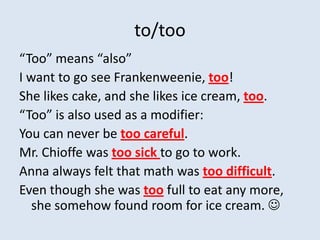
“Too” means “also”
Iwant to go see Frankenweenie, too!
She likes cake, and she likes ice cream, too.
“Too” is also used as a modifier:
You can never be too careful.
Mr. Chioffe was too sick to go to work.
Anna always felt that math was too difficult.
Even though she was too full to eat any more,
she somehow found room for ice cream.