Wireless Sensor
Technology
This presentation explores the fundamentals of wireless sensor
technology. We will cover key principles, applications, and challenges.
by Dipanshu Dhote
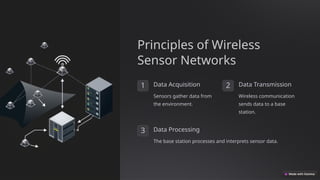
Principles of Wireless
Sensor Networks
1 Data Acquisition
Sensors gather data from
the environment.
2 Data Transmission
Wireless communication
sends data to a base
station.
3 Data Processing
The base station processes and interprets sensor data.
Sensor Types and Applications
Temperature Sensors
Used in environmental monitoring
and HVAC systems.
Motion Sensors
Used in security systems and
robotics.
Environmental Sensors
Used in environmental monitoring
and agriculture.
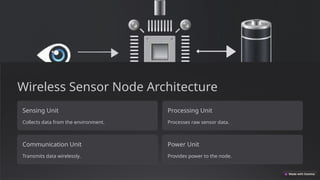
Wireless Sensor Node Architecture
Sensing Unit
Collects data from the environment.
Processing Unit
Processes raw sensor data.
Communication Unit
Transmits data wirelessly.
Power Unit
Provides power to the node.
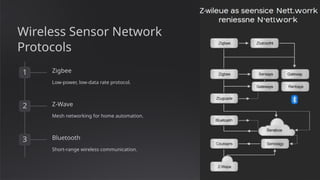
Wireless Sensor Network
Protocols
1 Zigbee
Low-power, low-data rate protocol.
2 Z-Wave
Mesh networking for home automation.
3 Bluetooth
Short-range wireless communication.
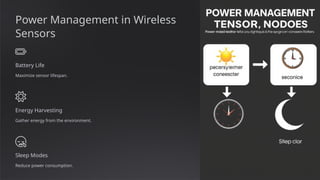
Power Management in Wireless
Sensors
Battery Life
Maximize sensor lifespan.
Energy Harvesting
Gather energy from the environment.
Sleep Modes
Reduce power consumption.
Challenges and Limitations
Limited Bandwidth Security
Vulnerabilities
Node Deployment
Power Constraints Data Aggregation Environmental
Factors
Future Trends and
Innovations
AI Integration
Enhanced data analysis.
IoT Convergence
Expanded network capabilities.
Miniaturization
Smaller, more versatile sensors.

Wireless Sensor Technology (For IOT).pptx

  • 1.
    Wireless Sensor Technology This presentationexplores the fundamentals of wireless sensor technology. We will cover key principles, applications, and challenges. by Dipanshu Dhote
  • 2.
    Principles of Wireless SensorNetworks 1 Data Acquisition Sensors gather data from the environment. 2 Data Transmission Wireless communication sends data to a base station. 3 Data Processing The base station processes and interprets sensor data.
  • 3.
    Sensor Types andApplications Temperature Sensors Used in environmental monitoring and HVAC systems. Motion Sensors Used in security systems and robotics. Environmental Sensors Used in environmental monitoring and agriculture.
  • 4.
    Wireless Sensor NodeArchitecture Sensing Unit Collects data from the environment. Processing Unit Processes raw sensor data. Communication Unit Transmits data wirelessly. Power Unit Provides power to the node.
  • 5.
    Wireless Sensor Network Protocols 1Zigbee Low-power, low-data rate protocol. 2 Z-Wave Mesh networking for home automation. 3 Bluetooth Short-range wireless communication.
  • 6.
    Power Management inWireless Sensors Battery Life Maximize sensor lifespan. Energy Harvesting Gather energy from the environment. Sleep Modes Reduce power consumption.
  • 7.
    Challenges and Limitations LimitedBandwidth Security Vulnerabilities Node Deployment Power Constraints Data Aggregation Environmental Factors
  • 8.
    Future Trends and Innovations AIIntegration Enhanced data analysis. IoT Convergence Expanded network capabilities. Miniaturization Smaller, more versatile sensors.