WIPAC MONTHLY
The Monthly Update from Water Industry Process Automation & Control
www.wipac.org.uk											Issue 9/2023- September 2023
Page 2
In this Issue
WIPAC Monthly is a publication of the Water Industry Process Automation & Control Group. It is produced by the group
manager and WIPAC Monthly Editor, Oliver Grievson. This is a free publication for the benefit of the Water Industry and please feel
free to distribute to any who you may feel benefit. However due to the ongoing costs of WIPAC Monthly a donation website has
been set up to allow readers to contribute to the running of WIPAC & WIPAC Monthly, For those wishing to donate then please visit
https://www.patreon.com/Wipac all donations will be used solely for the benefit and development of WIPAC.
All enquires about WIPAC Monthly, including those who want to publish news or articles within these pages, should be directed
to the publications editor, Oliver Grievson at olivergrievson@hotmail.com
From the editor............................................................................................................. 3
Industry news..............................................................................................................
Highlights of the news of the month from the global water industry centred around the successes of a few of the companies
in the global market.
4 - 11
Information silos in water utilities: a stumbling block on the road to Digital
Transformation.............................................................................................................
In this article by Manuel Parra of Xylem we look at a perennial problem within most water utilities that is the first step in the journey
for most water utilities to undertake and that is the breaking of siloed information and the barrier that it poses to companies who
are yet to start on a Digital Transformation journey
12
Engineering grade security for water utilities...............................................................
This article highlights the regulations that have been put in place in the USA and the solutions that are available to utilities to protect
themselves from cyber-attacks. Rees Machtemes discusses that the cyber tools that are being put place will allow US utilities to not
just keep with the risks of increasing attacks and changing regulation but get ahead of the curve in order to ensure that utility data
is secure.
13 - 15
A Climate neutral, energy positive and zero waste perspective of water......................
In our last article this month we have a look at the Siemens & Bunt Plant application of SIWA Leakplus that will be demonstrated in
November live on stage at the IWA Digital Water Summit. We look at its application in Sweden where using a Digital Transformation
approach to leakage they have managed to reduce non-revenue water to match the 8% benchmark.
16 - 17
Workshops, conferences & seminars............................................................................
The highlights of the conferences and workshops in the coming months.
18 - 19
Page 3
From the Editor
		 A very quick review of the business plans that have been set by the Water Companies in England & Wales reveal some
interesting things this month but do go to show that if we though monitoring in the past two investment programmes was
big then we truly have not seen anything yet. Some rough calculations after skimming the business plans and looking for
key words such as monitoring and doing some quick mental arithmetic show that the investment in wastewater monitor-
ing along is somewhere within the region of £1 billion over the five year period. This is in fact lower that was expected as
Section 82 of the Environment Act had previously been priced at over £7 billion alone. This is actually a good news story in
a way although the Environmental NGO's are bound to think that the monitoring should go in earlier.
However, experience of how England & Wales has delivered simpler programmes of work show it is something that we
need to develop first - in short we need to walk before we can run and trial some of the technologies before putting them
into practice and monitoring in the proverbial "anger" of having to report to the public within one hour. Simply said we
aren't ready for the huge amount of monitoring. In reality nor are the powers that be that first passed the legislation
through parliament. When you ask the question what are we going to do with the data the answer is that we are going
to use it to monitor "performance." This approach is naive at best the river environment is a complicated environment to
monitor. If you have a small slow moving stream which is well mixed this is easy enough but if you are monitoring the River
Thames (which although big isn't that big) then you have the complexity of monitoring in something that is effectively a
shipping lane with tourist boats and other riverine traffic going up and down it all day. This will basically necessitate a floating buoy approach (not unheard
of) and complex studies of the river currents to ensure that the sampling is representative of the environment that is being monitored otherwise what is the
point of monitoring.
Then comes the problem that if we got the entire supply chain in the United Kingdom that is qualified to install instrumentation of this sort then we wouldn't
have enough people to do the job in time (someone is bound to argue with me on this one) and then of course there are the problems in maintenance and this
is only one programme of works. I looked at some of the submissions in the business plans that were shared and my thought was that some of the promises
that are being made are quite frankly impossible to deliver. So we have challenges on installation and we have challenges on maintenance especially with the
number of skilled people that are able to deliver it. So what more?
Well there are the challenges of the IT and telemetry systems to accept and process all of the data let alone interpret it. Is this really a challenge? Well, yes
when we look back into the last investment period and the brave decision over smart customer metering that Thames Water took. This data was hourly which
the data for river water quality will be (but simpler data) and Thames Water found that the IT systems struggled to accept the volume of data. A pause in the
delivery of the programme and some skilled work in setting up IT systems for the water meter data meant that it was sorted out relatively quickly but the key
learning point is that is not just the instrumentation in the ground, its the telemetry systems serving it and then the IT systems accepting it and then finally the
interpretation of the data. If we don't use the data then why are we collecting it.
And then similar monitoring is starting to be rolled out across Europe as well (although a better concept thought of from a more sensible approach monitoring
the river catchments rather than the overflows). All in all the next few years is still going to see massive investment in instrumentation and monitoring espe-
cially around the wastewater side of the industry as well as smart customer meters but with the release of the business plans the scale of it is not feeling like
scaling Mount Everest blindfolded....a sensible approach for now is at least being taken.
Have a good month,
Oliver
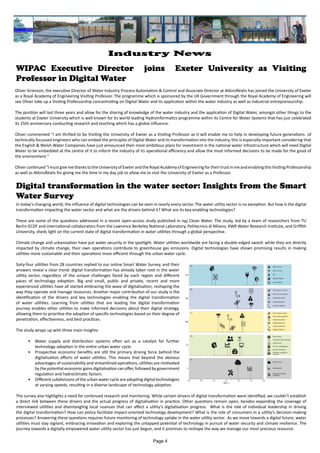
Oliver Grievson, the executive Director of Water Industry Process Automation & Control and Associate Director at AtkinsRéalis has joined the University of Exeter
as a Royal Academy of Engineering Visiting Professor. The programme which is sponsored by the UK Government through the Royal Academy of Engineering will
see Oliver take up a Visiting Professorship concentrating on Digital Water and its application within the water industry as well as industrial entrepreneurship.
The position will last three years and allow for the sharing of knowledge of the water industry and the application of Digital Water, amongst other things to the
students at Exeter University which is well known for its world leading Hydroinformatics programme within its Centre for Water Systems that has just celebrated
its 25th anniversary conducting research and teaching which has a global influence.
Oliver commented "I am thrilled to be Visiting the University of Exeter as a Visiting Professor as it will enable me to help in developing future generations of
technically focussed engineers who can embed the principles of Digital Water and its transformation into the industry, this is especially important considering that
the English & Welsh Water Companies have just announced their most ambitious plans for investment in the national water infrastructure which will need Digital
Water to be embedded at the centre of it to inform the industry of its operational efficiency and allow the most informed decisions to be made for the good of
the environment."
Olivercontinued"ImustgivemethankstotheUniversityofExeterandtheRoyalAcademyofEngineeringfortheirtrustinmeandenablingthisVisitingProfessorship
as well as AtkinsRéalis for giving me the time in my day job to allow me to visit the University of Exeter as a Professor.
WIPAC Executive Director joins Exeter University as Visiting
Professor in Digital Water
Digital transformation in the water sector: Insights from the Smart
Water Survey
In today’s changing world, the influence of digital technologies can be seen in nearly every sector. The water utility sector is no exception. But how is the digital
transformation impacting the water sector and what are the drivers behind it? What are its key-enabling technologies?
These are some of the questions addressed in a recent open-access study published in npj Clean Water. The study, led by a team of researchers from TU
Berlin-ECDF and international collaborators from the Lawrence Berkeley National Laboratory, Politecnico di Milano, KWR Water Research Institute, and Griffith
University, sheds light on the current state of digital transformation in water utilities through a global perspective.
Climate change and urbanisation have put water security in the spotlight. Water utilities worldwide are facing a double-edged sword: while they are directly
impacted by climate change, their own operations contribute to greenhouse gas emissions. Digital technologies have shown promising results in making
utilities more sustainable and their operations more efficient through the urban water cycle.
Sixty-four utilities from 28 countries replied to our online Smart Water Survey, and their
answers reveal a clear trend: digital transformation has already taken root in the water
utility sector, regardless of the unique challenges faced by each region and different
paces of technology adoption. Big and small, public and private, recent and more
experienced utilities have all started embracing the wave of digitalisation, reshaping the
way they operate and manage resources. Another major contribution of our study is the
identification of the drivers and key technologies enabling the digital transformation
of water utilities. Learning from utilities that are leading the digital transformation
journey enables other utilities to make informed decisions about their digital strategy,
allowing them to prioritise the adoption of specific technologies based on their degree of
penetration, effectiveness, and best practices.
The study wraps up with three main insights:
• Water supply and distribution systems often act as a catalyst for further
technology adoption in the entire urban water cycle.
• Prospective economic benefits are still the primary driving force behind the
digitalisation efforts of water utilities. This means that beyond the obvious
advantages of sustainability and streamlined operations, utilities are motivated
by the potential economic gains digitalisation can offer, followed by government
regulation and hydroclimatic factors.
• Different subdivisions of the urban water cycle are adopting digital technologies
at varying speeds, resulting in a diverse landscape of technology adoption.
The survey also highlights a need for continued research and monitoring. While certain drivers of digital transformation were identified, we couldn’t establish
a direct link between these drivers and the actual progress of digitalisation in practice. Other questions remain open, besides expanding the coverage of
interviewed utilities and disentangling local nuances that can affect a utility’s digitalisation progress. What is the role of individual leadership in driving
the digital transformation? How can policy facilitate impact-oriented technology development? What is the role of consumers in a utility’s decision-making
processes? Answering these questions requires future monitoring of technology uptake in the water utility sector. As we move towards a digital future, water
utilities must stay vigilant, embracing innovation and exploring the untapped potential of technology in pursuit of water security and climate resilience. The
journey towards a digitally empowered water utility sector has just begun, and it promises to reshape the way we manage our most precious resource.
Page 4
Industry News
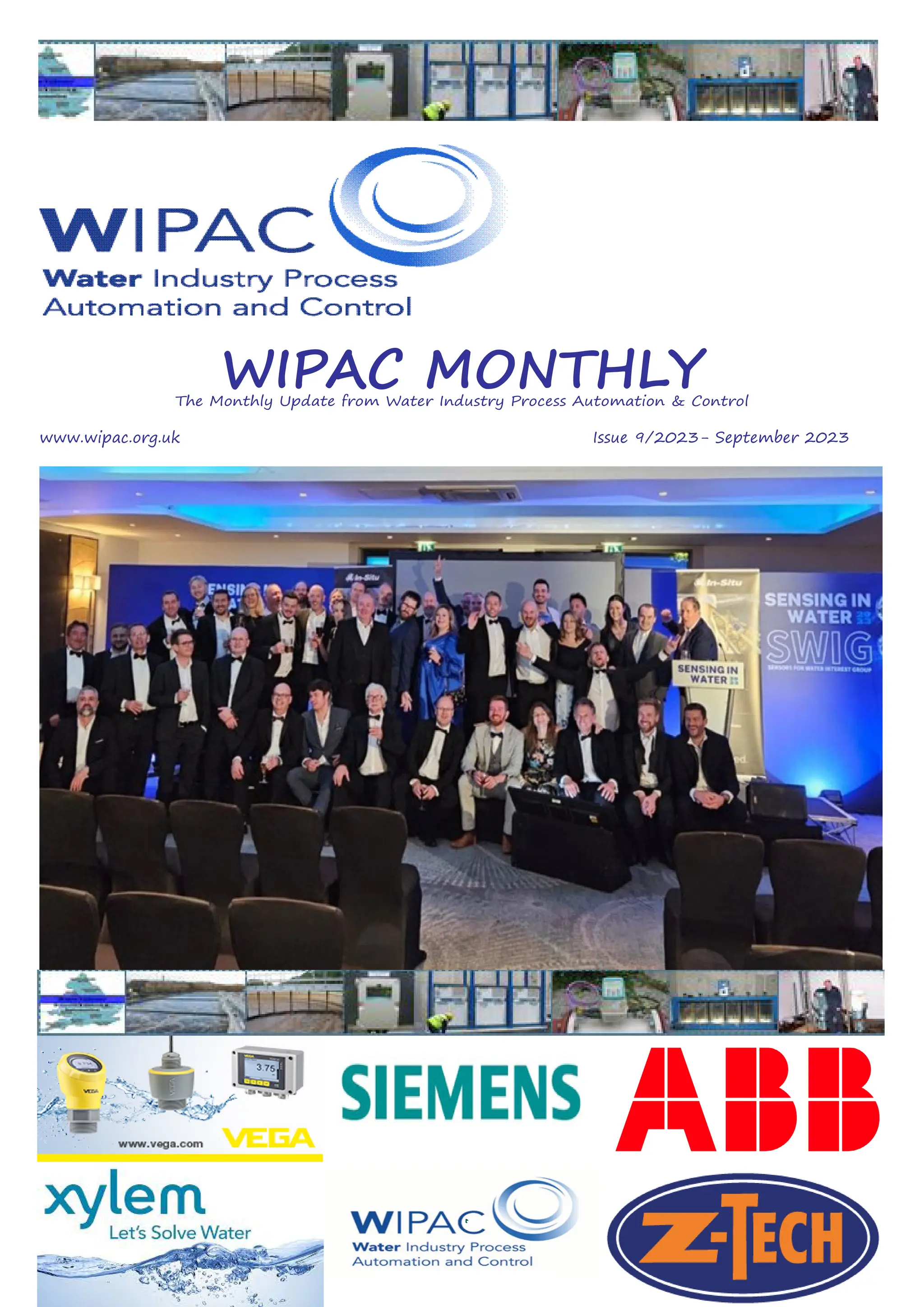
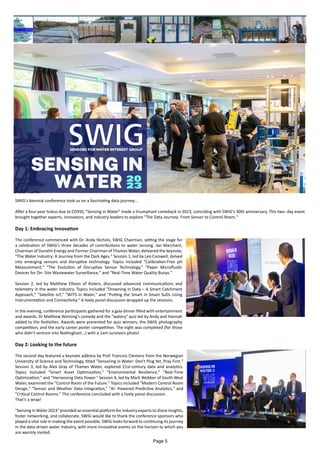
SWIG's biennial conference took us on a fascinating data journey…
After a four-year hiatus due to COVID, "Sensing in Water" made a triumphant comeback in 2023, coinciding with SWIG's 30th anniversary. This two- day event
brought together experts, innovators, and industry leaders to explore "The Data Journey: From Sensor to Control Room."
Day 1: Embracing Innovation
The conference commenced with Dr. Andy Nichols, SWIG Chairman, setting the stage for
a celebration of SWIG's three decades of contributions to water sensing. Ian Marchant,
Chairman of Dunelm Energy and Former Chairman of Thames Water, delivered the keynote,
"The Water Industry: A Journey from the Dark Ages." Session 1, led by Leo Carswell, delved
into emerging sensors and disruptive technology. Topics included "Calibration-Free pH
Measurement," "The Evolution of Disruptive Sensor Technology," "Paper Microfluidic
Devices for On- Site Wastewater Surveillance," and "Real-Time Water Quality Buoys."
Session 2, led by Matthew Ellison of Kisters, discussed advanced communications and
telemetry in the water industry. Topics included "Drowning in Data – A Smart Catchment
Approach," "Satellite IoT," "WITS in Water," and "Putting the Smart in Smart SuDs Using
Instrumentation and Connectivity." A lively panel discussion wrapped up the sessions.
In the evening, conference participants gathered for a gala dinner filled with entertainment
and awards. Dr Matthew Winning's comedy and the "watery" quiz led by Andy and Hannah
added to the festivities. Awards were presented for quiz winners, the SWIG photography
competition, and the early career poster competition. The night was completed (for those
who didn’t venture into Nottingham…) with a 1am survivors photo!
Day 2: Looking to the future
The second day featured a keynote address by Prof. Francois Clemens from the Norwegian
University of Science and Technology, titled "Sensoring in Water: Don't Plug Yet, Pray First."
Session 3, led by Alex Gray of Thames Water, explored 21st-century data and analytics.
Topics included "Smart Asset Optimization," "Environmental Resilience," "Real-Time
Optimization," and "Harnessing Data Power." Session 4, led by Mark Webber of South West
Water, examined the "Control Room of the Future." Topics included "Modern Control Room
Design," "Sensor and Weather Data Integration," "AI- Powered Predictive Analytics," and
"Critical Control Rooms." The conference concluded with a lively panel discussion.
That’s a wrap!
"Sensing in Water 2023" provided an essential platform for industry experts to share insights,
foster networking, and collaborate. SWIG would like to thank the conference sponsors who
played a vital role in making the event possible. SWIG looks forward to continuing its journey
in the data-driven water industry, with more innovative events on the horizon to which you
are warmly invited.
Page 5
English & Welsh water companies publish business plans for the 2025-
2030 investment period
Water companies have published, this month, draft business plans which set out their proposed spending on infrastructure and improvements to the water
system from 2025-2030. We expect Ofwat, the regulator, to scrutinise these plans to ensure they meet legal requirements and government targets, to check
families are not paying for what companies should already have done, and to give customers the best value for their money. Final plans will be agreed by Ofwat
in December 2024 with changes to bills taking effect from April 2025.
The plans include how companies propose to invest in improving water supply resilience and the environment, helping to make rivers and beaches cleaner,
reducing leaks and supply interruptions and tackling issues like storm overflows. In turn, this investment boosts economic growth and creates more jobs across
England and Wales.
The Government’s Plan for Water is transforming the water sector through more investment, stronger regulation, and tougher enforcement to deliver the clean
and plentiful water the public expects. We have given our regulators additional powers on bonuses and dividends so that billpayers are not rewarding poor
performance, and last week it was confirmed that the worst performing water companies must return money to consumers through their bills.
Environment Secretary Thérèse Coffey said:
Major improvements are needed to deliver clean and plentiful water now, and in the future – as the public and government have rightly demanded. As we
set out in our Plan for Water, this sector needs more investment, stronger regulation and tougher enforcement to drive the improvements we all need to see.
Funding this transformation requires making decisions for the long term, and water companies will carry out the largest ever environmental investment
programme in water company history, investing billions in new reservoirs for new homes, businesses and for our farmers, as well as the £60 billion plan to
tackle sewage spills.
We have the cleanest drinking water in the world but there is so much more to be done on other issues which is why we developed our Plan for Water and
legislated to give regulators Ofwat and the Environment Agency stronger powers on enforcement and unlimited penalties.
As part of the strengthened statutory process, Ofwat will now independently scrutinise these plans for the next fifteen months to ensure customers are getting
the best value for their money and that companies are delivering the improvements we expect. There will be no changes to bills until 2025.
I have been very clear with Ofwat, the regulator, that customers should not pay the price for poor performance and they should use the full powers we have
given them on behalf of consumers.
Now is the time for water companies to step up and deliver lasting changes for future generations.
There have been claims about customers paying twice for investment – that is not the case. Ofwat has been clear that customers won’t pay twice for investment
that should already have happened. The money that customers have paid through previous bills has been used for existing improvements, with £200 billion
invested in the water system since privatisation. Where improvements still need to be made for which companies have already received funding, they will not
be granted that funding again. This money from 2025 – 2030 will be used to pay for new improvements – including tackling building new reservoirs, cutting
leakage and investing to reduce sewage spills.
The plans have highlgithed the need for significant investment in the water industry and come to a total of £96 billion for the investment period although they
are subject to scrutiny over the next 12 months by the financial regulator OFWAT. This investment period is set to see a record investment in instrumentation
with capital investment in the region of £1 billion mainly driven by the need to install:
• Section 82 monitoring upstream and downstream of sewer overflows
• Monitoring of wastewater pumping station emergency overflows and flow monitoring where it is a joint emergency and storm overflow
• The remainder of the programme monitoring the pass forward flows at wastewater treatment works
• Moving from 15-minute monitoring to 2-minute monitoring on a large number of wastewater treatment works instrumentation
• Smart Customer Meters which the Environment Agency has requested be in place by 2030.
Additional items that may or may not be included in the investment programme are also likely to be monitoring of sewer levels for blockage detection,
updating of combined storm overflow devices which has been caused by installation regulations changes brought into force by the Environment Agency since
instruments have been installed causing significant rework for the water companies and their supply chain.
Additions to the investment will see all spill monitoring and flow monitoring for wastewater treatment and wastewater collection networks brought under the
Environment Agency Monitoring Certification Scheme (MCERTS).
It is also safe to say that the programme of works that will be delivered in the next Asset Management Period is the largest scale of investment in instrumentation
that the water industry has ever seen and there will need to be a number of support services brought into the supply chain include maintenance and data
handling to be able to manage the huge influx of data that is being brought into the industry.
All of this brings a large potential opportunity for Digital Tools and Digital Transformation to be brought into the water industry considering that the large influx
of data should be able, if given the right amount of analysis, lead to a vast improvement in situational awareness.
Page 6
Spain awards €200 million to improve the efficiency of the urban
water cycle
Spain’s Ministry for Ecological Transition and the Demographic Challenge (MITECO) has published on its website the provisional resolution of the first call of
the PERTE for the digitalisation of the water cycle, granting aid for a total amount of 200 million euros for the improvement of the digitalisation of the urban
water cycle.
A total of 30 projects have been selected with aid ranging from 3.3 to 7.9 million euros per project, which will benefit 1,676 municipalities in 16 autonomous
communities with a population of 14,742,016 inhabitants. The aid will benefit projects dealing with water management, both in large cities and small rural
municipalities, which have submitted grouped projects.
The beneficiaries have been operators of urban water supply, sanitation and treatment services of various types, such as local authorities, public and mixed
companies and representatives of the private sector.
The projects - selected on a competitive basis, in accordance with the principles of article 8.3 of Law 38/2003, of 17 November, on General Subsidies - stand out
for their high technical quality and their contribution to the achievement of the PERTE objectives of digitalisation of the water cycle.
The actions financed respond to cutting-edge and strategic initiatives that will improve efficiency in the use and management of water in Spain, such as the real-
time sensor of catchments in the public water domain, the control of consumption through the implementation of smart meters, the reduction of drinking water
losses, the real-time control of wastewater treatment plants and discharges into the public water domain, the creation of digital twins and the mathematical
modelling of hydraulic networks and systems that allow the use of artificial intelligence, real-time monitoring of wastewater treatment plants and discharges
into the public water domain, the creation of digital twins and mathematical modelling of hydraulic networks and systems that enable the use of artificial
intelligence for system management, as well as the implementation of platforms that integrate the entire water cycle and support sustainable management of
water resources and transparency in water management. In addition, comprehensive projects will be financed that will implement drought and flood action
plans.
After a period of 10 days to receive allegations and the reformulation of the projects, the final resolution of the call will be made in the first half of November
2023 and the deadline for completion of the projects will be 31 December 2025, with the possibility of an extension until 1 June 2026 at the latest.
In addition, the second call for PERTE grants for the digitalisation of the urban water cycle has been published for an amount of 200 million euros. The grants will
range from 500,000 euros to 10 million euros per project generally, the amount varying according to the number of inhabitants of the municipalities in which
the actions take place.
The deadline for submitting applications for this second call for applications is 13 December 2023. The first PERTE call is also open for irrigation digitalisation
projects which, with an initial investment of 100 million euros, will enable efficiency in the use of water, fertilisers and pesticides in the projects that are finally
selected nationwide.
Work is also being carried out on other PERTE lines of action. So far, more than 750 million euros have already been mobilised at different stages of processing,
to which the planned calls will be added once the Addendum to the European Recovery, Transformation and Resilience Plan is approved.
DEWA partners with Microsoft to adopt new generative AI tool to
enhance digital transformation
Dubai Electricity and Water Authority (DEWA) has adopted Microsoft Power Platform and its AI-powered tool Copilot. The move is part of DEWA’s efforts
to utilise the latest global technologies in all areas and benefit from the capabilities of generative AI to enhance DEWA’s digital transformation. Copilot will
assist software developers at DEWA in building smart programmes and applications that support DEWA’s operations more smoothly and efficiently by utilising
generative AI tools.
“We work to develop DEWA’s digital channels using the latest disruptive technologies of the Fourth Industrial Revolution and generative AI tools. This aligns
with the vision of His Highness Sheikh Mohammed bin Rashid Al Maktoum, Vice President and Prime Minister of the UAE and Ruler of Dubai, to make Dubai
the smartest and happiest city in the world. Adopting the Microsoft Power Platform Copilot is part of our efforts to utilise AI in all our services and operations.
DEWA invests in its digital infrastructure to enhance the digital transformation to promote stakeholders’ happiness and provide value-added advanced digital
services,” said HE Saeed Mohammed Al Tayer, MD & CEO of DEWA.
The Copilot supports developers and programmers in writing code and developing applications. It understands the context of the code being written and
provides suggestions and guidance to programmers during the programming process, in addition to tips on how to format code and correct errors to speed up
the development process.
Page 7
Timeseer.AI Joins SWAN To Promote High Data Quality Across The
Smart Water Sector
Timeseer.AI, a growing leading provider of artificial intelligence solutions for data quality optimization, announced its membership to the Smart Water Networks
Forum (SWAN), the leading global hub for the smart water sector.
Trusted by over a dozen Fortune 5000 companies, Timeseer.AI harnesses the power of advanced artificial intelligence to detect, prioritize, and investigate
data quality issues. Mario Maessen, Senior Data Scientist at Vitens, and proud SWAN Member remarked: “Challenges with data quality are mostly still hidden,
however have a proven significant impact on our ability to leverage digital technology. We are very happy that companies that are addressing these issues are
now also a part of the SWAN Forum.”
Reflecting on their new SWAN Membership, Niels Verheijen, Co-founder and Chief Revenue Officer at Timeseer.AI added: “By joining SWAN, we will be able to
engage with water utilities on a global scale. The value of being able to learn from other smart water members is a tremendous opportunity for us as a young
company. SWAN also provides a platform for us to demonstrate our capabilities in the important field of sensor data quality, which is a critical building block to
reach the potential of digital transformation.”
SWAN CEO, Amir Cahn commented, “Achieving high data quality is a significant challenge for water utilities who often only utilize a small fraction of the data
they collect. SWAN will greatly benefit by adding Timeseer.AI to our global community.”
Growing demand for storm overflow cameras
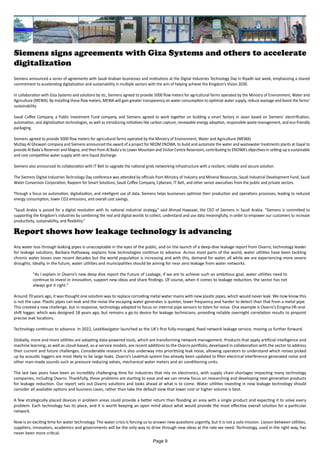
Water and sewerage companies are installing Meteor MRC remote
cameras at an increasing number of wastewater discharge and
storm overflow locations; primarily to check the veracity of event
duration monitors (EDMs), but also to avoid unnecessary site
visits, save costs, lower the carbon footprint of operations, and
help identify the sources of pollution.
The UK government has instructed all water and sewerage
companies (WaSCs) operating in England, to install monitors
on every storm overflow by the end of 2023. These EDMs must
provide information on the frequency and duration of storm
overflow spills.
The Environment Agency’s EDM data for 2022 showed that the
ten WaSCs in England have 14,580 storm overflows, and that 91%
of these were fitted with EDMs. On average, each overflow spilled
23 times for an average of 5.8 hours.
“Wherefrequentspillsarebeingreported,orwhenaWaSCsuspects
that an EDM is reporting falsely, a site visit may be required, so we
are experiencing a heavy demand for rugged, low-cost cameras
that are able to deliver reliable high-quality images of discharges
to verify the EDM data without, necessarily, having to make a site
visit,” explains Matt Dibbs, MD at Meteor Communications.
Meteor’s MRC cameras have been designed to operate unattended
in remote locations where normal power and communications may not be available. The MRC cameras require just a small battery and a solar panel for year-
round operation, and there are currently around 2,500 MRC cameras in use around the UK.
Matt says: “One of the most popular features of the MRC cameras for discharge points, is the facility to attach a robust, reliable water level sensor so that the
cameras can be automatically prompted to collect images when water levels rise.
“With the benefit of MRC remote cameras, WaSCs have ‘eyes in the field’ to improve the reliability of EDM data and avoid the over-reporting of spills, whilst
reducing the number of site visits - saving time, and lowering both costs and carbon footprint.”
Page 8
Siemens signs agreements with Giza Systems and others to accelerate
digitalization
Siemens announced a series of agreements with Saudi Arabian businesses and institutions at the Digital Industries Technology Day in Riyadh last week, emphasizing a shared
commitment to accelerating digitalization and sustainability in multiple sectors with the aim of helping achieve the Kingdom’s Vision 2030.
In collaboration with Giza Systems and solutions by stc, Siemens agreed to provide 5000 flow meters for agricultural farms operated by the Ministry of Environment, Water and
Agriculture (MEWA). By installing these flow meters, MEWA will gain greater transparency on water consumption to optimize water supply, reduce wastage and boost the farms’
sustainability.
Saudi Coffee Company, a Public Investment Fund company, and Siemens agreed to work together on building a smart factory in Jazan based on Siemens’ electrification,
automation, and digitalization technologies, as well as introducing initiatives like carbon capture, renewable energy adoption, responsible waste management, and eco-friendly
packaging.
Siemens agreed to provide 5000 flow meters for agricultural farms operated by the Ministry of Environment, Water and Agriculture (MEWA)
Mutlaq Al Ghowairi company and Siemens announced the award of a project for NEOM ENOWA, to build and automate the water and wastewater treatments plants at Gayal to
provide Al Bada'a Reservoir and Magna, and then from Al Bada'a to Lower Mountain and Visitor Centre Reservoirs, contributing to ENOWA’s objectives in setting-up a sustainable
and cost competitive water supply with zero liquid discharge.
Siemens also announced its collaboration with IT Belt to upgrade the national grids networking infrastructure with a resilient, reliable and secure solution.
The Siemens Digital Industries Technology Day conference was attended by officials from Ministry of Industry and Mineral Resources, Saudi Industrial Development Fund, Saudi
Water Conversion Corporation, Raqeem for Smart Solutions, Saudi Coffee Company, Cyberani, IT Belt, and other senior executives from the public and private sectors.
Through a focus on automation, digitalization, and intelligent use of data, Siemens helps businesses optimize their production and operations processes, leading to reduced
energy consumption, lower CO2 emissions, and overall cost savings.
“Saudi Arabia is poised for a digital revolution with its national industrial strategy,” said Ahmad Hawsawi, the CEO of Siemens in Saudi Arabia. “Siemens is committed to
supporting the Kingdom’s industries by combining the real and digital worlds to collect, understand and use data meaningfully, in order to empower our customers to increase
productivity, sustainability, and flexibility.”
Report shows how leakage technology is advancing
Any water loss through leaking pipes is unacceptable in the eyes of the public, and on the launch of a deep-dive leakage report from Ovarro, technology leader
for leakage solutions, Barbara Hathaway, explains how technologies continue to advance. Across most parts of the world, water utilities have been tackling
chronic water losses over recent decades but the world population is increasing and with this, demand for water, all while we are experiencing more severe
droughts. Ideally, in the future, water utilities and municipalities should be aiming for near zero leakage from water networks.
"As I explain in Ovarro’s new deep dive report the Future of Leakage, if we are to achieve such an ambitious goal, water utilities need to
continue to invest in innovation, support new ideas and share findings. Of course, when it comes to leakage reduction, the sector has not
always got it right."
Around 70 years ago, it was thought one solution was to replace corroding metal water mains with new plastic pipes, which would never leak. We now know this
is not the case. Plastic pipes can leak and the noise the escaping water generates is quieter, lower frequency and harder to detect than that from a metal pipe.
This created a new challenge, but in response, technology adapted to focus on internal pipe sensors to listen for noise. One example is Ovarro’s Enigma lift-and-
shift logger, which was designed 18 years ago, but remains a go-to device for leakage technicians, providing reliable overnight correlation results to pinpoint
precise leak locations.
Technology continues to advance. In 2022, LeakNavigator launched as the UK’s first fully-managed, fixed network leakage service, moving us further forward.
Globally, more and more utilities are adopting data-powered tools, which are transforming network management. Products that apply artificial intelligence and
machine learning, as well as cloud-based, as-a-service models, are recent additions to the Ovarro portfolio, developed in collaboration with the sector to address
their current and future challenges. Considerable research is also underway into prioritising leak noise, allowing operators to understand which noises picked
up by acoustic loggers are most likely to be large leaks. Ovarro’s LeakHub system has already been updated to filter electrical interference generated noise and
other man-made sounds such as pressure reducing valves, mechanical water meters and air conditioning units.
The last two years have been an incredibly challenging time for industries that rely on electronics, with supply chain shortages impacting many technology
companies, including Ovarro. Thankfully, these problems are starting to ease and we can renew focus on researching and developing next generation products
for leakage reduction. Our report sets out Ovarro solutions and looks ahead at what is to come. Water utilities investing in new leakage technology should
consider all available options and business cases, rather than take the default view that lower cost or higher volume is best.
A few strategically placed devices in problem areas could provide a better return than flooding an area with a single product and expecting it to solve every
problem. Each technology has its place, and it is worth keeping an open mind about what would provide the most effective overall solution for a particular
network.
Now is an exciting time for water technology. The water crisis is forcing us to answer new questions urgently, but it is not a solo mission. Liaison between utilities,
suppliers, innovators, academics and governments will be the only way to drive through new ideas at the rate we need. Technology, used in the right way, has
never been more critical.
Page 9
Going With The Flow: A Closer Look At McCrometer's Acquisition of
Hach Flow
In a strategic move aimed at bolstering the municipal flow monitoring market, McCrometer® has officially taken the reins of the Hach Flow product line from
Hach®. This transfer signifies a major shift in the flow meter manufacturing landscape and opens up new avenues for innovation and service in the field of open-
channel flow monitoring. Hach Flow engineers products and services primarily designed for open channels and collection systems. It has long been recognized
for its proficiency in serving the complex needs of open-channel wastewater flow monitoring. This asset reorganization not only enhances McCrometer’s existing
municipal flow portfolio, but it also takes advantage of synergies between the two businesses while creating a more comprehensive suite of products and
services tailored to the evolving demands of the industry.
Watching The Current
In 1999, Danaher Water Quality Platform Operating Company purchased Hach and merged the company and its offerings with American Sigma, which it had
purchased two years earlier. In 2006, Hach acquired Marsh McBirney, and its offerings were split between McCrometer – which Danaher also owned – and what
became the Hach Flow product line.
At the time, Hach Flow’s products and services fit the overall Hach focus on “measurement as a service,” recognizing the growing demand for comprehensive
service offerings in flow monitoring and sampling. The idea was to bundle equipment, services, and an uptime guarantee, all for a monthly or annual fee, a move
that resonates with customers seeking data-driven solutions.
Changing The Flow
Hach’s decision to part ways with the Hach Flow product line wasn’t just a strategic move; it was also about focus. Hach began to narrow its attention to
technologies inside the plant, leaving Hach Flow, which primarily operates in wastewater collection systems, outside its core scope. This separation was, in
essence, a strategic reallocation of resources to maximize impact.
Despite sharing a parent company, Hach and McCrometer didn’t have strong connections prior to the shift. However, Hach Flow and McCrometer shared similar
sales models. Both employ a third-party sales approach through manufacturer rep firms, while Hach handles all other product line sales directly. This shared
sales model laid the foundation for a smooth transition of customer relationships from Hach to McCrometer.
Importantly, this wasn’t a traditional purchase; instead, it was a transition of resources and revenue from one operating company to another. Hach still plays a
crucial role as a manufacturer for Hach Flow, ensuring the smooth fulfilment of existing orders. However, the baton of new product development, research, and
manufacturing now rests with McCrometer, underscoring its commitment to innovation and growth.
Navigating The Turbulence
The transition unfolded in two stages: employees shifted to McCrometer on May 30, 2023, and the business officially transferred six weeks later on July 3.
Throughout this process, both companies worked diligently to support customers, helping them adapt to changes in contact information and vendor setups.
Larger customers received proactive assistance to ensure a seamless transition.
So, what challenges does Hach Flow address, and how does it dovetail with McCrometer’s aspirations? Hach Flow’s “measurement as a service” model bundles
equipment, maintenance, and uptime guarantees. Known as Data Delivery Services (DDS), this service addresses the needs of water utilities hungry for reliable
data collection. McCrometer sees potential in enhancing customer budgeting by shifting capital expenditures to operational ones.
Furthermore, Hach Flow’s expertise in the water utility sector aligns with McCrometer’s goal of expanding further into this sector. At the same time, McCrometer’s
experience in the agricultural sector fits seamlessly with Hach Flow’s open-channel products. This synergy opens doors for McCrometer to expand its services
and data-centric offerings, providing customers with essential data while lowering costs.
Charting The Course Ahead
The transfer of the Hach Flow product line from Hach to McCrometer promises innovative business models, elevated customer service, and a more extensive
portfolio of solutions to meet the evolving demands of flow monitoring in the municipal sector. As McCrometer weaves Hach Flow’s strengths into its operations,
customers can anticipate a future where comprehensive, customer-centric solutions redefine how operators approach the complexities of flow monitoring in
municipal settings. In addition, McCrometer’s long history of innovation will lead to greater advances in depth and capability of Hach Flow products. Ultimately,
the partnership isn’t just about change; it’s about charting a new course toward a more efficient and data-driven future.
Page 10
RiversamplingstudyshowsimpactofCOVID-19pandemiconLondon's
waterways
The most detailed study of a city’s waterways anywhere in the world has revealed how chemical pollutants in London’s rivers changed over the pandemic. In a
study led by researchers at Imperial College London, scientists have shown how pollutants entering the capital’s river systems – including traces of prescription
medications such as antibiotics and antidepressants – changed over the course of the COVID-19 pandemic.
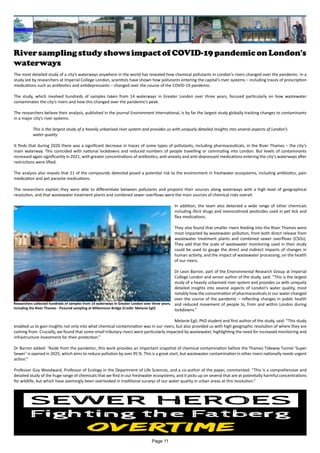
The study, which involved hundreds of samples taken from 14 waterways in Greater London over three years, focused particularly on how wastewater
contaminates the city’s rivers and how this changed over the pandemic’s peak.
The researchers believe their analysis, published in the journal Environment International, is by far the largest study globally tracking changes to contaminants
in a major city’s river systems.
This is the largest study of a heavily urbanised river system and provides us with uniquely detailed insights into several aspects of London’s
water quality
It finds that during 2020 there was a significant decrease in traces of some types of pollutants, including pharmaceuticals, in the River Thames – the city’s
main waterway. This coincided with national lockdowns and reduced numbers of people travelling or commuting into London. But levels of contaminants
increased again significantly in 2021, with greater concentrations of antibiotics, anti-anxiety and anti-depressant medications entering the city’s waterways after
restrictions were lifted.
The analysis also reveals that 21 of the compounds detected posed a potential risk to the environment in freshwater ecosystems, including antibiotics, pain
medication and pet parasite medications.
The researchers explain they were able to differentiate between pollutants and pinpoint their sources along waterways with a high level of geographical
resolution, and that wastewater treatment plants and combined sewer overflows were the main sources of chemical risks overall.
In addition, the team also detected a wide range of other chemicals
including illicit drugs and neonicotinoid pesticides used in pet tick and
flea medications.
They also found that smaller rivers feeding into the River Thames were
most impacted by wastewater pollution, from both direct release from
wastewater treatment plants and combined sewer overflows (CSOs).
They add that the scale of wastewater monitoring used in their study
could be used to gauge the direct and indirect impacts of changes in
human activity, and the impact of wastewater processing, on the health
of our rivers.
Dr Leon Barron, part of the Environmental Research Group at Imperial
College London and senior author of the study, said: “This is the largest
study of a heavily urbanised river system and provides us with uniquely
detailed insights into several aspects of London’s water quality, most
notably how the concentration of pharmaceuticals in our water changed
over the course of the pandemic – reflecting changes in public health
and reduced movement of people to, from and within London during
lockdowns.”
Melanie Egli, PhD student and first author of the study, said: “This study
enabled us to gain insights not only into what chemical contamination was in our rivers, but also provided us with high geographic resolution of where they are
coming from. Crucially, we found that some small tributary rivers were particularly impacted by wastewater, highlighting the need for increased monitoring and
infrastructure investment for their protection.”
Dr Barron added: “Aside from the pandemic, this work provides an important snapshot of chemical contamination before the Thames Tideway Tunnel ‘Super
Sewer’ is opened in 2025, which aims to reduce pollution by over 95 %. This is a great start, but wastewater contamination in other rivers nationally needs urgent
action.”
Professor Guy Woodward, Professor of Ecology in the Department of Life Sciences, and a co-author of the paper, commented: “This is a comprehensive and
detailed study of the huge range of chemicals that we find in our freshwater ecosystems, and it picks up on several that are at potentially harmful concentrations
for wildlife, but which have seemingly been overlooked in traditional surveys of our water quality in urban areas at this resolution.”
Researchers collected hundreds of samples from 14 waterways in Greater London over three years,
including the River Thames - Pictured sampling at Millennium Bridge (Credit: Melanie Egli)
Page 11
Article:
Information silos in water utilities: a
stumbling block on the road to digital
transformation
Digital transformation enables utilities to improve operations, reduce management times and increase efficiency. However, there is a stumbling block on the way
to effective transformation: information silos in water utilities, which needs to be removed. Digital transformation, defined as the process by which a company
implements digital technology to obtain a competitive advantage, is becoming increasingly necessary in addition to being highly effective. It is based on four
technological megatrends: mobility, the social network universe, the Cloud, and Big Data, which are the levers driving change.
However, in the Big Data society, in which the volume of data generated is expected to reach 181 zettabytes by 2025, i.e., an increase of +887% compared to
2015, there is a problem that causes the digital transformation process to stagnate: information silos in water utilities. The digital transformation process applied
to water utilities is divided into seven steps: installing sensors on assets, system and data integration, data visualization, subsequent analysis, data-driven process
optimization and, finally, the deployment of operational intelligence. The amount and complexity of the data used and the need to transform it into information
grows as we move along this path.
Therefore, as we advance along our digital journey, a solid, robust data structure is required to underpin this need. In this sense, Manuel Parra, Vice President
Strategic Partnerships and Alliances of Xylem Inc, stated that “one of the cornerstones for successful digital transformation is to have a highly solid data structure
that generates and provides valid, timely, high-quality information to the user. Traditionally, this has not been easy to solve”.
The source of the problem
The origin of these silos lies mainly in the traditional “technology acquisition” model that water utilities have followed. This model has focused on solving problems
for specific groups or departments within the company, and therefore the need to share data has been secondary or non-existent. In contrast, more and more
companies are adopting a digital transformation model in which data becomes an asset available to the entire company and the ability to share it to generate
relevant information at all levels of the company is a critical factor when evaluating the acquisition of any new digital technology.
Along these lines, Jorge Helmbrecht, Business Development Director at Idrica, pointed out that although this traditional model of sequentially acquiring technology
to solve problems as they arise (bottom-up) has provided companies with a good basic infrastructure, this network is made up of disconnected systems and
technologies, which does not address the needs that are generated when evolving towards a planned transformation that responds to a roadmap (top-down).
Here, Manuel Parra points out that some utilities are tackling this challenge through individual integrations between pairs of systems. This is known as “spaghetti
architecture“. According to the Xylem executive, this type of architecture is a mistake because, in addition to its inherent difficulty, “it is a costly model to maintain
and becomes ineffective in the short term. Far from reducing complexity, this increases dramatically as the need to share information and the number of data
sources to be added, updated, configured and maintained grows”. He also noted that beyond its technical complexity, this type of architecture “perpetuates the
very data silos that we are trying to avoid. Data is not shared as it remains in each of the source systems”.
Anotheraspectthatcanleadtothecreationofdatasilosinwaterutilitiesisinterferingwiththeuserexperience.Thisoccurspreciselywhenthedigitaltransformation
process is carried out without taking the user, the end customer, into account.
According to Manuel Parra, there are several obstacles that hamper interconnection and jeopardize the success of the process:
• The existence of multiple accesses to solve a single problem, instead of a single access point.
• The more than likely variety of user experiences which is precisely the result of spaghetti architecture with very heterogeneous platforms.
• The amount of manual work that the user ends up having to do to bring together information from different sources involves spending a large
amount of time on this task when this time could be used for other purposes.
Digital sustainability: the key to transformation
On this point, Jorge Helmbrecht said that the adoption of a digital transformation model “is a path of processes and people in which there is a basic digital
sustainability element that avoids the digital chaos of silos through a single, agnostic, scalable and modular data model”.
According to the Idrica executive, this sustainability is a stepping stone in utilities’ digital transformation processes, where this single data model democratizes
access to data and becomes an ally of people and the organization through the simplification and standardization of data, algorithms and analytics.
Both Manuel Parra and Jorge Helmbrecht look to the future with optimism in view of the opportunities that lie ahead thanks, to a large extent, to the strong
market signals indicating keen interest in adopting digital transformation models as well as the evolution of technologies to support them, as shown, for example,
in the agreement signed by Idrica and Xylem, embodied in Xylem Vue powered by GoAigua, the digital transformation and management platform for the entire
water cycle.
Page 12
Article:
Engineering-Grade Security For
Water Systems
In March, the U.S. EPA ordered states to add cybersecurity criteria into their regular audits of water utilities. This is not a surprise, as cyberattacks with physical
consequences have been more than doubling annually since 2019. This is bad news, and we will almost certainly see additional regulations within the next
few years. There is good news as well — the engineering profession has powerful and often-neglected tools for addressing cyber risks. These tools are unique
to operational technology (OT) and industrial environments — tools and approaches that are not even mentioned in cybersecurity standards such as the NIST
Cybersecurity Framework or the IEC 62443 series. Better yet, the protections provided by engineering-grade solutions are deterministic and predictable, even in
the face of the most powerful attacks. By deploying engineering-grade protections today, water utilities can get ahead of the cybersecurity problem, rather than
constantly chasing new regulations.
New Orders From The EPA
In their 13-page order to states, the EPA argues that securing public water systems’ (PWS) operations against cyberattack is essential to the supply of safe
drinking water.1 The order came with a 100- page guidance document designed to find and fix “significant deficiencies.”2 The guidance document is structured
as a checklist of cyber-specific audit criteria, organized into eight major categories: account security, device security, data security, governance and training,
vulnerability management, supply chain and third-party services, incident response and recovery, and “other.” These criteria mirror the most important functions
in the five pillars of the NIST Cybersecurity Framework. In short, the guidance is very sensible and covers the basics expected of any modern IT or OT cybersecurity
program.
An Increasing OT Threat Environment
The deteriorating threat environment is what motivates this increased focus on cybersecurity in sanitary audits. Today’s ransomware criminals are opportunistic,
target anyone with money, and employ increasingly sophisticated attack strategies. In the last several years, ransomware criminals were responsible for most of
the attacks that impaired critical infrastructures and other industrial operations. The 2023 Threat Report,3 a joint initiative by ICSStrive and Waterfall Security
Solutions, examines cyberattacks with physical consequences to industrial operations and critical infrastructures, including water and wastewater systems. The
report includes a comprehensive list of all such attacks since 2010, including links to public reports and sources that can be used to verify details of the attacks.
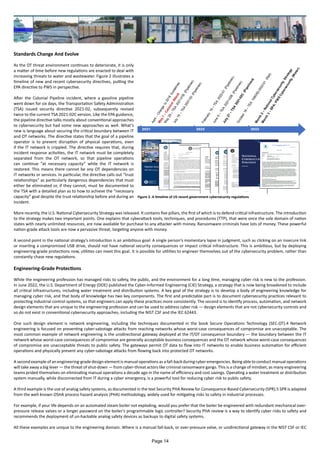
The report concludes that most attacks with physical consequences are criminal ransomware, with hacktivist threat actors behind most of the rest. Figure 1 shows
that the number of attacks with physical consequences on industrial targets have more than doubled every year since 2019.
These include attacks on water systems. In June 2022,
during the peak of monsoon season, Goa’s Water Resources
Department had 15 flood monitoring systems rendered
inoperable by ransomware. Without a budget to restore
the monitoring systems, it was decided to operate without
visibility into the watershed management program, impacting
local water treatment. In December 2022, Empresas Publicas
Medellín suffered a BlackCat/ALHPV ransomware attack.
While affecting IT and billing systems primarily, the attack
had the side effect of cutting off water for 28,000 customers
on prepaid water plans. More recently, in April 2023, Galil
Sewage Corp. became a victim of a GhostSec hacktivist attack,
where internet-connected pump controllers were defaced
and disabled.
In addition to these consequential attacks, there have been
many near misses — attacks that could have been consequential if the circumstances had been slightly different. In August 2022, a botched Cl0p-gang ransomware
attack on Thames Water fell apart when attackers attempted to extort the utility and threatened to shut down operations. In fact, they had breached South
Staffordshire Water’s network, another utility elsewhere in the UK. In July 2022, a ransomware attack hit the Narragansett Bay Commission in Rhode Island. While
a spokesperson for the commission claimed there was no disruption to wastewater collection and treatment, the organization had in fact paid a $250K ransom,
and further details were not made public. Finally, who can forget the February 2021 attack at Oldsmar, FL, where an operator observed a remote user attempting
to increase lye levels well beyond safe levels.
Figure 1. Attacks on OT with physical consequences
Page 13
Standards Change And Evolve
As the OT threat environment continues to deteriorate, it is only
a matter of time before new regulations are enacted to deal with
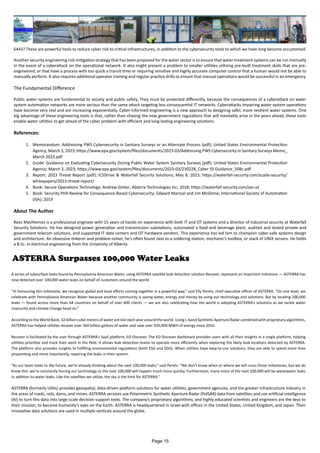
increasing threats to water and wastewater. Figure 2 illustrates a
timeline of new and recent cybersecurity directives, putting the
EPA directive to PWS in perspective.
After the Colonial Pipeline incident, where a gasoline pipeline
went down for six days, the Transportation Safety Administration
(TSA) issued security directive 2021-02, subsequently revised
twice to the current TSA 2021-02C version. Like the EPA guidance,
the pipeline directive talks mostly about conventional approaches
to cybersecurity but had some new approaches as well. What’s
new is language about securing the critical boundary between IT
and OT networks. The directive states that the goal of a pipeline
operator is to prevent disruption of physical operations, even
if the IT network is crippled. The directive requires that, during
incident response activities, the IT network must be completely
separated from the OT network, so that pipeline operations
can continue “at necessary capacity” while the IT network is
restored. This means there cannot be any OT dependencies on
IT networks or services. In particular, the directive calls out “trust
relationships” as particularly dangerous dependencies that must
either be eliminated or, if they cannot, must be documented to
the TSA with a detailed plan as to how to achieve the “necessary
capacity” goal despite the trust relationship before and during an
incident.
More recently, the U.S. National Cybersecurity Strategy was released. It contains five pillars, the first of which is to defend critical infrastructure. The introduction
to the strategy makes two important points. One explains that cyberattack tools, techniques, and procedures (TTP), that were once the sole domain of nation
states with nearly unlimited resources, are now available for purchase to any attacker with money. Ransomware criminals have lots of money. These powerful
nation-grade attack tools are now a pervasive threat, targeting anyone with money.
A second point in the national strategy’s introduction is an ambitious goal: A single person’s momentary lapse in judgment, such as clicking on an insecure link
or inserting a compromised USB drive, should not have national security consequences or impact critical infrastructure. This is ambitious, but by deploying
engineering-grade protections now, utilities can meet this goal. It is possible for utilities to engineer themselves out of the cybersecurity problem, rather than
constantly chase new regulations.
Engineering-Grade Protections
While the engineering profession has managed risks to safety, the public, and the environment for a long time, managing cyber risk is new to the profession.
In June 2022, the U.S. Department of Energy (DOE) published the Cyber-Informed Engineering (CIE) Strategy, a strategy that is now being broadened to include
all critical infrastructures, including water treatment and distribution systems. A key goal of the strategy is to develop a body of engineering knowledge for
managing cyber risk, and that body of knowledge has two key components. The first and predictable part is to document cybersecurity practices relevant to
protecting industrial control systems, so that engineers can apply these practices more consistently. The second is to identify process, automation, and network
design elements that are unique to the engineering profession and can be used to address cyber risk — design elements that are not cybersecurity controls and
so do not exist in conventional cybersecurity approaches, including the NIST CSF and the IEC 62443.
One such design element is network engineering, including the techniques documented in the book Secure Operations Technology (SEC-OT).4 Network
engineering is focused on preventing cyber-sabotage attacks from reaching networks whose worst-case consequences of compromise are unacceptable. The
most common example of network engineering is the unidirectional gateway deployed at the IT/OT consequence boundary — the boundary between the IT
network whose worst-case consequences of compromise are generally acceptable business consequences and the OT network whose worst-case consequences
of compromise are unacceptable threats to public safety. The gateways permit OT data to flow into IT networks to enable business automation for efficient
operations and physically prevent any cyber-sabotage attacks from flowing back into protected OT networks.
A second example of an engineering-grade design element is manual operations as a fall-back during cyber emergencies. Being able to conduct manual operations
will take away a big lever — the threat of shut-down — from cyber-threat actors like criminal ransomware gangs. This is a change of mindset, as many engineering
teams prided themselves on eliminating manual operations a decade ago in the name of efficiency and cost savings. Operating a water treatment or distribution
system manually, while disconnected from IT during a cyber emergency, is a powerful tool for reducing cyber risk to public safety.
A third example is the use of analog safety systems, as documented in the text Security PHA Review for Consequence-Based Cybersecurity (SPR).5 SPR is adapted
from the well-known OSHA process hazard analysis (PHA) methodology, widely used for mitigating risks to safety in industrial processes.
For example, if your life depends on an automated steam boiler not exploding, would you prefer that the boiler be engineered with redundant mechanical over-
pressure release valves or a longer password on the boiler’s programmable logic controller? Security PHA review is a way to identify cyber risks to safety and
recommends the deployment of un-hackable analog safety devices as backups to digital safety systems.
All these examples are unique to the engineering domain. Where is a manual fall-back, or over-pressure valve, or unidirectional gateway in the NIST CSF or IEC
Figure 2. A timeline of US recent government cybersecurity regulations
Page 14
6443? These are powerful tools to reduce cyber risk to critical infrastructures, in addition to the cybersecurity tools to which we have long become accustomed.
Another security engineering risk-mitigation strategy that has been proposed for the water sector is to ensure that water treatment systems can be run manually
in the event of a cyberattack on the operational network. It also might present a problem to smaller utilities utilizing pre-built treatment skids that are pre-
engineered, or that have a process with too quick a transit time or requiring sensitive and highly accurate computer control that a human would not be able to
manually perform. It also requires additional operator training and regular practice drills to ensure that manual operations would be successful in an emergency.
The Fundamental Difference
Public water systems are fundamental to society and public safety. They must be protected differently, because the consequences of a cyberattack on water
system automation networks are more serious than the same attack targeting less consequential IT networks. Cyberattacks impairing water system operations
have become very real and are increasing exponentially. Cyber-informed engineering is a new approach to designing safer, more resilient water systems. One
big advantage of these engineering tools is that, rather than chasing the new government regulations that will inevitably arise in the years ahead, these tools
enable water utilities to get ahead of the cyber problem with efficient and long-lasting engineering solutions.
References:
1. Memorandum: Addressing PWS Cybersecurity in Sanitary Surveys or an Alternate Process (pdf); United States Environmental Protection
Agency; March 3, 2023; https://www.epa.gov/system/files/documents/2023-03/Addressing PWS Cybersecurity in Sanitary Surveys Memo_
March 2023.pdf
2. Guide: Guidance on Evaluating Cybersecurity During Public Water System Sanitary Surveys (pdf); United States Environmental Protection
Agency; March 3, 2023; https://www.epa.gov/system/files/documents/2023-03/230228_Cyber SS Guidance_508c.pdf
3. Report: 2023 Threat Report (pdf); ICSStrive & Waterfall Security Solutions; May 8, 2023; https://waterfall-security.com/scada-security/
whitepapers/2023-threat-report/
4. Book: Secure Operations Technology; Andrew Ginter; Abterra Technologies Inc; 2018; https://waterfall-security.com/sec-ot
5. Book: Security PHA Review for Consequence-Based Cybersecurity; Edward Marszal and Jim McGlone; International Society of Automation
(ISA); 2019
About The Author
Rees Machtemes is a professional engineer with 15 years of hands-on experience with both IT and OT systems and a director of industrial security at Waterfall
Security Solutions. He has designed power generation and transmission substations, automated a food and beverage plant, audited and tested private and
government telecom solutions, and supported IT data centers and OT hardware vendors. This experience has led him to champion cyber-safe systems design
and architecture. An obsessive tinkerer and problem-solver, he’s often found next to a soldering station, mechanic’s toolbox, or stack of UNIX servers. He holds
a B.Sc. in electrical engineering from the University of Alberta.
ASTERRA Surpasses 100,000 Water Leaks
A series of subsurface leaks found by Pennsylvania American Water, using ASTERRA satellite leak detection solution Recover, represent an important milestone — ASTERRA has
now detected over 100,000 water leaks on behalf of customers around the world.
“In honouring this milestone, we recognize global and local efforts coming together in a powerful way,” said Elly Perets, chief executive officer of ASTERRA. “On one level, we
celebrate with Pennsylvania American Water because another community is saving water, energy and money by using our technology and solutions. But by locating 100,000
leaks — found across more than 64 countries on behalf of over 600 clients — we are also celebrating how the world is adopting ASTERRA’s solutions as we tackle water
insecurity and climate change head on.”
According to the World Bank, 32 billion cubic meters of water are lost each year around the world. Using L-band Synthetic Aperture Radar combined with proprietary algorithms,
ASTERRA has helped utilities recover over 360 billion gallons of water and save over 920,000 MWH of energy since 2016.
Recover is facilitated by the user through ASTERRA’s SaaS platform, EO Discover. The EO Discover dashboard provides users with all their insights in a single platform, helping
utilities prioritize and track their work in the field. It allows leak detection teams to operate more efficiently when exploring the likely leak locations detected by ASTERRA.
The platform also provides insights to fulfilling environmental regulations (both ESG and SDG). When utilities have easy-to-use solutions, they are able to spend more time
pinpointing and more importantly, repairing the leaks in their system.
“As our team looks to the future, we’re already thinking about the next 100,000 leaks,” said Perets. “We don’t know when or where we will cross those milestones, but we do
know this: we’re constantly honing our technology so the next 100,000 will happen much more quickly. Furthermore, many more of the next 100,000 will be wastewater leaks
in addition to water leaks. Like the satellites we utilize, the sky is the limit for ASTERRA.”
ASTERRA (formerly Utilis) provides geospatial, data-driven platform solutions for water utilities, government agencies, and the greater infrastructure industry in
the areas of roads, rails, dams, and mines. ASTERRA services use Polarimetric Synthetic Aperture Radar (PolSAR) data from satellites and use artificial intelligence
(AI) to turn this data into large-scale decision support tools. The company’s proprietary algorithms, and highly educated scientists and engineers are the keys to
their mission, to become humanity’s eyes on the Earth. ASTERRA is headquartered in Israel with offices in the United States, United Kingdom, and Japan. Their
innovative data solutions are used in multiple verticals around the globe.
Page 15
Article:
A climate-neutral, energy-
positive and zero-waste
perspective on water
Leakage from drinking water pipes is a global problem – including in Sweden. At VA SYD, non-revenue water accounted for 10% of all water supplied to
customers. On a global scale, this figure is quite low, “but when we compare ourselves with our peers, we can still do much better”, says Simon Granath.
Simon Granath is a development engineer at VA SYD, which carried out an innovative project to detect and eliminate water leaks from pipelines using artificial
intelligence (AI). The results will be used to help VA SYD achieve its ambitious goals of becoming a climate-neutral, energy-positive water utility with zero
unplanned disruptions of service by 2030.
VA SYD is one of Sweden’s largest utilities, supplying more than 546,000 customers with drinking water in the regions around Lund and Malmö in the south of
Sweden. In total, VA SYD operates around 5,000 kilometres of pipelines of which 2,000 km are drinking water pipes.
Some of the oldest pipes date from the late 19th century, and with such a vast and heterogeneous infrastructure, pinpointing leaks is a complex task. As Simon
Granath explains: “The percentage of non-revenue water varies greatly within our network. Some areas have exceptionally low rates of leaks, while the losses
in others are more significant. The issue was that until very recently, we could only detect the largest leaks that led to service disruptions – while it is the small
and minor leaks, often from small service pipes, that are responsible for the lion’s share of non-revenue water.” Compared to Sweden’s average of 20% water
loss through pipeline leaks – which itself is much lower than the global estimate of 50% non-revenue water – at the beginning of the project VA SYD’s 10% non-
revenue water seemed relatively small, but Simon was convinced that VA SYD should be in a position to reduce this number. “Ten per cent non-revenue water,
after all, translates into more than five million cubic metres of water per year that is simply lost,” says Simon. Apart from the immediate monetary aspects,
non-revenue water also impacts VA SYD’s broader company goals. “This water has been collected and treated, consuming energy and resources in the process.
If we want to become climate neutral and energy positive, this kind of waste is simply not acceptable.” Today, the non-revenue water at VA SYD accounts for
less than 8%, which is similar to its neighbouring country Denmark.
Finding a smart solution for leakage detection
Another aspect is improving the service to customers, adds Simon: “We have to maintain a lot of pipelines in a large area. When we have an issue with a
pipeline, we need to improve our ability to pinpoint the leak through smart metering zones. And for this purpose, we had been looking at utilizing an AI-based
solution because we saw this as a way to make the best use of our installed water meters and improve the hydraulic models that we have for our pipelines.” VA
SYD evaluated several systems over the last few years, looking for a solution that was state of the art and made optimum use of the available flowmeters and
smart meters in the area that had been chosen for the proof of concept.
With SIWA LeakPlus, Siemens offered an excellent solution powered by its cooperation partner BuntPlanet. SIWA LeakPlus ticked all the boxes, says Simon, “but
Page 16
when it came to the implementation concept, we ran into some obstacles. We needed to find a way to use the AI-based leakage detection in an on-premises
setup instead of in a cloud environment.” Siemens was able to offer a solution for this requirement as well. “We had some in-depth discussions with Siemens,
BuntPlanet, and our IT and OT departments about the best approach to install the SIWA LeakPlus solution in our own data centres. To my knowledge, this is the
first time something like this has been done in the Swedish water industry – and we managed to get the job done thanks not least to the support and expertise
from Siemens.”
Refining the models and initial results
Nevertheless, the initial setup of the architecture proved to be quite a challenge, says Simon: “You really need to create a suitable concept for the architecture,
bring the right people together, and specify exactly what you need and how you want to get there.” After the solution had been installed, the next step was to
refine the hydraulic models for the pipelines. “We had to do a dynamic calibration through a series of capacity tests and measure the pipeline pressure at several
places in our metering areas. The data were used to create a very fine-meshed model that offers a much higher degree of detail than the hydraulic models we
had previously.”
In parallel to the modeling, the data from the metering systems and pump stations were linked with SIWA LeakPlus using OPC UA. SIWA LeakPlus is one of the
Siemens Water (SIWA) applications specifically developed for the water and wastewater industry. This smart solution uses an AI-based algorithm to identify and
classify anomalies in the pipe network. To perform reliably, SIWA LeakPlus is first “trained” through historical flow and pressure data so that it learns to separate
anomalies from regular operations and assign the correct cause to each anomaly. The application can automatically detect whether an event was caused by
some aspect of the regular operation or is due to water theft or a pipeline leak. Alternatively, the operator can also manually assign a cause to an event to refine
the algorithm.
After completing the linkage and training, VA SYD was ready to perform the first tests. Simon explains: “We used the system to simulate different leaks and then
evaluated the data. We were able to detect leaks as small as 0.5 litres per second – this was quite impressive and a huge improvement over the previous solution,
which provided no means of detecting small leaks at all.”
It was especially impressive considering that the available data were still quite limited at that point, adds Simon. “Right now, we are working on Phase 2, which
will allow us to improve the leak detection so that we can pinpoint the location of the leak, and we will deploy this solution in the coming weeks. Then we will
have the means to really go out there and fix all those small issues efficiently.”
Efficiency that will pay off also on a larger scale
With the proof of concept in its final stages, VA SYD is also working on scaling up the solution to other parts of the network. “The proof of concept was done in
a relatively small system with 5,000 consumers per district metered area. This is a general principle here at VA SYD: start small, try things out, and learn from
failures so that you can succeed on a larger scale”, says Simon. “I can highly recommend this approach, as it enables you to reduce the risk and refine the solution
before you scale up.”
A further area to benefit from SIWA LeakPlus is currently the town of Lund, where VA SYD is installing additional flowmeters to provide more data from the
pipeline network. “This is another aspect that we are looking into,” says Simon. “With SIWA LeakPlus, we are able to work with a smarter leakage-detection
system that requires less data from the pipelines. The flowmeters on the pipes are quite expensive, and if we can reduce the number of installed meters by
having a good dynamic calibration of our hydraulic system, that is something that immediately pays off.”
Economic benefits aside, SIWA LeakPlus has already helped VA SYD take the next steps to reach its broader goals, says Simon. “One obvious impact of the new
leakage detection solution is that we are not only able to reduce the total amount of leakage, but we can also find and fix a leak before it becomes a burst and
affects our customers. That contributes to our goal of zero unplanned interruptions of service. Moreover, the solution enables us to find all those small leaks on
small service pipelines that add up to a lot of non-revenue water.”
Furthermore, the project at VA SYD has been widely recognized as a best practice in Sweden, leading other municipalities to adopt the same solution for water
distribution in their respective areas. One such example is the NSVA water utility in the south-western part of the country. Victor Pellin, along with Simon, played
a crucial role as project initiators at VA SYD. Victor later transitioned to NSVA, where he is successfully implementing the SIWA LeakPlus system in their regions.
His expertise and valuable experience in leakage detection installations greatly contribute to the success of the project at NSVA.
Treating natural resources with respect is a way of life in Sweden, and water should be no exception to this practice, says Victor: “Even if here in Sweden there
is not a water scarcity problem in general, wasting water just feels wrong. Plus, lifting, treating, and pressurizing that water consumes energy, and energy is a
major cost factor.”
Consequently, Victor and Simon are aiming even higher than matching the 8% benchmark for non-revenue water from Denmark: “We really want to beat that.
There are municipalities that achieve much lower figures, and we want to be able to measure up to the best. And in our opinion, that requires smart leakage
detection and AI-based solutions like SIWA LeakPlus.”
Siemens and BuntPlanet will be demonstrating the SIWA Leakplus solution at the IWA Digital Water Summit in Bilbao from the 14th -16th November 2023 in a
session hosted by Oliver Grievson the Executive Director of Water Industry Process Automation & Control and Chair of the IWA Digital Water Programme.
Page 17
Water, Wastewater & Environmental Monitoring Conference & Exhibition
Birmingham, UK
9th - 10th October 2024
WWEM is moving to the Birmingham NEC in 2024. Planning is still underway but the firm favourites like the Flow Forum,
Instrumentation Apprentice Competition and the Learning Zone will be returning as well as some surprises. Watch this space for
updates but what is sure that in its new home in Birmingham the WWEM Conference and Exhibition will be bigger than ever.
Sensor for Water Interest Group Workshops
The Sensors for Water Interest Group has moved their workshops for the foreseeable future to an online webinar format. The next
workshops are
8th November - Innovative solutions for new flow measurement regulations
IWA Digital Water Summit
Bilbao, Spain
14th -16th November 2023
The highly successful IWA Digital Water Summit returns to Bilbao in November 2023 for its 2nd edition. These dates are provisional
at the moment. The 1st summit highlighted the potential and the 2nd summit will build on the first in November 2023
WEX Global 2024
Madrid - Spain
4th -6th March 2024
WEX Global occupies a unique place in the water conference calendar. Business meetings and conversations lie at the heart of WEX,
along with the principle of ‘exchange’; the exchange of ideas and philosophies, of business cards, of solutions, and of methodologies,
to form strong networks on which to build stronger relationships
WWT Innovation & Smart Water Conference
Birmingham, UK
14th March 2024
The WWT Innovation and Smart Water Conference returns to Birmingham to discuss Digital Transformation in the UK Water Industry
as well as the innovation that is going to be necessary to face the challenges that the water industry will have to answer moving
forward.
Page 18
Conferences, Events,
Seminars & Studies
Conferences, Seminars & Events
2023/4 Conference Calendar
Page 19

WIPAC Monthly - September 2023

  • 1.
    WIPAC MONTHLY The MonthlyUpdate from Water Industry Process Automation & Control www.wipac.org.uk Issue 9/2023- September 2023
  • 2.
    Page 2 In thisIssue WIPAC Monthly is a publication of the Water Industry Process Automation & Control Group. It is produced by the group manager and WIPAC Monthly Editor, Oliver Grievson. This is a free publication for the benefit of the Water Industry and please feel free to distribute to any who you may feel benefit. However due to the ongoing costs of WIPAC Monthly a donation website has been set up to allow readers to contribute to the running of WIPAC & WIPAC Monthly, For those wishing to donate then please visit https://www.patreon.com/Wipac all donations will be used solely for the benefit and development of WIPAC. All enquires about WIPAC Monthly, including those who want to publish news or articles within these pages, should be directed to the publications editor, Oliver Grievson at olivergrievson@hotmail.com From the editor............................................................................................................. 3 Industry news.............................................................................................................. Highlights of the news of the month from the global water industry centred around the successes of a few of the companies in the global market. 4 - 11 Information silos in water utilities: a stumbling block on the road to Digital Transformation............................................................................................................. In this article by Manuel Parra of Xylem we look at a perennial problem within most water utilities that is the first step in the journey for most water utilities to undertake and that is the breaking of siloed information and the barrier that it poses to companies who are yet to start on a Digital Transformation journey 12 Engineering grade security for water utilities............................................................... This article highlights the regulations that have been put in place in the USA and the solutions that are available to utilities to protect themselves from cyber-attacks. Rees Machtemes discusses that the cyber tools that are being put place will allow US utilities to not just keep with the risks of increasing attacks and changing regulation but get ahead of the curve in order to ensure that utility data is secure. 13 - 15 A Climate neutral, energy positive and zero waste perspective of water...................... In our last article this month we have a look at the Siemens & Bunt Plant application of SIWA Leakplus that will be demonstrated in November live on stage at the IWA Digital Water Summit. We look at its application in Sweden where using a Digital Transformation approach to leakage they have managed to reduce non-revenue water to match the 8% benchmark. 16 - 17 Workshops, conferences & seminars............................................................................ The highlights of the conferences and workshops in the coming months. 18 - 19
  • 3.
    Page 3 From theEditor A very quick review of the business plans that have been set by the Water Companies in England & Wales reveal some interesting things this month but do go to show that if we though monitoring in the past two investment programmes was big then we truly have not seen anything yet. Some rough calculations after skimming the business plans and looking for key words such as monitoring and doing some quick mental arithmetic show that the investment in wastewater monitor- ing along is somewhere within the region of £1 billion over the five year period. This is in fact lower that was expected as Section 82 of the Environment Act had previously been priced at over £7 billion alone. This is actually a good news story in a way although the Environmental NGO's are bound to think that the monitoring should go in earlier. However, experience of how England & Wales has delivered simpler programmes of work show it is something that we need to develop first - in short we need to walk before we can run and trial some of the technologies before putting them into practice and monitoring in the proverbial "anger" of having to report to the public within one hour. Simply said we aren't ready for the huge amount of monitoring. In reality nor are the powers that be that first passed the legislation through parliament. When you ask the question what are we going to do with the data the answer is that we are going to use it to monitor "performance." This approach is naive at best the river environment is a complicated environment to monitor. If you have a small slow moving stream which is well mixed this is easy enough but if you are monitoring the River Thames (which although big isn't that big) then you have the complexity of monitoring in something that is effectively a shipping lane with tourist boats and other riverine traffic going up and down it all day. This will basically necessitate a floating buoy approach (not unheard of) and complex studies of the river currents to ensure that the sampling is representative of the environment that is being monitored otherwise what is the point of monitoring. Then comes the problem that if we got the entire supply chain in the United Kingdom that is qualified to install instrumentation of this sort then we wouldn't have enough people to do the job in time (someone is bound to argue with me on this one) and then of course there are the problems in maintenance and this is only one programme of works. I looked at some of the submissions in the business plans that were shared and my thought was that some of the promises that are being made are quite frankly impossible to deliver. So we have challenges on installation and we have challenges on maintenance especially with the number of skilled people that are able to deliver it. So what more? Well there are the challenges of the IT and telemetry systems to accept and process all of the data let alone interpret it. Is this really a challenge? Well, yes when we look back into the last investment period and the brave decision over smart customer metering that Thames Water took. This data was hourly which the data for river water quality will be (but simpler data) and Thames Water found that the IT systems struggled to accept the volume of data. A pause in the delivery of the programme and some skilled work in setting up IT systems for the water meter data meant that it was sorted out relatively quickly but the key learning point is that is not just the instrumentation in the ground, its the telemetry systems serving it and then the IT systems accepting it and then finally the interpretation of the data. If we don't use the data then why are we collecting it. And then similar monitoring is starting to be rolled out across Europe as well (although a better concept thought of from a more sensible approach monitoring the river catchments rather than the overflows). All in all the next few years is still going to see massive investment in instrumentation and monitoring espe- cially around the wastewater side of the industry as well as smart customer meters but with the release of the business plans the scale of it is not feeling like scaling Mount Everest blindfolded....a sensible approach for now is at least being taken. Have a good month, Oliver
  • 4.
    Oliver Grievson, theexecutive Director of Water Industry Process Automation & Control and Associate Director at AtkinsRéalis has joined the University of Exeter as a Royal Academy of Engineering Visiting Professor. The programme which is sponsored by the UK Government through the Royal Academy of Engineering will see Oliver take up a Visiting Professorship concentrating on Digital Water and its application within the water industry as well as industrial entrepreneurship. The position will last three years and allow for the sharing of knowledge of the water industry and the application of Digital Water, amongst other things to the students at Exeter University which is well known for its world leading Hydroinformatics programme within its Centre for Water Systems that has just celebrated its 25th anniversary conducting research and teaching which has a global influence. Oliver commented "I am thrilled to be Visiting the University of Exeter as a Visiting Professor as it will enable me to help in developing future generations of technically focussed engineers who can embed the principles of Digital Water and its transformation into the industry, this is especially important considering that the English & Welsh Water Companies have just announced their most ambitious plans for investment in the national water infrastructure which will need Digital Water to be embedded at the centre of it to inform the industry of its operational efficiency and allow the most informed decisions to be made for the good of the environment." Olivercontinued"ImustgivemethankstotheUniversityofExeterandtheRoyalAcademyofEngineeringfortheirtrustinmeandenablingthisVisitingProfessorship as well as AtkinsRéalis for giving me the time in my day job to allow me to visit the University of Exeter as a Professor. WIPAC Executive Director joins Exeter University as Visiting Professor in Digital Water Digital transformation in the water sector: Insights from the Smart Water Survey In today’s changing world, the influence of digital technologies can be seen in nearly every sector. The water utility sector is no exception. But how is the digital transformation impacting the water sector and what are the drivers behind it? What are its key-enabling technologies? These are some of the questions addressed in a recent open-access study published in npj Clean Water. The study, led by a team of researchers from TU Berlin-ECDF and international collaborators from the Lawrence Berkeley National Laboratory, Politecnico di Milano, KWR Water Research Institute, and Griffith University, sheds light on the current state of digital transformation in water utilities through a global perspective. Climate change and urbanisation have put water security in the spotlight. Water utilities worldwide are facing a double-edged sword: while they are directly impacted by climate change, their own operations contribute to greenhouse gas emissions. Digital technologies have shown promising results in making utilities more sustainable and their operations more efficient through the urban water cycle. Sixty-four utilities from 28 countries replied to our online Smart Water Survey, and their answers reveal a clear trend: digital transformation has already taken root in the water utility sector, regardless of the unique challenges faced by each region and different paces of technology adoption. Big and small, public and private, recent and more experienced utilities have all started embracing the wave of digitalisation, reshaping the way they operate and manage resources. Another major contribution of our study is the identification of the drivers and key technologies enabling the digital transformation of water utilities. Learning from utilities that are leading the digital transformation journey enables other utilities to make informed decisions about their digital strategy, allowing them to prioritise the adoption of specific technologies based on their degree of penetration, effectiveness, and best practices. The study wraps up with three main insights: • Water supply and distribution systems often act as a catalyst for further technology adoption in the entire urban water cycle. • Prospective economic benefits are still the primary driving force behind the digitalisation efforts of water utilities. This means that beyond the obvious advantages of sustainability and streamlined operations, utilities are motivated by the potential economic gains digitalisation can offer, followed by government regulation and hydroclimatic factors. • Different subdivisions of the urban water cycle are adopting digital technologies at varying speeds, resulting in a diverse landscape of technology adoption. The survey also highlights a need for continued research and monitoring. While certain drivers of digital transformation were identified, we couldn’t establish a direct link between these drivers and the actual progress of digitalisation in practice. Other questions remain open, besides expanding the coverage of interviewed utilities and disentangling local nuances that can affect a utility’s digitalisation progress. What is the role of individual leadership in driving the digital transformation? How can policy facilitate impact-oriented technology development? What is the role of consumers in a utility’s decision-making processes? Answering these questions requires future monitoring of technology uptake in the water utility sector. As we move towards a digital future, water utilities must stay vigilant, embracing innovation and exploring the untapped potential of technology in pursuit of water security and climate resilience. The journey towards a digitally empowered water utility sector has just begun, and it promises to reshape the way we manage our most precious resource. Page 4 Industry News
  • 5.
    SWIG's biennial conferencetook us on a fascinating data journey… After a four-year hiatus due to COVID, "Sensing in Water" made a triumphant comeback in 2023, coinciding with SWIG's 30th anniversary. This two- day event brought together experts, innovators, and industry leaders to explore "The Data Journey: From Sensor to Control Room." Day 1: Embracing Innovation The conference commenced with Dr. Andy Nichols, SWIG Chairman, setting the stage for a celebration of SWIG's three decades of contributions to water sensing. Ian Marchant, Chairman of Dunelm Energy and Former Chairman of Thames Water, delivered the keynote, "The Water Industry: A Journey from the Dark Ages." Session 1, led by Leo Carswell, delved into emerging sensors and disruptive technology. Topics included "Calibration-Free pH Measurement," "The Evolution of Disruptive Sensor Technology," "Paper Microfluidic Devices for On- Site Wastewater Surveillance," and "Real-Time Water Quality Buoys." Session 2, led by Matthew Ellison of Kisters, discussed advanced communications and telemetry in the water industry. Topics included "Drowning in Data – A Smart Catchment Approach," "Satellite IoT," "WITS in Water," and "Putting the Smart in Smart SuDs Using Instrumentation and Connectivity." A lively panel discussion wrapped up the sessions. In the evening, conference participants gathered for a gala dinner filled with entertainment and awards. Dr Matthew Winning's comedy and the "watery" quiz led by Andy and Hannah added to the festivities. Awards were presented for quiz winners, the SWIG photography competition, and the early career poster competition. The night was completed (for those who didn’t venture into Nottingham…) with a 1am survivors photo! Day 2: Looking to the future The second day featured a keynote address by Prof. Francois Clemens from the Norwegian University of Science and Technology, titled "Sensoring in Water: Don't Plug Yet, Pray First." Session 3, led by Alex Gray of Thames Water, explored 21st-century data and analytics. Topics included "Smart Asset Optimization," "Environmental Resilience," "Real-Time Optimization," and "Harnessing Data Power." Session 4, led by Mark Webber of South West Water, examined the "Control Room of the Future." Topics included "Modern Control Room Design," "Sensor and Weather Data Integration," "AI- Powered Predictive Analytics," and "Critical Control Rooms." The conference concluded with a lively panel discussion. That’s a wrap! "Sensing in Water 2023" provided an essential platform for industry experts to share insights, foster networking, and collaborate. SWIG would like to thank the conference sponsors who played a vital role in making the event possible. SWIG looks forward to continuing its journey in the data-driven water industry, with more innovative events on the horizon to which you are warmly invited. Page 5
  • 6.
    English & Welshwater companies publish business plans for the 2025- 2030 investment period Water companies have published, this month, draft business plans which set out their proposed spending on infrastructure and improvements to the water system from 2025-2030. We expect Ofwat, the regulator, to scrutinise these plans to ensure they meet legal requirements and government targets, to check families are not paying for what companies should already have done, and to give customers the best value for their money. Final plans will be agreed by Ofwat in December 2024 with changes to bills taking effect from April 2025. The plans include how companies propose to invest in improving water supply resilience and the environment, helping to make rivers and beaches cleaner, reducing leaks and supply interruptions and tackling issues like storm overflows. In turn, this investment boosts economic growth and creates more jobs across England and Wales. The Government’s Plan for Water is transforming the water sector through more investment, stronger regulation, and tougher enforcement to deliver the clean and plentiful water the public expects. We have given our regulators additional powers on bonuses and dividends so that billpayers are not rewarding poor performance, and last week it was confirmed that the worst performing water companies must return money to consumers through their bills. Environment Secretary Thérèse Coffey said: Major improvements are needed to deliver clean and plentiful water now, and in the future – as the public and government have rightly demanded. As we set out in our Plan for Water, this sector needs more investment, stronger regulation and tougher enforcement to drive the improvements we all need to see. Funding this transformation requires making decisions for the long term, and water companies will carry out the largest ever environmental investment programme in water company history, investing billions in new reservoirs for new homes, businesses and for our farmers, as well as the £60 billion plan to tackle sewage spills. We have the cleanest drinking water in the world but there is so much more to be done on other issues which is why we developed our Plan for Water and legislated to give regulators Ofwat and the Environment Agency stronger powers on enforcement and unlimited penalties. As part of the strengthened statutory process, Ofwat will now independently scrutinise these plans for the next fifteen months to ensure customers are getting the best value for their money and that companies are delivering the improvements we expect. There will be no changes to bills until 2025. I have been very clear with Ofwat, the regulator, that customers should not pay the price for poor performance and they should use the full powers we have given them on behalf of consumers. Now is the time for water companies to step up and deliver lasting changes for future generations. There have been claims about customers paying twice for investment – that is not the case. Ofwat has been clear that customers won’t pay twice for investment that should already have happened. The money that customers have paid through previous bills has been used for existing improvements, with £200 billion invested in the water system since privatisation. Where improvements still need to be made for which companies have already received funding, they will not be granted that funding again. This money from 2025 – 2030 will be used to pay for new improvements – including tackling building new reservoirs, cutting leakage and investing to reduce sewage spills. The plans have highlgithed the need for significant investment in the water industry and come to a total of £96 billion for the investment period although they are subject to scrutiny over the next 12 months by the financial regulator OFWAT. This investment period is set to see a record investment in instrumentation with capital investment in the region of £1 billion mainly driven by the need to install: • Section 82 monitoring upstream and downstream of sewer overflows • Monitoring of wastewater pumping station emergency overflows and flow monitoring where it is a joint emergency and storm overflow • The remainder of the programme monitoring the pass forward flows at wastewater treatment works • Moving from 15-minute monitoring to 2-minute monitoring on a large number of wastewater treatment works instrumentation • Smart Customer Meters which the Environment Agency has requested be in place by 2030. Additional items that may or may not be included in the investment programme are also likely to be monitoring of sewer levels for blockage detection, updating of combined storm overflow devices which has been caused by installation regulations changes brought into force by the Environment Agency since instruments have been installed causing significant rework for the water companies and their supply chain. Additions to the investment will see all spill monitoring and flow monitoring for wastewater treatment and wastewater collection networks brought under the Environment Agency Monitoring Certification Scheme (MCERTS). It is also safe to say that the programme of works that will be delivered in the next Asset Management Period is the largest scale of investment in instrumentation that the water industry has ever seen and there will need to be a number of support services brought into the supply chain include maintenance and data handling to be able to manage the huge influx of data that is being brought into the industry. All of this brings a large potential opportunity for Digital Tools and Digital Transformation to be brought into the water industry considering that the large influx of data should be able, if given the right amount of analysis, lead to a vast improvement in situational awareness. Page 6
  • 7.
    Spain awards €200million to improve the efficiency of the urban water cycle Spain’s Ministry for Ecological Transition and the Demographic Challenge (MITECO) has published on its website the provisional resolution of the first call of the PERTE for the digitalisation of the water cycle, granting aid for a total amount of 200 million euros for the improvement of the digitalisation of the urban water cycle. A total of 30 projects have been selected with aid ranging from 3.3 to 7.9 million euros per project, which will benefit 1,676 municipalities in 16 autonomous communities with a population of 14,742,016 inhabitants. The aid will benefit projects dealing with water management, both in large cities and small rural municipalities, which have submitted grouped projects. The beneficiaries have been operators of urban water supply, sanitation and treatment services of various types, such as local authorities, public and mixed companies and representatives of the private sector. The projects - selected on a competitive basis, in accordance with the principles of article 8.3 of Law 38/2003, of 17 November, on General Subsidies - stand out for their high technical quality and their contribution to the achievement of the PERTE objectives of digitalisation of the water cycle. The actions financed respond to cutting-edge and strategic initiatives that will improve efficiency in the use and management of water in Spain, such as the real- time sensor of catchments in the public water domain, the control of consumption through the implementation of smart meters, the reduction of drinking water losses, the real-time control of wastewater treatment plants and discharges into the public water domain, the creation of digital twins and the mathematical modelling of hydraulic networks and systems that allow the use of artificial intelligence, real-time monitoring of wastewater treatment plants and discharges into the public water domain, the creation of digital twins and mathematical modelling of hydraulic networks and systems that enable the use of artificial intelligence for system management, as well as the implementation of platforms that integrate the entire water cycle and support sustainable management of water resources and transparency in water management. In addition, comprehensive projects will be financed that will implement drought and flood action plans. After a period of 10 days to receive allegations and the reformulation of the projects, the final resolution of the call will be made in the first half of November 2023 and the deadline for completion of the projects will be 31 December 2025, with the possibility of an extension until 1 June 2026 at the latest. In addition, the second call for PERTE grants for the digitalisation of the urban water cycle has been published for an amount of 200 million euros. The grants will range from 500,000 euros to 10 million euros per project generally, the amount varying according to the number of inhabitants of the municipalities in which the actions take place. The deadline for submitting applications for this second call for applications is 13 December 2023. The first PERTE call is also open for irrigation digitalisation projects which, with an initial investment of 100 million euros, will enable efficiency in the use of water, fertilisers and pesticides in the projects that are finally selected nationwide. Work is also being carried out on other PERTE lines of action. So far, more than 750 million euros have already been mobilised at different stages of processing, to which the planned calls will be added once the Addendum to the European Recovery, Transformation and Resilience Plan is approved. DEWA partners with Microsoft to adopt new generative AI tool to enhance digital transformation Dubai Electricity and Water Authority (DEWA) has adopted Microsoft Power Platform and its AI-powered tool Copilot. The move is part of DEWA’s efforts to utilise the latest global technologies in all areas and benefit from the capabilities of generative AI to enhance DEWA’s digital transformation. Copilot will assist software developers at DEWA in building smart programmes and applications that support DEWA’s operations more smoothly and efficiently by utilising generative AI tools. “We work to develop DEWA’s digital channels using the latest disruptive technologies of the Fourth Industrial Revolution and generative AI tools. This aligns with the vision of His Highness Sheikh Mohammed bin Rashid Al Maktoum, Vice President and Prime Minister of the UAE and Ruler of Dubai, to make Dubai the smartest and happiest city in the world. Adopting the Microsoft Power Platform Copilot is part of our efforts to utilise AI in all our services and operations. DEWA invests in its digital infrastructure to enhance the digital transformation to promote stakeholders’ happiness and provide value-added advanced digital services,” said HE Saeed Mohammed Al Tayer, MD & CEO of DEWA. The Copilot supports developers and programmers in writing code and developing applications. It understands the context of the code being written and provides suggestions and guidance to programmers during the programming process, in addition to tips on how to format code and correct errors to speed up the development process. Page 7
  • 8.
    Timeseer.AI Joins SWANTo Promote High Data Quality Across The Smart Water Sector Timeseer.AI, a growing leading provider of artificial intelligence solutions for data quality optimization, announced its membership to the Smart Water Networks Forum (SWAN), the leading global hub for the smart water sector. Trusted by over a dozen Fortune 5000 companies, Timeseer.AI harnesses the power of advanced artificial intelligence to detect, prioritize, and investigate data quality issues. Mario Maessen, Senior Data Scientist at Vitens, and proud SWAN Member remarked: “Challenges with data quality are mostly still hidden, however have a proven significant impact on our ability to leverage digital technology. We are very happy that companies that are addressing these issues are now also a part of the SWAN Forum.” Reflecting on their new SWAN Membership, Niels Verheijen, Co-founder and Chief Revenue Officer at Timeseer.AI added: “By joining SWAN, we will be able to engage with water utilities on a global scale. The value of being able to learn from other smart water members is a tremendous opportunity for us as a young company. SWAN also provides a platform for us to demonstrate our capabilities in the important field of sensor data quality, which is a critical building block to reach the potential of digital transformation.” SWAN CEO, Amir Cahn commented, “Achieving high data quality is a significant challenge for water utilities who often only utilize a small fraction of the data they collect. SWAN will greatly benefit by adding Timeseer.AI to our global community.” Growing demand for storm overflow cameras Water and sewerage companies are installing Meteor MRC remote cameras at an increasing number of wastewater discharge and storm overflow locations; primarily to check the veracity of event duration monitors (EDMs), but also to avoid unnecessary site visits, save costs, lower the carbon footprint of operations, and help identify the sources of pollution. The UK government has instructed all water and sewerage companies (WaSCs) operating in England, to install monitors on every storm overflow by the end of 2023. These EDMs must provide information on the frequency and duration of storm overflow spills. The Environment Agency’s EDM data for 2022 showed that the ten WaSCs in England have 14,580 storm overflows, and that 91% of these were fitted with EDMs. On average, each overflow spilled 23 times for an average of 5.8 hours. “Wherefrequentspillsarebeingreported,orwhenaWaSCsuspects that an EDM is reporting falsely, a site visit may be required, so we are experiencing a heavy demand for rugged, low-cost cameras that are able to deliver reliable high-quality images of discharges to verify the EDM data without, necessarily, having to make a site visit,” explains Matt Dibbs, MD at Meteor Communications. Meteor’s MRC cameras have been designed to operate unattended in remote locations where normal power and communications may not be available. The MRC cameras require just a small battery and a solar panel for year- round operation, and there are currently around 2,500 MRC cameras in use around the UK. Matt says: “One of the most popular features of the MRC cameras for discharge points, is the facility to attach a robust, reliable water level sensor so that the cameras can be automatically prompted to collect images when water levels rise. “With the benefit of MRC remote cameras, WaSCs have ‘eyes in the field’ to improve the reliability of EDM data and avoid the over-reporting of spills, whilst reducing the number of site visits - saving time, and lowering both costs and carbon footprint.” Page 8
  • 9.
    Siemens signs agreementswith Giza Systems and others to accelerate digitalization Siemens announced a series of agreements with Saudi Arabian businesses and institutions at the Digital Industries Technology Day in Riyadh last week, emphasizing a shared commitment to accelerating digitalization and sustainability in multiple sectors with the aim of helping achieve the Kingdom’s Vision 2030. In collaboration with Giza Systems and solutions by stc, Siemens agreed to provide 5000 flow meters for agricultural farms operated by the Ministry of Environment, Water and Agriculture (MEWA). By installing these flow meters, MEWA will gain greater transparency on water consumption to optimize water supply, reduce wastage and boost the farms’ sustainability. Saudi Coffee Company, a Public Investment Fund company, and Siemens agreed to work together on building a smart factory in Jazan based on Siemens’ electrification, automation, and digitalization technologies, as well as introducing initiatives like carbon capture, renewable energy adoption, responsible waste management, and eco-friendly packaging. Siemens agreed to provide 5000 flow meters for agricultural farms operated by the Ministry of Environment, Water and Agriculture (MEWA) Mutlaq Al Ghowairi company and Siemens announced the award of a project for NEOM ENOWA, to build and automate the water and wastewater treatments plants at Gayal to provide Al Bada'a Reservoir and Magna, and then from Al Bada'a to Lower Mountain and Visitor Centre Reservoirs, contributing to ENOWA’s objectives in setting-up a sustainable and cost competitive water supply with zero liquid discharge. Siemens also announced its collaboration with IT Belt to upgrade the national grids networking infrastructure with a resilient, reliable and secure solution. The Siemens Digital Industries Technology Day conference was attended by officials from Ministry of Industry and Mineral Resources, Saudi Industrial Development Fund, Saudi Water Conversion Corporation, Raqeem for Smart Solutions, Saudi Coffee Company, Cyberani, IT Belt, and other senior executives from the public and private sectors. Through a focus on automation, digitalization, and intelligent use of data, Siemens helps businesses optimize their production and operations processes, leading to reduced energy consumption, lower CO2 emissions, and overall cost savings. “Saudi Arabia is poised for a digital revolution with its national industrial strategy,” said Ahmad Hawsawi, the CEO of Siemens in Saudi Arabia. “Siemens is committed to supporting the Kingdom’s industries by combining the real and digital worlds to collect, understand and use data meaningfully, in order to empower our customers to increase productivity, sustainability, and flexibility.” Report shows how leakage technology is advancing Any water loss through leaking pipes is unacceptable in the eyes of the public, and on the launch of a deep-dive leakage report from Ovarro, technology leader for leakage solutions, Barbara Hathaway, explains how technologies continue to advance. Across most parts of the world, water utilities have been tackling chronic water losses over recent decades but the world population is increasing and with this, demand for water, all while we are experiencing more severe droughts. Ideally, in the future, water utilities and municipalities should be aiming for near zero leakage from water networks. "As I explain in Ovarro’s new deep dive report the Future of Leakage, if we are to achieve such an ambitious goal, water utilities need to continue to invest in innovation, support new ideas and share findings. Of course, when it comes to leakage reduction, the sector has not always got it right." Around 70 years ago, it was thought one solution was to replace corroding metal water mains with new plastic pipes, which would never leak. We now know this is not the case. Plastic pipes can leak and the noise the escaping water generates is quieter, lower frequency and harder to detect than that from a metal pipe. This created a new challenge, but in response, technology adapted to focus on internal pipe sensors to listen for noise. One example is Ovarro’s Enigma lift-and- shift logger, which was designed 18 years ago, but remains a go-to device for leakage technicians, providing reliable overnight correlation results to pinpoint precise leak locations. Technology continues to advance. In 2022, LeakNavigator launched as the UK’s first fully-managed, fixed network leakage service, moving us further forward. Globally, more and more utilities are adopting data-powered tools, which are transforming network management. Products that apply artificial intelligence and machine learning, as well as cloud-based, as-a-service models, are recent additions to the Ovarro portfolio, developed in collaboration with the sector to address their current and future challenges. Considerable research is also underway into prioritising leak noise, allowing operators to understand which noises picked up by acoustic loggers are most likely to be large leaks. Ovarro’s LeakHub system has already been updated to filter electrical interference generated noise and other man-made sounds such as pressure reducing valves, mechanical water meters and air conditioning units. The last two years have been an incredibly challenging time for industries that rely on electronics, with supply chain shortages impacting many technology companies, including Ovarro. Thankfully, these problems are starting to ease and we can renew focus on researching and developing next generation products for leakage reduction. Our report sets out Ovarro solutions and looks ahead at what is to come. Water utilities investing in new leakage technology should consider all available options and business cases, rather than take the default view that lower cost or higher volume is best. A few strategically placed devices in problem areas could provide a better return than flooding an area with a single product and expecting it to solve every problem. Each technology has its place, and it is worth keeping an open mind about what would provide the most effective overall solution for a particular network. Now is an exciting time for water technology. The water crisis is forcing us to answer new questions urgently, but it is not a solo mission. Liaison between utilities, suppliers, innovators, academics and governments will be the only way to drive through new ideas at the rate we need. Technology, used in the right way, has never been more critical. Page 9
  • 10.
    Going With TheFlow: A Closer Look At McCrometer's Acquisition of Hach Flow In a strategic move aimed at bolstering the municipal flow monitoring market, McCrometer® has officially taken the reins of the Hach Flow product line from Hach®. This transfer signifies a major shift in the flow meter manufacturing landscape and opens up new avenues for innovation and service in the field of open- channel flow monitoring. Hach Flow engineers products and services primarily designed for open channels and collection systems. It has long been recognized for its proficiency in serving the complex needs of open-channel wastewater flow monitoring. This asset reorganization not only enhances McCrometer’s existing municipal flow portfolio, but it also takes advantage of synergies between the two businesses while creating a more comprehensive suite of products and services tailored to the evolving demands of the industry. Watching The Current In 1999, Danaher Water Quality Platform Operating Company purchased Hach and merged the company and its offerings with American Sigma, which it had purchased two years earlier. In 2006, Hach acquired Marsh McBirney, and its offerings were split between McCrometer – which Danaher also owned – and what became the Hach Flow product line. At the time, Hach Flow’s products and services fit the overall Hach focus on “measurement as a service,” recognizing the growing demand for comprehensive service offerings in flow monitoring and sampling. The idea was to bundle equipment, services, and an uptime guarantee, all for a monthly or annual fee, a move that resonates with customers seeking data-driven solutions. Changing The Flow Hach’s decision to part ways with the Hach Flow product line wasn’t just a strategic move; it was also about focus. Hach began to narrow its attention to technologies inside the plant, leaving Hach Flow, which primarily operates in wastewater collection systems, outside its core scope. This separation was, in essence, a strategic reallocation of resources to maximize impact. Despite sharing a parent company, Hach and McCrometer didn’t have strong connections prior to the shift. However, Hach Flow and McCrometer shared similar sales models. Both employ a third-party sales approach through manufacturer rep firms, while Hach handles all other product line sales directly. This shared sales model laid the foundation for a smooth transition of customer relationships from Hach to McCrometer. Importantly, this wasn’t a traditional purchase; instead, it was a transition of resources and revenue from one operating company to another. Hach still plays a crucial role as a manufacturer for Hach Flow, ensuring the smooth fulfilment of existing orders. However, the baton of new product development, research, and manufacturing now rests with McCrometer, underscoring its commitment to innovation and growth. Navigating The Turbulence The transition unfolded in two stages: employees shifted to McCrometer on May 30, 2023, and the business officially transferred six weeks later on July 3. Throughout this process, both companies worked diligently to support customers, helping them adapt to changes in contact information and vendor setups. Larger customers received proactive assistance to ensure a seamless transition. So, what challenges does Hach Flow address, and how does it dovetail with McCrometer’s aspirations? Hach Flow’s “measurement as a service” model bundles equipment, maintenance, and uptime guarantees. Known as Data Delivery Services (DDS), this service addresses the needs of water utilities hungry for reliable data collection. McCrometer sees potential in enhancing customer budgeting by shifting capital expenditures to operational ones. Furthermore, Hach Flow’s expertise in the water utility sector aligns with McCrometer’s goal of expanding further into this sector. At the same time, McCrometer’s experience in the agricultural sector fits seamlessly with Hach Flow’s open-channel products. This synergy opens doors for McCrometer to expand its services and data-centric offerings, providing customers with essential data while lowering costs. Charting The Course Ahead The transfer of the Hach Flow product line from Hach to McCrometer promises innovative business models, elevated customer service, and a more extensive portfolio of solutions to meet the evolving demands of flow monitoring in the municipal sector. As McCrometer weaves Hach Flow’s strengths into its operations, customers can anticipate a future where comprehensive, customer-centric solutions redefine how operators approach the complexities of flow monitoring in municipal settings. In addition, McCrometer’s long history of innovation will lead to greater advances in depth and capability of Hach Flow products. Ultimately, the partnership isn’t just about change; it’s about charting a new course toward a more efficient and data-driven future. Page 10
  • 11.
    RiversamplingstudyshowsimpactofCOVID-19pandemiconLondon's waterways The most detailedstudy of a city’s waterways anywhere in the world has revealed how chemical pollutants in London’s rivers changed over the pandemic. In a study led by researchers at Imperial College London, scientists have shown how pollutants entering the capital’s river systems – including traces of prescription medications such as antibiotics and antidepressants – changed over the course of the COVID-19 pandemic. The study, which involved hundreds of samples taken from 14 waterways in Greater London over three years, focused particularly on how wastewater contaminates the city’s rivers and how this changed over the pandemic’s peak. The researchers believe their analysis, published in the journal Environment International, is by far the largest study globally tracking changes to contaminants in a major city’s river systems. This is the largest study of a heavily urbanised river system and provides us with uniquely detailed insights into several aspects of London’s water quality It finds that during 2020 there was a significant decrease in traces of some types of pollutants, including pharmaceuticals, in the River Thames – the city’s main waterway. This coincided with national lockdowns and reduced numbers of people travelling or commuting into London. But levels of contaminants increased again significantly in 2021, with greater concentrations of antibiotics, anti-anxiety and anti-depressant medications entering the city’s waterways after restrictions were lifted. The analysis also reveals that 21 of the compounds detected posed a potential risk to the environment in freshwater ecosystems, including antibiotics, pain medication and pet parasite medications. The researchers explain they were able to differentiate between pollutants and pinpoint their sources along waterways with a high level of geographical resolution, and that wastewater treatment plants and combined sewer overflows were the main sources of chemical risks overall. In addition, the team also detected a wide range of other chemicals including illicit drugs and neonicotinoid pesticides used in pet tick and flea medications. They also found that smaller rivers feeding into the River Thames were most impacted by wastewater pollution, from both direct release from wastewater treatment plants and combined sewer overflows (CSOs). They add that the scale of wastewater monitoring used in their study could be used to gauge the direct and indirect impacts of changes in human activity, and the impact of wastewater processing, on the health of our rivers. Dr Leon Barron, part of the Environmental Research Group at Imperial College London and senior author of the study, said: “This is the largest study of a heavily urbanised river system and provides us with uniquely detailed insights into several aspects of London’s water quality, most notably how the concentration of pharmaceuticals in our water changed over the course of the pandemic – reflecting changes in public health and reduced movement of people to, from and within London during lockdowns.” Melanie Egli, PhD student and first author of the study, said: “This study enabled us to gain insights not only into what chemical contamination was in our rivers, but also provided us with high geographic resolution of where they are coming from. Crucially, we found that some small tributary rivers were particularly impacted by wastewater, highlighting the need for increased monitoring and infrastructure investment for their protection.” Dr Barron added: “Aside from the pandemic, this work provides an important snapshot of chemical contamination before the Thames Tideway Tunnel ‘Super Sewer’ is opened in 2025, which aims to reduce pollution by over 95 %. This is a great start, but wastewater contamination in other rivers nationally needs urgent action.” Professor Guy Woodward, Professor of Ecology in the Department of Life Sciences, and a co-author of the paper, commented: “This is a comprehensive and detailed study of the huge range of chemicals that we find in our freshwater ecosystems, and it picks up on several that are at potentially harmful concentrations for wildlife, but which have seemingly been overlooked in traditional surveys of our water quality in urban areas at this resolution.” Researchers collected hundreds of samples from 14 waterways in Greater London over three years, including the River Thames - Pictured sampling at Millennium Bridge (Credit: Melanie Egli) Page 11
  • 12.
    Article: Information silos inwater utilities: a stumbling block on the road to digital transformation Digital transformation enables utilities to improve operations, reduce management times and increase efficiency. However, there is a stumbling block on the way to effective transformation: information silos in water utilities, which needs to be removed. Digital transformation, defined as the process by which a company implements digital technology to obtain a competitive advantage, is becoming increasingly necessary in addition to being highly effective. It is based on four technological megatrends: mobility, the social network universe, the Cloud, and Big Data, which are the levers driving change. However, in the Big Data society, in which the volume of data generated is expected to reach 181 zettabytes by 2025, i.e., an increase of +887% compared to 2015, there is a problem that causes the digital transformation process to stagnate: information silos in water utilities. The digital transformation process applied to water utilities is divided into seven steps: installing sensors on assets, system and data integration, data visualization, subsequent analysis, data-driven process optimization and, finally, the deployment of operational intelligence. The amount and complexity of the data used and the need to transform it into information grows as we move along this path. Therefore, as we advance along our digital journey, a solid, robust data structure is required to underpin this need. In this sense, Manuel Parra, Vice President Strategic Partnerships and Alliances of Xylem Inc, stated that “one of the cornerstones for successful digital transformation is to have a highly solid data structure that generates and provides valid, timely, high-quality information to the user. Traditionally, this has not been easy to solve”. The source of the problem The origin of these silos lies mainly in the traditional “technology acquisition” model that water utilities have followed. This model has focused on solving problems for specific groups or departments within the company, and therefore the need to share data has been secondary or non-existent. In contrast, more and more companies are adopting a digital transformation model in which data becomes an asset available to the entire company and the ability to share it to generate relevant information at all levels of the company is a critical factor when evaluating the acquisition of any new digital technology. Along these lines, Jorge Helmbrecht, Business Development Director at Idrica, pointed out that although this traditional model of sequentially acquiring technology to solve problems as they arise (bottom-up) has provided companies with a good basic infrastructure, this network is made up of disconnected systems and technologies, which does not address the needs that are generated when evolving towards a planned transformation that responds to a roadmap (top-down). Here, Manuel Parra points out that some utilities are tackling this challenge through individual integrations between pairs of systems. This is known as “spaghetti architecture“. According to the Xylem executive, this type of architecture is a mistake because, in addition to its inherent difficulty, “it is a costly model to maintain and becomes ineffective in the short term. Far from reducing complexity, this increases dramatically as the need to share information and the number of data sources to be added, updated, configured and maintained grows”. He also noted that beyond its technical complexity, this type of architecture “perpetuates the very data silos that we are trying to avoid. Data is not shared as it remains in each of the source systems”. Anotheraspectthatcanleadtothecreationofdatasilosinwaterutilitiesisinterferingwiththeuserexperience.Thisoccurspreciselywhenthedigitaltransformation process is carried out without taking the user, the end customer, into account. According to Manuel Parra, there are several obstacles that hamper interconnection and jeopardize the success of the process: • The existence of multiple accesses to solve a single problem, instead of a single access point. • The more than likely variety of user experiences which is precisely the result of spaghetti architecture with very heterogeneous platforms. • The amount of manual work that the user ends up having to do to bring together information from different sources involves spending a large amount of time on this task when this time could be used for other purposes. Digital sustainability: the key to transformation On this point, Jorge Helmbrecht said that the adoption of a digital transformation model “is a path of processes and people in which there is a basic digital sustainability element that avoids the digital chaos of silos through a single, agnostic, scalable and modular data model”. According to the Idrica executive, this sustainability is a stepping stone in utilities’ digital transformation processes, where this single data model democratizes access to data and becomes an ally of people and the organization through the simplification and standardization of data, algorithms and analytics. Both Manuel Parra and Jorge Helmbrecht look to the future with optimism in view of the opportunities that lie ahead thanks, to a large extent, to the strong market signals indicating keen interest in adopting digital transformation models as well as the evolution of technologies to support them, as shown, for example, in the agreement signed by Idrica and Xylem, embodied in Xylem Vue powered by GoAigua, the digital transformation and management platform for the entire water cycle. Page 12
  • 13.
    Article: Engineering-Grade Security For WaterSystems In March, the U.S. EPA ordered states to add cybersecurity criteria into their regular audits of water utilities. This is not a surprise, as cyberattacks with physical consequences have been more than doubling annually since 2019. This is bad news, and we will almost certainly see additional regulations within the next few years. There is good news as well — the engineering profession has powerful and often-neglected tools for addressing cyber risks. These tools are unique to operational technology (OT) and industrial environments — tools and approaches that are not even mentioned in cybersecurity standards such as the NIST Cybersecurity Framework or the IEC 62443 series. Better yet, the protections provided by engineering-grade solutions are deterministic and predictable, even in the face of the most powerful attacks. By deploying engineering-grade protections today, water utilities can get ahead of the cybersecurity problem, rather than constantly chasing new regulations. New Orders From The EPA In their 13-page order to states, the EPA argues that securing public water systems’ (PWS) operations against cyberattack is essential to the supply of safe drinking water.1 The order came with a 100- page guidance document designed to find and fix “significant deficiencies.”2 The guidance document is structured as a checklist of cyber-specific audit criteria, organized into eight major categories: account security, device security, data security, governance and training, vulnerability management, supply chain and third-party services, incident response and recovery, and “other.” These criteria mirror the most important functions in the five pillars of the NIST Cybersecurity Framework. In short, the guidance is very sensible and covers the basics expected of any modern IT or OT cybersecurity program. An Increasing OT Threat Environment The deteriorating threat environment is what motivates this increased focus on cybersecurity in sanitary audits. Today’s ransomware criminals are opportunistic, target anyone with money, and employ increasingly sophisticated attack strategies. In the last several years, ransomware criminals were responsible for most of the attacks that impaired critical infrastructures and other industrial operations. The 2023 Threat Report,3 a joint initiative by ICSStrive and Waterfall Security Solutions, examines cyberattacks with physical consequences to industrial operations and critical infrastructures, including water and wastewater systems. The report includes a comprehensive list of all such attacks since 2010, including links to public reports and sources that can be used to verify details of the attacks. The report concludes that most attacks with physical consequences are criminal ransomware, with hacktivist threat actors behind most of the rest. Figure 1 shows that the number of attacks with physical consequences on industrial targets have more than doubled every year since 2019. These include attacks on water systems. In June 2022, during the peak of monsoon season, Goa’s Water Resources Department had 15 flood monitoring systems rendered inoperable by ransomware. Without a budget to restore the monitoring systems, it was decided to operate without visibility into the watershed management program, impacting local water treatment. In December 2022, Empresas Publicas Medellín suffered a BlackCat/ALHPV ransomware attack. While affecting IT and billing systems primarily, the attack had the side effect of cutting off water for 28,000 customers on prepaid water plans. More recently, in April 2023, Galil Sewage Corp. became a victim of a GhostSec hacktivist attack, where internet-connected pump controllers were defaced and disabled. In addition to these consequential attacks, there have been many near misses — attacks that could have been consequential if the circumstances had been slightly different. In August 2022, a botched Cl0p-gang ransomware attack on Thames Water fell apart when attackers attempted to extort the utility and threatened to shut down operations. In fact, they had breached South Staffordshire Water’s network, another utility elsewhere in the UK. In July 2022, a ransomware attack hit the Narragansett Bay Commission in Rhode Island. While a spokesperson for the commission claimed there was no disruption to wastewater collection and treatment, the organization had in fact paid a $250K ransom, and further details were not made public. Finally, who can forget the February 2021 attack at Oldsmar, FL, where an operator observed a remote user attempting to increase lye levels well beyond safe levels. Figure 1. Attacks on OT with physical consequences Page 13
  • 14.
    Standards Change AndEvolve As the OT threat environment continues to deteriorate, it is only a matter of time before new regulations are enacted to deal with increasing threats to water and wastewater. Figure 2 illustrates a timeline of new and recent cybersecurity directives, putting the EPA directive to PWS in perspective. After the Colonial Pipeline incident, where a gasoline pipeline went down for six days, the Transportation Safety Administration (TSA) issued security directive 2021-02, subsequently revised twice to the current TSA 2021-02C version. Like the EPA guidance, the pipeline directive talks mostly about conventional approaches to cybersecurity but had some new approaches as well. What’s new is language about securing the critical boundary between IT and OT networks. The directive states that the goal of a pipeline operator is to prevent disruption of physical operations, even if the IT network is crippled. The directive requires that, during incident response activities, the IT network must be completely separated from the OT network, so that pipeline operations can continue “at necessary capacity” while the IT network is restored. This means there cannot be any OT dependencies on IT networks or services. In particular, the directive calls out “trust relationships” as particularly dangerous dependencies that must either be eliminated or, if they cannot, must be documented to the TSA with a detailed plan as to how to achieve the “necessary capacity” goal despite the trust relationship before and during an incident. More recently, the U.S. National Cybersecurity Strategy was released. It contains five pillars, the first of which is to defend critical infrastructure. The introduction to the strategy makes two important points. One explains that cyberattack tools, techniques, and procedures (TTP), that were once the sole domain of nation states with nearly unlimited resources, are now available for purchase to any attacker with money. Ransomware criminals have lots of money. These powerful nation-grade attack tools are now a pervasive threat, targeting anyone with money. A second point in the national strategy’s introduction is an ambitious goal: A single person’s momentary lapse in judgment, such as clicking on an insecure link or inserting a compromised USB drive, should not have national security consequences or impact critical infrastructure. This is ambitious, but by deploying engineering-grade protections now, utilities can meet this goal. It is possible for utilities to engineer themselves out of the cybersecurity problem, rather than constantly chase new regulations. Engineering-Grade Protections While the engineering profession has managed risks to safety, the public, and the environment for a long time, managing cyber risk is new to the profession. In June 2022, the U.S. Department of Energy (DOE) published the Cyber-Informed Engineering (CIE) Strategy, a strategy that is now being broadened to include all critical infrastructures, including water treatment and distribution systems. A key goal of the strategy is to develop a body of engineering knowledge for managing cyber risk, and that body of knowledge has two key components. The first and predictable part is to document cybersecurity practices relevant to protecting industrial control systems, so that engineers can apply these practices more consistently. The second is to identify process, automation, and network design elements that are unique to the engineering profession and can be used to address cyber risk — design elements that are not cybersecurity controls and so do not exist in conventional cybersecurity approaches, including the NIST CSF and the IEC 62443. One such design element is network engineering, including the techniques documented in the book Secure Operations Technology (SEC-OT).4 Network engineering is focused on preventing cyber-sabotage attacks from reaching networks whose worst-case consequences of compromise are unacceptable. The most common example of network engineering is the unidirectional gateway deployed at the IT/OT consequence boundary — the boundary between the IT network whose worst-case consequences of compromise are generally acceptable business consequences and the OT network whose worst-case consequences of compromise are unacceptable threats to public safety. The gateways permit OT data to flow into IT networks to enable business automation for efficient operations and physically prevent any cyber-sabotage attacks from flowing back into protected OT networks. A second example of an engineering-grade design element is manual operations as a fall-back during cyber emergencies. Being able to conduct manual operations will take away a big lever — the threat of shut-down — from cyber-threat actors like criminal ransomware gangs. This is a change of mindset, as many engineering teams prided themselves on eliminating manual operations a decade ago in the name of efficiency and cost savings. Operating a water treatment or distribution system manually, while disconnected from IT during a cyber emergency, is a powerful tool for reducing cyber risk to public safety. A third example is the use of analog safety systems, as documented in the text Security PHA Review for Consequence-Based Cybersecurity (SPR).5 SPR is adapted from the well-known OSHA process hazard analysis (PHA) methodology, widely used for mitigating risks to safety in industrial processes. For example, if your life depends on an automated steam boiler not exploding, would you prefer that the boiler be engineered with redundant mechanical over- pressure release valves or a longer password on the boiler’s programmable logic controller? Security PHA review is a way to identify cyber risks to safety and recommends the deployment of un-hackable analog safety devices as backups to digital safety systems. All these examples are unique to the engineering domain. Where is a manual fall-back, or over-pressure valve, or unidirectional gateway in the NIST CSF or IEC Figure 2. A timeline of US recent government cybersecurity regulations Page 14
  • 15.
    6443? These arepowerful tools to reduce cyber risk to critical infrastructures, in addition to the cybersecurity tools to which we have long become accustomed. Another security engineering risk-mitigation strategy that has been proposed for the water sector is to ensure that water treatment systems can be run manually in the event of a cyberattack on the operational network. It also might present a problem to smaller utilities utilizing pre-built treatment skids that are pre- engineered, or that have a process with too quick a transit time or requiring sensitive and highly accurate computer control that a human would not be able to manually perform. It also requires additional operator training and regular practice drills to ensure that manual operations would be successful in an emergency. The Fundamental Difference Public water systems are fundamental to society and public safety. They must be protected differently, because the consequences of a cyberattack on water system automation networks are more serious than the same attack targeting less consequential IT networks. Cyberattacks impairing water system operations have become very real and are increasing exponentially. Cyber-informed engineering is a new approach to designing safer, more resilient water systems. One big advantage of these engineering tools is that, rather than chasing the new government regulations that will inevitably arise in the years ahead, these tools enable water utilities to get ahead of the cyber problem with efficient and long-lasting engineering solutions. References: 1. Memorandum: Addressing PWS Cybersecurity in Sanitary Surveys or an Alternate Process (pdf); United States Environmental Protection Agency; March 3, 2023; https://www.epa.gov/system/files/documents/2023-03/Addressing PWS Cybersecurity in Sanitary Surveys Memo_ March 2023.pdf 2. Guide: Guidance on Evaluating Cybersecurity During Public Water System Sanitary Surveys (pdf); United States Environmental Protection Agency; March 3, 2023; https://www.epa.gov/system/files/documents/2023-03/230228_Cyber SS Guidance_508c.pdf 3. Report: 2023 Threat Report (pdf); ICSStrive & Waterfall Security Solutions; May 8, 2023; https://waterfall-security.com/scada-security/ whitepapers/2023-threat-report/ 4. Book: Secure Operations Technology; Andrew Ginter; Abterra Technologies Inc; 2018; https://waterfall-security.com/sec-ot 5. Book: Security PHA Review for Consequence-Based Cybersecurity; Edward Marszal and Jim McGlone; International Society of Automation (ISA); 2019 About The Author Rees Machtemes is a professional engineer with 15 years of hands-on experience with both IT and OT systems and a director of industrial security at Waterfall Security Solutions. He has designed power generation and transmission substations, automated a food and beverage plant, audited and tested private and government telecom solutions, and supported IT data centers and OT hardware vendors. This experience has led him to champion cyber-safe systems design and architecture. An obsessive tinkerer and problem-solver, he’s often found next to a soldering station, mechanic’s toolbox, or stack of UNIX servers. He holds a B.Sc. in electrical engineering from the University of Alberta. ASTERRA Surpasses 100,000 Water Leaks A series of subsurface leaks found by Pennsylvania American Water, using ASTERRA satellite leak detection solution Recover, represent an important milestone — ASTERRA has now detected over 100,000 water leaks on behalf of customers around the world. “In honouring this milestone, we recognize global and local efforts coming together in a powerful way,” said Elly Perets, chief executive officer of ASTERRA. “On one level, we celebrate with Pennsylvania American Water because another community is saving water, energy and money by using our technology and solutions. But by locating 100,000 leaks — found across more than 64 countries on behalf of over 600 clients — we are also celebrating how the world is adopting ASTERRA’s solutions as we tackle water insecurity and climate change head on.” According to the World Bank, 32 billion cubic meters of water are lost each year around the world. Using L-band Synthetic Aperture Radar combined with proprietary algorithms, ASTERRA has helped utilities recover over 360 billion gallons of water and save over 920,000 MWH of energy since 2016. Recover is facilitated by the user through ASTERRA’s SaaS platform, EO Discover. The EO Discover dashboard provides users with all their insights in a single platform, helping utilities prioritize and track their work in the field. It allows leak detection teams to operate more efficiently when exploring the likely leak locations detected by ASTERRA. The platform also provides insights to fulfilling environmental regulations (both ESG and SDG). When utilities have easy-to-use solutions, they are able to spend more time pinpointing and more importantly, repairing the leaks in their system. “As our team looks to the future, we’re already thinking about the next 100,000 leaks,” said Perets. “We don’t know when or where we will cross those milestones, but we do know this: we’re constantly honing our technology so the next 100,000 will happen much more quickly. Furthermore, many more of the next 100,000 will be wastewater leaks in addition to water leaks. Like the satellites we utilize, the sky is the limit for ASTERRA.” ASTERRA (formerly Utilis) provides geospatial, data-driven platform solutions for water utilities, government agencies, and the greater infrastructure industry in the areas of roads, rails, dams, and mines. ASTERRA services use Polarimetric Synthetic Aperture Radar (PolSAR) data from satellites and use artificial intelligence (AI) to turn this data into large-scale decision support tools. The company’s proprietary algorithms, and highly educated scientists and engineers are the keys to their mission, to become humanity’s eyes on the Earth. ASTERRA is headquartered in Israel with offices in the United States, United Kingdom, and Japan. Their innovative data solutions are used in multiple verticals around the globe. Page 15
  • 16.
    Article: A climate-neutral, energy- positiveand zero-waste perspective on water Leakage from drinking water pipes is a global problem – including in Sweden. At VA SYD, non-revenue water accounted for 10% of all water supplied to customers. On a global scale, this figure is quite low, “but when we compare ourselves with our peers, we can still do much better”, says Simon Granath. Simon Granath is a development engineer at VA SYD, which carried out an innovative project to detect and eliminate water leaks from pipelines using artificial intelligence (AI). The results will be used to help VA SYD achieve its ambitious goals of becoming a climate-neutral, energy-positive water utility with zero unplanned disruptions of service by 2030. VA SYD is one of Sweden’s largest utilities, supplying more than 546,000 customers with drinking water in the regions around Lund and Malmö in the south of Sweden. In total, VA SYD operates around 5,000 kilometres of pipelines of which 2,000 km are drinking water pipes. Some of the oldest pipes date from the late 19th century, and with such a vast and heterogeneous infrastructure, pinpointing leaks is a complex task. As Simon Granath explains: “The percentage of non-revenue water varies greatly within our network. Some areas have exceptionally low rates of leaks, while the losses in others are more significant. The issue was that until very recently, we could only detect the largest leaks that led to service disruptions – while it is the small and minor leaks, often from small service pipes, that are responsible for the lion’s share of non-revenue water.” Compared to Sweden’s average of 20% water loss through pipeline leaks – which itself is much lower than the global estimate of 50% non-revenue water – at the beginning of the project VA SYD’s 10% non- revenue water seemed relatively small, but Simon was convinced that VA SYD should be in a position to reduce this number. “Ten per cent non-revenue water, after all, translates into more than five million cubic metres of water per year that is simply lost,” says Simon. Apart from the immediate monetary aspects, non-revenue water also impacts VA SYD’s broader company goals. “This water has been collected and treated, consuming energy and resources in the process. If we want to become climate neutral and energy positive, this kind of waste is simply not acceptable.” Today, the non-revenue water at VA SYD accounts for less than 8%, which is similar to its neighbouring country Denmark. Finding a smart solution for leakage detection Another aspect is improving the service to customers, adds Simon: “We have to maintain a lot of pipelines in a large area. When we have an issue with a pipeline, we need to improve our ability to pinpoint the leak through smart metering zones. And for this purpose, we had been looking at utilizing an AI-based solution because we saw this as a way to make the best use of our installed water meters and improve the hydraulic models that we have for our pipelines.” VA SYD evaluated several systems over the last few years, looking for a solution that was state of the art and made optimum use of the available flowmeters and smart meters in the area that had been chosen for the proof of concept. With SIWA LeakPlus, Siemens offered an excellent solution powered by its cooperation partner BuntPlanet. SIWA LeakPlus ticked all the boxes, says Simon, “but Page 16
  • 17.
    when it cameto the implementation concept, we ran into some obstacles. We needed to find a way to use the AI-based leakage detection in an on-premises setup instead of in a cloud environment.” Siemens was able to offer a solution for this requirement as well. “We had some in-depth discussions with Siemens, BuntPlanet, and our IT and OT departments about the best approach to install the SIWA LeakPlus solution in our own data centres. To my knowledge, this is the first time something like this has been done in the Swedish water industry – and we managed to get the job done thanks not least to the support and expertise from Siemens.” Refining the models and initial results Nevertheless, the initial setup of the architecture proved to be quite a challenge, says Simon: “You really need to create a suitable concept for the architecture, bring the right people together, and specify exactly what you need and how you want to get there.” After the solution had been installed, the next step was to refine the hydraulic models for the pipelines. “We had to do a dynamic calibration through a series of capacity tests and measure the pipeline pressure at several places in our metering areas. The data were used to create a very fine-meshed model that offers a much higher degree of detail than the hydraulic models we had previously.” In parallel to the modeling, the data from the metering systems and pump stations were linked with SIWA LeakPlus using OPC UA. SIWA LeakPlus is one of the Siemens Water (SIWA) applications specifically developed for the water and wastewater industry. This smart solution uses an AI-based algorithm to identify and classify anomalies in the pipe network. To perform reliably, SIWA LeakPlus is first “trained” through historical flow and pressure data so that it learns to separate anomalies from regular operations and assign the correct cause to each anomaly. The application can automatically detect whether an event was caused by some aspect of the regular operation or is due to water theft or a pipeline leak. Alternatively, the operator can also manually assign a cause to an event to refine the algorithm. After completing the linkage and training, VA SYD was ready to perform the first tests. Simon explains: “We used the system to simulate different leaks and then evaluated the data. We were able to detect leaks as small as 0.5 litres per second – this was quite impressive and a huge improvement over the previous solution, which provided no means of detecting small leaks at all.” It was especially impressive considering that the available data were still quite limited at that point, adds Simon. “Right now, we are working on Phase 2, which will allow us to improve the leak detection so that we can pinpoint the location of the leak, and we will deploy this solution in the coming weeks. Then we will have the means to really go out there and fix all those small issues efficiently.” Efficiency that will pay off also on a larger scale With the proof of concept in its final stages, VA SYD is also working on scaling up the solution to other parts of the network. “The proof of concept was done in a relatively small system with 5,000 consumers per district metered area. This is a general principle here at VA SYD: start small, try things out, and learn from failures so that you can succeed on a larger scale”, says Simon. “I can highly recommend this approach, as it enables you to reduce the risk and refine the solution before you scale up.” A further area to benefit from SIWA LeakPlus is currently the town of Lund, where VA SYD is installing additional flowmeters to provide more data from the pipeline network. “This is another aspect that we are looking into,” says Simon. “With SIWA LeakPlus, we are able to work with a smarter leakage-detection system that requires less data from the pipelines. The flowmeters on the pipes are quite expensive, and if we can reduce the number of installed meters by having a good dynamic calibration of our hydraulic system, that is something that immediately pays off.” Economic benefits aside, SIWA LeakPlus has already helped VA SYD take the next steps to reach its broader goals, says Simon. “One obvious impact of the new leakage detection solution is that we are not only able to reduce the total amount of leakage, but we can also find and fix a leak before it becomes a burst and affects our customers. That contributes to our goal of zero unplanned interruptions of service. Moreover, the solution enables us to find all those small leaks on small service pipelines that add up to a lot of non-revenue water.” Furthermore, the project at VA SYD has been widely recognized as a best practice in Sweden, leading other municipalities to adopt the same solution for water distribution in their respective areas. One such example is the NSVA water utility in the south-western part of the country. Victor Pellin, along with Simon, played a crucial role as project initiators at VA SYD. Victor later transitioned to NSVA, where he is successfully implementing the SIWA LeakPlus system in their regions. His expertise and valuable experience in leakage detection installations greatly contribute to the success of the project at NSVA. Treating natural resources with respect is a way of life in Sweden, and water should be no exception to this practice, says Victor: “Even if here in Sweden there is not a water scarcity problem in general, wasting water just feels wrong. Plus, lifting, treating, and pressurizing that water consumes energy, and energy is a major cost factor.” Consequently, Victor and Simon are aiming even higher than matching the 8% benchmark for non-revenue water from Denmark: “We really want to beat that. There are municipalities that achieve much lower figures, and we want to be able to measure up to the best. And in our opinion, that requires smart leakage detection and AI-based solutions like SIWA LeakPlus.” Siemens and BuntPlanet will be demonstrating the SIWA Leakplus solution at the IWA Digital Water Summit in Bilbao from the 14th -16th November 2023 in a session hosted by Oliver Grievson the Executive Director of Water Industry Process Automation & Control and Chair of the IWA Digital Water Programme. Page 17
  • 18.
    Water, Wastewater &Environmental Monitoring Conference & Exhibition Birmingham, UK 9th - 10th October 2024 WWEM is moving to the Birmingham NEC in 2024. Planning is still underway but the firm favourites like the Flow Forum, Instrumentation Apprentice Competition and the Learning Zone will be returning as well as some surprises. Watch this space for updates but what is sure that in its new home in Birmingham the WWEM Conference and Exhibition will be bigger than ever. Sensor for Water Interest Group Workshops The Sensors for Water Interest Group has moved their workshops for the foreseeable future to an online webinar format. The next workshops are 8th November - Innovative solutions for new flow measurement regulations IWA Digital Water Summit Bilbao, Spain 14th -16th November 2023 The highly successful IWA Digital Water Summit returns to Bilbao in November 2023 for its 2nd edition. These dates are provisional at the moment. The 1st summit highlighted the potential and the 2nd summit will build on the first in November 2023 WEX Global 2024 Madrid - Spain 4th -6th March 2024 WEX Global occupies a unique place in the water conference calendar. Business meetings and conversations lie at the heart of WEX, along with the principle of ‘exchange’; the exchange of ideas and philosophies, of business cards, of solutions, and of methodologies, to form strong networks on which to build stronger relationships WWT Innovation & Smart Water Conference Birmingham, UK 14th March 2024 The WWT Innovation and Smart Water Conference returns to Birmingham to discuss Digital Transformation in the UK Water Industry as well as the innovation that is going to be necessary to face the challenges that the water industry will have to answer moving forward. Page 18 Conferences, Events, Seminars & Studies Conferences, Seminars & Events 2023/4 Conference Calendar
  • 19.