A short guide
Wine Roads
of Northern Greece
Contents
The label. A wine’s identity
Ten Tips for enjoying wine
The map of the Wine Roads of Northern Greece
Wine Roads of Northern Greece
The Wine Road of the Olympian Gods
The Wine Road of Epirus
The Wine Road of the Lakes
The Wine Road of Naoussa
The Wine Road of Goumenissa and Pella
The Wine Road of Thessaloniki
The Wine Road of Chalkidiki
The Wine Road of Dionysus
Glossary
02
03
04
07
08
09
10
11
12
13
14
15
16
01.
A “proper” cellar should be:
> cool, with the temperature constantly at 10 to 14°C
> dark and tranquil
> relatively humid (70 - 80%)
> well ventilated, in order to prevent foul odours.
02.
In the cellar, bottles rest in a horizontal position, otherwise the cork dries out and loses its sealing
properties, allowing air to enter the bottle and spoil the wine. Nevertheless, wines with high alcohol
content should be stored in a vertical position.
03.
If the bottle has been transported just before being opened, it is recommended to let the wine rest for a
while; this is important especially for aged red wines, in order for the sediment to settle at the bottom
of the bottle.
04.
Serving temperatures for different wines:
> sparkling wines at 6-8°C
> sweet and dry white at 8-10°C
> rosé wines at 10-12°C
> light and fruity red wines at 14-16°C
> rich red aged wines and sweet red at 16-18°C.
05.
Keep in mind that the temperature of wine served in a glass rises by 2-3°C within 5-10 minutes.
06.
The wine glass should be stemmed, made of clear crystal. Wine is served to approximately 2/3
of the glass.
07.
Throughout the courses of a meal, wines are served in the following order:
> white wines before red
> fresh, young wines before aged
> dry wines before semi-sweet and sweet.
08.
For rich and rather young red wines, decanting may prove valuable. This will allow the wine to breathe,
strengthening the aromas and smoothening its flavour.
09.
For vintage wines, decanting is necessary, to enjoy the wine clear, free of sediment.
10.
When planning a delightful menu, harmony is to be found in pairing dishes and wines that match in both
colour and aroma, as well as flavour intensity.
Ten “smart” ideas that will help uncode the fascinating world of wine.
Ten Tips
for enjoying wine
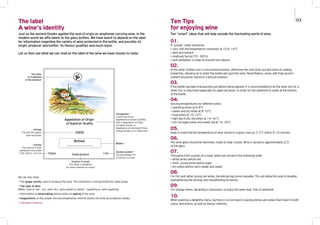
Just as the ancient Greeks applied the seal of origin on amphorae carrying wine, in the
modern world we affix labels to the glass bottles. We have learnt to depend on the label
for information regarding the variety of wine protected in the bottle, and possibly its
origin, producer and bottler, its flavour qualities and much more.
Let us then see what we can read on the label of the wine we have chosen to taste:
The label
A wine’s identity
We can also read:
> The grape variety used to produce the wine. This indication is not permitted for table wines
> The type of wine
White, rosé or red – dry, semi-dry, semi-sweet or sweet – sparkling or semi-sparkling
> Information on winemaking and possibly on ageing of the wine
> Suggestions on the proper serving temperature and the dishes the wine accompanies ideally.
(* Obligatory features)
03
���
���
���
���
���
���
���
�
�����
�������
�������
����������
���������
������ ������
��������
�
�
� �
�
� �
�
�
�
� � �
� � � �
� � � � � � � � � �
� � �
�
�
�
�
�
�
�
�
�
�
� �
�
�
�
�
�
� � � � � �
� �
� �
� �
�
� � �
� � � � � � � � � � � � � �
��
�
�
� � � �
���
�
�
�
�
�
�
�
�
�������
�����
��������������
���������
���������
��������
������
������������
�
��
�
������
������
������������
����
�������
�����
��������
�����
������
�������
������
��������
�������
�����
������
������
��������
�����
���������
�����������
������
��������
��������
������� �������
�������
������
�����
������ ��������
�������
������
�����������
�������
�������
�����
������������
�������
��������������
���������
��������
�������
������
���������
�����
��������
����������
������ ����������
�������
�����
����������
����������� �����������
�����������
��������
�����������
��������������
�������������
�����������
��������
��������
������
��������
����������
��������
������
�������
�������������
����������
�������������
�����������������
�������������
��������
������
�����
����������
��������
��������
�������
���������
����
����������
��������������
����������
����������������
�������
�����������
�������
�����������
������
�������
������������
����������
�������
����������
����������
������������
�������
����������
������������������
��������
�������
������������
���������
�������
����������
����������
���������
������������
����
�����������
�������
������
�����������������
���������
������
�������
����������
�������
��������
�������
�����������
�����
�������
�������
����������
�������
�
�����������
�
��������������
�
���������������
�
������
�
�
� � �
�������
� �
����
�
�
�
���������
�
���
���������
� � � � � � �
������������
��������������������
���������
��������������������
���������������������
��������
�����������������������
��������������
��������������������
��������������������������
��������������
�����������������������
�����������������������������
������������������������
���������������������������
�������������������������
�����������������������
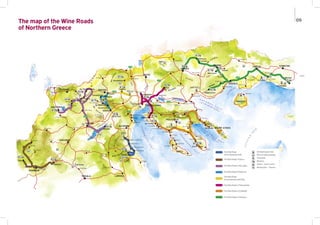
The map of the Wine Roads
of Northern Greece
05
Wine Roads
of Northern Greece
What does the phrase “Wine Roads” bring to mind?
Imagine traveling in a wine country. Getting to taste your favorite wines and getting
to know the people who make them. You will soon be surprised to discover that their
aromas and flavours seem to blend with the landscape, in a way that you could just barely
imagine when leaving behind the bustle of the city.
In a nutshell, Wine Roads is an exciting journey proposal for the contemporary explorer.
Carefully selected routes run through the most picturesque sights of a viticulture zone. Signs
lead the way to vineyards and wineries. An array of breathtaking views, archaeological sites,
churches, monasteries, museums, and buildings of folklore or cultural interest are scattered
along the way. Finally, the map could not possibly be complete without the most noteworthy
restaurants, taverns, ouzeri, coffee shops and hotels in the area.
Wine Roads are to be traced out in almost all wine-producing countries. The first such attempt
in Greece was brought to life by 28 winemakers, who established the Wine Producers
Association of the Vineyards of Northern Greece with the trade name “Wine Roads
of Northern Greece”.
The Association has indicated 8 routes that traverse Northern Greece from one end to the
other, stopping at the most important wine regions of Thessaly (Rapsani and Krania), Epirus,
Macedonia and Thrace.
Let us follow them!
07
The Wine Road
of the Olympian Gods
The lovely village of Rapsani is famous
for its lush vegetation, marvelous views,
soft climate, cool water from the springs
of Mount Olympus, and last but not least,
its wine. Most vineyards are situated on
the Tempi slopes, facing the sun from an
easterly or southeasterly direction,
at an altitude of 100 to 700 metres.
Three grape varieties are cultivated
here: Xinomavro, Krasato and Stavroto,
all red. The blending of these three
varieties gives us VQPRD Rapsani.
We continue our journey over the
eastern slopes of Mount Olympus to
reach the traditional settlement of
Krania, with its exceptional microclimate:
scarce rainfall, fairly cool summers,
enhanced by the morning sea breezes
from the Aegean Sea and
mountain-fresh evening winds from
Mount Olympus, not to mention its
rich subsoil, perfect for growing vine.
Here one can find the choice French
grape varieties Chardonnay, Cabernet
Sauvignon and Merlot. These varieties
are used to produce the white and red
Regional Wines of Krania.
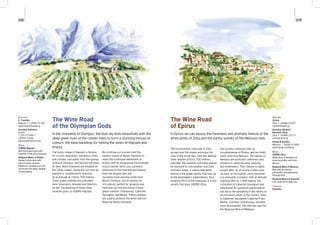
In the vineyards of Olympus, the blue sky knits beautifully with the
deep green hues of the conifer trees to form a stunning mosaic of
colours: the ideal backdrop for tasting the wines of Rapsani and
Krania.
Wineries
E. Tsantalis
Rapsani, T: 23990 76100
webmaster@tsantali.gr
Domaine Katsaros
Krania
T: 2410 536811,
24950 41666
katswine@hotmail.com
Wines
VQPRD Rapsani
Red full-bodied wine with
intensity in the spicy bouquet.
Regional Wines of Krania
Opulent white wine with
typical variety aromas.
Generous, complex and well
structured red wine, capable
of long ageing.
The Wine Road
of Epirus
The mountainous vineyards of Zitsa
spread over the slopes and enjoy the
view of the Ionian Sea. Here the altitude
often reaches 650 to 700 metres;
naturally, the varieties cultivated should
be resistant to cold weather and chilly
northerly winds. It seems that white
Debina is the grape variety that lives up
to the winemakers’ expectations, thus
covering 95% of the vineyards. It is this
variety that gives VQPRD Zitsa.
Our journey continues high up
mountainrange of Pindos, and we finally
reach charming Metsovo. The natives of
Metsovo are proficient craftsmen (and
women!) in wood-working, weaving
and embroidery. Their cheese is highly
sought after, as of course is their wine.
Up here, at the highest, most mountain-
ous vineyards in Greece, with an altitude
reaching 950 to 1.000 metres, the
cultivation of Cabernet Sauvignon was
introduced. Its successful performance
has led to the spreading of the variety in
all viticulture zones of the country. Next
to Cabernet Sauvignon, Cabernet Franc,
Merlot, Traminer, Chardonnay, Vlachiko
were also planted. The reds are used for
the Regional Wine of Metsovo.
In Epirus we can savour the freshness and aromatic finesse of the
white wines of Zitsa and the earthy solidity of the Metsovo reds.
Wineries
Ζοinος
Zitsa, T: 26580 22297
zitswin@otenet.gr
Domaine Glinavos
Monastiri Zitsa
Zitsa, T: 26580 22212
www.glinavos.gr
Katogi & Strofilia
Metsovo, T: 26560 41684
www.katogi-strofilia.gr
Wines
VQPRD Zitsa
White wine of elegant fruit,
amazing acidity and fresh
flavour.
Regional Wine of Metsovo
Red, with an intense
personality and endurance
through time.
Regional Wines of Ioannina
Fine white and supple red.
Tsipouro
Epirotiko
0908
The Wine Road
of the Lakes
The climate in the Velvedo area although
continental, it is greatly influenced
by its proximity to the lake and more
specifically the ubiquitous winds, which
serve as a source of refreshment for the
vineyard during the hot summer months.
Here the grape varieties Roditis,
Chardonnay, Trebbiano, Batiki,
Xinomavro, Moschomavro, Merlot
and Cabernet Sauvignon give us the
Regional Wines of Velvedo.
The grape cultivated in Amyndeo is
Xinomavro, the renowned red variety of
Northern Greece. At this altitude – 600
to 750 metres – we are in the ideal
setting for the making of exquisite red,
rosé and sparkling VQPRD wines. All the
same, the soil and climate of the area
are also ideal for the cultivation of white
grape varieties. Roditis, Chardonnay,
Sauvignon Blanc and Gewürztraminer
are used to make the white Regional
Wines of Florina.
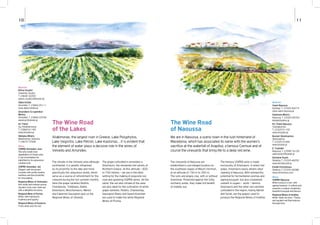
Aliakmonas, the largest river in Greece, Lake Polyphytos,
Lake Vegoritis, Lake Petron, Lake Kastorias... it is evident that
the element of water plays a decisive role in the wines of
Velvedo and Amyndeo.
Wineries
Ktima Voyatzi
Velvendo, Kozani
T: 24640 32283
yannis.voyatzis@boutari.gr
Alpha Estate
Amyndeo, T: 23860 20111
www.alpha-estate.gr
Amyndeon Co-operative
Winery
Amyndeo, T: 23860 22258
easamyn@otenet.gr
Kir Yianni
Ag. Pandeleimonas
T: 23860 61185
www.kiryianni.gr
Stergiou Winery
Metamorfosi, Kastoria
T: 24670 72508
Wines
VQPRD Amyndeo, rosé
The only Greek rosé
Appellation of Origin wine,
it can immediately be
identified by its expressive
varietal nose.
VQPRD Amyndeo, red
Elegant, well-structured,
complex with acidity lending
tastiness and the possibility
for long ageing.
Regional Wines of Velvendos
Rich white with intense aroma.
Opulent, fruity rosé. Dark red
with a delightful structure.
Regional Wine of Florina
White, with impressive
fruitiness and typicity.
Regional Wines of Kastoria
Fruity white and rich red.
The Wine Road
of Naoussa
The vineyards of Naoussa are
established in a privileged location on
the southeast slopes of Mount Vermion,
at an altitude of 150 m to 350 m.
The soils are largely clay, with or without
limestone. Protected against the chilly
northerly winds, they make full benefit
of midday sun.
The famous VQPRD wine is made
exclusively of Xinomavro. A select red
grape, Xinomavro easily attains ideal
ripening in Naoussa. With noteworthy
potential for fermentation aromas and
ageing bouquet, but also a balanced
content in sugars – acids – tannins.
Xinomavro and the other red varieties
cultivated in the region, mainly Merlot
and Syrah, are the grapes used to
produce the Regional Wines of Imathia.
We are in Naoussa, a scenic town in the lush hinterland of
Macedonia, which has associated its name with the women’s
sacrifice at the waterfall of Arapitsa, a famous Carnival and of
course the vineyards that bring life to a deep red wine.
Wineries
Vaeni Naoussa
Episkopi, T: 23320 44274
www.vaeni-naoussa.gr
Dalamara Winery
Naoussa, T: 23320 26054
ikdalas@yahoo.gr
Kir Yianni Naoussa
Yiannakochori
T: 23320 51100
www.kiryianni.gr
Boutari Stenimachos
Stenimachos
T: 23320 41666
www.boutari.gr
E. Tsantalis
Naoussa, T: 23990 76100
webmaster@tsantali.gr
Domaine Founti
Strantza, T: 23320 48255
www.ktimafoundi.gr
Estate Chrysohoou
Strantza, T: 23320 45080
www.chrisohoou.com
Wines
VQPRD Naoussa
When young it is tart, with
ageing however, it softens and
acquires a unique complexity,
beautiful bouquet and flavour.
Regional Wines of Imathia
White “blanc de noirs”. Fleshy
and opulent red that endures
through time.
1110
The Wine Road of
Goumenissa and Pella
The vineyards of Goumenissa stretch
over the east slopes of Mount Paiko and
on hills with mild slopes at the south
of the town, at an altitude of 150-250
metres. Here the climate is continental,
with chilly winters and dry summers.
The northwesterly “vardaris” wind blows
year-round and carries away diseases
and the humidity from the neighbouring
valley of Axios alleviates the summer
heatwaves. Xinomavro and Negoska, a
local red grape, are grown in this region.
Both grape varieties have been planted in
the vineyards to a proportion of
approximately 3:1 and the blending of the
two gives VQPRD Goumenissa.
At the highlands of Giannitsa, in the heart
of Pella territory, the vineyard has been
cultivated since ancient times. Here the
soil is calcareous clay, with rich organic
material. The favourable winds shift
between northerly and southerly
directions. In this ecosystem the
indigenous varieties Roditis, Xinomavro
paired with the noble Chardonnay,
Sauvignon Blanc, Ugnie Blanc and Merlot
are cultivated for the production of the
Regional Wines of Pella.
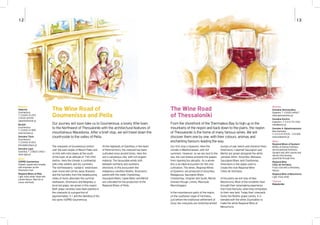
Our journey will soon take us to Goumenissa, a lovely little town
to the Northwest of Thessaloniki with the architectural features of
mountainous Macedonia. After a brief stop, we will travel down the
countryside to the valley of Pella.
Wineries
Aidarinis
Goumenissa
T: 23430 41293
23430 42555
aidarini@otenet.gr
Boutari
Goumenissa
T: 23430 41989
www.boutari.gr
Domaine Tatsis
Goumenissa
T: 23430 41053
ktimatatsis@acn.gr
Domaine Ligas
Giannitsa, T: 23820 24421
www.ligas.gr
Wines
VQPRD Goumenissa
Elegant, supple and complex,
with emphasis on the
Xinomavro fruit.
Regional Wines of Pella
Light, fruity white. Rosé with
a fresh flavour. Red rich in
colour and body.
The Wine Road
of Thessaloniki
Our first stop is Epanomi. Here the
climate is Mediterranean, with hot
summers. However, as we are next to the
sea, the cool breeze prevents the grapes
from ripening too abruptly. As a whole,
this is an ideal ecosystem for the vine
cultivation. The wines, Regional Wines
of Epanomi, are produced of Assyrtiko,
Malagousia, Sauvignon Blanc,
Chardonnay, Viognier and Syrah, Merlot,
Grenach Rouge, Limnio, Mavroudi,
Mavrotragano.
In the mountainous parts of the region,
on the southeast slope of Vertiskos,
just before the traditional settlement of
Ossa, the vineyards are stretched amidst
clumps of oak, beech and chestnut trees.
Xinomavro, Cabernet Sauvignon and
Merlot are grown alongside the white
varieties Athiri, Assyrtiko, Malvasia,
Sauvignon Blanc and Chardonnay.
Xinomavro is the grape used to
create the rosé Regional Wine
Côtes de Vertiskos.
In the plains we will stop at Nea
Messimvria. Most of the residents have
brought their winemaking experience
from East Romylia, when they emigrated
to their new land. Today their vineyards
foster the Roditis grape variety. It is
blended with the white Zoumiatiko to
make the white Regional Wine of
Messimvria.
From the shorefront of the Thermaikos Bay to high up in the
mountains of the region and back down to the plains, the region
of Thessaloniki is the home of many famous wines. We will
discover them one by one, with their colours, aromas and
enchanting flavours leading the way.
Wineries
Domaine Gerovassiliou
Epanomi, T: 23920 44567
www.gerovassiliou.gr
Domaine Kechris
Kalochori, T: 2310 751283,
info@kechri.gr
Domaine A. Babatzimopoulos
Nea Anchialos
T: 2310 519705 - 722309
www.babatzim.gr
Wines
Regional Wines of Epanomi
Whites of intense fruitiness
and exceptional freshness.
Opulent reds with volume and
density that develop
gracefully through time.
Regional Wine
Côtes de Vertiskos
Fruity rosé with a refreshing
flavour.
Regional Wine of Messimvria
Light, fruity white.
Tsipouro
Makedoniko
1312
The Wine Road
of Chalkidiki
The first vineyards are to be encountered
in central Chalkidiki. They are spread over
the low hills, in close proximity to the sea;
the cool sea breezes generously balance
the extreme summer temperatures.
The grapes largely cultivated here are
white Roditis and Sauvignon Blanc for
the production of white Regional Wine of
Chalkidiki. Xinomavro and Cabernet
Sauvignon blend to create the red
Regional Wine of Chalkidiki.
At the sun-drenched slopes of Mount
Meliton, the hot, dry climate and
beneficial humidity of the Aegean Sea
favour the production of choice wines.
Thus, Limnio –an old Greek grape
variety– and the French varieties
Cabernet Sauvignon and Cabernet Franc
join efforts to create the red VQPRD
Côtes de Meliton wine.
On the other hand, white varieties
Assyrtiko, Roditis and Athiri team up to
breathe life into the white wine under the
same Appellation of Origin. Malagouzia
and Syrah grapes respectively, give birth
to the Regional Wines of Sithonia.
In nearly all the monasteries of Mount
Athos one can find a long tradition in
viticulture and winemaking. To a great
extent, we are currently experiencing its
revival. A large variety of grapes is
cultivated in these vineyards: white
Roditis, Athiri, Assyrtiko, Sauvignon
Blanc and red Limnio, Xinomavro,
Cabernet Sauvignon and Grenache
Rouge. This blessed strip of land with a
moderate climate, more than sufficient
sunshine, cooled by mountain-fresh
breezes and seaside humidity is the home
of the Regional Wines of Mount Athos.
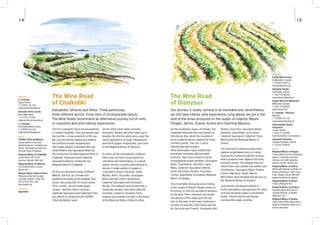
Kassandra, Sithonia and Athos. Three peninsulas,
three different worlds, three sites of incomparable beauty.
The Wine Roads recommend an alternative journey full of visits
to vineyards and wine-tasting experiences.
Wineries
E. Tsantalis
Agios Pavlos
T: 23990 76100
webmaster@tsantali.gr
Domaine Porto Carras
Neos Marmaras
T: 23750 77000
www.portocarraswines.gr
E. Tsantalis
Chromitsa Mount Athos
T: 23990 76100
webmaster@tsantali.gr
Wines
VQPRD Côtes de Meliton
Classy white of cool and
pleasing flavour. Complex red,
fleshy, marvelously enduring
through years of ageing.
Regional Wines of Chalkidiki
Lively white with fruity
aromas. Supple, fresh red.
Regional Wines of Sithonia
Full-bodied white. Purple,
dense red.
Regional Wines of Mount Athos
Pleasing white with a wide
aromatic palette. Light rosé,
full of fruit. Rich, well
structured red.
Tsipouro
Agioritiko
The Wine Road
of Dionysus
On the southeast slopes of Pangeo, the
vineyards welcome the cool breeze of
Strymonas Bay, while the mountains
form a natural barrier against the chilly
northerly winds. The soil is stony,
infertile and well drained.
Here winemakers have established
prototype vineyards and excellent
wineries. They have chosen to grow
cosmopolitan grape varieties: Sauvignon
Blanc, Chardonnay, Semillon, Ugnie
Blanc, Cabernet Sauvignon, Merlot,
Syrah and Greek: Roditis, Assyrtiko,
Limnio, Agiorgitiko to produce Regional
Wines of Pangeo.
The irresistible Dionysian allure hiding
in the slopes of Mount Pangeo leads us
to Drama, to visit the wonderful wineries
of the area. Their vineyards are model
viticultures in the valley and the low
hills to the east of the town, fostering a
number of varieties, both white and red,
for the most part French. Vineyards with
Roditis, Assyrtiko, Sauvignon Blanc,
Semillon, Ugnie Blanc and Limnio,
Cabernet Sauvignon, Cabernet Franc,
Merlot give the Regional Wines of
Drama.
The vineyards of Maronia have been
planted amphitheatrically on mildly
sloping hills backed by Mount Ismaros
which protects them against the chilly
northerly winds. The Aegean Sea lies
before them and softens the winter cold.
Chardonnay, Sauvignon Blanc, Roditis,
Limnio, Mavroudi, Syrah, Merlot,
Mourvèdre and Grenache Rouge give us
the Regional Wines of Ismaros.
Just recently the Regional Wines of
Avdira designation was approved for white,
rosé and red wines made of Zoumiatiko,
Roditis, Pamidi and the well-known
cosmopolitan grape varieties.
Our journey is slowly coming to an inevitable end; nevertheless,
we still have intense wine experiences lying ahead: we are in the
land of the wines produced on the slopes of majestic Mount
Pangeo, Serres, Drama, Avdira and charming Maronia.
Wineries
Estate Biblia Chora
Kokkinohori, Kavala
T: 25920 44974
oinopedion@acn.gr
Domaine Pavlidi
Kokinogia, Drama
T: 25210 58300
www.ktima-pavlidis.gr
Estate Wine Art Mikrochori
Mikrochori, Drama
T: 25210 83626
www.wineart.gr
E. Tsantalis - Maronia
Maronia
T: 23990 76100
webmaster@tsantali.gr
Vourvoukelis Family
Vineyards
Avdira, Xanthi
T: 25410 75098
www.domaine-vourvoukeli.gr
Apostolis Vineyard
Visaltia Ampelon, Serres
T: 23220 20830
Wines
Regional Wines of Pangeo
Fruity white of a rich refreshing
flavour. Vibrantly coloured,
intense rosé with lingering
aroma. Purple, velvety red.
Regional Wines of Drama
White with intense fruitiness in
aroma and flavour. Rich, rosy
rosé. Heady, robust red with
great endurance to ageing.
Regional Wines of Serres
Fruity white and red.
Regional Wines of Ismaros
Opulent white with typical
varietal aromas. Complex,
generous red.
Regional Wines of Avdira
Light, fruity white. Rosé with a
taste of freshness. Red rich in
colour and body.
1514
Glossary
Athiri. White grape, very popular in the
islands of the South Aegean and Chalkidiki.
Its wines present a slightly lemony aroma and
rich flavour.
Assyrtiko. The predominant grape of
Santorini, which has successfully migrated to
Chalkidiki, Epanomi, Drama, Pangeo and the
Peloponnese. White, with rather high acidity,
even when fully matured.
Krassato. Red grape grown exclusively in
Rapsani, participating in VQPRD Rapsani.
Limnio. Red grape, indigenous to the island
of Limnos, with roots tracing back to antiquity.
The Vine of Limnos, the wines of which have
been celebrated by Polydeuces, is grown
today – apart from Limnos of course – in
Northern Greece.
Malagousia. Exquisite white variety, leading
to full-bodied wines with exciting aromas.
Moschomavro. Aromatic red variety
encountered in the region of Kozani.
Negoska. Red grape grown exclusively in
Goumenissa. Participating in VQPRD
Goumenissa, it offers colour, fruitiness
and alcohol while reducing acidity.
Debina. A white grape from Epirus with
remarkable potential for the production of
fresh dry and sparkling wines.
Xinomavro. The choice red variety of
Northern Greece. Well accustomed to
continental climates, it is cultivated in more
regions than any other variety in Greece.
Its grapes have a characteristic acid flavour.
Roditis. Grown throughout almost all of
Greece. When carefully cultivated and
vinified, gives light wines soft on the palate
and delightfully fruity.
Stavroto. A red grape grown exclusively in
Rapsani participating in VQPRD Rapsani.
Appellation of Origin Wines (VQPRD).
Produced in specific regions, the names of which
are indicated on the label. The legislator has
specified the grape varieties used to produce
the specific wines, as well as the viticulture
conditions for proper ripening of the grapes
and the winemaking techniques employed
so that the wine displays tipicity.
Greek Appellation of Origin Wines can be
distinguished into Appellation of Origin of
Higher Quality and Appellation of Controlled
Origin. In Greece, 27 Appellation of Origin
Wines are produced.
Table Wines. Can be distinguished into Vins
de Pays Wines (see definition), Appellation de
Tradition Wines and Brand Name Wines.
Regional Wines (Vins de Pays). Wines
produced in specific geographical regions or
small, designated areas. The production of
such wines complies with terms respective to
those of Appellation of Origin. On the label we
can find the Geographical Indication of Origin
e.g. Regional Wine of Macedonia.
Text: Maria Netsika
Editing: Wine Plus
Design: RedFish Inspirations
Printing: Schema & Chroma
Wine Producers Association
of the Vineyards of Northern Greece
P.O. Box 1529, 540 06 Thessaloniki
Τ: +30 2310 281632, +30 2310 281617
F: +30 2310 281619
www.wineroads.gr
info@wineroads.gr

Wine roads of_Northern_Greece

  • 1.
    A short guide WineRoads of Northern Greece
  • 2.
    Contents The label. Awine’s identity Ten Tips for enjoying wine The map of the Wine Roads of Northern Greece Wine Roads of Northern Greece The Wine Road of the Olympian Gods The Wine Road of Epirus The Wine Road of the Lakes The Wine Road of Naoussa The Wine Road of Goumenissa and Pella The Wine Road of Thessaloniki The Wine Road of Chalkidiki The Wine Road of Dionysus Glossary 02 03 04 07 08 09 10 11 12 13 14 15 16
  • 3.
    01. A “proper” cellarshould be: > cool, with the temperature constantly at 10 to 14°C > dark and tranquil > relatively humid (70 - 80%) > well ventilated, in order to prevent foul odours. 02. In the cellar, bottles rest in a horizontal position, otherwise the cork dries out and loses its sealing properties, allowing air to enter the bottle and spoil the wine. Nevertheless, wines with high alcohol content should be stored in a vertical position. 03. If the bottle has been transported just before being opened, it is recommended to let the wine rest for a while; this is important especially for aged red wines, in order for the sediment to settle at the bottom of the bottle. 04. Serving temperatures for different wines: > sparkling wines at 6-8°C > sweet and dry white at 8-10°C > rosé wines at 10-12°C > light and fruity red wines at 14-16°C > rich red aged wines and sweet red at 16-18°C. 05. Keep in mind that the temperature of wine served in a glass rises by 2-3°C within 5-10 minutes. 06. The wine glass should be stemmed, made of clear crystal. Wine is served to approximately 2/3 of the glass. 07. Throughout the courses of a meal, wines are served in the following order: > white wines before red > fresh, young wines before aged > dry wines before semi-sweet and sweet. 08. For rich and rather young red wines, decanting may prove valuable. This will allow the wine to breathe, strengthening the aromas and smoothening its flavour. 09. For vintage wines, decanting is necessary, to enjoy the wine clear, free of sediment. 10. When planning a delightful menu, harmony is to be found in pairing dishes and wines that match in both colour and aroma, as well as flavour intensity. Ten “smart” ideas that will help uncode the fascinating world of wine. Ten Tips for enjoying wine Just as the ancient Greeks applied the seal of origin on amphorae carrying wine, in the modern world we affix labels to the glass bottles. We have learnt to depend on the label for information regarding the variety of wine protected in the bottle, and possibly its origin, producer and bottler, its flavour qualities and much more. Let us then see what we can read on the label of the wine we have chosen to taste: The label A wine’s identity We can also read: > The grape variety used to produce the wine. This indication is not permitted for table wines > The type of wine White, rosé or red – dry, semi-dry, semi-sweet or sweet – sparkling or semi-sparkling > Information on winemaking and possibly on ageing of the wine > Suggestions on the proper serving temperature and the dishes the wine accompanies ideally. (* Obligatory features) 03
  • 4.
    ��� ��� ��� ��� ��� ��� ��� � ����� ������� ������� ���������� ��������� ������ ������ �������� � � � � � �� � � � � � � � � � � � � � � � � � � � � � � � � � � � � � � � � � � � � � � � � � � � � � � � � � � � � � � � � � � � � � � � � � � � � � � �� � � � � � � ��� � � � � � � � � ������� ����� �������������� ��������� ��������� �������� ������ ������������ � �� � ������ ������ ������������ ���� ������� ����� �������� ����� ������ ������� ������ �������� ������� ����� ������ ������ �������� ����� ��������� ����������� ������ �������� �������� ������� ������� ������� ������ ����� ������ �������� ������� ������ ����������� ������� ������� ����� ������������ ������� �������������� ��������� �������� ������� ������ ��������� ����� �������� ���������� ������ ���������� ������� ����� ���������� ����������� ����������� ����������� �������� ����������� �������������� ������������� ����������� �������� �������� ������ �������� ���������� �������� ������ ������� ������������� ���������� ������������� ����������������� ������������� �������� ������ ����� ���������� �������� �������� ������� ��������� ���� ���������� �������������� ���������� ���������������� ������� ����������� ������� ����������� ������ ������� ������������ ���������� ������� ���������� ���������� ������������ ������� ���������� ������������������ �������� ������� ������������ ��������� ������� ���������� ���������� ��������� ������������ ���� ����������� ������� ������ ����������������� ��������� ������ ������� ���������� ������� �������� ������� ����������� ����� ������� ������� ���������� ������� � ����������� � �������������� � ��������������� � ������ � � � � � ������� � � ���� � � � ��������� � ��� ��������� � � � � � � � ������������ �������������������� ��������� �������������������� ��������������������� �������� ����������������������� �������������� �������������������� �������������������������� �������������� ����������������������� ����������������������������� ������������������������ ��������������������������� ������������������������� ����������������������� The map of the Wine Roads of Northern Greece 05
  • 5.
    Wine Roads of NorthernGreece What does the phrase “Wine Roads” bring to mind? Imagine traveling in a wine country. Getting to taste your favorite wines and getting to know the people who make them. You will soon be surprised to discover that their aromas and flavours seem to blend with the landscape, in a way that you could just barely imagine when leaving behind the bustle of the city. In a nutshell, Wine Roads is an exciting journey proposal for the contemporary explorer. Carefully selected routes run through the most picturesque sights of a viticulture zone. Signs lead the way to vineyards and wineries. An array of breathtaking views, archaeological sites, churches, monasteries, museums, and buildings of folklore or cultural interest are scattered along the way. Finally, the map could not possibly be complete without the most noteworthy restaurants, taverns, ouzeri, coffee shops and hotels in the area. Wine Roads are to be traced out in almost all wine-producing countries. The first such attempt in Greece was brought to life by 28 winemakers, who established the Wine Producers Association of the Vineyards of Northern Greece with the trade name “Wine Roads of Northern Greece”. The Association has indicated 8 routes that traverse Northern Greece from one end to the other, stopping at the most important wine regions of Thessaly (Rapsani and Krania), Epirus, Macedonia and Thrace. Let us follow them! 07
  • 6.
    The Wine Road ofthe Olympian Gods The lovely village of Rapsani is famous for its lush vegetation, marvelous views, soft climate, cool water from the springs of Mount Olympus, and last but not least, its wine. Most vineyards are situated on the Tempi slopes, facing the sun from an easterly or southeasterly direction, at an altitude of 100 to 700 metres. Three grape varieties are cultivated here: Xinomavro, Krasato and Stavroto, all red. The blending of these three varieties gives us VQPRD Rapsani. We continue our journey over the eastern slopes of Mount Olympus to reach the traditional settlement of Krania, with its exceptional microclimate: scarce rainfall, fairly cool summers, enhanced by the morning sea breezes from the Aegean Sea and mountain-fresh evening winds from Mount Olympus, not to mention its rich subsoil, perfect for growing vine. Here one can find the choice French grape varieties Chardonnay, Cabernet Sauvignon and Merlot. These varieties are used to produce the white and red Regional Wines of Krania. In the vineyards of Olympus, the blue sky knits beautifully with the deep green hues of the conifer trees to form a stunning mosaic of colours: the ideal backdrop for tasting the wines of Rapsani and Krania. Wineries E. Tsantalis Rapsani, T: 23990 76100 webmaster@tsantali.gr Domaine Katsaros Krania T: 2410 536811, 24950 41666 katswine@hotmail.com Wines VQPRD Rapsani Red full-bodied wine with intensity in the spicy bouquet. Regional Wines of Krania Opulent white wine with typical variety aromas. Generous, complex and well structured red wine, capable of long ageing. The Wine Road of Epirus The mountainous vineyards of Zitsa spread over the slopes and enjoy the view of the Ionian Sea. Here the altitude often reaches 650 to 700 metres; naturally, the varieties cultivated should be resistant to cold weather and chilly northerly winds. It seems that white Debina is the grape variety that lives up to the winemakers’ expectations, thus covering 95% of the vineyards. It is this variety that gives VQPRD Zitsa. Our journey continues high up mountainrange of Pindos, and we finally reach charming Metsovo. The natives of Metsovo are proficient craftsmen (and women!) in wood-working, weaving and embroidery. Their cheese is highly sought after, as of course is their wine. Up here, at the highest, most mountain- ous vineyards in Greece, with an altitude reaching 950 to 1.000 metres, the cultivation of Cabernet Sauvignon was introduced. Its successful performance has led to the spreading of the variety in all viticulture zones of the country. Next to Cabernet Sauvignon, Cabernet Franc, Merlot, Traminer, Chardonnay, Vlachiko were also planted. The reds are used for the Regional Wine of Metsovo. In Epirus we can savour the freshness and aromatic finesse of the white wines of Zitsa and the earthy solidity of the Metsovo reds. Wineries Ζοinος Zitsa, T: 26580 22297 zitswin@otenet.gr Domaine Glinavos Monastiri Zitsa Zitsa, T: 26580 22212 www.glinavos.gr Katogi & Strofilia Metsovo, T: 26560 41684 www.katogi-strofilia.gr Wines VQPRD Zitsa White wine of elegant fruit, amazing acidity and fresh flavour. Regional Wine of Metsovo Red, with an intense personality and endurance through time. Regional Wines of Ioannina Fine white and supple red. Tsipouro Epirotiko 0908
  • 7.
    The Wine Road ofthe Lakes The climate in the Velvedo area although continental, it is greatly influenced by its proximity to the lake and more specifically the ubiquitous winds, which serve as a source of refreshment for the vineyard during the hot summer months. Here the grape varieties Roditis, Chardonnay, Trebbiano, Batiki, Xinomavro, Moschomavro, Merlot and Cabernet Sauvignon give us the Regional Wines of Velvedo. The grape cultivated in Amyndeo is Xinomavro, the renowned red variety of Northern Greece. At this altitude – 600 to 750 metres – we are in the ideal setting for the making of exquisite red, rosé and sparkling VQPRD wines. All the same, the soil and climate of the area are also ideal for the cultivation of white grape varieties. Roditis, Chardonnay, Sauvignon Blanc and Gewürztraminer are used to make the white Regional Wines of Florina. Aliakmonas, the largest river in Greece, Lake Polyphytos, Lake Vegoritis, Lake Petron, Lake Kastorias... it is evident that the element of water plays a decisive role in the wines of Velvedo and Amyndeo. Wineries Ktima Voyatzi Velvendo, Kozani T: 24640 32283 yannis.voyatzis@boutari.gr Alpha Estate Amyndeo, T: 23860 20111 www.alpha-estate.gr Amyndeon Co-operative Winery Amyndeo, T: 23860 22258 easamyn@otenet.gr Kir Yianni Ag. Pandeleimonas T: 23860 61185 www.kiryianni.gr Stergiou Winery Metamorfosi, Kastoria T: 24670 72508 Wines VQPRD Amyndeo, rosé The only Greek rosé Appellation of Origin wine, it can immediately be identified by its expressive varietal nose. VQPRD Amyndeo, red Elegant, well-structured, complex with acidity lending tastiness and the possibility for long ageing. Regional Wines of Velvendos Rich white with intense aroma. Opulent, fruity rosé. Dark red with a delightful structure. Regional Wine of Florina White, with impressive fruitiness and typicity. Regional Wines of Kastoria Fruity white and rich red. The Wine Road of Naoussa The vineyards of Naoussa are established in a privileged location on the southeast slopes of Mount Vermion, at an altitude of 150 m to 350 m. The soils are largely clay, with or without limestone. Protected against the chilly northerly winds, they make full benefit of midday sun. The famous VQPRD wine is made exclusively of Xinomavro. A select red grape, Xinomavro easily attains ideal ripening in Naoussa. With noteworthy potential for fermentation aromas and ageing bouquet, but also a balanced content in sugars – acids – tannins. Xinomavro and the other red varieties cultivated in the region, mainly Merlot and Syrah, are the grapes used to produce the Regional Wines of Imathia. We are in Naoussa, a scenic town in the lush hinterland of Macedonia, which has associated its name with the women’s sacrifice at the waterfall of Arapitsa, a famous Carnival and of course the vineyards that bring life to a deep red wine. Wineries Vaeni Naoussa Episkopi, T: 23320 44274 www.vaeni-naoussa.gr Dalamara Winery Naoussa, T: 23320 26054 ikdalas@yahoo.gr Kir Yianni Naoussa Yiannakochori T: 23320 51100 www.kiryianni.gr Boutari Stenimachos Stenimachos T: 23320 41666 www.boutari.gr E. Tsantalis Naoussa, T: 23990 76100 webmaster@tsantali.gr Domaine Founti Strantza, T: 23320 48255 www.ktimafoundi.gr Estate Chrysohoou Strantza, T: 23320 45080 www.chrisohoou.com Wines VQPRD Naoussa When young it is tart, with ageing however, it softens and acquires a unique complexity, beautiful bouquet and flavour. Regional Wines of Imathia White “blanc de noirs”. Fleshy and opulent red that endures through time. 1110
  • 8.
    The Wine Roadof Goumenissa and Pella The vineyards of Goumenissa stretch over the east slopes of Mount Paiko and on hills with mild slopes at the south of the town, at an altitude of 150-250 metres. Here the climate is continental, with chilly winters and dry summers. The northwesterly “vardaris” wind blows year-round and carries away diseases and the humidity from the neighbouring valley of Axios alleviates the summer heatwaves. Xinomavro and Negoska, a local red grape, are grown in this region. Both grape varieties have been planted in the vineyards to a proportion of approximately 3:1 and the blending of the two gives VQPRD Goumenissa. At the highlands of Giannitsa, in the heart of Pella territory, the vineyard has been cultivated since ancient times. Here the soil is calcareous clay, with rich organic material. The favourable winds shift between northerly and southerly directions. In this ecosystem the indigenous varieties Roditis, Xinomavro paired with the noble Chardonnay, Sauvignon Blanc, Ugnie Blanc and Merlot are cultivated for the production of the Regional Wines of Pella. Our journey will soon take us to Goumenissa, a lovely little town to the Northwest of Thessaloniki with the architectural features of mountainous Macedonia. After a brief stop, we will travel down the countryside to the valley of Pella. Wineries Aidarinis Goumenissa T: 23430 41293 23430 42555 aidarini@otenet.gr Boutari Goumenissa T: 23430 41989 www.boutari.gr Domaine Tatsis Goumenissa T: 23430 41053 ktimatatsis@acn.gr Domaine Ligas Giannitsa, T: 23820 24421 www.ligas.gr Wines VQPRD Goumenissa Elegant, supple and complex, with emphasis on the Xinomavro fruit. Regional Wines of Pella Light, fruity white. Rosé with a fresh flavour. Red rich in colour and body. The Wine Road of Thessaloniki Our first stop is Epanomi. Here the climate is Mediterranean, with hot summers. However, as we are next to the sea, the cool breeze prevents the grapes from ripening too abruptly. As a whole, this is an ideal ecosystem for the vine cultivation. The wines, Regional Wines of Epanomi, are produced of Assyrtiko, Malagousia, Sauvignon Blanc, Chardonnay, Viognier and Syrah, Merlot, Grenach Rouge, Limnio, Mavroudi, Mavrotragano. In the mountainous parts of the region, on the southeast slope of Vertiskos, just before the traditional settlement of Ossa, the vineyards are stretched amidst clumps of oak, beech and chestnut trees. Xinomavro, Cabernet Sauvignon and Merlot are grown alongside the white varieties Athiri, Assyrtiko, Malvasia, Sauvignon Blanc and Chardonnay. Xinomavro is the grape used to create the rosé Regional Wine Côtes de Vertiskos. In the plains we will stop at Nea Messimvria. Most of the residents have brought their winemaking experience from East Romylia, when they emigrated to their new land. Today their vineyards foster the Roditis grape variety. It is blended with the white Zoumiatiko to make the white Regional Wine of Messimvria. From the shorefront of the Thermaikos Bay to high up in the mountains of the region and back down to the plains, the region of Thessaloniki is the home of many famous wines. We will discover them one by one, with their colours, aromas and enchanting flavours leading the way. Wineries Domaine Gerovassiliou Epanomi, T: 23920 44567 www.gerovassiliou.gr Domaine Kechris Kalochori, T: 2310 751283, info@kechri.gr Domaine A. Babatzimopoulos Nea Anchialos T: 2310 519705 - 722309 www.babatzim.gr Wines Regional Wines of Epanomi Whites of intense fruitiness and exceptional freshness. Opulent reds with volume and density that develop gracefully through time. Regional Wine Côtes de Vertiskos Fruity rosé with a refreshing flavour. Regional Wine of Messimvria Light, fruity white. Tsipouro Makedoniko 1312
  • 9.
    The Wine Road ofChalkidiki The first vineyards are to be encountered in central Chalkidiki. They are spread over the low hills, in close proximity to the sea; the cool sea breezes generously balance the extreme summer temperatures. The grapes largely cultivated here are white Roditis and Sauvignon Blanc for the production of white Regional Wine of Chalkidiki. Xinomavro and Cabernet Sauvignon blend to create the red Regional Wine of Chalkidiki. At the sun-drenched slopes of Mount Meliton, the hot, dry climate and beneficial humidity of the Aegean Sea favour the production of choice wines. Thus, Limnio –an old Greek grape variety– and the French varieties Cabernet Sauvignon and Cabernet Franc join efforts to create the red VQPRD Côtes de Meliton wine. On the other hand, white varieties Assyrtiko, Roditis and Athiri team up to breathe life into the white wine under the same Appellation of Origin. Malagouzia and Syrah grapes respectively, give birth to the Regional Wines of Sithonia. In nearly all the monasteries of Mount Athos one can find a long tradition in viticulture and winemaking. To a great extent, we are currently experiencing its revival. A large variety of grapes is cultivated in these vineyards: white Roditis, Athiri, Assyrtiko, Sauvignon Blanc and red Limnio, Xinomavro, Cabernet Sauvignon and Grenache Rouge. This blessed strip of land with a moderate climate, more than sufficient sunshine, cooled by mountain-fresh breezes and seaside humidity is the home of the Regional Wines of Mount Athos. Kassandra, Sithonia and Athos. Three peninsulas, three different worlds, three sites of incomparable beauty. The Wine Roads recommend an alternative journey full of visits to vineyards and wine-tasting experiences. Wineries E. Tsantalis Agios Pavlos T: 23990 76100 webmaster@tsantali.gr Domaine Porto Carras Neos Marmaras T: 23750 77000 www.portocarraswines.gr E. Tsantalis Chromitsa Mount Athos T: 23990 76100 webmaster@tsantali.gr Wines VQPRD Côtes de Meliton Classy white of cool and pleasing flavour. Complex red, fleshy, marvelously enduring through years of ageing. Regional Wines of Chalkidiki Lively white with fruity aromas. Supple, fresh red. Regional Wines of Sithonia Full-bodied white. Purple, dense red. Regional Wines of Mount Athos Pleasing white with a wide aromatic palette. Light rosé, full of fruit. Rich, well structured red. Tsipouro Agioritiko The Wine Road of Dionysus On the southeast slopes of Pangeo, the vineyards welcome the cool breeze of Strymonas Bay, while the mountains form a natural barrier against the chilly northerly winds. The soil is stony, infertile and well drained. Here winemakers have established prototype vineyards and excellent wineries. They have chosen to grow cosmopolitan grape varieties: Sauvignon Blanc, Chardonnay, Semillon, Ugnie Blanc, Cabernet Sauvignon, Merlot, Syrah and Greek: Roditis, Assyrtiko, Limnio, Agiorgitiko to produce Regional Wines of Pangeo. The irresistible Dionysian allure hiding in the slopes of Mount Pangeo leads us to Drama, to visit the wonderful wineries of the area. Their vineyards are model viticultures in the valley and the low hills to the east of the town, fostering a number of varieties, both white and red, for the most part French. Vineyards with Roditis, Assyrtiko, Sauvignon Blanc, Semillon, Ugnie Blanc and Limnio, Cabernet Sauvignon, Cabernet Franc, Merlot give the Regional Wines of Drama. The vineyards of Maronia have been planted amphitheatrically on mildly sloping hills backed by Mount Ismaros which protects them against the chilly northerly winds. The Aegean Sea lies before them and softens the winter cold. Chardonnay, Sauvignon Blanc, Roditis, Limnio, Mavroudi, Syrah, Merlot, Mourvèdre and Grenache Rouge give us the Regional Wines of Ismaros. Just recently the Regional Wines of Avdira designation was approved for white, rosé and red wines made of Zoumiatiko, Roditis, Pamidi and the well-known cosmopolitan grape varieties. Our journey is slowly coming to an inevitable end; nevertheless, we still have intense wine experiences lying ahead: we are in the land of the wines produced on the slopes of majestic Mount Pangeo, Serres, Drama, Avdira and charming Maronia. Wineries Estate Biblia Chora Kokkinohori, Kavala T: 25920 44974 oinopedion@acn.gr Domaine Pavlidi Kokinogia, Drama T: 25210 58300 www.ktima-pavlidis.gr Estate Wine Art Mikrochori Mikrochori, Drama T: 25210 83626 www.wineart.gr E. Tsantalis - Maronia Maronia T: 23990 76100 webmaster@tsantali.gr Vourvoukelis Family Vineyards Avdira, Xanthi T: 25410 75098 www.domaine-vourvoukeli.gr Apostolis Vineyard Visaltia Ampelon, Serres T: 23220 20830 Wines Regional Wines of Pangeo Fruity white of a rich refreshing flavour. Vibrantly coloured, intense rosé with lingering aroma. Purple, velvety red. Regional Wines of Drama White with intense fruitiness in aroma and flavour. Rich, rosy rosé. Heady, robust red with great endurance to ageing. Regional Wines of Serres Fruity white and red. Regional Wines of Ismaros Opulent white with typical varietal aromas. Complex, generous red. Regional Wines of Avdira Light, fruity white. Rosé with a taste of freshness. Red rich in colour and body. 1514
  • 10.
    Glossary Athiri. White grape,very popular in the islands of the South Aegean and Chalkidiki. Its wines present a slightly lemony aroma and rich flavour. Assyrtiko. The predominant grape of Santorini, which has successfully migrated to Chalkidiki, Epanomi, Drama, Pangeo and the Peloponnese. White, with rather high acidity, even when fully matured. Krassato. Red grape grown exclusively in Rapsani, participating in VQPRD Rapsani. Limnio. Red grape, indigenous to the island of Limnos, with roots tracing back to antiquity. The Vine of Limnos, the wines of which have been celebrated by Polydeuces, is grown today – apart from Limnos of course – in Northern Greece. Malagousia. Exquisite white variety, leading to full-bodied wines with exciting aromas. Moschomavro. Aromatic red variety encountered in the region of Kozani. Negoska. Red grape grown exclusively in Goumenissa. Participating in VQPRD Goumenissa, it offers colour, fruitiness and alcohol while reducing acidity. Debina. A white grape from Epirus with remarkable potential for the production of fresh dry and sparkling wines. Xinomavro. The choice red variety of Northern Greece. Well accustomed to continental climates, it is cultivated in more regions than any other variety in Greece. Its grapes have a characteristic acid flavour. Roditis. Grown throughout almost all of Greece. When carefully cultivated and vinified, gives light wines soft on the palate and delightfully fruity. Stavroto. A red grape grown exclusively in Rapsani participating in VQPRD Rapsani. Appellation of Origin Wines (VQPRD). Produced in specific regions, the names of which are indicated on the label. The legislator has specified the grape varieties used to produce the specific wines, as well as the viticulture conditions for proper ripening of the grapes and the winemaking techniques employed so that the wine displays tipicity. Greek Appellation of Origin Wines can be distinguished into Appellation of Origin of Higher Quality and Appellation of Controlled Origin. In Greece, 27 Appellation of Origin Wines are produced. Table Wines. Can be distinguished into Vins de Pays Wines (see definition), Appellation de Tradition Wines and Brand Name Wines. Regional Wines (Vins de Pays). Wines produced in specific geographical regions or small, designated areas. The production of such wines complies with terms respective to those of Appellation of Origin. On the label we can find the Geographical Indication of Origin e.g. Regional Wine of Macedonia. Text: Maria Netsika Editing: Wine Plus Design: RedFish Inspirations Printing: Schema & Chroma
  • 11.
    Wine Producers Association ofthe Vineyards of Northern Greece P.O. Box 1529, 540 06 Thessaloniki Τ: +30 2310 281632, +30 2310 281617 F: +30 2310 281619 www.wineroads.gr info@wineroads.gr