36th International Conference on
Ocean, Offshore and Arctic Engineering
OMAE 2017
June 25-30, 2017, Trondheim, Norway
I. Bayati, M.Belloli and A.Facchinetti
Politecnico di Milano
Department of Mechanical Engineering
Wind Tunnel 2-DoF Hybrid/HIL Tests On The
OC5 Floating Offshore Wind Turbine
Ilmas Bayati, PhD.
Presentation overview
• Testing Methodology
• Real Time Hydrodynamic Modelling
• Real Time Aerodynamic Forces Measurement
• Test Case: OC5 Floating System
• Results
• No Wind (Free Decays)
• Irregular + No Wind
• Irregular + Wind
Ilmas Bayati, PhD.
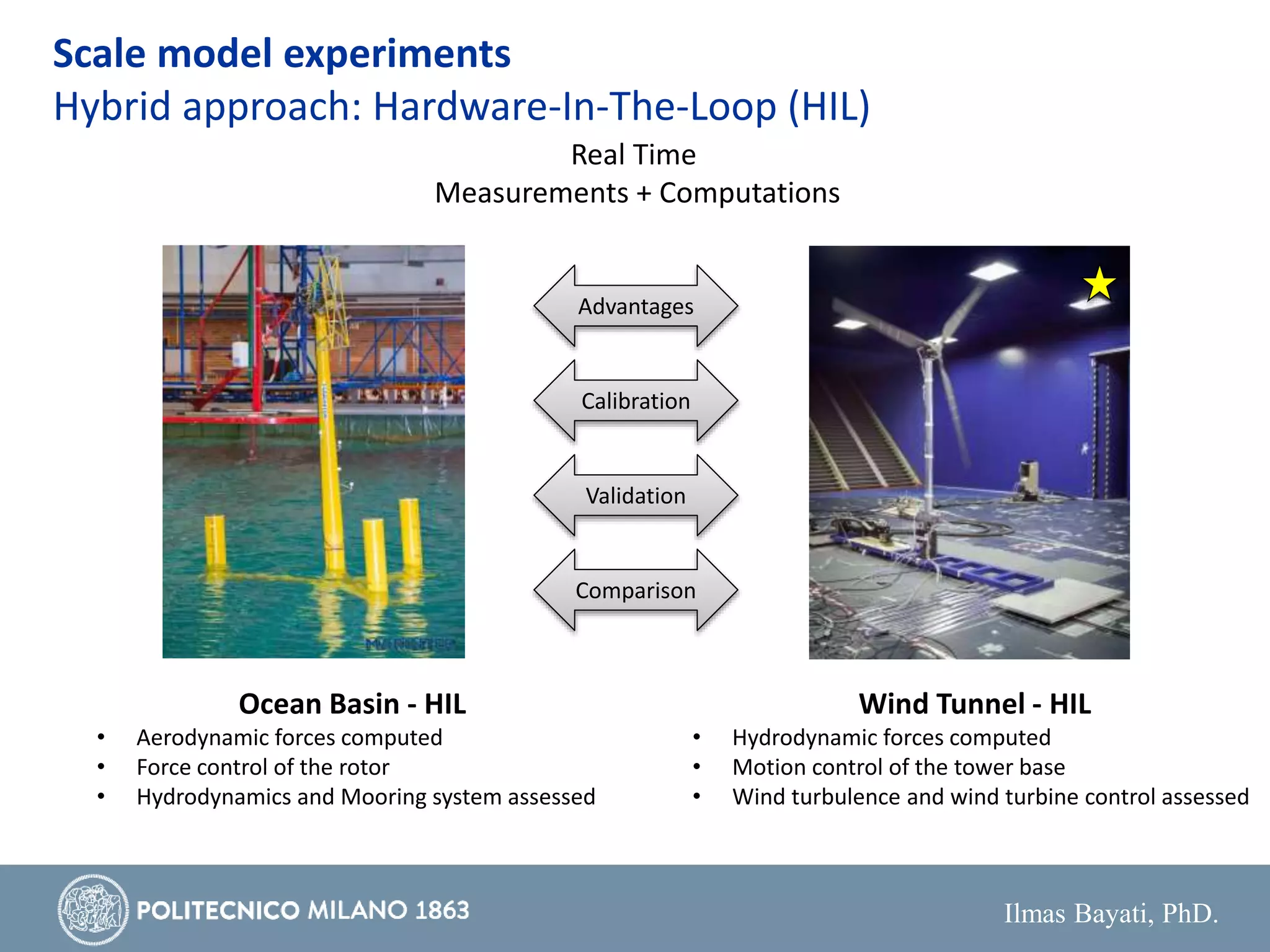
Scale model experiments
Hybrid approach: Hardware-In-The-Loop (HIL)
Ocean Basin - HIL
• Aerodynamic forces computed
• Force control of the rotor
• Hydrodynamics and Mooring system assessed
Wind Tunnel - HIL
• Hydrodynamic forces computed
• Motion control of the tower base
• Wind turbulence and wind turbine control assessed
Real Time
Measurements + Computations
Advantages
Comparison
Validation
Calibration
Ilmas Bayati, PhD.
Floating Wind Turbines Wind Tunnel Testing:
Hardware(Software)-In-The-Loop approach
Floater Dynamics Simulation
• Real time hydro-structure interaction
computation
Wind
Sea state
Wind Turbine Scale Model
• Real time measurements
[rotor, nacelle, tower base]
• Overall aerodynamic forces measured at the
base of the tower
Hydro
Aero
Hydro
Load Balance
Ilmas Bayati, PhD.
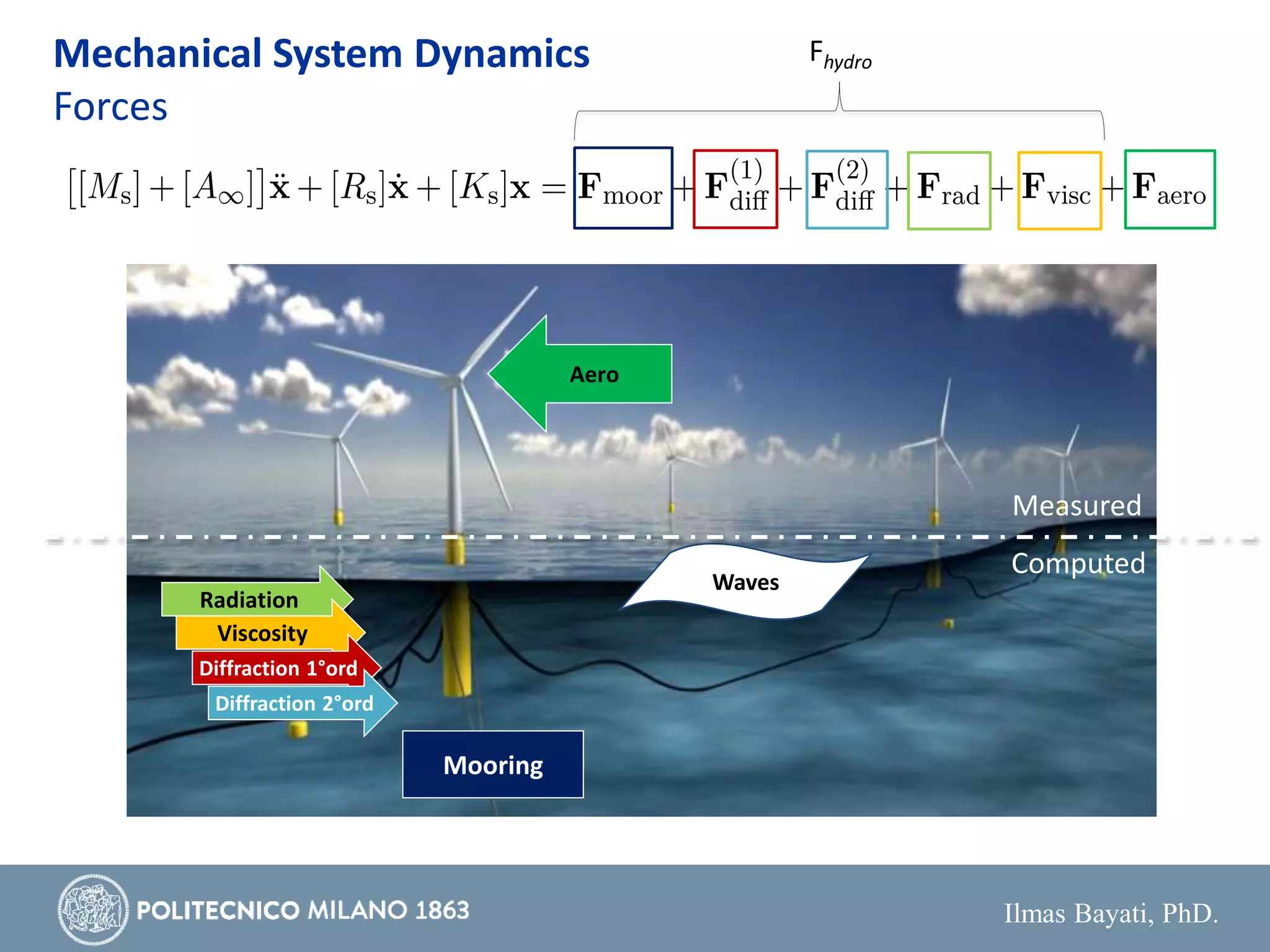
Mechanical System Dynamics
Forces
Aero
Mooring
Waves
Radiation
Viscosity
Diffraction 1°ord
Diffraction 2°ord
Measured
Computed
Fhydro
Ilmas Bayati, PhD.
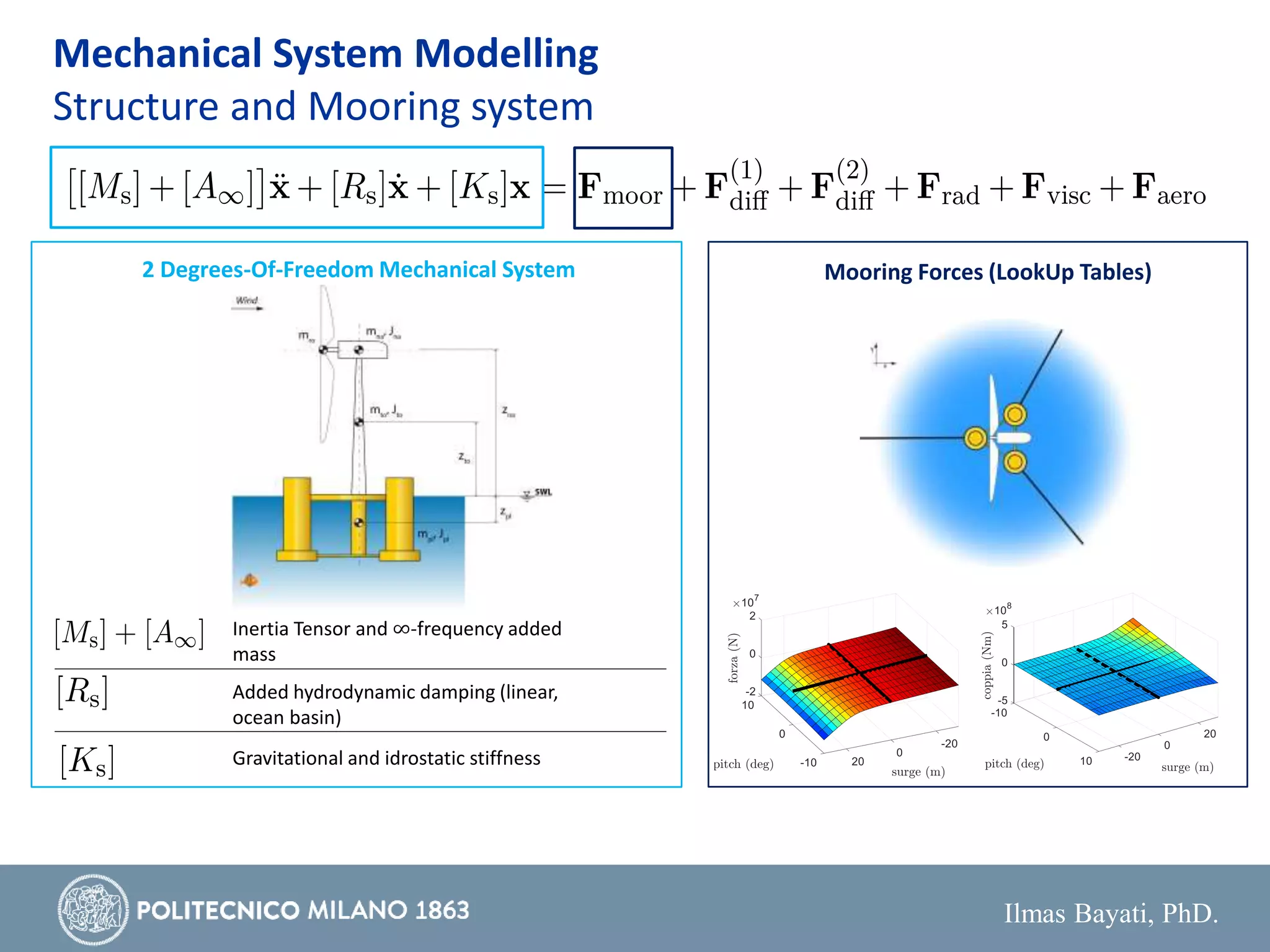
Inertia Tensor and ∞-frequency added
mass
Added hydrodynamic damping (linear,
ocean basin)
Gravitational and idrostatic stiffness
2 Degrees-Of-Freedom Mechanical System Mooring Forces (LookUp Tables)
Mechanical System Modelling
Structure and Mooring system
Ilmas Bayati, PhD.
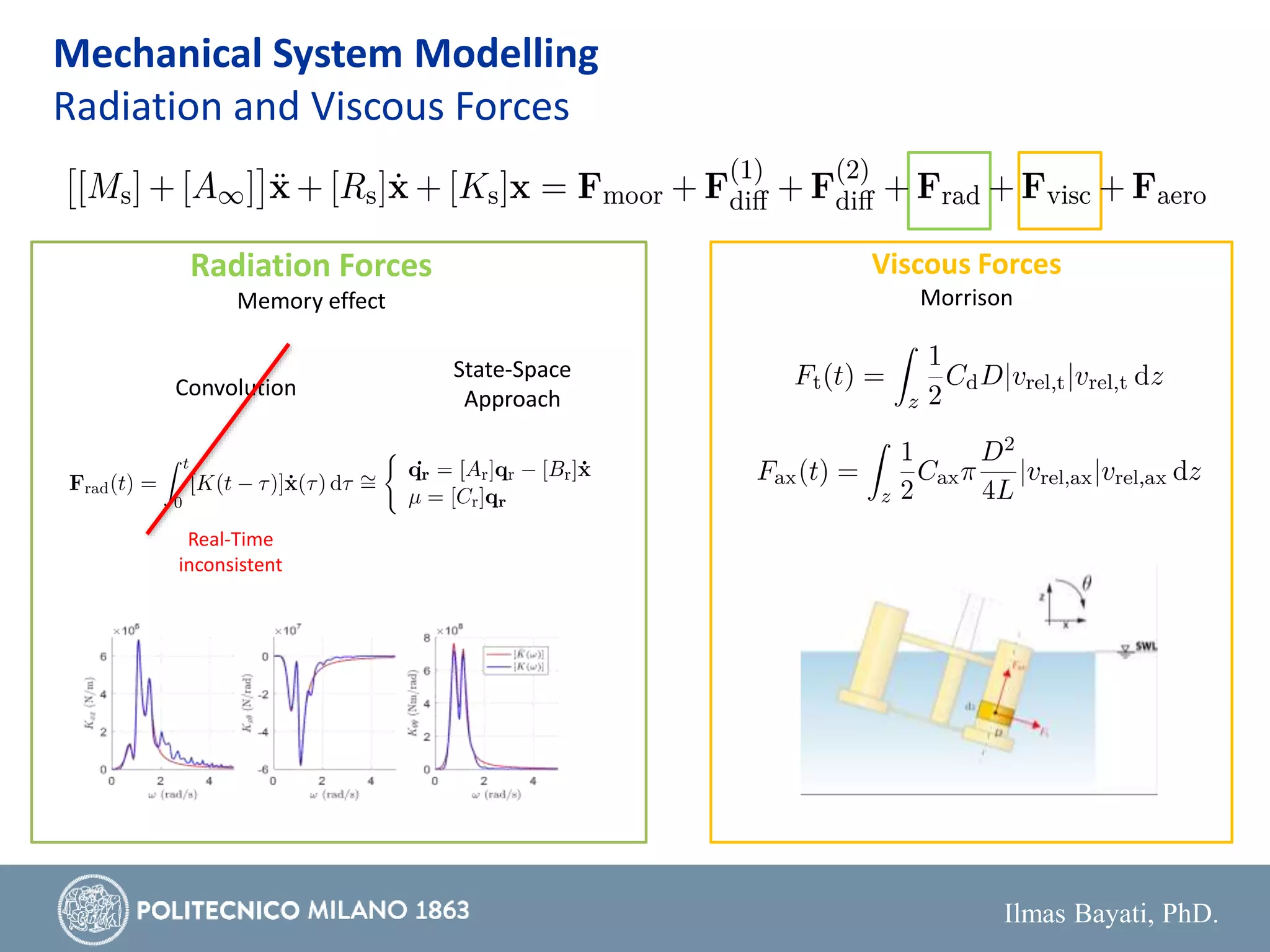
Radiation Forces
Memory effect
Viscous Forces
Morrison
Convolution
State-Space
Approach
Real-Time
inconsistent
Mechanical System Modelling
Radiation and Viscous Forces
Ilmas Bayati, PhD.
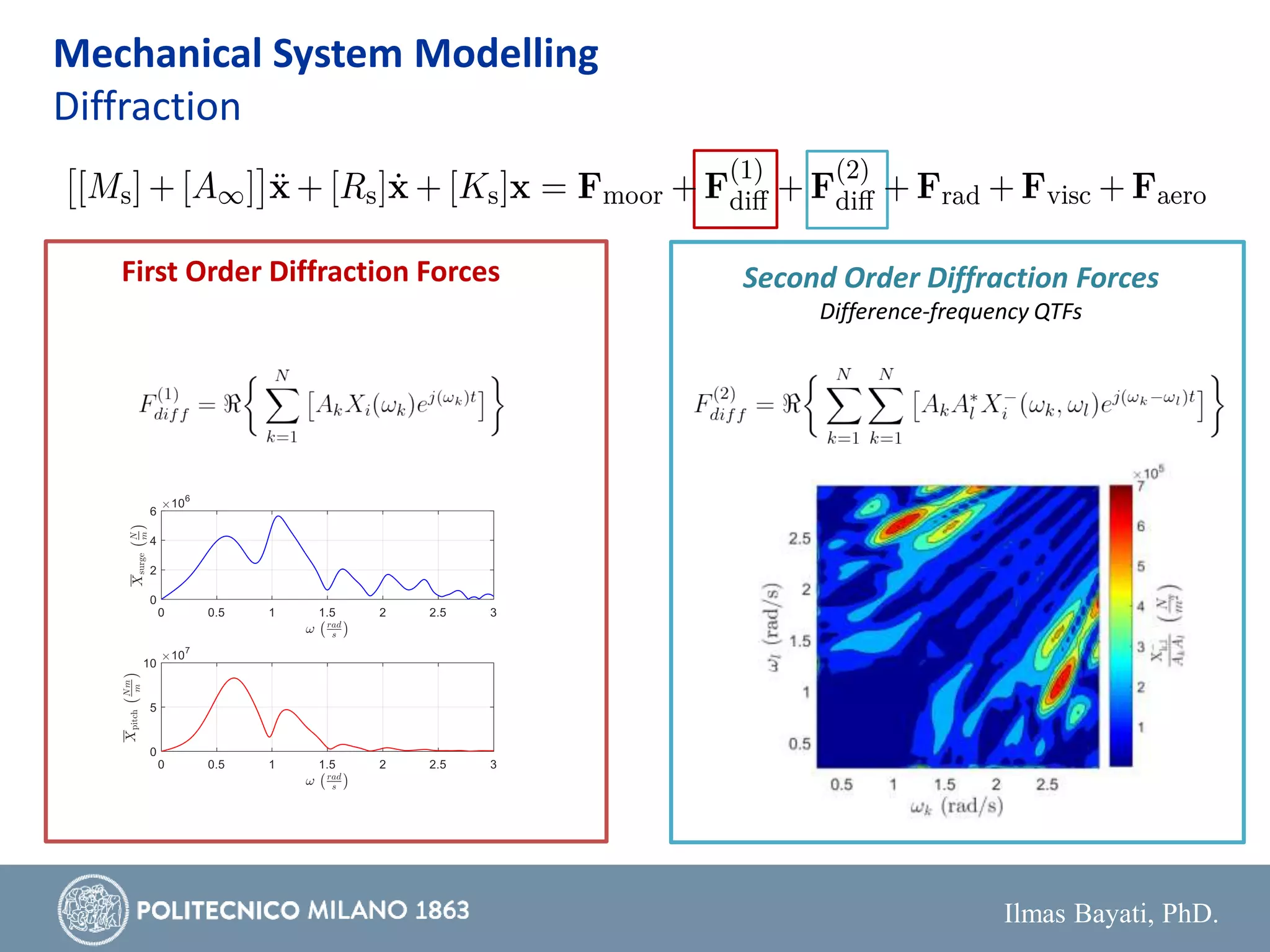
First Order Diffraction Forces Second Order Diffraction Forces
Difference-frequency QTFs
Mechanical System Modelling
Diffraction
Ilmas Bayati, PhD.
Floating Wind Turbines Testing:
Hardware(Software)-In-The-Loop approach
Floater Dynamics Simulation
• Real time hydro-structure interaction
reproduction
Wind
Sea state
Wind Turbine Scale Model
• Real time measurements
[rotor, nacelle, tower base]
• Overall aerodynamic forces measured at the
base of the tower
Hydro
Aero
Hydro
Load Balance
Ilmas Bayati, PhD.
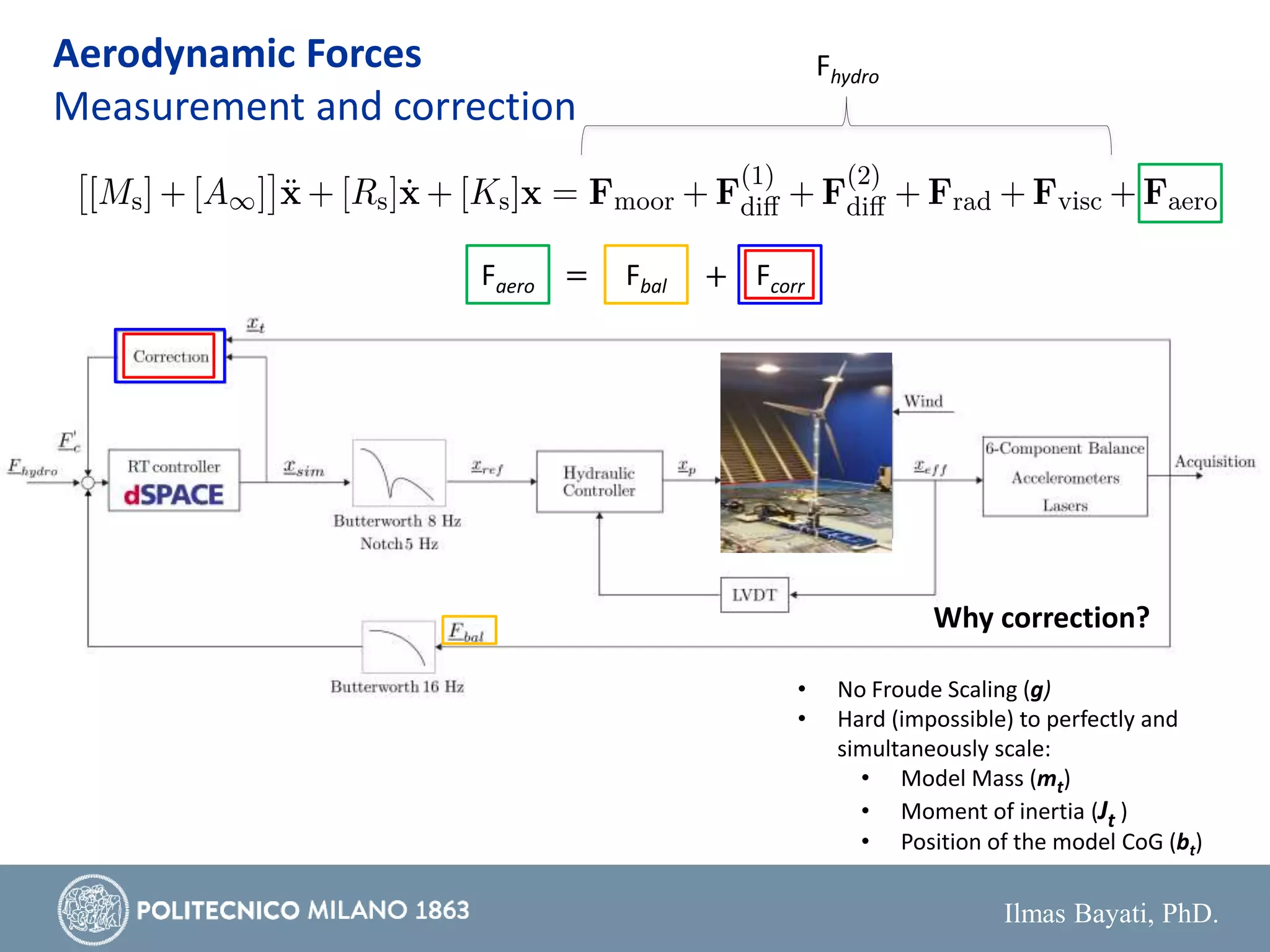
Aerodynamic Forces
Measurement and correction
Fhydro
Why correction?
• No Froude Scaling (g)
• Hard (impossible) to perfectly and
simultaneously scale:
• Model Mass (mt)
• Moment of inertia (Jt )
• Position of the model CoG (bt)
Faero Fbal += Fcorr
Ilmas Bayati, PhD.
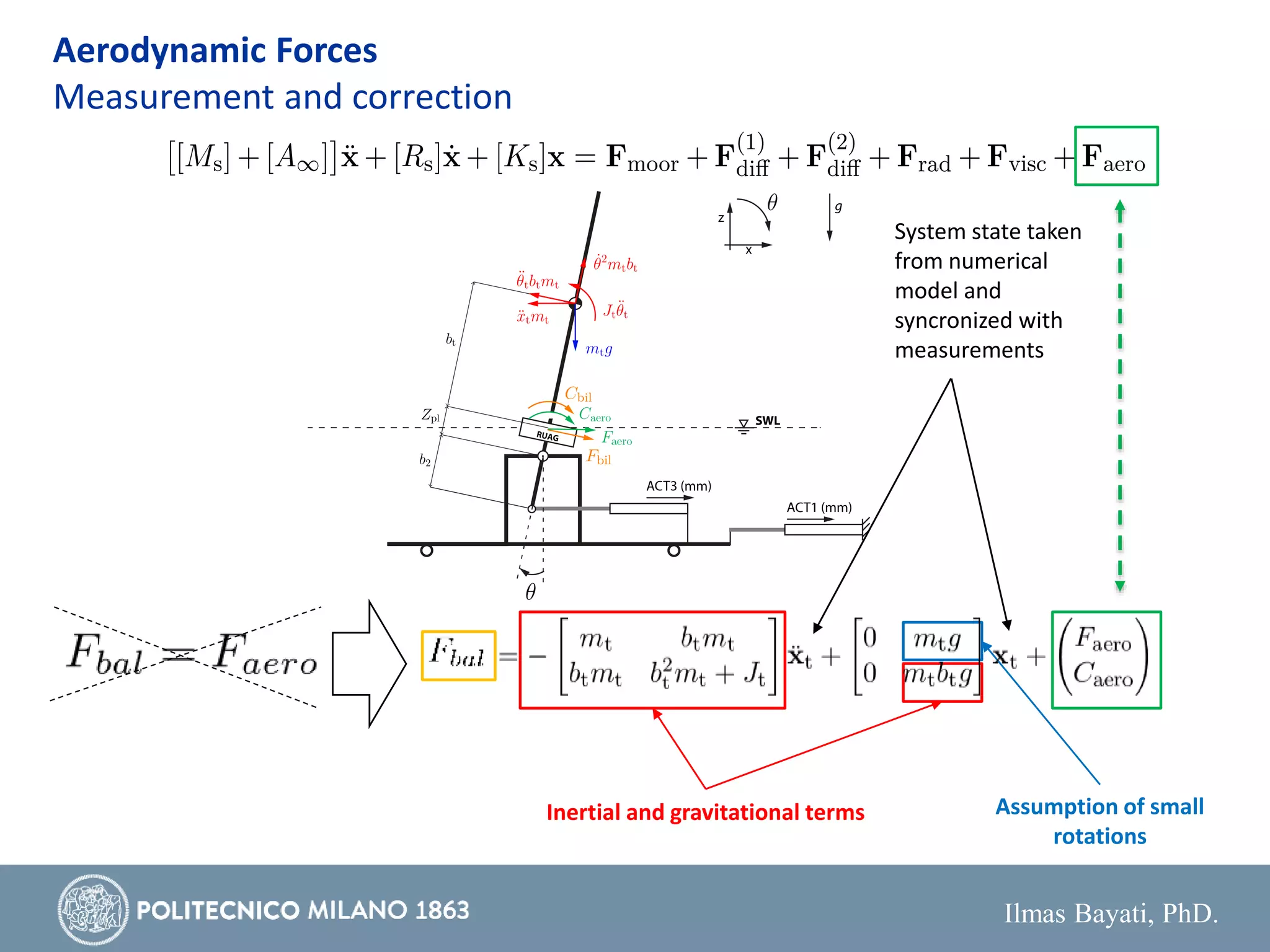
Inertial and gravitational terms Assumption of small
rotations
Aerodynamic Forces
Measurement and correction
System state taken
from numerical
model and
syncronized with
measurements
Ilmas Bayati, PhD.
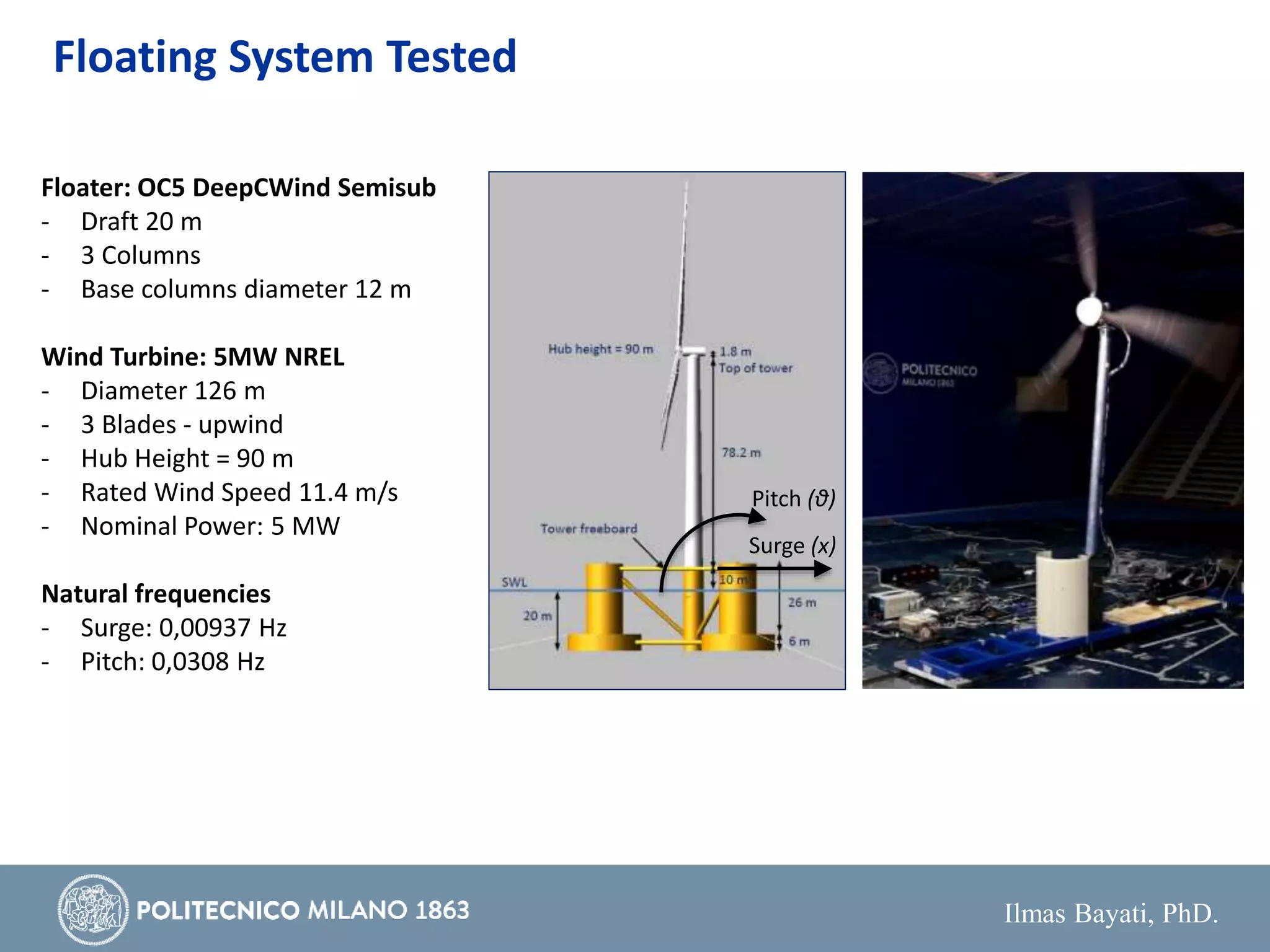
Floater: OC5 DeepCWind Semisub
- Draft 20 m
- 3 Columns
- Base columns diameter 12 m
Wind Turbine: 5MW NREL
- Diameter 126 m
- 3 Blades - upwind
- Hub Height = 90 m
- Rated Wind Speed 11.4 m/s
- Nominal Power: 5 MW
Natural frequencies
- Surge: 0,00937 Hz
- Pitch: 0,0308 Hz
Surge (x)
Pitch (θ)
Floating System Tested
Ilmas Bayati, PhD.
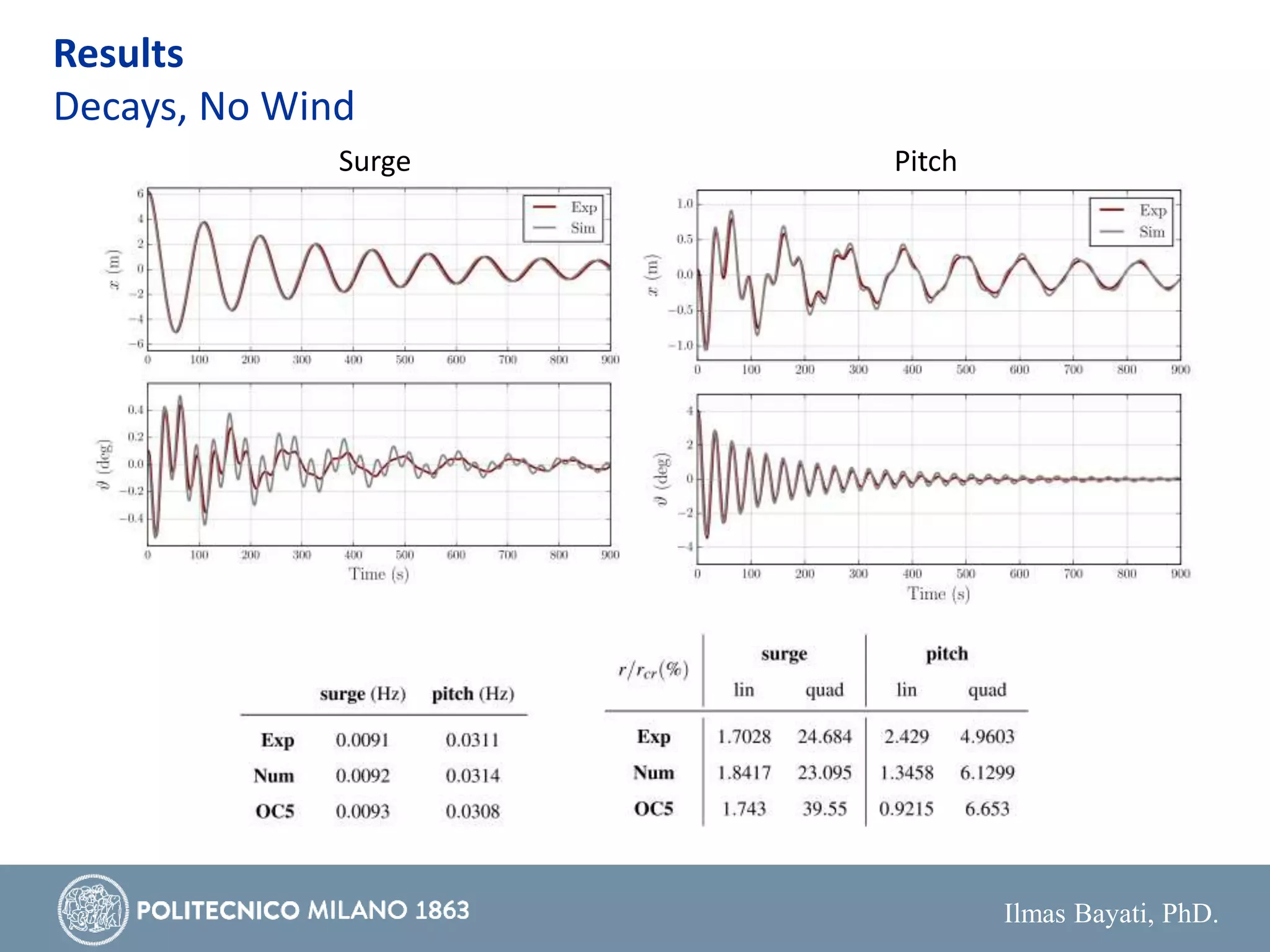
Results
Decays, No Wind
Surge Pitch
Ilmas Bayati, PhD.
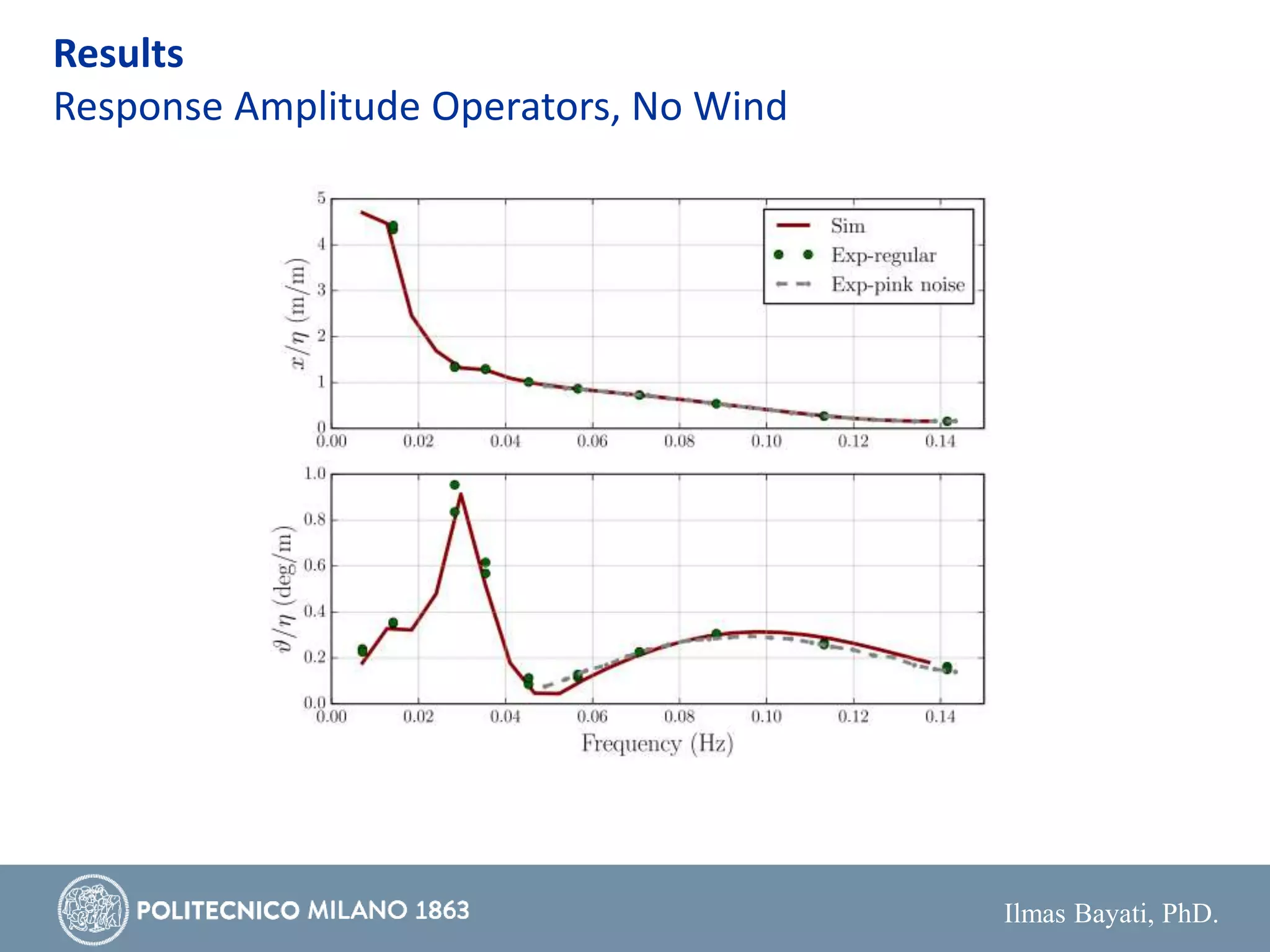
Results
Response Amplitude Operators, No Wind
Ilmas Bayati, PhD.
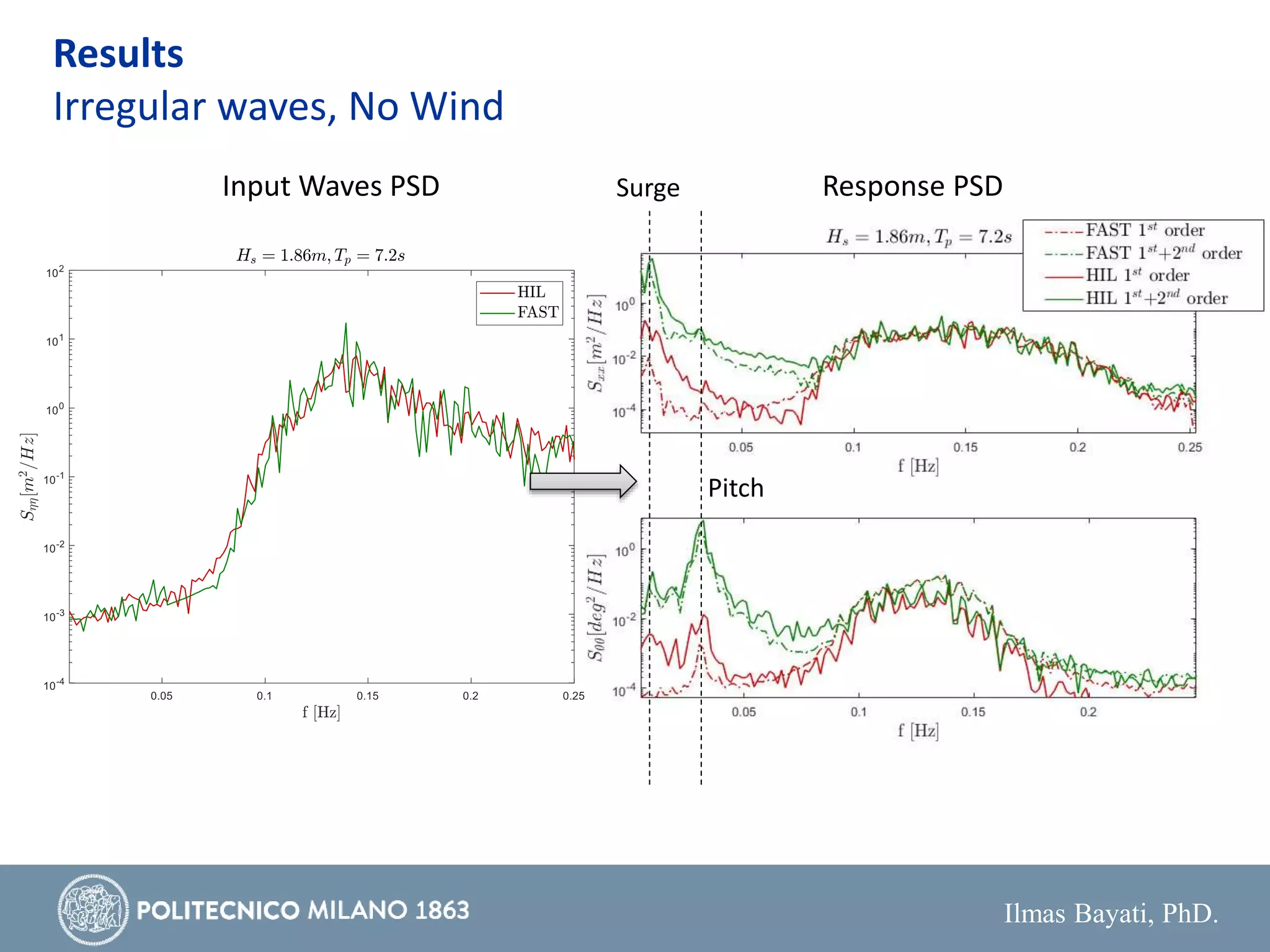
Results
Irregular waves, No Wind
Input Waves PSD Response PSDSurge
Pitch
Ilmas Bayati, PhD.
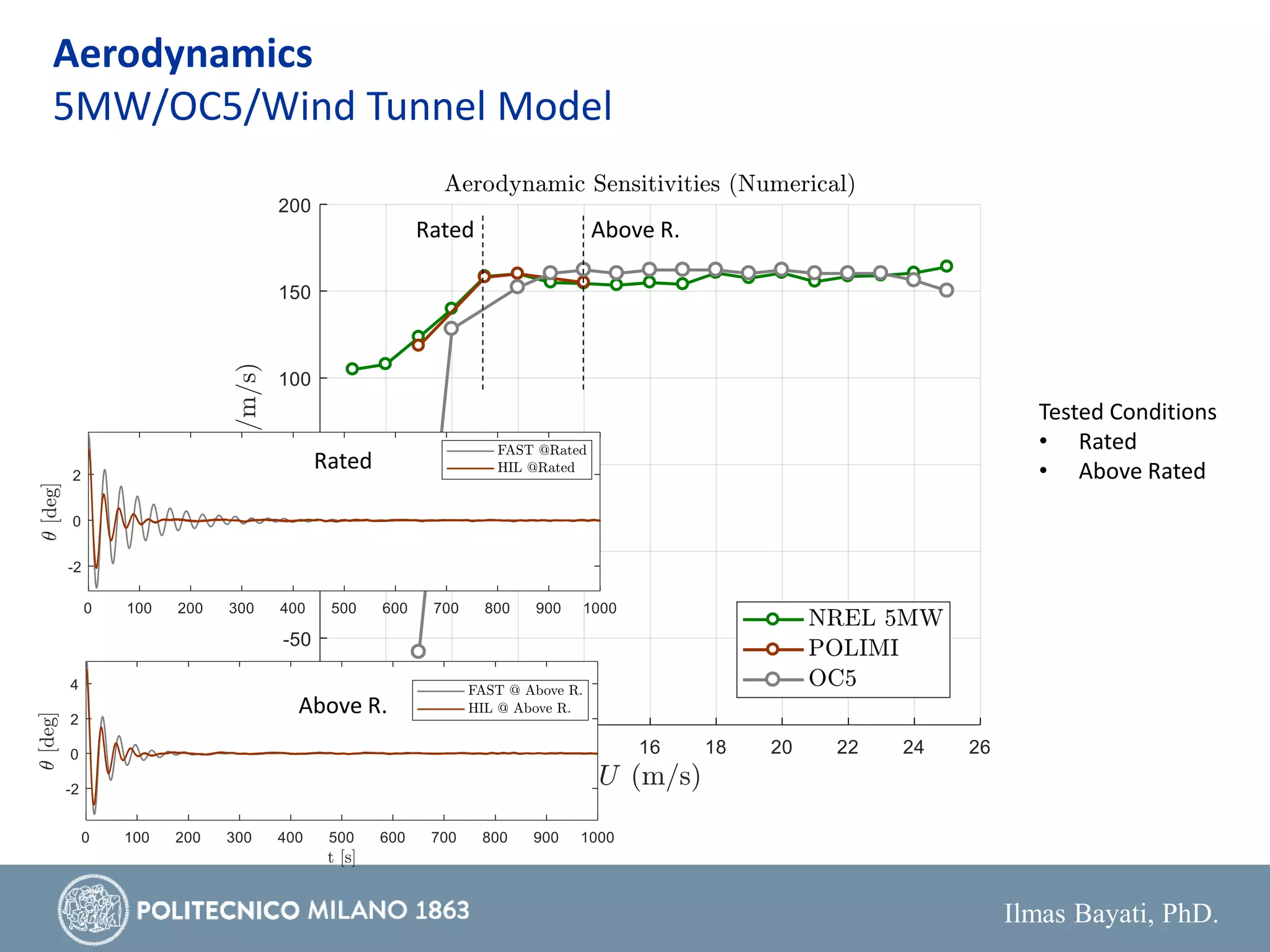
Aerodynamics
5MW/OC5/Wind Tunnel Model
Rated Above R.
Tested Conditions
• Rated
• Above RatedRated
Above R.
Ilmas Bayati, PhD.
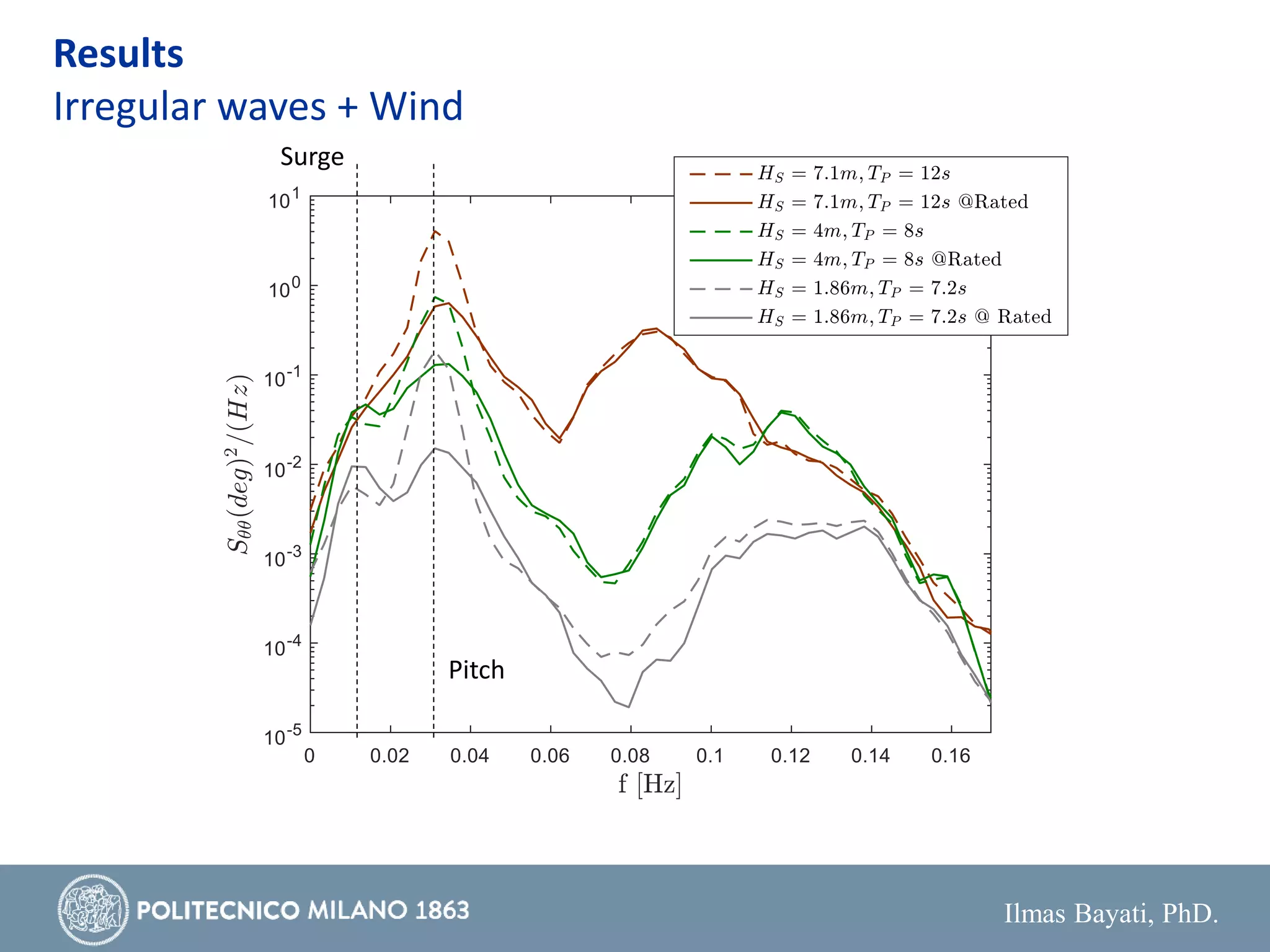
Results
Irregular waves + Wind
Surge
Pitch
Ilmas Bayati, PhD.
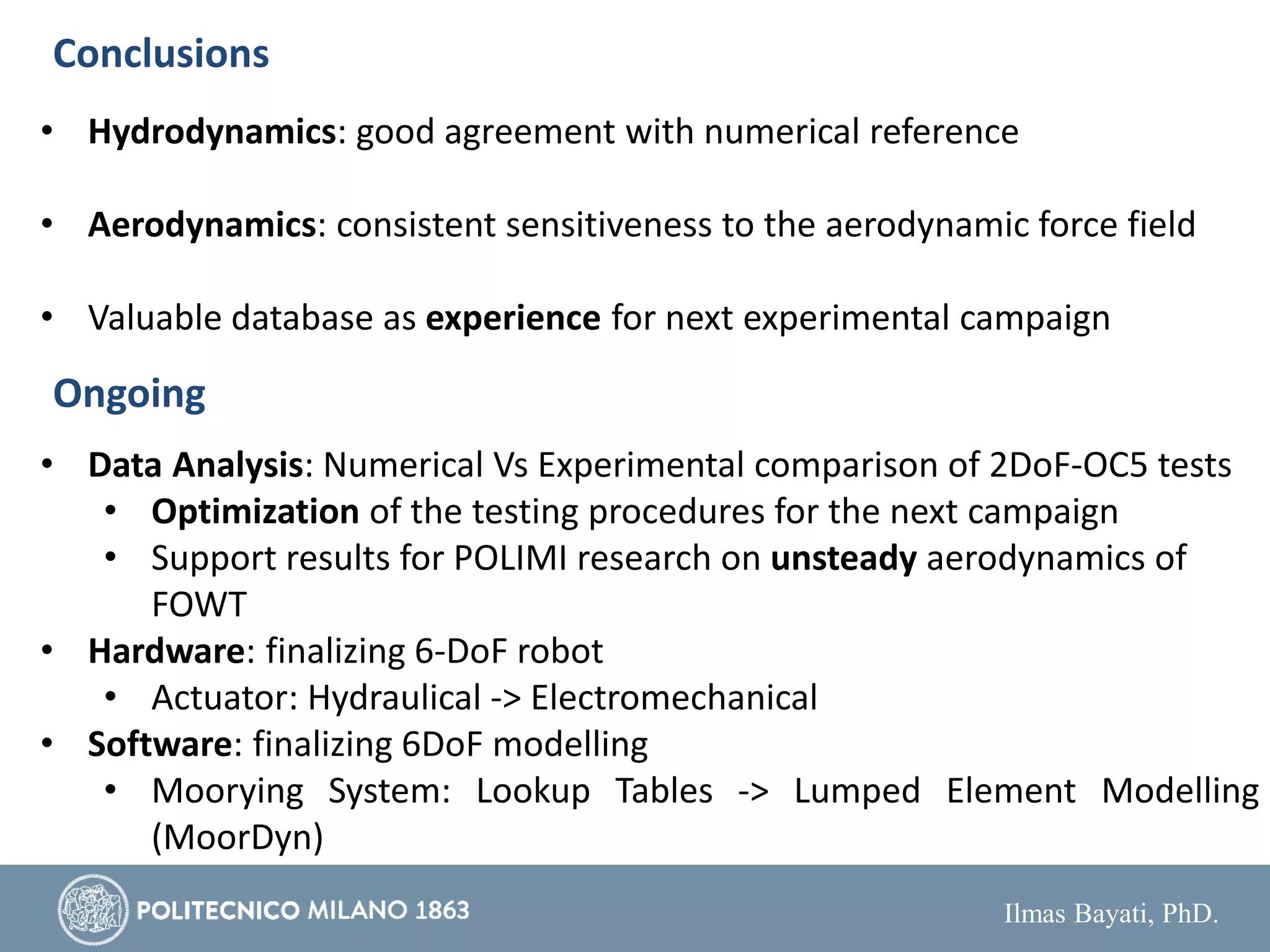
Conclusions
• Hydrodynamics: good agreement with numerical reference
• Aerodynamics: consistent sensitiveness to the aerodynamic force field
• Valuable database as experience for next experimental campaign
Ongoing
• Data Analysis: Numerical Vs Experimental comparison of 2DoF-OC5 tests
• Optimization of the testing procedures for the next campaign
• Support results for POLIMI research on unsteady aerodynamics of
FOWT
• Hardware: finalizing 6-DoF robot
• Actuator: Hydraulical -> Electromechanical
• Software: finalizing 6DoF modelling
• Moorying System: Lookup Tables -> Lumped Element Modelling
(MoorDyn)
Ilmas Bayati, PhD.
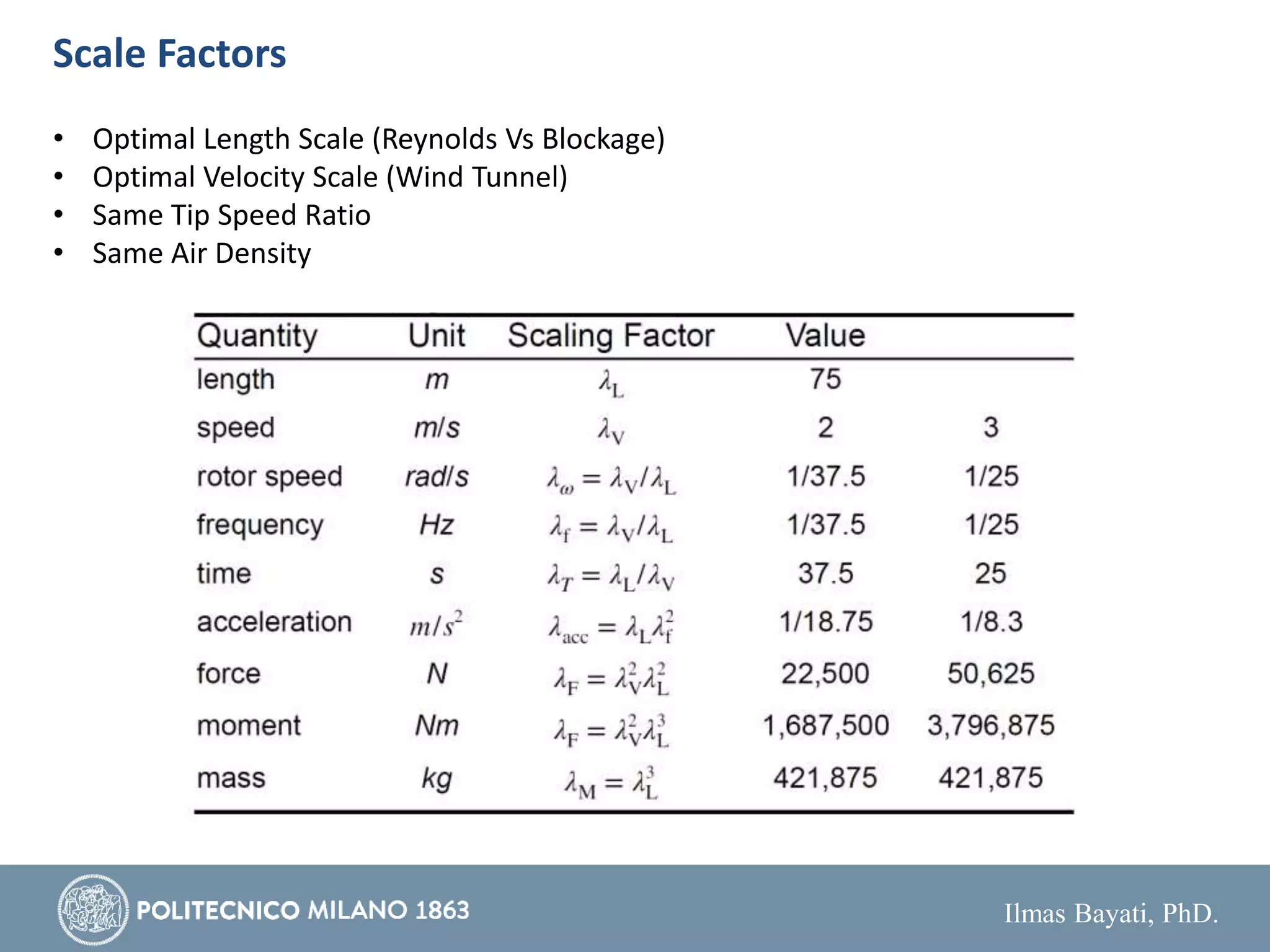
Scale Factors
• Optimal Length Scale (Reynolds Vs Blockage)
• Optimal Velocity Scale (Wind Tunnel)
• Same Tip Speed Ratio
• Same Air Density
Ilmas Bayati, PhD.
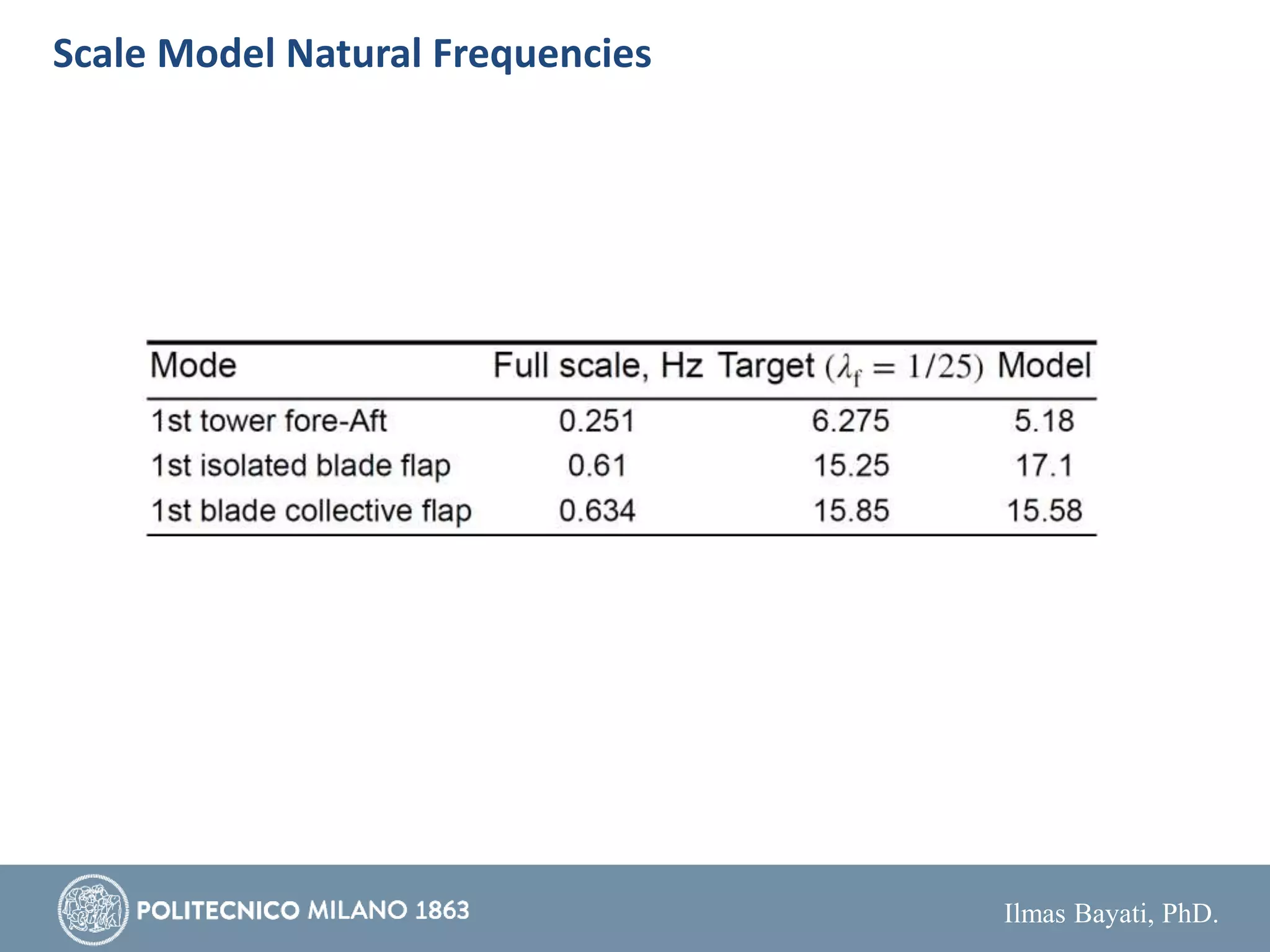
Scale Model Natural Frequencies
Ilmas Bayati, PhD.
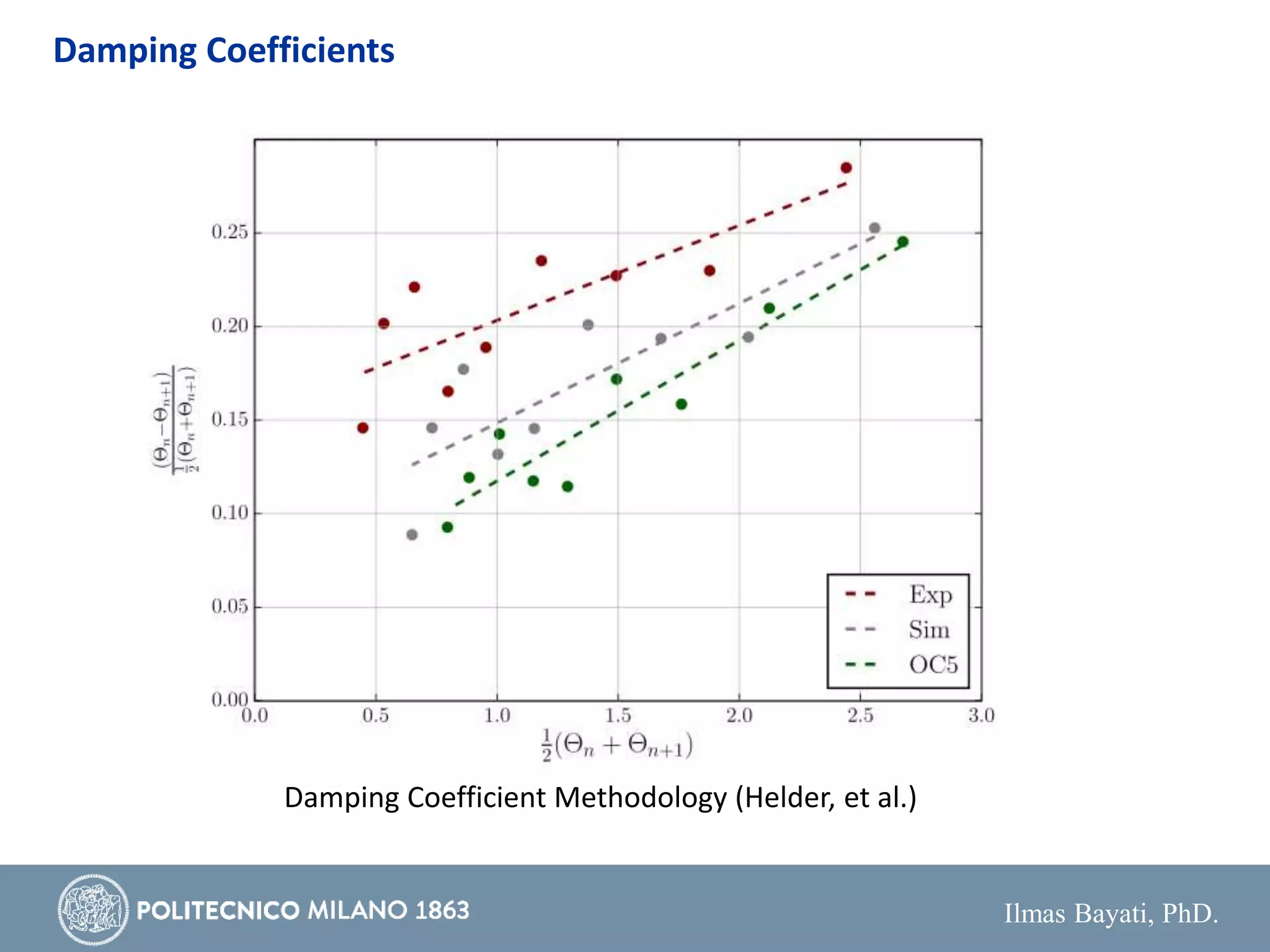
Damping Coefficients
Damping Coefficient Methodology (Helder, et al.)

Wind Tunnel 2-DoF Hybrid/Hil tests on the OC5 Floating Offshore Wind Turbine

  • 1.
    36th International Conferenceon Ocean, Offshore and Arctic Engineering OMAE 2017 June 25-30, 2017, Trondheim, Norway I. Bayati, M.Belloli and A.Facchinetti Politecnico di Milano Department of Mechanical Engineering Wind Tunnel 2-DoF Hybrid/HIL Tests On The OC5 Floating Offshore Wind Turbine
  • 2.
    Ilmas Bayati, PhD. Presentationoverview • Testing Methodology • Real Time Hydrodynamic Modelling • Real Time Aerodynamic Forces Measurement • Test Case: OC5 Floating System • Results • No Wind (Free Decays) • Irregular + No Wind • Irregular + Wind
  • 3.
    Ilmas Bayati, PhD. Scalemodel experiments Hybrid approach: Hardware-In-The-Loop (HIL) Ocean Basin - HIL • Aerodynamic forces computed • Force control of the rotor • Hydrodynamics and Mooring system assessed Wind Tunnel - HIL • Hydrodynamic forces computed • Motion control of the tower base • Wind turbulence and wind turbine control assessed Real Time Measurements + Computations Advantages Comparison Validation Calibration
  • 4.
    Ilmas Bayati, PhD. FloatingWind Turbines Wind Tunnel Testing: Hardware(Software)-In-The-Loop approach Floater Dynamics Simulation • Real time hydro-structure interaction computation Wind Sea state Wind Turbine Scale Model • Real time measurements [rotor, nacelle, tower base] • Overall aerodynamic forces measured at the base of the tower Hydro Aero Hydro Load Balance
  • 5.
    Ilmas Bayati, PhD. MechanicalSystem Dynamics Forces Aero Mooring Waves Radiation Viscosity Diffraction 1°ord Diffraction 2°ord Measured Computed Fhydro
  • 6.
    Ilmas Bayati, PhD. InertiaTensor and ∞-frequency added mass Added hydrodynamic damping (linear, ocean basin) Gravitational and idrostatic stiffness 2 Degrees-Of-Freedom Mechanical System Mooring Forces (LookUp Tables) Mechanical System Modelling Structure and Mooring system
  • 7.
    Ilmas Bayati, PhD. RadiationForces Memory effect Viscous Forces Morrison Convolution State-Space Approach Real-Time inconsistent Mechanical System Modelling Radiation and Viscous Forces
  • 8.
    Ilmas Bayati, PhD. FirstOrder Diffraction Forces Second Order Diffraction Forces Difference-frequency QTFs Mechanical System Modelling Diffraction
  • 9.
    Ilmas Bayati, PhD. FloatingWind Turbines Testing: Hardware(Software)-In-The-Loop approach Floater Dynamics Simulation • Real time hydro-structure interaction reproduction Wind Sea state Wind Turbine Scale Model • Real time measurements [rotor, nacelle, tower base] • Overall aerodynamic forces measured at the base of the tower Hydro Aero Hydro Load Balance
  • 10.
    Ilmas Bayati, PhD. AerodynamicForces Measurement and correction Fhydro Why correction? • No Froude Scaling (g) • Hard (impossible) to perfectly and simultaneously scale: • Model Mass (mt) • Moment of inertia (Jt ) • Position of the model CoG (bt) Faero Fbal += Fcorr
  • 11.
    Ilmas Bayati, PhD. Inertialand gravitational terms Assumption of small rotations Aerodynamic Forces Measurement and correction System state taken from numerical model and syncronized with measurements
  • 12.
    Ilmas Bayati, PhD. Floater:OC5 DeepCWind Semisub - Draft 20 m - 3 Columns - Base columns diameter 12 m Wind Turbine: 5MW NREL - Diameter 126 m - 3 Blades - upwind - Hub Height = 90 m - Rated Wind Speed 11.4 m/s - Nominal Power: 5 MW Natural frequencies - Surge: 0,00937 Hz - Pitch: 0,0308 Hz Surge (x) Pitch (θ) Floating System Tested
  • 13.
  • 14.
    Ilmas Bayati, PhD. Results ResponseAmplitude Operators, No Wind
  • 15.
    Ilmas Bayati, PhD. Results Irregularwaves, No Wind Input Waves PSD Response PSDSurge Pitch
  • 16.
    Ilmas Bayati, PhD. Aerodynamics 5MW/OC5/WindTunnel Model Rated Above R. Tested Conditions • Rated • Above RatedRated Above R.
  • 17.
    Ilmas Bayati, PhD. Results Irregularwaves + Wind Surge Pitch
  • 18.
    Ilmas Bayati, PhD. Conclusions •Hydrodynamics: good agreement with numerical reference • Aerodynamics: consistent sensitiveness to the aerodynamic force field • Valuable database as experience for next experimental campaign Ongoing • Data Analysis: Numerical Vs Experimental comparison of 2DoF-OC5 tests • Optimization of the testing procedures for the next campaign • Support results for POLIMI research on unsteady aerodynamics of FOWT • Hardware: finalizing 6-DoF robot • Actuator: Hydraulical -> Electromechanical • Software: finalizing 6DoF modelling • Moorying System: Lookup Tables -> Lumped Element Modelling (MoorDyn)
  • 19.
    Ilmas Bayati, PhD. ScaleFactors • Optimal Length Scale (Reynolds Vs Blockage) • Optimal Velocity Scale (Wind Tunnel) • Same Tip Speed Ratio • Same Air Density
  • 20.
    Ilmas Bayati, PhD. ScaleModel Natural Frequencies
  • 21.
    Ilmas Bayati, PhD. DampingCoefficients Damping Coefficient Methodology (Helder, et al.)

Editor's Notes

  • #2 I’ll be presenting wind tunnel tets on …based on Co-authored by
  • #4 HIL approach combines measurements and computations The HIL approach is being adopted in the most recent projects of wind turbines for its potentials in Overcoming scaling issues Exploiting separately the advantages of ocean basin and wind tunnel facilities The counterpart of the setup presented in the previos
  • #5 Among various measurable quantities on the scale model A balance between is the key sensor for the which couples the two worlds.. 2 Hydraulic actuators, slider cranck mechanism Let ourselves concern with the hydrodynamic modelling at first
  • #6 The overall system dynamics can be summarized as follows, being x the independent coordinates in surge and pitch, the structural matrices on the left handside Having hydrodynamic modelled forces of different sources
  • #7 The system is considered rigid, this is assumption is mandatory for making the real time computation affordable And consistent in experimental sense since…
  • #10 Let’s now focus on the aerodynamic forcing which is measured by the
  • #11 As said, at each time instant the load balance at the base of the tower will give us the info about the aerodynamic forces, however some correction are needed Because there some contributions contained in the measurements that we want to get rid of, because they are inconsistent with the simulations
  • #13 We decided to perform our first wind tunnel campaign refferring to the OC5 system against which we have calibrated our FAST then translated into the real time controller in Matlab/Simulink environment
  • #14 A few test with no wind have been performed in order to check the correctness in the implementation of the hydrodynamic model in the real time system A very good agreement in terms of natural frequencies and damping, with a slightly higher linear damping for pitch which we are confident will be…
  • #15 RAO for different input wave hehigts have been checked Non linearities cought by the methodology…
  • #16 Also irregular waves have been given to… The higher response in low frequency region for the experiments is presumably due to… Giving a warning for the next session
  • #17 Before switching on the wind, let me give you an overview about the aerodynamics of the physical wind turbine tested This is a numerical analysis of the sensitivity, which we are also planning to assess experimentally… Although PoliMi model is fitted on DTU 10 MW Free decay with wind at rated and above rated, they look consistent with the numerical prediction, so this is important before drawing conclusion on the tests with wind
  • #18 Three different sea states are herein reported, with dashed line refferring to no wind condition and the solid line to its counterpart with wind, all the lines are experimental results Wind is gretaly damping the system in the low frequency range Wind is not in the wave frequency range This opens up questions to which we are trying to give answers looking at the unsteady aerodynamics of such systems with a frequency based approach
  • #19 We can conclude that