



©	
  ThinkVine.	
  	
  All	
  Rights	
  Reserved.	
  
Learn	
  How	
  a	
  New	
  Kind	
  of	
  Marke1ng	
  Mix	
  Modeling	
  
is	
  Be7er	
  for	
  Media	
  Planning	
  
Mark	
  Ba7aglia,	
  CEO,	
  ThinkVine	
  
WHAT IS
Agent-based Modeling?
A	
  proven	
  way	
  of	
  combining	
  data,	
  
business	
  rules	
  and	
  analyEcs	
  to	
  
re-­‐create,	
  gain	
  insight	
  into,	
  and	
  predict	
  
complex	
  phenomena	
  by	
  simulaEng	
  
the	
  behavior	
  and	
  interacEons	
  of	
  “agents.”	
  
©	
  ThinkVine.	
  	
  All	
  Rights	
  Reserved.	
  
IN MARKETING MIX…
•  The “complex phenomena”
is how consumers respond
to marketing, including
buying (or not buying) products
•  Each “agent” represents
a person or a household
©	
  ThinkVine.	
  	
  All	
  Rights	
  Reserved.	
  
ABM has two advantages over
regression-based approaches:
•  Population heterogeneity: takes into
account how people are different
•  Change over time: includes how people
change over time including their price
sensitivity, awareness, etc.
©	
  ThinkVine.	
  	
  All	
  Rights	
  Reserved.	
  
Each company’s agent-based model
is different
• Each	
  uses	
  different	
  data,	
  includes	
  different	
  
markeEng	
  science,	
  does	
  different	
  calculaEons,	
  etc.	
  
• The	
  differences	
  ma7er	
  both	
  in	
  terms	
  of	
  the	
  results	
  
you	
  get	
  and	
  how	
  easy	
  it	
  is	
  to	
  get	
  them	
  	
  
For the rest of this deck, we’ll look at the advantages of
ThinkVine’s agent-based solution for media planners
©	
  ThinkVine.	
  	
  All	
  Rights	
  Reserved.	
   6	
  
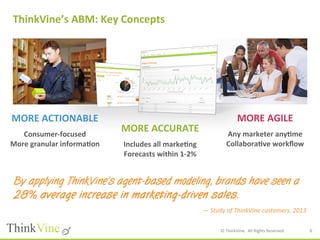
MORE	
  ACTIONABLE	
  
Consumer-­‐focused	
  
More	
  granular	
  informa1on	
  
MORE	
  ACCURATE	
  
Includes	
  all	
  marke1ng	
  
Forecasts	
  within	
  1-­‐2%	
  
MORE	
  AGILE	
  
Any	
  marketer	
  any1me	
  
Collabora1ve	
  workflow	
  
ThinkVine’s	
  ABM:	
  Key	
  Concepts	
  
By applying ThinkVine’s agent-based modeling, brands have seen a
28% average increase in marketing-driven sales.
—	
  Study	
  of	
  ThinkVine	
  customers,	
  2013	


©	
  ThinkVine.	
  	
  All	
  Rights	
  Reserved.	
  
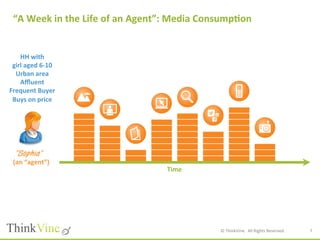
“A	
  Week	
  in	
  the	
  Life	
  of	
  an	
  Agent”:	
  Media	
  Consump1on	
  
7	
  
HH	
  with	
  	
  
girl	
  aged	
  6-­‐10	
  
Urban	
  area	
  
Affluent	
  
Frequent	
  Buyer	
  
Buys	
  on	
  price	


”Sophia”
(an	
  “agent”)	
  
Time	
  
©	
  ThinkVine.	
  	
  All	
  Rights	
  Reserved.	
  
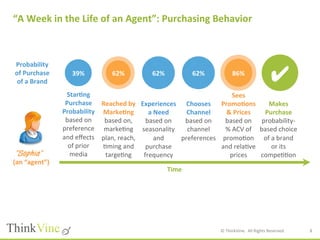
“A	
  Week	
  in	
  the	
  Life	
  of	
  an	
  Agent”:	
  Purchasing	
  Behavior	
  
8	


Reached	
  by	
  
Marke1ng	
  	
  
based	
  on,	
  
markeEng	
  
plan,	
  reach,	
  
Eming	
  and	
  
targeEng	
  
62%	


Experiences	
  
a	
  Need	
  	
  
based	
  on	
  
seasonality	
  
and	
  
purchase	
  
frequency	
  
62%	


Chooses	
  
Channel	
  
based	
  on	
  
channel	
  
preferences	
  
62%	
  
Sees	
  
Promo1ons	
  
&	
  Prices	
  
based	
  on	


%	
  ACV	
  of	
  
promoEon	
  
and	
  relaEve	
  
prices	
  
86%	


Makes	
  	
  
Purchase	
  
probability-­‐
based	
  choice	
  
of	
  a	
  brand	
  	
  
or	
  its	
  
compeEEon	
  
✔	
  
Star1ng	
  
Purchase	
  
Probability	
  
based	
  on	
  
preference	
  
and	
  effects	
  
of	
  prior	
  
media	
  
39%	
  
Probability	
  
of	
  Purchase	
  
of	
  a	
  Brand	
  	
  
”Sophia”
(an	
  “agent”)	
  
Time	
  
©	
  ThinkVine.	
  	
  All	
  Rights	
  Reserved.	
  
Understand	
  what	
  budget	
  you	
  need	
  and	
  how	
  to	
  use	
  it	
  to	
  meet	
  sales	
  goals	
  and	
  
achieve	
  other	
  objecEves,	
  such	
  as	
  leads,	
  new	
  customers,	
  and	
  lifeEme	
  value.	
  
Achieve your objectives
Understand the cumulative effect of all media
on consumer purchasing behavior
-­‐	
  A7ribuEon	
  of	
  sales	
  volume	
  across	
  all	
  on-­‐line	
  and	
  off-­‐line	
  media	
  (pricing,	
  distribuEon,	
  etc).	
  
-­‐	
  Short-­‐term,	
  long-­‐term,	
  marginal	
  and	
  normalized	
  ROI	
  by	
  media	
  type.	
  
Quantify what works & what doesn’t
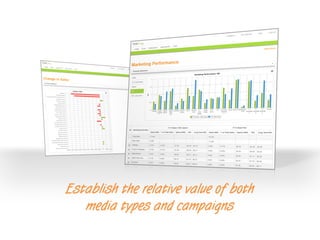
Establish the relative value of both
media types and campaigns
Identify the media mix that will drive the bestresults overall and for each consumer group	
  
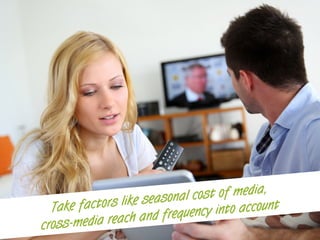
Take factors like seasonal cost of media,
cross-media reach and frequency into account	
  
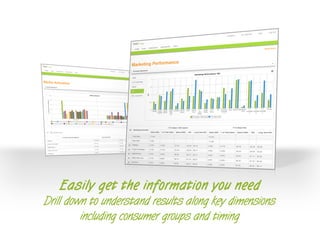
Easily get the information you need
Drill down to understand results along key dimensions
including consumer groups and timing
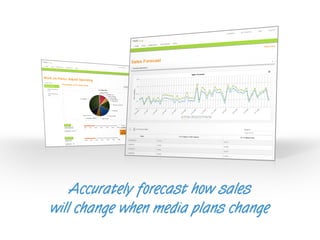
Accurately forecast how sales
will change when media plans change
Forecast the lift of new tactics
and from moving from pilot to scale
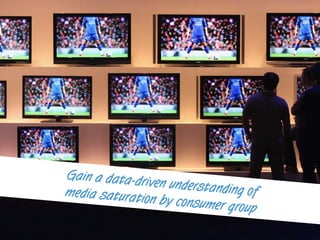
Gain a data-driven understanding ofmedia saturation by consumer group
Determine how long it takes to recoverif you “save” by “going dark”
Do your best work with software
that supports agile planning
And there’s more…
•  Quantify the “halo effect”
of media across product lines
•  Understand how competitive
campaigns affect preference for
your brand
•  Incorporate the persuasiveness of
creative into forecasts
See	
  a	
  2	
  minute	
  video	
  overview	
  at	
  
www.thinkvine.com	
  
or	
  call	
  +1	
  (513)	
  842-­‐5900	
  
Get better results
from your marketing mix.

Learn How a New Kind of Marketing Mix Modeling is Better for Media Planning

  • 1.
    ©  ThinkVine.    All  Rights  Reserved.   Learn  How  a  New  Kind  of  Marke1ng  Mix  Modeling   is  Be7er  for  Media  Planning   Mark  Ba7aglia,  CEO,  ThinkVine  
  • 2.
    WHAT IS Agent-based Modeling? A  proven  way  of  combining  data,   business  rules  and  analyEcs  to   re-­‐create,  gain  insight  into,  and  predict   complex  phenomena  by  simulaEng   the  behavior  and  interacEons  of  “agents.”  
  • 3.
    ©  ThinkVine.    All  Rights  Reserved.   IN MARKETING MIX… •  The “complex phenomena” is how consumers respond to marketing, including buying (or not buying) products •  Each “agent” represents a person or a household
  • 4.
    ©  ThinkVine.    All  Rights  Reserved.   ABM has two advantages over regression-based approaches: •  Population heterogeneity: takes into account how people are different •  Change over time: includes how people change over time including their price sensitivity, awareness, etc.
  • 5.
    ©  ThinkVine.    All  Rights  Reserved.   Each company’s agent-based model is different • Each  uses  different  data,  includes  different   markeEng  science,  does  different  calculaEons,  etc.   • The  differences  ma7er  both  in  terms  of  the  results   you  get  and  how  easy  it  is  to  get  them     For the rest of this deck, we’ll look at the advantages of ThinkVine’s agent-based solution for media planners
  • 6.
    ©  ThinkVine.    All  Rights  Reserved.   6   MORE  ACTIONABLE   Consumer-­‐focused   More  granular  informa1on   MORE  ACCURATE   Includes  all  marke1ng   Forecasts  within  1-­‐2%   MORE  AGILE   Any  marketer  any1me   Collabora1ve  workflow   ThinkVine’s  ABM:  Key  Concepts   By applying ThinkVine’s agent-based modeling, brands have seen a 28% average increase in marketing-driven sales. —  Study  of  ThinkVine  customers,  2013      
  • 7.
    ©  ThinkVine.    All  Rights  Reserved.   “A  Week  in  the  Life  of  an  Agent”:  Media  Consump1on   7   HH  with     girl  aged  6-­‐10   Urban  area   Affluent   Frequent  Buyer   Buys  on  price     ”Sophia” (an  “agent”)   Time  
  • 8.
    ©  ThinkVine.    All  Rights  Reserved.   “A  Week  in  the  Life  of  an  Agent”:  Purchasing  Behavior   8     Reached  by   Marke1ng     based  on,   markeEng   plan,  reach,   Eming  and   targeEng   62%     Experiences   a  Need     based  on   seasonality   and   purchase   frequency   62%     Chooses   Channel   based  on   channel   preferences   62%   Sees   Promo1ons   &  Prices   based  on           %  ACV  of   promoEon   and  relaEve   prices   86%     Makes     Purchase   probability-­‐ based  choice   of  a  brand     or  its   compeEEon   ✔   Star1ng   Purchase   Probability   based  on   preference   and  effects   of  prior   media   39%   Probability   of  Purchase   of  a  Brand     ”Sophia” (an  “agent”)   Time  
  • 9.
    ©  ThinkVine.    All  Rights  Reserved.   Understand  what  budget  you  need  and  how  to  use  it  to  meet  sales  goals  and   achieve  other  objecEves,  such  as  leads,  new  customers,  and  lifeEme  value.   Achieve your objectives
  • 10.
    Understand the cumulativeeffect of all media on consumer purchasing behavior
  • 11.
    -­‐  A7ribuEon  of  sales  volume  across  all  on-­‐line  and  off-­‐line  media  (pricing,  distribuEon,  etc).   -­‐  Short-­‐term,  long-­‐term,  marginal  and  normalized  ROI  by  media  type.   Quantify what works & what doesn’t
  • 12.
    Establish the relativevalue of both media types and campaigns
  • 13.
    Identify the mediamix that will drive the bestresults overall and for each consumer group  
  • 14.
    Take factors likeseasonal cost of media, cross-media reach and frequency into account  
  • 15.
    Easily get theinformation you need Drill down to understand results along key dimensions including consumer groups and timing
  • 16.
    Accurately forecast howsales will change when media plans change
  • 17.
    Forecast the liftof new tactics and from moving from pilot to scale
  • 18.
    Gain a data-drivenunderstanding ofmedia saturation by consumer group
  • 19.
    Determine how longit takes to recoverif you “save” by “going dark”
  • 20.
    Do your bestwork with software that supports agile planning
  • 21.
    And there’s more… • Quantify the “halo effect” of media across product lines •  Understand how competitive campaigns affect preference for your brand •  Incorporate the persuasiveness of creative into forecasts
  • 22.
    See  a  2  minute  video  overview  at   www.thinkvine.com   or  call  +1  (513)  842-­‐5900   Get better results from your marketing mix.