A	Tale	of	Ice	and	Fire
The	Clouds	and	The	Standards
WE	HAVE	A	PROBLEM
2
3
A	Power	Struggle
4
Us	vs.	Them
5
How	the	market	see	standards
6
7
Keep calm.
STANDARDS	101
8
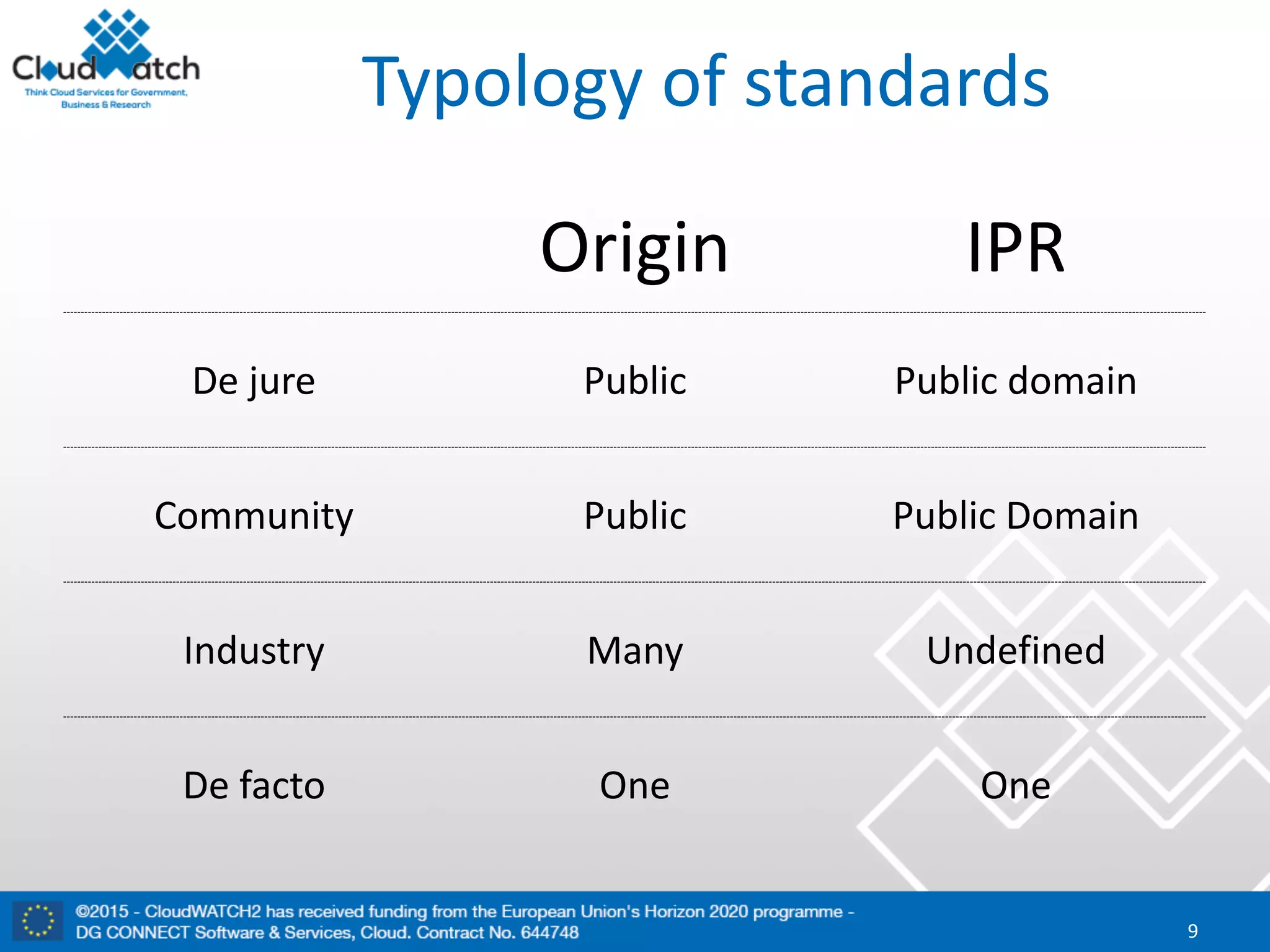
Origin IPR
De	jure Public Public	domain
Community Public Public	Domain
Industry Many Undefined
De	facto One One
Typology	of standards
9
The	Good,	the	Bad		& the	Ugly
10
HTML	&	HTTP	(The	Good)
Originated	in	the	1980’s
Used	to	store,	publish,	and	reference	papers
Primary	domain	High	Energy	Physics	(CERN)
Generic,	well-scoped,	orthogonal
No	commercial	constraints
11
MS	OOXML	(The	Bad)
Originated	2000	(some	speculations	on	motivation	persist)
Pushed	through	ECMA	in	2006,	ISO/IEC	in	2008
Primary	domain	MS	Office	documents
Extremely	controversial	process
Protecting	enormous	commercial	interest
12
MS	OOXML	(The	Ugly)
Badly	scoped
Inappropriate	language	choice	(XML)	
Inherits	predecessor’s	bad	design	choices
Virtually	only	one	implementation
Incompatibilities	between	MS	Office	versions
13
STANDARDS AND	THE	BUSINESS
14
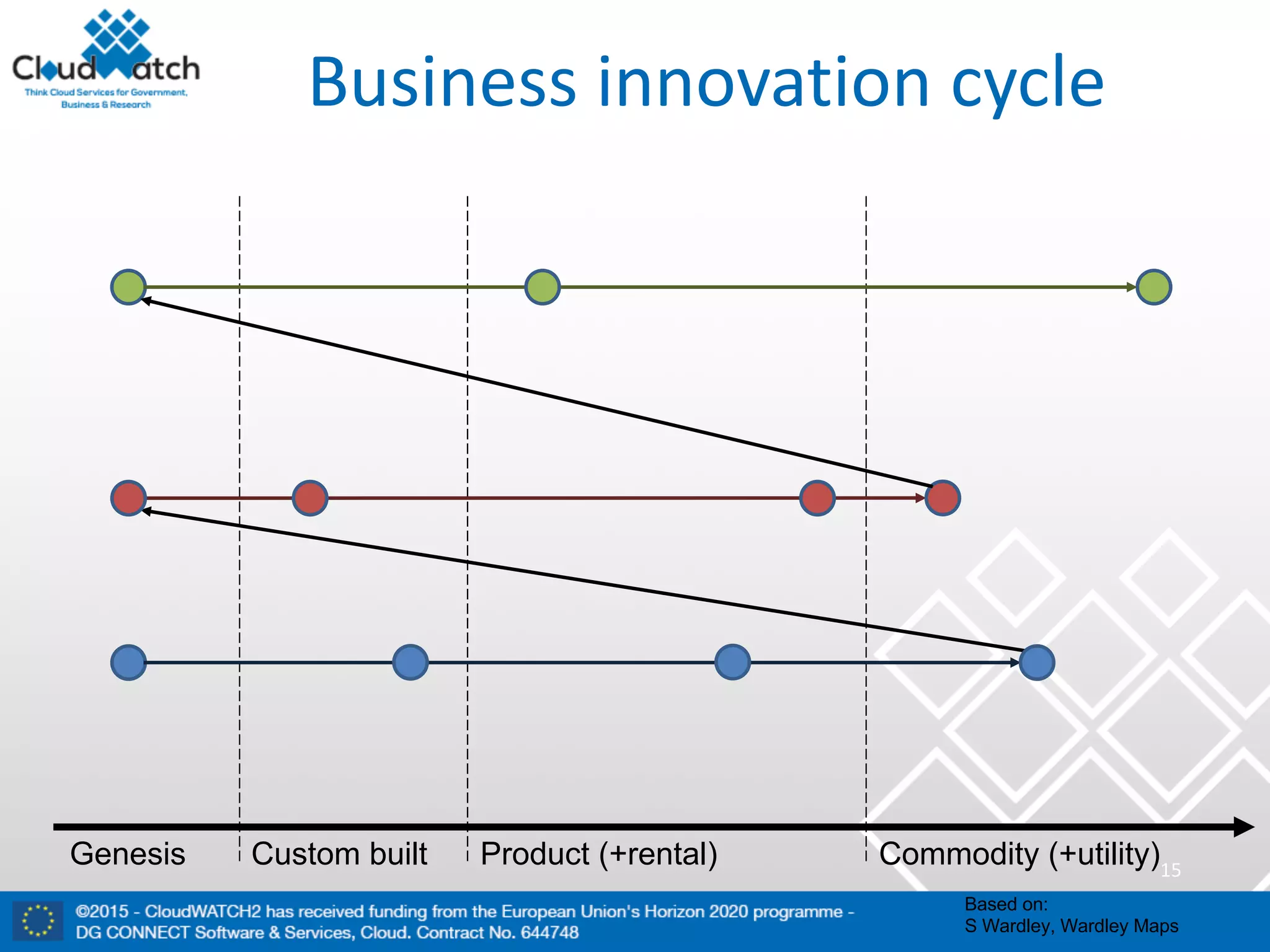
15
Commodity (+utility)Genesis Custom built Product (+rental)
Business	innovation	cycle
Based on:
S Wardley, Wardley Maps
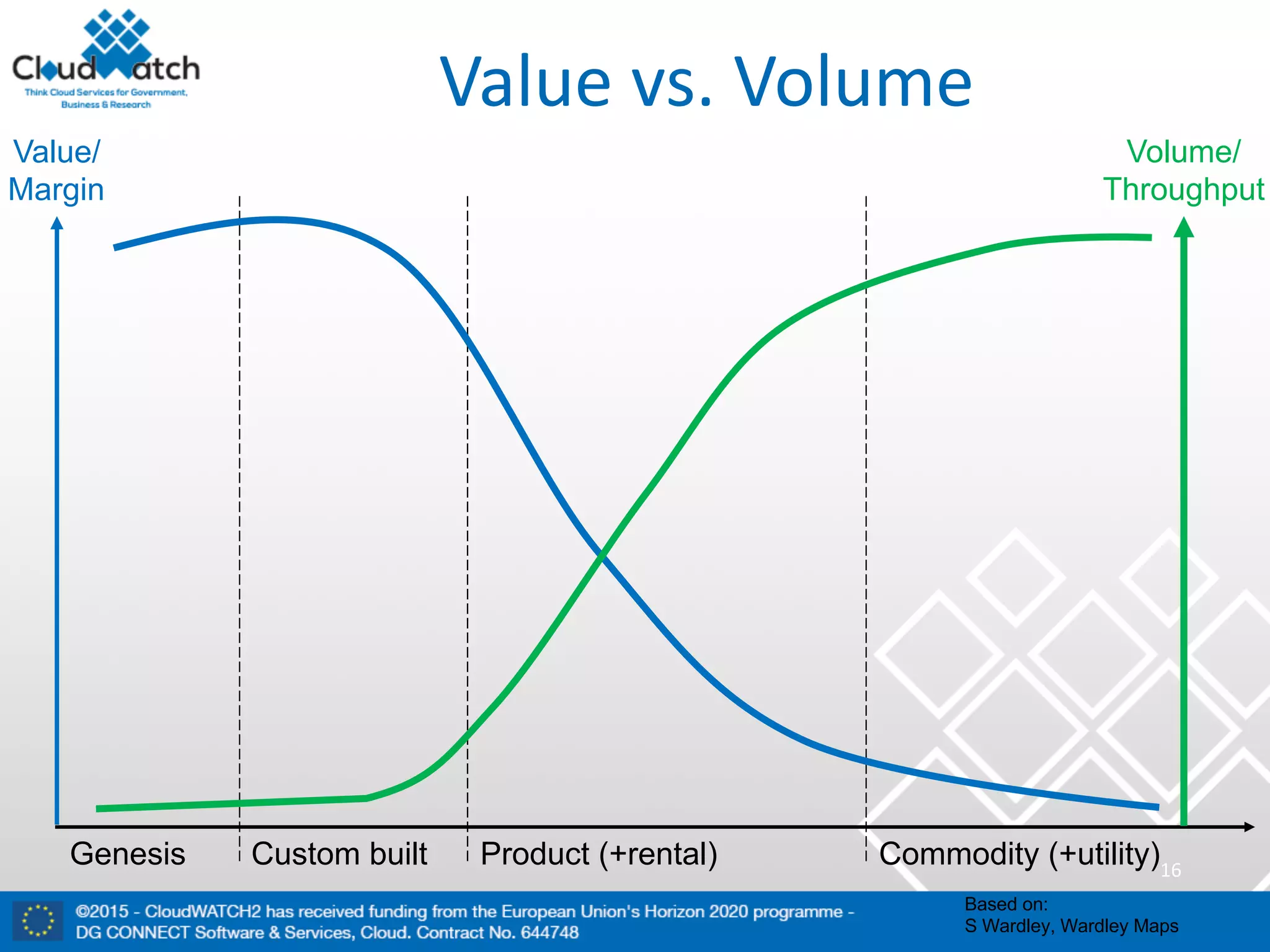
16
Commodity (+utility)Genesis Custom built Product (+rental)
Value	vs.	Volume
Based on:
S Wardley, Wardley Maps
Value/
Margin
Volume/
Throughput
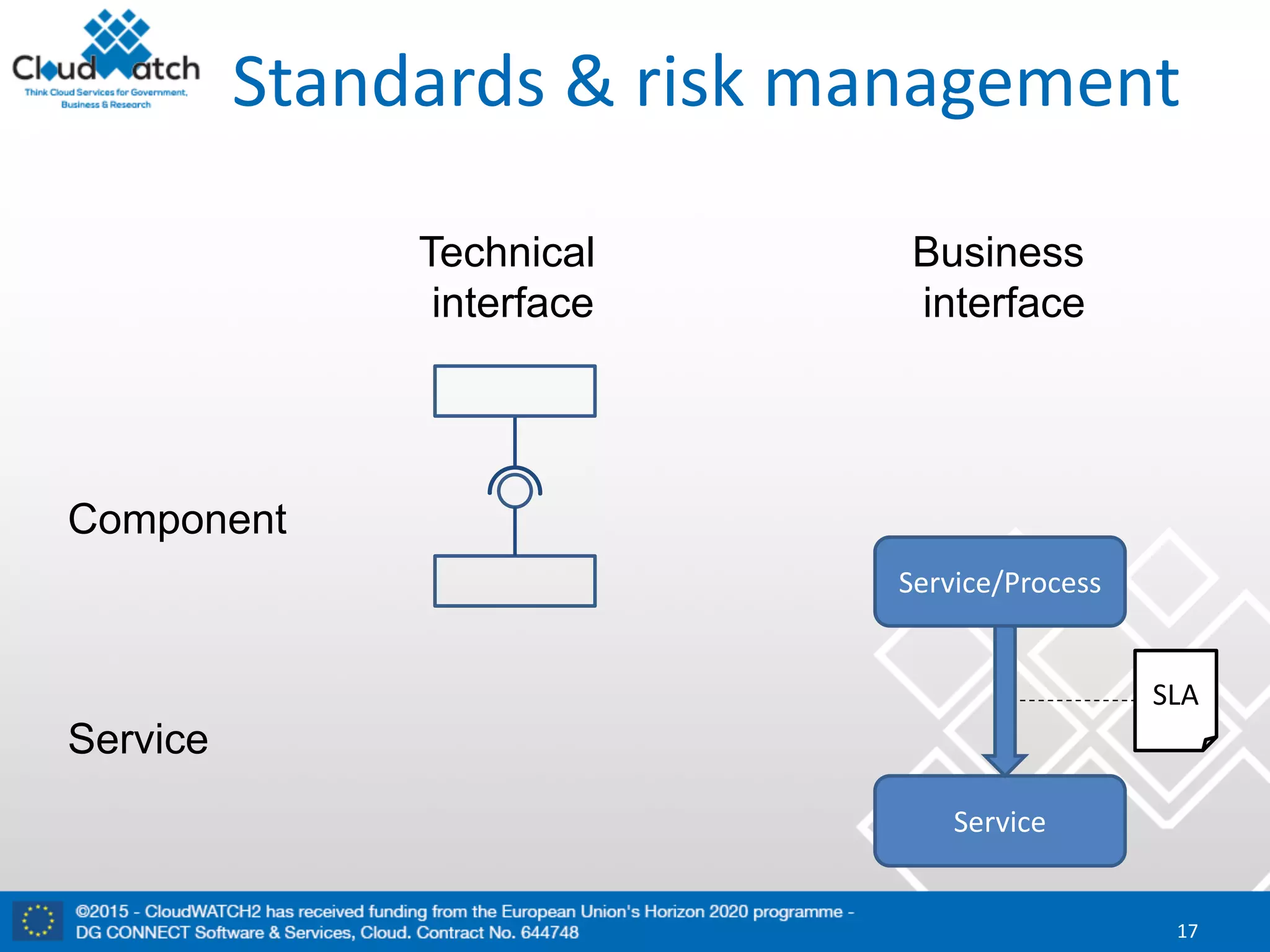
Standards	&	risk	management
17
Technical
interface
Business
interface
Component
Service
Service
Service/Process
SLA
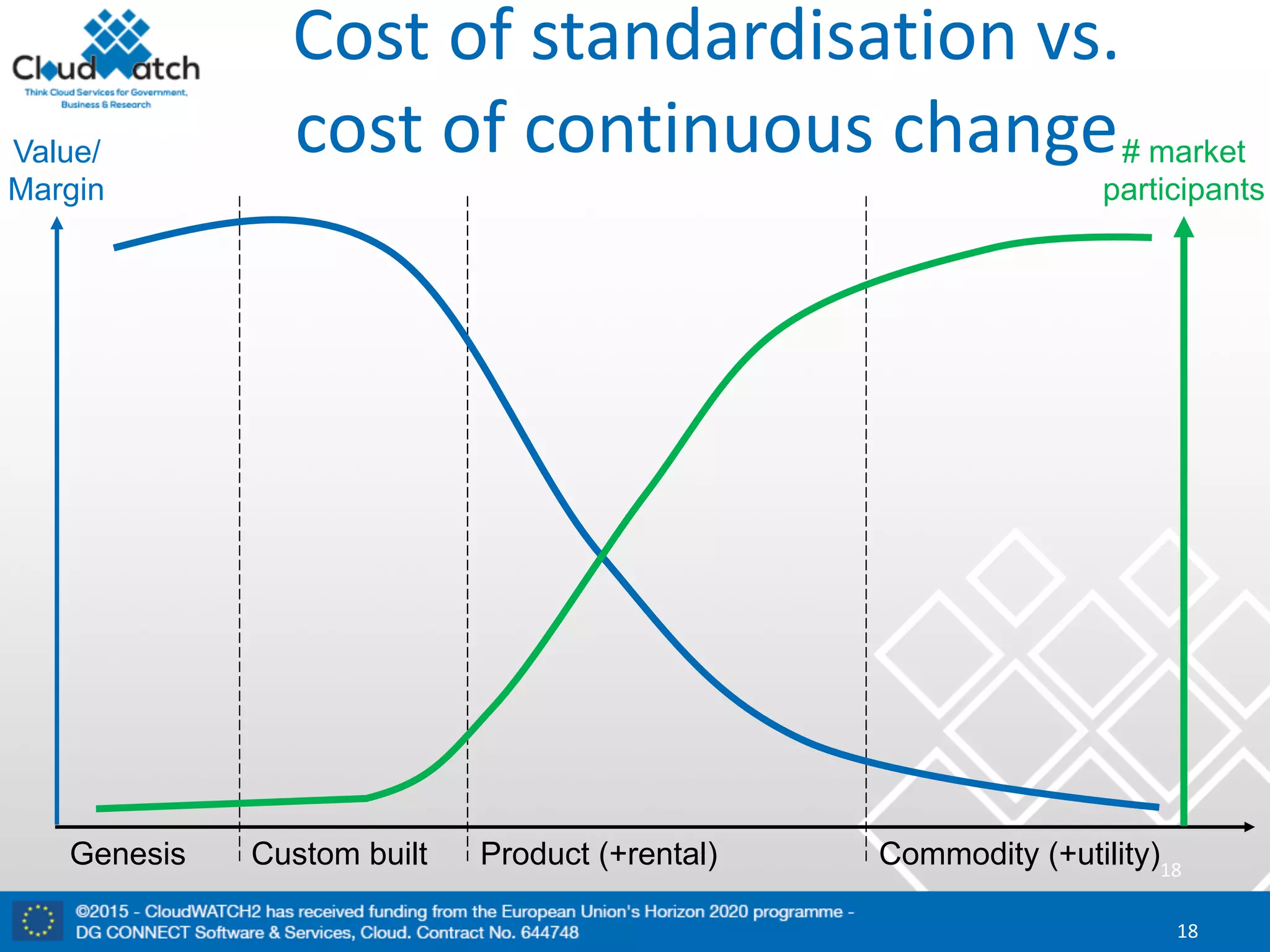
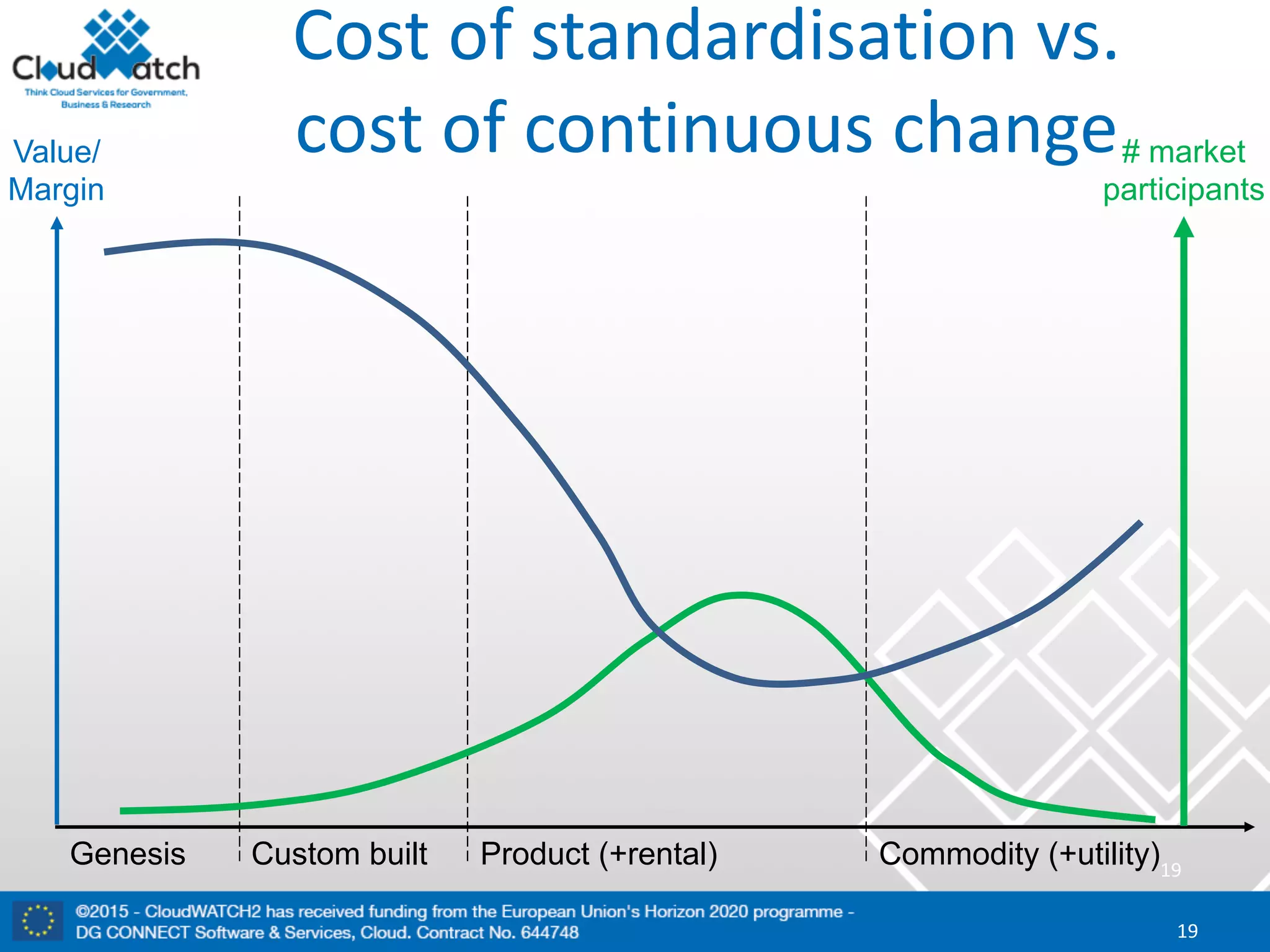
Cost	of standardisation vs.	
cost	of	continuous	change
18
18
Commodity (+utility)Genesis Custom built Product (+rental)
Value/
Margin
# market
participants
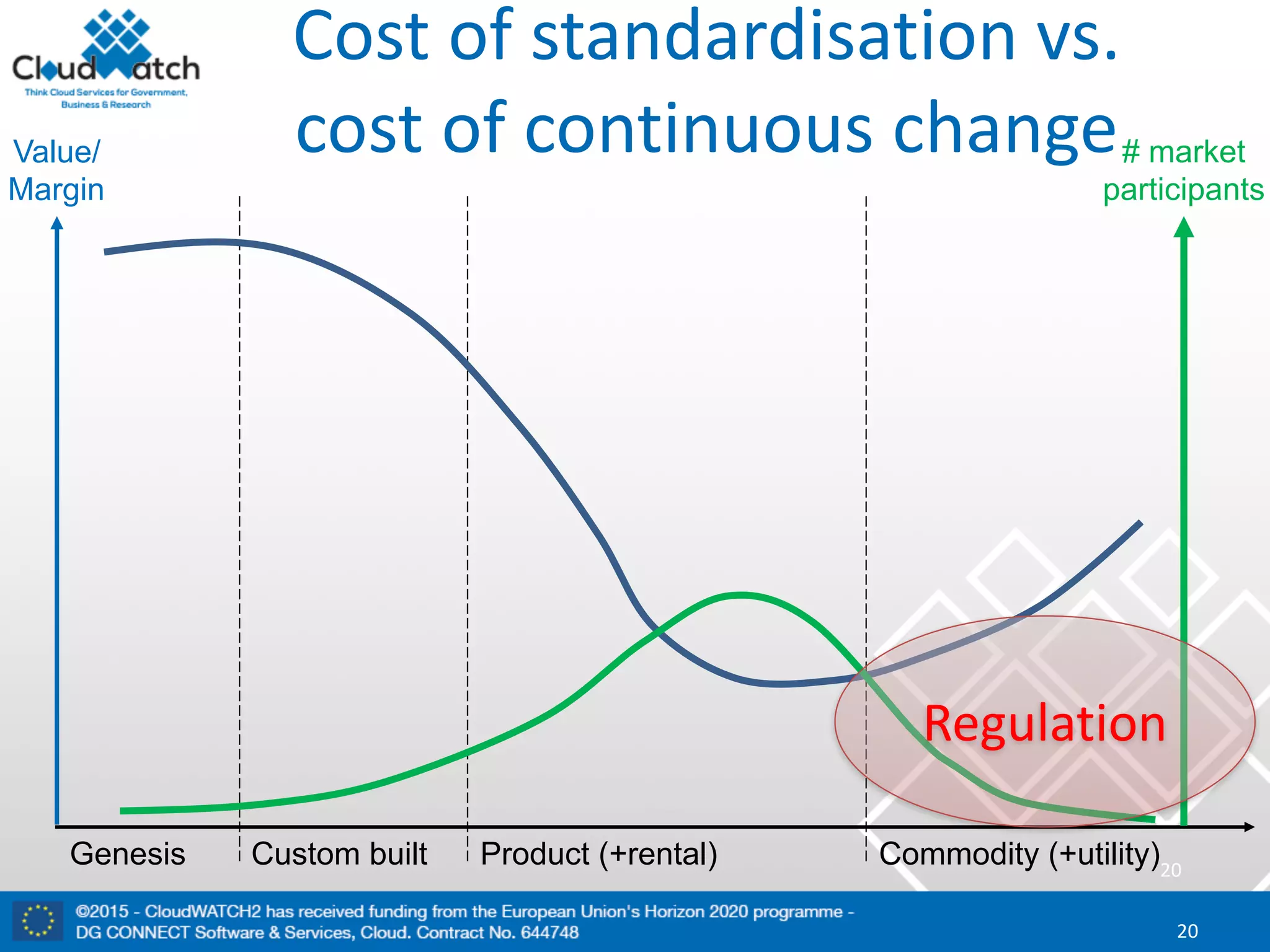
Cost	of standardisation vs.	
cost	of	continuous	change
19
19
Commodity (+utility)Genesis Custom built Product (+rental)
Value/
Margin
# market
participants
Cost	of standardisation vs.	
cost	of	continuous	change
20
20
Commodity (+utility)Genesis Custom built Product (+rental)
Value/
Margin
# market
participants
Regulation
A	WORLD	AS	SEEN	THROUGH	
STANDARDS
21
You	can’t	hide	…
22
What	if	…
23
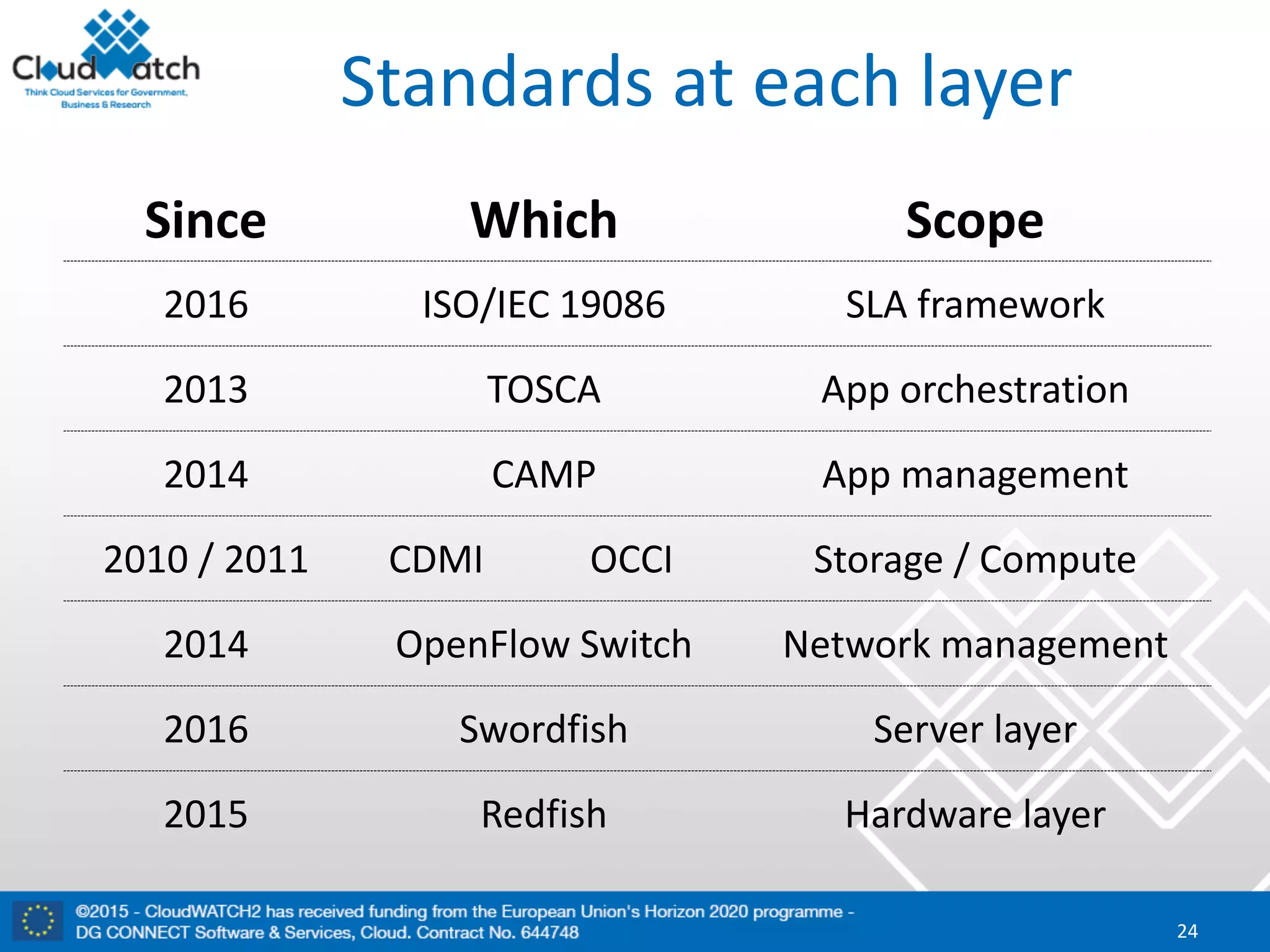
Standards at	each	layer
Since Which Scope
2016 ISO/IEC	19086 SLA	framework
2013 TOSCA App	orchestration
2014 CAMP App	management
2010	/	2011 CDMI OCCI Storage /	Compute
2014 OpenFlow Switch Network	management
2016 Swordfish Server	layer
2015 Redfish Hardware	layer
24
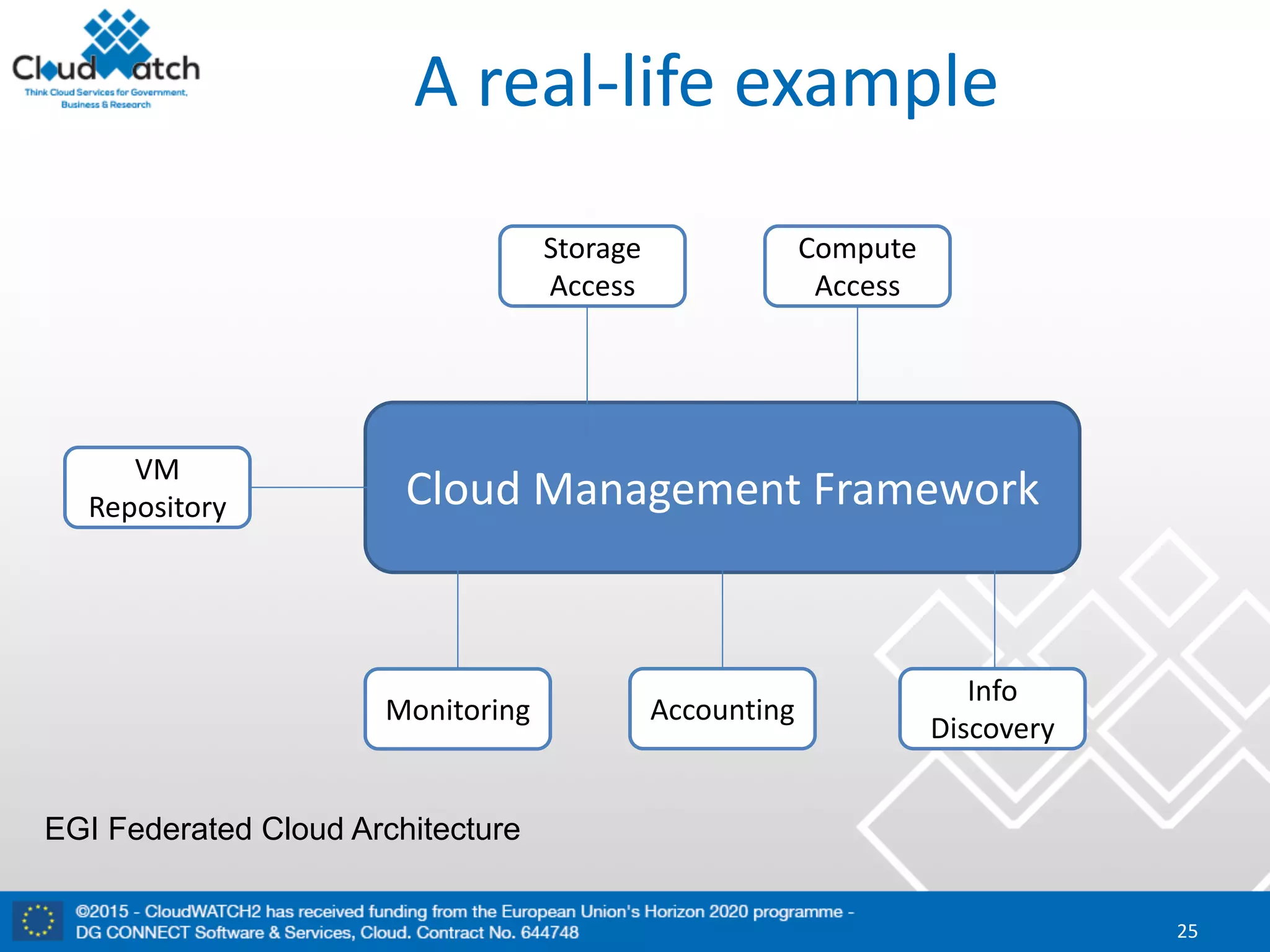
A	real-life	example
25
Cloud	Management	Framework
Storage
Access
Compute	
Access
Monitoring Accounting
Info
Discovery
VM
Repository
EGI Federated Cloud Architecture
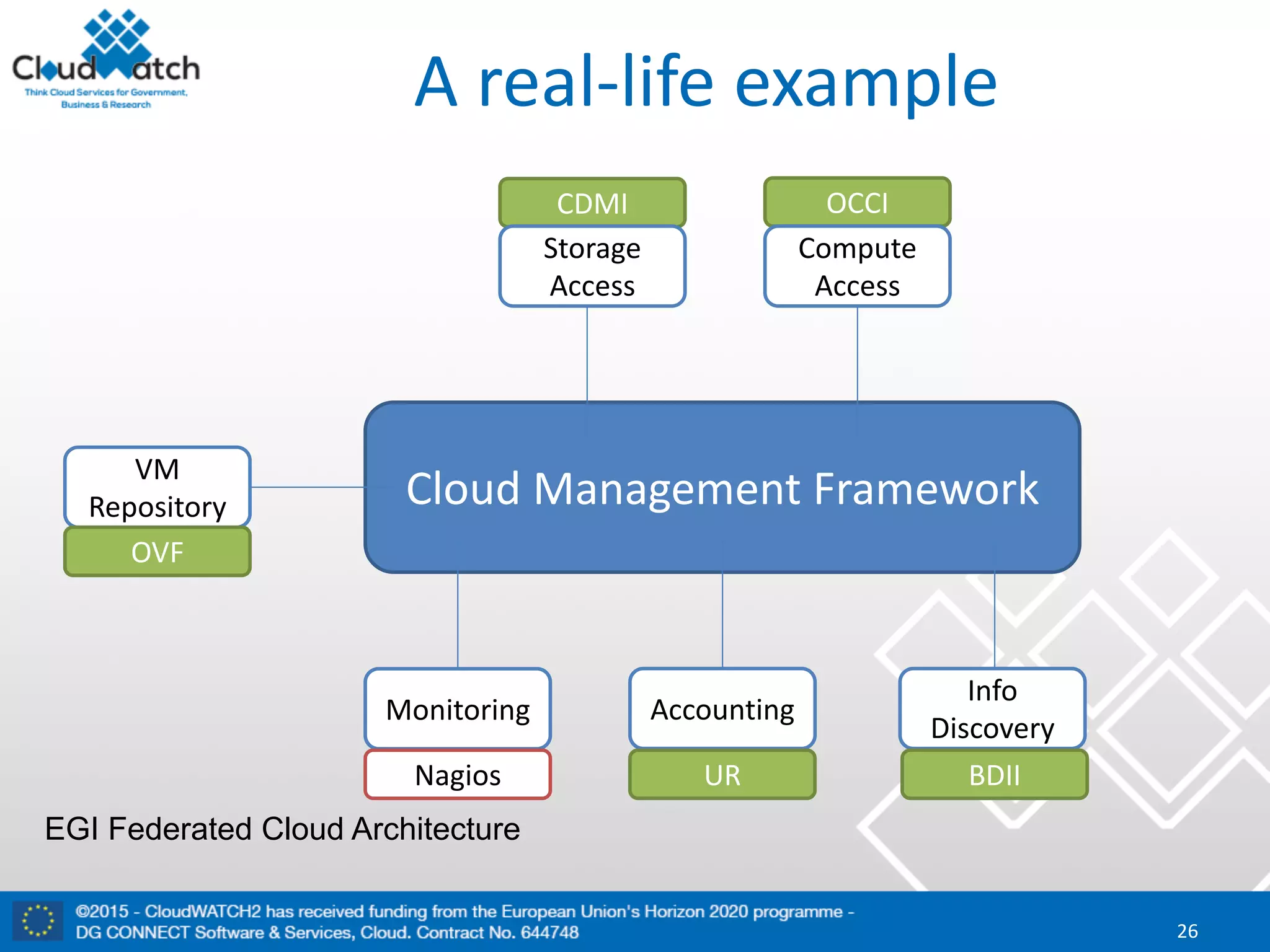
A	real-life	example
26
Cloud	Management	Framework
Monitoring Accounting
Info
Discovery
VM
Repository
EGI Federated Cloud Architecture
CDMI OCCI
Nagios UR BDII
Storage
Access
Compute	
Access
OVF
CONCLUSIONS
27
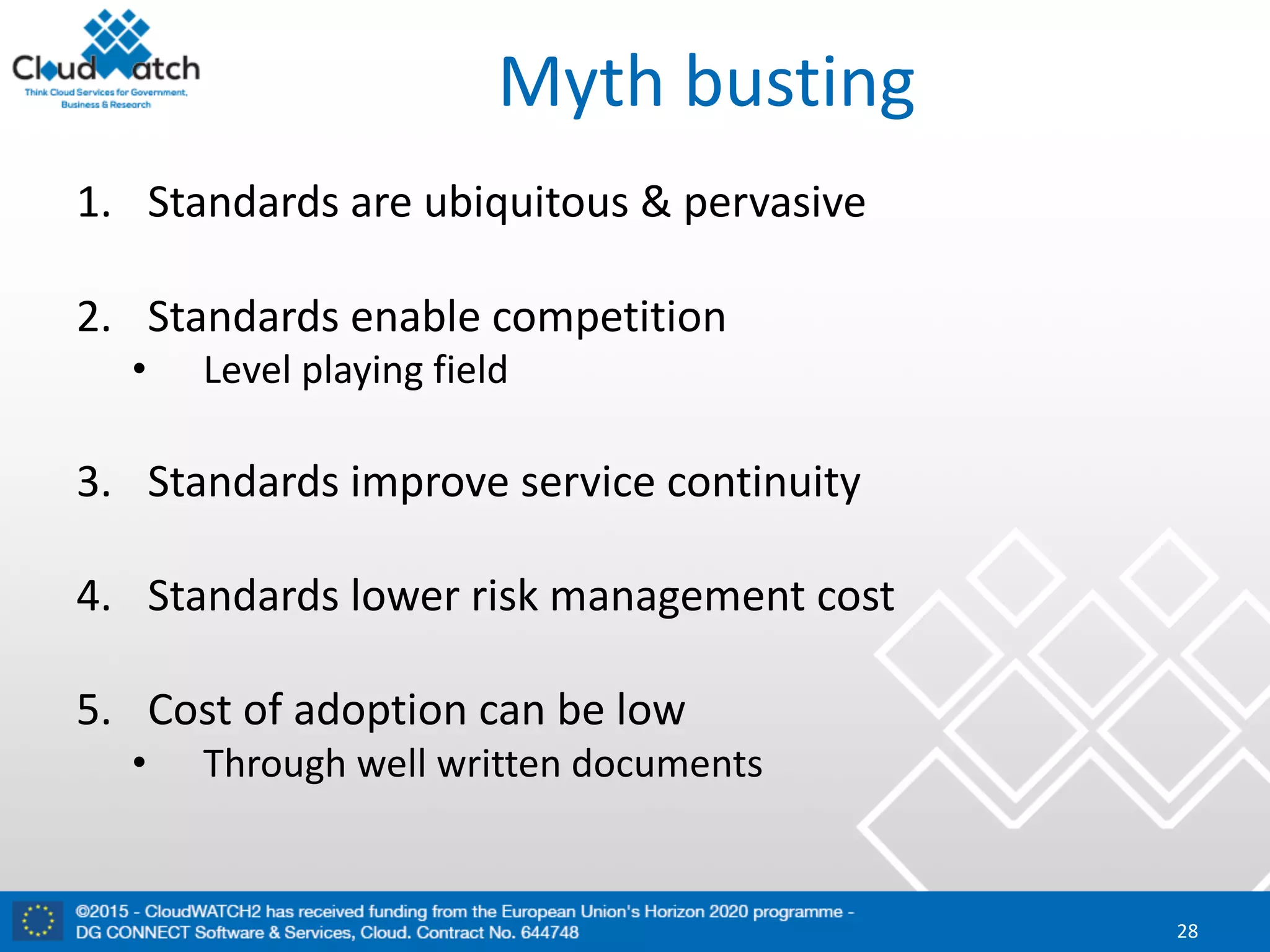
Myth	busting
1. Standards	are	ubiquitous	&	pervasive
2. Standards	enable	competition	
• Level	playing	field
3. Standards	improve	service	continuity
4. Standards	lower	risk	management	cost
5. Cost	of	adoption	can	be	low	
• Through	well	written	documents
28
The	EC	and	the	DSM
Four	Freedoms	
1. Free	movement	of	goods
2. Free	movement	for	workers
3. […]	Freedom	to	provide	services
4. Free	movement	of	capital
…	applied	to	Digital	Single	Market
1. Harmonising of	trading	standards
2. Convergence	on	common	standards
29
30
Panel	introduction
Wolfgang	Ziegler,	SCAI
Cedric	Thomas,	OW2
Arthur	van	der	Wees,	Arthur’s	Legal
Bruno	Chenard,	CEN/CENELEC
31
Dr. Wolfgang	Ziegler
Fraunhofer-Institute	for	Algorithms	and	Scientific	Computing	
(SCAI)
Open	Grid	Forum	(OGF)
32
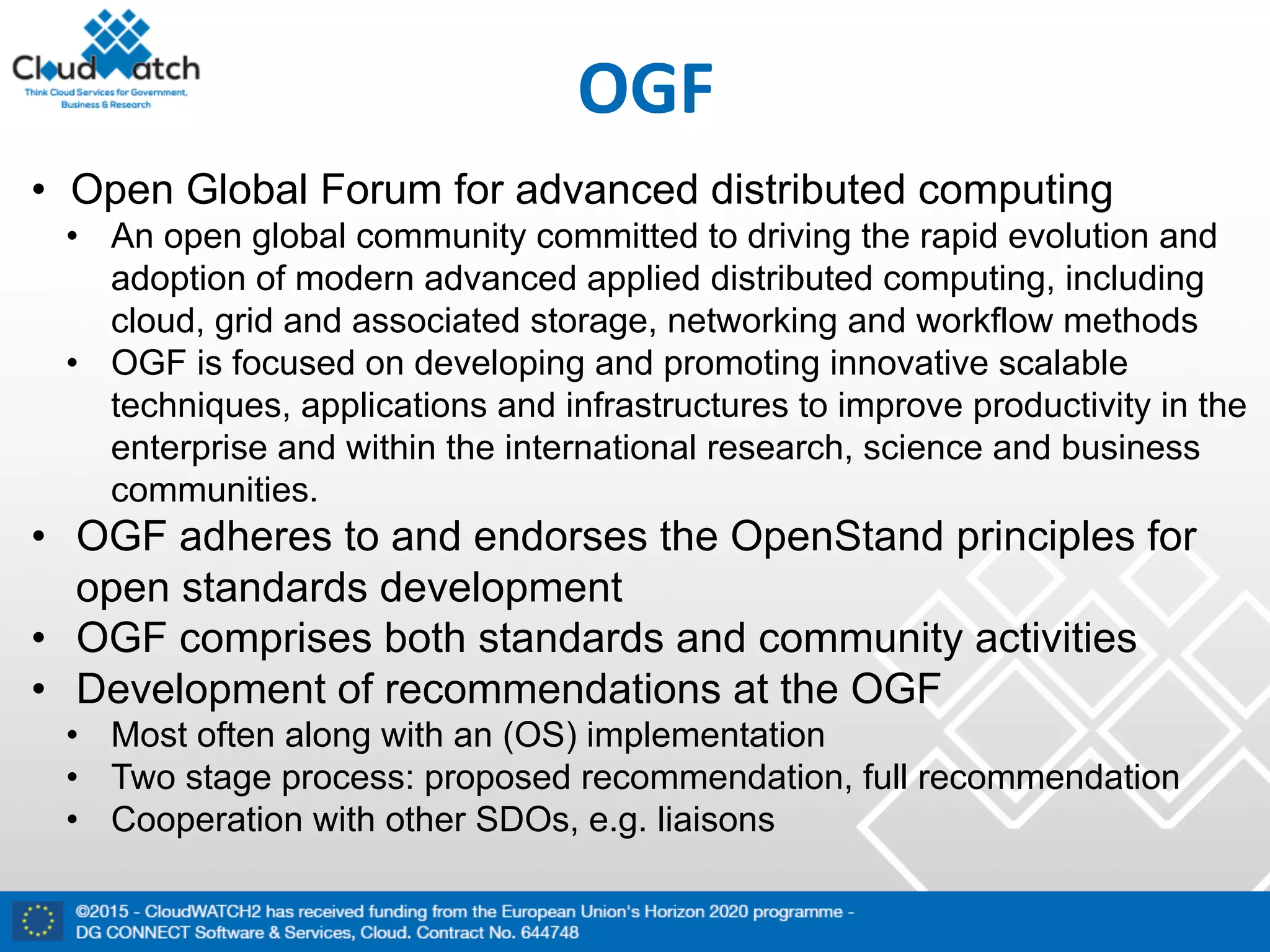
OGF
• Open Global Forum for advanced distributed computing
• An open global community committed to driving the rapid evolution and
adoption of modern advanced applied distributed computing, including
cloud, grid and associated storage, networking and workflow methods
• OGF is focused on developing and promoting innovative scalable
techniques, applications and infrastructures to improve productivity in the
enterprise and within the international research, science and business
communities.
• OGF adheres to and endorses the OpenStand principles for
open standards development
• OGF comprises both standards and community activities
• Development of recommendations at the OGF
• Most often along with an (OS) implementation
• Two stage process: proposed recommendation, full recommendation
• Cooperation with other SDOs, e.g. liaisons
Fraunhofer Institute	SCAI
• SCAI is one of 17 ICT institutes of 66 Fraunhofer Research
institutes
• Staff (2016): 145 including postgraduates and students,
• Budget (2016): € 10,5 m, share of industrial revenues (2016): 60 per cent,
share of total revenues (2016): 77 per cent
• Research foci: simulation, numerics, financial mathematics, intelligent
material design, optimisation, bio-informatics
• Bioinformatics: neurodegenerative diseases, text mining, virtual
screening
• National and European projects, most often in conjunction with
development and application of standards
• Most recent successful proposal: StandICT
• Supporting European Experts Presence in International Standardisation Activities in
ICT in the areas of Cloud, IoT, Big Data, Cyber Security, 5G
• Identification of relevant standards under development, contracting of experts for
contributing in SDOs
• First call for experts in January 2018
Cedric	Thomas
CEO,	OW2	Consortium
35
36
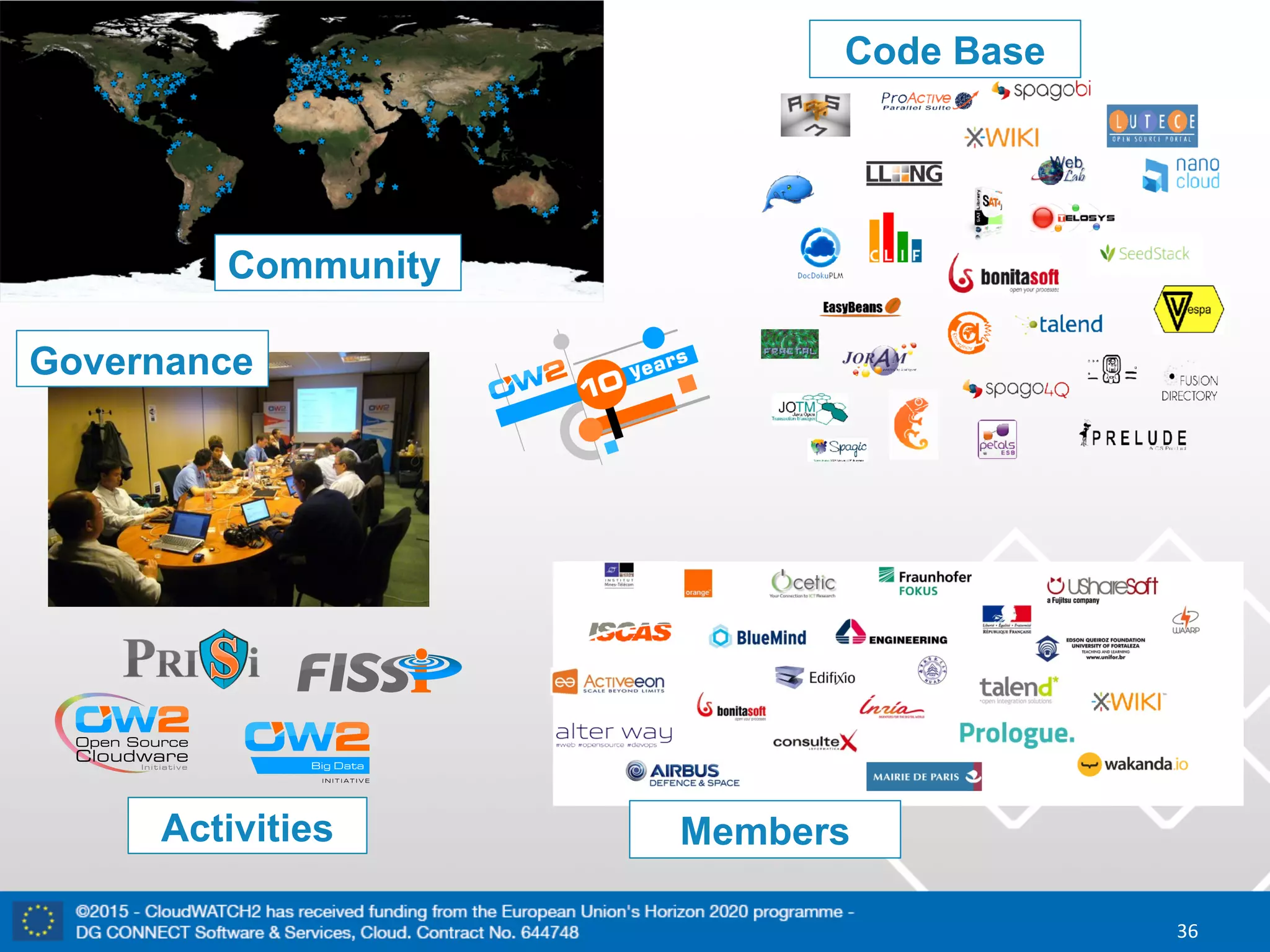
Community
Governance
Activities Members
Code Base
37
Arthur	van	der	Wees,	LLM
Managing	Director	Arthur’s	Legal,	the	Global	Tech	and	Strategic	
x-by-Design	Law	Firm
Founding	Member,	Alliance	for	IoT Innovation	(AIOTI)
38
All rights reserved, Arthur’s Legal
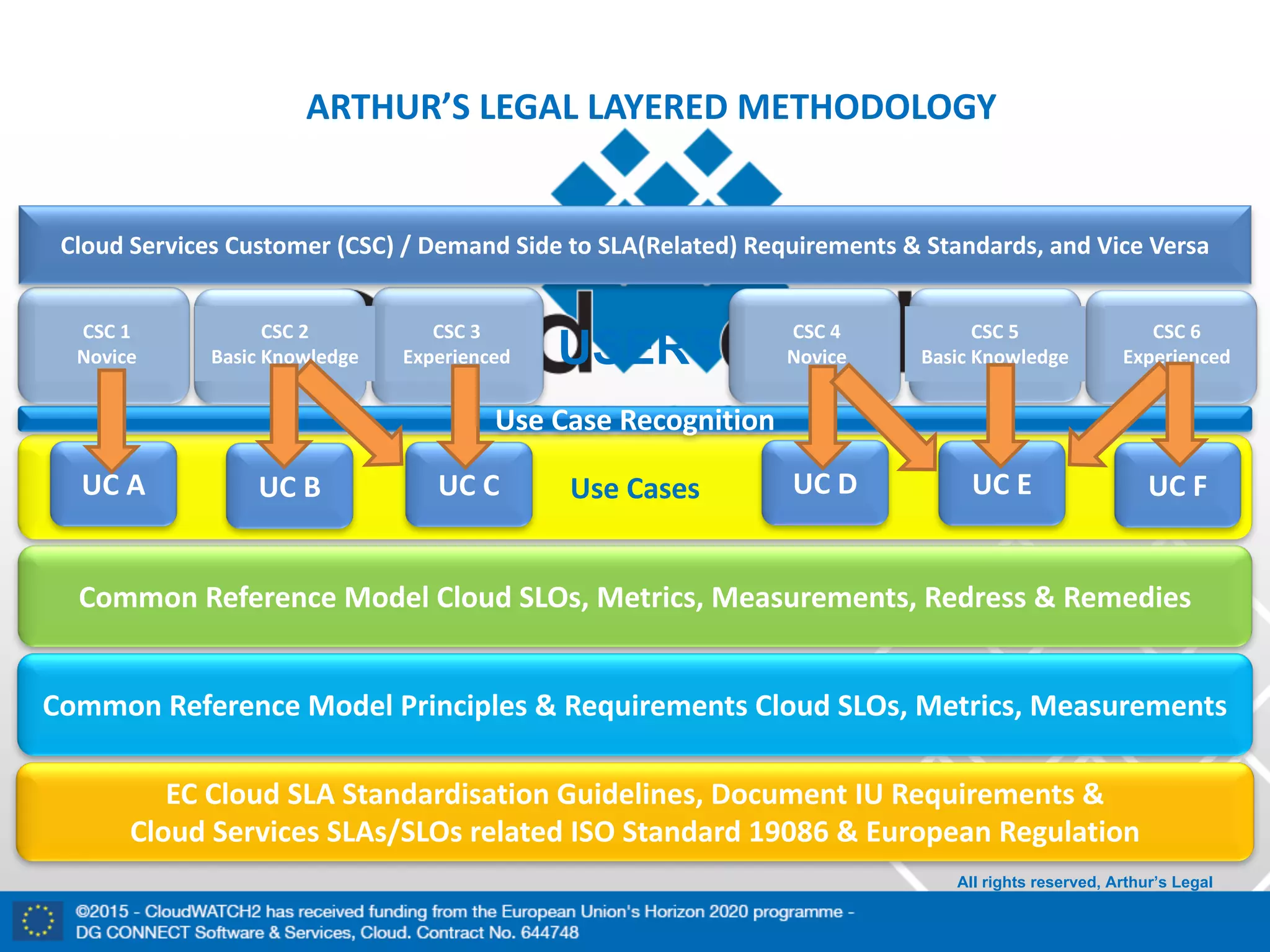
Use	Cases
Common	Reference	Model	Principles	&	Requirements	Cloud	SLOs,	Metrics,	Measurements
Cloud	Services	Customer	(CSC)	/	Demand	Side	to	SLA(Related)	Requirements	&	Standards,	and	Vice	Versa
Common	Reference	Model	Cloud	SLOs,	Metrics,	Measurements,	Redress	&	Remedies
CSC	5
Basic	Knowledge
EC	Cloud	SLA	Standardisation	Guidelines,	Document	IU	Requirements &	
Cloud	Services	SLAs/SLOs related ISO	Standard	19086	&	European	Regulation
CSC	1	
Novice
CSC	2	
Basic	Knowledge
CSC	3
Experienced
CSC	6
Experienced
Use	Case	Recognition
UC	A UC	B UC	C UC	D UC	E UC	F
USERS
All rights reserved, Arthur’s Legal
CSC	4	
Novice
ARTHUR’S	LEGAL	LAYERED	METHODOLOGY
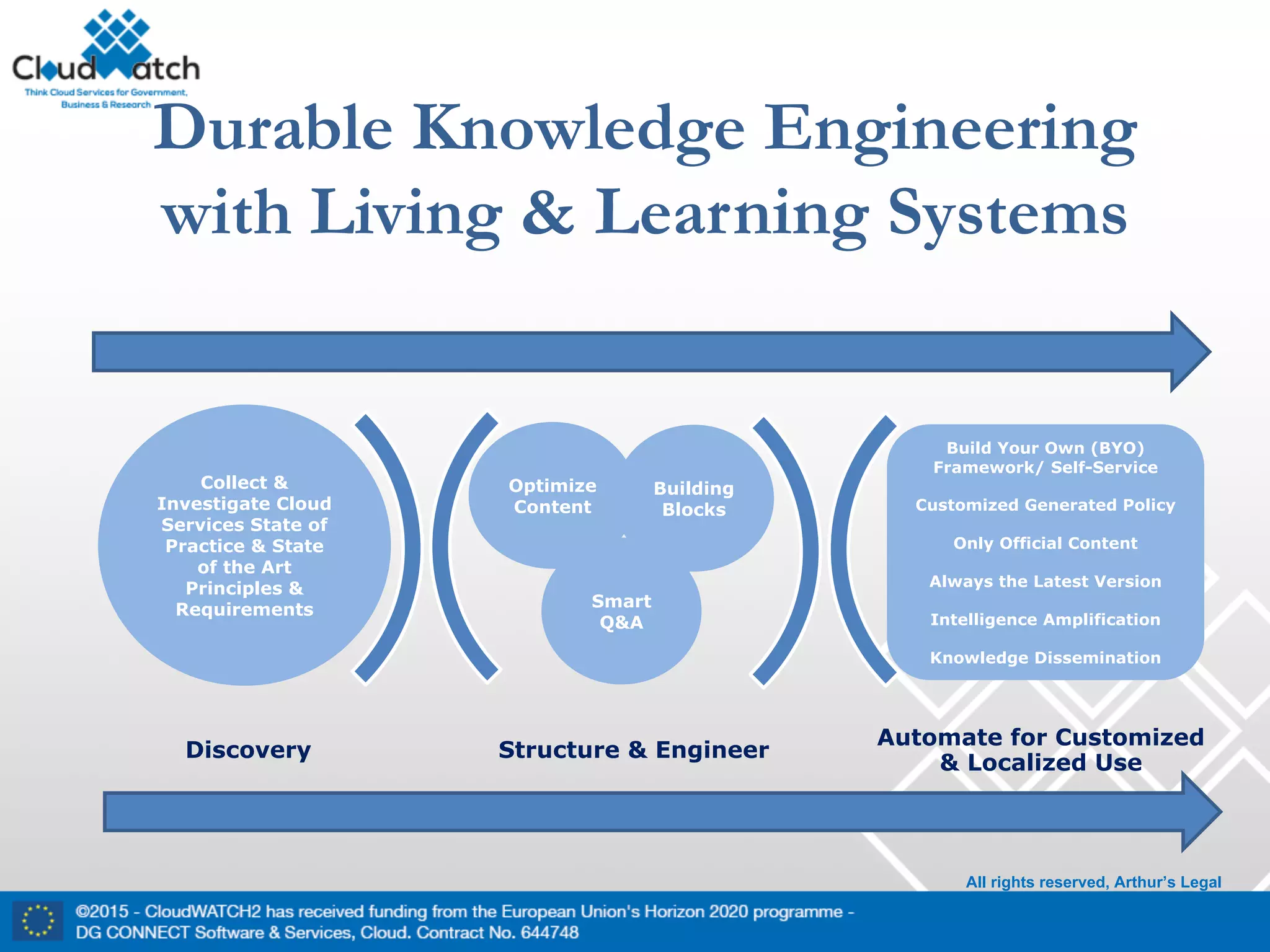
Structure & Engineer
Automate for Customized
& Localized Use
Discovery
Durable Knowledge Engineering
with Living & Learning Systems
Build Your Own (BYO)
Framework/ Self-Service
Customized Generated Policy
Only Official Content
Always the Latest Version
Intelligence Amplification
Knowledge Dissemination
Collect &
Investigate Cloud
Services State of
Practice & State
of the Art
Principles &
Requirements
Optimize
Content
Building
Blocks
Smart
Q&A
All rights reserved, Arthur’s Legal
Bruno	Chenard
CEN	- European	Committee	for	Standardization
CENELEC	- European	Committee	for	Electrotechnical
Standardization
42
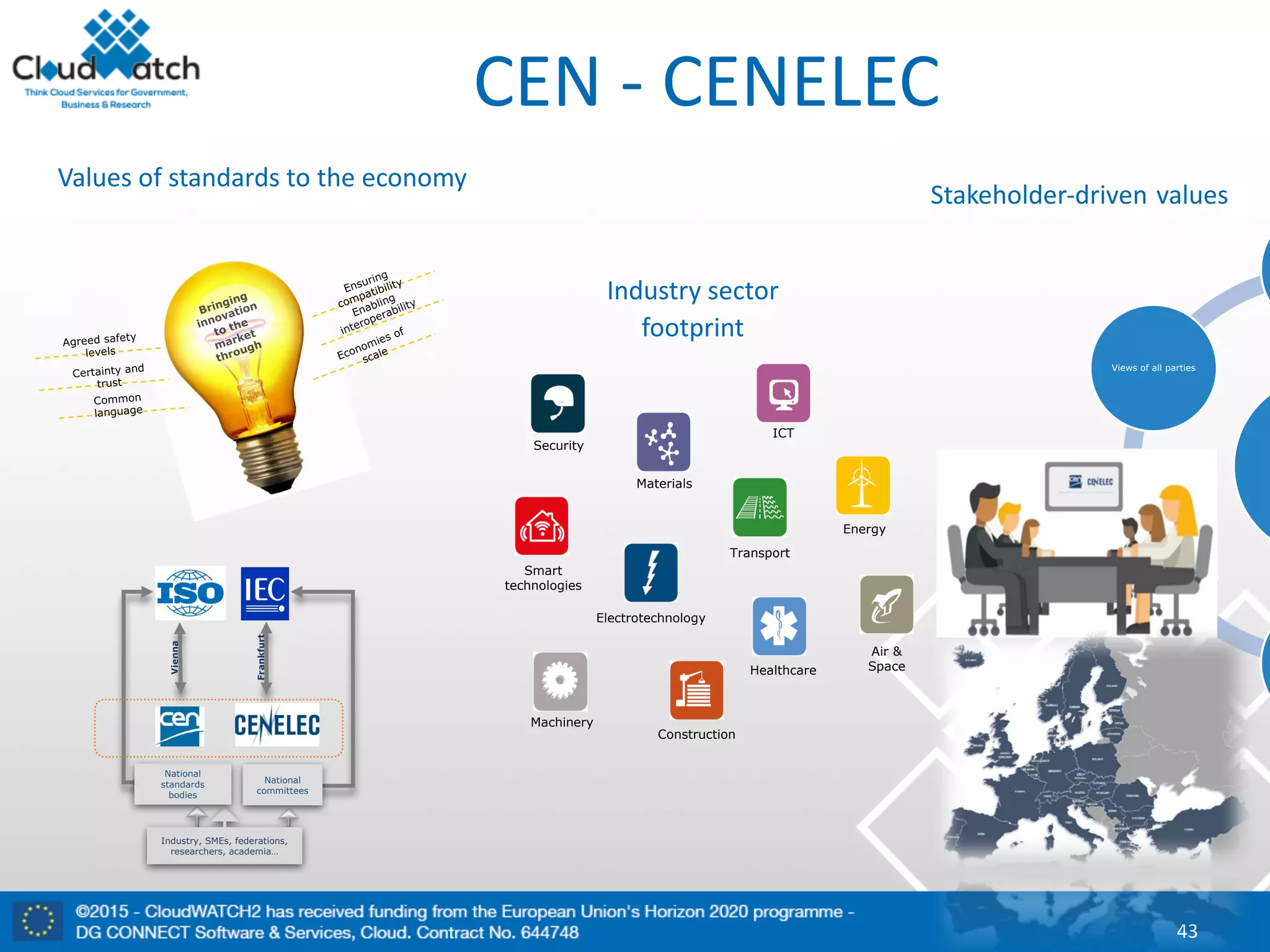
CEN	- CENELEC
43
Conciliation of conflicting
arguments
Views of all parties
Values	of	standards	to	the	economy
Stakeholder-driven values
Industry	sector	
footprint
Security
Materials
Smart
technologies
Energy
Transport
Electrotechnology
ICT
Healthcare
Construction
Air &
Space
Machinery
Vienna
Frankfurt
Industry, SMEs, federations,
researchers, academia…
National
standards
bodies
National
committees
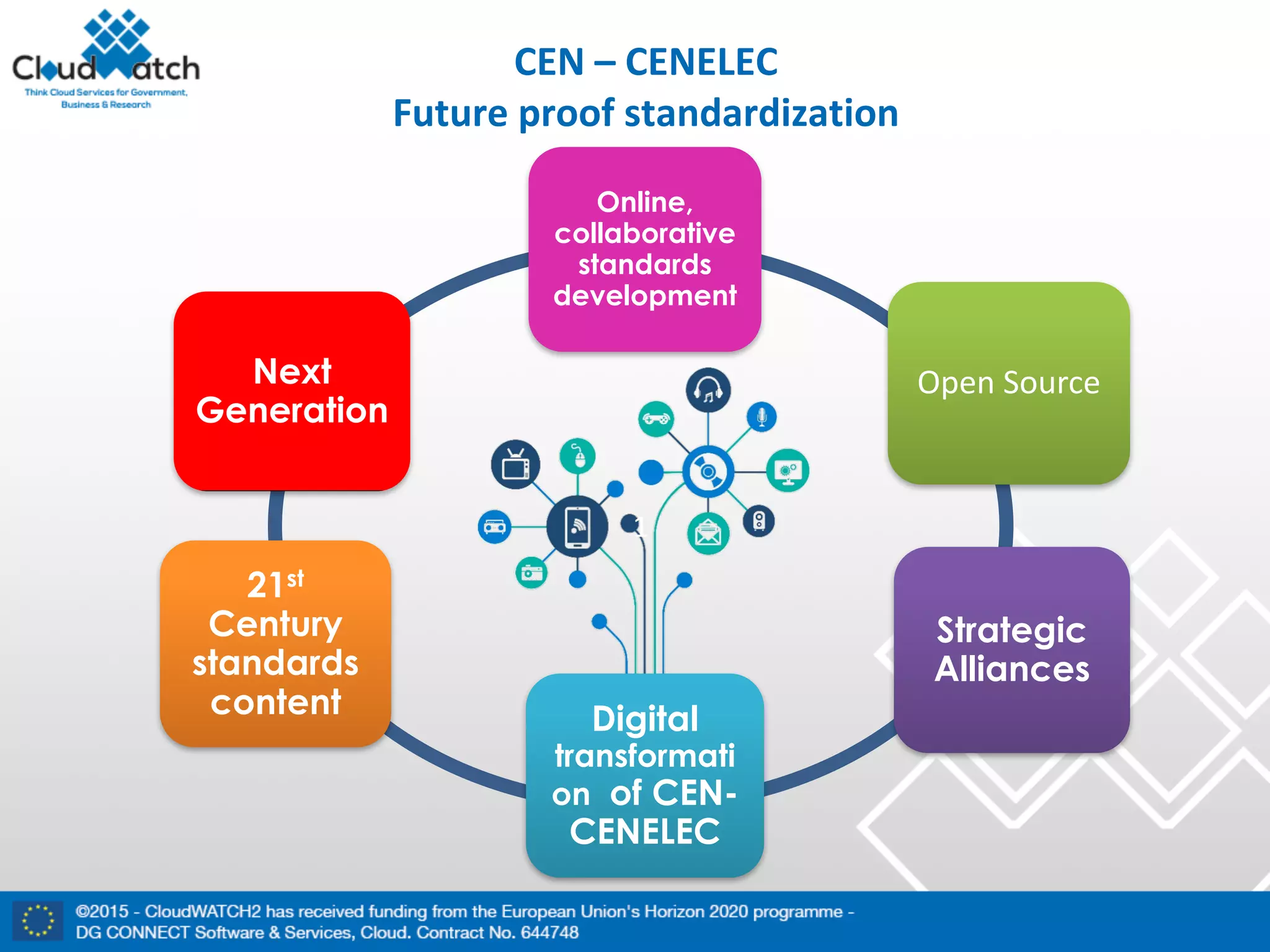
CEN	– CENELEC
Future	proof	standardization
1
Online,
collaborative
standards
development
Open	Source
Strategic
Alliances
Digital
transformati
on of CEN-
CENELEC
21st
Century
standards
content
Next
Generation
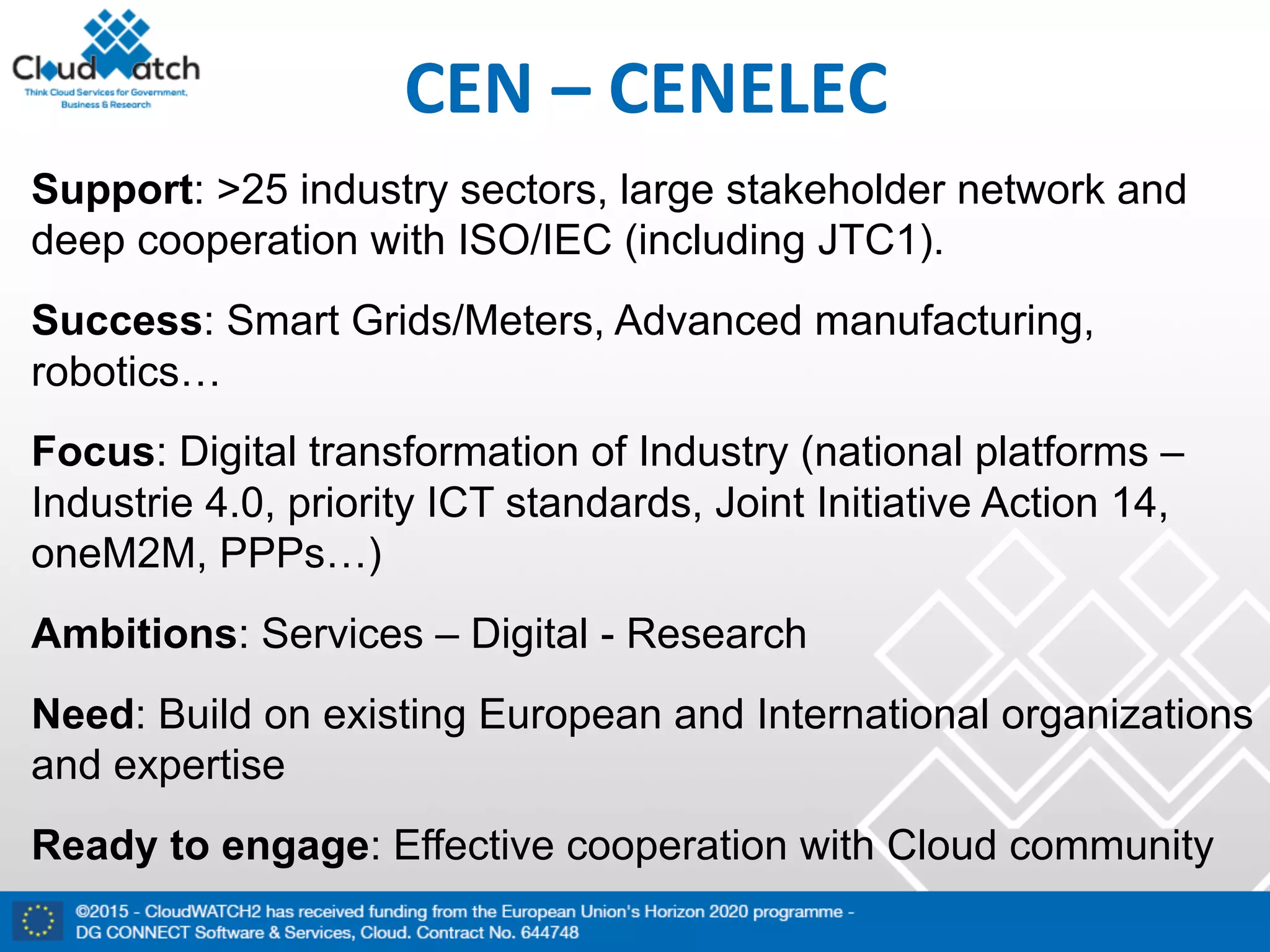
CEN	– CENELEC
Support: >25 industry sectors, large stakeholder network and
deep cooperation with ISO/IEC (including JTC1).
Success: Smart Grids/Meters, Advanced manufacturing,
robotics…
Focus: Digital transformation of Industry (national platforms –
Industrie 4.0, priority ICT standards, Joint Initiative Action 14,
oneM2M, PPPs…)
Ambitions: Services – Digital - Research
Need: Build on existing European and International organizations
and expertise
Ready to engage: Effective cooperation with Cloud community
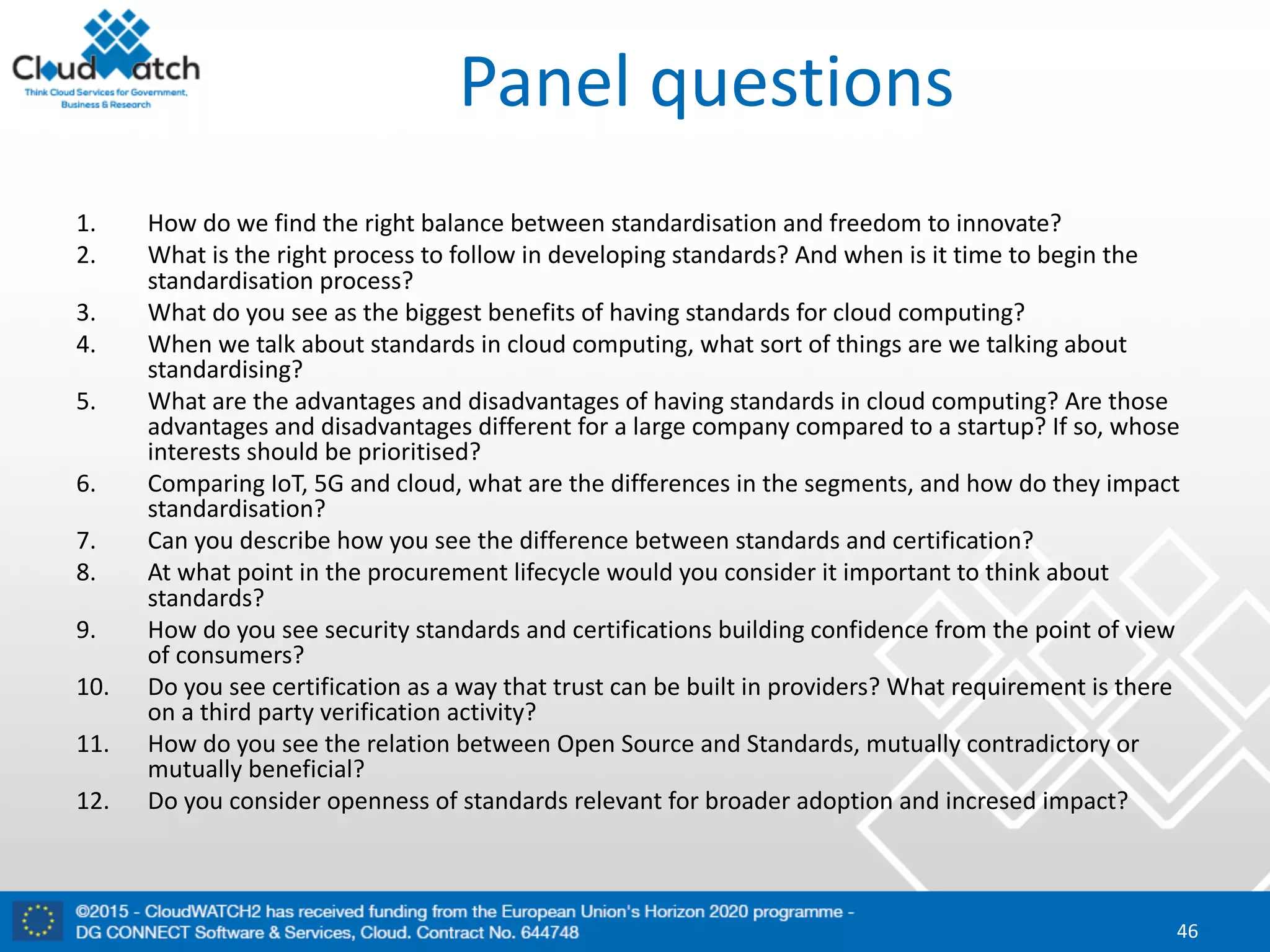
Panel	questions
1. How	do	we	find	the	right	balance	between	standardisation	and	freedom	to	innovate?
2. What	is	the	right	process	to	follow	in	developing	standards?	And	when	is	it	time	to	begin	the	
standardisation	process?
3. What	do	you	see	as	the	biggest	benefits	of	having	standards	for	cloud	computing?
4. When	we	talk	about	standards	in	cloud	computing,	what	sort	of	things	are	we	talking	about	
standardising?
5. What	are	the	advantages	and	disadvantages	of	having	standards	in	cloud	computing?	Are	those	
advantages	and	disadvantages	different	for	a	large	company	compared	to	a	startup?	If	so,	whose	
interests	should	be	prioritised?
6. Comparing	IoT,	5G	and	cloud,	what	are	the	differences	in	the	segments,	and	how	do	they	impact	
standardisation?
7. Can	you	describe	how	you	see	the	difference	between	standards	and	certification?
8. At	what	point	in	the	procurement	lifecycle	would	you	consider	it	important	to	think	about	
standards?
9. How	do	you	see	security	standards	and	certifications	building	confidence	from	the	point	of	view	
of	consumers?
10. Do	you	see	certification	as	a	way	that	trust	can	be	built	in	providers?	What	requirement	is	there	
on	a	third	party	verification	activity?
11. How	do	you	see	the	relation	between	Open	Source	and	Standards,	mutually	contradictory	or	
mutually	beneficial?
12. Do	you	consider	openness	of	standards	relevant	for	broader	adoption	and	incresed impact?
46
Balancing	
standards	&	innovation
How	do	we	find	the	right	balance	
between	standardisation	and	freedom	
to	innovate?
47
Standardisation	process	&	timing
What	is	the	right	process	to	follow	in	
developing	standards?	
And	when	is	it	time	to	begin	the	
standardisation	process?
48
Standards:
SMEs	vs.	Corporates
What	are	the	advantages	and	disadvantages	of	
having	standards	in	cloud	computing?	
Are	those	advantages	and	disadvantages	
different	for	a	large	company	compared	to	a	
startup?	
If	so,	whose	interests	should	be	prioritised?
49
Standards	for	cloud,	IoT,	5G
Comparing	IoT,	5G	and	cloud,	what	are	
the	differences	in	the	segments,	and	
how	do	they	impact	standardisation?
50
Security	standards	&	certification
How	do	you	see	security	standards	and	
certifications	building	confidence	from	the	
point	of	view	of	consumers?
Do	you	see	certification	as	a	way	that	trust	
can	be	built	in	providers?	
What	requirement	is	there	on	a	third	party	
verification	activity?
51
Open	Source	&	(Open)	Standards?
How	do	you	see	the	relation	between	
Open	Source	and	Standards,	mutually	
contradictory	or	mutually	beneficial?
Do	you	consider	openness	of	standards	
relevant	for	broader	adoption	and	
increased	impact?
52
MORE	PANEL	QUESTIONS
53
Benefits	of	cloud	standards
What	do	you	see	as	the	biggest	
benefits	of	having	standards	for	cloud	
computing?
54
Cloud	standards	topics
When	we	talk	about	standards	in	cloud	
computing,	what	sort	of	things	are	we	
talking	about	standardising?
55
Standards	vs.	certification
Can	you	describe	how	you	see	the	
difference	between	standards	and	
certification?
56
Standards	in	procurements
At	what	point	in	the	procurement	
lifecycle	would	you	consider	it	
important	to	think	about	standards?
57

Why standardise? The business case for the adoption of cloud standards