@jezhumble
#gotober | december 4 2015
why scaling agile doesn’t work
(and what to do about it)
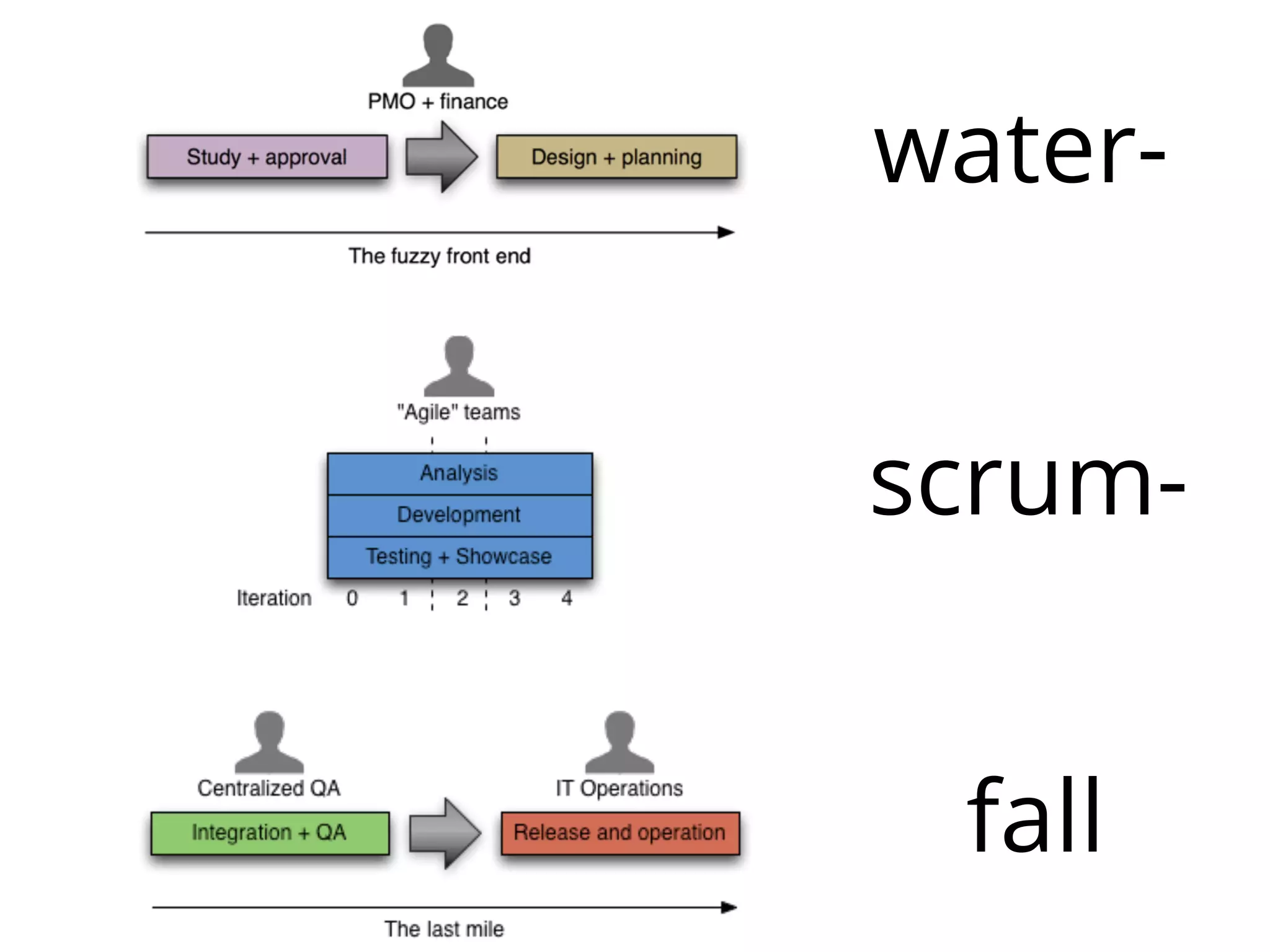
scrum-
fall
water-
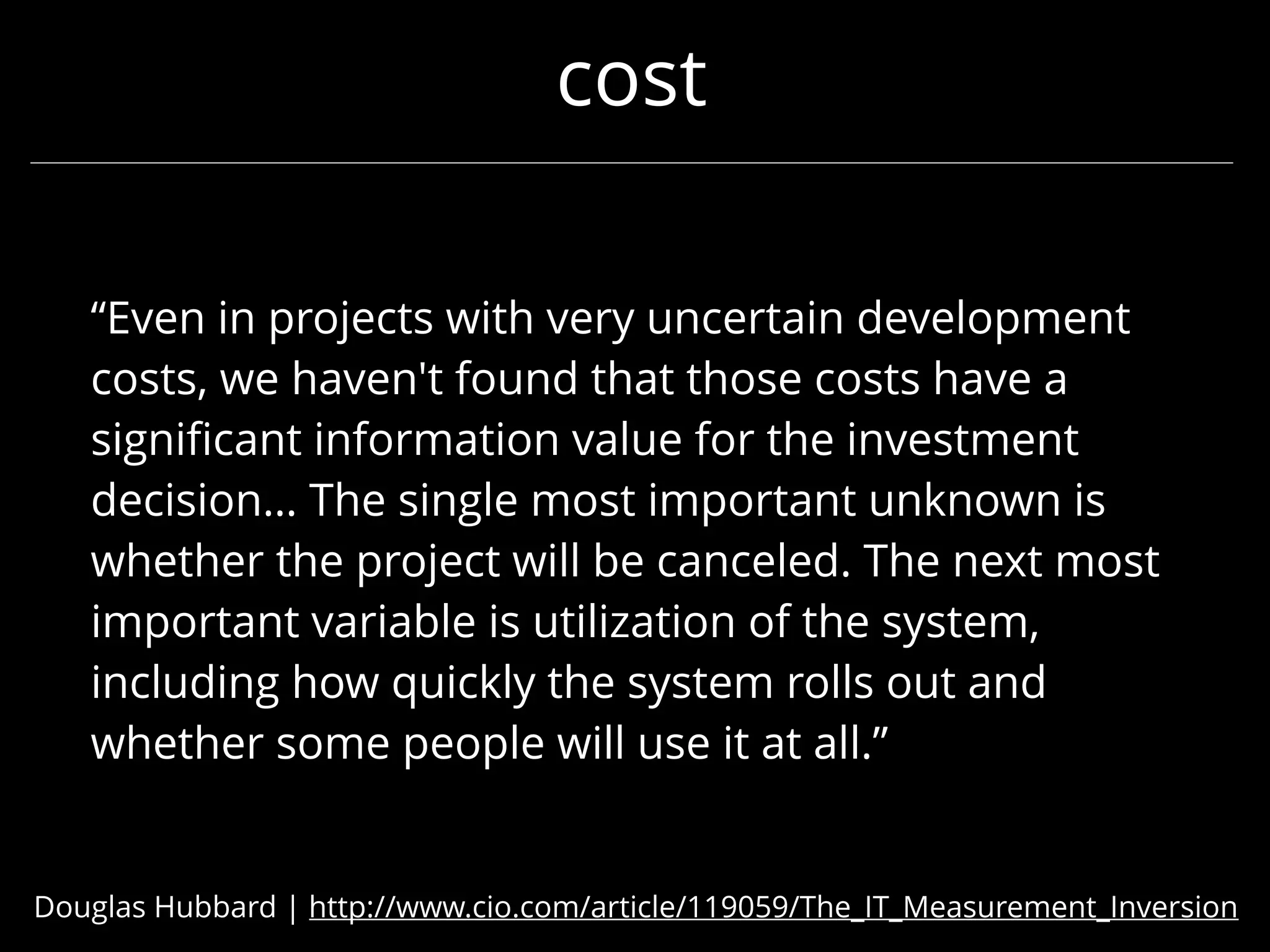
cost
“Even in projects with very uncertain development
costs, we haven't found that those costs have a
significant information value for the investment
decision… The single most important unknown is
whether the project will be canceled. The next most
important variable is utilization of the system,
including how quickly the system rolls out and
whether some people will use it at all.”
Douglas Hubbard | http://www.cio.com/article/119059/The_IT_Measurement_Inversion
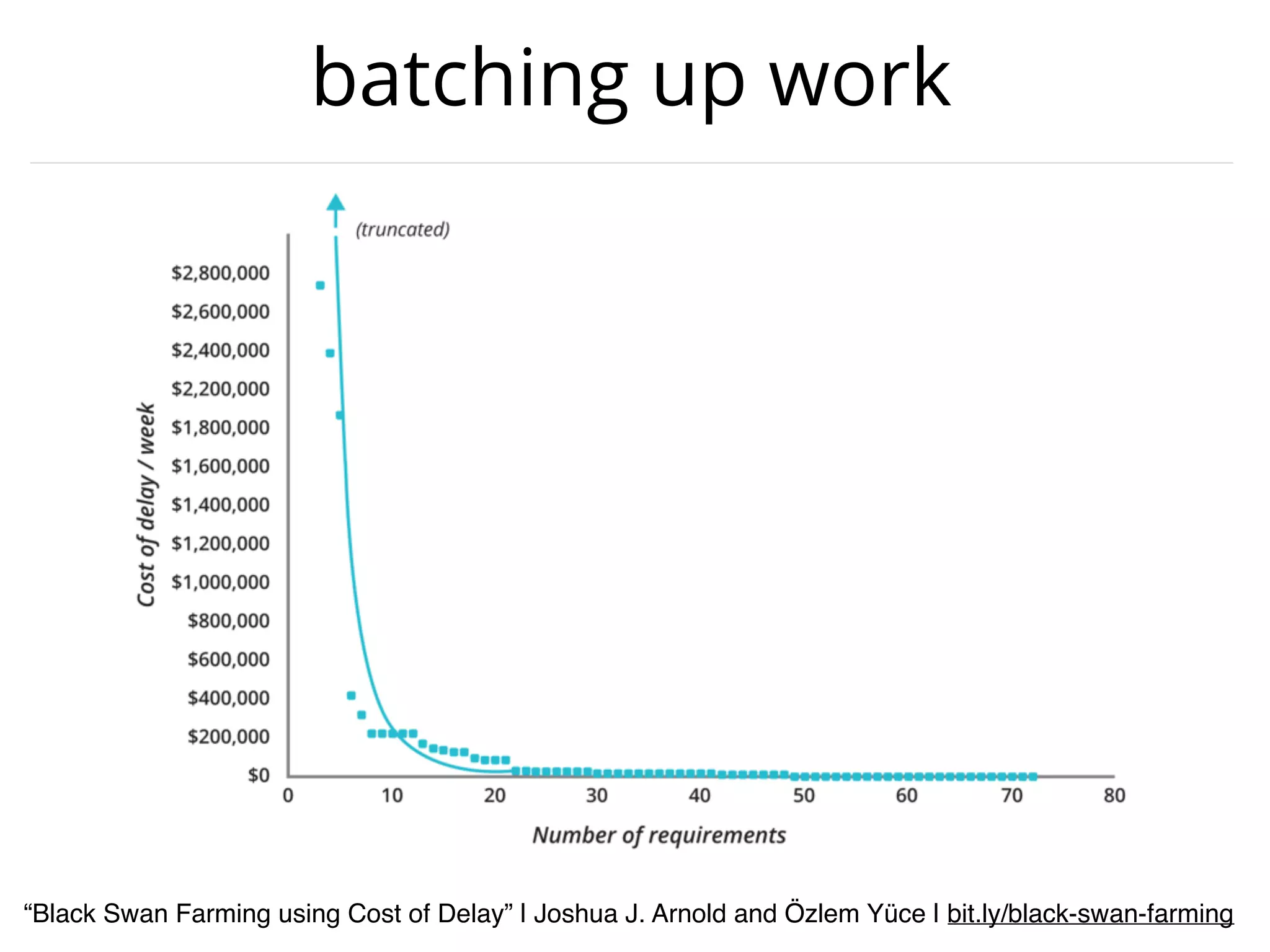
batching up work
“Black Swan Farming using Cost of Delay” | Joshua J. Arnold and Özlem Yüce | bit.ly/black-swan-farming
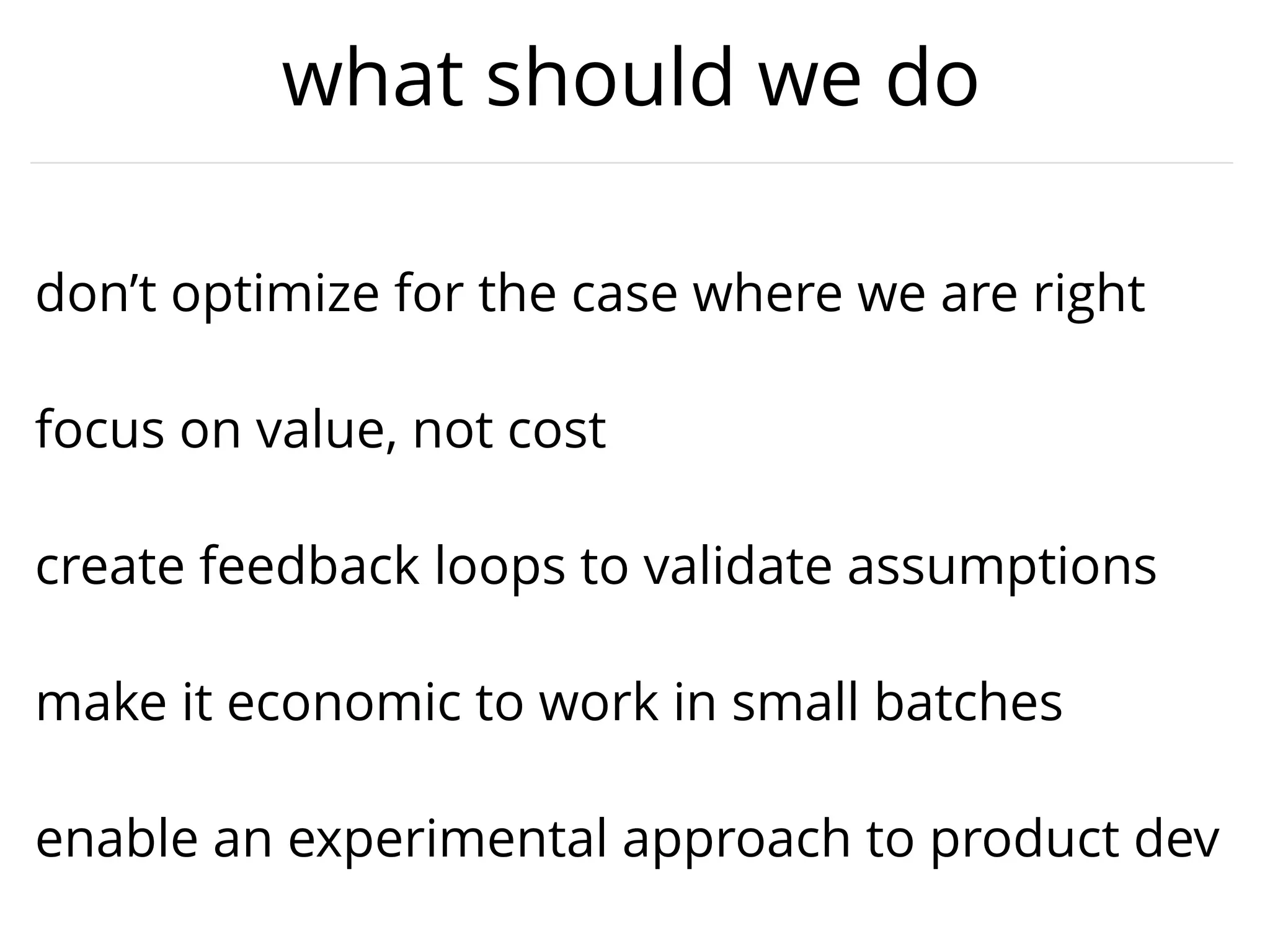
create feedback loops to validate assumptions
don’t optimize for the case where we are right
focus on value, not cost
enable an experimental approach to product dev
make it economic to work in small batches
what should we do
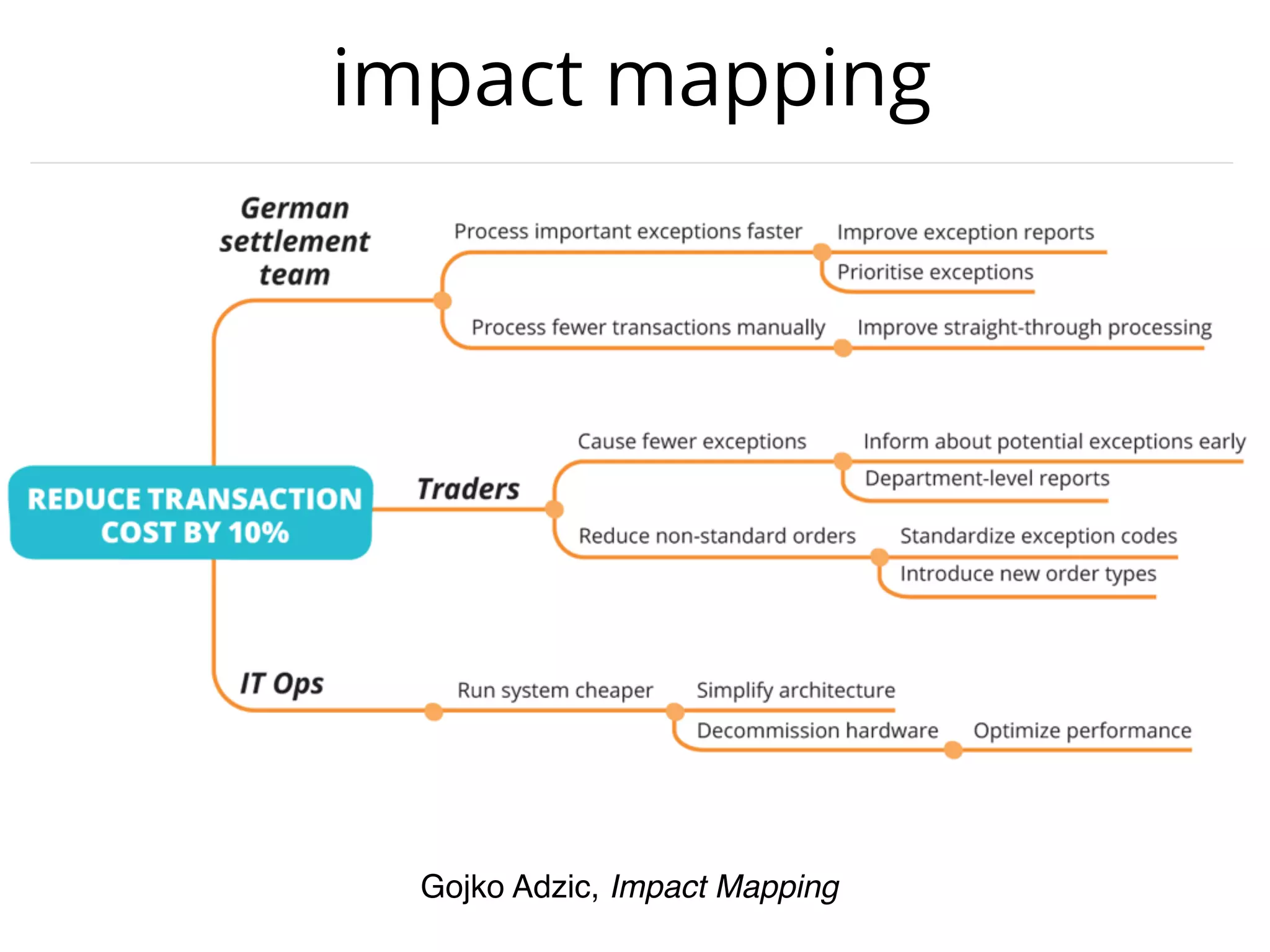
impact mapping
Gojko Adzic, Impact Mapping
@jezhumbleJeff Gothelf “Better product definition with Lean UX and Design” http://bit.ly/TylT6A
hypothesis-driven delivery
We believe that
[building this feature]
[for these people]
will achieve [this outcome].
We will know we are successful when we see
[this signal from the market].
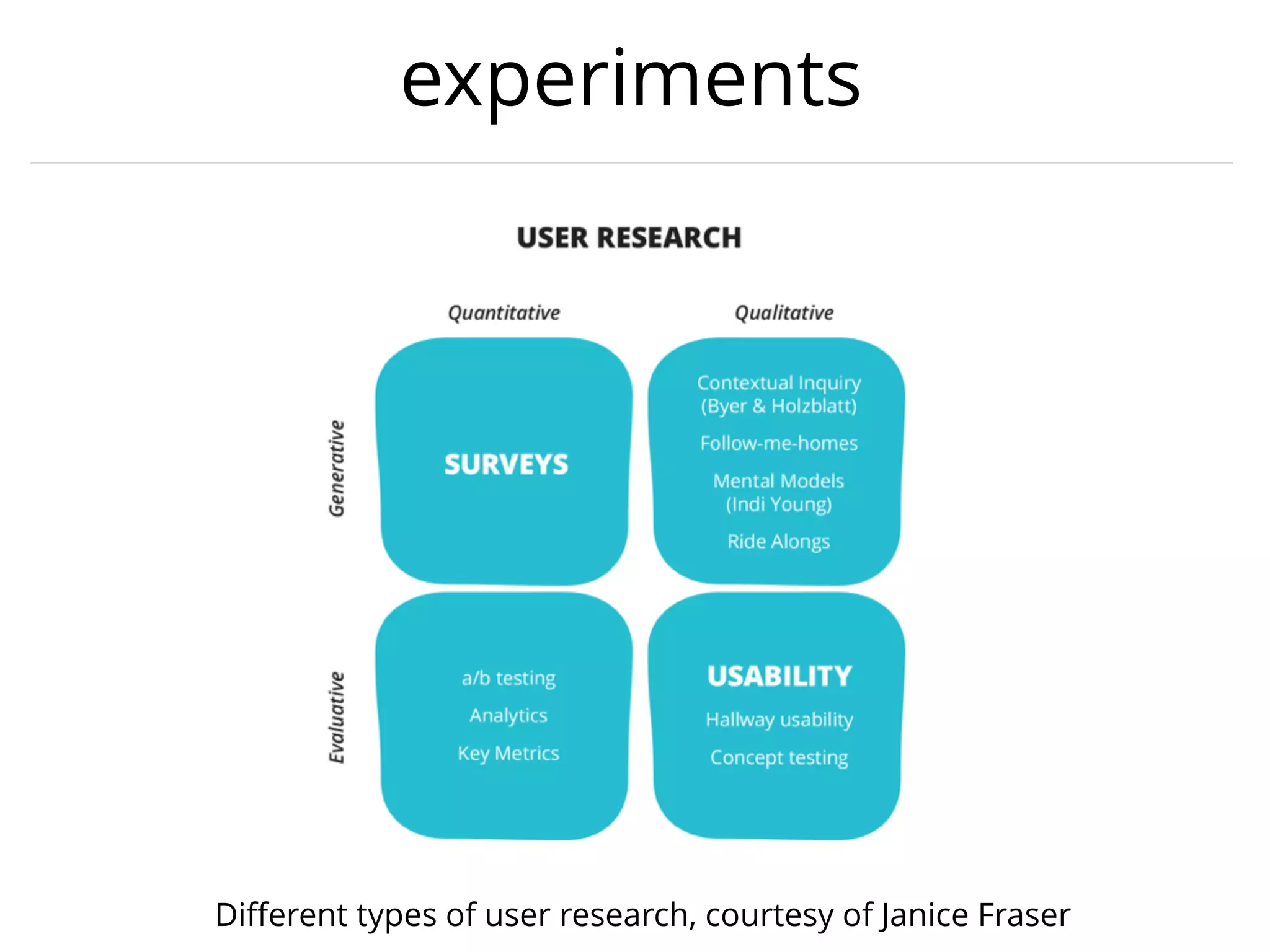
experiments
Different types of user research, courtesy of Janice Fraser
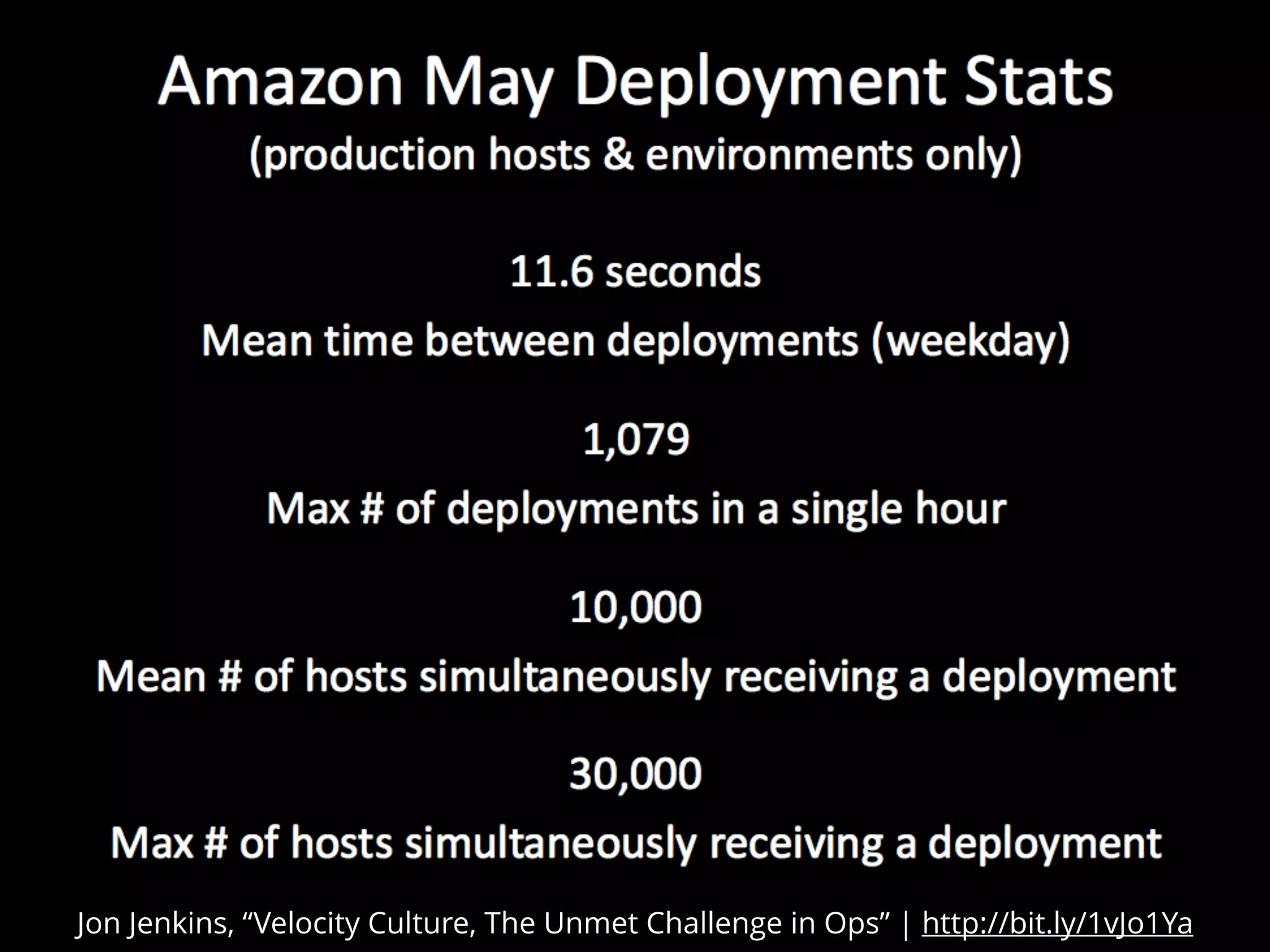
Jon Jenkins, “Velocity Culture, The Unmet Challenge in Ops” | http://bit.ly/1vJo1Ya
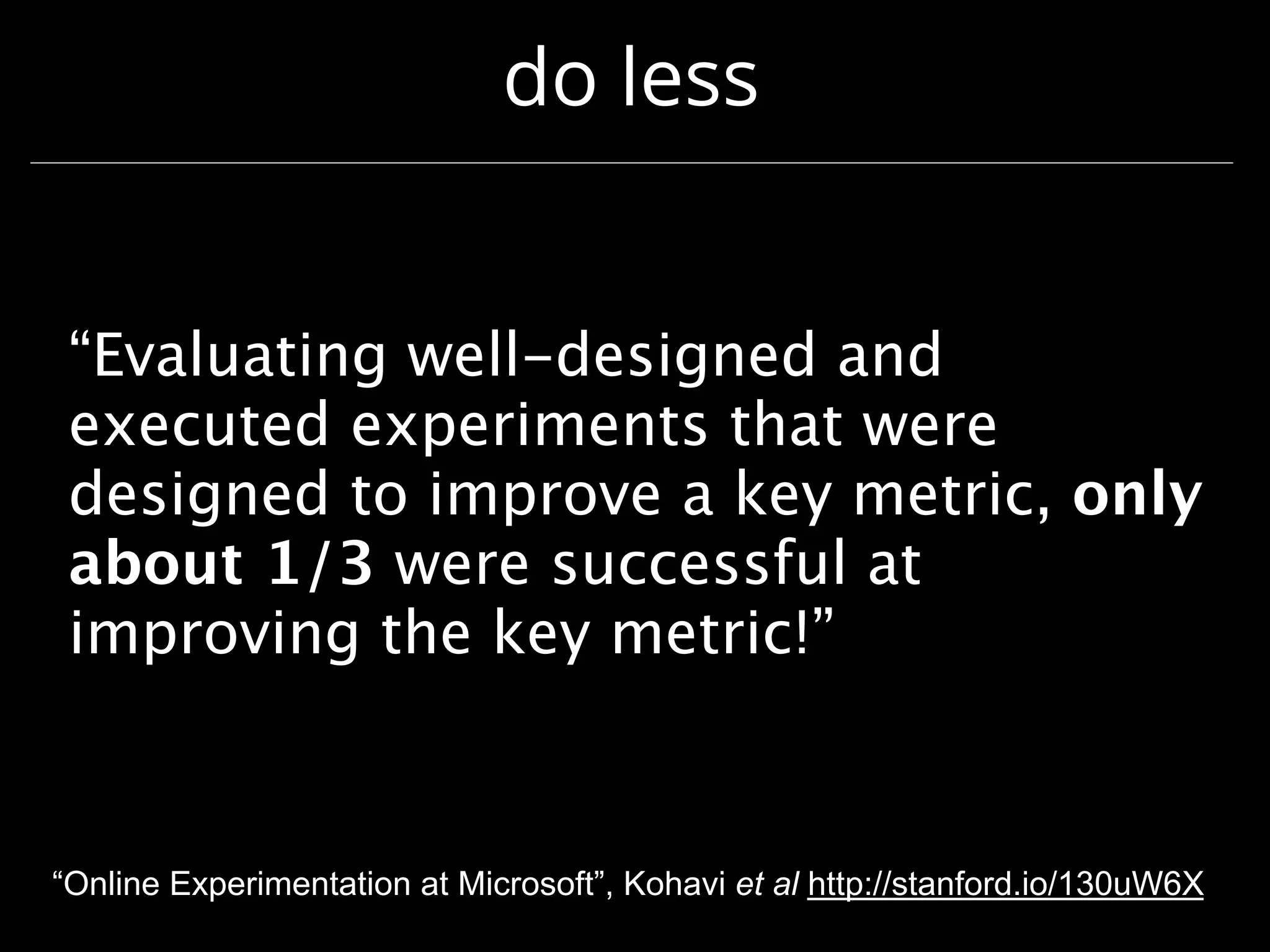
do less
“Evaluating well-designed and
executed experiments that were
designed to improve a key metric, only
about 1/3 were successful at
improving the key metric!”
“Online Experimentation at Microsoft”, Kohavi et al http://stanford.io/130uW6X
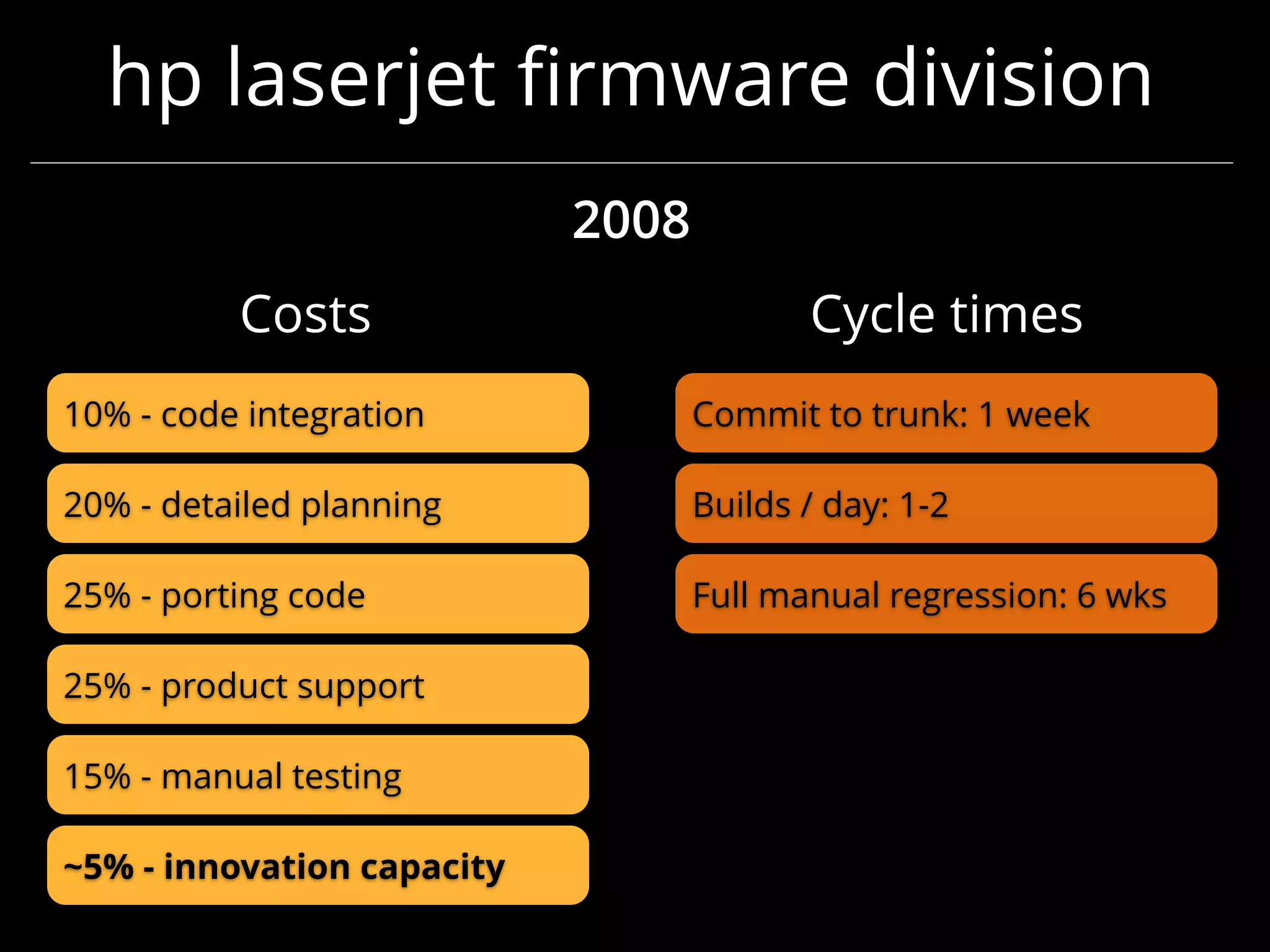
hp laserjet firmware division
2008
~5% - innovation capacity
15% - manual testing
25% - product support
25% - porting code
20% - detailed planning
10% - code integration
Costs
Full manual regression: 6 wks
Builds / day: 1-2
Commit to trunk: 1 week
Cycle times
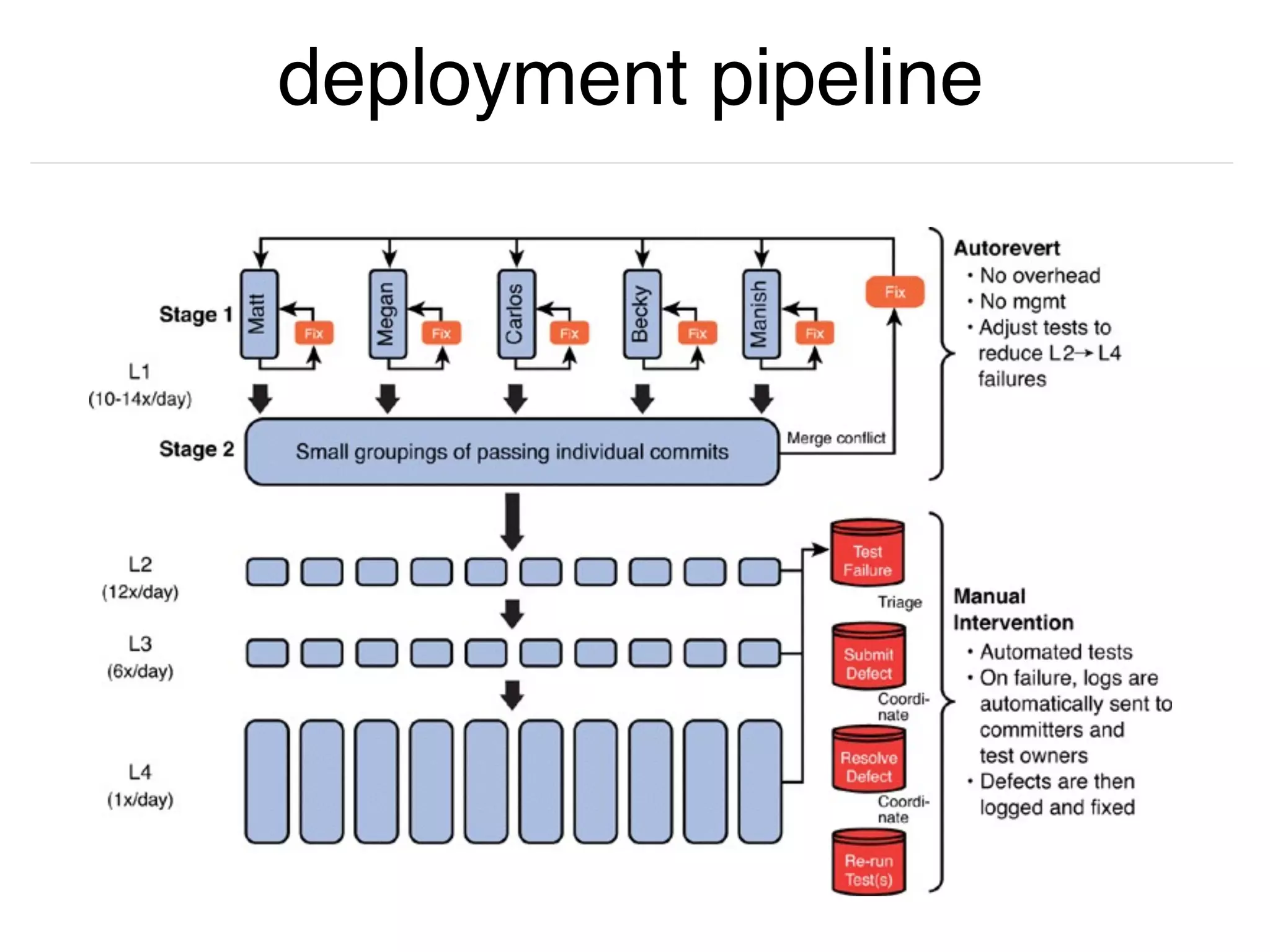
deployment pipeline
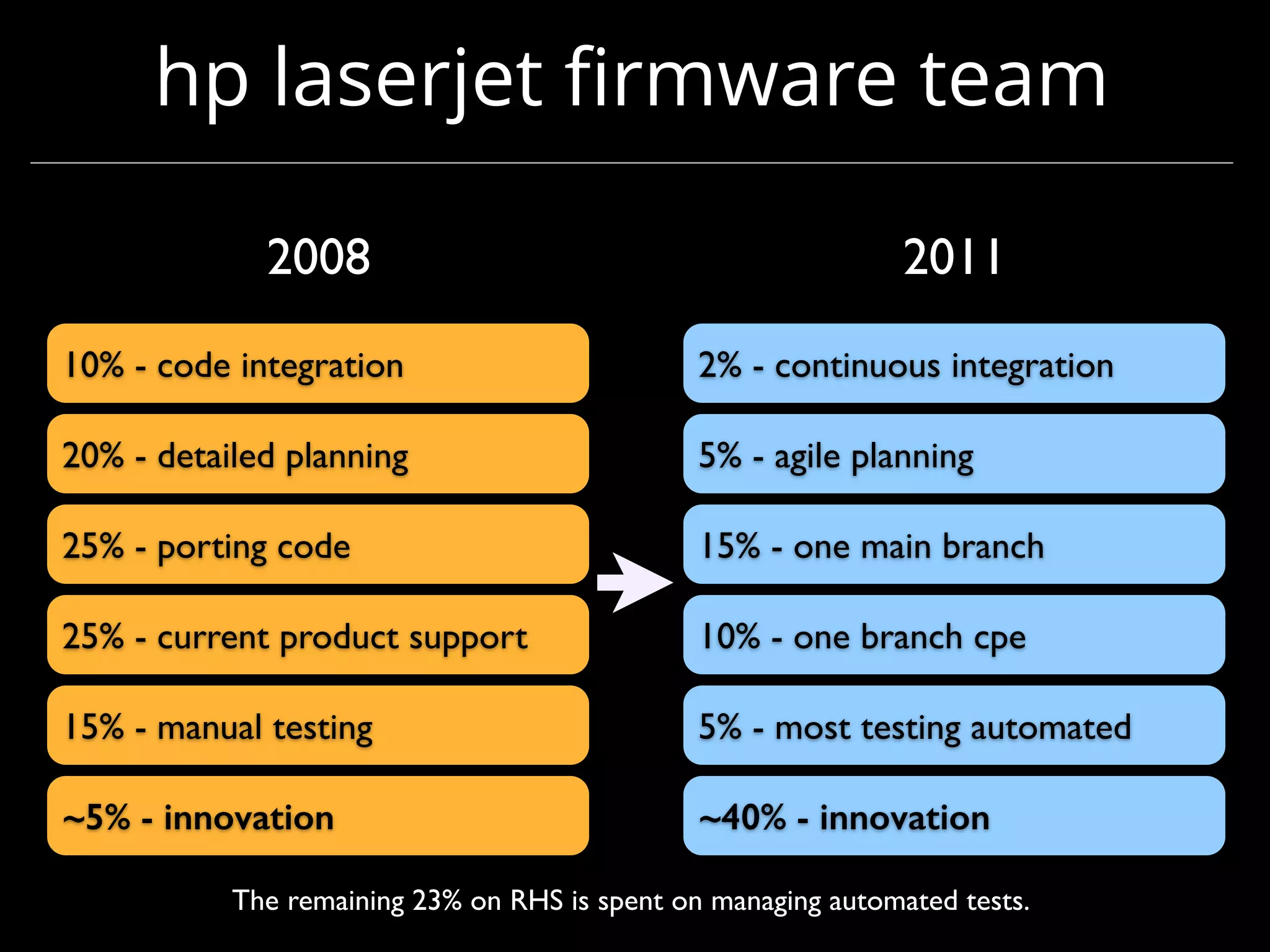
hp laserjet firmware team
~5% - innovation
15% - manual testing
25% - current product support
25% - porting code
20% - detailed planning
10% - code integration
2008
~40% - innovation
5% - most testing automated
10% - one branch cpe
15% - one main branch
5% - agile planning
2% - continuous integration
2011
The remaining 23% on RHS is spent on managing automated tests.
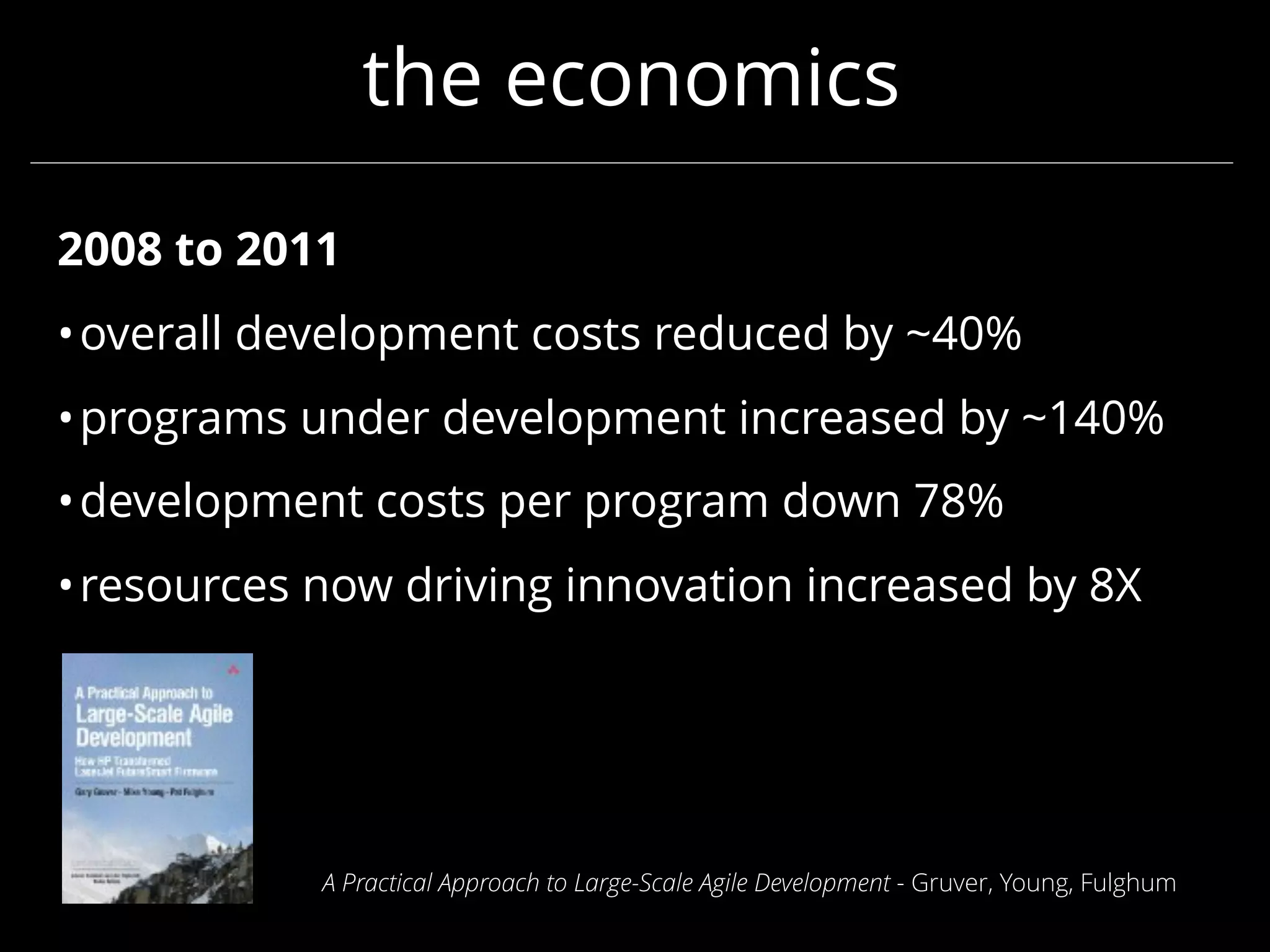
the economics
2008 to 2011
•overall development costs reduced by ~40%
•programs under development increased by ~140%
•development costs per program down 78%
•resources now driving innovation increased by 8X
A Practical Approach to Large-Scale Agile Development - Gruver, Young, Fulghum
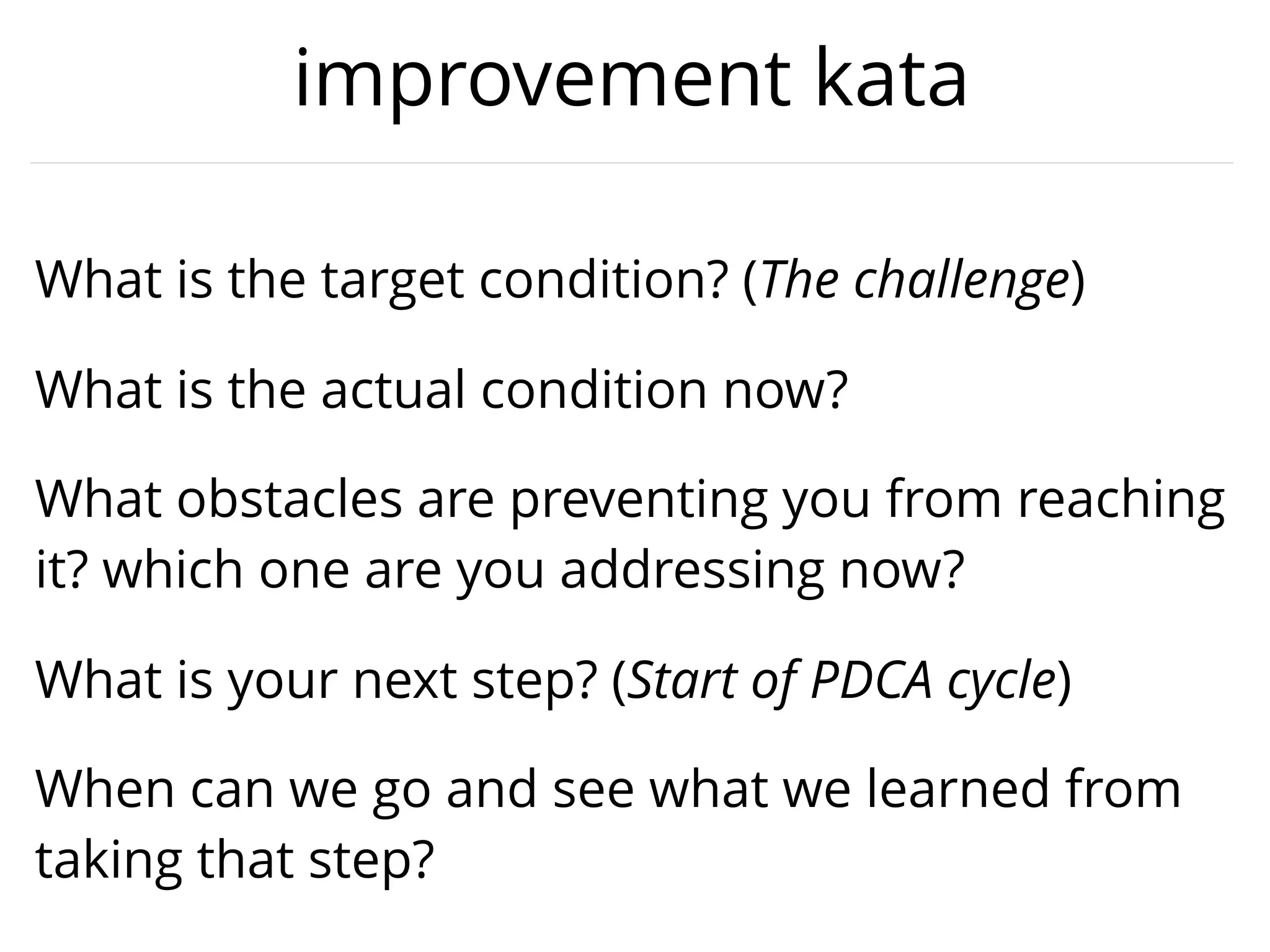
What obstacles are preventing you from reaching
it? which one are you addressing now?
What is the target condition? (The challenge)
What is the actual condition now?
When can we go and see what we learned from
taking that step?
What is your next step? (Start of PDCA cycle)
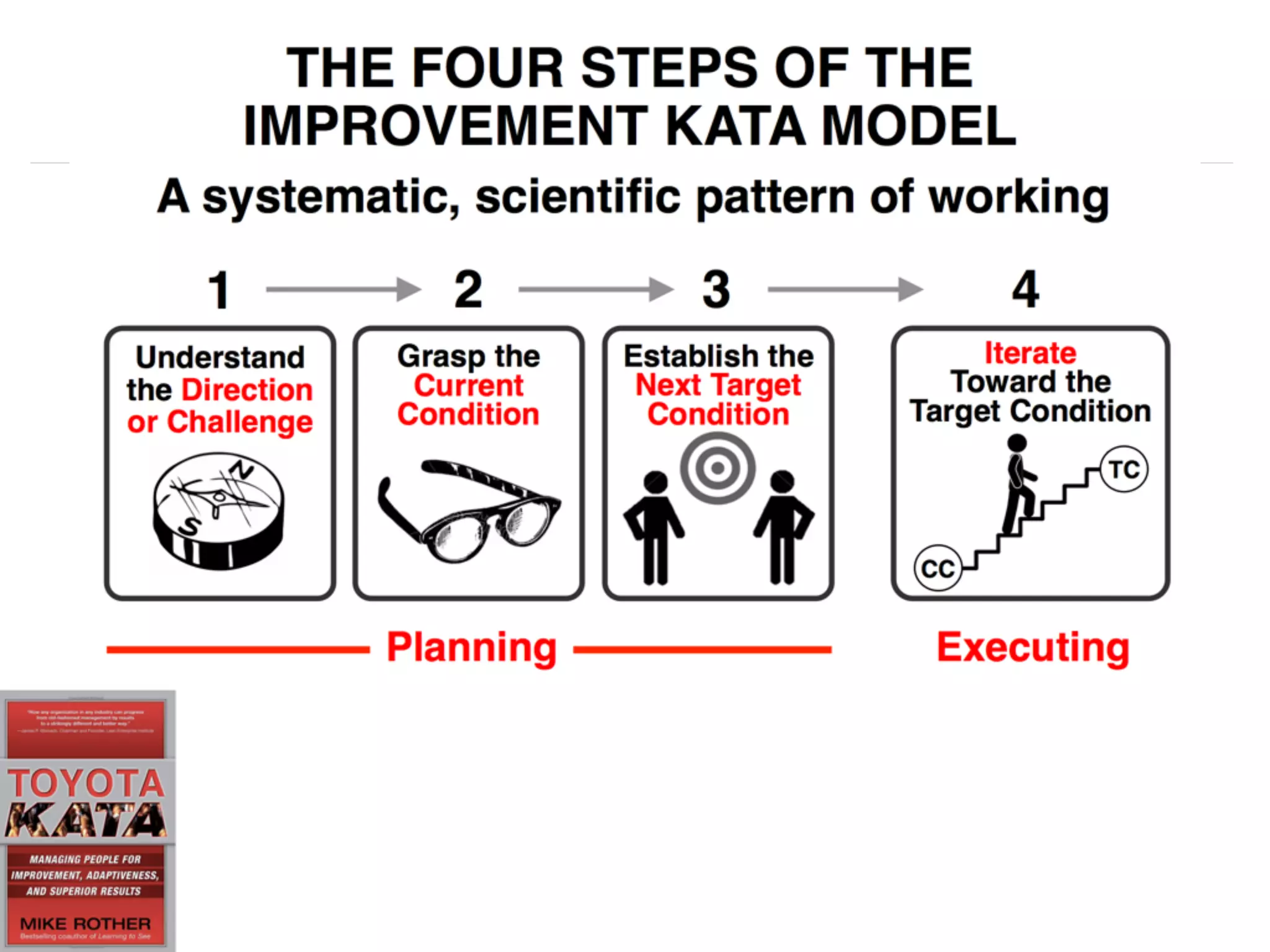
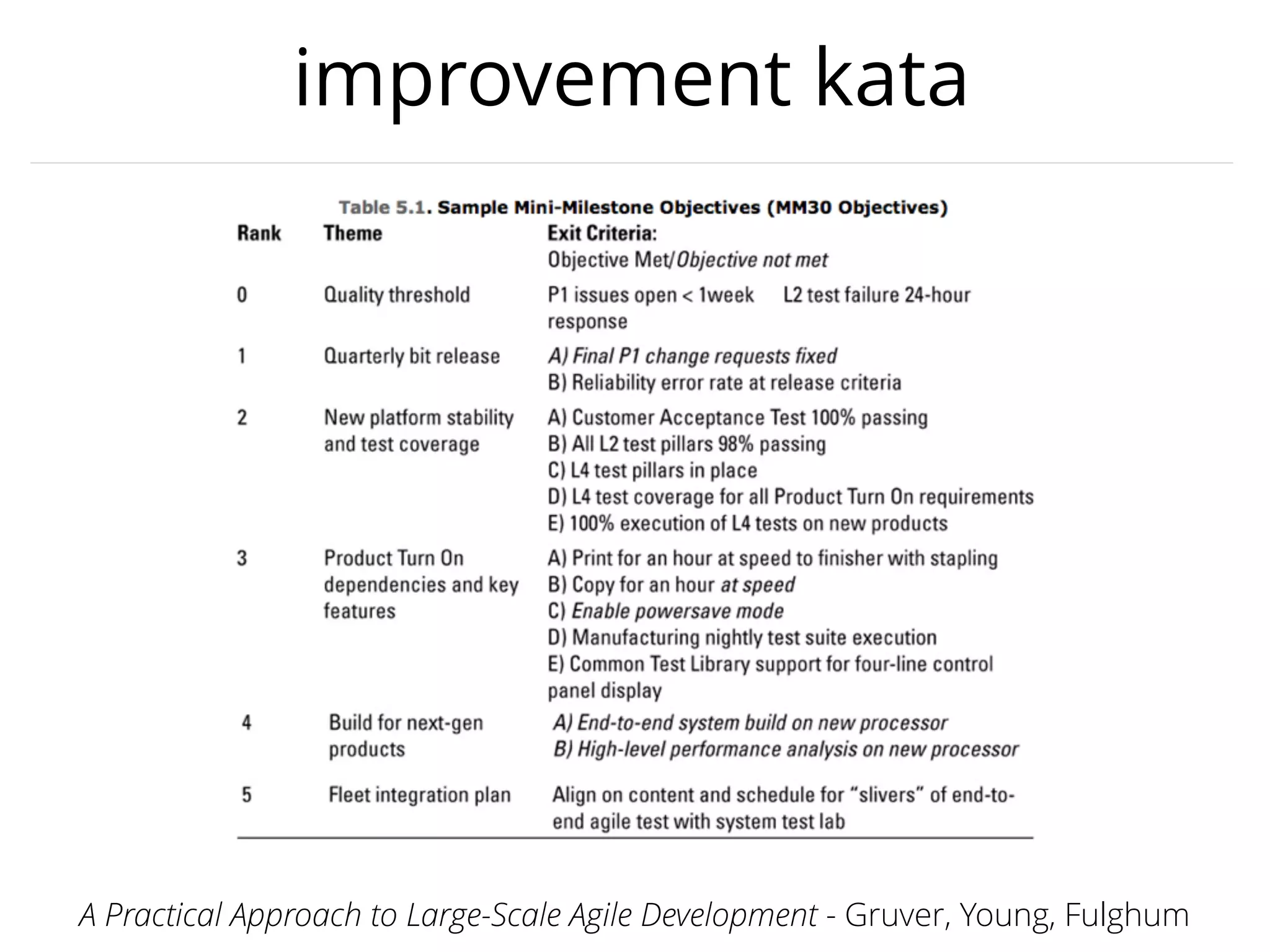
improvement kata
improvement kata
A Practical Approach to Large-Scale Agile Development - Gruver, Young, Fulghum
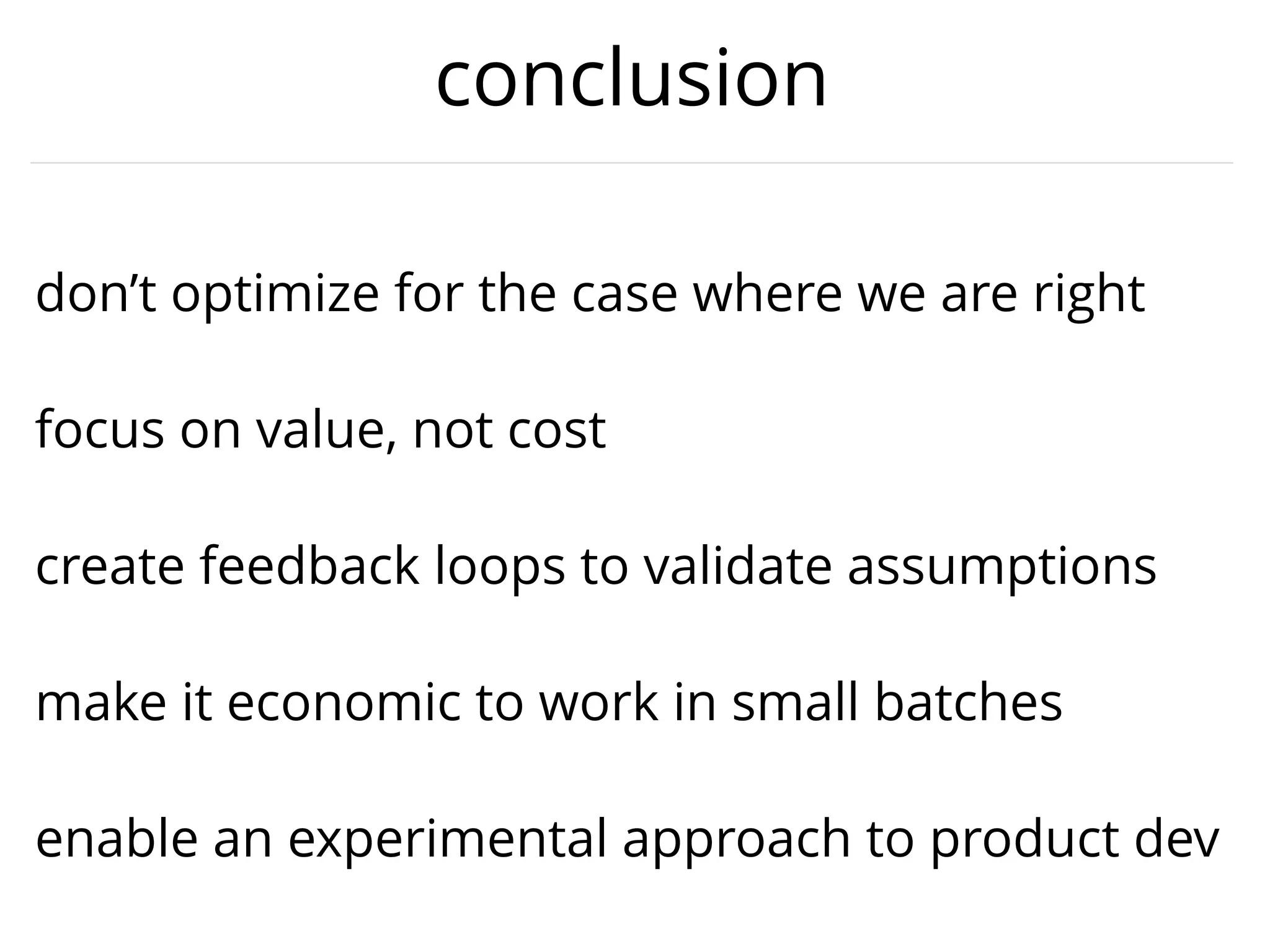
create feedback loops to validate assumptions
don’t optimize for the case where we are right
focus on value, not cost
enable an experimental approach to product dev
make it economic to work in small batches
conclusion
want to learn more?
To receive the following:
• An exclusive invite to our DevOps benchmarking tool
• A chance to get a personalized analysis of your results
• A copy of this presentation
• A 100 page excerpt from Lean Enterprise
• A 20m preview of my Continuous Delivery video workshop
• Discount code for CD video + interviews with Eric Ries & more
• Early drafts of the DevOps Handbook
Just pick up your phone and send an email
To: jezhumble@sendyourslides.com
Subject: devops
© 2015 Jez Humble & Associates LLC

Why Scaling Agile Doesn't Work (and What to Do About It)

  • 1.
    @jezhumble #gotober | december4 2015 why scaling agile doesn’t work (and what to do about it)
  • 2.
  • 4.
    cost “Even in projectswith very uncertain development costs, we haven't found that those costs have a significant information value for the investment decision… The single most important unknown is whether the project will be canceled. The next most important variable is utilization of the system, including how quickly the system rolls out and whether some people will use it at all.” Douglas Hubbard | http://www.cio.com/article/119059/The_IT_Measurement_Inversion
  • 5.
    batching up work “BlackSwan Farming using Cost of Delay” | Joshua J. Arnold and Özlem Yüce | bit.ly/black-swan-farming
  • 6.
    create feedback loopsto validate assumptions don’t optimize for the case where we are right focus on value, not cost enable an experimental approach to product dev make it economic to work in small batches what should we do
  • 7.
  • 8.
    @jezhumbleJeff Gothelf “Betterproduct definition with Lean UX and Design” http://bit.ly/TylT6A hypothesis-driven delivery We believe that [building this feature] [for these people] will achieve [this outcome]. We will know we are successful when we see [this signal from the market].
  • 9.
    experiments Different types ofuser research, courtesy of Janice Fraser
  • 10.
    Jon Jenkins, “VelocityCulture, The Unmet Challenge in Ops” | http://bit.ly/1vJo1Ya
  • 11.
    do less “Evaluating well-designedand executed experiments that were designed to improve a key metric, only about 1/3 were successful at improving the key metric!” “Online Experimentation at Microsoft”, Kohavi et al http://stanford.io/130uW6X
  • 12.
    hp laserjet firmwaredivision 2008 ~5% - innovation capacity 15% - manual testing 25% - product support 25% - porting code 20% - detailed planning 10% - code integration Costs Full manual regression: 6 wks Builds / day: 1-2 Commit to trunk: 1 week Cycle times
  • 13.
  • 14.
    hp laserjet firmwareteam ~5% - innovation 15% - manual testing 25% - current product support 25% - porting code 20% - detailed planning 10% - code integration 2008 ~40% - innovation 5% - most testing automated 10% - one branch cpe 15% - one main branch 5% - agile planning 2% - continuous integration 2011 The remaining 23% on RHS is spent on managing automated tests.
  • 15.
    the economics 2008 to2011 •overall development costs reduced by ~40% •programs under development increased by ~140% •development costs per program down 78% •resources now driving innovation increased by 8X A Practical Approach to Large-Scale Agile Development - Gruver, Young, Fulghum
  • 17.
    What obstacles arepreventing you from reaching it? which one are you addressing now? What is the target condition? (The challenge) What is the actual condition now? When can we go and see what we learned from taking that step? What is your next step? (Start of PDCA cycle) improvement kata
  • 18.
    improvement kata A PracticalApproach to Large-Scale Agile Development - Gruver, Young, Fulghum
  • 19.
    create feedback loopsto validate assumptions don’t optimize for the case where we are right focus on value, not cost enable an experimental approach to product dev make it economic to work in small batches conclusion
  • 20.
    want to learnmore? To receive the following: • An exclusive invite to our DevOps benchmarking tool • A chance to get a personalized analysis of your results • A copy of this presentation • A 100 page excerpt from Lean Enterprise • A 20m preview of my Continuous Delivery video workshop • Discount code for CD video + interviews with Eric Ries & more • Early drafts of the DevOps Handbook Just pick up your phone and send an email To: jezhumble@sendyourslides.com Subject: devops © 2015 Jez Humble & Associates LLC