D H A R S H A N R A N G E G O W D A
F O U N D E R , S C A L E G R I D . I O
A P R I L 2 0 1 4
Why NoSQL?
What is NoSQL?
 “Not only SQL”
 “Not SQL”
 Term popularized by Eric
Evans of Rackspace in 2009
 Class of databases that don’t
use a “Relational schema”
 NoSQL <> No T-SQL
NoSQL history
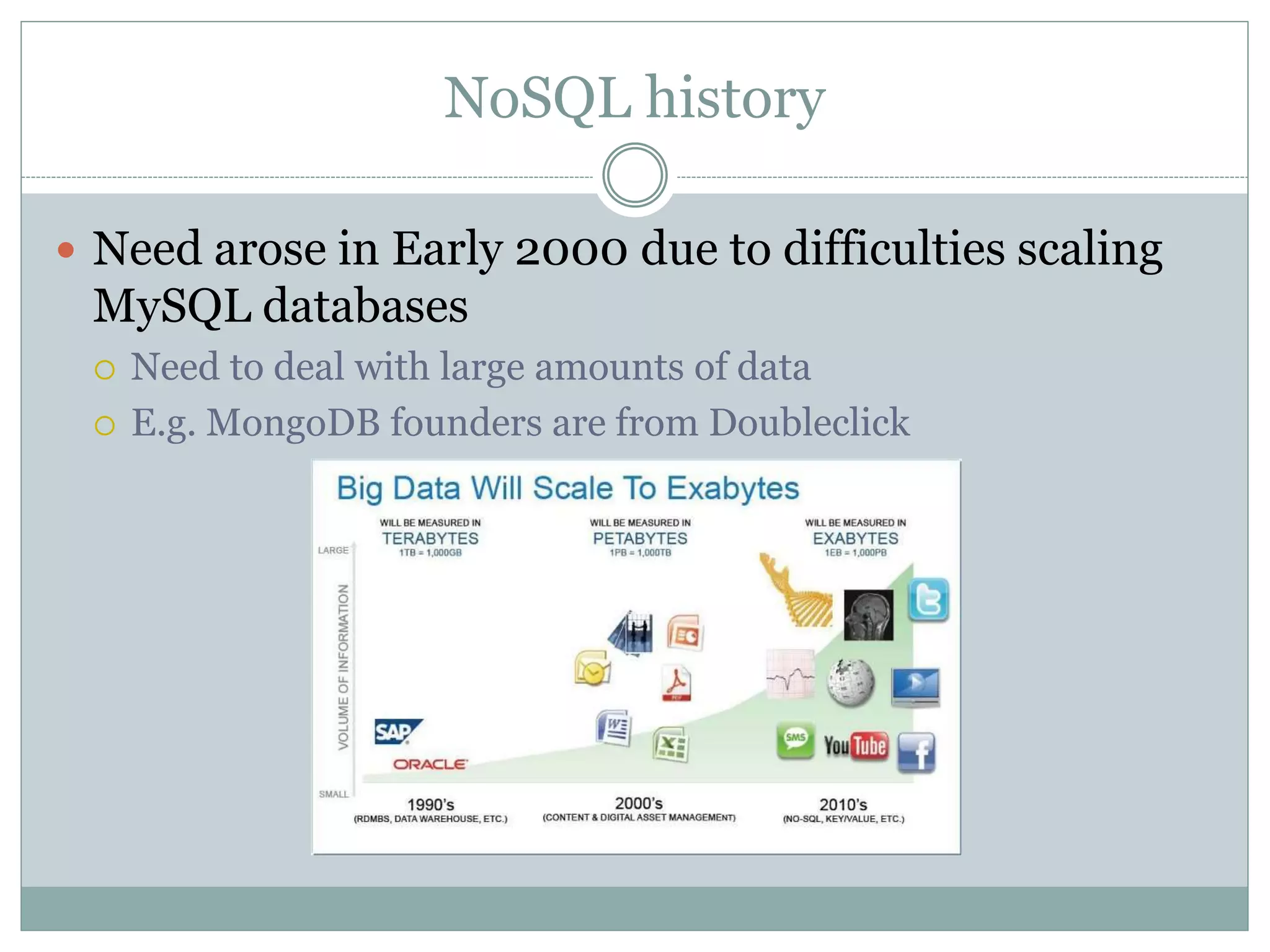
 Need arose in Early 2000 due to difficulties scaling
MySQL databases
 Need to deal with large amounts of data
 E.g. MongoDB founders are from Doubleclick
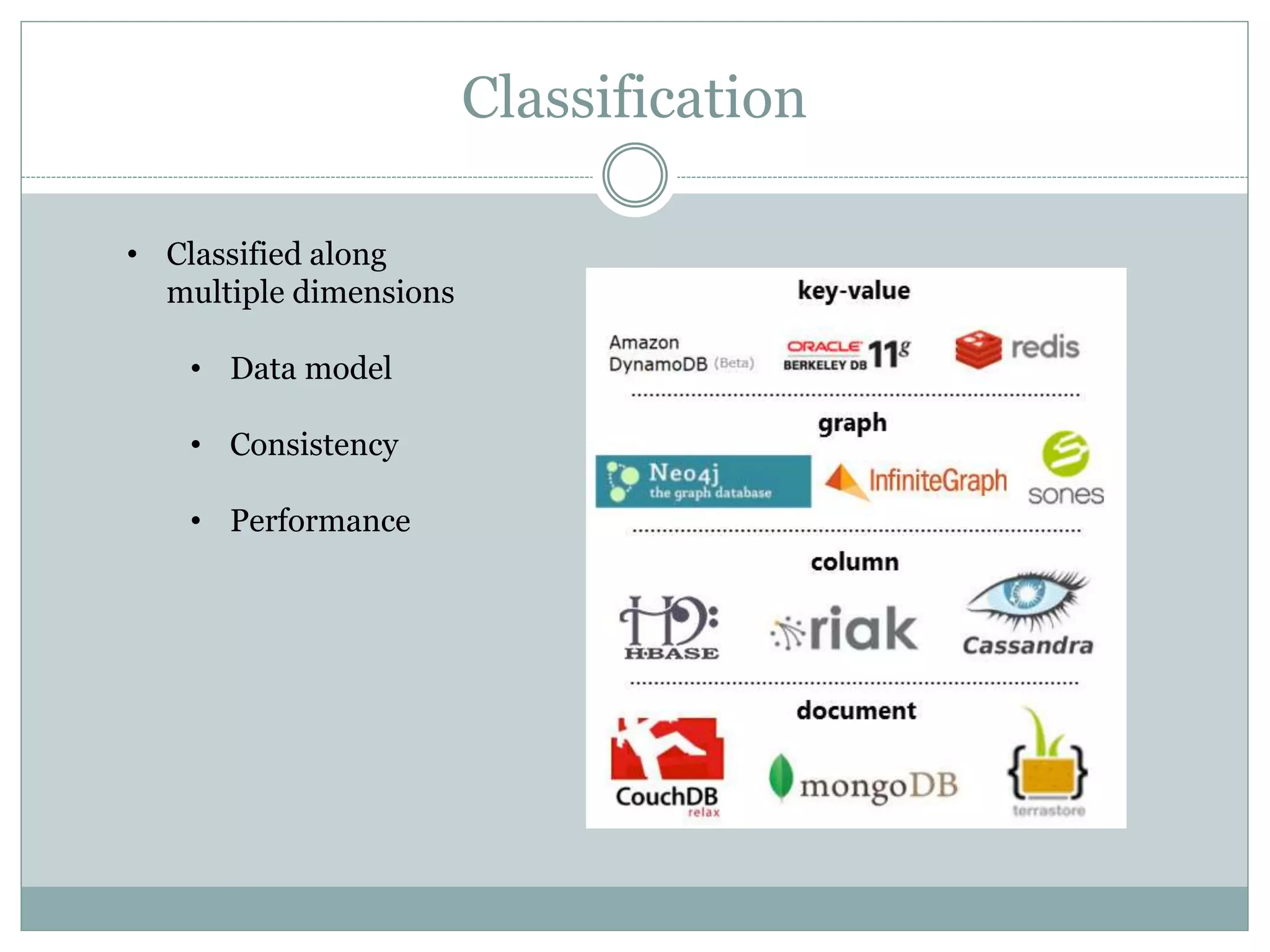
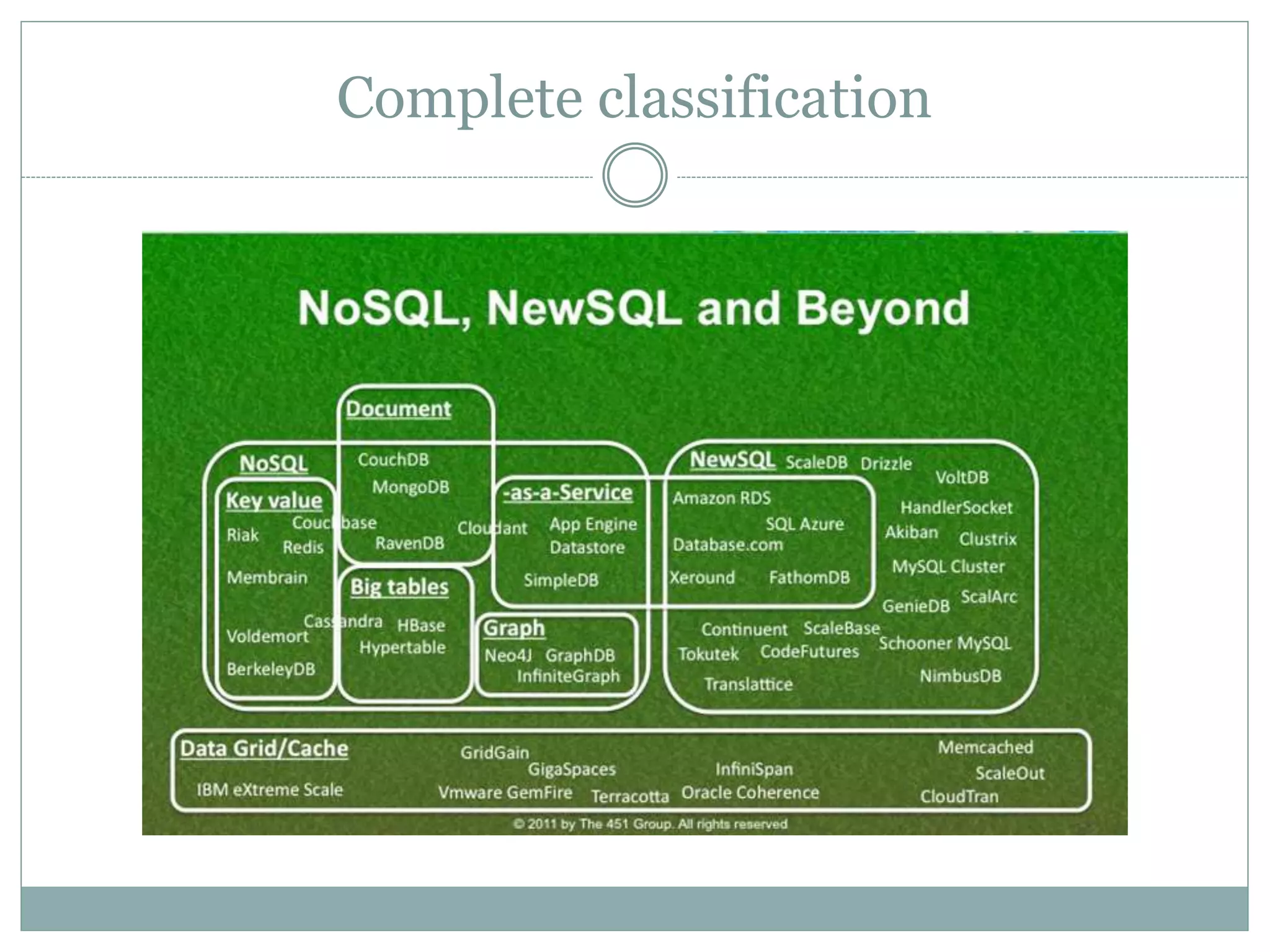
Classification
• Classified along
multiple dimensions
• Data model
• Consistency
• Performance
Complete classification
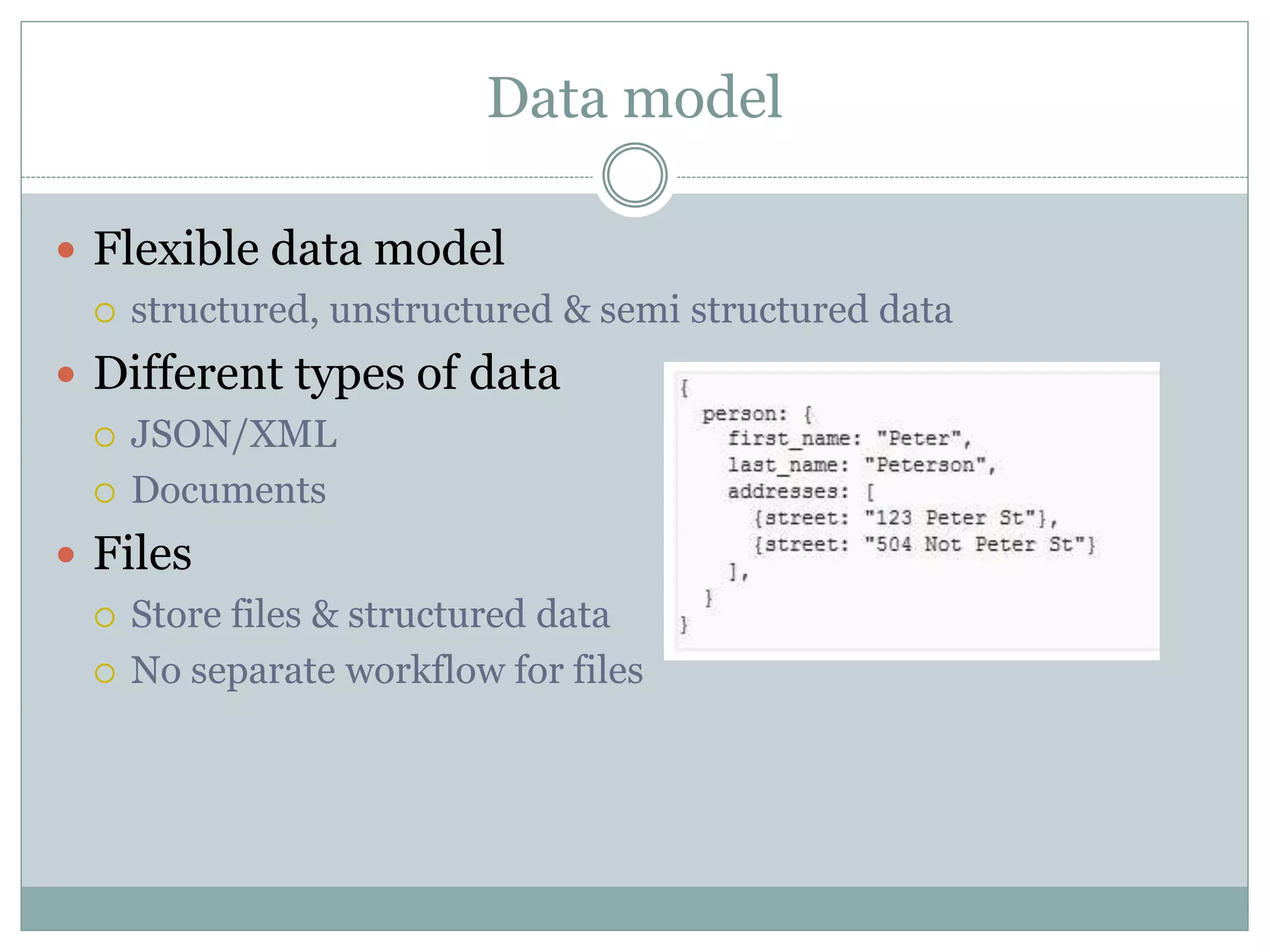
Data model
 Flexible data model
 structured, unstructured & semi structured data
 Different types of data
 JSON/XML
 Documents
 Files
 Store files & structured data
 No separate workflow for files
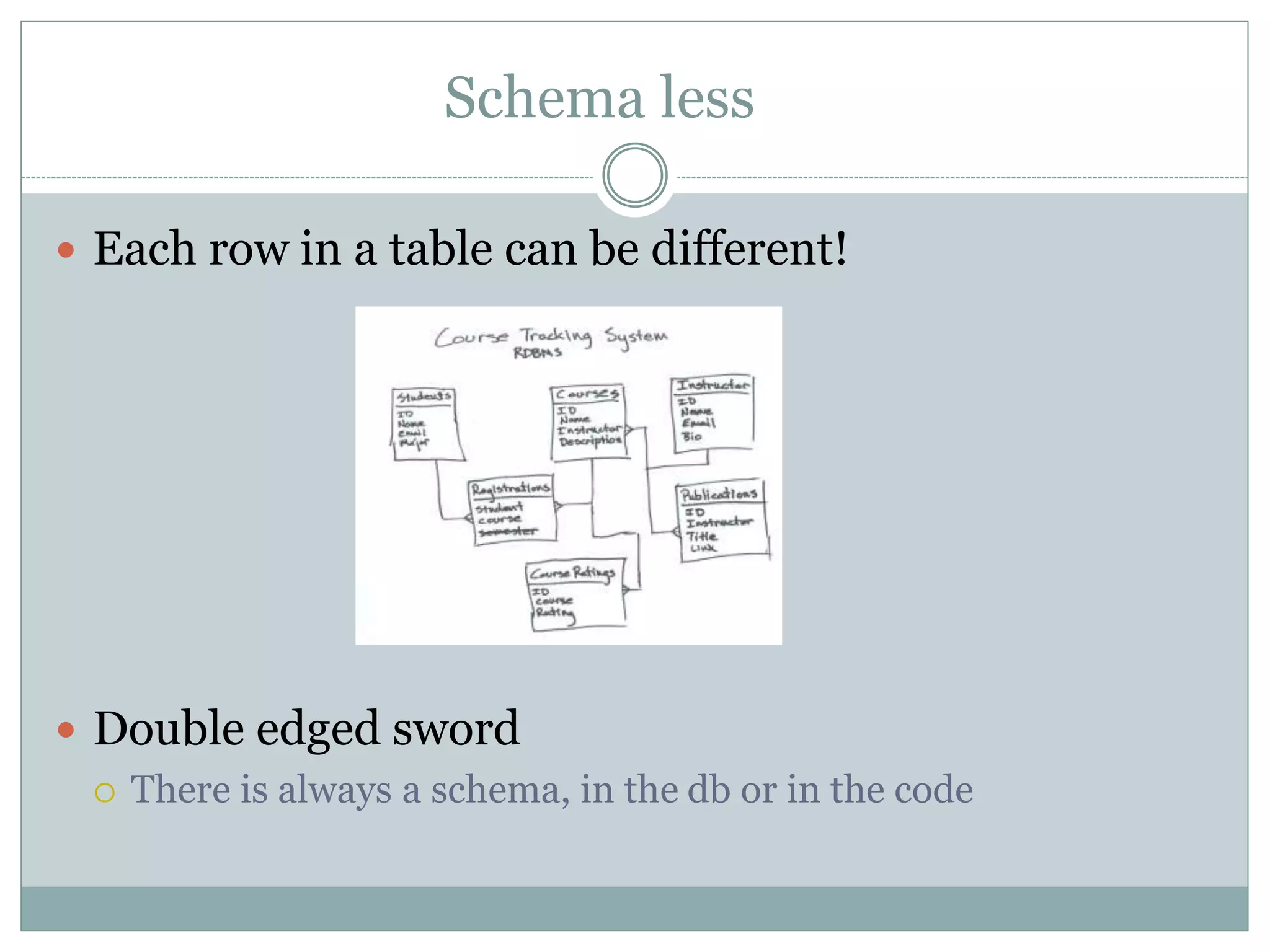
Schema less
 Each row in a table can be different!
 Double edged sword
 There is always a schema, in the db or in the code
Developer agility
Focus on developer
agility
 Extremely easy to get
started
 Got rid of impedance
mismatch between
app code and SQL
 Always work with
objects
• Big hit with developers
Developer agility
 Great Geo query support
 Extremely important for most web apps today
 Great integration with new frameworks
 Node.js, Meteor.js
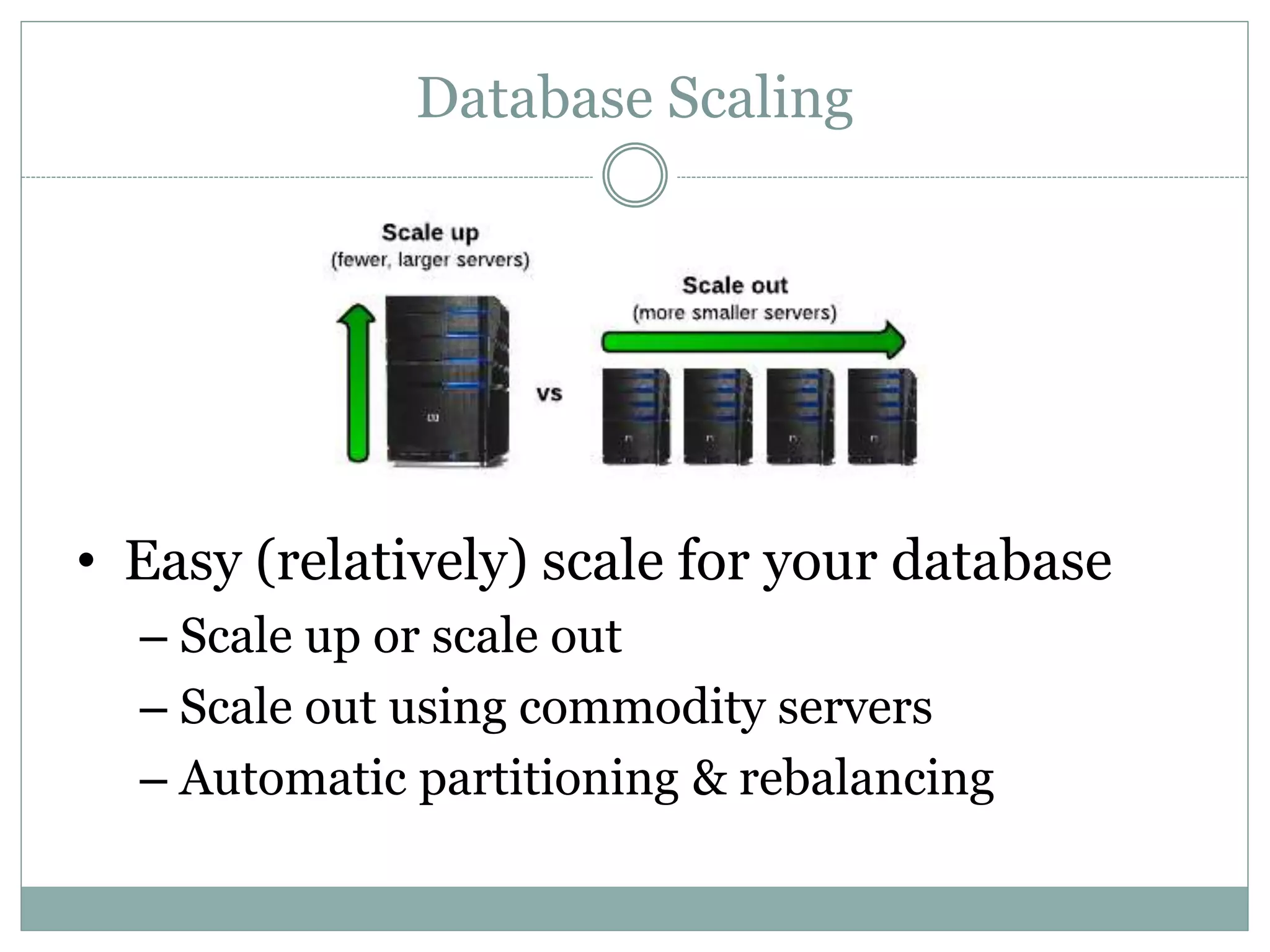
Database Scaling
• Easy (relatively) scale for your database
– Scale up or scale out
– Scale out using commodity servers
– Automatic partitioning & rebalancing
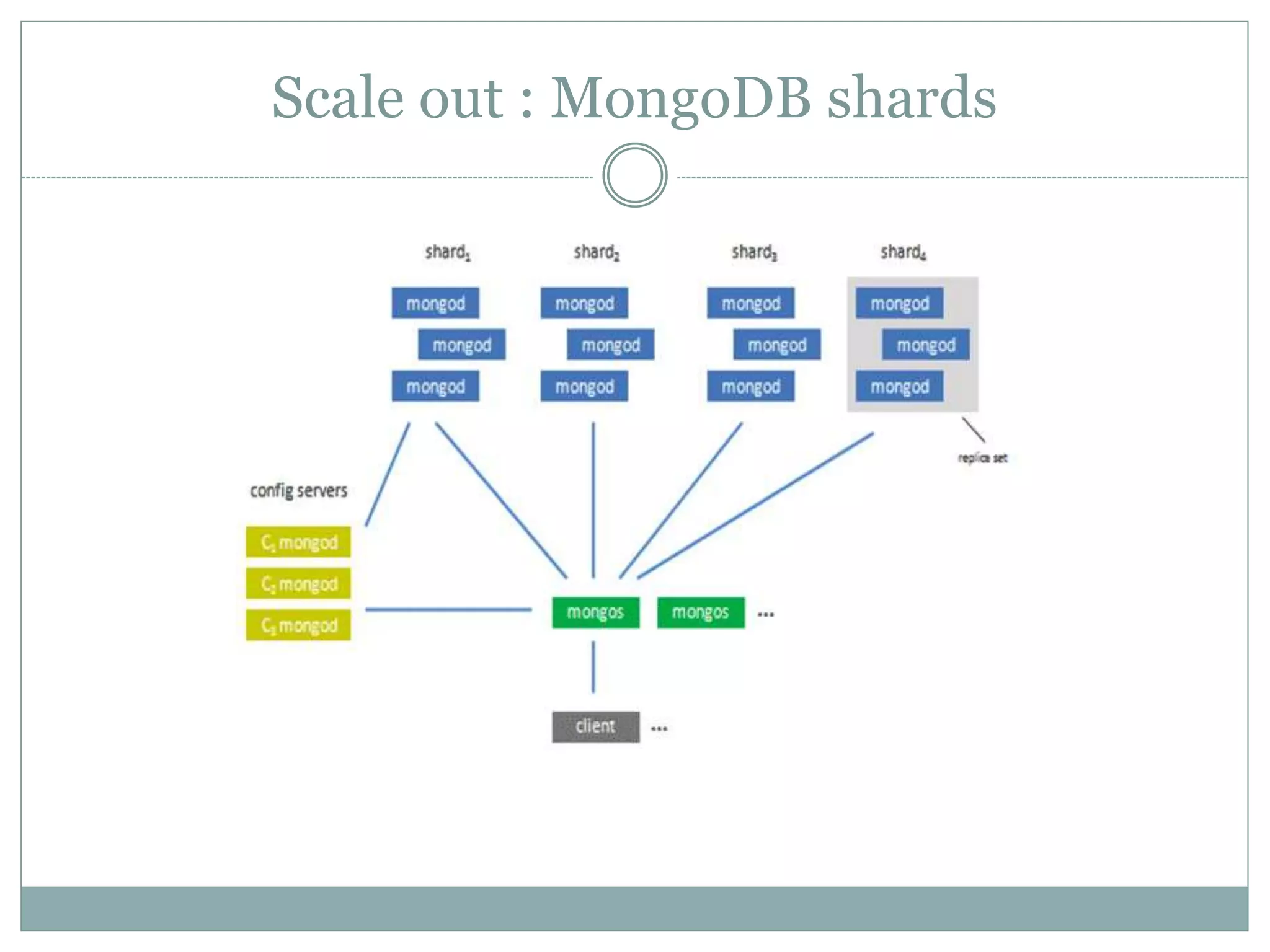
Scale out : MongoDB shards
Cons?
 Not ACID compliant (mostly)
 Transaction scope is usually limited
 Consistency can also vary
 If you are writing a banking application stick to RDBMS 
 Engineering
 Relatively immature
 Don’t have 3 decades of engineering in them
Adoption
• Web properties
– Scale features
– Document support
– Geo support
• Data warehouse
– Handle TB’s of data
– Cost
Future?
Q & A
Email : Dharshanr@scalegrid.io
Twitter: @dharshanrg

Why nosql?

  • 1.
    D H AR S H A N R A N G E G O W D A F O U N D E R , S C A L E G R I D . I O A P R I L 2 0 1 4 Why NoSQL?
  • 2.
    What is NoSQL? “Not only SQL”  “Not SQL”  Term popularized by Eric Evans of Rackspace in 2009  Class of databases that don’t use a “Relational schema”  NoSQL <> No T-SQL
  • 3.
    NoSQL history  Needarose in Early 2000 due to difficulties scaling MySQL databases  Need to deal with large amounts of data  E.g. MongoDB founders are from Doubleclick
  • 4.
    Classification • Classified along multipledimensions • Data model • Consistency • Performance
  • 5.
  • 6.
    Data model  Flexibledata model  structured, unstructured & semi structured data  Different types of data  JSON/XML  Documents  Files  Store files & structured data  No separate workflow for files
  • 7.
    Schema less  Eachrow in a table can be different!  Double edged sword  There is always a schema, in the db or in the code
  • 8.
    Developer agility Focus ondeveloper agility  Extremely easy to get started  Got rid of impedance mismatch between app code and SQL  Always work with objects • Big hit with developers
  • 9.
    Developer agility  GreatGeo query support  Extremely important for most web apps today  Great integration with new frameworks  Node.js, Meteor.js
  • 10.
    Database Scaling • Easy(relatively) scale for your database – Scale up or scale out – Scale out using commodity servers – Automatic partitioning & rebalancing
  • 11.
    Scale out :MongoDB shards
  • 12.
    Cons?  Not ACIDcompliant (mostly)  Transaction scope is usually limited  Consistency can also vary  If you are writing a banking application stick to RDBMS   Engineering  Relatively immature  Don’t have 3 decades of engineering in them
  • 13.
    Adoption • Web properties –Scale features – Document support – Geo support • Data warehouse – Handle TB’s of data – Cost
  • 14.
  • 15.
    Q & A Email: Dharshanr@scalegrid.io Twitter: @dharshanrg