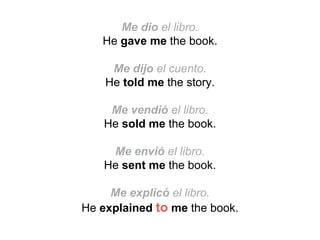
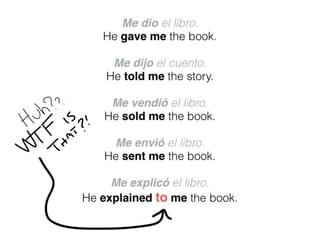
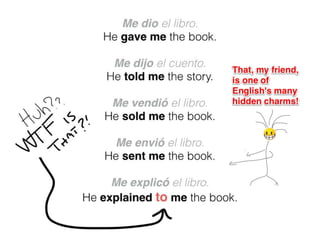
Me dio el libro.
He gave me the book.
Me dijo el cuento.
He told me the story.
Me vendió el libro.
He sold me the book.
Me envió el libro.
He sent me the book.
Me explicó el libro.
He explained to me the book.
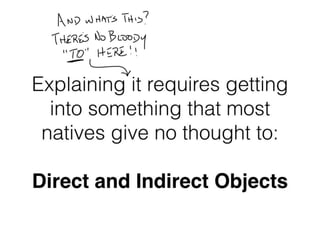
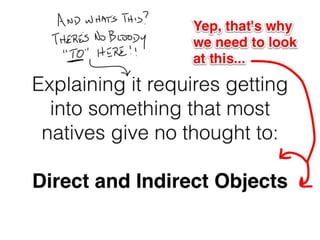
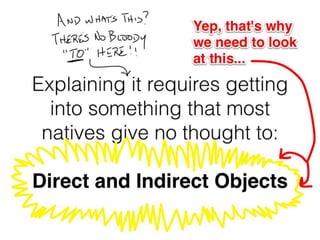
Explaining it requires getting
into something that most
natives give no thought to:
Direct and Indirect Objects
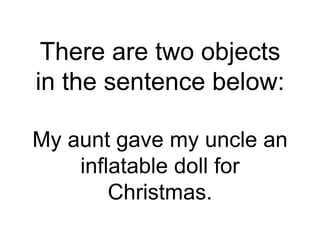
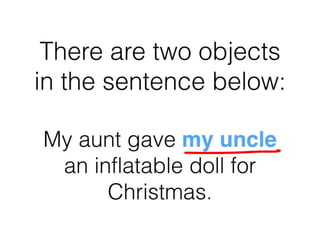
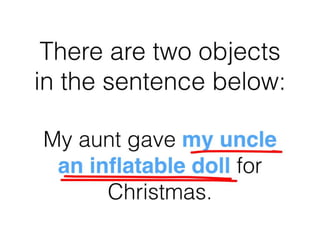
There are two objects
in the sentence below:
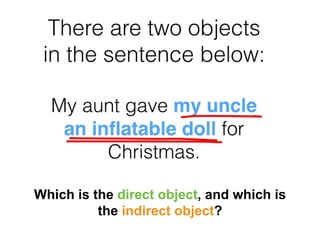
My aunt gave my uncle an
inflatable doll for
Christmas.
Which is the direct object, and which is
the indirect object?
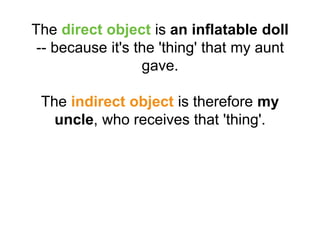
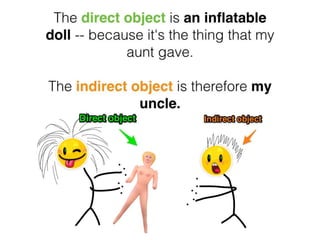
The direct object is an inflatable doll
-- because it's the 'thing' that my aunt
gave.
The indirect object is therefore my
uncle, who receives that 'thing'.
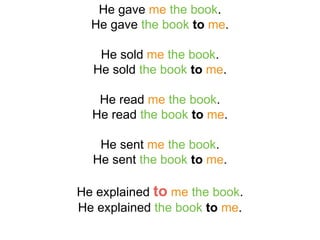
He gave me the book.
He gave the book to me.
He sold me the book.
He sold the book to me.
He read me the book.
He read the book to me.
He sent me the book.
He sent the book to me.
He explained to me the book.
He explained the book to me.
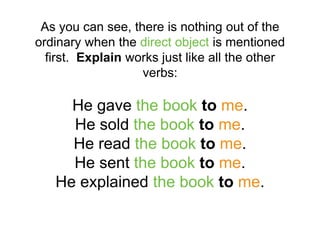
As you can see, there is nothing out of the
ordinary when the direct object is mentioned
first. Explain works just like all the other
verbs:
He gave the book to me.
He sold the book to me.
He read the book to me.
He sent the book to me.
He explained the book to me.
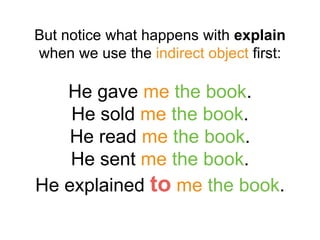
But notice what happens with explain
when we use the indirect object first:
He gave me the book.
He sold me the book.
He read me the book.
He sent me the book.
He explained to me the book.
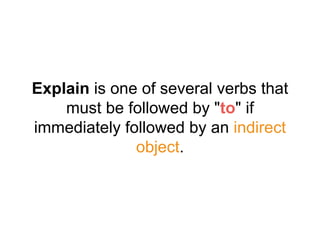
Explain is one of several verbs that
must be followed by "to" if
immediately followed by an indirect
object.
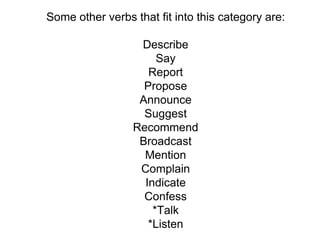
Some other verbs that fit into this category are:
Describe
Say
Report
Propose
Announce
Suggest
Recommend
Broadcast
Mention
Complain
Indicate
Confess
*Talk
*Listen

Why do we have to say explain "to"???

  • 2.
    Me dio ellibro. He gave me the book. Me dijo el cuento. He told me the story. Me vendió el libro. He sold me the book. Me envió el libro. He sent me the book. Me explicó el libro. He explained to me the book.
  • 5.
    Explaining it requiresgetting into something that most natives give no thought to: Direct and Indirect Objects
  • 9.
    There are twoobjects in the sentence below: My aunt gave my uncle an inflatable doll for Christmas.
  • 12.
    Which is thedirect object, and which is the indirect object?
  • 13.
    The direct objectis an inflatable doll -- because it's the 'thing' that my aunt gave. The indirect object is therefore my uncle, who receives that 'thing'.
  • 15.
    He gave methe book. He gave the book to me. He sold me the book. He sold the book to me. He read me the book. He read the book to me. He sent me the book. He sent the book to me. He explained to me the book. He explained the book to me.
  • 16.
    As you cansee, there is nothing out of the ordinary when the direct object is mentioned first. Explain works just like all the other verbs: He gave the book to me. He sold the book to me. He read the book to me. He sent the book to me. He explained the book to me.
  • 17.
    But notice whathappens with explain when we use the indirect object first: He gave me the book. He sold me the book. He read me the book. He sent me the book. He explained to me the book.
  • 18.
    Explain is oneof several verbs that must be followed by "to" if immediately followed by an indirect object.
  • 19.
    Some other verbsthat fit into this category are: Describe Say Report Propose Announce Suggest Recommend Broadcast Mention Complain Indicate Confess *Talk *Listen