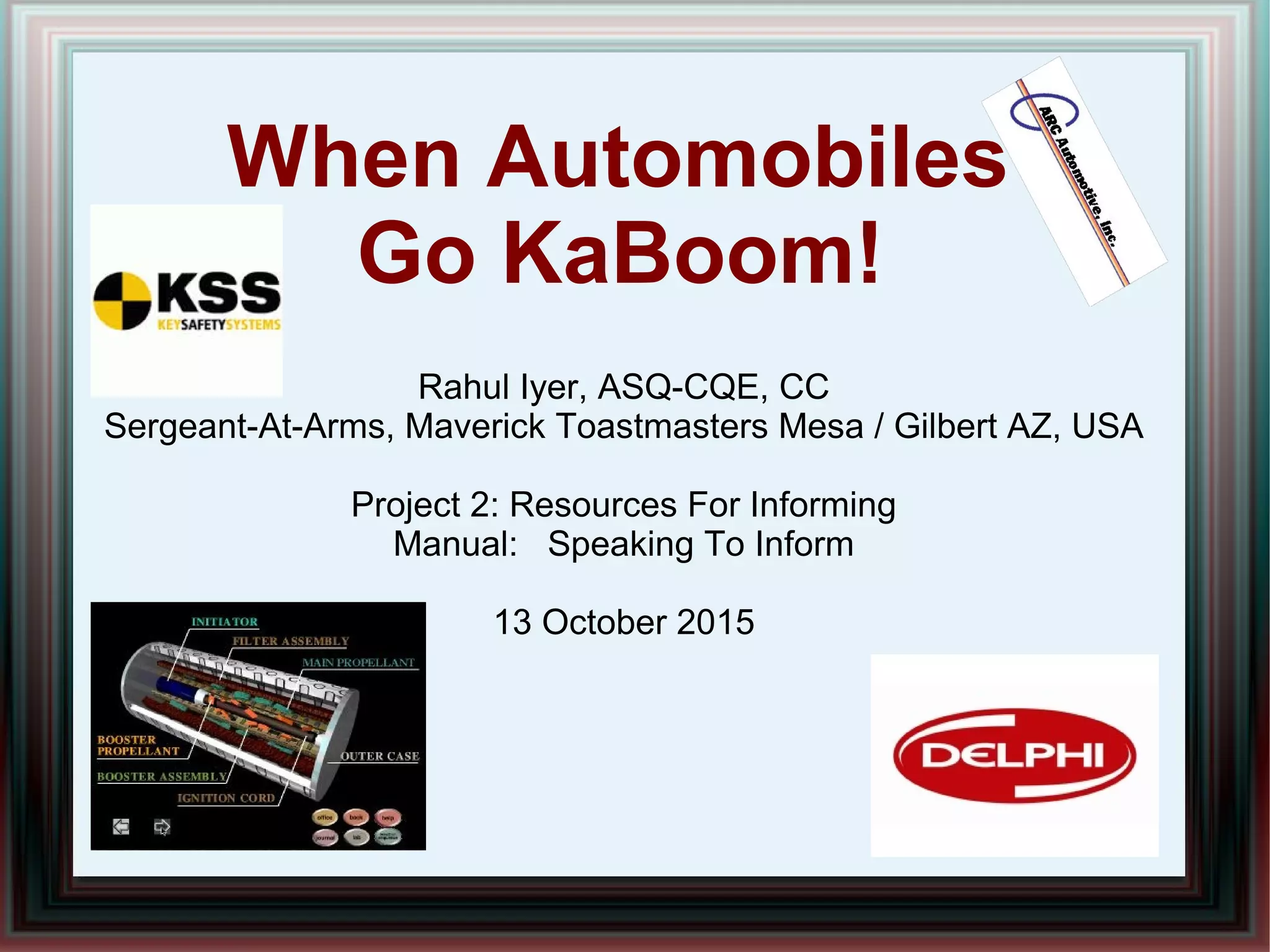
When Automobiles
Go KaBoom!
Rahul Iyer, ASQ-CQE, CC
Sergeant-At-Arms, Maverick Toastmasters Mesa / Gilbert AZ, USA
Project 2: Resources For Informing
Manual: Speaking To Inform
13 October 2015
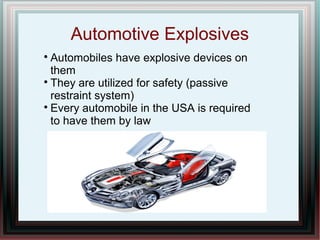
Automotive Explosives

Automobiles have explosive devices on
them

They are utilized for safety (passive
restraint system)

Every automobile in the USA is required
to have them by law
History of the Automotive
Airbag

German and American Invention

Walter Linderer, Germany; November 12, 1953

John Hetrick, US Navy, USA; August 18, 1953

Further development by the Japanese in the
1960s

Adopted by automotive industry in the 1970s

US Federal requirement for cars produced after 1
April 1989 (original regulation issued in 1984)

Also applied in other industries
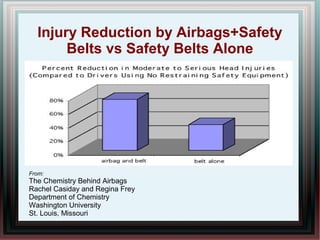
Injury Reduction by Airbags+Safety
Belts vs Safety Belts Alone
From:
The Chemistry Behind Airbags
Rachel Casiday and Regina Frey
Department of Chemistry
Washington University
St. Louis, Missouri
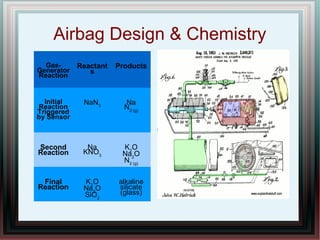
Airbag Design & Chemistry
Gas-
Generator
Reaction
Reactant
s
Products
Initial
Reaction
Triggered
by Sensor
NaN3
Na
N2 (g)
Second
Reaction
Na
KNO3
K2
O
Na2
O
N2 (g)
Final
Reaction
K2
O
Na2
O
SiO2
alkaline
silicate
(glass)
Conclusion

Definition of an Automotive Explosive
/ Airbag

History of the Airbag With Effectiveness
Regarding Safety

Design and Technical Aspects of Airbags
Conclusion

Definition of an Automotive Explosive
/ Airbag

History of the Airbag With Effectiveness
Regarding Safety

Design and Technical Aspects of Airbags

When Automobiles Go KaBoom!

  • 1.
    When Automobiles Go KaBoom! RahulIyer, ASQ-CQE, CC Sergeant-At-Arms, Maverick Toastmasters Mesa / Gilbert AZ, USA Project 2: Resources For Informing Manual: Speaking To Inform 13 October 2015
  • 2.
    Automotive Explosives  Automobiles haveexplosive devices on them  They are utilized for safety (passive restraint system)  Every automobile in the USA is required to have them by law
  • 3.
    History of theAutomotive Airbag  German and American Invention  Walter Linderer, Germany; November 12, 1953  John Hetrick, US Navy, USA; August 18, 1953  Further development by the Japanese in the 1960s  Adopted by automotive industry in the 1970s  US Federal requirement for cars produced after 1 April 1989 (original regulation issued in 1984)  Also applied in other industries
  • 4.
    Injury Reduction byAirbags+Safety Belts vs Safety Belts Alone From: The Chemistry Behind Airbags Rachel Casiday and Regina Frey Department of Chemistry Washington University St. Louis, Missouri
  • 5.
    Airbag Design &Chemistry Gas- Generator Reaction Reactant s Products Initial Reaction Triggered by Sensor NaN3 Na N2 (g) Second Reaction Na KNO3 K2 O Na2 O N2 (g) Final Reaction K2 O Na2 O SiO2 alkaline silicate (glass)
  • 6.
    Conclusion  Definition of anAutomotive Explosive / Airbag  History of the Airbag With Effectiveness Regarding Safety  Design and Technical Aspects of Airbags
  • 7.
    Conclusion  Definition of anAutomotive Explosive / Airbag  History of the Airbag With Effectiveness Regarding Safety  Design and Technical Aspects of Airbags