When $1 Today is Worth $2.50 Tomorrow
Brian Gongol
DJ Gongol & Associates, Inc.
June 7, 2017
Iowa WEA Annual Conference
Ottumwa, Iowa
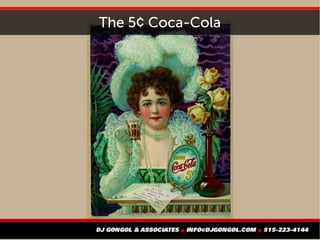
The 5¢ Coca-Cola
1900: 5¢
2017: 50¢ in a pack
2017: $1.00 from a vending machine
But...the 5¢ Coca-Cola Wasn't Really 5¢
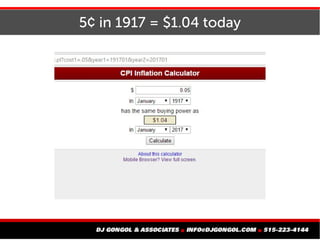
Inflation makes an enormous difference
5¢ in 1917 = $1.04 today
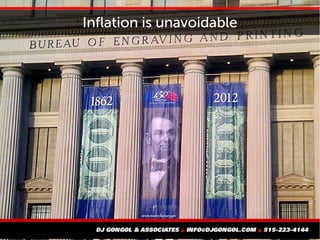
Inflation is unavoidable
Even a little amounts to a lot...over time
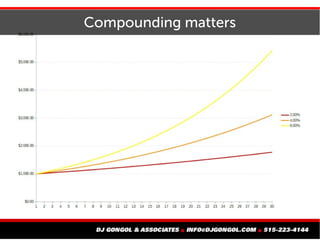
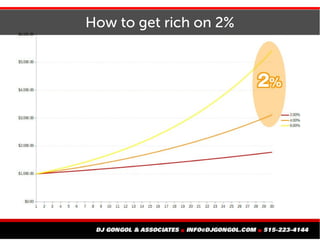
Compounding matters
How to get rich on 2%
How Buffett did it
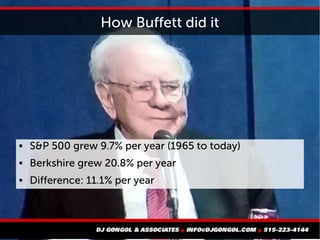
How Buffett did it
 S&P 500 grew 9.7% per year (1965 to today)
 Berkshire grew 20.8% per year
 Difference: 11.1% per year
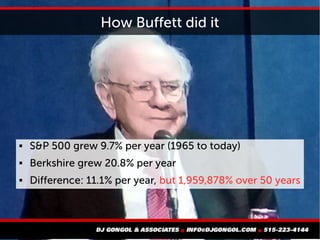
How Buffett did it
 S&P 500 grew 9.7% per year (1965 to today)
 Berkshire grew 20.8% per year
 Difference: 11.1% per year, but 1,959,878% over 50 years
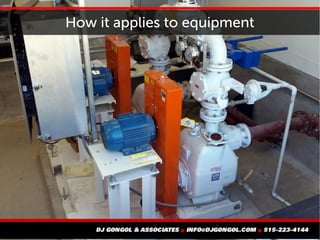
How it applies to equipment
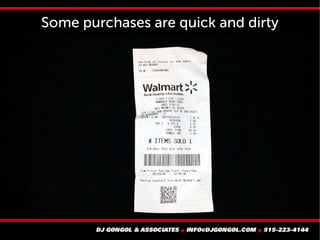
Some purchases are quick and dirty
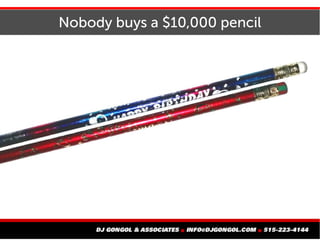
Nobody buys a $10,000 pencil
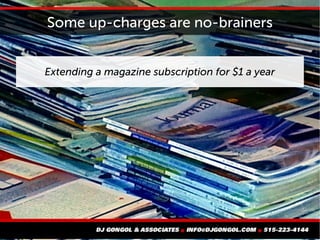
Some up-charges are no-brainers
Extending a magazine subscription for $1 a year
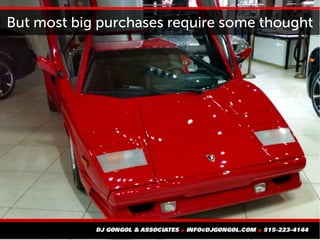
But most big purchases require some thought
Considerations and costs
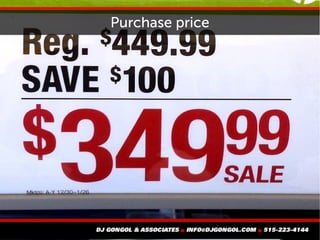
Purchase price
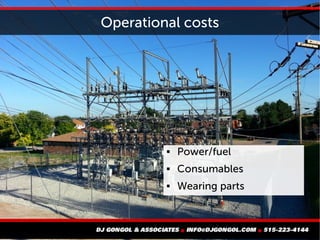
Operational costs
 Power/fuel
 Consumables
 Wearing parts
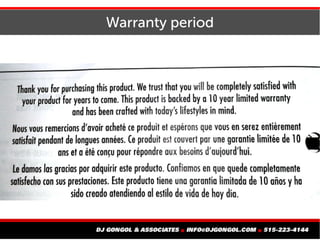
Warranty period
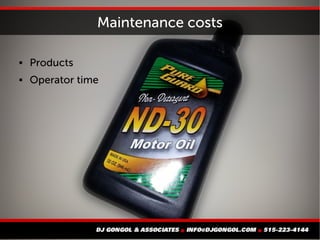
Maintenance costs
 Products
 Operator time
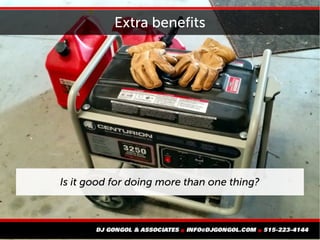
Extra benefits
Is it good for doing more than one thing?
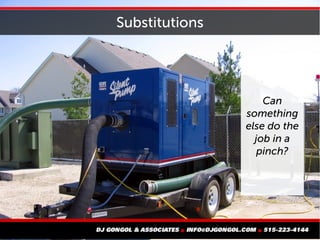
Substitutions
Can
something
else do the
job in a
pinch?
Opportunity cost
The true cost of anything
is what you give up
to get it
Accounting principle
Ideally, you want to
match the cost of something
to the time over which you'll use it
A note on financing
We live in a very, very strange era
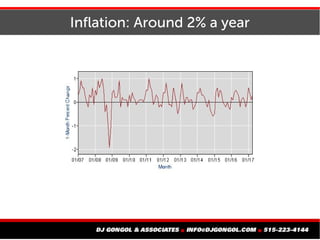
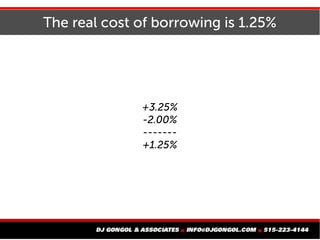
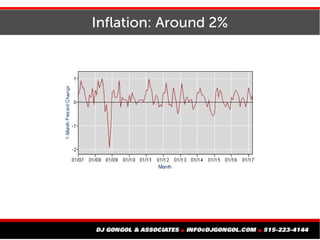
Inflation: Around 2% a year
15-year mortgage rates: 3.25%
The real cost of borrowing is 1.25%
+3.25%
-2.00%
-------
+1.25%
Easy to justify borrowing at 1.25%
It's not quite "free",
but almost
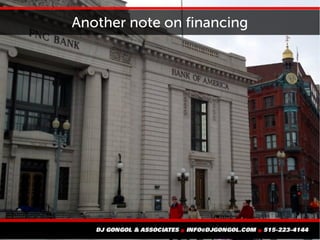
Another note on financing
Great for borrowers, terrible for savers
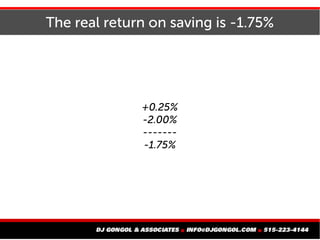
Inflation: Around 2%
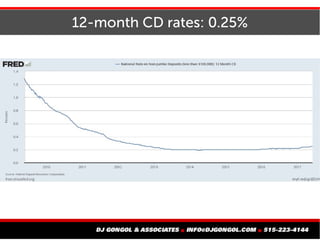
12-month CD rates: 0.25%
The real return on saving is -1.75%
+0.25%
-2.00%
-------
-1.75%
Your task
Since households aren't getting
any benefit from "safe" savings,
anything you can do to invest wisely
for long-term returns in your utility
is good for them
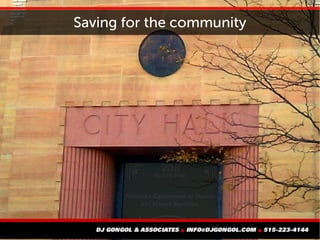
Saving for the community
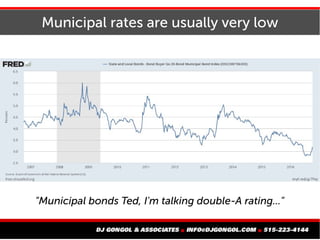
Municipal rates are usually very low
"Municipal bonds Ted, I'm talking double-A rating..."
They also rarely invest on their own behalf
It's worth considering the rate of return
for taxpayers if they kept their own money
Rewarding long-term residents
Long-term residents benefit most
from life-cycle cost management
Who benefits from "cheap"?
"Cheap" benefits transient residents and
punishes long-term community members
Two excellent times to borrow long
1. Low "real" interest rates
Interest rate on paper
minus inflation rate
equals "real" interest rate
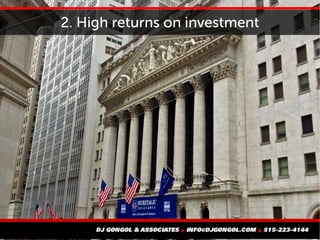
2. High returns on investment
Variables to consider
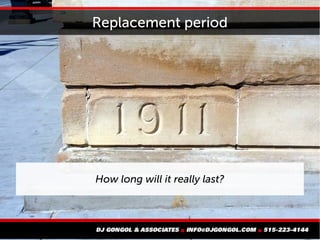
Replacement period
How long will it really last?
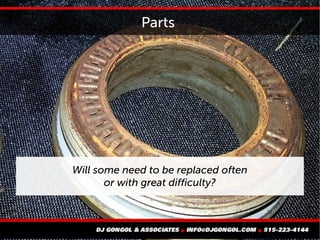
Parts
Will some need to be replaced often
or with great difficulty?
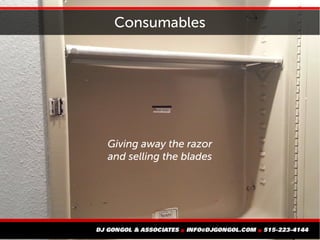
Consumables
Giving away the razor
and selling the blades
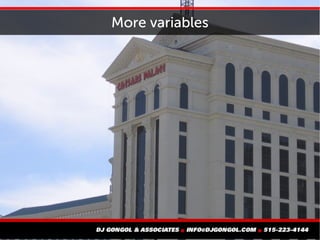
More variables
Out-of-house maintenance
Is a service contract being
sold by stealth?
Energy
It takes a lot of kilowatt-hours to pay
for maintenance labor and downtime
Real labor costs
Multiply hourly wages by
1.5 to 2 for the true cost
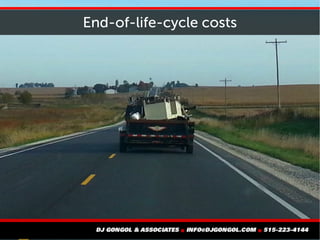
End-of-life-cycle costs
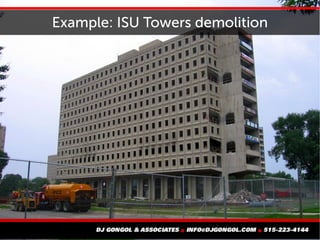
Example: ISU Towers demolition
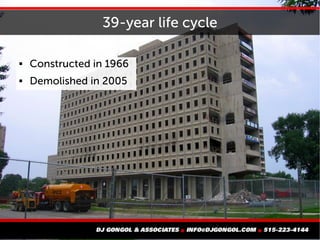
39-year life cycle
 Constructed in 1966
 Demolished in 2005
Demolition cost: $3 million
"Both buildings have significant deferred maintenance"
Considerations and costs
Purchase price
Energy costs
Operational costs
Warranty period
Maintenance costs
Major costs
Extra benefits
But wait! There's more!
Financing and opportunity costs
Special considerations when buying
Can it be rebuilt to like-new condition?
Is there an intermediate step
between new and a
complete replacement?
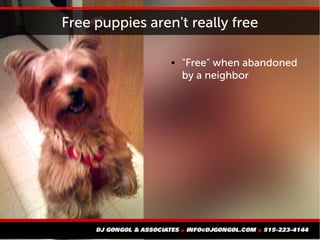
Free puppies aren't really free
 "Free" when abandoned
by a neighbor
Free puppies aren't really free
 "Free" when abandoned
by a neighbor
 Needed $600 in dental
care immediately
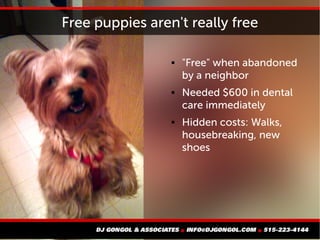
Free puppies aren't really free
 "Free" when abandoned
by a neighbor
 Needed $600 in dental
care immediately
 Hidden costs: Walks,
housebreaking, new
shoes
Example 1: When cheap really isn't
Example 2: Ongoing costs will get you
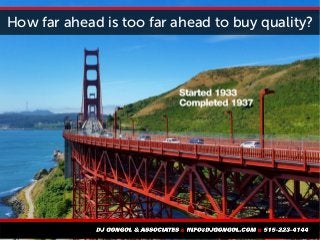
How far ahead is too far ahead to buy quality?
Dangerous to assume proper maintenance
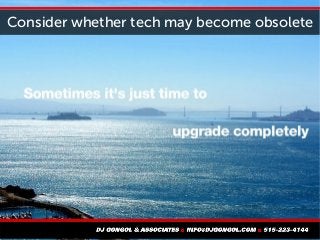
Consider whether tech may become obsolete
To recap
 Inflation happens
 Costs and investments alike can compound
 Sticker price is almost never the real life-cycle price
 How you structure your costs over time can reward or
punish certain types of customers
 Financing conditions affect the "right" decision
 Even "free" isn't really free
 Sometimes $1 spent today is worth $2.50 later
Questions?
 Thank you for your
attention!
 Brian Gongol
 DJ Gongol & Associates
 515-223-4144
 brian@gongol.net
 www.gongol.net
 Twitter: @djgongol
 Facebook.com/djgongol
Credits

Coca-Cola advertising image (public domain):
 http://www.loc.gov/pictures/item/2004671509/

CPI calculation:
 https://data.bls.gov/cgi-bin/cpicalc.pl?cost1=.05&year1=191701&year2=201701
 CPI graph:

https://data.bls.gov/pdq/SurveyOutputServlet

CPI data:

https://fred.stlouisfed.org/graph/?g=dZrT
 15-year mortgage data:
 https://fred.stlouisfed.org/series/MORTGAGE15US

12-month CD data:

https://fred.stlouisfed.org/series/CD12NRNJ

Municipal bonds:
 https://fred.stlouisfed.org/series/WSLB20
 Alcatraz closure:

https://www.bop.gov/about/history/alcatraz.jsp

All other pictures and images are original work by Brian Gongol.

Copyright and all other rights reserved. Use by others is prohibited except by explicit written permission.

When $1 today is worth $2.50 tomorrow