An education effort from
Blockchain Training
an education effort from
An education effort from
Blockchain
Lesson 02
An education effort from
What's Blockchain?
Is a data structure used to create a decentralized ledger.
Is composed of blocks in a serialized manner. A block contains a set of
transactions, a hash of the previous block, timestamp, block reward, block number,
and so on.
Every block contains a hash of the previous block, thus creating a chain of block
linked with each other.
Every node on the network contains a copy of the blockchain.
An education effort from
What's Blockchain?
The major advantage of blockchain data structure is that it automates auditing and
makes an application transparent yet secure. It can prevent fraud and corruption. It
can be used to solve many other problems depending on how you implement and
use it.
An education effort from
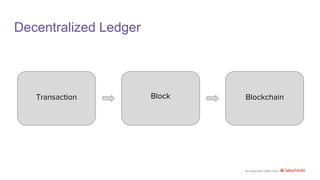
Decentralized Ledger
Transaction Block Blockchain
An education effort from
Blockchain Data Structures
● Transaction: the most basic unit of execution, it results in calling a function
like transfer to deduct funds from one account to add them to another.
● Ledger: a list of new transactions to be added, existing transactions cannot
be modified or deleted.
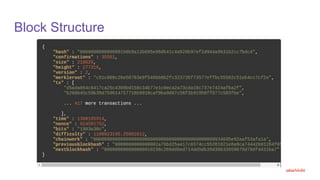
● Block: a ledger with added meta-data such as a timestamp, a merkle tree
root that is summary of the ledger for quick verifications, the hash value of the
previous block and the hash value of this new block being added.
● Blockchain: the particular implementation of a decentralized ledger for a
specific purpose. Bitcoin is a blockchain for currency transactions that
enables global, secure and fast transfer of value.
An education effort from
Block Structure
An education effort from
Consensus
Logical system where every individual produces a good or service he specializes in
and exchange it for another good.
However this had some problems:
● No common unit of value
● Goods are perishable
● Transportation of goods wasn't efficient
● Not secure
An education effort from
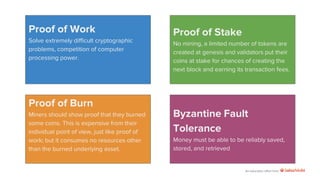
Proof of Work
Solve extremely difficult cryptographic
problems, competition of computer
processing power.
Proof of Stake
No mining, a limited number of tokens are
created at genesis and validators put their
coins at stake for chances of creating the
next block and earning its transaction fees.
Proof of Burn
Miners should show proof that they burned
some coins. This is expensive from their
individual point of view, just like proof of
work; but it consumes no resources other
than the burned underlying asset.
Byzantine Fault
Tolerance
Money must be able to be reliably saved,
stored, and retrieved
An education effort from
Mining - Proof of Work
Race to find the solution to a cryptography problem. Winner gets a reward of newly
created “coins”.
However this had some problems:
● Intense computational calculations.
● Computer resources: CPU, GPU, Storage.
● Electric power hungry - renewable
● Not secure
An education effort from
Blockchain examples
Here are some of the most common blockchain implementations as of Q1 2018:
● Bitcoin
● IPFS
● Ethereum
● HyperLedger
● FileCoin
● Dash
● BigchainDB
● Ripple

What's Blockchain and it's structures?

  • 1.
    An education effortfrom Blockchain Training an education effort from
  • 2.
    An education effortfrom Blockchain Lesson 02
  • 3.
    An education effortfrom What's Blockchain? Is a data structure used to create a decentralized ledger. Is composed of blocks in a serialized manner. A block contains a set of transactions, a hash of the previous block, timestamp, block reward, block number, and so on. Every block contains a hash of the previous block, thus creating a chain of block linked with each other. Every node on the network contains a copy of the blockchain.
  • 4.
    An education effortfrom What's Blockchain? The major advantage of blockchain data structure is that it automates auditing and makes an application transparent yet secure. It can prevent fraud and corruption. It can be used to solve many other problems depending on how you implement and use it.
  • 5.
    An education effortfrom Decentralized Ledger Transaction Block Blockchain
  • 6.
    An education effortfrom Blockchain Data Structures ● Transaction: the most basic unit of execution, it results in calling a function like transfer to deduct funds from one account to add them to another. ● Ledger: a list of new transactions to be added, existing transactions cannot be modified or deleted. ● Block: a ledger with added meta-data such as a timestamp, a merkle tree root that is summary of the ledger for quick verifications, the hash value of the previous block and the hash value of this new block being added. ● Blockchain: the particular implementation of a decentralized ledger for a specific purpose. Bitcoin is a blockchain for currency transactions that enables global, secure and fast transfer of value.
  • 7.
    An education effortfrom Block Structure
  • 8.
    An education effortfrom Consensus Logical system where every individual produces a good or service he specializes in and exchange it for another good. However this had some problems: ● No common unit of value ● Goods are perishable ● Transportation of goods wasn't efficient ● Not secure
  • 9.
    An education effortfrom Proof of Work Solve extremely difficult cryptographic problems, competition of computer processing power. Proof of Stake No mining, a limited number of tokens are created at genesis and validators put their coins at stake for chances of creating the next block and earning its transaction fees. Proof of Burn Miners should show proof that they burned some coins. This is expensive from their individual point of view, just like proof of work; but it consumes no resources other than the burned underlying asset. Byzantine Fault Tolerance Money must be able to be reliably saved, stored, and retrieved
  • 10.
    An education effortfrom Mining - Proof of Work Race to find the solution to a cryptography problem. Winner gets a reward of newly created “coins”. However this had some problems: ● Intense computational calculations. ● Computer resources: CPU, GPU, Storage. ● Electric power hungry - renewable ● Not secure
  • 11.
    An education effortfrom Blockchain examples Here are some of the most common blockchain implementations as of Q1 2018: ● Bitcoin ● IPFS ● Ethereum ● HyperLedger ● FileCoin ● Dash ● BigchainDB ● Ripple