What to consider when
creating an inclusive
learning environment
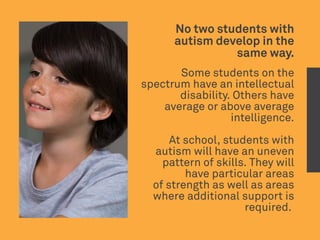
Some students on the
spectrum have an intellectual
disability. Others have
average or above average
intelligence.
At school, students with
autism will have an uneven
pattern of skills. They will
have particular areas
of strength as well as areas
where additional support is
required. 
No two students with
autism develop in the
same way.
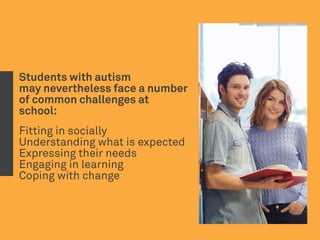
Students with autism
may nevertheless face a number
of common challenges at
school:
Fitting in socially 
Understanding what is expected
Expressing their needs
Engaging in learning
Coping with change
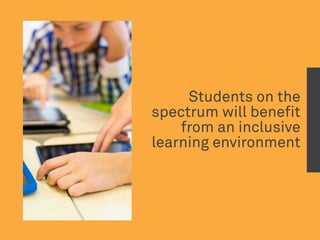
Students on the
spectrum will benefit
from an inclusive
learning environment
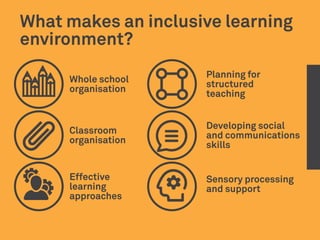
Classroom
organisation
Whole school
organisation
Effective
learning
approaches
Planning for
structured
teaching
Developing social
and communications
skills
Sensory processing
and support
What makes an inclusive learning
environment?
Students on the
spectrum benefit when
their schools adopt a
whole school approach
to teaching, learning
and support.
Whole school organisation
A whole school approach means
that all members of the school
community take responsibility for
ensuring that students with autism
have opportunities to maximise
their learning. It is also important
that students on the spectrum
understand the school’s ethos,
expectations and behaviour rules.
Students on the
spectrum can be
significantly affected
by their physical
learning environment.
Classroom organisation
A calm and predictable environment
is important, while places and
times for breaks can also be a
helpful way of supporting students
with autism. A clear understanding
of students’ individual needs and
preferred ways of working also
helps to create an inclusive
classroom environment.
Effective learning approaches
Skills for effective
learning may need to
be explicitly taught for
students on the
spectrum.
Classroom talk, timetables and
tasks need to be presented in a
structured way for students with
autism. The challenges in social
interaction faced by students on the
spectrum also need to be prepared
and planned for if learning is to be
effective.
Planning for structured
teaching
This requires teachers to
understand the pattern of strengths
and abilities of students on the
spectrum. Adjustments need to be
made so that the curriculum can be
accessed by students with autism,
which means that teaching
approaches should be clear and
explicit, and tasks broken down into
manageable steps
Structured teaching
approaches should be
in place across the
school and curriculum
to create an inclusive
learning environment.

Developing social and
communications skills
Students with autism
may not develop social
and communication
skills in the same way
as students not on the
spectrum.
An inclusive learning environment
for students on the spectrum is one
where social and communication
skills are explicitly taught. This can
also help to reduce the anxiety that
students with autism may
experience in the sort of social
interactions that occur in the
classroom.
Sensory processing and support
This means that the response of
students with autism to sensory
experiences may be hypo-sensitive
in certain areas whilst being hyper-
sensitive in others. An inclusive
learning environment will have
strategies in place that
accommodates a student’s sensory
profile.
Students on the
spectrum may
experience sensory
processing difficulties
that have a significant
impact on learning.


What to Consider When Creating an Inclusive Learning Environment

  • 1.
    What to considerwhen creating an inclusive learning environment
  • 2.
    Some students onthe spectrum have an intellectual disability. Others have average or above average intelligence. At school, students with autism will have an uneven pattern of skills. They will have particular areas of strength as well as areas where additional support is required.  No two students with autism develop in the same way.
  • 3.
    Students with autism may nevertheless facea number of common challenges at school: Fitting in socially  Understanding what is expected Expressing their needs Engaging in learning Coping with change
  • 4.
    Students on the spectrumwill benefit from an inclusive learning environment
  • 5.
    Classroom organisation Whole school organisation Effective learning approaches Planning for structured teaching Developingsocial and communications skills Sensory processing and support What makes an inclusive learning environment?
  • 6.
    Students on the spectrumbenefit when their schools adopt a whole school approach to teaching, learning and support. Whole school organisation A whole school approach means that all members of the school community take responsibility for ensuring that students with autism have opportunities to maximise their learning. It is also important that students on the spectrum understand the school’s ethos, expectations and behaviour rules.
  • 7.
    Students on the spectrum canbe significantly affected by their physical learning environment. Classroom organisation A calm and predictable environment is important, while places and times for breaks can also be a helpful way of supporting students with autism. A clear understanding of students’ individual needs and preferred ways of working also helps to create an inclusive classroom environment.
  • 8.
    Effective learning approaches Skillsfor effective learning may need to be explicitly taught for students on the spectrum. Classroom talk, timetables and tasks need to be presented in a structured way for students with autism. The challenges in social interaction faced by students on the spectrum also need to be prepared and planned for if learning is to be effective.
  • 9.
    Planning for structured teaching Thisrequires teachers to understand the pattern of strengths and abilities of students on the spectrum. Adjustments need to be made so that the curriculum can be accessed by students with autism, which means that teaching approaches should be clear and explicit, and tasks broken down into manageable steps Structured teaching approaches should be in place across the school and curriculum to create an inclusive learning environment.

  • 10.
    Developing social and communicationsskills Students with autism may not develop social and communication skills in the same way as students not on the spectrum. An inclusive learning environment for students on the spectrum is one where social and communication skills are explicitly taught. This can also help to reduce the anxiety that students with autism may experience in the sort of social interactions that occur in the classroom.
  • 11.
    Sensory processing andsupport This means that the response of students with autism to sensory experiences may be hypo-sensitive in certain areas whilst being hyper- sensitive in others. An inclusive learning environment will have strategies in place that accommodates a student’s sensory profile. Students on the spectrum may experience sensory processing difficulties that have a significant impact on learning.