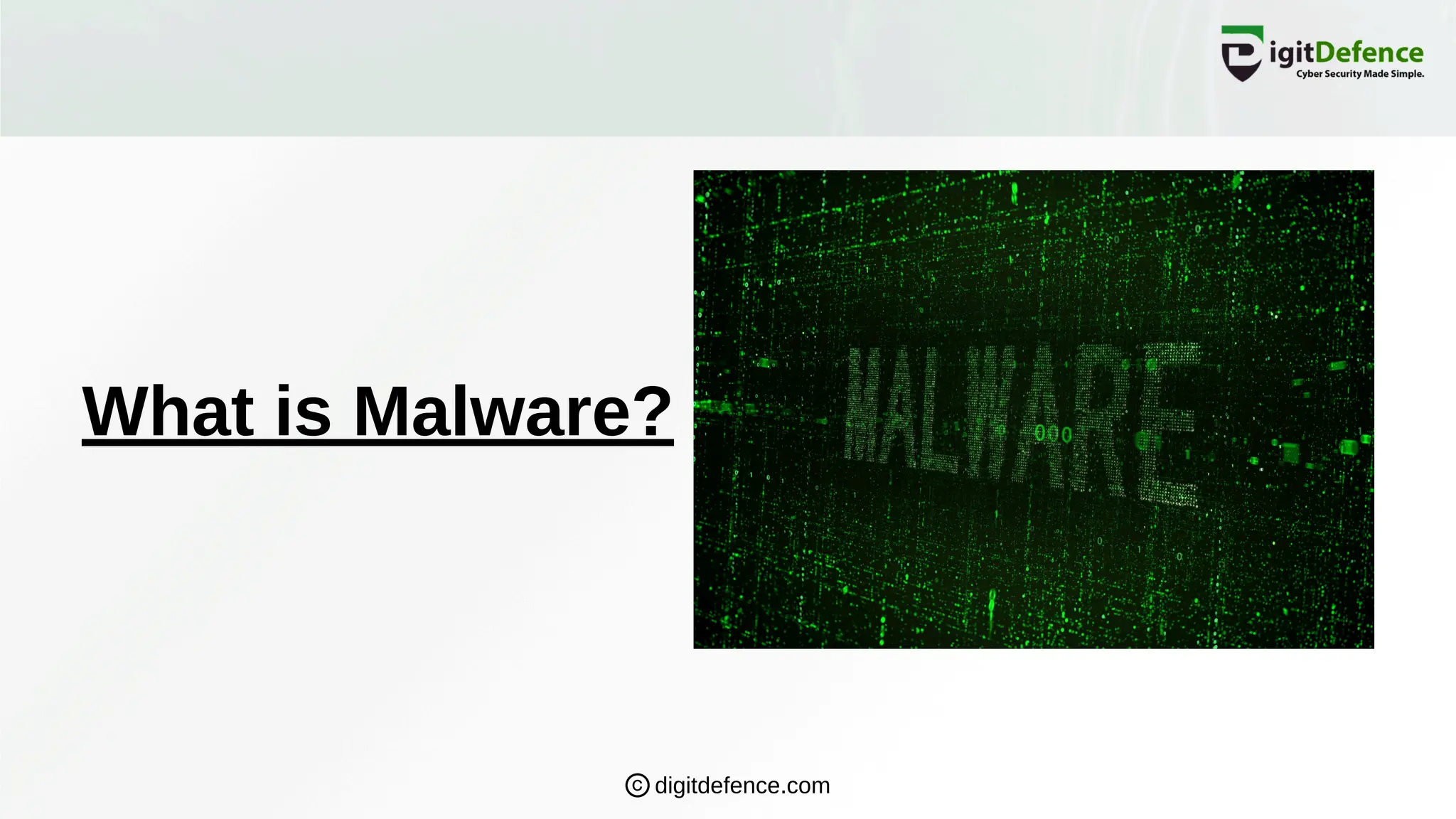
What is Malware?
digitdefence.com
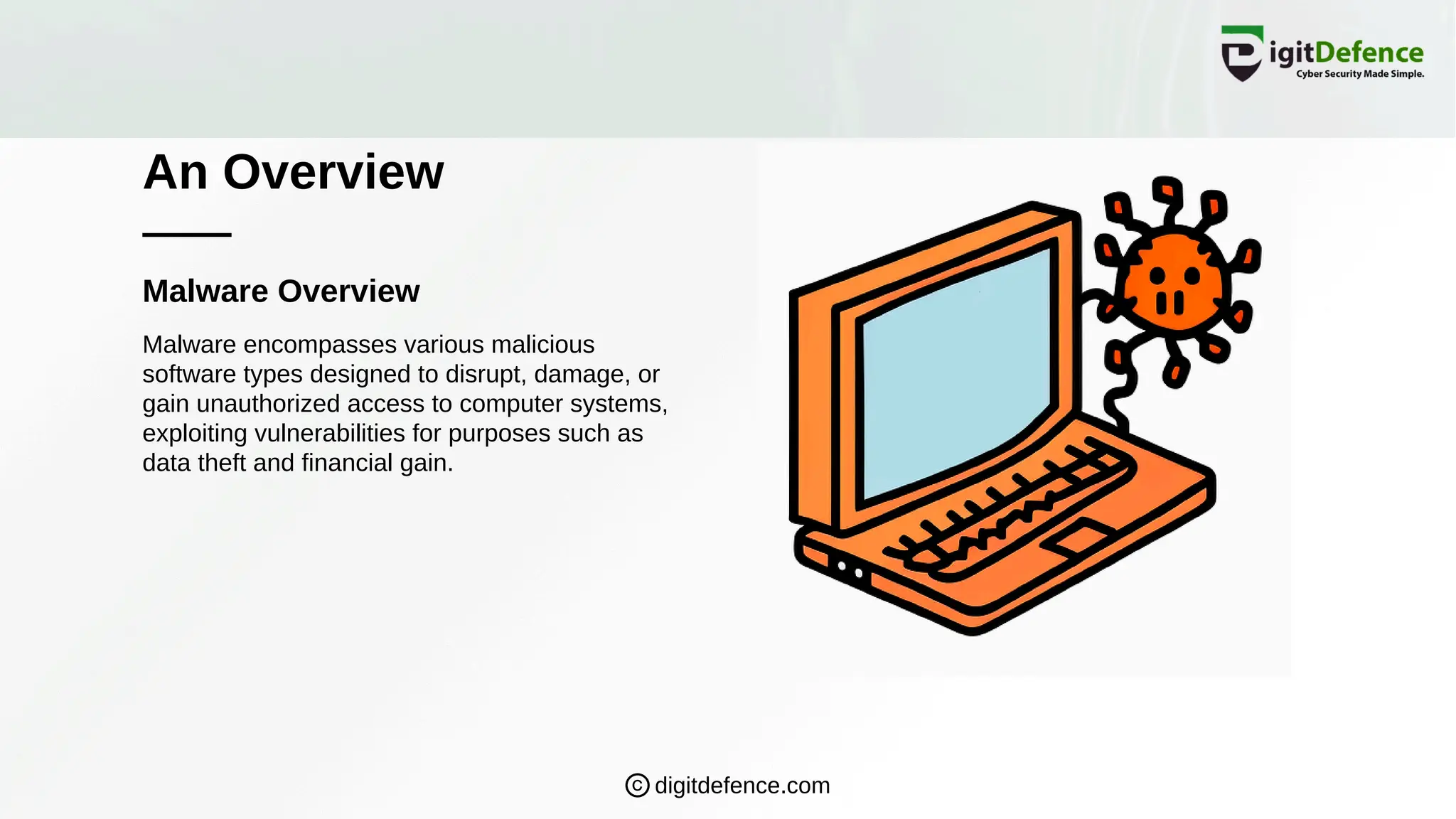
An Overview
Malware Overview
Malware encompasses various malicious
software types designed to disrupt, damage, or
gain unauthorized access to computer systems,
exploiting vulnerabilities for purposes such as
data theft and financial gain.
digitdefence.com
01 02 03
How It Operates
Infection
Strategies
Diverse Malware
Types
Command and
Control Dynamics
Malware employs various
infection strategies,
including social engineering,
exploiting software
vulnerabilities, and
deceptive files, often
requiring user interaction to
initiate the infection process
through methods like
phishing or drive-by
downloads.
Different malware types,
such as viruses, worms,
Trojans, ransomware, and
spyware, exhibit unique
operational characteristics,
each with specific methods
of propagation, damage,
and stealth capabilities,
complicating detection and
response efforts.
Many malware variants
establish a command and
control (C2) relationship with
attackers, allowing remote
manipulation of infected
devices, data exfiltration,
and further malicious
actions, often utilizing
encrypted communication to
evade security measures.
digitdefence.com
01 02 03
Common Misconceptions About Malware
Malware
Diversity
Targeted
Users
Device
Vulnerability
Malware includes various forms
beyond viruses, such as
ransomware and spyware, each
with unique methods of attack and
impact, necessitating a
comprehensive understanding for
effective defense strategies.
Malware can affect anyone,
regardless of technical expertise;
cybercriminals often exploit
vulnerabilities in both novice and
experienced users, highlighting the
need for universal security
awareness.
All internet-connected devices,
including smartphones and IoT
devices, are susceptible to
malware, emphasizing the
importance of implementing
security measures across all
platforms to mitigate risks.
digitdefence.com
01 02
03 04
The Impact of Malware on Systems and Data
Significant System Disruption Data Breach Risks
Financial Burden Regulatory Compliance Issues
Malware can severely disrupt system
operations, leading to downtime and
loss of productivity, which can have
immediate financial repercussions for
organizations.
The potential for data theft and
compromise is heightened with
malware, exposing sensitive
information and leading to identity
theft and financial fraud.
Organizations face substantial costs
related to malware attacks, including
recovery expenses, loss of customer
trust, and potential ransom payments
in ransomware scenarios.
Malware incidents can result in legal
consequences, including fines and
lawsuits, particularly for organizations
that fail to protect sensitive data as
mandated by regulations.
digitdefence.com
How They Spread and Affect Systems
Propagation
Mechanisms
Systemic
Consequences
Viruses utilize various propagation
mechanisms, including social engineering
tactics that trick users into executing infected
files, and exploiting software vulnerabilities.
Understanding these methods is crucial for
developing effective countermeasures and
enhancing user awareness to prevent
unintentional virus activation.
The systemic consequences of virus
infections extend beyond immediate data
loss; they can lead to long-term operational
disruptions, increased recovery costs, and
potential legal liabilities. Organizations must
recognize these risks to implement
comprehensive security strategies that
address both prevention and recovery.
digitdefence.com
Deceptive Tactics and
Risks
Impact on Cybersecurity
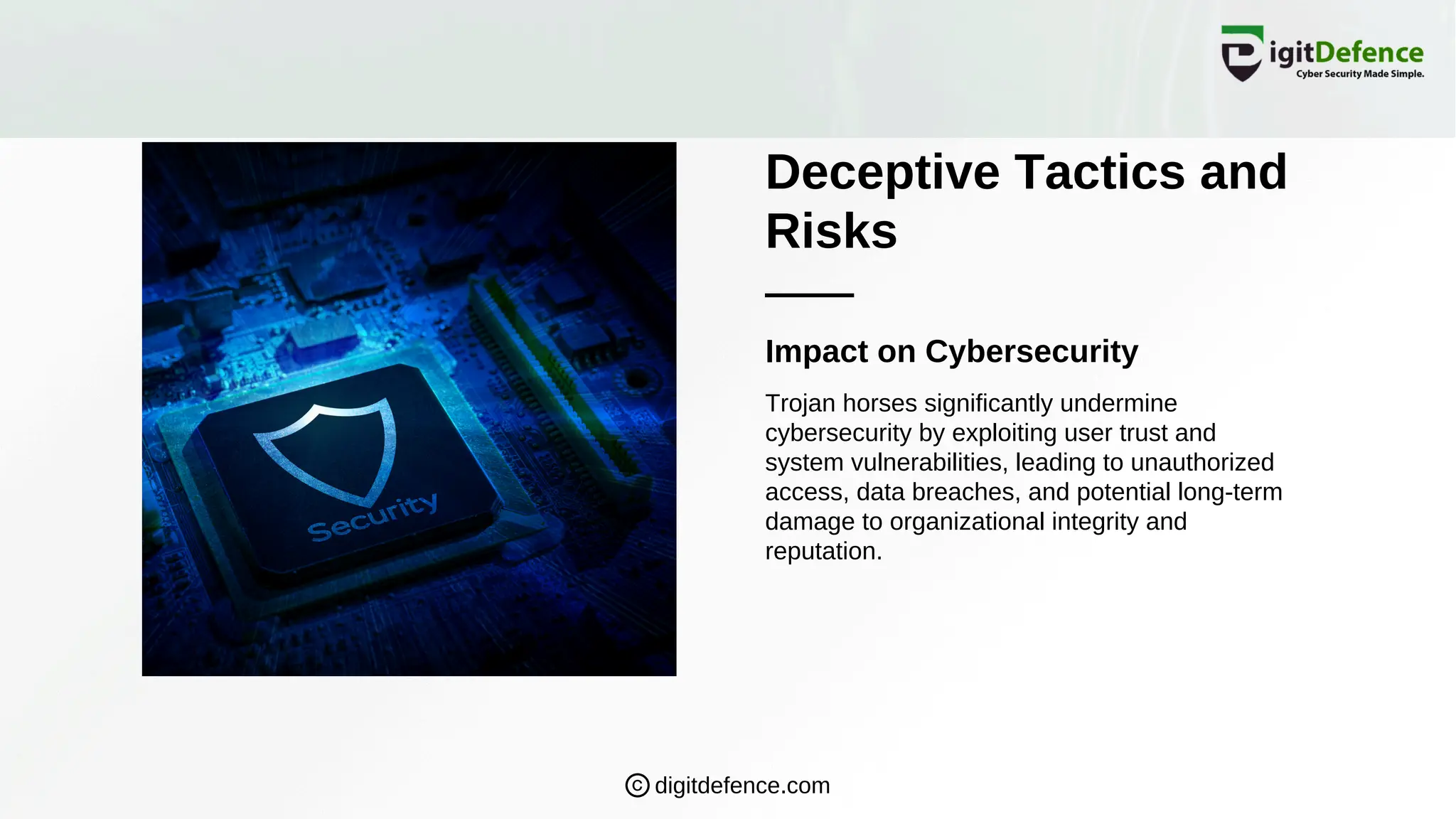
Trojan horses significantly undermine
cybersecurity by exploiting user trust and
system vulnerabilities, leading to unauthorized
access, data breaches, and potential long-term
damage to organizational integrity and
reputation.
digitdefence.com
The Growing Threat and Its Consequences
Financial Impact of
Ransomware
Operational Disruption
Risks
Evolving Attack
Strategies
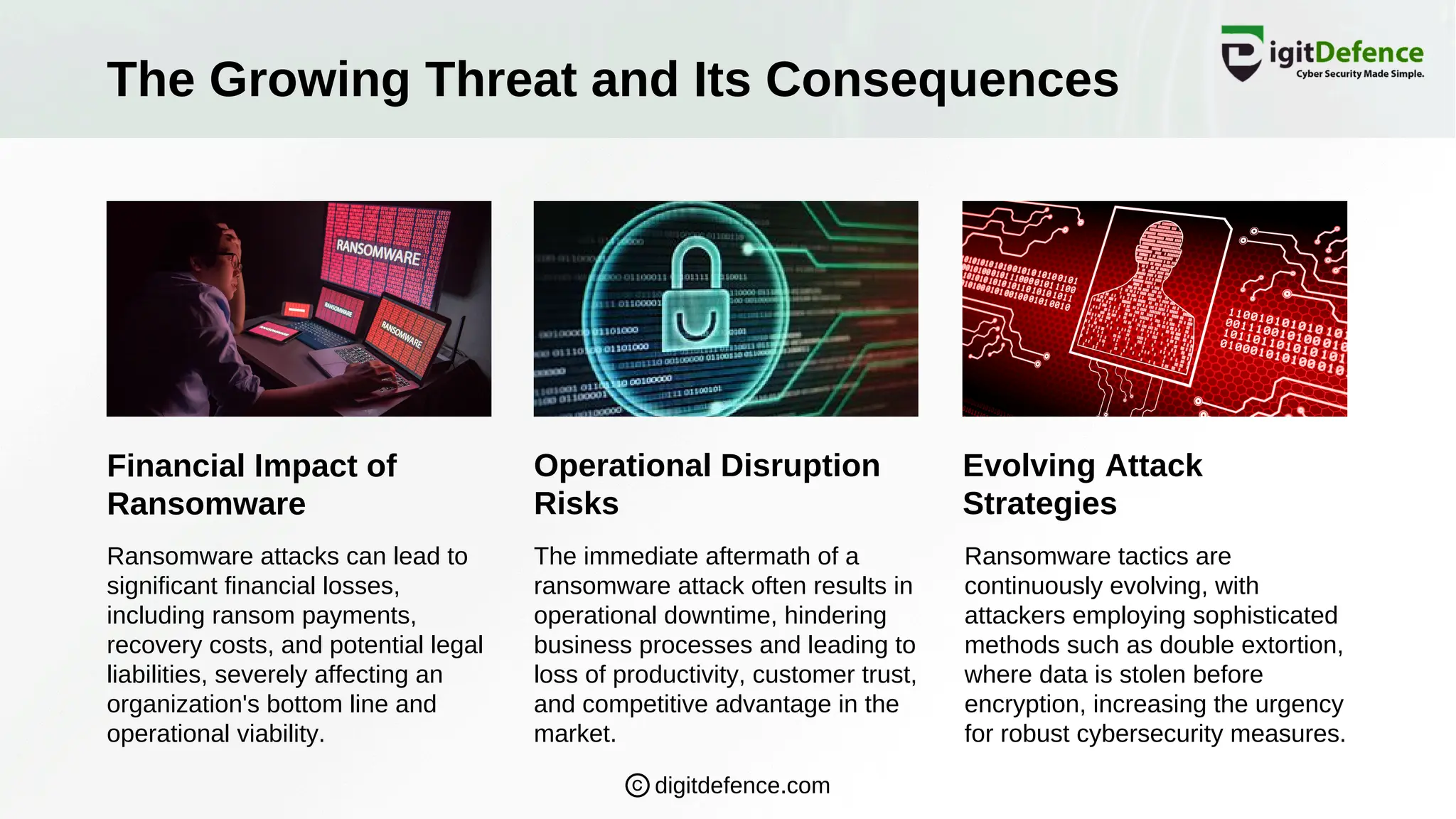
Ransomware attacks can lead to
significant financial losses,
including ransom payments,
recovery costs, and potential legal
liabilities, severely affecting an
organization's bottom line and
operational viability.
The immediate aftermath of a
ransomware attack often results in
operational downtime, hindering
business processes and leading to
loss of productivity, customer trust,
and competitive advantage in the
market.
Ransomware tactics are
continuously evolving, with
attackers employing sophisticated
methods such as double extortion,
where data is stolen before
encryption, increasing the urgency
for robust cybersecurity measures.
digitdefence.com
Best Practices for Malware Prevention
Regular Software Updates
Comprehensive User Training
Data Backup Protocols
Consistently updating software, including operating systems and applications, is essential to
close security gaps that malware can exploit, thereby enhancing overall system security and
resilience against attacks.
Providing ongoing education about recognizing phishing attempts and safe browsing practices
empowers users to identify and avoid potential malware threats, significantly reducing the risk of
infection.
Establishing a routine for backing up critical data ensures that organizations can quickly recover
from malware incidents, minimizing downtime and data loss while maintaining business
continuity.
digitdefence.com
01 02 03
Tools and Software for Malware Detection
Proactive Threat
Identification
Comprehensive
Coverage
Real-Time
Monitoring
Effective malware detection tools
utilize advanced algorithms and
machine learning to identify
potential threats before they can
inflict damage, enhancing overall
cybersecurity posture.
A combination of antivirus, anti-
malware, and EDR solutions
ensures a multi-layered defense,
addressing various malware types
and attack vectors for robust
protection.
Continuous monitoring capabilities
of detection tools allow for
immediate response to suspicious
activities, significantly reducing the
risk of successful malware attacks
and data breaches.
digitdefence.com

What is Malware - Digitdefence Cybersecurity Service

  • 1.
  • 2.
    An Overview Malware Overview Malwareencompasses various malicious software types designed to disrupt, damage, or gain unauthorized access to computer systems, exploiting vulnerabilities for purposes such as data theft and financial gain. digitdefence.com
  • 3.
    01 02 03 HowIt Operates Infection Strategies Diverse Malware Types Command and Control Dynamics Malware employs various infection strategies, including social engineering, exploiting software vulnerabilities, and deceptive files, often requiring user interaction to initiate the infection process through methods like phishing or drive-by downloads. Different malware types, such as viruses, worms, Trojans, ransomware, and spyware, exhibit unique operational characteristics, each with specific methods of propagation, damage, and stealth capabilities, complicating detection and response efforts. Many malware variants establish a command and control (C2) relationship with attackers, allowing remote manipulation of infected devices, data exfiltration, and further malicious actions, often utilizing encrypted communication to evade security measures. digitdefence.com
  • 4.
    01 02 03 CommonMisconceptions About Malware Malware Diversity Targeted Users Device Vulnerability Malware includes various forms beyond viruses, such as ransomware and spyware, each with unique methods of attack and impact, necessitating a comprehensive understanding for effective defense strategies. Malware can affect anyone, regardless of technical expertise; cybercriminals often exploit vulnerabilities in both novice and experienced users, highlighting the need for universal security awareness. All internet-connected devices, including smartphones and IoT devices, are susceptible to malware, emphasizing the importance of implementing security measures across all platforms to mitigate risks. digitdefence.com
  • 5.
    01 02 03 04 TheImpact of Malware on Systems and Data Significant System Disruption Data Breach Risks Financial Burden Regulatory Compliance Issues Malware can severely disrupt system operations, leading to downtime and loss of productivity, which can have immediate financial repercussions for organizations. The potential for data theft and compromise is heightened with malware, exposing sensitive information and leading to identity theft and financial fraud. Organizations face substantial costs related to malware attacks, including recovery expenses, loss of customer trust, and potential ransom payments in ransomware scenarios. Malware incidents can result in legal consequences, including fines and lawsuits, particularly for organizations that fail to protect sensitive data as mandated by regulations. digitdefence.com
  • 6.
    How They Spreadand Affect Systems Propagation Mechanisms Systemic Consequences Viruses utilize various propagation mechanisms, including social engineering tactics that trick users into executing infected files, and exploiting software vulnerabilities. Understanding these methods is crucial for developing effective countermeasures and enhancing user awareness to prevent unintentional virus activation. The systemic consequences of virus infections extend beyond immediate data loss; they can lead to long-term operational disruptions, increased recovery costs, and potential legal liabilities. Organizations must recognize these risks to implement comprehensive security strategies that address both prevention and recovery. digitdefence.com
  • 7.
    Deceptive Tactics and Risks Impacton Cybersecurity Trojan horses significantly undermine cybersecurity by exploiting user trust and system vulnerabilities, leading to unauthorized access, data breaches, and potential long-term damage to organizational integrity and reputation. digitdefence.com
  • 8.
    The Growing Threatand Its Consequences Financial Impact of Ransomware Operational Disruption Risks Evolving Attack Strategies Ransomware attacks can lead to significant financial losses, including ransom payments, recovery costs, and potential legal liabilities, severely affecting an organization's bottom line and operational viability. The immediate aftermath of a ransomware attack often results in operational downtime, hindering business processes and leading to loss of productivity, customer trust, and competitive advantage in the market. Ransomware tactics are continuously evolving, with attackers employing sophisticated methods such as double extortion, where data is stolen before encryption, increasing the urgency for robust cybersecurity measures. digitdefence.com
  • 9.
    Best Practices forMalware Prevention Regular Software Updates Comprehensive User Training Data Backup Protocols Consistently updating software, including operating systems and applications, is essential to close security gaps that malware can exploit, thereby enhancing overall system security and resilience against attacks. Providing ongoing education about recognizing phishing attempts and safe browsing practices empowers users to identify and avoid potential malware threats, significantly reducing the risk of infection. Establishing a routine for backing up critical data ensures that organizations can quickly recover from malware incidents, minimizing downtime and data loss while maintaining business continuity. digitdefence.com
  • 10.
    01 02 03 Toolsand Software for Malware Detection Proactive Threat Identification Comprehensive Coverage Real-Time Monitoring Effective malware detection tools utilize advanced algorithms and machine learning to identify potential threats before they can inflict damage, enhancing overall cybersecurity posture. A combination of antivirus, anti- malware, and EDR solutions ensures a multi-layered defense, addressing various malware types and attack vectors for robust protection. Continuous monitoring capabilities of detection tools allow for immediate response to suspicious activities, significantly reducing the risk of successful malware attacks and data breaches. digitdefence.com