Data Encryption and Protection
in Cloud Computing
digitdefence.com
01 02 03
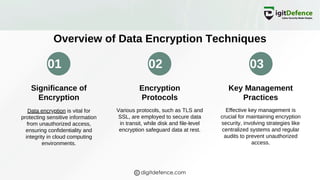
Overview of Data Encryption Techniques
Significance of
Encryption
Encryption
Protocols
Key Management
Practices
Data encryption is vital for
protecting sensitive information
from unauthorized access,
ensuring confidentiality and
integrity in cloud computing
environments.
Various protocols, such as TLS and
SSL, are employed to secure data
in transit, while disk and file-level
encryption safeguard data at rest.
Effective key management is
crucial for maintaining encryption
security, involving strategies like
centralized systems and regular
audits to prevent unauthorized
access.
digitdefence.com
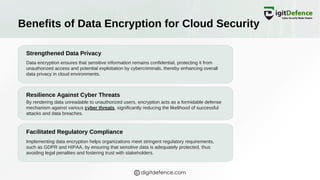
Benefits of Data Encryption for Cloud Security
Strengthened Data Privacy
Resilience Against Cyber Threats
Facilitated Regulatory Compliance
Data encryption ensures that sensitive information remains confidential, protecting it from
unauthorized access and potential exploitation by cybercriminals, thereby enhancing overall
data privacy in cloud environments.
By rendering data unreadable to unauthorized users, encryption acts as a formidable defense
mechanism against various cyber threats, significantly reducing the likelihood of successful
attacks and data breaches.
Implementing data encryption helps organizations meet stringent regulatory requirements,
such as GDPR and HIPAA, by ensuring that sensitive data is adequately protected, thus
avoiding legal penalties and fostering trust with stakeholders.
digitdefence.com
Challenges in Implementing Data Encryption
Complexity of Protocol
Selection
Robust Key Management
Needs
Performance
Trade-offs
Organizations face difficulties in
selecting appropriate encryption
protocols due to the vast array of
algorithms available, each with
unique strengths, weaknesses,
and implementation requirements.
Effective key management is
essential yet challenging, as it
involves secure generation,
distribution, and storage of keys,
particularly in multi-cloud
environments with diverse access
points.
Implementing encryption can lead
to performance degradation, as
the computational demands of
encryption and decryption
processes may increase latency,
impacting overall cloud service
efficiency.
digitdefence.com
01 02 03
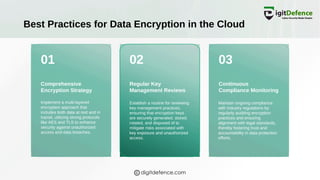
Best Practices for Data Encryption in the Cloud
Comprehensive
Encryption Strategy
Regular Key
Management Reviews
Continuous
Compliance Monitoring
Implement a multi-layered
encryption approach that
includes both data at rest and in
transit, utilizing strong protocols
like AES and TLS to enhance
security against unauthorized
access and data breaches.
Establish a routine for reviewing
key management practices,
ensuring that encryption keys
are securely generated, stored,
rotated, and disposed of to
mitigate risks associated with
key exposure and unauthorized
access.
Maintain ongoing compliance
with industry regulations by
regularly auditing encryption
practices and ensuring
alignment with legal standards,
thereby fostering trust and
accountability in data protection
efforts.
digitdefence.com
Identity and Access Management (IAM) Strategies
Enhanced
Security
Measures
Streamlined
Compliance
Management
Implementing advanced IAM strategies,
such as adaptive authentication and
contextual access controls, significantly
strengthens security by evaluating user
behavior and environmental factors,
thereby reducing the risk of
unauthorized access and potential data
breaches in cloud environments.
A well-defined IAM framework not only
secures access but also simplifies
compliance with regulations like GDPR
and HIPAA by automating user access
reviews and maintaining detailed audit
trails, ensuring organizations can
demonstrate adherence to legal
requirements effectively.
digitdefence.com
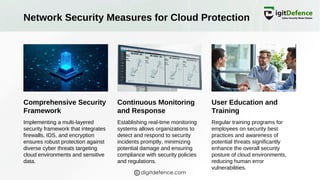
Network Security Measures for Cloud Protection
Comprehensive Security
Framework
Continuous Monitoring
and Response
User Education and
Training
Implementing a multi-layered
security framework that integrates
firewalls, IDS, and encryption
ensures robust protection against
diverse cyber threats targeting
cloud environments and sensitive
data.
Establishing real-time monitoring
systems allows organizations to
detect and respond to security
incidents promptly, minimizing
potential damage and ensuring
compliance with security policies
and regulations.
Regular training programs for
employees on security best
practices and awareness of
potential threats significantly
enhance the overall security
posture of cloud environments,
reducing human error
vulnerabilities.
digitdefence.com
01 02 03
Compliance and Regulatory Considerations
Understanding
Regulatory Obligations
Implementing Risk
Management Strategies
Engaging Stakeholders
in Compliance
Organizations must thoroughly
comprehend the specific
compliance requirements relevant
to their industry, ensuring that data
handling practices align with
regulations like GDPR, HIPAA, and
PCI DSS to avoid legal
repercussions.
Proactive risk management
strategies, including regular
assessments and updates to
compliance protocols, are essential
for identifying vulnerabilities and
ensuring ongoing adherence to
evolving regulatory standards.
Involving key stakeholders,
including legal, IT, and
management teams, in compliance
discussions fosters a culture of
accountability and ensures that all
aspects of data protection are
addressed comprehensively.
digitdefence.com
Emerging Encryption
Technologies
Advancements in Quantum
Security
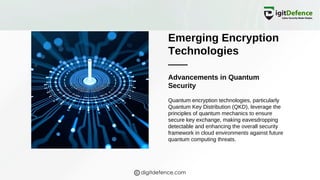
Quantum encryption technologies, particularly
Quantum Key Distribution (QKD), leverage the
principles of quantum mechanics to ensure
secure key exchange, making eavesdropping
detectable and enhancing the overall security
framework in cloud environments against future
quantum computing threats.
digitdefence.com
The Role of Artificial
Intelligence in Cloud
Security
AI-Driven Threat Intelligence
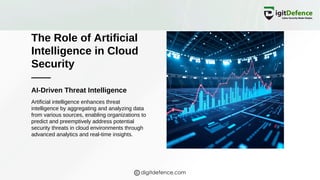
Artificial intelligence enhances threat
intelligence by aggregating and analyzing data
from various sources, enabling organizations to
predict and preemptively address potential
security threats in cloud environments through
advanced analytics and real-time insights.
digitdefence.com

Data Encryption and Protection in Cloud Computing

  • 1.
    Data Encryption andProtection in Cloud Computing digitdefence.com
  • 2.
    01 02 03 Overviewof Data Encryption Techniques Significance of Encryption Encryption Protocols Key Management Practices Data encryption is vital for protecting sensitive information from unauthorized access, ensuring confidentiality and integrity in cloud computing environments. Various protocols, such as TLS and SSL, are employed to secure data in transit, while disk and file-level encryption safeguard data at rest. Effective key management is crucial for maintaining encryption security, involving strategies like centralized systems and regular audits to prevent unauthorized access. digitdefence.com
  • 3.
    Benefits of DataEncryption for Cloud Security Strengthened Data Privacy Resilience Against Cyber Threats Facilitated Regulatory Compliance Data encryption ensures that sensitive information remains confidential, protecting it from unauthorized access and potential exploitation by cybercriminals, thereby enhancing overall data privacy in cloud environments. By rendering data unreadable to unauthorized users, encryption acts as a formidable defense mechanism against various cyber threats, significantly reducing the likelihood of successful attacks and data breaches. Implementing data encryption helps organizations meet stringent regulatory requirements, such as GDPR and HIPAA, by ensuring that sensitive data is adequately protected, thus avoiding legal penalties and fostering trust with stakeholders. digitdefence.com
  • 4.
    Challenges in ImplementingData Encryption Complexity of Protocol Selection Robust Key Management Needs Performance Trade-offs Organizations face difficulties in selecting appropriate encryption protocols due to the vast array of algorithms available, each with unique strengths, weaknesses, and implementation requirements. Effective key management is essential yet challenging, as it involves secure generation, distribution, and storage of keys, particularly in multi-cloud environments with diverse access points. Implementing encryption can lead to performance degradation, as the computational demands of encryption and decryption processes may increase latency, impacting overall cloud service efficiency. digitdefence.com
  • 5.
    01 02 03 BestPractices for Data Encryption in the Cloud Comprehensive Encryption Strategy Regular Key Management Reviews Continuous Compliance Monitoring Implement a multi-layered encryption approach that includes both data at rest and in transit, utilizing strong protocols like AES and TLS to enhance security against unauthorized access and data breaches. Establish a routine for reviewing key management practices, ensuring that encryption keys are securely generated, stored, rotated, and disposed of to mitigate risks associated with key exposure and unauthorized access. Maintain ongoing compliance with industry regulations by regularly auditing encryption practices and ensuring alignment with legal standards, thereby fostering trust and accountability in data protection efforts. digitdefence.com
  • 6.
    Identity and AccessManagement (IAM) Strategies Enhanced Security Measures Streamlined Compliance Management Implementing advanced IAM strategies, such as adaptive authentication and contextual access controls, significantly strengthens security by evaluating user behavior and environmental factors, thereby reducing the risk of unauthorized access and potential data breaches in cloud environments. A well-defined IAM framework not only secures access but also simplifies compliance with regulations like GDPR and HIPAA by automating user access reviews and maintaining detailed audit trails, ensuring organizations can demonstrate adherence to legal requirements effectively. digitdefence.com
  • 7.
    Network Security Measuresfor Cloud Protection Comprehensive Security Framework Continuous Monitoring and Response User Education and Training Implementing a multi-layered security framework that integrates firewalls, IDS, and encryption ensures robust protection against diverse cyber threats targeting cloud environments and sensitive data. Establishing real-time monitoring systems allows organizations to detect and respond to security incidents promptly, minimizing potential damage and ensuring compliance with security policies and regulations. Regular training programs for employees on security best practices and awareness of potential threats significantly enhance the overall security posture of cloud environments, reducing human error vulnerabilities. digitdefence.com
  • 8.
    01 02 03 Complianceand Regulatory Considerations Understanding Regulatory Obligations Implementing Risk Management Strategies Engaging Stakeholders in Compliance Organizations must thoroughly comprehend the specific compliance requirements relevant to their industry, ensuring that data handling practices align with regulations like GDPR, HIPAA, and PCI DSS to avoid legal repercussions. Proactive risk management strategies, including regular assessments and updates to compliance protocols, are essential for identifying vulnerabilities and ensuring ongoing adherence to evolving regulatory standards. Involving key stakeholders, including legal, IT, and management teams, in compliance discussions fosters a culture of accountability and ensures that all aspects of data protection are addressed comprehensively. digitdefence.com
  • 9.
    Emerging Encryption Technologies Advancements inQuantum Security Quantum encryption technologies, particularly Quantum Key Distribution (QKD), leverage the principles of quantum mechanics to ensure secure key exchange, making eavesdropping detectable and enhancing the overall security framework in cloud environments against future quantum computing threats. digitdefence.com
  • 10.
    The Role ofArtificial Intelligence in Cloud Security AI-Driven Threat Intelligence Artificial intelligence enhances threat intelligence by aggregating and analyzing data from various sources, enabling organizations to predict and preemptively address potential security threats in cloud environments through advanced analytics and real-time insights. digitdefence.com