The Growing Need for
Cyber Security in India
digitdefence.com
Overview of Cyber
Crimes in India
Rising Threats and Vulnerabilities
The increasing sophistication of cyber crimes in
India necessitates urgent enhancements in
cybersecurity measures, as the nation faces a
surge in identity theft, ransomware, and
phishing attacks that threaten both individual
privacy and national security.
digitdefence.com
Statistics on Cyber
Attacks and Trends
Surge in Cyber Incidents
Recent statistics reveal that India experienced
over 18 million cyber threats in the first quarter
of 2023, highlighting a dramatic increase in
cyber attacks from 44,679 incidents in 2014 to
313,649 by 2019, underscoring the urgent need
for enhanced cybersecurity measures across all
sectors.
digitdefence.com
Impact of Cyber Threats on Businesses and Individuals
Financial
Implications of
Cybercrime
Psychological
Effects on
Individuals
The financial repercussions of cyber
threats extend beyond immediate losses,
encompassing long-term impacts such as
increased insurance premiums, loss of
business opportunities, and potential
bankruptcy. Organizations must allocate
substantial resources to cybersecurity,
which can divert funds from growth and
innovation initiatives.
The psychological toll of cyber threats on
individuals can be profound, leading to
anxiety, fear, and a pervasive sense of
vulnerability. Victims may experience
ongoing stress and distrust in digital
interactions, which can hinder their
engagement with technology and online
services, affecting their overall quality of
life.
digitdefence.com
Case Studies of Notable
Cyber Incidents
Significant Data Breach
The 2016 India Post data breach exposed the
personal information of over 24 million users,
highlighting critical vulnerabilities in public
sector cybersecurity and the urgent need for
improved data protection measures.
digitdefence.com
Objectives and Implementation
Protection of Critical Infrastructure
Capacity Building Initiatives
Regulatory Framework Development
The NCSP prioritizes safeguarding essential services and systems, ensuring that critical
information infrastructure is resilient against cyber threats, thereby maintaining national
security and public safety.
The policy emphasizes the importance of training and skill development programs to equip
personnel in both public and private sectors with the necessary expertise to combat
evolving cyber threats effectively.
Establishing comprehensive guidelines and standards is crucial for enhancing compliance
with international cybersecurity norms, thereby strengthening India's overall cybersecurity
posture and fostering a culture of accountability.
digitdefence.com
Establishment of Cyber Crime Coordination Centers
Centralized Incident
Management
Enhanced Collaboration
Framework
Proactive Cybersecurity
Education
Cyber Crime Coordination Centers
serve as centralized hubs for
managing cyber incidents,
ensuring that law enforcement and
relevant agencies can respond
swiftly and effectively to emerging
threats.
These centers foster collaboration
between government, law
enforcement, and private sector
entities, creating a unified
approach to cybersecurity that
leverages diverse expertise and
resources for better outcomes.
By implementing public awareness
campaigns, the centers aim to
educate citizens on cybersecurity
best practices, thereby reducing
vulnerability and promoting a
culture of vigilance against cyber
threats.
digitdefence.com
01 02 03
Recent Legislative Developments in Cybersecurity
Strengthening Data
Protection Laws
Enhanced Cyber Crime
Response
Focus on Sector-
Specific Regulations
Recent legislative efforts focus on
enhancing data protection
frameworks, ensuring organizations
implement stringent measures to
safeguard personal information and
comply with new regulations to
mitigate risks associated with data
breaches and cyber threats.
The establishment of Cyber Crime
Coordination Centers aims to
improve the efficiency of law
enforcement in addressing cyber
incidents, facilitating real-time
monitoring and collaborative
responses to emerging cyber
threats across the nation.
Legislative developments
emphasize tailored cybersecurity
regulations for critical sectors, such
as finance and healthcare,
mandating robust security practices
and regular audits to protect
sensitive data and maintain public
trust in digital services.
digitdefence.com
01 02 03
Collaboration Between Government and Private
Sector
Synergistic Resource
Utilization
Joint Training and
Awareness Programs
Real-Time Threat
Intelligence Sharing
Effective collaboration enables
the pooling of resources,
expertise, and technology from
both sectors, enhancing the
overall cybersecurity posture
and ensuring a more resilient
response to emerging threats.
Collaborative initiatives can
lead to the development of
comprehensive training
programs that equip personnel
from both sectors with the
necessary skills to address
evolving cyber threats
effectively.
Establishing frameworks for
real-time sharing of threat
intelligence between
government and private
entities fosters a proactive
approach to cybersecurity,
allowing for quicker
identification and mitigation of
potential risks.
digitdefence.com
Role of Artificial
Intelligence in Cyber
Defense
AI-Driven Threat Mitigation
Artificial Intelligence significantly enhances the
ability to predict, detect, and respond to cyber
threats by utilizing advanced algorithms that
analyze user behavior and network traffic,
enabling organizations to proactively address
vulnerabilities and minimize potential damage
from cyberattacks.
digitdefence.com
Importance of
Blockchain Technology
for Data Security
Decentralized Trust Mechanism
Blockchain technology establishes a
decentralized trust mechanism that eliminates
the need for intermediaries, thereby reducing
the risk of data manipulation and enhancing the
overall security of sensitive information across
various sectors.
digitdefence.com
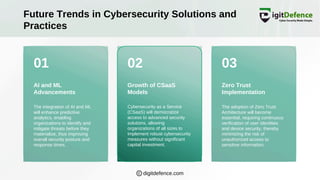
01 02 03
Future Trends in Cybersecurity Solutions and
Practices
AI and ML
Advancements
Growth of CSaaS
Models
Zero Trust
Implementation
The integration of AI and ML
will enhance predictive
analytics, enabling
organizations to identify and
mitigate threats before they
materialize, thus improving
overall security posture and
response times.
Cybersecurity as a Service
(CSaaS) will democratize
access to advanced security
solutions, allowing
organizations of all sizes to
implement robust cybersecurity
measures without significant
capital investment.
The adoption of Zero Trust
Architecture will become
essential, requiring continuous
verification of user identities
and device security, thereby
minimizing the risk of
unauthorized access to
sensitive information.
digitdefence.com

The Growing Need for Cyber Security in India

  • 1.
    The Growing Needfor Cyber Security in India digitdefence.com
  • 2.
    Overview of Cyber Crimesin India Rising Threats and Vulnerabilities The increasing sophistication of cyber crimes in India necessitates urgent enhancements in cybersecurity measures, as the nation faces a surge in identity theft, ransomware, and phishing attacks that threaten both individual privacy and national security. digitdefence.com
  • 3.
    Statistics on Cyber Attacksand Trends Surge in Cyber Incidents Recent statistics reveal that India experienced over 18 million cyber threats in the first quarter of 2023, highlighting a dramatic increase in cyber attacks from 44,679 incidents in 2014 to 313,649 by 2019, underscoring the urgent need for enhanced cybersecurity measures across all sectors. digitdefence.com
  • 4.
    Impact of CyberThreats on Businesses and Individuals Financial Implications of Cybercrime Psychological Effects on Individuals The financial repercussions of cyber threats extend beyond immediate losses, encompassing long-term impacts such as increased insurance premiums, loss of business opportunities, and potential bankruptcy. Organizations must allocate substantial resources to cybersecurity, which can divert funds from growth and innovation initiatives. The psychological toll of cyber threats on individuals can be profound, leading to anxiety, fear, and a pervasive sense of vulnerability. Victims may experience ongoing stress and distrust in digital interactions, which can hinder their engagement with technology and online services, affecting their overall quality of life. digitdefence.com
  • 5.
    Case Studies ofNotable Cyber Incidents Significant Data Breach The 2016 India Post data breach exposed the personal information of over 24 million users, highlighting critical vulnerabilities in public sector cybersecurity and the urgent need for improved data protection measures. digitdefence.com
  • 6.
    Objectives and Implementation Protectionof Critical Infrastructure Capacity Building Initiatives Regulatory Framework Development The NCSP prioritizes safeguarding essential services and systems, ensuring that critical information infrastructure is resilient against cyber threats, thereby maintaining national security and public safety. The policy emphasizes the importance of training and skill development programs to equip personnel in both public and private sectors with the necessary expertise to combat evolving cyber threats effectively. Establishing comprehensive guidelines and standards is crucial for enhancing compliance with international cybersecurity norms, thereby strengthening India's overall cybersecurity posture and fostering a culture of accountability. digitdefence.com
  • 7.
    Establishment of CyberCrime Coordination Centers Centralized Incident Management Enhanced Collaboration Framework Proactive Cybersecurity Education Cyber Crime Coordination Centers serve as centralized hubs for managing cyber incidents, ensuring that law enforcement and relevant agencies can respond swiftly and effectively to emerging threats. These centers foster collaboration between government, law enforcement, and private sector entities, creating a unified approach to cybersecurity that leverages diverse expertise and resources for better outcomes. By implementing public awareness campaigns, the centers aim to educate citizens on cybersecurity best practices, thereby reducing vulnerability and promoting a culture of vigilance against cyber threats. digitdefence.com
  • 8.
    01 02 03 RecentLegislative Developments in Cybersecurity Strengthening Data Protection Laws Enhanced Cyber Crime Response Focus on Sector- Specific Regulations Recent legislative efforts focus on enhancing data protection frameworks, ensuring organizations implement stringent measures to safeguard personal information and comply with new regulations to mitigate risks associated with data breaches and cyber threats. The establishment of Cyber Crime Coordination Centers aims to improve the efficiency of law enforcement in addressing cyber incidents, facilitating real-time monitoring and collaborative responses to emerging cyber threats across the nation. Legislative developments emphasize tailored cybersecurity regulations for critical sectors, such as finance and healthcare, mandating robust security practices and regular audits to protect sensitive data and maintain public trust in digital services. digitdefence.com
  • 9.
    01 02 03 CollaborationBetween Government and Private Sector Synergistic Resource Utilization Joint Training and Awareness Programs Real-Time Threat Intelligence Sharing Effective collaboration enables the pooling of resources, expertise, and technology from both sectors, enhancing the overall cybersecurity posture and ensuring a more resilient response to emerging threats. Collaborative initiatives can lead to the development of comprehensive training programs that equip personnel from both sectors with the necessary skills to address evolving cyber threats effectively. Establishing frameworks for real-time sharing of threat intelligence between government and private entities fosters a proactive approach to cybersecurity, allowing for quicker identification and mitigation of potential risks. digitdefence.com
  • 10.
    Role of Artificial Intelligencein Cyber Defense AI-Driven Threat Mitigation Artificial Intelligence significantly enhances the ability to predict, detect, and respond to cyber threats by utilizing advanced algorithms that analyze user behavior and network traffic, enabling organizations to proactively address vulnerabilities and minimize potential damage from cyberattacks. digitdefence.com
  • 11.
    Importance of Blockchain Technology forData Security Decentralized Trust Mechanism Blockchain technology establishes a decentralized trust mechanism that eliminates the need for intermediaries, thereby reducing the risk of data manipulation and enhancing the overall security of sensitive information across various sectors. digitdefence.com
  • 12.
    01 02 03 FutureTrends in Cybersecurity Solutions and Practices AI and ML Advancements Growth of CSaaS Models Zero Trust Implementation The integration of AI and ML will enhance predictive analytics, enabling organizations to identify and mitigate threats before they materialize, thus improving overall security posture and response times. Cybersecurity as a Service (CSaaS) will democratize access to advanced security solutions, allowing organizations of all sizes to implement robust cybersecurity measures without significant capital investment. The adoption of Zero Trust Architecture will become essential, requiring continuous verification of user identities and device security, thereby minimizing the risk of unauthorized access to sensitive information. digitdefence.com